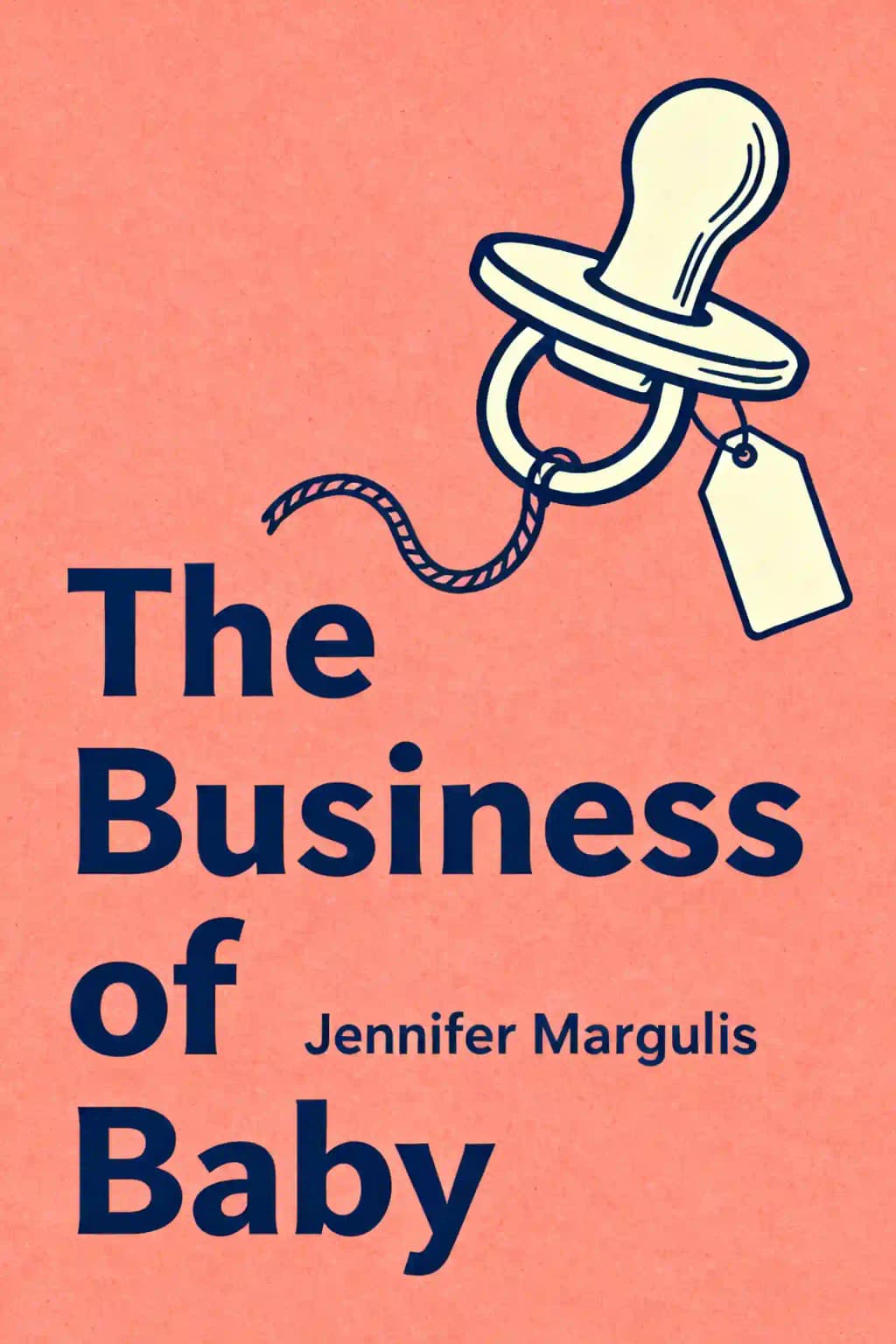
Unmasking the profit-driven world of pregnancy and parenting, "The Business of Baby" controversially challenges medical conventions, sparking fierce debates within healthcare communities. Is your child's wellbeing truly prioritized, or are corporate interests dictating your most intimate parenting decisions?
Jennifer Margulis, Ph.D., is an award-winning science journalist and author of The Business of Baby: Taking Charge of Your Pregnancy, Childbirth, and Parenting Decisions for a Happier, Healthier Family. She is renowned for her investigative work challenging mainstream healthcare practices.
A meticulous researcher and Fulbright grantee, her writing combines rigorous science journalism with advocacy for vulnerable populations, particularly mothers and infants. Margulis co-authored the New York Times bestselling The Vaccine-Friendly Plan with pediatrician Dr. Paul Thomas and The Addiction Spectrum, both amplifying evidence-based approaches to health.
Her articles have graced the cover of Smithsonian and been featured in the Washington Post and New York Times. A senior fellow at Brandeis University’s Schuster Institute for Investigative Journalism, Margulis frequently speaks at universities and health conferences.
Her book has been praised by midwife Ina May Gaskin as a “searing and well-researched exposé," and draws from her global health advocacy, including UNICEF-backed work in Niger. She resides in Oregon with her husband and four children.
The Business of Baby examines how profit-driven practices in healthcare and corporations influence pregnancy, childbirth, and parenting in the U.S. Jennifer Margulis critiques routine medical interventions, hospital births, and formula marketing while advocating for evidence-based, parent-centered choices. The book combines investigative journalism with personal anecdotes to highlight systemic issues in maternal and infant care.
Expectant parents, healthcare providers, and policymakers interested in understanding the commercialization of childbirth will find this book valuable. It’s ideal for readers seeking alternatives to mainstream medical practices or those questioning the ethics of profit motives in maternal care. Margulis’s work also appeals to advocates of informed consent and natural parenting.
Yes, for its bold critique of the $50+ billion baby industry and well-researched insights into hospital protocols, cesarean rates, and formula marketing. While some critics argue Margulis overstates risks of modern medicine, the book empowers readers to make informed decisions by scrutinizing industry conflicts of interest.
Margulis challenges routine interventions like fetal monitoring, inductions, and cesareans, arguing they prioritize profit over patient well-being. She highlights the lack of evidence supporting many hospital protocols and exposes financial ties between medical institutions and pharmaceutical companies.
The book advocates for home birth as a safer, low-intervention alternative for low-risk pregnancies, citing studies on reduced infection rates and maternal satisfaction. Margulis critiques hospital environments for increasing stress and unnecessary procedures, though she acknowledges emergencies requiring medical expertise.
While not the book’s focus, Margulis questions one-size-fits-all vaccine schedules and urges parents to research risks—a stance critics link to vaccine hesitancy. She emphasizes transparency about ingredients and conflicts of interest in public health recommendations.
Margulis exposes aggressive marketing tactics that undermine breastfeeding, including hospital “gift packs” and misleading claims about formula’s benefits. She ties declining breastfeeding rates to corporate lobbying and lax regulation of infant nutrition products.
The book encourages questioning standard prenatal tests, avoiding elective inductions, and seeking midwifery care. Margulis provides checklists for evaluating hospitals and strategies to resist pressure for unnecessary interventions.
As an award-winning science journalist and daughter of biologist Lynn Margulis, she blends investigative rigor with a systems-thinking approach. Her prior work on vaccine policies and medical ethics informs the book’s critical perspective.
Post-pandemic maternal care challenges, rising cesarean rates, and AI-driven prenatal diagnostics could be explored. The 2025 edition might address telehealth’s impact on obstetric care and updated FDA guidelines on formula marketing.
Both books advocate for individualized healthcare, but The Vaccine-Friendly Plan focuses on immunization schedules, while The Business of Baby targets systemic profit motives in maternity care. Critics argue both works amplify distrust in medical consensus.
The book sparked debates about overmedicalized birth and inspired consumer advocacy groups to push for transparency in obstetric care. Its influence persists in growing demand for midwives and doulas, though some medical professionals dispute its conclusions.
Erlebe das Buch durch die Stimme des Autors
Verwandle Wissen in fesselnde, beispielreiche Erkenntnisse
Erfasse Schlüsselideen blitzschnell für effektives Lernen
Genieße das Buch auf unterhaltsame und ansprechende Weise
American birth has been transformed from a natural process into a profit-driven industry.
Doctors get paid more based on the extra testing they do.
The hospital environment often creates the very problems it claims to solve.
Hospitals make twice as much money for a C-section as opposed to a vaginal birth.
Zerlegen Sie die Kernideen von The Business Of Baby What Doctors Dont Tell You What Corporations Try To Sell You And How To Put Your Pregnancy Childbirth And Baby Before Their Bottom Line in leicht verständliche Punkte, um zu verstehen, wie innovative Teams kreieren, zusammenarbeiten und wachsen.
Destillieren Sie The Business Of Baby What Doctors Dont Tell You What Corporations Try To Sell You And How To Put Your Pregnancy Childbirth And Baby Before Their Bottom Line in schnelle Gedächtnisstützen, die die Schlüsselprinzipien von Offenheit, Teamarbeit und kreativer Resilienz hervorheben.

Erleben Sie The Business Of Baby What Doctors Dont Tell You What Corporations Try To Sell You And How To Put Your Pregnancy Childbirth And Baby Before Their Bottom Line durch lebhafte Erzählungen, die Innovationslektionen in unvergessliche und anwendbare Momente verwandeln.
Fragen Sie alles, wählen Sie die Stimme und erschaffen Sie gemeinsam Erkenntnisse, die wirklich bei Ihnen ankommen.

Von Columbia University Alumni in San Francisco entwickelt
"Instead of endless scrolling, I just hit play on BeFreed. It saves me so much time."
"I never knew where to start with nonfiction—BeFreed’s book lists turned into podcasts gave me a clear path."
"Perfect balance between learning and entertainment. Finished ‘Thinking, Fast and Slow’ on my commute this week."
"Crazy how much I learned while walking the dog. BeFreed = small habits → big gains."
"Reading used to feel like a chore. Now it’s just part of my lifestyle."
"Feels effortless compared to reading. I’ve finished 6 books this month already."
"BeFreed turned my guilty doomscrolling into something that feels productive and inspiring."
"BeFreed turned my commute into learning time. 20-min podcasts are perfect for finishing books I never had time for."
"BeFreed replaced my podcast queue. Imagine Spotify for books — that’s it. 🙌"
"It is great for me to learn something from the book without reading it."
"The themed book list podcasts help me connect ideas across authors—like a guided audio journey."
"Makes me feel smarter every time before going to work"
Von Columbia University Alumni in San Francisco entwickelt

Erhalten Sie die The Business Of Baby What Doctors Dont Tell You What Corporations Try To Sell You And How To Put Your Pregnancy Childbirth And Baby Before Their Bottom Line-Zusammenfassung als kostenloses PDF oder EPUB. Drucken Sie es aus oder lesen Sie es jederzeit offline.
The United States spends more on healthcare than any nation on earth, yet American mothers face a higher risk of dying from pregnancy complications than women in 40 other countries. While mothers in Bosnia and Herzegovina are four times less likely to die in childbirth, Americans pay premium prices for some of the worst maternal outcomes in the developed world. This paradox reveals a troubling truth: American birth has transformed from a natural process into a profit-driven industry where corporate interests frequently override evidence-based care. The business of baby begins long before birth, with a cascade of interventions that often create the very problems they claim to solve. What if the standard practices we've come to accept without question are actually driven more by profit margins than medical necessity? And what happens when we follow the money trail through every aspect of pregnancy, birth, and early parenting?