Book of Eels
Our Enduring Fascination with the Most Mysterious Creature in the Natural World
Überblick über Book of Eels
Part memoir, part scientific odyssey, "The Book of Eels" explores humanity's centuries-old fascination with nature's most enigmatic creature. Winner of the National Outdoor Book Award, Svensson's narrative intertwines personal fishing memories with Aristotle's and Freud's obsessions over the same slippery mystery.
Kernthemen in Book of Eels
- eel life cycle
- scientific mystery
- father-son relationships
- spontaneous generation
- nature's elusive secrets
Zitate aus Book of Eels
No one knows for sure where the European eel comes from.
The eel remained an enigma.
The experience was largely silent.
The eels we caught became focal points for stories.
Personen in Book of Eels
- Patrik SvenssonThe author and narrator of the memoir
- Svensson's FatherA man who taught his son how to fish for eels
- Johannes SchmidtDanish biologist who sought the eel's birthplace
Über den Autor
Über den Autor von Book of Eels
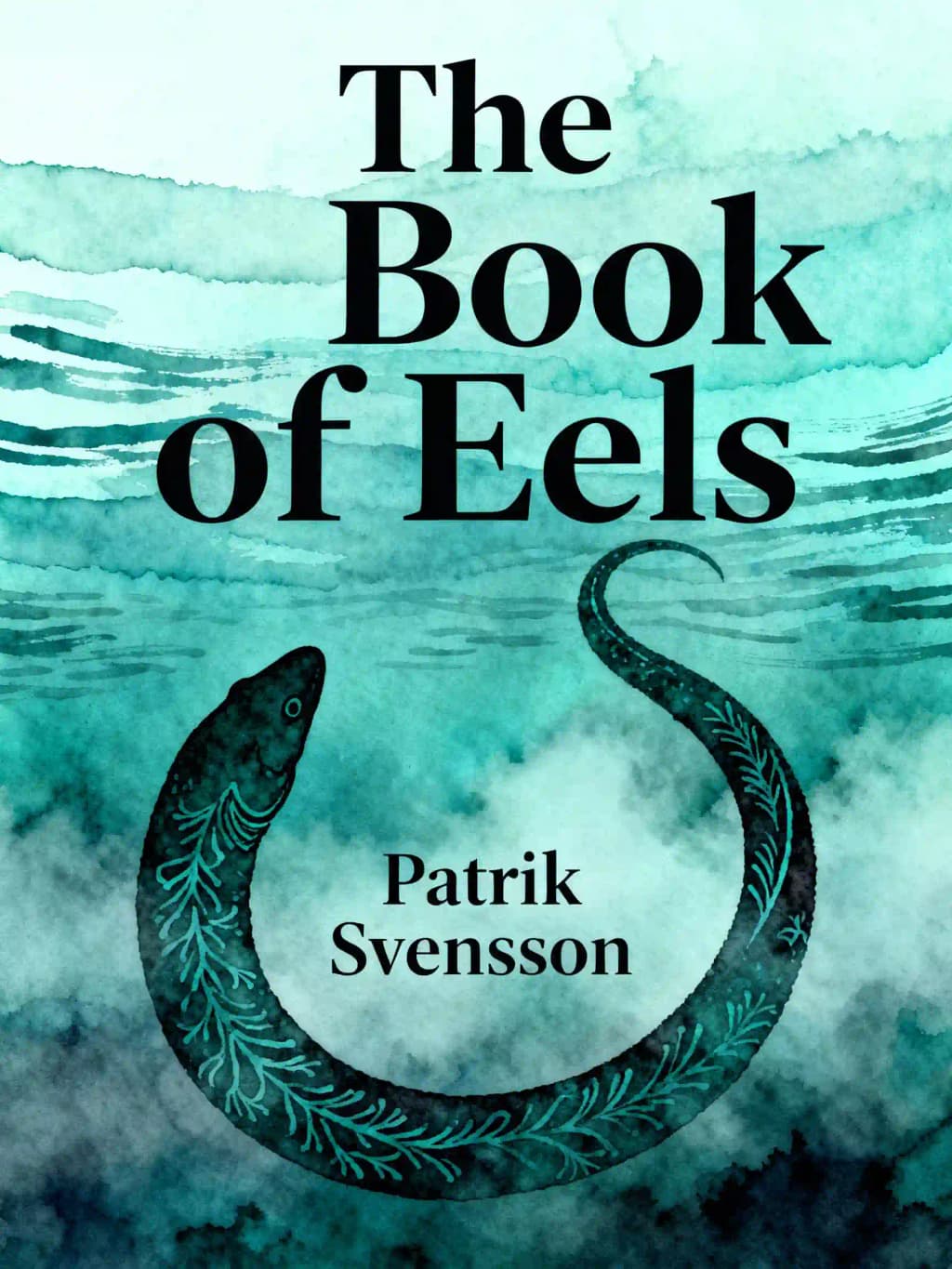
Patrik Svensson, the award-winning Swedish author and digital humanities scholar, masterfully bridges scientific inquiry and personal narrative in his bestselling debut The Book of Eels: Our Enduring Fascination with the Most Mysterious Creature in the Natural World.
This genre-defying work combines marine biology, cultural history, and memoir, drawing from Svensson’s childhood experiences fishing for eels with his father in southern Sweden. A professor of humanities and information technology at Umeå University and former director of its pioneering HUMlab, Svensson brings academic rigor to his exploration of nature’s mysteries.
His other works include Big Digital Humanities (University of Michigan Press), which examines technology’s role in humanistic scholarship, and the forthcoming Humane Infrastructures (MIT Press, 2025).
Translated into over 30 languages and winner of Sweden’s prestigious August Prize, The Book of Eels was named a Publishers Weekly Best Book of 2020 and a Carnegie Medal for Excellence finalist, cementing Svensson’s reputation for transforming obscure subjects into profound meditations on human connection.
Zusammenfassung von Book of Eels herunterladen
Erhalten Sie die Book of Eels-Zusammenfassung als kostenloses PDF oder EPUB. Drucken Sie es aus oder lesen Sie es jederzeit offline.
FAQ zu diesem Buch
The Book of Eels intertwines scientific exploration of the European eel’s life cycle with a personal memoir about Svensson’s bond with his father. It examines the eel’s ecological mysteries, its cultural significance, and humanity’s fraught relationship with this enigmatic species. The narrative blends marine biology, history, and philosophy, while reflecting on mortality and the search for meaning.
This book appeals to readers of literary nonfiction, nature writing enthusiasts, and those drawn to meditative memoirs. It suits anyone interested in marine biology, ecological conservation, or existential themes. Fans of Helen Macdonald’s H Is for Hawk or Sy Montgomery’s works will find similar reflective storytelling.
Yes, for its unique fusion of science and autobiography. The book received Sweden’s August Prize and was shortlisted for international awards. Critics praise its lyrical prose and emotional depth, though some note unresolved scientific questions about eels. Its blend of curiosity-driven research and personal narrative offers a fresh perspective on natural history.
Key themes include the interplay of mystery and scientific inquiry, humanity’s impact on nature, and familial legacy. The eel symbolizes life’s unknowable aspects, while Svensson’s father-son dynamic underscores themes of connection and loss. The book also critiques anthropogenic threats to marine ecosystems.
Svensson details the eel’s bizarre life cycle—from its birth in the Sargasso Sea to its freshwater migrations—and the centuries-long scientific quest to understand it. He highlights Danish biologist Johannes Schmidt’s groundbreaking research and modern conservation challenges, emphasizing gaps in human knowledge about the species.
The book probes existential ideas like purpose, adaptation, and humanity’s need for answers. Svensson questions whether scientific explanations diminish wonder, asking: “Must we solve every mystery?” He parallels the eel’s enigmatic journey with human struggles for meaning.
Svensson’s childhood eel-fishing trips with his father frame the memoir. These experiences mirror the eel’s cyclical migrations, symbolizing continuity and impermanence. His father’s death adds emotional weight, linking the eel’s elusive nature to human mortality.
Some reviewers argue the book over-relies on rhetorical questions and anthropomorphism, leaving core scientific mysteries unresolved. Critics note its philosophical musings occasionally lack depth, but most praise its originality and narrative ambition.
Svensson warns of the eel’s endangered status due to pollution, overfishing, and habitat loss. He contextualizes this within broader biodiversity crises, urging readers to reconsider humanity’s role in ecological destruction.
The book profiles Aristotle’s early eel studies, Freud’s failed dissection experiments, and Rachel Carson’s conservation advocacy. These vignettes illustrate humanity’s enduring fascination with the species.
Both blend natural history with personal grief, using animal subjects as metaphors for human struggles. While Macdonald focuses on raptors and trauma, Svensson uses the eel to explore paternal bonds and existential curiosity.
Its themes of ecological stewardship and embracing uncertainty resonate amid climate crises. The eel’s plight underscores urgent biodiversity challenges, while its mysterious life cycle invites reflection on accepting the unknown.