Kapitel 1
Cracking the Bestseller Code: When Algorithms Meet Literature
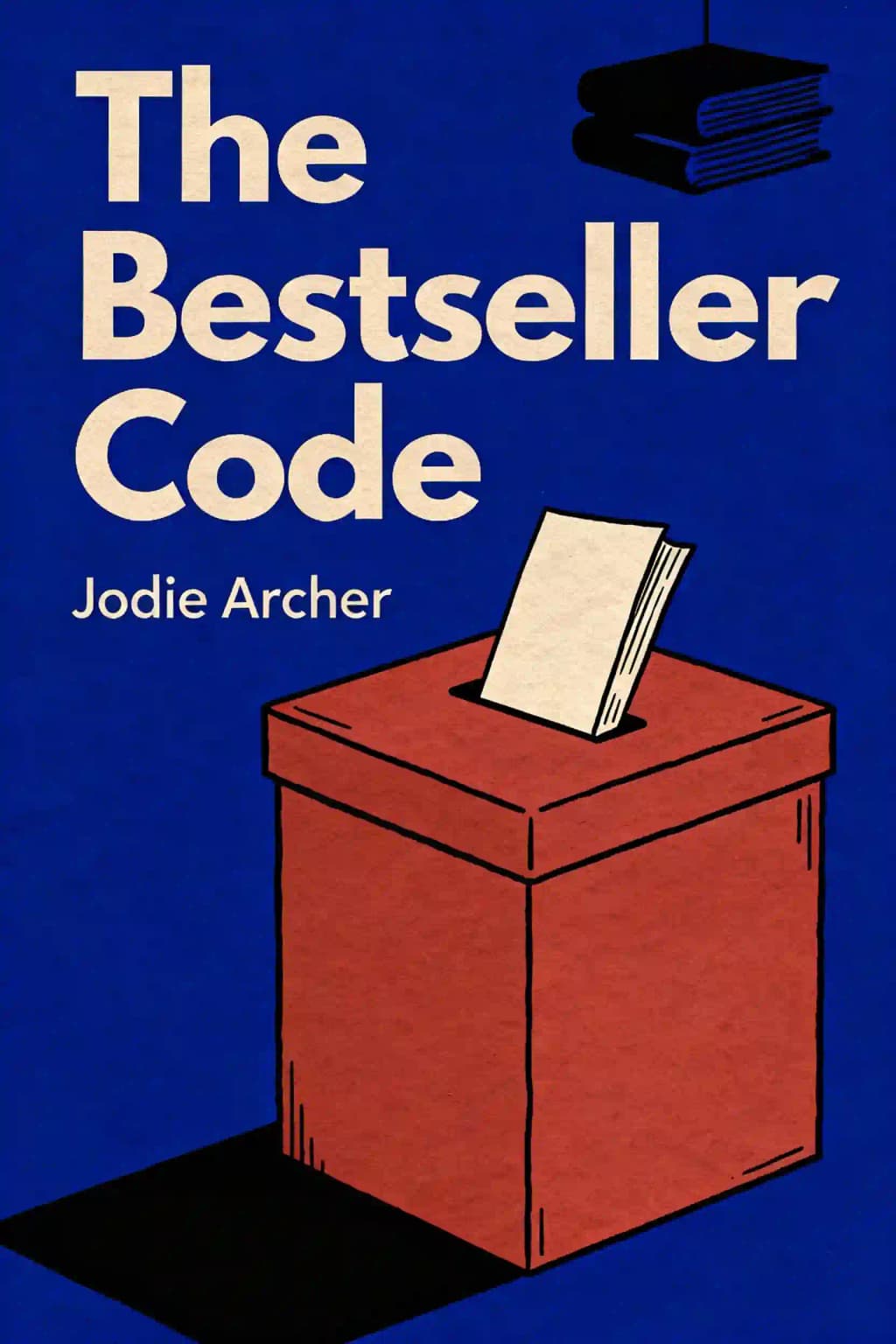
Ever wondered why some books fly off the shelves while others languish in obscurity? What if the secret to writing a bestseller wasn't luck or connections, but a hidden pattern that could be scientifically identified? In 2010, as Stieg Larsson's brutal novels dominated bestseller lists worldwide despite critical dismissal, two researchers began asking exactly this question. Their groundbreaking five-year study would eventually analyze over 20,000 novels using sophisticated algorithms, correctly identifying bestsellers with 80-90% accuracy based solely on the text itself. The publishing industry, which typically sees success rates below 0.5%, has long considered bestsellers to be unpredictable "black swans." But what if they're actually "white swans" - following identifiable patterns that have remained hidden until now? This revolutionary approach could democratize publishing, helping unknown writers without MFAs or New York connections break through based purely on their manuscript's inherent qualities. The implications for writers, publishers, and readers are nothing short of transformative.
Kapitel 2
The Bestseller DNA: Patterns Behind Literary Success
The publishing industry has long organized books primarily by subject matter, operating under the assumption that genre and topic drive reader choice. Yet our comprehensive data analysis reveals this approach overlooks crucial elements that truly determine commercial success. When our algorithm analyzed thousands of novels across multiple decades, we discovered that commonly assumed drivers of bestseller status - sex, drugs, and rock and roll - appear with surprisingly low frequency, averaging around 0.001% of content. Even more revealing, explicit sexual content appears less frequently in bestsellers than in less successful books, challenging conventional wisdom about what sells.
Instead, bestsellers demonstrate remarkable consistency in their topic distribution patterns. Our research focused particularly on two "godparents" of contemporary bestsellers - Danielle Steel and John Grisham - who have mastered a specific formula. Both authors dedicate precisely one-third of their writing to their signature themes (Steel to "Domestic Life" and Grisham to "Lawyers and the Law"), while using the remaining two-thirds for complementary topics that keep each book fresh and engaging. This focused approach markedly distinguishes bestsellers from less successful novels, which typically scatter attention across too many themes. Where bestsellers efficiently use just four primary topics to reach 40% of their content, non-bestsellers require six or more, resulting in less cohesive narratives that fail to maintain reader engagement.
The true secret weapon shared by bestselling authors emerges in their masterful incorporation of scenes depicting human closeness and connection - the single most predictive topic for commercial success across all genres. Both Steel and Grisham expertly balance their dominant themes with secondary topics that create natural dramatic tension. They focus on realistic scenarios that trigger universal fears and aspirations - family conflicts, workplace challenges, moral dilemmas - while carefully avoiding content that might alienate broad segments of readers. These authors understand that emotional and ethical themes resonate more broadly than graphic content or niche interests.
The data reveals specific patterns in how bestselling authors structure these elements. They typically introduce moments of human connection every 20-30 pages, creating a rhythm that keeps readers emotionally invested. They balance tension with resolution, typically resolving minor conflicts while building toward larger ones. Successful authors also demonstrate remarkable restraint with controversial topics, addressing them through personal impact rather than political stance. This approach allows readers from diverse backgrounds to connect with the story's emotional core while avoiding polarizing positions that might limit market appeal.
Furthermore, bestselling authors show exceptional skill in weaving these elements together seamlessly. They create a narrative tapestry where their signature theme provides structure while human connection scenes offer emotional depth. This combination creates what we term the "bestseller DNA" - a perfect balance of familiar genre elements with universal human experiences that keeps readers coming back for more.
Kapitel 3
The Emotional Rollercoaster: Why Some Books Are Unputdownable
When E.L. James's Fifty Shades of Grey sold 125 million copies in just four years despite widespread critical disdain, it challenged our research findings that sex-heavy novels rarely become bestsellers. Testing our model on James's novel revealed surprising results - it scored 90% despite algorithms typically associating explicit sexual content with poor market performance. The topical analysis showed human closeness (21%), intimate conversation (13%), and nonverbal communication (10%) were the dominant themes - not the BDSM elements that generated headlines. In fact, the sexual content comprised only 7% of the total narrative, far less than public perception suggested.
What truly sets bestsellers apart is their emotional rhythm. When we tracked students' physical responses while reading, all reported visceral reactions within the first ten pages of bestsellers - something absent with non-bestsellers. These reactions included increased heart rate, skin conductance changes, and muscle tension, particularly during pivotal character interactions. E.L. James mastered this affective response, writing emotional turns with such regular rhythm that readers feel the thrum physically. Only twenty-five other bestsellers share this rhythm, with only one other novel - Dan Brown's The Da Vinci Code - achieving the same measured beat and comparable sales. This pattern occurs approximately every 2.5 pages in both books.
Emotional response graphs reveal why some novels become bestsellers while similar titles don't. When comparing three self-published erotic romances, E.L. James's Fifty Shades shows perfectly rhythmic, symmetrical emotional curves with precisely calibrated peaks and valleys that create an addictive reading experience. These peaks occur during moments of intense character conflict or revelation, while valleys allow readers to process and recover. This emotional roller coaster translates into "page-turner" and "gripping" reading experiences. The graph reveals both the high-frequency "heartbeat" of constant micro-conflicts between Ana and Christian (their chemistry) and the smoother story arc of major plot developments. Our analysis showed these micro-conflicts occurred every 4-6 paragraphs, while major emotional peaks appeared every 22-25 pages.
Despite their seemingly different content, Fifty Shades of Grey and The Da Vinci Code share a remarkably similar emotional rhythm that explains their extraordinary commercial success. When graphed, their emotional beats mirror each other with exceptional regularity - the distance between peaks is consistent at 22-25 pages, the distance between valleys is consistent at 18-20 pages, and the distance between peaks and valleys is consistent at 8-10 pages. This symmetry is extremely rare in literature and represents mastery of the "page-turner beat." We analyzed over 1,000 novels and found only these two maintained this precise rhythm throughout their entire narrative. Other bestsellers like The Girl with the Dragon Tattoo and Gone Girl showed similar patterns but with less consistency, achieving about 70% of the rhythm precision found in Fifty Shades and The Da Vinci Code.
Kapitel 4
The Language of Success: Style Matters More Than You Think
Like our physical DNA, our writing contains unconscious patterns that algorithms can identify. These aren't the beautiful metaphors literary critics praise, but rather the mundane features - preposition usage, pronoun frequency, grammatical marks - that form our unique linguistic signature. Even Stephen King faced exposure when writing as Richard Bachman, outed by a bookseller who recognized his distinctive style.
What's fascinating is that these seemingly boring stylistic elements are powerful indicators of market success, even for debut novelists. In a crowded market with countless similar plots and themes, style refreshes familiar tales and helps new writers stand out.
Bestselling style favors informality and authenticity over formality. Contractions like "n't" appear four times more often in bestsellers, while "-'d" is twelve times more common and "-'re" is five times more common. This reflects Wordsworth's ideal of "the everyday language of the common man."
Bestsellers also feature more casual expressions like "okay" (three times more common) and "ugh," along with more question marks but fewer exclamation points. Ellipses are popular in bestsellers to indicate unfinished thoughts that create intimacy between character and reader.
The most successful fiction uses shorter, cleaner sentences with fewer adjectives and adverbs. Bestsellers avoid decorating sentences with unnecessary modifiers or "really very pretty lovely little words ending in -ly." The sentences of the bestseller are not gaudy Christmas trees - better the plain fir tree brought into simple relief.
When ranking books based solely on bestselling style, women authors dominated the top of the list, with nine of the ten debut bestsellers being written by women. This prompted an investigation into whether writing style correlates with gender. The algorithm could correctly identify author gender 71% of the time based on stylistic markers.
Interestingly, the model misclassified bestsellers by James Patterson as female-authored, including his Alex Cross crime novel "Four Blind Mice." The pattern revealed wasn't simply about gender but about training and background. Authors with the most "male" style typically had formal literary education and won prestigious awards. Those with the most "female" style predominantly had backgrounds in journalism or advertising.
The debutante bestsellers like "The Girl on the Train" and "The Help" share journalistic backgrounds that trained them in accessible, colloquial language that appeals to mass audiences rather than literary establishments. It's not about gender, but about understanding audience and having a natural feel for language nurtured by disciplined practice.
Kapitel 5
Character Agency: The Power of Need and Want
Though readers might claim they read for theme or genre, thousands admit in reviews and book clubs that character is what transforms a good novel into a can't-put-down experience. Characters allow us to observe vicariously, judge quietly, and fantasize unnoticed. They transport us to new emotional, mental, moral and sexual territories, letting us temporarily experience different lives and relationships. This vicarious experience creates a powerful emotional investment, making readers feel personally connected to the story's outcome.
From a computational perspective, character is exceptionally difficult to analyze, requiring sophisticated natural language processing to track behavior patterns and emotional arcs. Despite these difficulties, our model achieved 72% accuracy in predicting bestsellers based solely on character verbs. The findings reveal that bestselling protagonists, regardless of gender, have and express their needs. The verbs "need" and "want" are the two biggest differentiators between bestsellers and non-bestsellers, appearing three times more frequently in successful novels.
Characters in bestsellers display agency through active verbs like "grab," "do," "think," "ask," "look," and "hold." They "love" more often and express this emotion through concrete actions rather than mere statements. These characters possess self-awareness and make things happen - they "tell," "like," "see," "hear," "smile," and "reach." They have energy and direction, they "pull," "push," "start," "work," "know," and ultimately "arrive." This pattern of active verbs creates a sense of forward momentum that keeps readers engaged.
By contrast, less successful characters are passive - they "halt," "drop," "demand," "seem," "wait," and "interrupt." They "shout," "fling," "whirl," and "thrust" - verbs suggesting a flailing child rather than a compelling lead. They "murmur," "protest," "hesitate," "wish," "suppose," and "dislike" - behaviors that don't keep pages turning. These reactive rather than proactive verbs often signal a character who things happen to, rather than one who drives the action.
Why is "need" the top verb differentiating bestsellers from non-bestsellers, while "wish" characterizes books that don't sell? The answer is simple: "I think, therefore, I am. I wish, therefore, I sit and wait. I need, therefore, I act." Action drives plot, and characters who identify needs must journey, move, interact, and engage in conflict. Need creates urgency and motivation, pushing characters to overcome obstacles and make difficult choices. This fundamental drive transforms passive desire into active pursuit, generating the conflict and tension that captivate readers.
The most successful protagonists demonstrate their needs through consistent action rather than internal monologue alone. They pursue their goals with determination, face setbacks with resilience, and learn from their mistakes. This pattern of active engagement with their desires creates a compelling narrative arc that readers find irresistible, regardless of genre or setting.
Kapitel 6
The Girl Phenomenon: Reinventing Female Characters
The phenomenon of "girl" titles in bestselling fiction has become unmistakable. Since 2008, some of the biggest breakout books have featured "girls" - from Stieg Larsson's trilogy beginning with The Girl with the Dragon Tattoo to Gillian Flynn's Gone Girl and Paula Hawkins' The Girl on the Train.
When examining sociocultural roles in titles, "wife" appears frequently but always qualified (The Silent Wife, The Paris Wife), reflecting contemporary fascination with women's roles. The bestselling "girl" titles reveal a specific pattern - these aren't sweet, passive girls but displaced, angry misfits. The successful "girl" is a feminine noir character - not "The Girl on a Swing" but "The Girl on the Train"; not "A Girl to Come Home To" but "Gone Girl."
The "girls" in recent bestsellers are far from passive - they need, want, and act decisively. Our model confirms that female characters, not male ones, drive the success of novels like "The Girl with the Dragon Tattoo," "Gone Girl," and "The Girl on the Train." Lisbeth Salander's agency scored 93% likelihood of bestseller status, while her male counterpart Blomkvist scored only 29%. Similarly, female characters in "Gone Girl" and "Girl on the Train" scored 99% - outperforming their male counterparts.
These bestselling "girls" represent a new subgenre dubbed "domestic noir" - they bring thriller, whodunnit and horror elements into the private sphere. Unlike traditional heroines embodying beauty and goodness, these darker characters enter households, marriages and families, turning stereotypes upside down as avenging angels, angry victims, or agents of destruction.
These characters function as purifiers, testing and battling against constrictions placed on women. They're fascinating because they're both the perceived "problem" and the solution - unlike simpler good-versus-evil narratives. Lisbeth, Rachel, and Amy embody both darkness and light, challenging readers with their complexity.
The bestselling "girl" novels share three key elements that explain their success. First is the agency of female characters who challenge traditional roles. Second is their distinctive plot structure showing sharp descent into trouble followed by unresolved endings. Third is their subversion of the bestseller theme of human closeness - either inverting it (in Gone Girl and Girl on the Train) or notably lacking it (Dragon Tattoo).
Kapitel 7
The Perfect Bestseller: When the Algorithm Speaks
Our bestseller-ometer analyzes thousands of data points to predict bestseller status with 80% accuracy. For bestseller success, authors need to hit the sweet spot in every aspect of fiction writing. The most successful books feature three or four central themes occupying about 30% of the pages, with human closeness being the most important. Bestsellers typically follow a symmetrical three-act structure with carefully manipulated emotional journeys. Stylistically, bestselling authors balance literary technique with practical experience in journalism or marketing.
After analyzing hundreds of manuscript reports, we encountered one book that achieved perfection across all metrics. Its topical makeup featured the ideal three themes comprising 30% of content (21% Modern Technology, 4% Jobs and Workplace, 3% Human Closeness). Its plot followed the bestselling three-act structure with perfect symmetry, ending darker than it began. Stylistically, it balanced "masculine" and "feminine" writing (52% feminine, 48% masculine) with ideal sentence structure and punctuation. Its female protagonist demonstrated strong agency with the bestselling verbs "need" and "want." Our model gave this manuscript a 100% confidence score for bestseller potential. The perfect book? Dave Eggers' "The Circle."
Dave Eggers himself embodies many bestselling character traits. His debut memoir "A Heartbreaking Work of Staggering Genius" hit #1 on the NYT list while also becoming a Pulitzer finalist - rare market positioning that reflects his unique stylistic balance. Unlike most bestselling authors with journalism backgrounds, Eggers writes with an almost perfect 50/50 blend of "feminine" and "masculine" styles, appealing to both mass readership and prize committees.
The novel's protagonist Mae becomes the face of technological dystopia, working at a company resembling a Google-Facebook hybrid with Apple hardware. The novel's thematic DNA (21% Modern Technology, 4% Jobs and Workplace, 3% Human Closeness) creates perfect bestseller conflict. In a stunning irony, Mae's job at the Circle involves perfecting customer response formulas to achieve 100% satisfaction scores - mirroring our algorithm's own function.
Kapitel 8
The Future of Fiction: Humans, Machines, and Storytelling
Can computers write novels? This tantalizing question follows naturally from our analysis of computers reading books. In 2013, Darius Kazemi launched "NaNoGenMo" (National Novel Generation Month), challenging programmers to create code that generates 50,000-word novels. This wasn't entirely new - back in 1952, Christopher Strachey programmed the Ferranti Mark 1 to write love letters, investigating whether computers could express emotion. Today, computers already write sports and business reports for major outlets like Forbes and AP. But novel-writing, particularly stories about human love and closeness, remains the ultimate challenge for artificial intelligence.
The gap between computer-generated text and genuine creative writing remains vast. Early experiments like "True Love.wrt" borrowed heavily from existing works, while Nick Monfort's "World Clock" (generated with just 165 lines of Python code) follows rigid paragraph structures that feel mechanical. Computer-written novels are essentially sophisticated forgeries or digital cut-ups, reminiscent of Dadaist techniques. Their appeal lies in novelty and absurd ironies rather than storytelling quality.
While computers excel at accumulating facts and data, they lack the creative and critical thinking skills essential to novelists who unveil meaning in a hectic world. Computer writing works best in amusing snippets rather than full novels. Despite having data on bestseller ingredients, we have no interest in programming a bestselling novel - we'd rather write one ourselves using our research insights.
Our research has transformed our attitudes toward literature. We now teach classes on bestsellers alongside classics, believing the bestseller-ometer might change how we write, publish, and read fiction - bringing respect to mainstream novelists, inspiring new authors, and offering fresh perspectives on what makes a good book work.
The implications for publishing are profound. By identifying promising new voices regardless of their connections, age, gender, or ethnicity, we hope to democratize an industry that currently has a bestseller rate below 0.5%. The model doesn't care about your MFA or your contacts in New York - it only evaluates the manuscript itself. Perhaps one day, your friend writing at 4 AM might get an 80% score that earns them an advance and a career. The algorithm's ability to see through marketing hype to the inherent quality of a text could transform how we discover and promote new voices in literature.
Kapitel 9
The Science Behind the Magic: How the Algorithm Works
Text mining extracts textual features from books (step one), while machine learning processes those features to predict bestseller status (step two). Perfecting these steps took four years and thousands of computers working in parallel, processing over 20,000 books across multiple genres and time periods. Natural Language Processing (NLP) powers this work through sophisticated tasks like word segmentation, sentence identification, part-of-speech tagging, and dependency parsing. Each book undergoes multiple passes of analysis, examining everything from individual word choices to complex sentence structures and thematic elements.
From 28,000 initial features, the researchers conducted extensive statistical analysis to identify 2,799 truly predictive ones. They discarded superficial elements like place names, numbers, and basic formatting while retaining significant patterns like the topic of Human Closeness, emotional intensity markers, and specific verbs like "need," "want," and "desire" that signal character motivation. The analysis revealed surprising correlations, such as the relationship between punctuation patterns and reader engagement, or the impact of sentence rhythm on narrative flow.
The research employed three sophisticated classification algorithms: K Nearest Neighbors (KNN), which groups books based on feature similarity; Support Vector Machines (SVM), which creates multidimensional boundaries between bestsellers and non-bestsellers; and Nearest Shrunken Centroids (NSC), which identifies the most distinctive characteristics of successful books. Each algorithm brought unique strengths to the analysis - KNN excelled at pattern recognition, SVM at handling complex feature interactions, and NSC at identifying core success factors.
Using all 2,799 features, KNN achieved an impressive 90% accuracy, while SVM reached 70% and NSC 79%, resulting in an average 80% accuracy across methods. The researchers implemented rigorous validation techniques, including "10-fold" cross-validation where the data was divided into ten parts for testing, and "hold one out" validation that tested each book individually against the rest. They carefully controlled for prolific authors by limiting their representation in the training data to prevent any single author's style from dominating the model.
The model demonstrated remarkable versatility by successfully classifying unexpected bestsellers like "Fifty Shades of Grey" and "Gone Girl." These books, while appearing revolutionary on the surface, actually contained deep structural and linguistic patterns common to successful novels. For instance, "Gone Girl" shared specific verbal patterns with classic psychological thrillers, while "Fifty Shades" employed emotional language patterns similar to traditional romance bestsellers. Even works with seemingly novel elements followed established bestseller patterns in aspects ranging from comma usage frequency to verb choice distribution, suggesting that successful authors intuitively weave together these latent aspects of bestselling regardless of surface-level innovation.
The research continues to evolve as new bestselling phenomena emerge, with the team regularly updating their model to account for changing literary trends. However, they've consistently found that seemingly "new" trends often contain familiar bestselling DNA patterns - whether in pacing, emotional arc construction, or character development techniques. This suggests there are fundamental, timeless elements that make books connect with readers, transcending genre conventions, stylistic choices, and historical periods. By uncovering these hidden patterns, the algorithm has revealed not just the mechanics of commercial success, but deeper insights into the universal elements of storytelling that resonate with human psychology and emotional experience.