Kapitel 1
The Magical Mystery Tour: How Four Lads Changed Music Forever
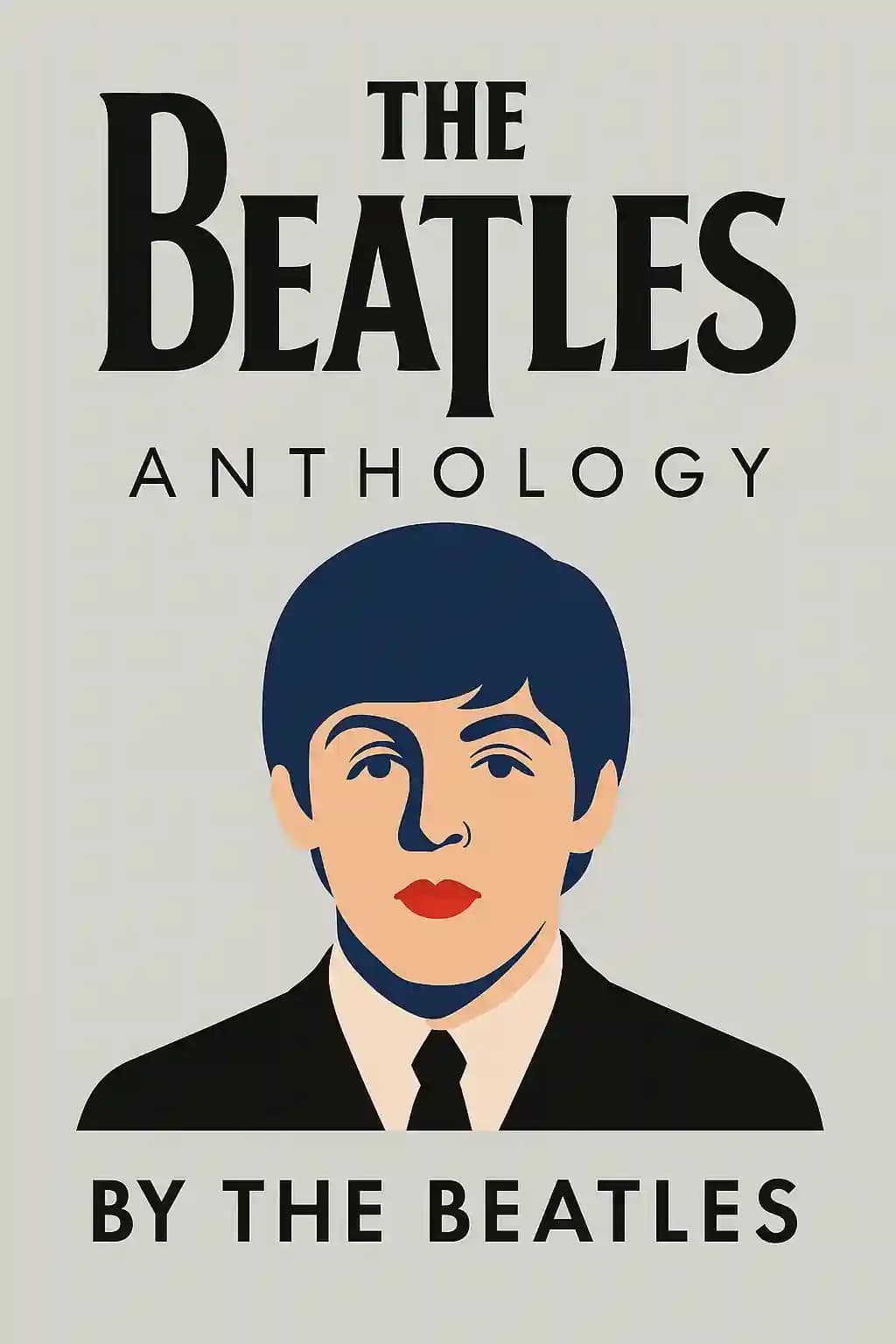
The Beatles Anthology stands as one of the most comprehensive chronicles of musical history ever assembled. This remarkable collection presents the story of The Beatles in their own words-raw, unfiltered, and profoundly human. What makes this work so extraordinary is its authenticity; unlike typical rock biographies filtered through journalists or ghostwriters, this narrative comes directly from John, Paul, George, and Ringo themselves, alongside those closest to them. The book's cultural impact has been immense, with celebrities from Martin Scorsese to Taylor Swift citing it as essential reading. Beyond its popularity among musicians and filmmakers, the Anthology has become required reading in university music programs worldwide. Its influence extends far beyond entertainment, offering invaluable insights into creative collaboration, cultural revolution, and the price of unprecedented fame. As we dive into their journey, we discover not just the story of a band, but a generation-defining phenomenon that continues to resonate decades later.
Kapitel 2
Liverpool Beginnings: The Crucible of Creativity
Liverpool in the 1950s was hardly the cultural epicenter of Britain, yet something extraordinary was brewing in this working-class port city. For young John Lennon, life was a complex blend of rebellion and artistic yearning. "I was aggressive and calculating," John admitted of his school days. "If I thought someone could punch harder than me, I said, 'OK, we'll have wrestling instead.'" Behind this tough facade lay a sensitive soul convinced of his own genius: "I used to think I must be a genius but nobody'd noticed. I thought, 'I'm a genius or I'm mad.'"
School bored John senseless, except for art and literature classes where his creativity flourished. His aunt Mimi wanted him to become "a rugby type or chemist" while he insisted, "I'm an artist." This tension between conformity and creative expression would define much of his early life.
Paul McCartney's musical awakening came through Elvis Presley's "Heartbreak Hotel" on Radio Luxembourg. "After hearing him, I thought of nothing else but rock'n'roll," Paul recalled. Despite parental concerns about rock's sexual undertones, Paul knew this music wasn't just a passing fad. His musical education began informally-his mother taught him banjo chords which he adapted to guitar, and he learned mostly by picking up bits here and there.
The fateful meeting between John and Paul occurred through Ivan Vaughan at a Woolton church-hall garden fete where John's band, the Quarry Men, was playing. After the show, Paul impressed John by playing "Twenty Flight Rock" by Eddie Cochran. "He could play guitar, trumpet, and piano, while I only knew two guitar chords," John remembered. "I thought, 'He's as good as me,' and realized he was worth having despite the challenge to my leadership." Paul also "looked like Elvis," which John liked.
George Harrison joined shortly after, introduced by Paul. Though initially considered too young, George won John over by playing "Raunchy" when asked. "I let him join because he knew more chords than we did," John explained. With George's addition, the original Quarry Men were gradually pushed out, and the core of what would become The Beatles was formed.
These early Liverpool days were characterized by skipped school days, impromptu jam sessions at George's house, and the writing of rudimentary songs. They shared an inexplicable confidence about their musical future despite having no formal training or industry connections. As George later reflected, "We were cocky and felt something good would happen, though back then 'something good' meant merely touring Mecca Ballrooms."
Kapitel 3
Hamburg Crucible: From Boys to Performers
Hamburg transformed The Beatles from amateur musicians into a formidable performing unit. John would later state bluntly, "I grew up in Hamburg, not Liverpool," reflecting how transformative their German experience was. The opportunity arose after another Liverpool group, Derry and the Seniors, impressed German promoter Bruno Koschmider. When Koschmider requested another Liverpool band-specifically a five-piece-they recruited Pete Best, whose mother Mona ran the Casbah club.
The conditions in Hamburg were brutal. During their first stint in 1960, they played grueling sets at the Indra Club and later the Kaiserkeller, often performing for eight hours straight. "We had to learn to play long and loud," Paul recalled. "We'd start at seven in the evening and finish at two in the morning." Their accommodations were equally harsh-a small room behind a cinema screen with no heating or proper washing facilities.
Ringo Starr, then playing with Rory Storm and the Hurricanes, first encountered The Beatles in Hamburg. "I thought they were great," Ringo remembered. "They had their own style. They were doing things differently from the other groups." Though he occasionally sat in with them when Pete couldn't make gigs, it would be nearly two years before he officially joined.
Hamburg's red-light district environment exposed the young band to a world far removed from their Liverpool upbringing. They consumed Preludin (a stimulant) to stay awake during marathon performances, experimented with their image, and immersed themselves in the seedy atmosphere. "We were very young, but we got a lot of sex education in Hamburg," George later quipped.
The intensity of their Hamburg performances forged an unbreakable musical bond. Playing for demanding audiences of sailors, gangsters, and prostitutes required them to develop a commanding stage presence. "In Hamburg, we had to play for hours and hours on end. Every song lasted twenty minutes and had twenty solos in it," Paul explained. "That's when we really found ourselves musically."
Their repertoire expanded dramatically during this period, incorporating obscure American R&B, rock 'n' roll standards, and increasingly, their own compositions. By their third Hamburg visit in 1962, they had developed the tight, energetic sound that would soon captivate Britain and eventually the world.
Hamburg also introduced them to artistic influences that would shape their aesthetic. Through Astrid Kirchherr and Klaus Voormann, they encountered existentialism, modern art, and European fashion. The famous "Beatle haircut" originated here, inspired by the German art students' style. As George later noted, "We had a lot of influences in Hamburg that weren't just musical."
By the time they returned to Liverpool from their final Hamburg stint, The Beatles were no longer just another local band. They had become a tight, professional unit with an unmistakable sound and growing confidence in their original material. The crucible of Hamburg had transformed them from boys into performers ready to conquer the world.
Kapitel 4
Brian Epstein and the Path to Fame
The Beatles' trajectory changed forever when Brian Epstein discovered them after customers requested "My Bonnie" at his NEMS record store. Curious, he visited the Cavern Club where they performed and approached them afterward. "He looked efficient and rich," Paul recalled of their first impression. After negotiations, they agreed to his 25% management fee, beginning a partnership that would launch them to unprecedented heights.
Brian immediately doubled their Cavern pay from 7.10s to 15 and secured better venues. He polished their act-suggesting they cut off loose guitar strings, bow after performances, stop eating and smoking on stage. Though John initially resisted these changes, they respected Brian's business sense and vision for their career.
The transformation extended to their appearance. Brian gradually moved them from leather to suits for professional gigs, understanding that dance hall promoters saw their leather look as thuggish. As John put it pragmatically, "I'll wear a bloody balloon if somebody's going to pay me." This image change created tension within the group. John described "a constant fight between Brian and Paul on one side and me and George on the other." John felt pressured to cut his long, greased-back hair and saw their first Granada TV appearance in suits as "where we started to sell out."
In December 1961, Brian arranged an audition with Decca Records. They drove to London on New Year's Eve through snow, recording about twenty songs from their Cavern set. Despite Brian's persistence, Decca ultimately turned them down, with Dick Rowe famously declaring "Guitar groups are on the way out, Mr. Epstein." This rejection became one of the music industry's legendary misjudgments.
Brian tirelessly shopped their demo tape around London, returning repeatedly with disappointment. Without his persistence in taking those tapes from place to place, eventually to George Martin at Parlophone Records, they would never have made it. Their audition with Martin in June 1962 proved successful, though Martin suggested changing drummers after finding Pete Best's playing imprecise.
The decision to replace Pete with Ringo was agonizing. "It was one of the most difficult decisions we ever made," Paul admitted. They were admittedly cowards about the firing, making Brian handle it. The band set their sights on Ringo, whom they considered "the greatest drummer in Liverpool." George was particularly instrumental in bringing Ringo aboard, even visiting his house to speak with his mother while Ringo was away at Butlins holiday camp.
Ringo's first official Cavern performance was chaotic-half the audience loved him, half hated him, with some fans shouting "Pete is best!" George even got a black eye defending him afterward. Neil Aspinall, who was close with Pete's family, initially refused to set up Ringo's kit but eventually came around. The difference was immediately noticeable. As Paul put it, "When Ringo joins us we get a bit more kick, a few more imaginative breaks, and the band settles."
Brian's influence extended beyond management to emotional support. John had a particularly close relationship with him, appreciating his theatrical rather than business-oriented approach. Brian believed in them completely when no one else did, working tirelessly to secure opportunities. As John later reflected, "We had complete faith in Brian when he was running us."
Under Brian's guidance, The Beatles rapidly ascended from local popularity to national attention. Their first single, "Love Me Do," reached number seventeen in the charts, driven largely by their regional popularity. By year's end, it had sold 100,000 copies, mostly in Liverpool. This modest success earned them more respect at EMI: "The next time we went to EMI, they were more friendly: 'Oh, hello lads. Come in.'"
Kapitel 5
Beatlemania: The Phenomenon Explodes
Everything changed when "Please Please Me" hit Number One in February 1963 while they were touring with Helen Shapiro. Suddenly, they were the act everyone was waiting for. John had written the song at his aunt's house, attempting to create a Roy Orbison-style number after hearing "Only The Lonely." Originally a slow, dreary rocker, George Martin suggested speeding up the tempo. When they finally recorded it, Martin declared, "You've got your first Number One."
With success came madness. Fans began jumping on them, overturning vans, ripping wing mirrors off cars. Neil had to organize getting in and out of theaters. The screaming at shows was actually welcome at first-it covered when they weren't playing well. Getting out of theaters became the worst part; some fan would let the tyres down on their coach. Things they once enjoyed-entering theaters normally, staying in hotels, having nights out, shopping-became impossible dreams.
Their first album, "Please Please Me," was recorded in one marathon twelve-hour session. "It captured our live sound-the closest to what audiences in Hamburg and Liverpool heard," Paul explained. "Twist and Shout" nearly killed John's voice-they deliberately recorded it last, and after just two takes his voice was gone, leaving his throat like sandpaper.
The Beatles had four hits in 1963, with records going gold before release. "She Loves You" with its iconic "Yeah, yeah, yeah" refrain became their breakthrough hit. Paul and John wrote it together in a Newcastle hotel room. When they took it to George Martin, he thought the 6th-cluster ending was corny, but they insisted on keeping it. Brian Matthew in Melody Maker initially called it "banal rubbish," but quickly changed his tune when it zoomed to Number One.
Their songwriting partnership flourished during this period. Though they credited songs jointly as Lennon and McCartney very early on because they aspired to be like Rodgers and Hammerstein, they often wrote separately. Paul was more advanced with more chords thanks to his father's piano playing, but they enjoyed collaborating. John preferred inspiration to craftsmanship, finding it difficult but possible to write on demand. Their process was haphazard-if one had a partial song, they'd help each other finish it, with no fixed rules.
Playing Sunday Night at the London Palladium in October 1963 was a major milestone-it was the show with the biggest stars from America and England. Ringo was so nervous before the show that he vomited into a bucket before going on stage. Shortly after came the Royal Command Performance where they met the Queen Mother. John's famous line about "rattle your jewellery" wasn't spontaneous-he'd spent time thinking about what to say.
By the end of 1963, The Beatles had conquered Britain. Their second album, "With The Beatles," showcased more original songs alongside carefully chosen covers. The iconic cover photo by Robert Freeman was inspired by Astrid and Jurgen's Hamburg pictures-the first time they actively involved themselves in Beatles' artwork. As George Martin observed, "They were becoming more and more conscious of their image."
Kapitel 6
America and Global Domination
America was their make-or-break moment as world stars. They'd conquered Europe, but were worried about America since George's earlier visit revealed nobody knew them there. When they landed in February 1964, they were shocked to find millions of kids waiting-just like home. The radio was broadcasting their movements live: "They have just left the airport and are coming towards New York City..." It felt like a dream.
Their Ed Sullivan Show appearance on February 9, 1964, was watched by 73 million people-approximately 40% of the American population. Even Elvis sent a telegram. Their haircuts made as much impact as their music, with parents telling kids "they're wearing wigs" while mothers and children insisted on watching.
American radio fascinated them-stations everywhere compared to just the BBC back home. DJs would follow them into elevators with microphones broadcasting live, and they'd phone stations constantly requesting records, not their own but other artists they loved-Marvin Gaye, The Miracles, Shirelles.
The British Embassy event in Washington was miserable-stuffy officials and "Hooray Henrys" treating them like exhibits. Someone snipped off a piece of Ringo's hair with scissors, infuriating them all. John stormed out swearing. Carnegie Hall fulfilled Brian's classical ambitions, then Miami felt like paradise with its palm trees. They were proper tourists with their cameras, amazed by police carrying guns. Muhammad Ali (then Cassius Clay) held two of them under each arm for photos before his Liston fight.
Their first film, "A Hard Day's Night," directed by Richard Lester, captured their humor and energy. Filmed in a documentary style with a script by Alun Owen, it showcased their personalities-John's wit, Ringo's laconic manner, Paul's charm, and George's quiet intelligence. The title came from one of Ringo's malapropisms-after working all day into the night, he'd said "It's been a hard day..." then noticed it was dark and added "...night!"
For the music, Paul and John wrote songs throughout filming-in Paris, on Miami Beach, wherever they found themselves with guitars. They created "Can't Buy Me Love," "If I Fell," "I Should Have Known Better," and "Tell Me Why" among others. Despite arguments with American producers who wanted to change British phrases for US audiences, the film was an international success. Fans wrote saying they'd seen it dozens of times.
Their 1964 world tour took them through Scandinavia, Holland, Hong Kong, Australia and New Zealand. In Australia, they played to a mostly Army audience in Hong Kong, which felt flat but at least they could hear themselves. Australia was a high moment, like their first time in America. The Sydney arrival was memorable-pouring rain soaked them on an open truck moving at a crawl while the dye from their new capes turned them blue "like old Celtic warriors." Despite the weather, the crowds were immense-"a million million people" as John put it.
The 1965 American tour was even crazier, with the film and soundtrack album both hits by then. They played the Hollywood Bowl, which had great acoustics despite the screaming. George Martin recorded the show on three-track tape, though the screams were overwhelming. Ringo had to follow the others by watching "their three bums wiggling" since he couldn't hear anything.
By 1966, the pressures of touring had become unbearable. Ringo explained that performing had become impossible-they were playing poorly and couldn't hear themselves over screaming crowds. The band's thirty-minute shows had devolved into rushed performances where they'd sometimes finish in fifteen minutes just to escape the chaos. By Candlestick Park on August 29, 1966, they silently acknowledged it would be their last concert, taking photos with their backs to the audience between songs.
Kapitel 7
Studio Revolution: Rubber Soul to Sgt. Pepper
After abandoning touring in 1966, The Beatles embraced the freedom to focus on studio work. Paul described their transition from touring to becoming more artistic, enjoying newfound freedom to visit exhibitions, listen to avant-garde music, and pursue creative ideas. George explored Indian music, while John delved deeper into his writing. This period of openness allowed them to cross-fertilize different influences when they came together.
"Rubber Soul" (1965) marked a turning point in their development. John's songwriting became more personal with "In My Life," which began as a bus journey from his home to town. George Martin recalled the studio sessions as "enormously happy times" with much fooling around, especially during vocal overdubs. The album cover featured an innovative stretched photo that happened accidentally when photographer Robert Freeman's projection card fell backward, elongating their faces-fitting perfectly with their evolving image.
By 1966's "Revolver," they were pushing boundaries further. For "Tomorrow Never Knows," each member created unique tape loops. George's contained "weird noises," while Ringo, "deranged from strong tea," spent hours making his contributions. For John's unique vocal effect, Martin and engineer Geoff Emerick ran his voice through a Leslie speaker to create a "metallic" vibrato that approximated John's request to sound "like the Dalai Lama chanting from a hilltop."
The creation of Artificial Double Tracking (ADT) allowed them to create doubled vocals without re-recording, and the revolutionary "Revolver" album cover was designed by their old Hamburg friend Klaus Voormann. The Beatles were increasingly experimenting with marijuana and LSD during these sessions, though Neil Aspinall noted they remained hard workers who never took substances "to a great extent at the session."
"Sgt. Pepper's Lonely Hearts Club Band" (1967) represented their most ambitious work yet. Paul conceived the concept after visiting America, influenced by the West Coast trend of bands adopting elaborate names. He brought this alter-ego band concept back to the group as a way to escape their established identity and enter a more surreal creative space.
The album's creation was meticulous and experimental. George Martin arranged for Capitol to record the concert on three-track tape, though the screams were like "putting a microphone at the tail of a 747 jet." They spent six months recording, with Martin bringing his experimental background to the sessions. As he noted, while he had introduced The Beatles to new sounds previously, for Sgt. Pepper they wanted "every trick brought out of the bag."
John's "Lucy In The Sky With Diamonds" sparked controversy for its supposed LSD reference in the title, though the band insisted it came from Julian Lennon's school drawing. Paul and John traded psychedelic imagery like "cellophane flowers" and "kaleidoscope eyes" while writing it. George's "Within You Without You" reflected his immersion in Indian music and philosophy after spending time in India with Ravi Shankar.
For the album cover, they developed a concept of their Sgt. Pepper alter-egos surrounded by their cultural heroes. Paul credited his friendship with London art-dealer Robert Fraser as instrumental in developing the idea. Fraser connected them with artist Peter Blake and photographer Michael Cooper. The result was the iconic collage featuring everyone from Marlon Brando and James Dean to Albert Einstein and Oscar Wilde.
Upon completion, Paul felt immense satisfaction, considering it a huge advance that silenced critics who had suggested The Beatles were "drying up." He celebrated its release with a weekend-long party and considered Jimi Hendrix performing the title track just two days after release as "the single biggest tribute." The album captured the spirit of 1967's "Summer of Love" and became a cultural touchstone that defined the era.
Kapitel 8
The Apple Years: Dreams and Disillusionment
Following Brian Epstein's tragic death in August 1967, The Beatles found themselves without management and decided to establish their own business empire, Apple Corps. "It was like the wind-down to a divorce," Ringo later reflected. "A divorce usually doesn't just happen suddenly; there are months and years of misery until you finally say 'Oh, let's end it.'"
The Apple concept emerged from accountants' advice to Brian that The Beatles should diversify their investments. After his death, they expanded the idea into something more idealistic. George described how the hippie period's optimism made them believe they could create a new business model, helping others avoid the exploitation they'd experienced. Despite good intentions, he admitted the gap between their groovy ideas and business reality was significant.
In May 1968, Paul and John announced Apple's launch in New York as "Send us your huddled talent." They appeared on The Tonight Show with baseball player Joe Garagiola hosting instead of Johnny Carson, which John later called "the most embarrassing thing I've ever been on." The concept was that artists could present ideas and if any Beatle approved, they'd receive funding without having to beg.
Apple's headquarters at 3 Savile Row became a hub of activity, with the record division on the ground floor, studio in the basement, and offices for each Beatle on the first floor. Following their newspaper ad promising to review submissions, they were overwhelmed with tapes, poetry and scripts. Derek Taylor's office evolved into a "self-perpetuating salon of fun and games" while The Beatles recorded the White Album.
Paul discovered and produced Mary Hopkin after Twiggy recommended her from the TV show "Opportunity Knocks." He produced her hit "Those Were The Days," a Russian folk tune he'd remembered. George brought in Jackie Lomax, while Ringo discovered classical composer John Tavener, whose builder brother had shared his tape with him.
The Apple Boutique on Baker Street was another venture that reflected their idealism but lacked business sense. They commissioned The Fool to paint a beautiful mural on the building's wall, which local authorities soon forced them to remove. The shop ultimately failed, and they closed it by giving away all merchandise. The night before, they took what they wanted, then advertised for people to come get free clothes.
One of Apple's most problematic figures was "Magic Alex" Mardas, a Greek electronics enthusiast introduced by John. Despite others disputing his electronic theories, he promised innovations like wallpaper speakers and was made head of Apple Electronics. His most disastrous project was building their recording studio, which Ringo described as "the biggest disaster of all time" with sixteen speakers for a sixteen-track system when only two were needed.
By late 1968, Apple was hemorrhaging money. George viewed it as a costly lesson against partnerships, feeling he and Ringo were forced to go along with John and Paul's expensive ideas. "What it turned out to be was that we just gave away huge quantities of money," he lamented. The chaos after Brian Epstein's death allowed "every weirdo in the country" office space at Savile Row, including Hare Krishnas and Hell's Angels.
Their 1968 animated film "Yellow Submarine" was produced with minimal involvement from the band, who didn't even voice their own characters. Despite this hands-off approach, it became beloved for its innovative animation and psychedelic style. George considers it "a classic" that "works for every generation," while Ringo appreciates its artistic vision.
As personal tensions mounted within the band, their business affairs became increasingly chaotic. Paul tried to streamline operations but met resistance. When he suggested Derek Taylor didn't need four secretaries, the other staff threatened to reinstate her if she was fired. The Beatles' dream of creating a different kind of company ultimately collapsed under the weight of financial reality and their own fracturing relationships.
Kapitel 9
The End of the Dream: Let It Be and Abbey Road
The Let It Be sessions began in January 1969 at Twickenham Studios under the working title "Get Back." The original concept, primarily Paul's idea, was to film the Beatles rehearsing new material and culminate with a live concert performance. Initial plans to record on an ocean liner were abandoned for the more practical studio setting, though tensions were already evident within the band.
"In fact what happened was, when we got in there, it showed how the break-up of a group works," Paul reflected. "We didn't realise that we were actually breaking up as it was happening." The band members openly acknowledged their waning collective energy. Ringo explained: "We used to put in a thousand per cent, but now it was dwindling... We had families. The energy was dissipating because we had other things to do."
George noted that each Beatle wanted something different: "John wanted to go off and do his avant-garde... I just wanted to record some songs. Paul wanted to keep playing live." The sessions were fraught with tension, leading to George temporarily quitting the band at one point. When he returned, they moved to the more comfortable setting of Apple Studios in the basement of their Savile Row headquarters.
After shelving the heavily bootlegged Get Back/Let It Be recordings, the Beatles decided to "make a good album again" by returning to Abbey Road with George Martin, which Ringo described as feeling "comfortable" and "at home." The album was initially going to be called "Everest" after their engineer's cigarette brand, but Paul suggested "Abbey Road" instead, noting it "sounds a bit like a monastery."
Abbey Road's second side featured a medley of song fragments that Paul described as having an "operatic structure." He explained how they gave it this form by piecing together about a dozen unfinished songs. The medley culminated with "The End" featuring three consecutive guitar solos and Ringo's reluctant drum solo. As Ringo noted, "After the Let It Be nightmare, Abbey Road turned out fine."
George's contributions to Abbey Road-"Something" and "Here Comes The Sun"-marked his emergence as a songwriter after years of being overshadowed by Lennon-McCartney. Paul considered them "George's greatest tracks," while Frank Sinatra would later call "Something" "the greatest love song ever written." "Here Comes The Sun" emerged when George "sagged off" from Apple business meetings and visited Eric Clapton's house, expressing his relief from dealing with "dopey accountants."
The famous Abbey Road cover photo session was a quick half-hour shoot on a hot August day, where Paul spontaneously went barefoot. This detail sparked the "Paul is dead" conspiracy theory, with fans interpreting his bare feet as a Mafia death symbol and finding other "clues" like the "28 IF" license plate on a nearby car. The band found the rumors silly but acknowledged it created publicity for the album.
On August 22, 1969, The Beatles gathered at John's Tittenhurst Park home for what would unknowingly become their final photo session together. Shortly after, John formed the Plastic Ono Band and performed at a rock'n'roll revival show in Toronto with Eric Clapton, Klaus Voormann and Alan White, marking his first major performance outside The Beatles.
Following the Toronto show, the band met at Savile Row where John announced he wanted to end The Beatles. "I started the band. I disbanded it. It's as simple as that," John later stated. Though he'd made previous independent excursions with books and a film, he finally found the courage to ask for "a divorce." He felt guilty about the sudden announcement, admitting the others "only had each other" while he had Yoko.
For several months after John's announcement, Paul, George and Ringo called each other, uncertain about the finality of the band's breakup. This period of limbo reflected their difficulty accepting the end of their musical partnership. Eventually they realized it was truly over. Paul started recording his McCartney album and felt they should publicly acknowledge the split, while the others wanted to keep quiet.
On April 10, 1970, Paul made the breakup official through a press release accompanying his first solo album. The public response was massive global news that created genuine dismay. Derek issued a vague official statement but acknowledged that people had invested too much in The Beatles' friendship as a symbol of hope-"if these people were happy with each other...life was worth living."
Kapitel 10
Legacy: The Beatles After The Beatles
The Beatles' breakup left each member to forge his own path. John described being in The Beatles as "a trap" and "a tape loop," feeling liberated by its end. George welcomed the breakup as liberation, comparing it to growing up and leaving home: "it was so negative at that point that I would have given anything to get out." Ringo sat in his garden wondering what to do with his life, calling it "quite a dramatic period-or traumatic, actually." Paul retreated to his Scottish farm for nearly a year, struggling with feelings of redundancy and worthlessness: "I just suddenly felt I wasn't worth anything if I wasn't in The Beatles."
Despite their separate journeys, The Beatles maintained a permanent connection. As Paul emphasized, "We're the only four people who've seen the whole Beatlemania bit from the inside out, so we're tied forever, whatever happens." John expressed continued affection: "I still love those guys! Because they'll always be those people who were that part of my life." George observed The Beatles could never truly split because their work remained intact: "Whatever we did is still there and always will be."
Their musical legacy proved immense. George explained, "We reached nationalities and places other bands couldn't. All the good music today steals from The Beatles-our licks, riffs, ideas and titles have been plundered for thirty years." Beyond music, they transformed culture in profound ways. Paul reflected, "I think we gave some sort of freedom to the world. We freed people from an upper-class world. Regional actors no longer needed perfect Shakespearean voices-your own accent became enough."
The Beatles' impact on fashion, art, film, and social attitudes was equally significant. Their journey from matching suits to psychedelic exploration mirrored and influenced the cultural evolution of the 1960s. As John observed, "We were all on this ship in the Sixties. Our generation-a ship going to discover the New World. And The Beatles were in the crow's-nest of that ship."
Perhaps most remarkably, their music continued to resonate with subsequent generations. Paul noted with pride seeing young kids cry over the spirit in songs like "Let It Be" decades after its creation. The band's message of love, peace, and authenticity transcended their era, speaking to universal human experiences and emotions.
Ringo summed up their enduring appeal: "There were amazing moments of closeness between four guys who truly loved each other. It was pretty sensational." Paul concluded simply: "There was a good spirit behind everything we did. It were a grand thing, The Beatles."
The Beatles' story remains one of the most extraordinary in music history-four working-class lads from Liverpool who changed the cultural landscape forever. Their journey from the Cavern Club to global phenomenon, their artistic evolution from simple love songs to groundbreaking studio experimentation, and their complex interpersonal dynamics all contribute to a legacy that continues to inspire and influence. As George reflected, "I hope our old fans have grown up, gotten married and become more responsible, but still keep a space in their hearts for us." Decades later, that space remains, not just for their original fans but for generations who continue to discover the magic of their music.