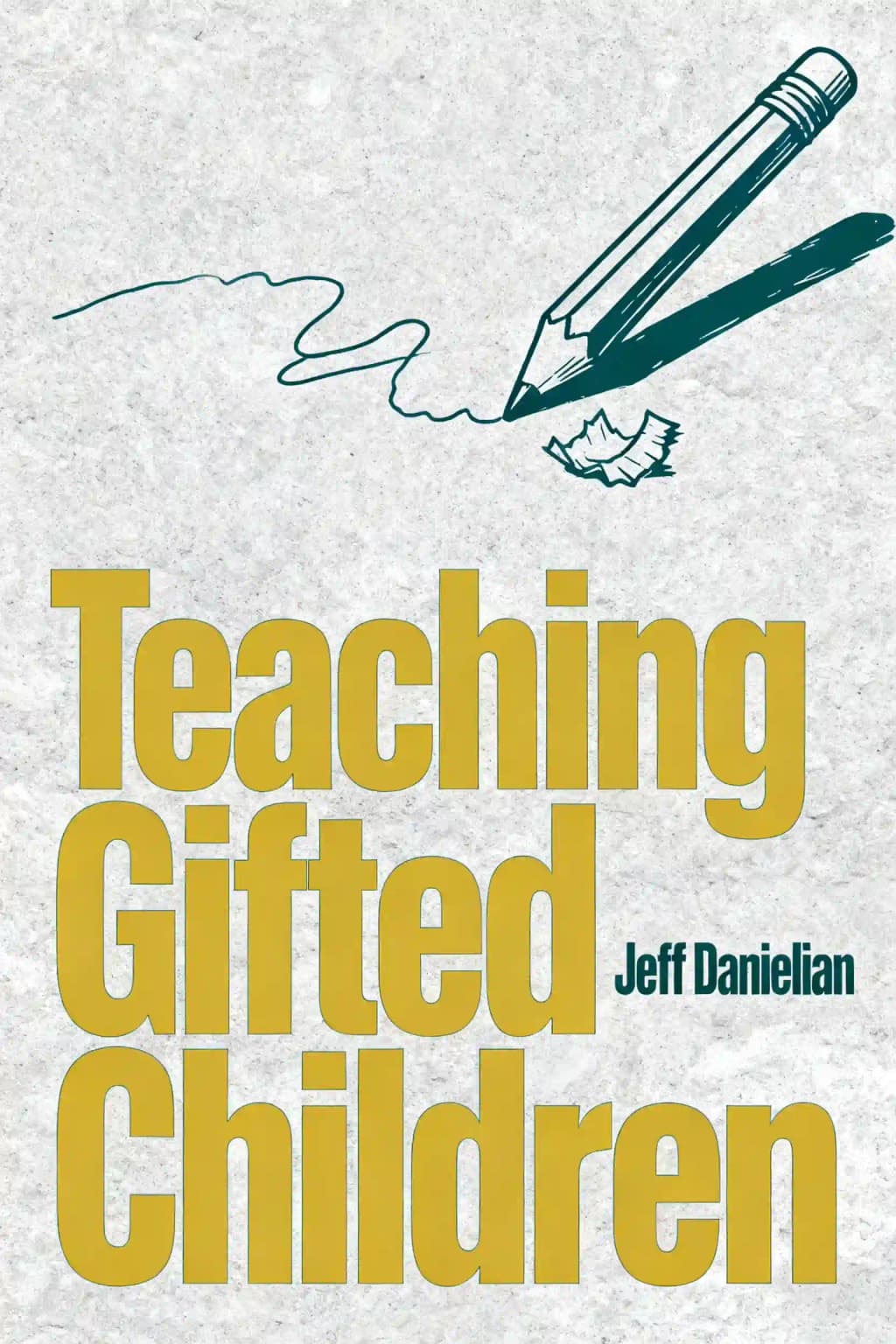
Teaching Gifted Children
Success Strategies for Teaching High-Ability Learners
Überblick über Teaching Gifted Children
The definitive guide for nurturing exceptional minds, "Teaching Gifted Children" equips educators with strategies for high-ability learners, including underrepresented groups. Called "exceptionally well organized" by Midwest Book Review, it revolutionizes classroom approaches through innovative concepts like Makerspaces and growth mindset development.
Kernthemen in Teaching Gifted Children
- talent development framework
- social-emotional needs
- classroom differentiation strategies
- domain-specific identification
- psychosocial skill development
Zitate aus Teaching Gifted Children
Gifted education exists to address students' unique social-emotional challenges.
It's not just about doing more work or doing it faster.
Organization matters more than expense.
I realized there wasn't anything wrong with me.
Personen in Teaching Gifted Children
- Jeff DanielianEditor and expert in gifted education
- C. Matthew FugateCo-editor and contributor to the guide
- Elizabeth FogartyCo-editor and specialist in gifted education
Über den Autor
Über den Autor von Teaching Gifted Children
Jeff Danielian, author of Teaching Gifted Children: Success Strategies for Teaching High-Ability Learners, is an educator and author specializing in gifted education and curriculum development.
A middle school natural science teacher in Providence, Rhode Island, he holds a bachelor’s degree in natural science from Lyndon State College and has dedicated his career to advancing strategies for nurturing high-ability students. His work blends practical classroom experience with research-backed methods, reflected in this comprehensive guide for educators, which has been praised as a "magnificent anthology of gifted research and teaching strategies" by MiddleWeb.
Danielian has co-authored The Reel Classroom and edited Enriching the Young Naturalist, alongside contributing to professional development programs accessible on digital platforms. His writing emphasizes real-world application, offering tools for lesson enhancement and curriculum design.
Teaching Gifted Children is recommended by educators and institutions globally, lauded for its actionable insights and adaptability across diverse classroom settings. The book has been widely adopted in gifted education programs and remains a trusted resource for teachers seeking to unlock student potential.
Zusammenfassung von Teaching Gifted Children herunterladen
Erhalten Sie die Teaching Gifted Children-Zusammenfassung als kostenloses PDF oder EPUB. Drucken Sie es aus oder lesen Sie es jederzeit offline.
FAQ zu diesem Buch
Teaching Gifted Children provides evidence-based strategies for educating high-ability students, covering instructional methods, social-emotional support, and classroom differentiation. It addresses STEM integration, growth mindset development, and combating underachievement, with insights from Danielian’s experience as a gifted education specialist and editor of Teaching for High Potential.
This book is ideal for K-12 educators, curriculum developers, and parents seeking research-backed methods to nurture gifted learners. Administrators and policymakers will also benefit from its frameworks for identification, equity-focused practices, and addressing twice-exceptional students’ needs.
Yes—praised as “exceptionally well organized and presented” by the Midwest Book Review, it combines academic rigor with actionable strategies. It’s particularly valuable for its focus on modern challenges like Makerspaces, underrepresented populations, and balancing academic rigor with emotional support.
Danielian emphasizes differentiated instruction, growth mindset cultivation, and project-based STEM learning. He advocates for using multiple intelligences theory to tailor curricula and introduces practical tools like vocabulary-building exercises and math engagement techniques.
The book dedicates chapters to perfectionism, idealism, and asynchronous development in gifted youth. Danielian provides strategies for fostering resilience, including mindfulness practices and peer collaboration models that align with gifted students’ heightened sensitivities.
He critiques overreliance on standardized testing and advocates for multidimensional assessments. The book highlights methods to recognize potential in twice-exceptional learners and underrepresented groups through observational checklists and portfolio evaluations.
Danielian promotes hands-on, inquiry-based STEM lessons tied to real-world problems. He provides templates for interdisciplinary projects and emphasizes leveraging gifted students’ natural curiosity through open-ended challenges.
Key strategies include:
- Tiered assignments with adjustable complexity
- Socratic seminars for critical thinking
- Makerspace integration for creative problem-solving
- Curriculum compacting to avoid skill repetition
The book links underachievement to mismatched curricula and emotional disengagement. Solutions include interest-based learning contracts, mentorship programs, and “passion projects” that reconnect students with intrinsic motivations.
While praised for comprehensive theory, some educators note a need for more grade-specific examples. Danielian balances this by including case studies across K-12 settings and modifiable templates for different age groups.
Danielian provides frameworks for identifying potential in ESL learners, low-income students, and neurodivergent populations. The book includes cultural competency guidelines and partnership models for school-community collaboration.
Blending 20+ years as a classroom teacher and NAGC resource specialist, Danielian merges academic research with poetic sensitivity—evident in his emphasis on nurturing creativity alongside academic rigor.