Kapitel 1
A Dance with Death: Love and Sacrifice in a World of Gods and Monsters
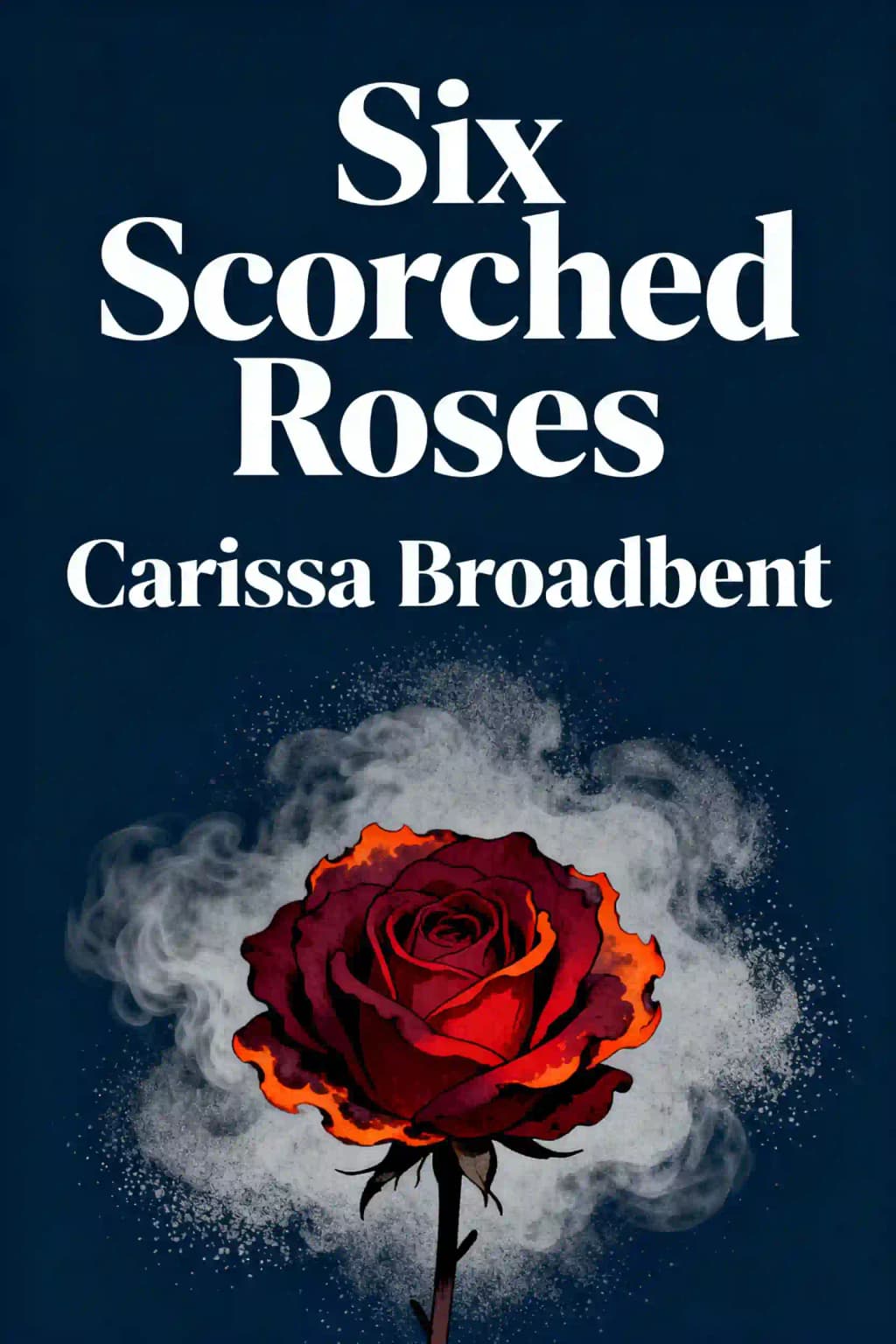
In a literary landscape saturated with vampire tales, Carissa Broadbent's "Six Scorched Roses" stands apart as a haunting exploration of mortality, sacrifice, and unexpected connection. This dark fantasy novella has developed a devoted following since its release, with readers particularly drawn to its complex, flawed protagonists. The book serves as an entryway to Broadbent's larger Crowns of Nyaxia universe, which has been praised by fantasy reviewers for its intricate world-building and emotional depth. Celebrities like BookTok influencer Ayman Chaudhary have championed the series, calling it "the perfect blend of darkness and romance." What makes this story particularly compelling is how it subverts traditional vampire romance tropes, placing a terminally ill protagonist at its center who views death not as an enemy, but as an old acquaintance finally coming to collect its due.
Kapitel 2
When Death Becomes a Companion: Lilith's Lifelong Struggle
Death has been Lilith's shadow since birth, when she nearly didn't take her first breath. The silence before her first cry-a moment her father once described as the worst sound in the world-marked the beginning of her tenuous relationship with mortality. Death continued its vigil when her mother died giving birth to her sister Mina, and again when a healer noticed Lilith's troubled breathing, revealing she wouldn't live long.
But the third encounter with death came not for Lilith herself, but for her entire community. The town of Adcova, once blessed by Vitarus, the God of Abundance, fell under a devastating curse after Lilith's father dared to curse the deity following a frost that destroyed their crops. The divine retribution manifested as a plague that began with her father and slowly consumed the town over fifteen years. The disease was horrific-turning skin to dust, stealing breath from lungs and blood from veins.
Despite dedicating herself to medicine and developing countless remedies, Lilith could only slow the inevitable. The disease continued claiming lives, coming for everyone in the end. This reality shaped Lilith's entire existence-knowing her own death approached while watching her community slowly crumble around her.
What makes Lilith's character so compelling is her pragmatic approach to her circumstances. Rather than wallowing in self-pity, she channels her limited time into purpose, meticulously organizing her workspace so anyone could continue her work after she's gone. In a mostly barren greenhouse, she tends to the only flourishing patch-black roses outlined in red, strange blooms that seem to defy the death surrounding them.
When we first meet Lilith, she's preparing for a desperate gamble. Outside her home, her sister Mina sits wrapped in a blanket, her skin already showing signs of the disease as flesh-colored dust settles around her. Unable to express her love directly or reveal her true intentions, Lilith simply promises to return soon from her "errands." Her inability to embrace her sister-fearing such tenderness might prevent her from leaving-reveals the emotional walls she's built. For Lilith, love is not expressed through words or touch, but through relentless action and sacrifice.
Kapitel 3
The Vampire and the Dying Girl: An Unlikely Alliance
Lilith's desperate quest leads her to Vale, a centuries-old vampire living in isolation in a grand mansion. Their initial interaction establishes the fundamental tension that will define their relationship-Lilith's urgent hunger for knowledge versus Vale's jaded immortal perspective. After drawing his blood for her experiments, Lilith explores his surroundings with undisguised fascination, noting ancient books carelessly stored in dusty corners.
When she asks what will become of his possessions when he dies, Vale dismissively claims immortality, though Lilith quickly corrects him that he's merely long-lived. This exchange reveals their opposing worldviews-Vale insists knowledge becomes meaningless after centuries, while Lilith, with her limited time, cannot fathom ever finding it worthless. When she presses him on what truly matters, Vale answers with a predatory smile revealing his fangs: "Curiosity." This moment offers the first glimpse of the monster beneath his civilized veneer.
Their dynamic is immediately compelling because they approach each other from opposite ends of mortality's spectrum. Lilith values every moment because she has so few remaining, while Vale's endless existence has left him detached and cynical. Yet they share an intellectual curiosity that forms the foundation of their unlikely connection.
When Lilith returns home with Vale's blood, she locks herself in her office to examine it with a magical seeing lens. Rather than finding death, she discovers unexpected beauty-his blood appears like "a field of red-black flower petals" moving in "slow constellations," both different from human blood yet somehow familiar. This discovery represents the first hint that Vale might offer more than just knowledge-he might hold the key to salvation.
As Lilith continues her desperate research, she maintains emotional distance from her deteriorating sister, justifying her coldness as necessary: "My love gave my sister nothing. But my work gave her a chance." This painful rationalization reveals how thoroughly Lilith has subordinated emotional connection to practical action, believing herself incapable of offering both simultaneously.
Kapitel 4
The Price of Hope: Moral Compromises and Unexpected Connections
Lilith's desperate search for a cure leads her to make increasingly dangerous choices. When her colleague Farrow discovers she's working with vampire blood, he's horrified, grabbing her arm and demanding answers. His concern reveals both his feelings for Lilith and the taboo nature of her actions. Lilith defends herself, explaining that after ten years of failed religious and magical remedies, she has no choice but to venture into darker territory.
Farrow tenderly asks her to stay, offering to help find another solution, but Lilith refuses his affection. She knows it would be unfair to let him love someone who will soon be gone-another instance of her pushing away emotional connection to focus on her mission. Despite his pleas, Lilith returns to Vale's mansion, believing they're already too deep in darkness to turn back.
As Lilith and Vale continue their research, their conversations reveal more about vampire nature and Vale's past. He explains he was Born, not Turned-an important distinction in vampire society. Born vampires are considered superior because Turned vampires retain "the taint of humanity" in their blood. When Lilith suggests that surviving the dangerous Turning process might actually make them the strongest vampires, Vale seems conflicted, as if he'd never considered this perspective.
This exchange highlights one of the novel's strengths-Lilith's ability to challenge Vale's centuries-old assumptions with her fresh perspective. Despite her limited lifespan, or perhaps because of it, she sees possibilities that Vale's jaded immortality has blinded him to.
Vale gradually reveals more about his past, explaining he left his homeland of Obitraes when his clan, the feather-winged Rishan vampires, lost power to the bat-winged Hiaj two hundred years ago. As he walks Lilith through his mansion, freely sharing knowledge about his artifacts and paintings, they experience a rare moment of genuine connection. For perhaps the first time in her life, Lilith doesn't feel she has to work hard to bridge the gap between herself and another person.
This growing connection culminates in an unexpected moment when Vale offers Lilith to stay until morning, even suggesting she could share his bed. Though tempted, Lilith refuses to be "taken to bed in sheets still mussed from someone else's body" and firmly pushes him away. This interaction reveals both the growing attraction between them and Lilith's unwillingness to be treated as interchangeable or disposable.
Kapitel 5
Against Time: The Race for a Cure
For three weeks following their initial encounters, Lilith works relentlessly on her experiments with Vale's blood, barely sleeping or eating. Her singular focus is driven by Mina's rapidly deteriorating condition, whose blackening lips signal the plague's progression. Through countless trials and failures, including explosions and strange reactions, Lilith finally develops a potion that responds well to her tests.
When administered to a dying test rat, the concoction doesn't cure the animal but prevents its death, keeping it alive beyond its expected lifespan. Though the rat remains sickly, this small victory gives Lilith hope that she's moving in the right direction. The partial success perfectly encapsulates the novel's central theme-not the complete defeat of death, but the possibility of negotiating with it, of buying precious time.
As Mina's condition worsens, Lilith ventures out during a dangerous storm to seek more blood from Vale. Her journey illustrates the increasing risks she's willing to take, culminating in an attack by starving men who attempt to rob her. When they demand she remove her dress, Vale appears suddenly with magnificent silvery-white wings, slaughtering her attackers before Lilith loses consciousness from her injuries.
This dramatic rescue marks a turning point in their relationship. When Lilith awakens in Vale's home after being unconscious for three days, their dynamic has shifted. Vale has tended her wounds and seems genuinely confused by what he perceives as her strength, calling her "infallible" in their previous encounters. This makes Lilith laugh, as she considers herself "the very definition of fallible." The moment humanizes both characters-revealing Vale's capacity for care and Lilith's awareness of her own limitations.
During her recovery, Vale brings Lilith books to keep her occupied, though they're all in Obitraen, a language she doesn't understand. When she suggests he read them to her, he reluctantly agrees. Despite his initial grumbling, he reads the vampire histories with enthusiasm, his voice "smooth and deep." This intimate intellectual exchange deepens their connection beyond the purely transactional relationship they initially established.
As Lilith explores Vale's mansion, she discovers a room filled with weapons-swords, armor, axes, and bows-some stained with blood. Vale reveals he was once the third-best general in the House of Night, keeping these weapons to prevent them being used in someone else's war. This revelation adds complexity to his character, suggesting a past filled with violence but also a desire to prevent further bloodshed.
Kapitel 6
When Worlds Collide: Faith, Science, and Sacrifice
Just as Lilith and Vale make a breakthrough in their research, their fragile alliance is threatened by external forces. Farrow arrives at Lilith's door in a panic, warning that zealots from the town are coming for Vale, believing that killing him will end the plague. This development introduces the novel's exploration of religious fanaticism and how desperation can twist faith into violence.
Lilith makes the difficult decision to send Mina away with Farrow while she rushes to warn Vale. Her choice to protect Vale over staying with her sister represents a significant shift in her priorities. When she arrives at Vale's estate, she finds a scene of carnage-blood everywhere, bodies strewn across the property. Most of it is human blood, but the black streaks mixed in fill her with dread.
She discovers Vale has killed Thomassen, a high-ranking acolyte of Vitarus, an act that could bring divine wrath upon them all. This violence escalates the stakes dramatically-they've now committed a sacrilege against the very god whose curse they're trying to break.
As Vale collapses from his wounds, Lilith sends Farrow back to town with her medicine bag, convinced the cure works despite her doubts. After Farrow leaves, Lilith burns the bodies at Vale's insistence, then helps him to his bedroom where she treats his wounds with magical potions.
During this intimate moment of care, Vale reveals he'd decided to return to Obitraes, to the House of Night he once helped build. But something has changed: "I thought I would be happy to go home," he admits, "but perhaps they want some part of me I have already given to someone else." This confession suggests Vale has developed feelings for Lilith that complicate his previous plans.
The emotional tension culminates when Vale asks why Lilith came to save him. Though she initially lies that her work isn't done, Vale's use of her name-"Look at me, Lilith"-breaks through her defenses. In a moment of raw vulnerability, Lilith confesses her terminal illness-"I'm dying"-expecting Vale to pull away. Instead, he holds her face firmly and offers the words she's waited a lifetime to hear: "Whatever you wish to give me, I'll have it."
This acceptance of Lilith's limitations-taking only what she can offer without demanding more-represents a profound shift from all her previous relationships. In this moment of acceptance, Lilith chooses connection over isolation, pulling Vale close and kissing him.
Kapitel 7
Divine Intervention: The God's Bargain
The romantic development between Lilith and Vale is interrupted by a divine crisis. After their night together, they discover the sky over Adcova is warped, with clouds circling in unnatural swirls, cradling fragments of bright yellow light-a sign that Vitarus has noticed their transgressions.
Despite Vale's offer to help or even take Lilith away with him, she insists on facing the consequences alone. Her return to Adcova reveals the full extent of the divine intervention-Vitarus himself has manifested, confronting Mina in the fields surrounded by wild rosebushes.
The god's appearance is both beautiful and terrible, with shifting hair and eyes like "sunshine on wheat fields," bronze skin, and a shimmering white mist. His divine touch against Lilith's skin sends fever through her, and she notices his hands embody both decay and abundance-one mottled and crawling with insects, the other rich with soil and sprouting green.
This duality perfectly represents the novel's central theme-the inseparable nature of life and death, growth and decay. When Lilith begs him not to harm the innocent townsfolk, Vitarus is perplexed by her concept of "enough suffering," revealing the vast gulf between human and divine perspectives.
The confrontation leads to a shocking revelation-Lilith's father once made a bargain with Vitarus. The strange roses weren't just markers of divine presence; they were payment for that deal. Vitarus explains that her father traded for fertile soil but never lived to see the roses bloom after his death. Most disturbing of all, Lilith's unnaturally extended life was part of that bargain too-she had been living on borrowed time all along.
This revelation recontextualizes Lilith's entire existence. Her lifelong struggle with illness wasn't just bad luck or natural disease; it was the result of divine manipulation, a debt that would eventually come due.
With Vale approaching dangerously in the distance, Lilith desperately proposes terminating her father's deal. She offers Vitarus soil, flowers, and finally herself-the three things her father bargained for. Vitarus accepts with a kiss that drains fifteen years of staved-off illness back into her body all at once. As he vanishes, Lilith collapses into the barren soil, death's embrace finally claiming her.
Kapitel 8
Between Life and Death: The Final Choice
Death's realm materializes before Lilith as an endless field of blackened flowers - a haunting destination she's managed to avoid for fifteen years since her first brush with mortality. Through the haze of her fading consciousness, she watches Mina's tears fall, those bright amber eyes clouded with grief. Lilith struggles to form words of comfort, but her throat produces only blood-bubbled breath, each attempt bringing forth another crimson rose petal.
Vale materializes like a shadow made solid, his presence both terrifying and comforting as he grips her hand with desperate strength. Between them lies a scorched rose, its petals curling inward as it withers - a symbol of her fleeting humanity. His voice cuts through the encroaching darkness with urgent clarity as he presents her with the ultimate choice: to embrace death's waiting arms or to be Turned, to join him in eternal night as a vampire. Unlike so many before her who faced this decision in confusion or fear, Lilith understands the full weight of what he offers.
This moment crystallizes everything in Lilith's journey - every choice, every loss, every triumph leading to this crossroads. Standing between Vale's immortal existence and death's cold embrace, she experiences a sudden, fierce revelation: she wants to live, with an intensity that surprises even her. The word "Yes" tears from her throat as death's skeletal fingers brush her skin. Vale's blood flows into her mouth, tasting of midnight and rose petals, sweet and metallic. She feels herself being pulled back from death's grasp, gasping into Vale's arms as a garden of withering roses surrounds them, marking her transition.
The metamorphosis from human to vampire proves excruciating - a rebirth through fire and shadow. Lilith drifts through a kaleidoscope of a million dreams: sun-dappled memories of her mother's garden, her father's rare smile, Mina's laughter echoing through childhood corridors. These peaceful visions intermingle with darker ones - torrid nights filled with blood and thorns, amber eyes watching from darkness, silver wings cutting through storm clouds. She dreams of drowning in roses, of breathing in petals instead of air, of blood replacing the tears she can no longer shed. Time loses all meaning, becoming a fluid thing that flows between past and future, life and death, agony and ecstasy.
When consciousness finally returns weeks later, Lilith awakens to a transformed existence. Her body feels like an instrument tuned to an entirely new frequency - her heartbeat thunders in her ears, every sense heightened to overwhelming intensity. Colors appear sharper, sounds clearer, even the air itself seems to carry new meaning. Vale stands watch by her bedside, his expression a mixture of concern and hope as he asks if she regrets her choice. Her response comes without hesitation: "No." This transformation transcends mere physical change - it represents a fundamental shift in her understanding of existence. Lilith has evolved from someone who merely accepted death's inevitability to someone who has chosen to embrace a different kind of life, one that exists in the spaces between traditional definitions of living and dying.
Kapitel 9
A New Beginning: From Dying to Living
The novel's resolution brings healing not just to Lilith but to her entire community. Vale explains that Adcova has escaped its curse, with no new cases reported and existing ones cured by their medicine. The bargain with Vitarus has been fulfilled, releasing the town from its divine punishment.
Mina appears vibrant and healthy, and the sisters embrace tearfully, finally understanding each other completely. Their reconciliation represents the healing of the emotional distance Lilith maintained throughout her illness. With death no longer standing between them, they can finally connect as equals.
In a touching role reversal, Mina insists Lilith should follow her dreams and go with Vale to Obitraes. "You've spent your whole damned life dying," she tells her sister. "Now you've gotten that out of the way, and you get to go live." This observation captures the novel's central irony-Lilith had to die to truly begin living.
As Lilith's strength gradually returns, she and Vale prepare for a new chapter. On their final night before departure, Vale comes to her room awkwardly, and Lilith presents him with her final promised rose-withered, crumbling, its petals disintegrating into dusty patches of black and faded red. Vale laughs, acknowledging their debt is now settled.
When he hesitates, uncertain in a way that seems unfamiliar to him, Lilith takes the initiative and kisses him. With her heightened vampire senses, she experiences him in a new way, losing herself completely in the sensation. Between kisses, Vale asks her to return with him to Obitraes and the House of Night, and Lilith answers without hesitation: "Yes."
When Vale warns her about returning to a nation at war, Lilith simply asks, "Do I seem like someone frightened of the unknown?" This question encapsulates her transformation-from a woman who accepted death's inevitability to one who embraces life's uncertainties.
As they wind themselves around each other, the withered rose petals spread around them like decaying dust-a visual reminder of the death Lilith has transcended. For the first time in her life, she feels utterly at ease, caught between unnatural life and rightful death, becoming everything they were meant to be.
Kapitel 10
The Roses' Legacy: Themes of Sacrifice and Renewal
"Six Scorched Roses" weaves together multiple thematic threads that give the story its emotional resonance. At its core, the novel explores the relationship between life and death not as opposites but as complementary forces. Vitarus's hands-one decaying, one flourishing-symbolize this duality, as do the roses themselves, which bloom vibrantly in otherwise barren soil.
The roses serve as a powerful multifaceted symbol throughout the narrative. They represent the bargain between Lilith's father and Vitarus, marking both divine blessing and curse. They track Lilith's journey from human to vampire, with the final withered rose symbolizing the completion of her transformation. And they embody the novel's central paradox-that beauty can emerge from decay, that life can spring from death's shadow.
Sacrifice stands as another central theme. Lilith sacrifices her own happiness and connection with others to search for a cure. Vale sacrifices his isolation and eventually offers Lilith a new life. Even Vitarus's curse stems from a sacrifice denied-the offerings Lilith's father refused to make after the failed harvest.
Perhaps most powerfully, the novel explores how mortality shapes our experience of life. Lilith's limited lifespan makes her value knowledge and action above all else, while Vale's immortality has led to detachment and cynicism. Their union represents a balance between these extremes-Vale learning to value connection again through Lilith's perspective, and Lilith gaining the time she needs to fully embrace life rather than merely fighting death.
Through its exploration of these themes, "Six Scorched Roses" transcends the typical vampire romance, offering a meditation on how we face our mortality and what gives life meaning in the shadow of inevitable death. The roses-scorched but still beautiful-remind us that even in darkness, something precious can bloom.