Kapitel 1
The Hunter Becomes the Hunted: A Modern Tale of Primal Instincts
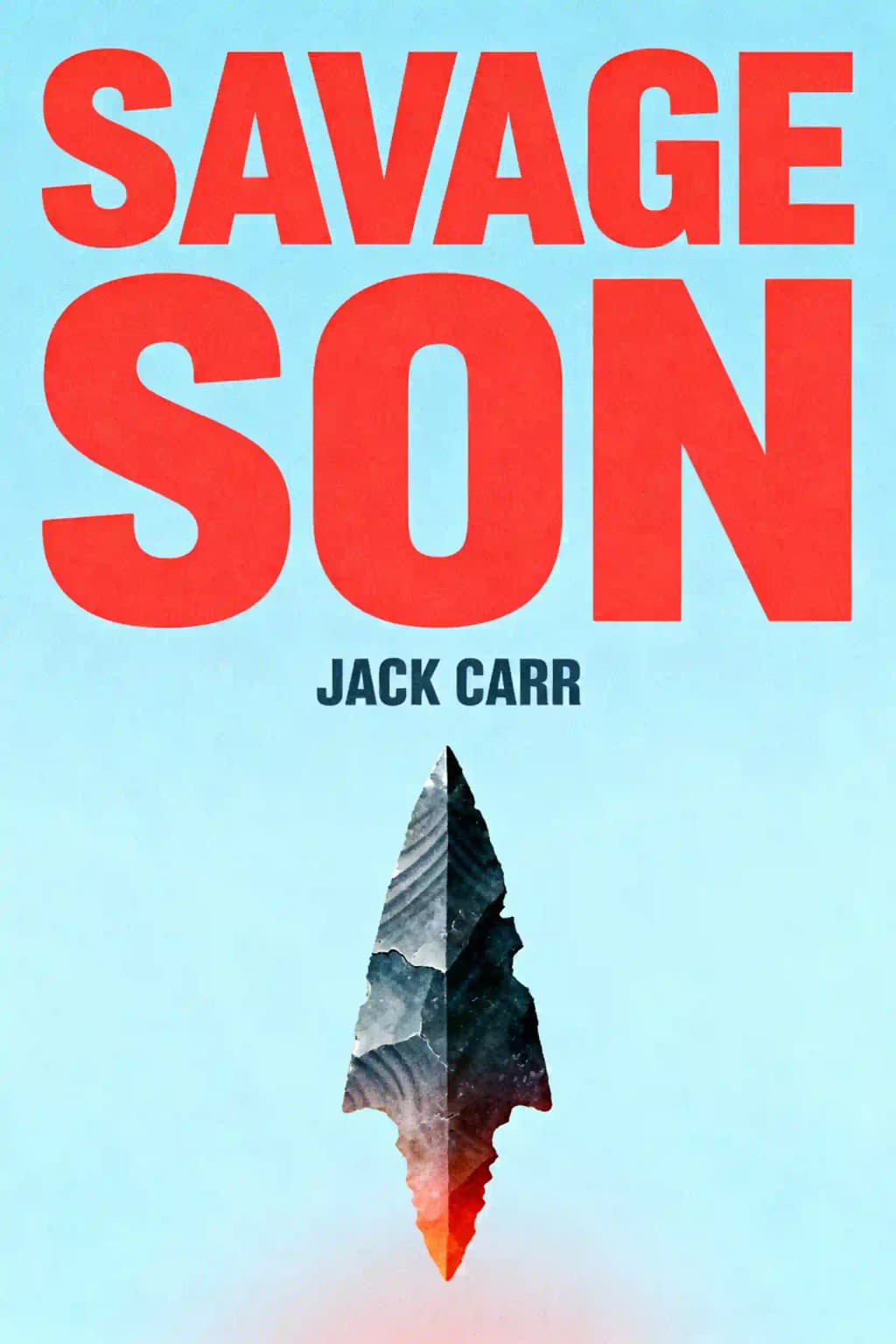
James Reece, a former Navy SEAL turned CIA operative, has become one of the most compelling characters in modern thriller fiction. Jack Carr's "Savage Son" follows Reece as he navigates the aftermath of brain tumor surgery while being drawn into a deadly game of hunter versus hunted. This third installment in Carr's bestselling series has garnered praise from Tom Clancy fans and military veterans alike, with Brad Thor calling it "one of the best thrillers of the year." The book draws inspiration from Richard Connell's classic "The Most Dangerous Game," exploring humanity's primal hunting instincts through the lens of modern warfare. As a #1 New York Times bestseller that Stephen King praised as "terrifically paced and plotted," Savage Son continues to captivate readers with its authentic portrayal of special operations and the psychological depths of those who've experienced combat firsthand.
Kapitel 2
Healing and Homecoming: The Warrior at Rest
After undergoing complex brain surgery to remove a life-threatening tumor, James Reece finds himself in Montana's breathtaking Flathead Valley, where towering pines meet crystal-clear waters. His former SEAL teammate and college friend Raife Hastings has prepared a lakeside cabin as his new home - a gesture that leaves Reece momentarily speechless, a rare display of vulnerability for the hardened warrior. Inside the cabin hangs his late father's prized six-point elk mount above the native stone fireplace, a thoughtful connection to his past that visibly moves him. The mount, weathered but dignified, serves as a bridge between his childhood memories and present reality.
The cabin, with its hand-hewn logs and wraparound porch, represents more than just shelter; it's a potential sanctuary for a man who never expected to survive his mission of vengeance. Having lost his pregnant wife Lauren and young daughter Lucy to a far-reaching conspiracy he's since dismantled, Reece now faces an unexpected future filled with both possibility and pain. His friend Katie Buranek, an investigative journalist who stayed steadfast by his side during his grueling recovery, represents a possible second chance at happiness - though the weight of his past makes every step forward a conscious choice.
Yet even in this peaceful setting, where ospreys dive for fish and elk graze in distant meadows, Reece remains perpetually vigilant. He carries his SIG P320 X-Compact everywhere, maintaining the practiced awareness of a trained operator. Behind his Land Cruiser's seat sits a carefully maintained Daniel Defense MK12 rifle with suppressor, cleaned weekly and ready for action. "Trouble seems to find you," Raife explains with knowing understatement, reflecting their shared understanding of how violence can pierce even the most tranquil facade. This delicate balance between peace and preparedness defines Reece's existence - a warrior temporarily at rest but never truly at ease.
During quiet evenings by the lake, where the water reflects the Montana sunset in brilliant oranges and purples, Reece often sits with an empty chair beside him, a poignant reminder of the family he lost. These moments of solitude reveal the depth of his grief, particularly when he makes his regular pilgrimages to Arlington National Cemetery. There, among the endless rows of white stones, he whispers to his parents' graves, asking them to watch over his wife and daughter until he can join them. Despite his formidable physical presence and tactical expertise, these private moments expose the raw emotional wounds that continue to shape his actions and drive his relentless pursuit of justice. The cabin may offer refuge, but true peace remains elusive for a man carrying such profound loss.
Kapitel 3
The Russian Connection: A Web of Intelligence and Crime
In the shadows of post-Soviet Russia, the lines between intelligence services and organized crime have blurred beyond recognition. At the center of this murky alliance stands the Zharkov family - Ivan, the powerful Vor v Zakone (crime boss) of the Russian mafia, and his son Aleksandr, deputy director of Directorate S in Russian intelligence. While Ivan built his criminal empire through traditional means like extortion, smuggling, and strategic violence, Aleksandr climbed the SVR ladder through countless third-world postings across Southeast Asia and Africa, creating a dangerous fusion of state power and criminal enterprise. Their dual spheres of influence encompass everything from oil and gas operations to human trafficking networks stretching from Moscow to Berlin.
Aleksandr's position in Directorate S - which handles illegal intelligence operations including sleeper agents - gives him unprecedented access to create false identities and produce legitimate Russian passports. His department maintains a vast network of safe houses across Europe and operates front companies in dozens of countries. Despite Western beliefs that the Russian threat ended with the Soviet Union's collapse, the SVR has more sleeper agents embedded throughout the United States and Europe than during the Cold War. These modern agents blend seamlessly into Western society, often working in technology firms, financial institutions, and defense contractors.
The relationship between Russian intelligence and organized crime predates their Sicilian counterparts by almost a century, with the bratva embedded in state affairs since the czars. During the Soviet era, vor v zakone worked as unofficial enforcers for the KGB, while intelligence officers provided protection for criminal enterprises. This unholy alliance allows figures like Oliver Grey, a disgraced former CIA officer, to find sanctuary in Russia after betraying his country. Grey offers his services to Ivan Zharkov, providing intelligence on FBI and CIA informants within the organization while harboring his own vendetta against James Reece. His knowledge of Western intelligence procedures makes him particularly valuable to the Zharkovs' operations.
Grey's obsession with finding Reece consumes him, transforming his office into a war room of surveillance data and intelligence reports. Working from an office at Petersburg Petroleum Company - a publicly traded company controlled by Zharkov that serves as a front for money laundering operations - he methodically searches for any trace of Reece, covering his whiteboard with an algorithm of names, places, and dates from Reece's past. His investigation spans multiple continents, tracking financial transactions, surveillance footage, and communications intercepts. When he finally discovers a promising lead through Flathead Bank & Trust, identifying regular payments to a company owned by Jonathan Hastings in Montana, Grey believes he's found his target at last. The wheels of a deadly international plot begin turning, drawing Reece back into a world of violence he thought he'd left behind. Grey's discovery sets in motion a complex operation involving both Russian intelligence assets and criminal elements, all converging on the remote wilderness of Montana.
Kapitel 4
The Darkness Within: Aleksandr's Deadly Obsession
Behind Aleksandr Zharkov's polished exterior as a Russian intelligence official lies a predator whose appetites extend far beyond normal human experience. His journey into darkness began in childhood, when he discovered his mother's suicide with disturbing curiosity rather than shock. While other children might have been traumatized, young Aleksandr meticulously examined the scene, noting the precise angle of the gun, the spray pattern of blood, and the way her fingers still clutched the weapon - details he would later recall with unsettling clarity. Though outwardly perfect - bright, handsome, and socially adept - young Aleksandr harbored a darkness that manifested in calculated cruelty toward his younger brothers, orchestrating "accidents" that left them terrified but unable to prove his involvement.
Ivan's fears crystallized during their first hunt together when ten-year-old Aleksandr was given his grandfather's engraved Mauser rifle - a family heirloom that should have represented tradition and responsibility. After shooting a moose, the boy stood watching the animal suffer in agony, smiling at its pain and deliberately preventing his father from approaching. When Ivan finally pushed past him and mercifully ended the animal's suffering with a shot to the chest, he was chilled by the hatred burning in his son's eyes - a memory that would haunt him through sleepless nights for decades to come.
As an adult, Aleksandr's perversions evolved during his SVR training in sexpionage, where he discovered his pleasure in inflicting pain after nearly killing a female student during a role-playing exercise. The incident revealed not just violence but calculated sadism - he had carefully planned each moment to maximize her terror while maintaining plausible deniability. Only his father's considerable political influence saved his career, though whispers of his brutality followed him through the ranks. His international postings became elaborate hunting grounds - first for exotic animals, then for prostitutes whom he murdered with impunity, each kill more elaborate than the last.
When ordinary prey lost its appeal, Aleksandr discovered the ultimate thrill: hunting humans. In Myanmar, during a remote posting, he orchestrated his first formal human hunt. A village woman accused of infidelity was released barefoot into the jungle at midnight, given only a twelve-hour head start. By lunchtime, his trained hunting dogs had her trapped in a towering banyan tree. Aleksandr refused the offered gun, preferring the intimacy of a machete. After knocking her unconscious with precisely aimed stones, he awakened her with a calculated slash across her thigh before slowly driving the blade into her chest, pressing his palm against the handle to feel her heart's final desperate beats through the weapon.
This escalating pattern of violence culminated in his establishment of a sophisticated hunting operation on remote Medny Island in the Bering Sea. There, Aleksandr imports carefully selected humans to hunt for sport - the ultimate expression of his sadistic nature. The island, with its isolation and harsh terrain, provides the perfect backdrop for his twisted games. Victims are given what he mockingly calls a "sporting chance" - basic supplies and a head start against a predator who has spent a lifetime perfecting the art of the kill. He's created an elaborate compound complete with holding cells, a trophy room, and high-tech surveillance systems to track his prey across the island's unforgiving landscape.
Kapitel 5
The Ambush: When Predators Become Prey
After spending a perfect weekend with Katie at his Montana cabin, Reece prepares for a day trip to Glacier National Park. As they drive his Land Cruiser down a winding mountain road, Reece's phone connects to service, delivering a frantic warning from his CIA handler Vic Rodriguez about an imminent Russian attack. With combat-honed instincts, Reece immediately spots the ambush setup-a woman with apparent car trouble and a helpful local-and narrowly escapes when bullets shatter his rear window.
Meanwhile, Raife Hastings is bow hunting on the property, tracking a massive buck through the valley. Having left his radio behind with his pack, he remains unaware of the danger until the deer bolts upright, sensing something wrong. In an instant, Raife transforms from hunter to warrior as rifle rounds erupt around him. He abandons his bow, draws his Colt 1911, and dives behind a fallen ponderosa pine.
Back at the main house, Caroline Hastings transforms from western Martha Stewart to battle-hardened warrior, drawing on her experiences defending homesteads in Rhodesia. With military precision, she distributes weapons to her impromptu fire team-giving Thorn an AR-15, Liz a scoped AR, Annika a shotgun, and Katie an AR with an Aimpoint. Taking position at a dormer window with her trusted Brno rifle chambered in .375 H&H, Caroline ambushes the approaching attackers.
The coordinated attack on multiple fronts reveals a sophisticated operation targeting not just Reece but the entire Hastings family. Jonathan Hastings emerges armed with his wartime FAL rifle and chest rig, immediately taking command of the situation. He joins Reece with his dog Zulu to find Raife, racing toward the sound of gunfire.
In the ensuing firefight, the Hastings family and their guests demonstrate why they are not to be underestimated. Despite being outnumbered and surprised, their military backgrounds and combat experience allow them to repel the attack, though not without casualties. The ambush marks a turning point-transforming what had been Reece's peaceful recovery into a renewed mission of survival and vengeance against an enemy who has brought war to his doorstep.
Kapitel 6
Uncovering the Conspiracy: From Montana to Moscow
In the aftermath of the attack, Reece captures a wounded Russian prisoner and takes him to Senator Thornton's remote cabin for interrogation. Using brutal methods, he extracts crucial information: Oliver Grey works for the Russian mafia under Ivan Zharkov, whose son Aleksandr-an SVR director who betrayed his father's assassination plan-hunts humans for sport on Medny Island in the Bering Sea.
Meanwhile, CIA officer Vic Rodriguez arrives at the Hastings ranch, having made calls citing national security concerns to keep the media away. He informs Reece that Russian intelligence officer Aleksandr Zharkov had actually warned them of the attack-a puzzling contradiction that suggests deeper motives. Vic suspects the attack is connected to their elimination of Colonel Andrenov in Switzerland, a mission that had put them in conflict with Russian interests.
The situation takes a devastating turn when news arrives that Raife's sister Hanna has been kidnapped in Romania by suspected Russian intelligence operatives. Tracking data shows she was transported through Moldova, Ukraine, and into Russian territory before being flown to a remote naval air station in Kamchatka-ultimately destined for Medny Island.
When Reece proposes a rescue mission, he encounters resistance from an unexpected source. Reginald Pyne, President Grimes' chief of staff and former tobacco industry defender, refuses to authorize any operation, claiming it could start "World War III." He forbids CIA Director Janice Motley from even briefing the president on the situation.
This political obstruction reveals another layer of the conspiracy-someone in Washington is protecting Russian interests. Pyne later meets with Grant Larue, a lobbyist for Russian interests, revealing that he deliberately blocked the CIA rescue mission and warning that former special operations personnel might attempt their own rescue. He insists that Larue's Russian contacts eliminate the Hastings siblings and dispose of their bodies completely.
With official channels blocked, Reece realizes he must take matters into his own hands. The conspiracy has expanded from a simple assassination attempt to an international web involving the highest levels of both Russian and American government-with innocent lives hanging in the balance.
Kapitel 7
The Warrior Guardians: Brothers in Arms
When official channels fail, Reece turns to the brotherhood forged in combat. At Kumba Ranch in Montana's Flathead Valley, he assembles a team of former special operators-men who understand that some missions transcend government authority when lives are at stake.
The team includes "Farkus" Fleming, a free-fall parachuting expert who specialized in reconnaissance missions; Devan Blanding, who travels with his Belgian Malinois service dog Edo; and Lawrence "Chavez y Chavez" Chiaverini, a master knife maker who once attempted to scalp an Iraqi commander he suspected of betrayal. Each brings unique skills honed in the world's most dangerous places.
These men represent what Raife calls the "Warrior/Guardians" network-hardened operators who've found purpose after military service by helping others. Raife's own outfitting business employs fellow special operations veterans, connecting successful businessmen with former operators to ease their transition to civilian life.
When Jonathan Hastings offers each team member $200,000 for the rescue mission, Chavez suggests his payment go to the special needs child of their fallen comrade Freddy Strain instead, with the others quickly following suit. "The Warrior Guardians," Reece suggests as the name for the donation-crystallizing their identity as protectors who operate outside official channels when justice demands it.
The gravity of their mission settles over the room as they prepare for their dawn launch. They understand the stakes-entering Russian territory without government backing means no rescue if things go wrong. Yet they move forward, driven by loyalty to their brother Raife and his sister Hanna, embodying the special operations ethos that no one gets left behind.
This makeshift team represents something powerful-the idea that true warriors never truly retire, that the skills honed in service can be directed toward justice when institutions fail, and that the bonds formed in combat create obligations that transcend national boundaries and political considerations. As they board Thorn's Gulfstream G550 with their specialized gear and weapons, they carry with them not just the tools of war but the moral certainty that their cause is just.
Kapitel 8
Into the Heart of Darkness: The Final Hunt
After a high-altitude jump into Russian territory goes catastrophically wrong when an electromagnetic pulse disables their equipment, Reece's team finds themselves in a desperate battle against Aleksandr's security forces. Using flares to illuminate the night and their superior training to overcome technological disadvantages, they eliminate the Russian contractors and discover the horrifying truth at Aleksandr's lodge-a prison containing African captives and, most disturbingly, a glass jar containing Hanna Hastings' severed head.
While his team rescues the prisoners, Reece pursues Aleksandr through the snow, determined to end the hunt once and for all. After brutal encounters with guard dogs and a massive Russian fighter that leave him bloodied but victorious, Reece tracks Aleksandr to a cliff edge where Raife has already engaged his sister's killer. The brothers-in-arms finally corner their prey, with Reece putting two arrows through Aleksandr's chest before the Russian falls into the surf below.
With Raife severely injured and their extraction window closed, they face the prospect of being stranded in enemy territory. In a moment of unexpected salvation, a diverted special operations team arrives to extract them. But Reece makes a fateful decision-he's not leaving. The man who killed his father, Oliver Grey, is nearby, and his mission isn't complete.
For six months, Reece moves like a ghost across Siberia, covering two thousand kilometers through the harsh wilderness. Villages spread rumors of a half-man, half-beast moving westward, taking what he needs and leaving offerings of fresh meat as payment. When he finally confronts Grey, the traitor attempts to bargain for his life by offering information about another target. Reece appears to consider it before detonating his final Claymore mine, obliterating the man who killed his father.
In a surprising turn, Reece forms an alliance with Ivan Zharkov, proposing that the Russian help him escape and gather intelligence while Reece offers a backchannel to the CIA. The practical arrangement, built on mutual respect and clear understanding of the consequences of betrayal, allows Reece to return to America while establishing a new connection that may serve future missions.
Six weeks after returning home, Reece visits a Baltimore storage facility, accessing a unit registered to his father. Inside, he discovers his father's 1985 Grand Wagoneer and a hidden safe-deposit box key with a sealed letter-a "message from the grave" that provides closure to one chapter while potentially opening another. As he sits in the old Wagoneer, reflecting on his journey and those lost along the way, Reece makes a call to the director of Clandestine Services, giving his answer about joining the Agency full-time.
The hunt has ended, but for James Reece, the warrior's path continues-driven by duty, shaped by loss, and guided by the primal instincts that connect modern operators to the hunters of ancient times.
Kapitel 9
The Thin Line Between Predator and Prey
"Savage Son" masterfully explores the razor-thin distinction between hunter and hunted, between warrior and killer. Throughout the narrative, characters repeatedly cross this boundary, transforming from one role to the other as circumstances demand. James Reece's journey exemplifies this fluid dynamic - beginning as potential prey while recovering from brain surgery, transitioning to the hunted during the brutal ambush at his Montana ranch, and ultimately emerging as the apex predator methodically tracking his enemies across the harsh Siberian wilderness. His transformation demonstrates how quickly these roles can reverse, often within the span of a single heartbeat or tactical decision.
This fluidity challenges our fundamental understanding of violence and its place in modern society. The "civilized" world maintains a complicated relationship with warriors - keeping them at arm's length during peacetime, yet desperately relying on their skills when crisis strikes. Contemporary society often struggles to reconcile its need for protectors with its discomfort regarding the violent nature of their work. As Carr suggests in his preface, our increasing disconnection from both hunting and self-defense may prove dangerously problematic when survival once again depends on these primal abilities.
The novel raises uncomfortable questions about human nature and our evolutionary heritage. Have we truly advanced beyond our primal instincts in our age of smartphones and climate-controlled environments? Or do we merely channel these ancient drives through different expressions - sports, competition, video games, and unfortunately, sometimes violence? Aleksandr embodies the darkest manifestation of these impulses, hunting humans for sport without moral restraint or ethical boundaries. His character serves as a mirror reflecting humanity's capacity for calculated cruelty. Reece, by contrast, directs his lethal skills toward protecting others and punishing those who prey on the innocent, demonstrating how similar capabilities can serve drastically different ends.
Perhaps most provocatively, the story suggests that the capacity for violence is not inherently evil but rather a neutral tool whose morality depends entirely on its application and intent. The same tracking skills that make Reece deadly in combat allow him to save innocent lives. The same hunting instincts that Aleksandr perverts for sadistic pleasure enable Reece to track and eliminate genuine threats to society. The novel forces readers to confront their own assumptions about violence and its role in maintaining civilization.
In the end, what separates the hero from the villain is not the capacity for violence but the moral framework governing its use. This distinction becomes particularly relevant in an era where violence is increasingly sanitized and distant from daily life. As civilization grows increasingly removed from its primal roots, "Savage Son" reminds us that understanding our darker nature - rather than denying or suppressing it - may be essential to preserving what makes us human in the first place. The book suggests that acknowledging our capacity for violence, while choosing to channel it ethically, represents a more mature approach than pretending such impulses don't exist.