Kapitel 1
The Art of Guiding Customers to "Yes": Transforming How We Sell
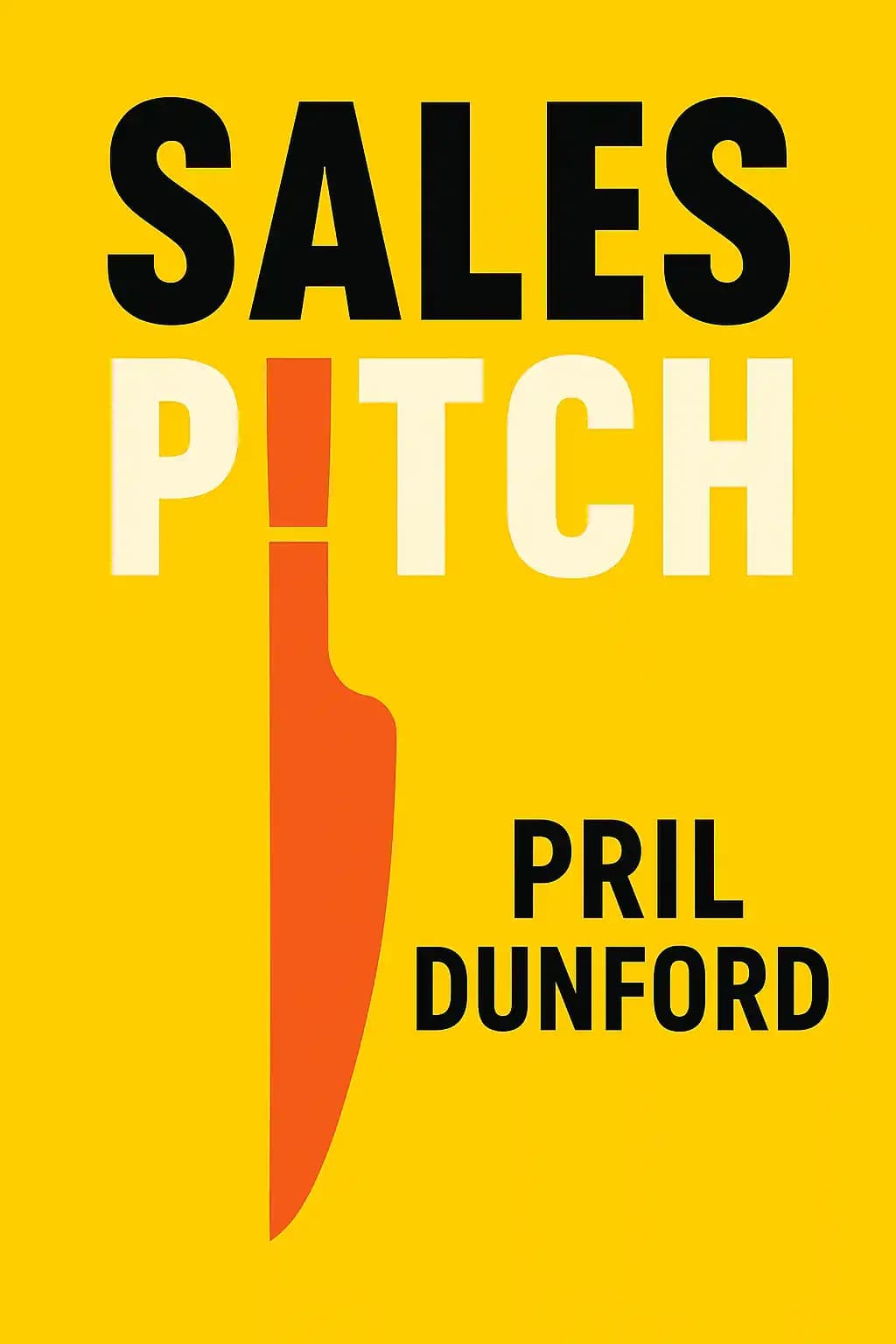
Ever walked into a store to buy what you thought was a simple product, only to find yourself drowning in options you didn't understand? That's exactly what happened to April Dunford when she tried to buy a toilet. After weeks of frustrating research and showroom visits, she was ready to give up-until a knowledgeable salesperson guided her decision in just fifteen minutes by simplifying her choice to three factors: quality, aesthetics, and space requirements. This experience crystallized what would become the foundation of her revolutionary approach to sales pitches: customers don't want to be sold to-they want to be guided through buying.
Dunford's book has become required reading in sales departments across Silicon Valley, with executives from Salesforce, HubSpot, and Shopify implementing her methodology. What makes her approach so powerful is that it flips traditional selling on its head, focusing not on pushing features but on educating customers about their options in a market they often don't fully understand. As the former VP of Marketing at several successful tech companies and consultant to over 200 organizations, Dunford's framework has consistently doubled sales conversion rates by addressing what she calls "the problem inside the problem"-customers' inability to make confident purchase decisions.
Kapitel 2
The Buying Dilemma: Why Customers Choose to Do Nothing
When Janet, a CFO, assigns her finance director Joey to find new accounting software, she's unknowingly setting him up for a frustrating experience. Joey faces 685 million Google search results, dozens of vendors on comparison sites, and conflicting analyst recommendations. Each sales rep he meets bombards him with features he doesn't understand, leaving him overwhelmed and confused.
This scenario plays out daily across businesses worldwide. The problem isn't that buyers don't want new solutions-it's that they lack confidence to choose between options. Research shows an astonishing 40-60% of B2B purchase processes end in no decision. Not because customers love their current solution, but because the status quo offers safety: nobody gets blamed, nobody faces training pain, and nobody risks the new system failing to deliver.
The irony is that we're drowning in information yet starving for insight. Buyers have access to more product details than ever before, but they struggle to make sense of it all. They don't know which features matter for their specific situation or how to evaluate competing claims. Without a framework for making confident decisions, the path of least resistance becomes doing nothing.
This dynamic creates an emotional dimension to B2B purchasing that many vendors miss. While consumer purchases often involve emotions like self-worth and status, B2B emotions center on fear-fear of failure, poor decisions, looking stupid, or even getting fired. Building trust and confidence becomes crucial in helping buyers overcome these fears.
"Most companies are so focused on selling their products that they forget their real job is helping customers buy," Dunford explains. "When you recognize that buying is harder than selling, everything about your approach changes."
Kapitel 3
What Buyers Really Want From Vendors
Many technology startups make a critical mistake: they assume helping customers buy isn't their job. They expect buyers to research independently, determine criteria, evaluate options, and make decisions without guidance. They think buyers don't want vendors' opinions on purchase decisions.
The reality couldn't be more different. Research from "The Challenger Sale" revealed that buyers value sales representatives who teach them something new about their business-not just those who understand their needs or build relationships. Specifically, buyers want vendors to help them understand available options, trade-offs between approaches, and potential pitfalls.
This insight reveals a fundamental truth: customers are experts in their pain points, but vendors are experts in solutions. While customers can articulate their problems and what they've tried before, they don't understand the market landscape like vendors do. As solution providers, we have deeper knowledge about what's possible, the underlying technology, and its potential applications.
Consider Help Scout, a customer service software company. When they shifted from simply demonstrating features to explaining how their solution fits within the broader market landscape-comparing their approach to alternatives and explaining why certain features matter for specific customer types-their sales effectiveness dramatically improved.
"Buyers don't just want products; they want perspective," Dunford notes. "They're looking for vendors who can help them make sense of a confusing market and guide them to the right decision-even if that decision isn't always to buy from you."
Kapitel 4
Building a Foundation: The Sales Pitch Principles
Before constructing an effective sales pitch, we need to understand what happens before and during that first critical call with a prospect. Four key elements determine success: qualification, discovery, product demonstrations, and differentiated value.
Qualification ensures you're not wasting time with prospects who aren't a good fit. This typically happens before the first sales meeting through questionnaires or calls with business development representatives. Only qualified prospects should proceed to a sales call.
Discovery occurs during the first sales call as a two-way conversation. The buyer teaches the seller about their pain points and situation, while the seller educates the buyer about their perspective on problems and solutions. Effective discovery aligns both parties on the problem's nature, solution evaluation criteria, and the value a perfect solution should deliver.
When it comes to product demonstrations, many companies make the mistake of showing everything in a standard walkthrough. Instead, always showcase your best capabilities-even if not specifically requested-as buyers often don't know what's possible. The CRM company for investment banks that always demonstrated their killer feature understood this principle well. Custom demos are better saved for follow-up meetings after you've established your core value proposition, and sometimes demos can be skipped entirely if prospects have already tried your product.
The most crucial yet least understood concept is differentiated value. Technical founders naturally focus on features, but customers care about business outcomes. For B2B products, you must explicitly connect features to benefits by answering the "So what?" question. Beyond general value, you win deals based on differentiated value-what you deliver that alternatives can't. A great sales pitch tells the story of unique value that only your product can provide.
"You can't differentiate yourself without addressing the alternatives," Dunford emphasizes. "A good sales pitch helps customers understand how to categorize competitors, their strengths and weaknesses for different buyers, and why your unique value matters specifically to them."
Kapitel 5
Common Storytelling Approaches and Their Limitations
Companies tell different stories for different audiences-employer stories for prospective employees, investor pitches for fundraising, and sales pitches for customers. Unlike future-focused investor pitches, effective sales pitches must be firmly oriented in the present, answering why customers should choose you over available alternatives today.
Most companies rely on one of four common storytelling approaches, each with significant limitations:
The Product Walkthrough works best with educated buyers familiar with similar solutions but focuses too much on features rather than value and differentiation. It assumes customers already understand how to evaluate options and can connect features to benefits themselves.
The Problem/Solution Pitch starts by describing customer problems before presenting the solution. This works when competing only against the status quo but falls short when competitors define problems the same way you do-which is almost always the case.
The Vision Narrative paints an exciting picture of the future, which works well for investors but is problematic for sales. It ignores current competitors, gives buyers reason to delay decisions, and isn't centered on differentiated value available today.
The Hero's Journey tells a compelling story about a customer who overcame challenges with your solution. While excellent for case studies, it lacks focus on decision-making criteria and comparing alternatives.
None of these approaches adequately helps customers understand their options, the trade-offs between alternatives, and why your solution is uniquely valuable for their specific situation. A more effective approach is needed.
Kapitel 6
The IBM Revelation: A Better Way to Structure Sales Pitches
Early in my career at IBM, I discovered something remarkable about their sales approach. Rather than starting pitches with company information or product features, IBM sales reps would begin by sharing their perspective on the market. They would discuss important considerations for evaluating solutions and how different approaches compared, effectively positioning their products while educating customers on making informed choices.
This approach was revolutionary because it simultaneously accomplished several goals: it established the sales rep as a knowledgeable guide rather than a pushy salesperson, it educated prospects about evaluation criteria that favored IBM's strengths, and it naturally led to discovery conversations about the prospect's specific situation.
When I applied these lessons at subsequent startups, restructuring pitches to begin with positioning setups and focusing demos on differentiated value, we doubled revenue. The key insight was that positioning shouldn't disappear when prospects move from marketing to sales-it should become even more prominent.
Most companies obsess over storytelling in marketing campaigns and materials, but when customers reach a sales meeting, that positioning vanishes. Instead of hearing what makes the product special and different, prospects face feature barrages and company history-a tremendous missed opportunity.
After extensive testing with over 200 technology companies ranging from early-stage startups to tech giants, I've refined a sales pitch structure that consistently drives growth. This structure helps customers understand all their choices, the trade-offs between options, and when your solution is the right pick.
Kapitel 7
The Eight-Step Sales Pitch Framework
A great sales pitch consists of two distinct phases: the setup and the follow-through. The setup focuses on market insights and competitive alternatives, while the follow-through showcases your specific solution's differentiated value.
The framework includes eight steps:
1. Insight: Frame the conversation with a unique market perspective that points to your differentiated value.
2. Alternatives: Help prospects understand their options and the pros/cons of different approaches.
3. The Perfect World: Outline the characteristics of an ideal solution based on the alternatives discussion.
4. Introduction: Briefly introduce your company and product within its market category.
5. Differentiated Value: Showcase the unique benefits only your solution can provide.
6. Proof: Demonstrate your capability through case studies and validation.
7. Objections: Optionally address common concerns before they're raised.
8. The Ask: Recommend clear next steps in the purchase process.
This structure works because it's built on solid positioning. Positioning defines your differentiated value and target buyer, which should be reflected in your sales narrative. The five components of positioning-Competitive Alternatives, Unique Capabilities, Differentiated Value, Best-Fit Customers, and Market Category-work together sequentially to create a compelling story about why your solution matters.
Before developing your sales pitch, you must thoroughly document your positioning as it serves as the critical foundation. For single-product companies, the pitch focus is straightforward. Multi-product companies typically give prospects a full company overview first, then use discovery to determine which specific products to focus on in follow-up conversations.
Kapitel 8
Crafting Your Unique Market Insight
The Insight step sets this sales pitch structure apart from others by leading with a perspective that reshapes how prospects view their challenges. Rather than starting with generic problem statements or jumping straight into product demos, begin with market insight that makes your differentiated value critically important to customers. This approach immediately establishes credibility, frames the customer's situation to highlight your unique value, and creates a natural transition to discussing alternatives.
Your insight represents "the problem inside the problem" - the key element prospects need to understand to fully grasp the importance of your differentiated value. For example, LevelJump's insight that sales enablement should measure impact on sales metrics (not just training completion) connects directly to their unique Salesforce integration that tracks how training affects metrics like time to first deal and time to quota. Another example is how HubSpot's insight about inbound marketing revealed that traditional outbound marketing was becoming less effective as buyers gained control of their buying journey, naturally leading to their marketing automation platform.
A well-crafted insight naturally directs conversation toward your unique value from the beginning. When determining your insight, ask what best-fit prospects need to know to understand why your unique value matters to them. For LevelJump, prospects need to shift from thinking about "efficiently training reps" to "improving sales results by reducing ramp time" - a perspective that naturally leads to their solution. Similarly, Salesforce's insight about cloud-based software replacing on-premise solutions helped frame their entire SaaS platform's value proposition.
The insight should be backed by compelling data points, industry trends, or customer examples that validate your perspective. For instance, you might reference industry research, market studies, or specific customer success stories that demonstrate the impact of the problem you've identified. This evidence helps establish authority and creates urgency around addressing the challenge.
The insight step should frame the entire discussion that follows while avoiding common pitfalls like being too generic, product-focused, or complex. Keep this section brief but impactful - one slide and a minute or two of discussion is typically enough. Focus on delivering 2-3 key data points or examples that support your insight. The goal is to establish credibility and quickly move toward discussing your differentiated value while ensuring the prospect sees the situation through a new lens that makes your solution's unique approach more compelling.
Remember to tailor your insight to different industries or buyer personas while maintaining its core message. This allows you to make the insight more relevant and actionable for each specific audience while still leveraging your fundamental market perspective.
Kapitel 9
Mapping the Competitive Landscape
After establishing your insight, the next step is helping prospects understand their options in the market. Many companies avoid discussing competitors, fearing it makes them look bad, but buyers need to understand the entire market landscape to make informed decisions.
For business software, the status quo is often your biggest competitor-solutions like Excel spreadsheets, manual processes, or repurposed enterprise systems that do a "good enough" job. What sales teams often call "no decision" is actually a decision to stick with the status quo. You must view these existing approaches as legitimate competitive alternatives.
Help buyers make sense of their options by grouping alternatives into different "approaches" to solving the problem. For example, status quo alternatives might be grouped as "manual labor plus spreadsheets," while direct competitors might be categorized by their target market size or key functionality.
Breaking up competitors into clear categories helps best-fit buyers understand market options. For a project management tool targeting small agencies, competitors might include "manual solutions" (spreadsheets), "easy-to-use all-purpose tools" (Trello, Basecamp), and "enterprise tools" (Jira). This categorization highlights why general tools lack specific features smaller agencies need while enterprise solutions are too complex and expensive.
After categorizing alternatives, outline the pros and cons for different customer types. This analysis should be crafted with qualified prospects in mind, focusing on their specific needs and situations. The Alternatives step should be a conversation, not a lecture-engage in a back-and-forth where you learn about their situation while teaching them about the market.
Kapitel 10
From Setup to Solution: Bringing Your Value to Life
The Perfect World step concludes the "setup" phase of the sales pitch. Here, you paint a picture of an ideal solution based on the alternatives discussion, describing characteristics that would give prospects the upsides of each alternative while avoiding the drawbacks. This critical turning point requires customer agreement with your point of view on what matters most for buyers like them.
When prospects agree with your perfect world description, they've essentially agreed their purchase criteria should match what only you can deliver, disqualifying competitors. The conversation should flow naturally from discussing market alternatives to outlining what an ideal solution would look like, with the characteristics mapping directly to your differentiated value.
The Introduction marks the transition from discussing market context to presenting your solution. For single-product startups, briefly introduce the product by explaining its market category and core purpose. Multi-product companies typically outline their entire portfolio and position the specific product within it.
Differentiated Value forms the centerpiece of your sales pitch-it's where you should spend the most time in first calls because it's why customers ultimately buy. Having established context through previous steps, now demonstrate how your solution delivers unique value that matters to the prospect. This step typically uses a combination of slides and demos, organized around value themes rather than features.
Since buyers are naturally skeptical of vendor claims, you must back up your value statements with compelling proof. This doesn't always require empirical evidence with concrete numbers, though statistics like "30 percent faster" or "99 percent uptime" are valuable when available. For less measurable claims like ease of use, you can demonstrate value through customer testimonials.
While good salespeople handle questions as they arise, there are often common objections that should be addressed proactively. This optional Objections step allows you to tackle unspoken concerns head-on, even if the prospect hasn't raised them. By anticipating objections about deployment difficulty, pricing, user adoption, or integration challenges, you can remove potential roadblocks before they become deal-breakers.
The final step of the sales pitch requires being deliberate about how the conversation concludes, including guiding your prospect on next steps rather than leaving it entirely up to them. Your ask should align with what you believe is the best next step in your purchase process, whether that's setting up a proof of concept, arranging a customized demo with more stakeholders, or preparing a detailed quote.
Kapitel 11
Beyond the Sales Call: Extending Your Story
While this framework focuses on sales calls, your pitch structure becomes a key input for marketing messaging and content. Since the pitch is built on your positioning foundation, it ensures alignment between sales and marketing stories.
Home page explainer videos are perfect for adapting your sales pitch structure. Even in just a couple minutes, you can communicate your unique market insight, differentiation from competitors, exclusive value, and supporting proof.
Buyer's guides are powerful marketing content that help prospects who've never purchased similar products before. These guides provide purchase criteria frameworks, helping customers understand what features matter and why. The Insight step from your sales pitch serves as an excellent starting point, educating customers on how features map to value.
For companies with product-led sales motions, the product experience itself sets expectations. Your differentiated value story should be evident in onboarding, walkthroughs, tips, and help materials. Well-designed graphics effectively communicate differentiation and market position through product suite diagrams, infrastructure integration graphics, and workflow illustrations.
While direct sales pitches aren't appropriate for conferences, the setup phase of your pitch-centered on market insights-makes for excellent talk material. Many startup CEOs use conferences to share their unique perspective on the market, effectively exposing their thinking while providing valuable information to the audience.
Companies can sponsor or conduct research exploring their market insight themes, distributing findings through white papers and other content. Yearly research tracking market trends and solution adoption aligns with and feeds into the Insight step of your sales pitch, with results easily repurposed for blogs, social media, and other marketing materials.
Kapitel 12
Guiding the Way to Better Sales
Selling is incredibly difficult, but building an effective sales pitch doesn't have to be if you focus on helping buyers make confident decisions. The key is recognizing that buying is hard for prospects, and "do nothing" is your fiercest competitor. Research shows that roughly 60% of sales opportunities end in no decision, primarily because buyers struggle to navigate complex purchasing decisions and fear making the wrong choice.
Great pitches start with unique market insights that help customers understand options and build decision confidence. This means sharing industry trends, competitive analysis, and real-world examples that illuminate the broader context of their challenges. For instance, rather than immediately pushing your product, start by discussing how similar companies have tackled comparable problems, what worked, what didn't, and why certain approaches prevail in specific situations.
Remember that differentiated value, not features, is what customers truly care about. While technical capabilities matter, buyers need to understand the concrete business outcomes your solution delivers. Focus on metrics that matter - whether that's time saved, revenue generated, costs reduced, or risks mitigated. Share specific customer success stories that demonstrate these outcomes with tangible results and measurable impact.
By structuring your sales pitch to guide customers through understanding the market landscape, evaluating alternatives, and recognizing your unique value, you transform the sales experience from a pushy product pitch into a consultative buying journey. This involves creating a clear decision framework that helps prospects evaluate options objectively, identify their must-have requirements, and assess the true costs and benefits of different approaches.
This approach doesn't just close more deals-it closes better deals with customers who truly understand your value and are prepared to implement your solution successfully. When buyers clearly understand the why behind their purchase decision, they become more engaged partners in implementation and are more likely to realize the full value of your solution. They're also more likely to become long-term advocates who refer other customers.
In a world where buyers are overwhelmed with options and information, becoming their trusted guide might be the most powerful sales strategy of all. This means investing time in understanding their business context, challenging their assumptions when necessary, and sometimes even recommending alternative solutions if yours isn't the best fit. This level of honesty and customer-centricity builds the kind of trust that leads to lasting business relationships and sustained sales success.