Kapitel 1
The Timeless Wealth Blueprint That Changed Millions of Lives
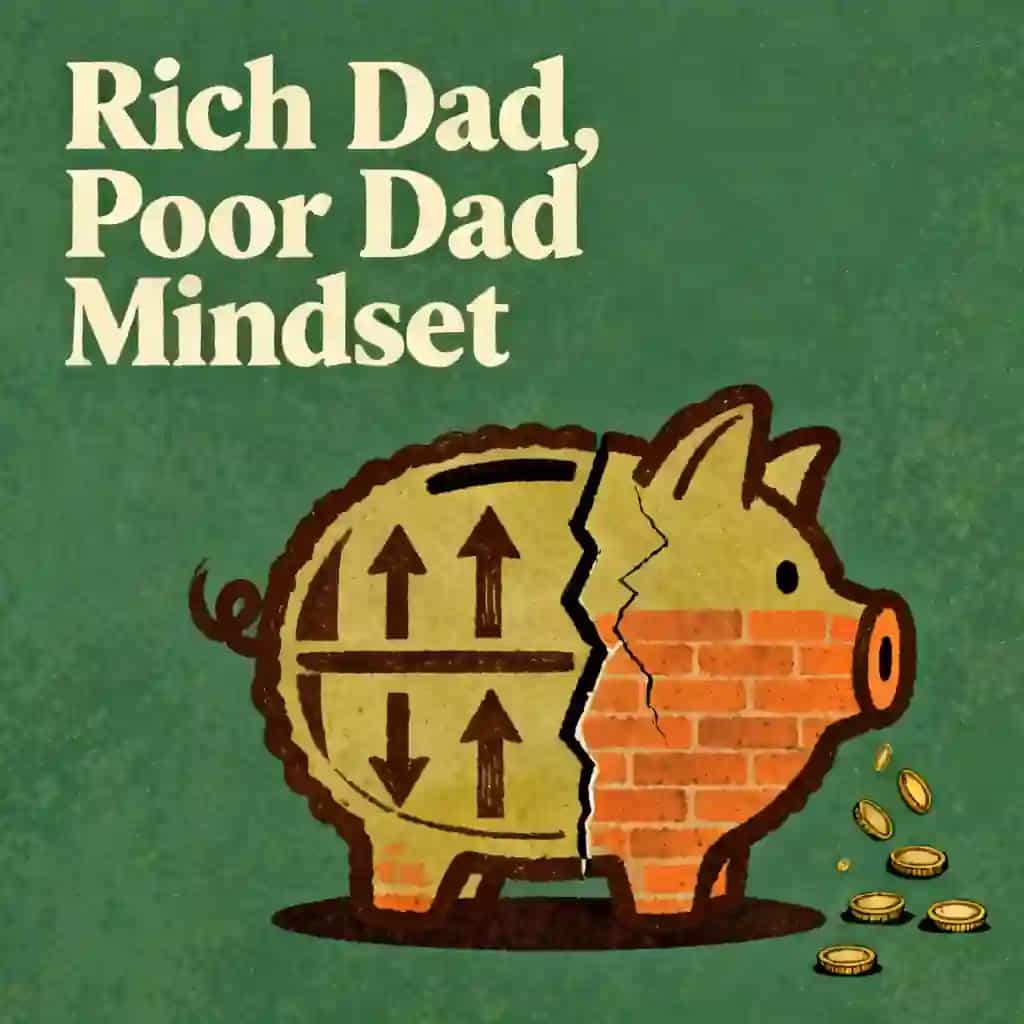
When Robert Kiyosaki's "Rich Dad Poor Dad" first hit shelves in 1997, few could have predicted its meteoric rise to become the #1 personal finance book of all time, selling over 40 million copies in more than 40 languages. Initially self-published after being rejected by numerous publishers who claimed its contrarian ideas were "dangerous," the book's unconventional wisdom has since been embraced by everyone from Oprah Winfrey to Will Smith. What makes this book so revolutionary isn't just its financial advice, but its fundamental challenge to how we think about money, work, and education. Through the contrasting perspectives of his two "fathers" - his biological father (a highly educated but financially struggling professor) and his best friend's father (a high-school dropout who became one of Hawaii's wealthiest men) - Kiyosaki delivers a blueprint for financial independence that continues to resonate across generations and cultures.
Kapitel 2
Two Fathers, Two Financial Philosophies
At the heart of Kiyosaki's narrative lies a powerful contrast between his two father figures. His biological father, whom he calls his "poor dad," was highly educated with a Ph.D. and climbed the ranks of Hawaii's educational system. Despite his impressive credentials and steady government position, he struggled financially his entire life, constantly saying phrases like "I can't afford it" and "Money doesn't grow on trees." His advice centered on conventional wisdom: get good grades, secure a stable job with benefits, and save for retirement.
In stark contrast stood his "rich dad" - his best friend Mike's father - who never finished eighth grade yet became one of Hawaii's wealthiest entrepreneurs. This father figure taught Kiyosaki a completely different approach to money, encouraging him to think in terms of assets versus liabilities, cash flow, and financial independence. Rather than saying "I can't afford it," rich dad would ask, "How can I afford it?" - a subtle but profound difference in mindset that opened possibilities rather than shutting them down.
This unique childhood experience of having two father figures with opposing financial philosophies forced young Robert to think critically about money from an early age. At just nine years old, he made a conscious decision to learn about money from his rich dad, recognizing that despite his biological father's academic achievements, his financial struggles suggested there might be better approaches to building wealth.
The contrast between these two mentors wasn't just about their bank accounts but about their entire relationship with money. Poor dad worked for money; rich dad made money work for him. Poor dad valued job security above all; rich dad valued financial education and freedom. Poor dad saw his home as his biggest asset; rich dad recognized it as a liability that took money from his pocket each month.
These fundamental differences in perspective form the foundation for the entire book, challenging readers to reconsider which financial philosophy they've unconsciously adopted in their own lives. Have you been following the path of the highly educated but financially struggling poor dad, or the financially savvy rich dad who built wealth through financial intelligence rather than academic credentials?
Kapitel 3
The Rich Don't Work for Money
One of Kiyosaki's most provocative lessons begins when nine-year-old Robert and his friend Mike ask rich dad how to get rich. Instead of giving them a direct answer, rich dad offers them jobs working in one of his small grocery stores for a meager 10 cents per hour. After three weeks of tedious labor dusting cans for minimal pay, young Robert reaches his breaking point and threatens to quit.
This was exactly what rich dad had been waiting for. When the boys confront him about the low wages, he reveals his first lesson: most people spend their lives working for money, but the rich have money work for them. Rich dad explains that life pushes everyone around, and most people either give up or fight back without learning. The rare few learn from these challenges and find ways to use them to their advantage.
To demonstrate money's power over people, rich dad stops paying the boys completely. When they protest, he gradually offers higher wages-from 25 cents to eventually $5 an hour (an enormous sum in 1956). The boys resist these temptations, showing they're beginning to understand his lesson about not being controlled by money.
Rich dad explains that two emotions drive financial decisions for most people: fear and desire. Fear of not having enough money motivates people to work hard, but then desire takes over once they get paid, leading to a cycle of spending that keeps them trapped. Even wealthy people remain caught in this cycle, often becoming more afraid of losing their money than they were of being poor.
"The poor and middle class work for money," rich dad teaches. "The rich have money work for them."
This lesson comes alive when the boys spot an opportunity to create a comic book library in Mike's basement. They collect discarded comics from a local store and charge neighborhood children 10 cents for two hours of reading. They hire Mike's sister as librarian for $1 weekly and average $9.50 in weekly profit. Though the business eventually closes after a fight breaks out among customers, rich dad is pleased-they've learned to make money work for them through their own business rather than depending on an employer.
The genius of this lesson is that it shifts the fundamental relationship with money. Instead of seeing yourself as dependent on a paycheck, you begin looking for opportunities to generate income through assets. This mindset shift is the first crucial step toward financial independence, where your money generates enough income to cover your expenses without requiring your physical presence or labor.
Kapitel 4
Financial Literacy: The Foundation of Wealth
Kiyosaki emphasizes that wealth isn't determined by how much money you make, but by how much you keep. This simple principle forms the foundation of financial literacy, which rich dad considered essential for anyone wanting to build wealth.
The core of financial literacy is understanding the difference between assets and liabilities. Rich dad simplified this concept with crystal clarity: "Assets put money in your pocket. Liabilities take money out of your pocket." This definition differs dramatically from traditional accounting definitions but provides a practical framework for building wealth.
Using simple diagrams showing cash flow patterns, rich dad taught young Robert that the rich acquire assets while the poor and middle class acquire liabilities they mistake for assets. The middle class, in particular, falls into the trap of buying things they think are assets-like houses, cars, and consumer goods-that actually drain their finances through payments, maintenance, and depreciation.
Consider the typical pattern: A couple starts in a small apartment, saving for their dream home. As their incomes increase, so do their expenses through taxes and consumer debt. They buy a larger house, considering it an investment, but their mortgage, property taxes, and maintenance costs create a massive monthly outflow. They consolidate credit card debt into their mortgage, thinking it's smart financial management, but continue accumulating more consumer debt.
The problem isn't lack of money but financial illiteracy-not understanding the difference between assets and liabilities. A true asset generates income whether you work or not. A house you live in, despite conventional wisdom, is actually a liability because it consistently takes money out of your pocket through mortgage payments, taxes, insurance, and maintenance.
The rich focus on acquiring income-generating assets: businesses that don't require their presence, stocks, bonds, income-producing real estate, notes, royalties from intellectual property, and anything else that has value, produces income, or appreciates in value. As their asset column grows, it produces enough income to cover their expenses, with the surplus reinvested to acquire more assets. This creates a virtuous cycle where their wealth grows exponentially through the power of compounding assets.
Meanwhile, the middle class remains trapped in the "Rat Race" because they focus on increasing their income through salaries rather than building their asset columns. As their wages increase, so do their taxes and expenses, leaving them financially vulnerable despite higher incomes. When "deals of a lifetime" appear, they can't take advantage because they're overworked, overtaxed, and overloaded with debt.
The solution is simple but requires discipline: know the difference between assets and liabilities, then concentrate on buying income-generating assets while keeping expenses low. This creates a growing asset base that eventually allows for financial independence.
Kapitel 5
Mind Your Own Business
One of Kiyosaki's most powerful insights is the distinction between your profession and your business. Your profession is what you do for a paycheck, but your business is what builds your asset column. Most people spend their lives minding someone else's business (their employer's) rather than their own, making others rich while neglecting their own financial growth.
Ray Kroc, McDonald's founder, understood this principle perfectly. When asked if he was in the hamburger business, he replied that his real business was real estate. McDonald's owns some of the most valuable commercial property in the world, which generates far more wealth than selling hamburgers ever could.
The solution is to mind your own business while keeping your day job. Focus on acquiring real assets that generate income whether you're working or not. Keep your expenses low, build your asset column relentlessly, and never let money escape from it once it enters. That dollar becomes your employee, working 24 hours a day to generate more income.
Unlike the poor and middle class who buy luxuries first on credit, the truly wealthy build their asset columns first, then let the income from assets buy luxuries. When you buy a Mercedes using income from your assets rather than your salary, it's not just a car-it represents financial intelligence at work.
This principle applies regardless of your income level. Even those with modest salaries can begin building their asset columns by investing small amounts regularly in assets they understand. The key is consistency and patience, allowing your assets to compound over time until they generate enough income to cover your expenses.
For many, this means starting small with investments in areas they're passionate about, whether real estate, stocks, or small businesses. When you buy what you love, you'll take better care of those investments and be more likely to learn what's necessary to make them successful.
Kapitel 6
The History of Taxes and the Power of Corporations
Kiyosaki offers a provocative perspective on taxation, noting that taxes were originally intended to be temporary measures targeting only the wealthy. In England and America, permanent income taxes didn't exist until 1874 and 1913 respectively. However, once governments "got a taste of money," their appetite grew insatiably, and the tax burden eventually shifted to the middle class.
The rich responded by creating legal structures to protect their assets and minimize taxation. Corporations, originally designed to limit risk in sailing ventures, became powerful tools for wealth preservation. When "tax-the-rich" laws were passed, the wealthy simply adapted by using corporate structures to access preferential tax treatment.
This creates a fundamental inequity in our tax system. Employees earn money, pay taxes on that income, and then try to live on what remains. Business owners, however, earn money through their corporations, spend pre-tax dollars on legitimate business expenses, and pay taxes only on what's left. This legal structure allows the wealthy to pay for many expenses with pre-tax dollars while employees must use after-tax dollars for the same items.
For example, a corporation can deduct business meals, travel, healthcare, vehicles, and even education as legitimate business expenses before calculating taxable income. An employee must pay taxes first, then use what remains for these same expenses.
The wealthy also use sophisticated strategies like the "1031 exchange" that allows deferring taxes on real estate gains indefinitely. They hire smart attorneys and accountants to find legal ways to minimize tax burdens, while the average person lacks these resources and knowledge.
This isn't about evading taxes but understanding how the system works and using it legally to your advantage. Financial intelligence includes knowledge of accounting, investing, markets, and law-particularly tax law. By structuring your affairs properly through corporations and other legal entities, you can dramatically reduce your tax burden and accelerate wealth building.
The lesson isn't to resent the wealthy for their tax advantages but to educate yourself about these strategies and implement them in your own financial life. Moving from the E (employee) quadrant to the B (business owner) quadrant isn't just about changing how you earn money-it's about changing how you're taxed on that money.
Kapitel 7
Creating Money Through Financial Intelligence
In the real world beyond academics, success often comes not to the smartest but to the boldest. Financial intelligence combines technical knowledge with courage to act on opportunities others miss or fear.
Kiyosaki defines financial intelligence as having four key components:
1. Accounting (financial literacy)
2. Investing (the science of money making money)
3. Understanding markets (supply and demand)
4. Knowledge of the law (tax advantages, corporate protections)
This intelligence allows you to create money rather than simply working for it. For example, Kiyosaki shares how he purchased a foreclosed home for $45,000 (worth $65,000), sold it a year later for $95,000, then used a tax-deferred exchange to roll the profits into a 12-unit apartment building. Two years later, he sold that property for $495,000 and bought a 30-unit complex generating $5,000 monthly cash flow.
What's remarkable about these transactions isn't just the profit but how little of his own money was involved. By understanding markets (recognizing undervalued properties), using legal tax advantages (1031 exchanges), and leveraging other people's money (bank financing), he created substantial wealth from minimal personal investment.
This approach differs dramatically from conventional financial advice that emphasizes saving money and avoiding risk. Financial intelligence isn't about having money magically appear but about creating options when opportunities arise or problems emerge. It's developing the mental flexibility to turn challenges into profit rather than just working harder.
In the Information Age, wealth is increasingly created through ideas and agreements, not physical labor. Money itself isn't real-it's simply what we agree it is. Those who understand this can create wealth regardless of economic conditions, while others remain trapped in outdated industrial-age thinking about money and work.
The key is to start small, learn through experience, and gradually build your financial intelligence through practical application. What's risky for someone financially uneducated may be relatively safe for someone with financial knowledge. By developing this intelligence, you create options for yourself that most people never recognize.
Kapitel 8
Work to Learn, Not for Money
One of Kiyosaki's most counterintuitive principles is that talented people should focus on learning rather than earning, especially early in their careers. This approach contradicts conventional wisdom that emphasizes specialization and climbing corporate ladders for higher salaries.
Rich dad encouraged Kiyosaki to "know a little about a lot" rather than specializing deeply in one area. He had young Robert work in different areas of his companies-accounting, construction, sales, marketing-and attend meetings with bankers, lawyers, and brokers to understand every aspect of business operations.
When Kiyosaki quit his high-paying job with Standard Oil to join the Marine Corps, his educated dad was bewildered. But rich dad understood the value of military leadership training, telling Robert: "Leadership is what you need to learn next. If you're not a good leader, you'll get shot in the back, just like they do in business."
After Vietnam, Kiyosaki joined Xerox not for the benefits but to overcome his fear of rejection in sales. Though his educated dad was ashamed, rich dad was proud when Robert conquered this fear and consistently ranked among the top salespeople before moving on to start his own businesses.
The three essential management skills for financial success are:
1. Management of cash flow
2. Management of systems (including yourself, time, family, business)
3. Management of people
The most crucial specialized skills are sales and marketing, as these directly impact your ability to generate revenue in any venture. Many talented professionals-doctors, lawyers, accountants-struggle financially despite their expertise because they never learn these fundamental business skills.
This principle applies particularly to young people starting their careers. Rather than chasing the highest-paying job, seek positions that will teach you valuable skills across multiple areas of business. Work for what you'll learn rather than what you'll earn. This approach may mean lower initial income but leads to greater wealth and freedom in the long run.
Most workers become trapped in the "Rat Race" because they focus on short-term pay rather than long-term learning. The more specialized you become, the more trapped and dependent you are on that specialty. Broad knowledge across business systems creates flexibility and opportunity that specialization cannot provide.
Kapitel 9
Overcoming the Five Obstacles to Financial Freedom
Even with financial knowledge, five major obstacles prevent many from achieving financial independence: fear, cynicism, laziness, bad habits, and arrogance. Understanding and overcoming these barriers is essential for building wealth.
1. Overcoming Fear
Everyone fears losing money, even the rich. The difference is how you handle that fear. Rich dad's solution was "If you hate risk and worry, start early." Starting young gives you more time to recover from mistakes and learn from them.
Winners understand that losing usually precedes winning-whether learning to ride a bike or investing. Most people don't win financially because the pain of losing money overwhelms the joy of being rich. Successful investors use failure as inspiration to improve rather than reason to quit.
Building your asset column doesn't require much education-fifth-grade math will do-but it takes guts, patience, and a great attitude toward failure. As rich dad said, "Failure inspires winners and defeats losers."
2. Overcoming Cynicism
We all have doubts and fears when opportunities arise, whether from our own minds or from friends, family, or media. These doubts often prevent us from taking action that could lead to financial freedom.
Savvy investors know that the worst times economically are actually the best times to make money. When everyone else is afraid to act, they pull the trigger and get rewarded. Many people miss golden opportunities because they listen to cynical advice from people who themselves have never taken financial risks.
3. Overcoming Laziness
The most common form of laziness isn't lounging around-it's staying busy to avoid what's truly important. Many people use activity as a way to avoid addressing their financial situation.
The cure for laziness is a little greed-the desire for something better. Rather than suppressing desires through guilt, rich dad encouraged asking "How can I afford it?" This question opens the mind to possibilities rather than shutting down thinking.
When avoiding important financial tasks, ask yourself "What's in it for me?" A little greed-the desire for financial freedom-can motivate action when nothing else will.
4. Overcoming Bad Habits
Our lives reflect our habits more than our education. One crucial financial habit is paying yourself first-putting money into your asset column before paying bills or taxes.
While poor dad paid everyone else first and himself last (if anything remained), rich dad prioritized himself-even when short on cash. This created pressure to find additional income sources rather than simply working harder at his current job.
This pressure forced creative thinking about generating income through multiple channels rather than depending solely on a paycheck. By paying yourself first, you strengthen your financial muscles; paying yourself last-or not at all-makes you financially weaker and vulnerable to external pressures.
5. Overcoming Arrogance
Financial arrogance-pretending to know what you don't-can be extremely costly. Many people use arrogance to hide their ignorance, especially regarding financial matters.
As rich dad said, "What I know makes me money. What I don't know loses me money." The truly wise approach is to recognize your knowledge gaps and actively seek education rather than pretending to know everything.
Arrogance prevents learning, and without continuous learning, financial growth becomes impossible. The rapidly changing financial landscape requires constant education and adaptation, which arrogance makes impossible.
Kapitel 10
The Path to Financial Freedom
Building wealth isn't easy, but it follows a learnable process that anyone with determination can master. Kiyosaki offers ten practical strategies for starting your journey to financial independence:
1. Find a reason greater than reality
Financial freedom requires deep emotional motivation-both "wants" and "don't wants." Without strong reasons, the challenges will seem insurmountable. Whether it's providing for family, achieving time freedom, or making a difference in the world, your emotional drivers must be powerful enough to sustain you through setbacks.
2. Make daily choices for wealth
With every dollar we hold, we choose our financial future. Most people choose not to be rich through their daily spending habits, choosing immediate gratification over long-term wealth. The most important investment is in financial education-attending seminars, reading books, listening to experts-even when it means making mistakes to fully understand.
3. Choose friends carefully
Seek knowledge from financially successful people rather than taking advice from those who struggle. Surprisingly, wealthy individuals report that their struggling friends rarely ask how they succeeded-only for loans or jobs. Avoid listening exclusively to pessimists, as the market contains both bears and bulls, and wisdom comes from considering multiple perspectives.
4. Master a formula and then learn a new one
You become what you study, so choose carefully what you learn. Most people follow one formula: work for money, pay bills, maybe buy mutual funds, repeat. Financial freedom requires learning different formulas for creating wealth. In today's rapidly changing world, how fast you learn is more valuable than what you know.
5. Pay yourself first
Self-discipline is perhaps the most crucial factor separating the rich from the poor. The principle of "paying yourself first" means allocating money to your asset column before paying monthly expenses. When cash flow is tight, use that pressure to inspire creative solutions rather than dipping into savings or investments.
6. Pay your brokers well
Good professionals provide valuable information and education that helps you make money. What you pay them is tiny compared to what you make from their knowledge. Find brokers who personally invest in what they sell and understand your business. A broker who spends time educating you can be your best asset.
7. Be an "Indian giver"
Sophisticated investors always ask: "How fast do I get my money back?" and "What do I get for free?" Focus on return on investment (ROI) and recovering your initial capital quickly while maintaining ownership of the asset. This creates essentially "free" assets that continue generating income without your money being at risk.
8. Use assets to buy luxuries
Instead of buying luxuries on credit, use your desire for them as motivation to invest. Only purchase luxuries from the income generated by your assets, not from your salary or by creating debt. This approach ensures that your consumption strengthens rather than weakens your financial position.
9. Choose heroes who make it look easy
Heroes are powerful learning tools. Find financial heroes whose approaches you can study and emulate. When investing seems complicated, these heroes make it appear simple, which inspires belief that "if they can do it, so can I."
10. Teach and you shall receive
The principle of reciprocity works for everything-money, smiles, love, friendship. Whenever you feel needy, find what you want and give it first. Teaching others about money enhances your own understanding, bringing new ideas and distinctions. True giving comes from joy, not expectation of return.
Kapitel 11
The Power of Financial Education
Financial education creates options that most people never see. It's not about complex formulas or advanced degrees but understanding fundamental principles and applying them consistently. The difference between financial struggle and financial freedom often comes down to a few key concepts properly implemented over time.
Kiyosaki emphasizes that there are three types of income: ordinary earned income (from a job), portfolio income (from paper assets like stocks), and passive income (typically from real estate). The key to financial freedom is converting earned income into passive and portfolio income-assets that generate cash flow whether you work or not.
This conversion is what allowed Kiyosaki and his wife Kim to become financially free at relatively young ages. They own real estate investments for passive income and participate in private equity and stock offerings for portfolio income. Their educational products, especially their CASHFLOW games, teach these essential skills in ways books alone cannot.
The most important insight is that financial freedom isn't about how much money you make but about how you manage what you have. Many high-income professionals remain financially vulnerable because they spend everything they earn, while others with modest incomes achieve financial independence through disciplined investing and financial intelligence.
With each dollar that enters your hand, you alone choose your future. Spend it foolishly and choose poverty. Spend it on liabilities and join the middle class. Invest it in your mind and learn to acquire assets, and you choose wealth. The choice is yours alone, made daily with every dollar that passes through your hands.
The journey to financial freedom isn't always straightforward, and even Kiyosaki admits uncertainty about his own path at times. But by focusing on financial education, building assets, and developing the courage to act on opportunities, anyone can move from financial struggle to financial security and ultimately to financial freedom.