Kapitel 1
When Icons Collide: The Unlikely Friendship That Sparked a National Conversation
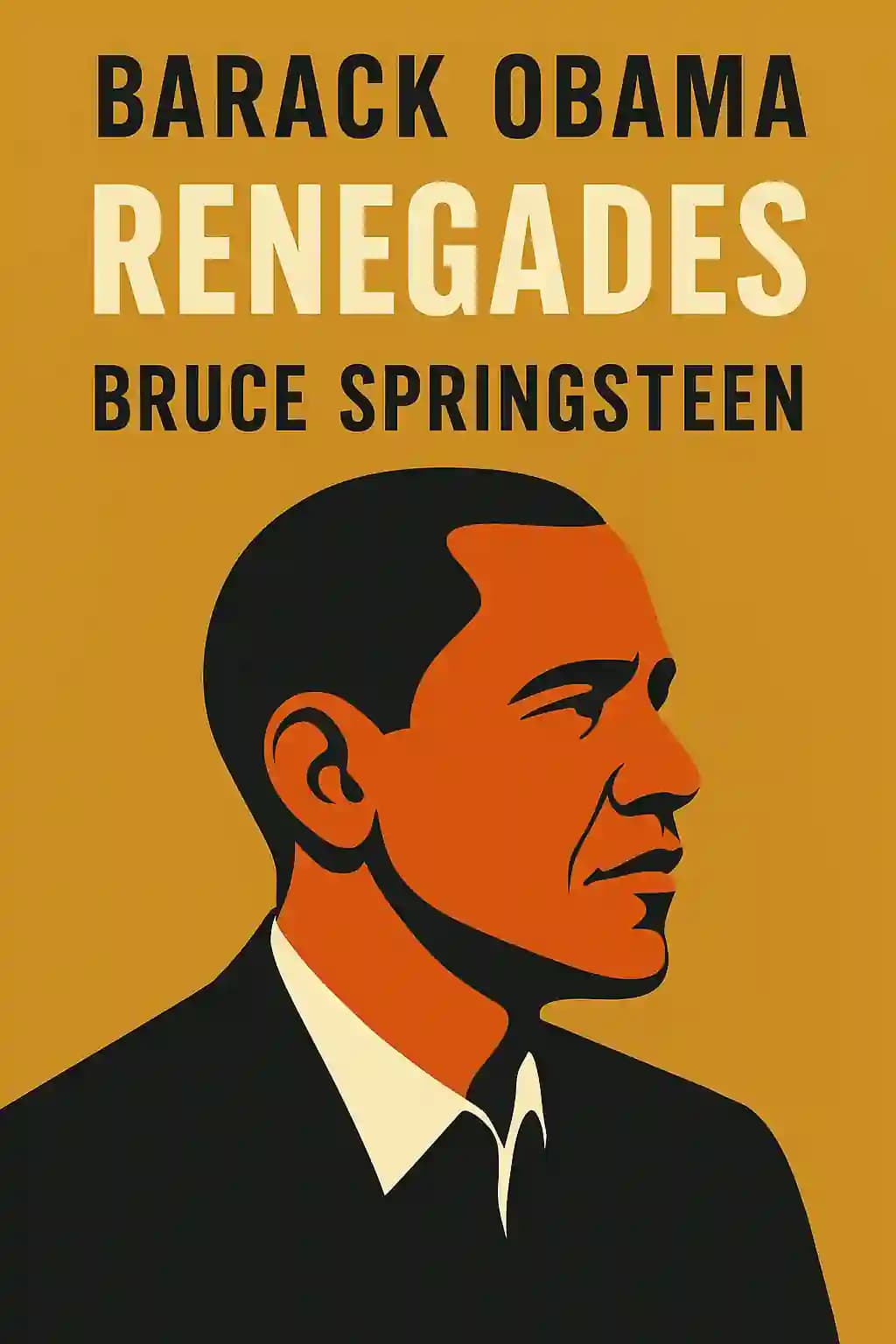
In the summer of 2020, as America grappled with a pandemic and deepening political divisions, two seemingly different men sat down in a converted New Jersey farmhouse surrounded by horses, guitars, and recording equipment. One was Barack Obama, the first Black president, raised in Hawaii by a white mother; the other was Bruce Springsteen, a working-class white rock star from New Jersey. Their podcast "Renegades: Born in the USA" quickly became a cultural phenomenon, not just because of their celebrity status, but because their conversations tapped into something Americans desperately needed: authentic dialogue across divides. The project emerged from their unlikely friendship, formed years earlier when Springsteen performed at Obama's campaign events. As Springsteen initially wondered, "I'm a high school graduate from Freehold, New Jersey, who plays guitar... what's wrong with this picture?" But his wife Patti's encouragement proved prescient: people did indeed want to hear their conversations. What makes this collaboration particularly fascinating is how these two men from vastly different backgrounds discovered parallel journeys in their search for America's soul and their own identities within it.
Kapitel 2
Parallel Journeys: Finding Identity in a Complex America
Both Obama and Springsteen describe childhoods marked by a sense of being outsiders, though their experiences emerged from distinctly different circumstances. For Obama, growing up mixed-race in Hawaii meant experiencing racism in subtle yet piercing ways, like when a tennis coach suggested he might "rub off on the chart and make it dirty" when checking tournament seedings as a twelve-year-old. His friends were fellow "misfits and outsiders," mostly from broken homes and lower economic backgrounds, creating a makeshift community of those who didn't quite fit in. Basketball became his equalizer - a space where Black and white kids could meet on equal terms, where skill and determination mattered more than skin color or background. His mother played a crucial role in his identity formation, deliberately instilling pride in his Black heritage by sharing biographies of figures like Muhammad Ali, Malcolm X, and Martin Luther King Jr., teaching him that the struggles of Black Americans had "fortified" them and created a legacy of resilience.
For Springsteen, the outsider status stemmed from growing up in a working-class household in Freehold, New Jersey, dominated by his father's unpredictable moods and oppressive silences. His father, Douglas, was "an unknowable man with a great penchant for secrecy," who shared almost nothing about his life and would disappear regularly without explanation, sometimes sitting alone in the dark kitchen late at night. This mysterious presence shaped Springsteen's understanding of masculinity and his own identity, leading him to both emulate and resist his father's model of manhood. Music became his salvation and means of self-expression, offering an escape from the confines of his working-class neighborhood and the emotional darkness of his home life. The local bar scene and the boardwalk became his classroom, where he learned to transform personal pain into universal stories.
Despite their different backgrounds - one the son of a white Kansas mother and Kenyan father, the other the product of Irish-Italian Catholic working-class New Jersey - both men developed similar philosophical approaches to American identity. Obama articulates his belief that America isn't defined by how people look or their backgrounds, but by "fidelity to a creed" - the idea that America is a place "for all the outsiders and all the misfits" trying to make something from nothing. This vision contrasts with a more exclusive definition of America, a tension that continues to define our national politics and social discourse. Springsteen's music similarly explores the complexity of American identity, giving voice to the struggles and dreams of working-class Americans while questioning the gap between American ideals and reality, evident in songs like "Born in the U.S.A." and "The Ghost of Tom Joad."
Their parallel journeys of self-discovery and their shared commitment to telling more inclusive American stories created the foundation for their unlikely but profound friendship. Both men came to understand America as a work in progress, a nation constantly struggling to live up to its founding promises while grappling with its contradictions. Through their respective art forms - politics and music - they've worked to bridge divides and create narratives that embrace the full complexity of the American experience.
Kapitel 3
The American Songbook: How Music Shapes Our National Identity
What makes America exceptional, Obama reflects, isn't merely its wealth or military might, but being "the only nation in human history made up of people of every race, religion, and culture from every corner of the globe." This unique blending of traditions is perhaps most powerfully expressed through American music - from African rhythms to Irish ballads creating something entirely new through jazz, blues, country, and rock. Music serves as both cultural unifier and mirror reflecting social fault lines, revealing "what gets played and who gets paid" while amplifying marginalized voices.
Springsteen's musical journey illustrates this American synthesis. Growing up as "a creature of Top 40," he first heard his mother playing doo-wop and rhythm and blues on the radio when he was eight or nine. His musical education expanded gradually - first through Dylan's electric work, then later exploring Dylan's acoustic music, Woody Guthrie, and eventually country music as he sought "other solutions than rock music provided." In Guthrie and Dylan's music, Springsteen found not just descriptions of hardship but "transcendence and actionable solutions" - music that allowed listeners to be active rather than fatalistic about social problems.
This approach shaped his career as he began playing "This Land Is Your Land" in 1980 and developed songs like "Born in the U.S.A.," blending entertainment with social consciousness while maintaining ties to his community. The misinterpretation of "Born in the U.S.A." as a simple patriotic anthem rather than a critique of how America treated Vietnam veterans demonstrates the complex relationship between music and national identity.
Obama's presidency deliberately showcased America's musical diversity through the White House music series. At a time of national division, these events deliberately blended musical traditions - pairing country singers with gospel performers or R&B artists with rock musicians - to demonstrate how American musical forms interconnect. Obama recalls being struck by the generosity musicians showed each other during rehearsals, once observing seventy-year-old Mick Jagger collaborating respectfully with young blues guitarist Gary Clark Jr. "Life among musicians is good," Springsteen noted, to which Obama responded wistfully, "It'd be good if politics was like this, where folks were just trying to make a good song."
The conversation culminates in discussing Obama's powerful rendition of "Amazing Grace" at the memorial service for victims of the Charleston church shooting. Obama describes how, after numerous mass shootings that left him feeling hopeless about gun reform, he initially didn't want to speak, feeling he'd "used up all my words." The decision to sing came spontaneously, inspired by the victims' families forgiving the shooter and correspondence with author Marilynne Robinson about the concept of grace. At the podium, emotional and worried he might cry, Obama took a long pause before singing, knowing "all I had to do was hit the first bar" and the Black church community would support him. This moment represented being "at your best when you understand that you are simply an instrument for everyone else" and captured "this unifying element in America represented in its music."
Kapitel 4
Confronting America's Racial Divide: Honest Conversations About Who We Are
Addressing America's racial divide requires both concrete policies and personal efforts to bridge divides through daily interactions and confronting unspoken attitudes. Obama notes that his approach to racial reconciliation involves finding a balance between holding up ideals while acknowledging reality: "The bridge between America as it is and as we mythologize it to be." He explains his preference for using hopeful narratives to inspire progress rather than solely focusing on structural injustices, though he respects those who take different approaches. This strategy, he elaborates, helped him connect with diverse constituencies during his political career while still advancing meaningful change.
The conversation distinguishes between the roles of activists versus politicians, noting that prophetic voices like Jeremiah Wright have their place in calling out injustice, while political leadership requires finding practical paths forward. Obama draws parallels to the civil rights movement, where Martin Luther King Jr.'s moral vision worked alongside Johnson's political pragmatism to achieve concrete reforms. When Springsteen agrees with the need for ideals as "North Stars," Obama adds that progress requires honest assessment of current realities: "You can't get to where you want to go if you don't know where you are." He cites examples from his presidency, including the Beer Summit and his response to the Trayvon Martin case, as moments that required balancing moral clarity with practical leadership.
Springsteen shares the story behind his song "American Skin (41 Shots)," written after Amadou Diallo was killed by police in a case of mistaken identity. The song, which describes a mother teaching her son how to behave during police encounters, sparked immediate controversy. Police unions called for boycotts of his concerts, misinterpreting the song as anti-police rather than a meditation on tragedy and human cost. This illustrates how art can create space for difficult conversations about race when political discourse fails. Springsteen describes performing the song years later with the Miami Horns, including African American musicians whose personal experiences added deeper resonance to its meaning.
The discussion of social movements and the "arc of history" that bends toward justice reveals both men's perspectives on progress. Recent white nationalist demonstrations in Charlottesville shocked Springsteen, who thought such overt displays were "over." Obama responds by drawing on historical examples - from Reconstruction's collapse to the Civil Rights Movement's victories - to show how progress often faces backlash. He reassures him that despite setbacks, humanity follows an upward trajectory, albeit with many zigs, zags, and loops backward. Obama points to concrete improvements in his lifetime, from voting rights to educational access, while acknowledging persistent disparities in wealth, criminal justice, and opportunity.
Their conversation models the kind of honest dialogue about race that America needs - acknowledging painful truths while maintaining hope and seeking common ground. As Obama puts it, addressing the legacy of slavery and Jim Crow requires confronting uncomfortable realities, "even - or maybe especially - when it's with the people we love." They discuss specific examples of productive conversations across racial lines, from Obama's interactions with rural voters to Springsteen's experiences performing in diverse communities. Both men emphasize that progress comes through sustained engagement rather than avoiding difficult topics.
Kapitel 5
The Almighty Dollar: How Economic Changes Reshaped American Values
Both Obama and Springsteen grew up in families that didn't have much money, but had enough. American society wasn't as stratified then. Despite challenges for women and people of color, upward mobility was possible thanks to strong unions and government investment. Hard work provided not just financial stability but dignity and self-worth. Both men have spent considerable time reflecting on how America became more unequal and how the pursuit of wealth undermined community values.
They identify the Reagan era as a pivotal turning point when American values shifted toward materialism and individualism. Springsteen describes the "dread in the air" that inspired his album Nebraska, while Obama recalls watching from Manhattan as Wall Street culture emerged with its "greed is good" ethos. This cultural shift coincided with manufacturing moving offshore, union busting, and CEOs' compensation skyrocketing from 30 times to 300 times what average workers earned. The economic transformation particularly harmed Black Americans, who found opportunities disappearing just as civil rights gains should have opened doors.
Springsteen questions whether the relative equality of the post-war decades was merely "a break in between two Gilded Ages," to which Obama responds, "mostly yes." This historical perspective helps explain current economic inequality as part of a longer pattern in American capitalism rather than an inevitable condition.
The conversation turns personal as they reflect on their choices to pursue paths focused on community and art rather than wealth. Obama reveals that his path toward community organizing came partly from his mother's freethinking influence and partly from recognizing that the American Dream wasn't fully available to Black Americans. Rather than aspiring to wealth, he looked to civil rights leaders for inspiration, finding salvation in merging his story with the communities he served. Meanwhile, Springsteen shares his struggle with sudden wealth after years of poverty, including a memorable story about counting pennies to get through the Lincoln Tunnel.
Both men wrestled with maintaining authenticity as their fortunes grew, questioning what they owed to the communities that shaped them. They discuss how economic inequality threatens America's foundation, with Obama suggesting that creating a new collective story about what we value could help those with wealth recognize that giving back creates a better society for everyone. Springsteen's song "Used Cars" captures his working-class childhood and the mixed emotions of aspiration and limitation, illustrating how art can express complex feelings about class and economic mobility that political discourse often misses.
Kapitel 6
Redefining Masculinity: Breaking Free from Destructive Patterns
Traditional masculine ideals - emphasizing physical toughness, emotional suppression, defining success through possessions and domination rather than love and care, and treating women as objects - contribute to broader societal problems like economic inequality and political polarization. Both Obama and Springsteen recognize that their perspectives on masculinity have been shaped by their complicated relationships with their fathers, whom they describe as "flawed role models."
Springsteen's father Douglas was "an unknowable man with a great penchant for secrecy," sharing almost nothing about his life and disappearing regularly without explanation. This mysterious presence created a complicated relationship that Springsteen has spent much of his career processing through his music. Obama's father was largely absent, leaving when he was very young and appearing only once more in his childhood. Both men had to construct their own understanding of manhood without consistent paternal guidance.
Their journey toward healthier masculinity was significantly shaped by the strong women in their lives. They discuss how they were fortunate to find partners - Michelle and Patti - who challenged them, grounded them, and called them out on their "BS." These relationships helped them become better versions of themselves and gave them what they consider the greatest gift: fatherhood.
Parenthood became a transformative experience for both men, requiring them to confront and overcome traditional masculine behaviors. Springsteen shares a pivotal moment with his son Evan, realizing he had taught him to say "no" to things he needed emotionally. He apologized to his young son and made a conscious choice to be fully present whenever his children needed him, replacing "no" with "yes, yes, yes" to build deeper connections.
Obama established a rule to have dinner with his family at 6:30 every night unless traveling overseas, despite the demands of the presidency. These family moments became his "lifeline" amid the chaos of presidential duties. He reflects on his parenting philosophy, explaining how Michelle helped him understand that "kids are like plants" - they need nurturing but grow at their own pace and in their own way.
Both men's evolution toward more emotionally available versions of masculinity reflects broader cultural shifts, but also demonstrates how personal growth can contribute to social change. By modeling different ways of being men - vulnerable, present, emotionally engaged - they offer alternatives to destructive traditional masculine ideals.
Kapitel 7
American Heroes: Finding Inspiration in Ordinary Greatness
When discussing their American heroes, Obama and Springsteen reveal much about their values and vision for the country through a rich tapestry of examples spanning music, civil rights, and political history. Obama begins with Stevie Wonder, praising his remarkable string of five albums - including "Talking Book," "Innervisions," and "Songs in the Key of Life" - that "will match up with anybody else's five albums in history." Yet he quickly pivots to emphasize that his deepest inspiration often comes from less celebrated figures in the civil rights movement.
He speaks reverently of activists like Diane Nash, who led lunch counter sit-ins in Nashville and helped coordinate Freedom Rides, and Bob Moses, who risked his life registering Black voters in Mississippi. Obama particularly admires Ella Baker's grassroots organizing philosophy and Fannie Lou Hamer's raw courage in challenging segregation despite brutal opposition. He cites Joseph Lowery, C.T. Vivian, and Fred Shuttlesworth as "heroes on a human scale" who "achieved extraordinary things" through "doggedness and courage" in their daily struggles against systemic racism.
Springsteen's mention of Ruby Bridges leads to one of the conversation's most poignant moments. He describes how this six-year-old child walked through angry mobs to attend William Frantz Elementary School in New Orleans, protected by federal marshals but carrying herself with remarkable dignity. Obama recalls displaying Norman Rockwell's famous painting "The Problem We All Live With" outside the Oval Office, showing Ruby's brave walk to school. When he later met her as an adult, Obama was struck by how she still embodied "that kind of quiet heroism" and "absolute grace" that had defined her childhood courage.
Lincoln occupies a special place in Obama's pantheon of heroes, describing him as "at the center of what I think about as America." He admires Lincoln's trajectory from frontier poverty to becoming one of America's most profound writers and leaders, particularly how he wrestled with the nation's fundamental question: "Are we going to be a truly free nation or not?" Obama details Lincoln's evolution on race and equality, noting how his thinking grew more radical as he confronted slavery's moral challenge.
The conversation deepens when addressing how to view historically significant but morally flawed figures. Obama advocates for a nuanced approach that can "acknowledge someone's wrongs without negating everything about them." He uses George Washington as an example - a slaveholder whose military and political leadership were nevertheless crucial to establishing American democracy. This balanced perspective reflects both men's understanding of human complexity and their resistance to oversimplified historical narratives.
Looking to the future, Obama expresses genuine optimism about younger generations, noting how they "believe in a unifying story of America" while actively rejecting discrimination and inequality. He sees his and Bruce's role as keeping "the lantern lit" for these emerging leaders. Springsteen concurs, sharing how his own children "humble me" with their character and commitment to social justice, suggesting that the torch of progress is being passed to capable hands.
Their discussion of heroes ultimately presents a vision of America as an ongoing project, where ordinary people - through persistent effort and moral courage - accomplish extraordinary things to move the country closer to its founding ideals. This grounded perspective anchors their hope for the future not in abstract principles but in tangible examples of human resilience and determination.
Kapitel 8
The Rising: Finding Hope in America's Unfinished Story
As their conversations draw to a close, Obama and Springsteen reflect on their central question: how to restore faith in America's promise while honestly acknowledging its shortcomings. Despite the cynicism of modern media that profits from division, they believe most Americans hunger for a unifying national story - one of a just and compassionate country where everyone belongs.
This optimism isn't naive. Both men have witnessed America's failures firsthand and have spent their careers wrestling with the gap between American ideals and reality. Yet they maintain what might be called a tough hope - a belief in possibility grounded in honest assessment of where we are. As Obama puts it: "You can't get to where you want to go if you don't know where you are."
Their hope draws strength from historical perspective. They see America's story as one of constant struggle toward greater inclusion and justice, with setbacks and advances along the way. The civil rights movement, which looms large in their conversations, demonstrates how determined citizens can transform the country through persistent, principled action.
They find particular hope in younger generations who "believe in a unifying story of America" and reject discrimination and inequality. Obama sees his and Bruce's role as keeping "the lantern lit" for the next generation who will carry forward the work of perfecting the union.
Springsteen's song "The Rising," written after 9/11, captures this spirit of resilience and hope in dark times. The song acknowledges pain and loss while pointing toward possibility and renewal - "Come on up for the rising / Come on up, lay your hands in mine." This artistic expression parallels Obama's political message of hope and unity amid division.
Their conversation concludes with mutual appreciation, Obama saying "I think we've done some good work today, brother," and Bruce responding, "Thank you, brother." This simple exchange captures the essence of their project - modeling respectful dialogue across differences in service of a more perfect union. Their friendship itself becomes a metaphor for the America they envision: diverse individuals finding common purpose while honoring each other's unique journeys.
In a time of deep polarization, their conversations remind us that America's story is still being written, and that each of us has a role in shaping its next chapter. As Obama put it in his Selma speech, which features prominently in their discussions: "The single most powerful word in our democracy is the word 'We.'"