Kapitel 1
Rewiring Your Mental Circuits: The Life-Changing Power of Self-Image
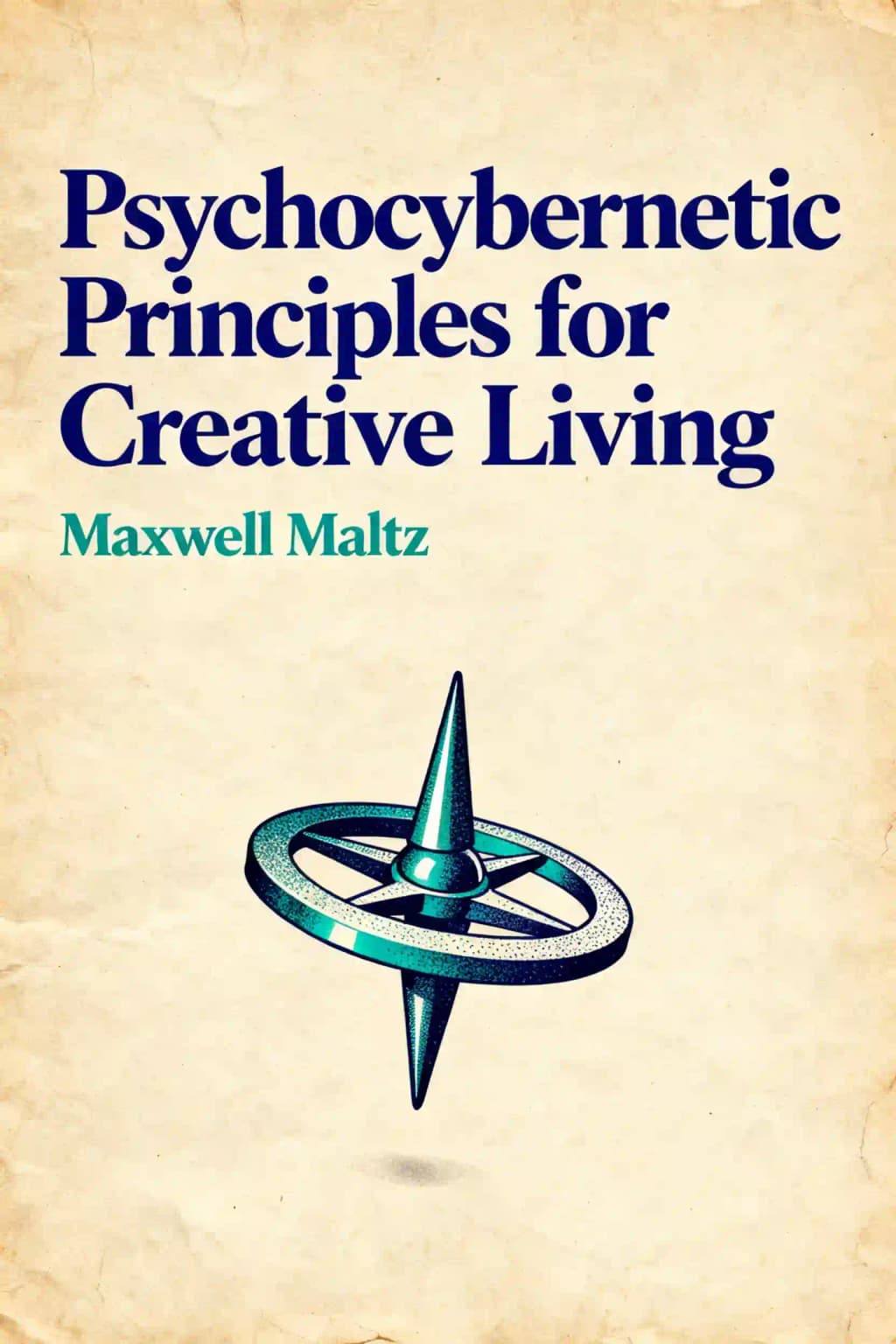
Have you ever wondered why some people seem to bounce back from life's challenges with remarkable resilience while others crumble under similar pressures? Why do certain individuals consistently achieve their goals while others remain stuck in patterns of failure? The answer might lie not in your circumstances, but in how you see yourself. Maxwell Maltz's groundbreaking work "Psycho-Cybernetics" has transformed millions of lives since its publication in 1959, becoming a favorite of successful people from professional athletes to business leaders. The book's enduring popularity stems from its practical approach to personal transformation-focusing on the self-image as the key to unlocking human potential. Before becoming a plastic surgeon, Maltz studied psychology extensively, allowing him to make a fascinating discovery: changing a person's physical appearance often didn't improve their life until their internal self-image changed as well. This insight led to the development of psycho-cybernetics, a system that applies the principles of cybernetics (the science of self-regulating systems) to the human mind, creating a roadmap for reprogramming your mental "servo-mechanism" for success rather than failure.
Kapitel 2
Your Self-Image: The Hidden Commander of Your Life
Imagine having an invisible force directing your every action, decision, and reaction-because you do. Your self-image, though unseen, functions as the most powerful influence on your life's trajectory. It's not what you consciously want that determines your outcomes, but what your self-image believes is possible and appropriate for "someone like you."
This internal picture develops from your experiences, especially your successes and failures, and how you've mentally repeated and interpreted them. If you see yourself as worthy and capable, you'll naturally move toward positive experiences. If you perceive yourself as inferior or undeserving, you'll fail before you even begin-not because you lack ability, but because your self-image won't allow success that contradicts its programming.
Consider the remarkable case of a woman with muscular dystrophy who wrote to Dr. Maltz. Diagnosed at age ten and told she had less than a year to live, she endured twenty years of physical challenges and operations that fused her ankle joints. Despite doctors insisting she lacked the physical capability to walk, she became what they called a "medical phenomenon"-not only walking but driving a car. Her success wasn't supernatural; it came from the unseen muscles of her self-image that refused to accept the limitations others placed on her.
Your self-image functions like an automatic guidance system, making you accident-prone, happiness-prone, relaxation-prone, or defeat-prone. It creates conditioned reflexes based not on reality but on what your imagination represents as reality. The exciting revelation is that, except in cases of severe mental illness requiring professional help, you can change this all-important self-image through psycho-cybernetics.
The process works because your nervous system cannot distinguish between vividly imagined experiences and real ones. When you feed your Creative Mechanism (your goal-striving brain) positive images of success, it works automatically to achieve those outcomes. Feed it negative data, and it produces negative responses-garbage in, garbage out.
To transform your self-image positively, you must first recognize its current state, set realistic goals within your capabilities, discover and rise above your shortcomings, and commit to creative goals. Your mistakes aren't failures but aids to relearning that further motivate your growth. By focusing on who you want to become rather than dwelling on past failures, you reprogram your automatic success mechanism to guide you toward achievement rather than away from it.
Kapitel 3
Becoming a Professional Human Being
In our age of specialization, we often focus exclusively on vocational skills while neglecting the development of our inner qualities. Yet true fulfillment comes from becoming what Maltz calls a "professional human being"-someone who has mastered not just career skills but the art of living itself.
Consider Mr. Williams, a 27-year-old computer student who, despite standing 6'3" tall physically, saw himself as only "three inches tall" internally. Plagued by fears of failure and abandonment issues stemming from his father leaving, Williams discovered through therapy that his fundamental problem was lack of self-respect. By learning to forgive both himself and his absent father, and by utilizing his Creative Mechanism positively, he transformed into a better employee, husband, and father.
Becoming a professional human being requires understanding the automatic mechanism that drives our behavior. Unlike animals with fixed instincts, humans have a versatile guidance system addressing emotional and spiritual needs. This mechanism doesn't set goals-our forebrain does that-but it helps us achieve them by accessing stored knowledge and solving problems. To function properly, it needs clearly defined goals visualized as already existing.
This system operates impersonally, processing whatever data we feed it. When directed toward positive outcomes, it functions as a success mechanism; when fed negative inputs, it becomes a failure mechanism. The key insight is that we control this computer; it doesn't control us.
A fascinating basketball experiment demonstrates how this works: students who merely imagined shooting baskets improved almost as much (23%) as those who physically practiced (24%). This shows that our mechanism cannot differentiate between vividly imagined experiences and real ones-a principle we can leverage for personal growth.
To become a professional human being, practice rising above problems rather than being overwhelmed by them. Seek the best in yourself, forgive your mistakes, eliminate negative feelings, and focus on your own growth rather than comparing yourself to others. The most harmful "inside job" is when we rob ourselves of our sense of worth through fear, hatred, procrastination, or self-criticism. By contrast, psycho-cybernetics is a positive inside job that improves self-image and helps us grow into our full potential as human beings.
Kapitel 4
The Playhouse of Your Mind: Harnessing Imagination
Imagination is perhaps our most precious gift-one that can be used wisely to create success or squandered to ensure failure. It's a curious mixture of complexities and contradictions, overflowing with possibilities that shape our reality in profound ways.
Consider Pierre, a 45-year-old piano teacher and composer suffering from tension, insomnia, and nightmares. In therapy, he revealed lifelong negativity and shyness stemming from childhood. His doctor encouraged him to "come downstairs" metaphorically instead of hiding from life, to use his imagination creatively rather than destructively, and to set realistic goals. Pierre began healing by composing a piece called "Two Steps Down," symbolizing his gradual progress. Three months later, he returned with a new composition called "Downstairs," having learned to use his imagination productively and live in the present.
Imagination shapes our reality in practical ways across all fields. Chess masters like Alekhine defeat opponents by playing chess mentally; salespeople succeed by rehearsing difficult scenarios; musicians practice compositions mentally before touching instruments; athletes visualize perfect performance; military leaders like Napoleon plan battles in advance; and business titans like Conrad Hilton and Henry Kaiser imagine ventures before realizing them.
Dr. Maltz shares his own transformation story from medical school when negative imagination nearly derailed his career. While excelling at written exams, his oral quizzes were disasters due to overwhelming anxiety and negative mental images. His breakthrough came when he imagined answering questions as if writing them down without seeing anyone's face. This simple shift in imagination changed everything, demonstrating the stark difference between destructive and constructive imagination.
The human mind cannot differentiate between real experiences and vividly imagined ones. We use imagination either positively or negatively every day, leading to either achievement or frustration. Reality stems from imagination-negative imagination creates failure while positive imagination produces success. Invoking past successes helps transform current crises into opportunities, while abusing your imagination through negative visualization is self-destructive.
To harness your imagination effectively, practice creative visualization daily. Imagine yourself succeeding in specific situations, feeling the emotions of success, and experiencing the scenario as if it were already happening. This isn't mere daydreaming-it's programming your automatic success mechanism to achieve your goals. Remember: you must win the battle over negative imagination before you can win in the external world.
Kapitel 5
Breaking Free from Self-Hypnosis
Millions of people hypnotize themselves with false beliefs that create crippling inferiority complexes. These negative self-suggestions function exactly like hypnotic commands, directing behavior automatically and unconsciously toward failure rather than success.
Florence, a 37-year-old church soloist, dreamed of singing professionally but remained paralyzed by self-doubt. When asked why she couldn't pursue her dream, she offered multiple excuses: she was "too old" at 37, didn't know the right people, lacked fully developed technique, and doubted her ability to hit high notes. Her doctor identified her problem as negative self-hypnosis-telling herself she couldn't achieve made failure inevitable. He encouraged her to "dehypnotize" herself from these limiting beliefs, stop belittling herself, and become a "mirror watcher" who sees herself at her best. Seven months later, Florence returned transformed, able to sing beautifully with a full range, having successfully dehypnotized herself from false beliefs of unworthiness.
Hypnotism works when we believe what the hypnotist says because we operate on beliefs rather than reality. When we adopt negative ideas about ourselves-whether from others' opinions, unfavorable comparisons, or resistance to change-we become literally hypnotized to act accordingly. Hypnotism doesn't confer magical power but releases self-blocking imagination, allowing natural capabilities to emerge.
The key insight is that we are neither inferior nor superior-we are unique individuals. Dehypnotization begins when you embrace your uniqueness rather than imitating others or feeling compelled to "keep up." Relaxation techniques help release tension, while developing friendship skills counters feelings of unworthiness.
To dehypnotize yourself from feelings of inferiority:
1. Recognize your power to change negative beliefs
2. Stop trying to be what you're not
3. Stop trying to be superior to overcome inferiority
4. Focus on keeping up with yourself rather than others
5. Use mental imagery like a geyser releasing steam to dehypnotize from stress
6. Release unnecessary fears and worries
Remember that all habits are forms of daily hypnosis-self-confidence is creative hypnosis, while fear is negative hypnosis. Negative beliefs function like absurd ideas planted by hypnotists, and dehypnotization begins when you stop criticizing yourself and competing with others. Think productively, embracing John Dewey's definition of faith as "not worrying."
Kapitel 6
Clear Creative Thinking: The Path to Goal Achievement
Clear creative thinking is essential to your psycho-cybernetic success. Without this basic skill, your self-image cannot grow, nor can your success mechanism function properly to realize your lifelong objectives.
Consider Rosalie, a 38-year-old flight attendant suffering from a water phobia stemming from nearly drowning at age 10. She feared being alone, procrastinated habitually, and lacked self-respect. Her doctor helped her realize she was living in yesterday's failure rather than today's possibilities. He prescribed a mirror exercise writing "Drown-Swim-Survive" vertically with lipstick, emphasizing she must learn to swim as a symbolic first goal. A year later, Rosalie returned transformed-she had learned to swim, obtained her real estate license, and developed clear, creative thinking.
Our automatic mechanism works on data we feed it, controlled by conscious thinking. We must focus on present goals rather than past failures, as memories lose power when we change our minds. Like hypnosis demonstrates, we act according to our beliefs-when fears of failure are removed, our capabilities emerge naturally.
In the playhouse of your mind unfolds your success story through clear creative thinking. Visualize past successes repeatedly to energize your automatic mechanism while developing a screening process to eliminate irrelevant thoughts. Your thinking must have direction and purpose, moving you toward self-fulfillment.
Ken Reuter wrote to Dr. Maltz explaining how Psycho-Cybernetics principles helped him overcome alcoholism, smoking, and fear of water-transforming his life completely. The key was learning to concentrate on his thinking, build from past successes, think with empathy, and rise above misfortunes.
Creative thinking requires discipline to live in the present, self-respect, faith in yourself, and continual searching for the bigger you within. To think clearly, fight off distractions like bees about to sting you. Clear thinking begins with longing for improvement and builds on past successes. Think with empathy for others, knowing your aspirations influence theirs. Creative thinking emerges when you're not frustrated or fearful.
If your thinking has repeatedly failed you, don't despair. Just as a struggling store can transform under new management, your thinking processes can change too. Work constantly to refine your mind powers and streamline your thinking into clear creative channels-this is your opportunity to turn possibility into actuality through mental power.
Kapitel 7
The Magic of Relaxation
Success without relaxation is merely an empty display. Material achievement, vocational success, and personal accomplishments mean nothing without inner peace. The truly successful individual feels it in their bloodstream and can relax despite external pressures.
Bill, a tense 21-year-old college sophomore, struggled with social anxiety, particularly with women. Though he got along with his separated parents, his tension began at age thirteen when he developed feelings of social inferiority. As a perfectionist, he feared rejection and couldn't relax around girls. His doctor advised him to befriend himself first-recognizing his uniqueness and right to succeed. By being considerate of others, forgiving himself for mistakes, and focusing on giving his best rather than his anxieties, Bill overcame his tension. Six months later, he reported being calmer on dates by focusing on being nice to the girl rather than on his own problems.
Stress comes from overreliance on conscious "forebrain" thinking. While the forebrain formulates goals and evaluates data, it cannot solve problems effectively on its own. After making decisions, we must "unclamp" our mental machinery and trust our success mechanism. Creative ideas arise automatically, not through forced conscious effort. Relaxation enables spontaneous, natural performance.
There's magic in relaxation-a soothing music that calms the soul. Unfortunately, today's world rarely produces this tranquility in most individuals. We live between two worlds: one abrasive and irritating, the other a land of inner calm. Material possessions alone cannot bring tranquility; the blessed sanctuary of your mind is the battlefield where you fight for genuine peace.
Success must include the ability to relax, which starts by addressing the disturbances in your mind, tempering self-criticism with kindness, and developing a sense of your human rights. Forgiveness-of others and yourself-is essential, as is seeing things from others' perspectives, taking stock of your assets, remembering past successes, and facing reality with dignity.
Relaxation requires conscious practice: an open hand instead of a clenched fist, a smile instead of a frown. Accept others' weaknesses to tolerate your own. Assert your right to tranquility. Stand resolute against daily tensions. Live in the NOW, developing good habits of relaxation rather than despair. See yourself at your best-as a person of confidence, not frustration.
Unlike the superstitious charms of the past, modern relaxation comes through common sense, imagination, intelligence, and awareness-if we work for them.
Kapitel 8
Activating Your Happiness Mechanism
Your most vital ally in seeking richer, fuller living is the automatic servomechanism inside you. But do you use it as a happiness mechanism or a device for self-annihilation?
A fifty-year-old woman teacher struggled with insecurity, lost confidence, and self-hatred. She couldn't express herself adequately, had a temper problem, and felt inferior to her "clever" colleagues. She had lost confidence in her husband for being "too much like me" and wished he were stronger and more aggressive. Her doctor suggested she was actually stronger than her husband and should use her teaching skills at home-making herself and her family happy just as she did with her students. By treating family like schoolchildren, she discovered her true worth and became a happy human being.
Happiness is a pleasant state of mind that improves our senses, memory, and internal organ function. Unhappiness causes psychosomatic ills; happiness cures them. Happiness isn't earned through good conduct-it's not a moral issue. Ironically, the concept that happiness stems from unselfishness leads to the paradoxical conclusion that unhappiness leads to happiness. But unhappiness only perpetuates trouble.
Happiness is found now, within us-it's internal, a mental attitude programmed into our servomechanism regardless of environment. Unhappiness often comes when things don't go as we wish and we interpret this as a blow to our self-esteem. The happiness habit frees us from domination by external factors.
Happiness begins with you. It's your birthright, not a sin. Contentment doesn't harm others-unhappiness does. Happiness must be lived today, not postponed. It's a mental habit you develop, not a gift or external force. You must precondition yourself by winning internal battles before facing external struggles.
Dr. Maltz shares his own story of overcoming poverty to become a doctor through determination and happiness despite hardships. He also describes a lame fruit vendor whose wealth was his radiant smile and cheerful spirit-proof that happiness requires no external aids.
To cultivate happiness: Stop self-hatred over small faults. Choose belief over disbelief. Find courage to overcome negative attitudes. Use imagination creatively. Give to others and feel needed. Accept yourself as your greatest miracle. Seek truth about yourself with happiness as your primary goal.
Remember that happiness multiplies through division-when you extend companionship to others, they reciprocate, accelerating your good feeling. A smile launches wisdom. The wise person understands life's complexity and tragedy but rises above difficulties through constructive achievement and self-esteem, developing values that relieve suffering and enable clear, positive thinking.
Kapitel 9
Discovering Your True Self: The SUCCESS Formula
Self-discovery unlocks the invisible walls confining your personality, allowing escape from nightmare, stagnation, and inner death. It's the key to moving forward toward success.
Raphael, once an unhappy 29-year-old math teacher, transformed through self-discovery. Previously isolated and self-hating, he recognized his connection to humanity and no longer expected perfection from himself. His transformation came through recognizing his true needs and the needs of others, which inspired him to pursue a medical career. What was once insecurity and inferiority transformed into enthusiasm for life and determination to succeed.
Success-type personalities effectively handle reality and gain satisfaction from achieving important goals. Build this personality by pursuing realistic objectives with a clear mental picture of both your desired self-image and final goal. The letters in "SUCCESS" represent key concepts: Sense of direction, Understanding, Courage, Compassion, Esteem, Self-confidence, and Self-acceptance-each essential for personal growth and achievement.
SENSE OF DIRECTION: After achieving a crucial goal, the danger lies in losing momentum with nowhere to go. Without worthwhile objectives, we feel lost and purposeless. Goals matter because humans are built to solve problems and achieve objectives.
UNDERSTANDING: Misunderstanding and poor communication cause most relationship failures. We react not to reality but to our interpretation of it. To reconcile differences, ask: How does this seem to them? How do they feel? Why do they act this way?
COURAGE: Without courage to act, our direction and understanding accomplish nothing. Problems worsen when ignored but diminish when boldly confronted. You must bet on yourself-research issues, choose logical paths, then move forward despite risks.
COMPASSION: Successful people genuinely like and respect others, meeting their needs rather than using them as pawns. Every person deserves respect as a unique creation. When we feel compassion toward others, we naturally extend it to ourselves.
ESTEEM: Lack of self-esteem is our deadliest pitfall. False humility that devalues oneself is a vice, not virtue. Jealousy stems from poor self-esteem; those who value themselves don't feel hostile or fear losing love.
SELF-CONFIDENCE: Confidence builds on past successes-even minor ones can become stepping stones to greater achievements. The technique: remember successes, forget failures. When tackling new tasks, recall feelings from previous successes and visualize successful moments.
SELF-ACCEPTANCE: Self-misery comes from using phony postures to convince others you're something you're not. Change your mental self-image to release latent powers within. Self-acceptance means coming to terms with yourself, acknowledging both weaknesses and strengths.
Like the purifying geysers that create fertile soil, letting off emotional steam reduces strain and creates internal growth conditions. The voyage of self-discovery requires no physical distance but involves inner surveillance and defusing internal destructiveness.
Kapitel 10
Transforming Crisis into Opportunity
Life inevitably brings crises that can knock us down unexpectedly. The fundamental challenge is whether to crumble under crisis or transform it into creative opportunity.
Jeanette, a young woman struggling at work, learned from her doctor that her problems stemmed from being too timid and not valuing herself enough. He advised her to improve her self-image by bringing a flower to work as a symbol of standing "firm and sweet under stress." A year later, Jeanette reported success-she quit her job, moved to Los Angeles, and now worked as an assistant manager at an advertising firm. She credited her transformation to the "flower exercise" which helped her realize her own worth.
Winners must first control crisis situations, then transform negatives into growth opportunities. Three key principles apply: (1) practice without crisis to master skills when pressure is low, (2) respond positively rather than fearfully to challenges, and (3) maintain realistic perspective about crises rather than catastrophizing.
The difference between those who crumble versus rally in emergencies is that the latter have learned coping skills. Crisis management skills include mastering techniques under non-crisis conditions, reacting positively, and seeing proper perspective. Practice without pressure through shadowboxing, mirrors, and dry runs. React positively by planning constructive action, accepting challenges, and maintaining confidence. Apply perspective by being realistic and remembering that failure isn't death.
During World War II, American soldiers used flares to illuminate and deter German attackers. This metaphor illustrates how illuminating your inner darkness (negative feelings) is essential before you can transform crisis into opportunity. Just as the soldiers needed light to see their enemy, we need self-awareness to counteract negative thoughts and move toward our goals.
To seize opportunity: realize you are opportunity, stop dwelling on yesterday, focus on today's goals, accept yourself, set achievable goals, stand up to crisis, practice relaxation, mentally rehearse success, choose compassion over resentment and courage over cowardice, and launch yourself toward opportunities despite fear of failure.
Faith and belief are wings that help you soar through crisis to creative living, and taking time to know your better self prevents perpetual internal crisis.
Kapitel 11
Living a Creative Day, Every Day
Psycho-cybernetics aims to help you reach your human potential and live the richest, fullest life possible. The ultimate goal is to live a creative day, as an individual among millions, which eventually builds into a creative life.
Susan, a 42-year-old divorced writer with limited success, described herself as a "cheat" who had cheated herself throughout life. After contemplating suicide at 19, she married a critical colonel for twelve years before fleeing to South America and eventually living with headhunters in the jungle. Though a writer, she struggled to produce work, feeling trapped in a mental jungle. Her doctor advised her to forgive her past, forgive herself, and focus on writing to emerge from her inner jungle. A year later, Susan reported publishing regularly, including an article titled "The Jungle in Your Mind," and described each day as fulfilling-a creative day.
Maltz emphasizes the importance of properly beginning each day. The first hour is crucial-within these sixty minutes, you decide whether to move toward goals or retreat. While bathing, cleanse negative feelings; while brushing teeth, focus on successful moments; while dressing, remind yourself that happiness is your birthright. Complete your emotional preparations while finishing physical ones-build confidence, focus on goals, and move forward.
To live a creative day: Use the first hour as takeoff time toward creativity; stay alert for negative feelings and redirect them; return daily to your big self; encourage others to encourage yourself; grow daily in stature as a human being; adjust to pressure while aiming for victory.
Remember that creative living means trying, imagination requires worthwhile goals, relaxation requires forgiveness, happiness comes from within, confidence is as easy to master as frustration, and accepting weaknesses cushions shocks. Success means reaching 65% of your goals-the same percentage that makes athletes champions.
Beyond Socrates' "Know thyself," Marcus Aurelius' "Be thyself," and Shakespeare's "To thine own self be true," we must take action by adjusting our self-image to changing conditions and moving toward goals. Make today the best day of life, with a promise to repeat this commitment tomorrow.
Maltz concludes with an anecdote about a man who transformed an overgrown farm, telling a minister who praised "what you and God have done" that "You should have seen it when just God had it." This illustrates that your creative day begins with your own efforts in that crucial first hour, and by living one creative day after another, your entire life becomes creative-the essence of psycho-cybernetics.




![[d9307d19-2cfe-4ac0-8f67-4ffe4db3b183:c0000] The New Psycho-Cybernetics by Maxwell Maltz (1).pdf p1-1](/_next/image?url=https%3A%2F%2Fd1y2du6z1jfm9e.cloudfront.net%2Fassets%2Fpodcast%2Fblue.png&w=1024&q=50)
![[d9307d19-2cfe-4ac0-8f67-4ffe4db3b183:c0001] The New Psycho-Cybernetics by Maxwell Maltz (1).pdf p1-1](/_next/image?url=https%3A%2F%2Fd1y2du6z1jfm9e.cloudfront.net%2Fassets%2Fpodcast%2Fyellow.png&w=1024&q=50)
![[d9307d19-2cfe-4ac0-8f67-4ffe4db3b183:c0002] The New Psycho-Cybernetics by Maxwell Maltz (1).pdf p1-1](/_next/image?url=https%3A%2F%2Fd1y2du6z1jfm9e.cloudfront.net%2Fassets%2Fpodcast%2Fpurple.png&w=1024&q=50)


