Kapitel 1
Fear Is Just a Hater in Disguise
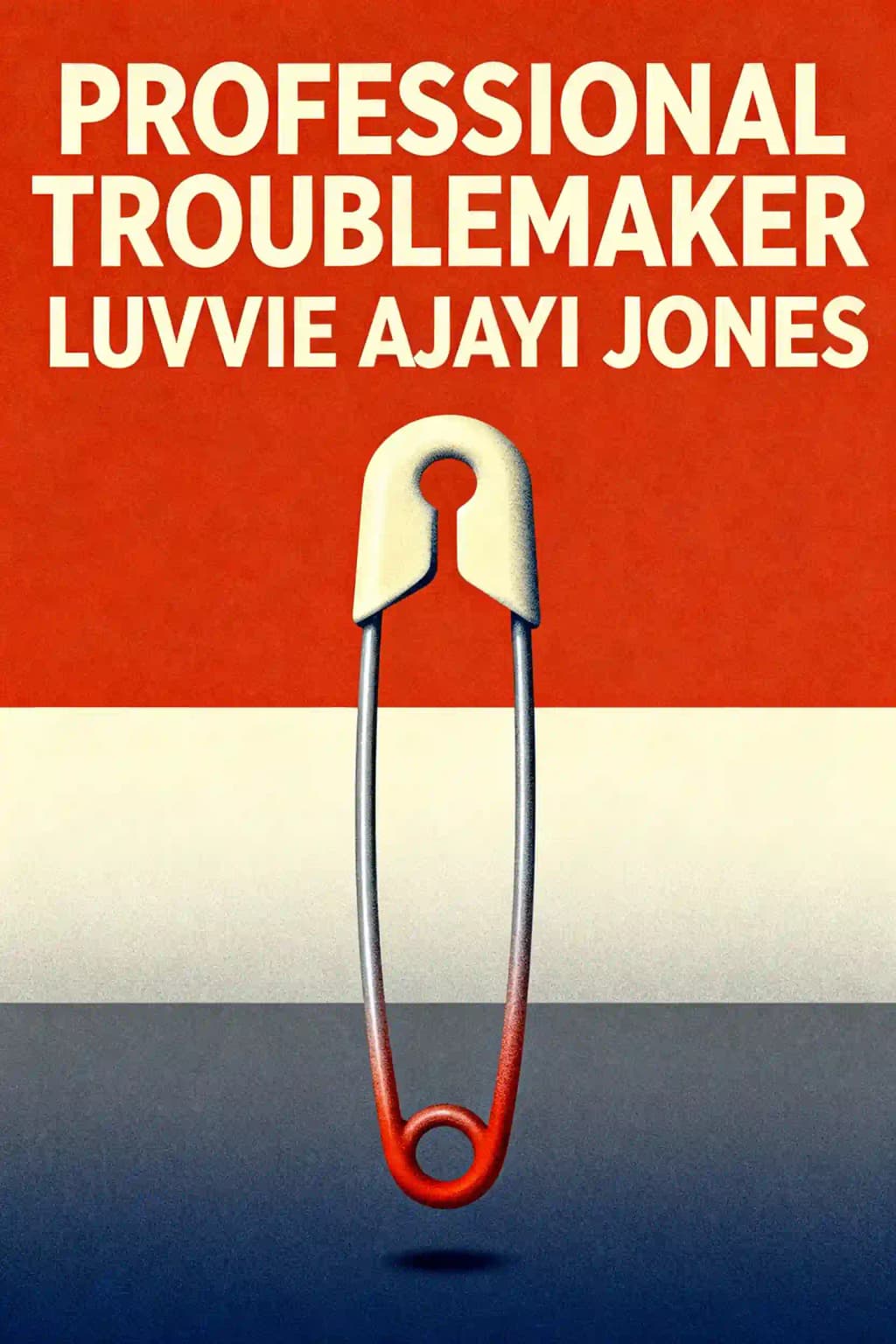
What happens when a Nigerian-born woman with a sharp tongue and zero chill decides to write a guide for facing fear? You get "Professional Troublemaker" - Luvvie Ajayi Jones' manifesto for living boldly in a world that constantly tells us to shrink. This isn't just another self-help book; it's a battle cry against the fear that keeps us playing small. Oprah Winfrey called it "a call to courage that comes at the perfect time," while Shonda Rhimes praised it as "the book we need right now." Since its 2021 release, it has inspired thousands to become professional troublemakers - not people who cause chaos, but those who critique broken systems and refuse to stay silent. Drawing wisdom from her grandmother Olufunmilayo Faloyin - a woman who took up space unapologetically with charm and directness - Luvvie shows us how to fight fear like it personally insulted us, because what waits on the other side is nothing short of transformation.
Kapitel 2
The Foundation: Knowing Your Full Self
We fear our full selves - who we are in all our glory and grit. Yet standing in your complete personhood provides the foundation needed to be a professional troublemaker. This isn't about being immovable or stubborn, but about having a strong sense of identity and knowing you belong in this world. As the poem "Desiderata" reminds us: "YOU HAVE A RIGHT TO BE HERE."
Knowing yourself fully means understanding not just who you are but whose you are. Being connected to community provides accountability and a charging station for our spirits. In Yoruba culture, this connection is embodied in the oriki - a personal praise greeting that connects you to your kinship and speaks life to your destiny. An oriki reminds you of your roots, brags about your people, and connects you to ancestors by telling who you WERE, ARE, and WILL BE.
We see this tradition living on in how people praise themselves and others - from Christian praise to fictional introductions like Daenerys Targaryen's lengthy titles in Game of Thrones. Even without knowing my own traditional oriki, I've created custom ones for people I admire like Michelle Obama and Beyonce. Creating your own begins with "First Name and Middle Name of House Last Name" followed by your accomplishments and qualities.
Beyond our connections to others, we must know who we are at our core. We often swallow our true selves to fit in until we forget our own taste. When people ask how I'm so confident, it's because I constantly work to stay connected to myself through key questions: What do I hold dear? What are my core values? What brings me joy? What makes me amazing even on my worst day? What's worth fighting for? What do I want said at my funeral?
These questions form my life mission statement - my atlas when I've gone off course. Knowing yourself also means knowing who you aren't - rejecting others' projections and stereotypes. Don't let people who can't spell your name define your worth. Remember the battles you've fought and mountains you've climbed. Your professional troublemaking depends on it.
Kapitel 3
Embracing Your "Too Much-ness"
When we talk about being our full selves, we're often afraid of being judged for it. People frequently declare us "TOO much" - too loud, aggressive, passionate, intimidating, quiet, sensitive, tall, short, Black. This isn't just observation but a request to change, to turn down our volume. The problem? What we're told is "too much" is usually core to our identity or appearance - something we cannot or should not change.
Being "TOO" something means doing or being something to a level others find uncouth or different. The inverse of too much is too little, and I'd rather be too big than too small. When someone says you're too much, they're really saying "be less" - but why should you shrink yourself for others' insecurities? Your job isn't to chameleon through life until you forget your true colors. If a space demands you shrink, it's too small for you - find somewhere that allows you to grow infinitely.
My grandmother was the Queen Mother of Team Too Much. Everything about her was big - she was too bossy, confident, aggressive, brash, headstrong, assertive, feisty, strong, and dramatic. As an older Nigerian woman, being dramatic was practically cultural obligation. Once during an argument with my mother, she theatrically packed a trash bag, put on mismatched clothes, and announced she was going to wait at the bus stop for "the people who pick up old people." For her sixtieth birthday, she threw a seven-day celebration that closed three blocks, hosted a thousand guests daily, slaughtered a cow each day, hired Nigeria's top musician to perform until sunrise, and wore gold chains that would make rappers jealous.
When I moved from Nigeria to the United States at nine years old, my confidence was shaken for the first time. I felt too different, too foreign. I introduced myself as "Lovette" instead of Ifeoluwa Ajayi - not from shame, but to protect my sacred name from mispronunciation. I worked to lose my Nigerian accent quickly after being called an "African booty scratcher." I'd eat my jollof rice lunch in corners to avoid questions about the "smell." In college, I finally reclaimed my Nigerianness, meeting others with similar stories and realizing my cultural perspective was my superpower.
Whatever people think we're TOO much of often becomes useful when it benefits them. Our TOO MUCHness is our superpower, to be wielded with pride. The person who's "TOO sensitive" likely has high emotional IQ, while the "TOO uptight" person excels at organizing, and the "TOO turnt" person creates memorable adventures. You'll always be too much for somebody, so be the full totality of yourself. Be the Youest You That Ever Youed.
Kapitel 4
Daring to Dream Beyond Fear
We fear having too much hope because we're afraid of disappointment. When we expect nothing or something small, we think we can't be let down. But this defense mechanism becomes a liability, causing us to live colorless versions of our true desires. Even in a world of oppressive systems that make dreaming feel like a privilege, we must dare to imagine bigger possibilities. We need the nerve to dream like those who've never been told there are ceilings.
Growing up, I wanted to be Dr. Luvvie, but Chemistry 101 in college crushed that dream with a solid D. As my doctor dream ended, I started blogging in 2003, eventually creating AwesomelyLuvvie.com after graduation. Though I won awards for my humor blog, I was afraid to call myself a writer - that title belonged to giants like Toni Morrison and Maya Angelou. After being laid off from my marketing job in 2010, I reluctantly freelanced while still hunting for traditional employment.
The turning point came when I covered the Academy Awards as a blogger in 2012, standing alongside journalists from major networks. That experience shifted my perspective: I was there because of my words. I was indeed a writer.
After college, I wrote down two major dreams: publishing a New York Times bestselling book and helping my single mother retire. When I turned thirty in 2015, I declared it my year of "Afraid? Do it anyway," pursuing everything that scared me - from skydiving to solo international travel. This mindset shift enabled me to finally write my first book, "I'm Judging You: The Do-Better Manual." The book hit the New York Times bestseller list at number five, instantly changing my life - my fees doubled and doors opened. A month later, I called my mother and told her she could stop working because I could now handle both our bills.
It all began with a blog from a girl who thought she wanted to be a doctor but was really a writer. I became the example I couldn't find for myself, drawing the map for others who might follow. When we dream boldly and unapologetically, we give others permission to do the same.
Kapitel 5
Owning Your Dopeness Without Apology
We spend our lives trying to be humble and modest, fearing accusations of arrogance. While perspective matters, sometimes humility can go too far. Rather than carrying ourselves with "the confidence of a mediocre white man," we should embody the confidence of an older West African woman who has overcome challenges and emerged stronger.
My grandmother was the queen of "Smell the Roses While Here," unapologetically accepting all love sent her way. As the Most Senior Mother-in-Israel Prophetess Faloyin at her Cherubim and Seraphim church, she embraced celebration. When she arrived at church, everything stopped - music paused, her presence was announced, and she danced down the aisle with a welcome committee. This revolutionary behavior taught me to allow myself to be truly celebrated.
Women especially have been told humility requires perpetual self-deprecation, as if knowing our worth threatens the world. When we don't own our dopeness, we sell ourselves short. Some of us struggle to share our accomplishments because it feels like bragging. But your achievements are factual things. If speaking about them makes someone feel you're bragging - so what? Don't let others make you feel bad for being successful and amazing.
Owning your dopeness is about being liked by you first. Even terrible people can convince others they're amazing through confidence alone, while exceptional people question themselves. We err on the side of humility to our detriment. Stop apologizing for your existence - your presence warrants celebration, not apology. Especially as women, we've been told to be polite but stern, sexy but not sexual, bosses but not bossy. But we are magic, we are everything. Don't let impostor syndrome block your blessings.
Kapitel 6
Trusting Your Place in the World
What would happen if we showed up as the best version of ourselves? We often talk about fear of failure, but fear of success is just as real. We worry about sustaining excellence or handling what comes with it. This fear often stems from impostor syndrome - questioning whether we deserve opportunities and talking ourselves out of winning before entering the race.
When invited to speak at TEDWomen, I initially declined due to scheduling conflicts, but when the opportunity arose again just two weeks before the event, I panicked about the lack of preparation time. Despite my attempts to find excuses, the TED team accommodated all my constraints. The night before, I rewrote half my talk to infuse more of my personal story. On the day, despite my nerves and a mic pack falling off at the start, I delivered my talk flawlessly for ten minutes and fifty-four seconds straight through. The audience gave me a standing ovation, and I rushed to catch my flight.
A week later, TED featured my talk on their homepage, where it gained millions of views. This experience proved my own point about not letting fear lead my decisions - I wasn't fearless, but I did it anyway. When we honor our gifts, we must stand in them.
Impostor syndrome, the cousin of fear, makes us feel like frauds wearing masks in roles we don't belong in. It tricks us into declining opportunities, questioning our worthiness, and striving for nonexistent perfection. I've let it convince me I didn't belong on stages like TED or Oprah's SuperSoul 100.
Impostor syndrome tells us our differences reduce our worth when they're actually our superpowers. As often the only Black woman keynote speaker in rooms, I've learned to see my uniqueness as an anchor rather than a disadvantage. To fight impostor syndrome, I remind myself: I don't have to be the best to be enough; my hard work earned me my place; and once I'm in the room, I belong there.
Kapitel 7
Speaking Truth When Your Voice Shakes
We are afraid of the truth. We don't like hearing it, sharing it, or seeing it. The truth can feel like the boogeyman, despite being essential for a well-functioning society. We fear honesty because it exposes our flaws and the rawness of life we'd rather ignore. Once you see the truth, you can't unsee it, and you might have to take action.
Lies travel faster than truth. Studies show most people lie at least once in a ten-minute conversation - not maliciously but for self-preservation and to be liked. I've always been bad at lying, lacking a poker face with my thoughts visibly written on my face. Growing up, I got in trouble for being too direct, defending myself or others with "that's not fair." I learned early that truths make people uncomfortable, which ironically became the foundation of my career.
I started blogging in 2003 as a college freshman, before social media existed. Writing online was a gift to myself - with no career expectations, I couldn't fail at it. This freedom allowed me to write authentically without pretense or agenda. As people recognized me as someone writing what they thought but wouldn't say, I gained an audience. I was genuinely confused when my work won awards - all I was doing was writing truthfully about the world.
We're collectively unaccustomed to truthfulness. When we lie in small moments, we lack the capacity for honesty in important ones. Take the example of a friend's bad haircut - lying to spare feelings creates distrust when they discover the truth. Honesty is a love language - affirming with facts rather than pleasing with lies.
Meetings mirror how we navigate the world. We've all witnessed terrible ideas go unchallenged because people stay silent. When companies face backlash for tone-deaf campaigns, I wonder who didn't speak up in those rooms. Some are tired of always being the challenger, others believe it's not their department, many feel unwelcome speaking up, and others fear punishment.
Black women show up daily with no room for error and few defenders. They're often thrust into the role of workplace chaperone, not by choice but necessity. I believe Black women are the moral center of the universe - speaking up, showing out, and standing for everyone despite constant disrespect.
I won't pretend speaking truth has no consequences - it can. But I'd rather risk fallout than regret my silence. When I'm afraid to speak up, I remember skydiving - that terrifying moment when I jumped from a plane and forgot how to breathe for three seconds. Once I caught my breath, all I saw was beauty below.
Speaking truth feels scary each time, even for experienced challengers. We never get comfortable with it; we just practice doing it despite the fear. Before challenging others, I ask myself three questions: Do I mean it? Can I defend it? Can I say it with love? If yes to all three, I speak up and let the chips fall.
Kapitel 8
Embracing Failure as Part of Growth
Failing sucks. We fear people will see our slips showing and use our mistakes as ammunition against us. We're afraid to say or do the wrong thing, so we end up doing nothing noteworthy, living in the gray zone. But if you're living a life of color, of impact, you will make mistakes. You will show you're an everlasting fool who constantly needs to get their shit together. And that's okay. Failure is necessary for living loudly.
Through therapy, I realized my younger self was necessary because she became the woman I am now. I had to thank that girl for the work she did and the person she was, because she led me here. I needed to give myself grace and forgive my mistakes. That girl who was afraid to call herself a writer could've never written this book or confidently shown up in these rooms.
None of us belong on pedestals. We're flawed people whose jobs make us seem grander than we are. I know I can be trash and have garbage ways. I'm not infallible or smarter than someone just because I have a platform. I got kicked off my pedestal and hope people didn't put me back on it, because I don't deserve it. I will disappoint you. I will let you down. I will fuck up. But I will hopefully never stop learning how to show up in the best way I know how.
The judge will be judged. I often challenge people to do better, which means I'll be challenged to do the same. I'll be in the court of public opinion too because I'm bound to make mistakes. What matters is how I handle it and move forward. A proper apology shows humility and acknowledges when we're wrong - not just in what we say, but how we act when challenged.
As my career grows, my prayers need to strengthen. I can't guarantee I'll never make mistakes again, so I need fortification for when people call me what I'm not. I must pray that my armor strengthens daily, that my feet remain planted, and that I demonstrate what it looks like to fail and move forward.
Kapitel 9
Asking for What You Deserve
Many of us live "what-if" lives because we're afraid to ask for what we want and need, fearing rejection. But what might happen if we constantly asked for more - from life, relationships, bosses? What if we realized that "no" won't kill us, but "yes" could transform our lives? Our inability to ask stems from learned disappointment. As James 4:2 says, "we have not, because we ask not."
In therapy, I realized I was someone who, despite my boldness, feared asking for more. When stressed about work and home responsibilities, my therapist asked if I'd requested help from my partner. I hadn't, even though he'd offered. I insisted on handling everything myself, shouldering boulders while others carried rocks.
This stemmed from being the Responsible One who never wanted to burden others. As a lifelong giver who prided herself on independence, I struggled to receive - whether help, compliments, or gifts - without feeling indebted. But by not allowing others to give to us, we deny them the same joy of generosity we cherish.
We've been conditioned to view money as a taboo topic, despite its enormous impact on our quality of life. This silence persists even though we live in a world where the eight richest people (all men) hold as much wealth as half the human population. Women especially are discouraged from focusing on finances, as we're expected to be service-minded. This explains why women comprise 74 percent of the nonprofit workforce yet earn 74 percent or less than men in the same roles.
The systems of oppression have conditioned marginalized people to believe we're liabilities rather than assets. This explains the persistent wage gap where white women make 79 cents to a white man's dollar, with women of color earning even less. I learned this lesson the hard way when I accepted my nonprofit job offer of $35,000 without negotiation-a mistake that cost me thousands.
ALWAYS negotiate job offers because: nobody's doing you a favor by hiring you; negotiation is standard business practice; the first offer is never the best offer; and asking for more won't cause them to rescind the offer. The salary you accept early in your career affects all future earnings-that $5,000 difference compounds with each percentage-based raise.
I've gone from making $35,000 annually to earning that amount in a single weekend through building my platform over a decade. My negotiation strategy is simple: research industry standards, reject the notion that asking for fair compensation is greedy, state your number confidently (with an exclamation point, not a question mark), then remain silent. Never stake your claim on being cheap-your value isn't in your affordability but in your quality.
Kapitel 10
Setting Boundaries Without Apology
In both personal and professional relationships, we need to establish clear boundaries that protect our well-being and help others understand how to interact with us respectfully. People often feel entitled to our lives, energy, time, space, and platforms - usually not from malice but from habit. We struggle with establishing boundaries because we fear disrupting harmony, hurting feelings, or seeming difficult.
But like flight attendants tell us, we must put our oxygen masks on first. While everyone isn't responsible for my comfort, they might be culpable in my discomfort. My boundaries are my responsibility to voice - people can't honor invisible lines. We cannot assume everyone operates from the same understanding, which is why we must speak our boundaries out loud.
My grandmother drew firm lines about not being spoken to in a loud voice during conflict - even in Nigerian culture where loud speaking is normal. Her boundaries were respected by everyone, showing me that people are capable of acting appropriately when they know what's expected.
At the core of setting boundaries is minimizing self-betrayal. One of my biggest boundaries is that I don't like hugging people I don't know - which is tough because people love to hug! I often find myself accepting unwanted hugs to avoid disappointing others, but this prioritizes their comfort over mine.
Social media is the land of crossed boundaries - something about being behind a keyboard makes people forget their home training. My virtual boundaries include not tagging me in photos I'm not in, not using me to get audience attention, and not direct messaging me for favors without building rapport first. My social media is a dictatorship, not a democracy - I block, delete, and mute as needed.
Your life is not a carnival and not everyone deserves a ticket. I see my life as an exclusive club where only people on the guest list get in. Draw lines, especially with family - these are the folks who can manipulate us to erase boundaries most important to our well-being. Don't give everyone everything you have in terms of energy, time, brain power, money, or presence. You'll be left with nothing while they still have everything you gave them.
Kapitel 11
Building Your Squad for the Journey
Although we fear betrayal and often pride ourselves on being movements of one, humans are not meant to do life alone. We need people to cheer, encourage, challenge, and love us. But we're afraid of being deceived or rejected, carrying traumas that teach us to "trust no one." To squad up means forming community with people who aren't blood, allowing them access that can be revoked at will - and that scares us.
My grandma was an alpha woman who never lost herself in being a wife. In a time when domestic violence was the norm, that wasn't her experience - Grandma could BOX. Having to fend for herself since eighteen made her tough, but she also curated a squad of other tough-ass Nigerian women who affirmed her boldness. Bold women rock with other bold women because we create space for each other and normalize bravado that society denounces.
The people around us affirm our lives and decisions, peer-pressuring us into being better. Seeing them up close inspires us to know what's possible. You need a strong village to hold you up when you can't stand. If people demean you, your squad reminds you who you are. My accomplishments might be half my drive and half because I don't come from half-stepping people.
When I say "build a squad," I don't mean make everyone your best friend. We can have multiple squads serving different purposes with varying proximity:
1. THE DAY ONES: Friends you've had since you were younger, before any glow up. They remember your snaggleteeth and chicken pox, have embarrassing photos, and call you by childhood nicknames.
2. THE PROFESSIONAL CREW: People you've bonded with in professional settings - work spouses, former colleagues, industry connections who understand your work frustrations.
3. THE MENTORS: The business version of "not your little friends" - guides who care about your whole life and actively ask "How can I help?" without expecting anything in return.
4. THE PLAY GROUP: Who you travel, party and kick it with - part of your self-care routine, reminding you that life is fun and helping you blow off steam without judgment.
5. THE TRUE BLUES: They know where all the bodies are buried - they probably helped with the shovel. They've seen you at your worst but hold space for your best self.
Each group is essential for a well-rounded village, and they're dynamic - people can move between categories. Not everyone is equally invested in your well-being, and that's okay. Friendship doesn't mean zero discord; commitment through thick and thin applies here too.
Kapitel 12
The Final Battle: Fear Itself
Fear is a hater that will have you sitting when you should stand, staying silent when you should speak, and abandoning your purpose. The world is scary, but we lead lives with too much fear, bracing for impact and staying put. Sometimes this anxiety comes from loved ones - generational curses can be limitations placed on us by family who meant well but used ammunition of apprehension.
Living minimally afraid by covering ourselves in bubble wrap is boring and wasted - a version of fluorescent beige. I want to leave a mark when I'm gone. I want my absence felt and my contributions to be bigger than my small stature. I'm not fearless, but I've learned to push past fear because often the fear itself is scarier than what's on the other side.
Fighting fear is facing freedom. We owe it to ourselves to say FUCK FEAR and drop dead weight - unsupportive friends, worthless partners, soul-crushing jobs, self-doubt. Everyone who has done major things started with one step. Those dreams we have the audacity to dream can't stay on the "wish list" pile forever.
In the middle of writing this book, the coronavirus pandemic began, testing whether I could practice what I preach during especially difficult times. Hundreds of thousands died while some refused to take precautions, being wildly foolish when fear should serve its original purpose: protecting us from danger.
Life is full of uncertainty, and that's scary. During uncharted waters, we can know we're doing our part. While some needed rest during the crisis, I continued writing because book deadlines are real and writing is my catharsis. Crisis presents opportunities for our best work - people write from the depths of their spirits, paint with soul-summoned strokes, sing cosmic notes, and innovate.
My grandmother would have prayed during these times, but I must not let faith become toxic positivity - the harmful idea that we should always respond positively regardless of circumstances. Christians excel at this, taught that faith and fear cannot coexist, but this oversimplifies scripture and flattens normal human experience. You can be spiritual and still worry. The goal isn't to never feel negative emotions; it's to not let them consume us.
Fear will always be present, but we must keep going. When fear tries to stop me, I think of my grandmother Olufunmilayo Juliana Faloyin, my prototype of a professional troublemaker. Fear is a hater, a liar, and a cheat. To be FEARLESS is to not commit to doing LESS because of our fears.