Kapitel 1
The Predator, His Protectors, and the Pursuit of Justice
Jeffrey Epstein seemed untouchable. A multimillionaire financier with connections to presidents, princes, and powerful figures across the globe, he operated with impunity for decades while systematically abusing underage girls. His case represents one of the most shocking failures of the American justice system-a perversion of justice that allowed a serial predator to escape meaningful punishment despite overwhelming evidence. When Julie K. Brown began investigating this story for the Miami Herald in 2017, she had no idea her reporting would eventually lead to Epstein's arrest, a cabinet secretary's resignation, and a long-overdue reckoning for his victims. The story of how Epstein maintained his predatory empire, how the system protected him, and how determined journalism finally brought him down reveals disturbing truths about power, wealth, and accountability in America.
Kapitel 2
Investigation of Systematic Abuse in Palm Beach
Detective Joe Recarey took charge of a significant criminal investigation after receiving the case from a colleague. The recorded witness interviews revealed deeply troubling accounts from adolescent victims who were initially hesitant to come forward. Many expressed serious concerns for their safety and faced intimidation after cooperating with law enforcement, including surveillance and threatening communications.
The investigation uncovered a sophisticated criminal enterprise targeting vulnerable youth, particularly those from disadvantaged backgrounds. The perpetrator offered monetary compensation, typically $200-300, for what was presented as therapeutic services. He focused recruitment efforts around specific schools in economically challenged areas. These encounters escalated into serious criminal conduct. The scheme expanded through a incentivized recruitment system, where existing victims were paid additional funds to introduce others, creating widespread community impact. Most affected individuals were high school students, with some as young as middle school age.
Detective Recarey encountered significant resistance while building his case during 2005-2006. Private investigators conducted counter-surveillance on law enforcement and witnesses, while a high-powered legal team worked to discredit victims by investigating their personal lives and circumstances. The criminal activity continued throughout the investigation, with evidence showing regular payments and concerning transportation patterns.
Despite these obstacles, law enforcement built a comprehensive case through thorough investigation. By February 2006, they had gathered seventeen detailed victim statements, corroborating testimony from two former employees, extensive phone records, appointment logs, physical evidence, and multiple consistent witness accounts describing the location of criminal acts. The detective determined there was sufficient evidence to pursue multiple serious criminal charges. However, the investigation faced mounting interference from influential figures in law enforcement and political circles who sought to protect the wealthy suspect.
The investigation revealed how wealth and connection could potentially influence the justice system, raising serious questions about equal treatment under the law. Detective Recarey's methodical work highlighted the importance of persistent law enforcement efforts in the face of powerful opposition.
Kapitel 3
The Making of a Monster
Jeffrey Epstein's path to becoming one of America's most notorious sex offenders began with humble origins. Born in 1953 to a middle-class Jewish family in Brooklyn, he was the son of Seymour Epstein, a parks department employee, and Paula, a homemaker. Considered a mathematical prodigy, he skipped two grades in school and graduated from Lafayette High School at sixteen. His early academic success would later become part of his carefully crafted mythology, though former classmates would later question the extent of his supposed genius.
Despite lacking a college degree, Epstein managed to secure a teaching position at the prestigious Dalton School in 1974, hired by headmaster Donald Barr (father of future Attorney General William Barr). Though some remember him as an engaging teacher, others found him "creepy" around female students. Former students recalled his inappropriate behavior, including attending student parties and making suggestive comments to teenage girls. More importantly, Dalton provided Epstein with crucial connections to New York's financial elite, setting the stage for his meteoric rise in finance.
After impressing Alan Greenberg's daughter's father at a parent-teacher conference, Epstein was recommended to Bear Stearns. He joined the investment firm in 1976 and quickly rose through the ranks, becoming a limited partner before departing under murky circumstances in 1981 amid allegations of regulatory violations. By the 1990s, he had reinvented himself as a financial "genius" managing money for billionaires, though the sources of his wealth remained mysterious. He cultivated an air of exclusivity, claiming to only accept clients with assets over $1 billion, while operating from his mansion on Manhattan's Upper East Side.
Epstein's predatory behavior likely began early and followed a calculated pattern. His first known underage victim was recruited at Interlochen, a prestigious Michigan arts camp he had attended in his youth and later supported financially through substantial donations that gave him special access to students. In 1994, he and his associate Ghislaine Maxwell befriended a thirteen-year-old aspiring singer whose father had recently died, using a familiar playbook of promises about career advancement and financial support. Another lawsuit describes a similar pattern with another thirteen-year-old from Interlochen, whom Epstein groomed by offering financial support, calling himself her "godfather," and gradually escalating to sexual assault over several years.
What made Epstein particularly dangerous was his sophisticated understanding of power dynamics and vulnerability. He targeted girls from disadvantaged backgrounds who needed money, often with absent fathers or troubled home lives. His operation became increasingly organized, with a network of recruiters who would bring him new victims, often promising legitimate massage work or modeling opportunities. As victim Courtney Wild later observed: "Jeffrey Epstein preyed on girls who were homeless and addicted to drugs. He didn't victimize Olympic stars and Hollywood actresses. He victimized people he thought nobody would ever listen to, and he was right." This strategic targeting of vulnerable victims, combined with his powerful connections and financial resources, allowed his abuse to continue unchecked for decades.
Kapitel 4
The System Fails: How Justice Was Derailed
The Epstein case represents a catastrophic failure of the justice system at multiple levels. When Palm Beach Police Chief Michael Reiter brought the case to State Attorney Barry Krischer in 2006, he expected swift prosecution given the overwhelming evidence. Instead, prosecutors began treating victims with skepticism.
Prosecutor Lanna Belohlavek referred to the underage girls as "prostitutes" despite Florida law making sex with anyone seventeen or younger illegal regardless of consent. When Detective Recarey questioned why she wouldn't believe the victims without interviewing them, Belohlavek pointed to social media posts showing underage drinking and marijuana use. "This is problematic," she said. Exasperated, Recarey responded, "Tell me what teenager doesn't drink! Based on these criteria, basically what you're telling me is the only victim of a sexual battery could be a nun."
Epstein strategically hired Palm Beach lawyer Jack Goldberger, whose law partner Jason Weiss was married to Daliah Weiss-the other prosecutor assigned to the case. This forced Daliah Weiss to recuse herself, removing the tougher prosecutor from the case.
In a shocking move, State Attorney Krischer decided to put the case before a grand jury-unusual for non-capital cases in Florida-which limited media scrutiny through secrecy rules. Without consulting Recarey, prosecutors offered Epstein a plea deal: one count of aggravated assault with intent to commit a felony, five years' probation with adjudication withheld-no sex charges and no jail time.
Frustrated with the state's handling of the case, Chief Reiter took the extraordinary step of referring the case to the FBI and the U.S. Attorney's Office in 2006. This should have been Epstein's undoing. The FBI investigation identified even more victims, and Assistant U.S. Attorney Ann Marie Villafana drafted an 82-page prosecution memo outlining sex trafficking charges.
But once again, Epstein's connections and legal firepower prevailed. His defense team, now including former independent counsel Kenneth Starr, bypassed Villafana to meet directly with U.S. Attorney Alexander Acosta and other Justice Department officials. After months of negotiations, Acosta approved a non-prosecution agreement that immunized Epstein and his co-conspirators from all federal charges in exchange for pleading guilty to minor state prostitution charges.
The deal was sealed from public view, and prosecutors deliberately kept victims in the dark-a violation of the Crime Victims' Rights Act. When Epstein finally took his plea in June 2008, victims' attorney Brad Edwards was misled about the nature of the agreement. It would take months before Edwards could see the full document-by which time Epstein was already serving his token sentence.
Kapitel 5
A Country Club Incarceration
Jeffrey Epstein's 13-month "jail sentence" made a mockery of justice and exposed the deep inequalities in America's criminal justice system. While convicted child molesters typically face brutal treatment in Florida's state prisons, including solitary confinement and constant threats from other inmates, Epstein's stay in Palm Beach County jail resembled a luxury retreat with amenities most prisoners could never imagine.
The sheriff's department created an unprecedented special work release program specifically for him, allowing him to leave confinement for up to 12 hours a day, six days a week. During this period, Epstein made an astounding sixty-nine doctor visits in just six months, sometimes twice in one day, plus thrice-weekly chiropractor appointments. These medical visits occurred without any documented serious health conditions. Sheriff's officials notably referred to Epstein as a "client" rather than an inmate, and he paid over $128,000 for special off-duty details with deputies dressed in business suits rather than standard uniforms - an arrangement never before offered to other inmates.
The preferential treatment extended to record-keeping. Deputies logged visitors but stored the logbook in Epstein's private office safe, which later mysteriously "no longer existed" when investigators sought access. One deputy, in a revealing admission, stated he never checked what Epstein did all day, saying "That wasn't my job." The visitor logs that did survive showed frequent visits from high-profile individuals including Harvard law professor Alan Dershowitz, Clinton associate Arnold Prosperi, and Story Cowles, a young assistant who visited over 100 times during the brief incarceration period.
Even more disturbing were allegations that emerged later. At least one victim came forward claiming that Epstein continued to sexually abuse women during his work release period, with sheriff's deputies stationed outside the door of his office. When Palm Beach Sheriff Ric Bradshaw was questioned about this extraordinary arrangement years later, he responded by ordering an internal investigation - a tactical move that conveniently allowed him to refuse releasing public records by citing an "ongoing investigation."
The farce continued after his release, when Epstein's house arrest proved equally meaningless. He spent hours shopping at Home Depot and Sports Authority without consequence, and remarkably received permission to travel to his private Caribbean island and New York mansion - privileges unheard of for sex offenders under supervision. When caught walking outside his permitted area, his probation officer dismissed it as merely getting "exercise." Adding insult to injury, Epstein was released a month early on July 22, 2009, for "good behavior."
The entire episode sent a clear and troubling message: for the wealthy and well-connected, even conviction for sex crimes against minors wouldn't result in meaningful punishment. Within weeks of his release, Epstein had returned to his jet-setting lifestyle, hosting parties at his Manhattan mansion and traveling internationally, convinced he had permanently beaten the system through his wealth and connections. This period of "incarceration" would later become a textbook example of how money and influence can corrupt the criminal justice system.
Kapitel 6
The Network of Facilitators: Understanding the Support System
Evidence shows that multiple individuals enabled and sustained Epstein's criminal enterprise. Most significantly, his associate Ghislaine Maxwell played a central organizational role, according to extensive court testimony and documentation.
Maxwell, daughter of British media executive Robert Maxwell, relocated to New York following her father's 1991 passing and subsequent revelations of financial impropriety. Despite her family's economic difficulties, she maintained an affluent Manhattan lifestyle, raising questions about her financial resources.
Court records indicate Maxwell began recruiting young individuals for Epstein during this period, reportedly offering legitimate-seeming employment opportunities. Virginia Giuffre, a teenage employee at Mar-a-Lago, testified that Maxwell approached her with what appeared to be professional massage therapy training. This arrangement subsequently evolved into systematic exploitation by both Maxwell and Epstein.
Multiple witnesses described Maxwell as both facilitator and participant in the misconduct. According to court testimony, she provided instruction and coordinated encounters. As one witness stated under oath: "Maxwell was responsible for managing my availability to meet with others through Jeffrey."
The operation extended beyond Maxwell to include various staff members, such as pilots, household employees, and assistants including Sarah Kellen, Nadia Marcinkova, and Lesley Groff. Several of these individuals later testified that they themselves had been victimized by Epstein when they were vulnerable young adults.
The network's influence reached institutional levels. Harvard University maintained Epstein's office access and accepted donations through intermediaries despite his 2008 legal status. MIT's Media Lab received undisclosed contributions, with internal communications using coded references. Financial executive Leon Black provided $158 million between 2012-2017 for consulting services, while Epstein maintained contact with prominent figures like Bill Gates following his conviction.
This extensive support system enabled the continuation of criminal activities for years after initial legal intervention. As noted by attorney David Boies: "These activities persisted openly for an extended period."
Kapitel 7
The Journalist Who Wouldn't Give Up
By 2017, Jeffrey Epstein seemed to have successfully buried his past. The media had moved on, his victims remained silenced, and he had returned to his jet-setting lifestyle. But Julie Brown, an investigative reporter at the Miami Herald, couldn't shake the feeling that a grave injustice had occurred.
Brown had spent years covering Florida's brutal prison system, documenting inmate abuse and suspicious deaths. The stark contrast between how ordinary prisoners were treated and Epstein's country-club incarceration gnawed at her. When Trump nominated Alexander Acosta-the prosecutor who had approved Epstein's sweetheart deal-as Labor Secretary, Brown was astonished that senators barely questioned this aspect of his record.
Despite initial reluctance from her editors, Brown began a methodical investigation. She created a "war room" in her spare bedroom, working from home to avoid distractions. Using fragments of information from court records and redacted police reports, she pieced together a list of victims. She looked for patterns on social media, noting that Epstein targeted girls with similar appearances-blonde, blue-eyed, petite, beautiful, mostly from West Palm Beach.
By October 2017, Brown had identified about sixty possible victims and tracked down addresses for most. The Harvey Weinstein scandal and resulting #MeToo movement suddenly made her editor more enthusiastic about the project, recognizing the parallels in how powerful men created "complicity machines" of enablers.
Brown wrote nearly sixty letters to potential sources, explaining her investigation into how the criminal justice system had failed Epstein's victims. She described how prosecutors had minimized public scrutiny while exploiting the survivors' vulnerabilities, writing them off as "strippers, prostitutes, drug addicts, and gold-diggers" when they were actually lost teenagers.
Her persistence paid off when Michelle Licata, known in the case file as Jane Doe 2, called from Tennessee. This led to more victim interviews, including with Virginia Giuffre and Courtney Wild. Brown also secured interviews with the original investigators, including former Police Chief Michael Reiter, who was finally ready to speak about the case after years of silence.
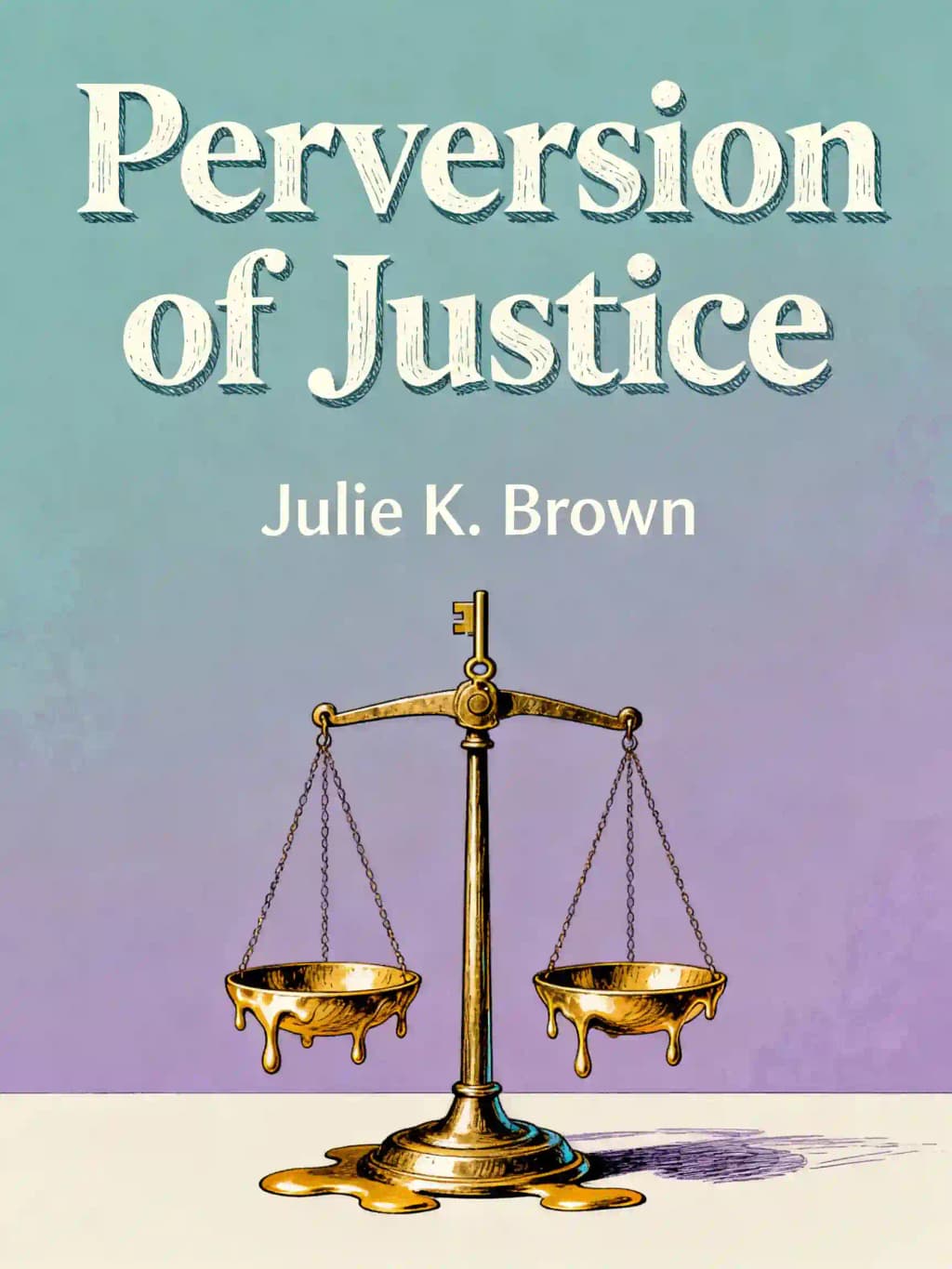
The resulting three-part series, "Perversion of Justice," published in November 2018, identified 80 victims and exposed in unprecedented detail how prosecutors had worked with Epstein's lawyers to conceal the plea deal and keep victims in the dark. The stories went viral, bringing national attention to a case that had been deliberately buried a decade earlier.
Kapitel 8
Justice Delayed: The Final Reckoning
Eight months after Brown's explosive reporting, federal prosecutors in New York finally took action. On July 6, 2019, Jeffrey Epstein was arrested at Teterboro Airport after returning from Paris on his private jet. Prosecutors charged him with sex trafficking of minors and conspiracy, alleging he had abused dozens of girls as young as 14 between 2002 and 2005.
At his bail hearing, prosecutor Alex Rossmiller revealed damning new evidence: hundreds of thousands of seminude photographs of young females discovered in Epstein's Manhattan mansion, a fake Austrian passport, diamonds as large as 2.38 carats, and suspicious payments to co-conspirators from his 2008 case.
The most powerful moment came when two victims spoke. Annie Farmer described meeting Epstein at sixteen in New York before he flew her to New Mexico, while Courtney Wild testified she was sexually abused starting at fourteen, calling Epstein "a scary person" who "should not be walking the streets."
The arrest triggered a cascade of consequences. Labor Secretary Alexander Acosta resigned under pressure after a disastrous press conference attempting to defend his handling of the original case. Prince Andrew stepped back from royal duties following a catastrophic BBC interview about his relationship with Epstein. MIT's president apologized for accepting Epstein's donations, and Harvard launched an investigation into his connections to the university.
But on August 10, 2019, Epstein was found dead in his cell at the Metropolitan Correctional Center. The medical examiner ruled it a suicide, though forensic pathologist Dr. Michael Baden, hired by Epstein's brother, found multiple broken neck bones more consistent with strangulation than hanging. The circumstances-including non-functioning cameras, sleeping guards, and the removal of Epstein's cellmate the day before-fueled conspiracy theories that persist to this day.
Epstein's death didn't end the pursuit of justice. On July 2, 2020, FBI agents arrested Ghislaine Maxwell at a secluded New Hampshire estate where she had been hiding. She was charged with six felony counts, including sex trafficking of minors as young as fourteen and perjury. Despite offering a $28.5 million bail package, she remained in custody awaiting trial.
Meanwhile, victims continued their fight in civil courts. By March 2021, Epstein's estate had paid over $67 million to at least 175 sexual assault survivors through a compensation fund. The U.S. Virgin Islands Attorney General brought charges against Epstein's estate and associates, seeking the return of his islands worth over $80 million.
Kapitel 9
The Power of Journalism and Survivors' Voices
On August 27, 2019, more than two dozen women gathered in the New York federal courtroom where Jeffrey Epstein had sat just one month earlier. Though the hearing was technically to dismiss the criminal complaint against Epstein, Judge Richard Berman invited victims to speak, citing the Crime Victims' Rights Act.
One by one, the women approached the podium. A woman molested at fifteen described feeling "powerless, not merely because one man wanted to strip me of my innocence, but because I was the victim of a system that just disenfranchises human beings." Another victim shared how, after losing her mother to cancer at eleven, she was recruited at a mall while carrying her violin, then sexually abused by "Jeff" until she became so disgusted she stopped going.
But something transformative happened that day-the victims realized they weren't alone. They discovered a bond, a sisterhood. "It took me years to tell anyone what Epstein did to me because I was so ashamed... until I found out there were other victims, girls just like me," said Jennifer Araoz, who was raped by Epstein at fifteen.
After the hearing, the women compared details of their experiences, recognizing patterns and shared trauma. In the months that followed, they became friends on social media, visited each other, shared photos of their children, and some even launched their own investigations into their recruiters and abusers. Virginia, Michelle, Courtney, and Jena-Lisa became close friends and stronger advocates for victims of sexual abuse.
The Epstein case demonstrates both the worst and best of American society. It reveals how wealth and power can corrupt our justice system, allowing predators to escape accountability. But it also shows how persistent journalism and courageous survivors can eventually overcome these barriers.
When Julie Brown began investigating this case in 2017, she faced enormous obstacles-shrinking newsroom resources, powerful opponents, and a story that had been deliberately buried. Yet her determination to give voice to forgotten victims ultimately changed history. As she reflected after Epstein's arrest: "I was aiming for something greater than a Pulitzer: justice."
The legacy of this case extends beyond Epstein himself. It has sparked important conversations about wealth inequality in the justice system, the treatment of sexual assault victims, and the responsibility of institutions to protect the vulnerable rather than the powerful. Most importantly, it has empowered survivors to speak their truth, transforming them from victims into warriors for justice.