Kapitel 1
The Power of Tiny Steps: Transforming Your Life Without Fear
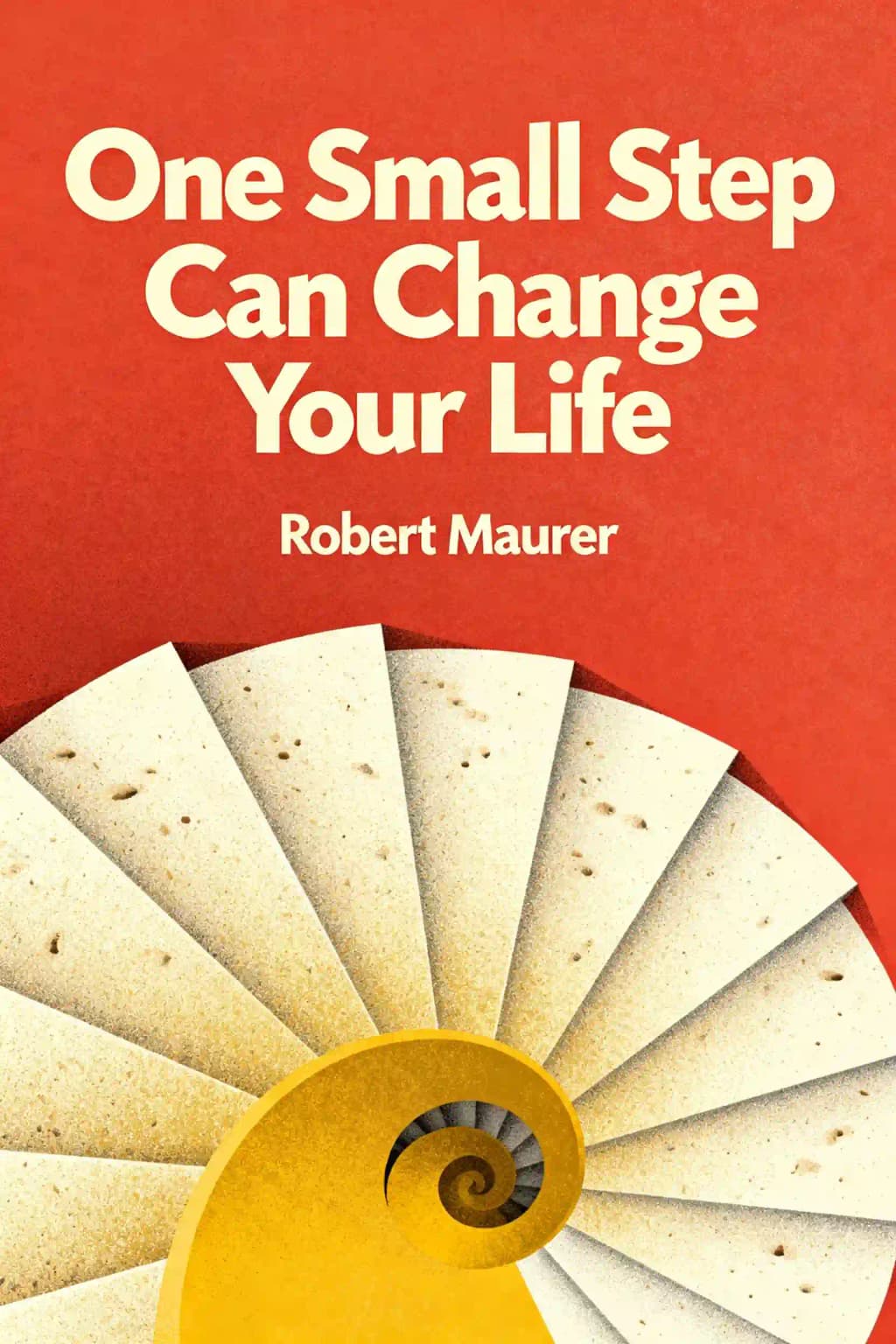
Have you ever felt overwhelmed by the prospect of change? Perhaps you've tried and failed at New Year's resolutions, fitness regimens, or breaking bad habits. What if the problem isn't your willpower but your approach? Robert Maurer's groundbreaking work reveals that our cultural obsession with dramatic transformation-the "no pain, no gain" mentality-actually sets us up for failure. Drawing from ancient Japanese wisdom and modern neuroscience, Maurer introduces kaizen: the revolutionary practice of using steps so small they seem trivial, yet lead to remarkable transformations. This approach has revitalized corporations like Toyota, helped Olympic athletes achieve gold, and enabled countless individuals to overcome seemingly insurmountable challenges. Celebrities like Oprah Winfrey and Tony Robbins have embraced these principles, recognizing that sustainable change comes not from dramatic leaps but from consistent, tiny actions that bypass our brain's fear response. As Helen Keller wisely noted, "I long to accomplish a great and noble task, but it is my chief duty to accomplish small tasks as if they were great and noble."
Kapitel 2
Why Small Steps Succeed Where Big Leaps Fail
When we attempt significant changes, our brain's ancient fear response kicks in, sabotaging our best intentions. This explains why 80% of New Year's resolutions fail by February and why so many diets end in binges. Consider how many people join gyms in January only to stop attending by March, or launch ambitious business plans that fizzle out within weeks. Our brain has three distinct parts that evolved over millions of years: the reptilian brain stem (500 million years old) controlling basic survival functions, the mammalian midbrain (300 million years old) processing emotions and memory, and the cortex (100 million years old) handling higher-level thinking. The midbrain contains the amygdala-our fear-processing center-which triggers fight-or-flight responses when we face significant challenges, even seemingly positive ones.
This biological reality explains why innovation-the process of seeking dramatic improvement through radical change-often fails. When you decide to exercise for an hour daily after years of inactivity or completely overhaul your diet, the amygdala perceives this as a threat, similar to encountering a predator in prehistoric times. It floods your body with stress hormones like cortisol and adrenaline, effectively shutting down access to your cortex, where creative thinking and rational decision-making occur. The result? Procrastination, excuses, and eventually abandonment of your goals. This pattern repeats across personal and professional contexts, from failed corporate transformations to abandoned personal development plans.
Kaizen works by circumventing this fear response through microscopic changes. Steps so small they seem laughable-like marching in place for just one minute while watching television, writing one sentence per day, or saving just one dollar-don't trigger the amygdala's alarm. This allows the brain to establish new neural pathways gradually, without resistance. Over time, these tiny steps build momentum and create sustainable change. For example, a person might start by doing one push-up daily, then naturally progress to two, then five, eventually building up to a full workout routine without experiencing the overwhelming fear that typically derails bigger initiatives.
We often mislabel our fear as "stress" or "anxiety," which prevents us from addressing it effectively. Children speak plainly about being "scared," while adults use clinical terms that distance them from their emotions. This self-deception makes it harder to address the root cause of our resistance to change. By acknowledging fear as a natural response to change-even positive change-we can work with our brain's architecture rather than against it. This shift in perspective allows kaizen's small steps to work their magic, gradually building new habits without triggering resistance. For instance, instead of launching an ambitious meditation practice with 30-minute sessions, starting with just one minute of mindful breathing can lead to a sustainable practice that grows naturally over time.
Understanding this neurological basis for resistance to change helps explain why seemingly promising initiatives often fail, whether in personal habits, organizational change, or social movements. The key is not to fight against our brain's natural protective mechanisms but to work with them through small, consistent steps that fly under the radar of our fear response.
Kapitel 3
The Art of Small Questions: Programming Your Brain for Success
Our brains naturally love questions. Unlike commands that can trigger resistance, questions engage our curiosity and activate our problem-solving capabilities. The hippocampus, responsible for storing information, pays special attention to repeated queries, making questions a powerful tool for programming our minds.
Small questions work by keeping the brain's fear response dormant while stimulating creativity. When you ask yourself "What's one small step I could take toward better health?" rather than "How can I lose 50 pounds?" you bypass the amygdala's alarm system. Your cortex remains engaged, playfully exploring possibilities without pressure.
These gentle questions create a mental environment where creativity flourishes. Successful writers like Michael Ondaatje avoid writer's block by starting with small questions: "Who is the man in the plane? Why is he there?" Similarly, engineer Perry Spencer's simple curiosity-"Why would radar melt my candy bar?"-led to the invention of the microwave oven.
For complex emotional challenges, small questions can be transformative. Grace, terrified of becoming dependent like her mother, couldn't commit to relationships despite wanting one. Through small questions like "What would my ideal mate be like?" and "What small, caring act would I appreciate from a partner?" she gradually clarified her desires without triggering fears. Within six months of this practice, she met and eventually married a wonderful man who matched her newly articulated preferences.
The power of questions works both ways-negative self-questions like "Why am I such a loser?" focus mental energy on flaws and inadequacies. For clients with low self-esteem, recording one positive thought about themselves daily often transforms their outlook within a month.
Small questions directed toward others yield surprising insights. Medical residents discovered teens preferred procedures at the beginning of appointments and often wanted parents present-contrary to their assumptions. Successful leaders regularly ask questions of their staff and even unexpected sources like janitorial teams, recognizing that everyone has valuable perspectives to offer.
To develop this kaizen habit, choose one question and ask it repeatedly over days or weeks. Helpful starting points include: "If I were guaranteed not to fail, what would I be doing differently?" for those unsure why they're unhappy; "What is one small step I could take toward reaching my goal?" for specific objectives; or "What is one small thing that is special about me?" to counter negativity. The key is consistency and a kind tone, as if speaking to a beloved friend.
Kapitel 4
Mind Sculpture: Rewiring Your Brain Through Imagination
While traditional approaches to change often advocate diving in ("Just do it!" or "Fake it till you make it"), mind sculpture offers a nearly painless alternative that works with your brain's natural learning processes. This powerful technique uses "small thoughts"-brief mental rehearsals-to develop new skills through imagination rather than immediate action.
Mind sculpture advances beyond traditional guided imagery by engaging all senses, not just visual. When practicing mind sculpture, you immerse yourself in the complete sensory experience-hearing, tasting, smelling, touching, and feeling muscle movements and emotions as if actually performing the action. This comprehensive mental rehearsal rewires the brain's chemistry within minutes of practice.
Olympic swimmer Michael Phelps famously used mind sculpture during training, mentally rehearsing his races while still in bed. This preparation proved crucial when his goggles filled with water during an Olympic final-having mentally practiced swimming blind, he maintained his rhythm and won gold. Research confirms mental practice can be as effective as physical practice; in one study, people who imagined piano exercises showed similar brain changes to those who physically practiced.
While elite athletes regularly use mind sculpture, the technique works equally well for everyday challenges. It's particularly effective for neutralizing fears-even helping earthquake victims overcome flashbacks by imagining positive resolutions. One woman with narcolepsy overcame her pill phobia after a single mind sculpture session. The technique has helped people master medical procedures, control anger, manage portions, embrace fitness, improve social skills, and become confident speakers.
Michael, a corporate supervisor who avoided employee reviews, agreed to spend just 30 seconds daily imagining giving positive feedback. Starting with compliments rather than criticism, he first practiced mentally, then left messages on his psychologist's voicemail, and eventually began giving real feedback. Within three months, he was conducting reviews comfortably, and department morale improved dramatically.
To practice mind sculpture effectively: identify a challenging task, commit to seconds (not minutes) of daily practice, imagine the scenario through all senses, envision positive outcomes, and only increase practice time when comfortable. Once mastered, you can even rehearse handling worst-case scenarios, preparing yourself for any situation.
Mind sculpture serves as a versatile kaizen tool usable at any stage of change-whether you're just beginning, temporarily unable to take physical action due to illness or scheduling conflicts, or maintaining an established habit. Even fifteen seconds daily imagining enjoying vegetables can prepare you for actually eating them. The technique works especially well for learning portion control, overcoming self-criticism, repairing relationships, and developing relaxation skills in triggering situations.
Kapitel 5
Small Actions: The Heart of Kaizen Transformation
Small actions form the core of kaizen. By taking steps so tiny they seem trivial or even laughable, you can easily overcome obstacles that previously defeated you. This gentle approach allows you to painlessly build momentum and establish permanent pathways to change.
Kaizen actions require minimal time and zero financial investment, making them perfect for busy, budget-conscious lives. When a struggling medical clinic faced high patient disenrollment due to long wait times, they implemented tiny changes: receptionists explained delays, nurses apologized, and doctors thanked patients for choosing their practice. Though wait times remained unchanged, patient satisfaction doubled and defections dropped 60%. These small steps-merely adding "I apologize" and "thank you"-transformed the patient experience without requiring expensive software or additional staff.
Though kaizen steps may seem tiny, they often produce surprisingly rapid change. Julie, a time-starved single mother, began by marching just one minute daily in front of her television. She gradually increased to commercial breaks, then found herself continuing during programs. Without struggle, she eventually reached thirty minutes of daily cardiovascular exercise.
Kaizen offers an alternative to failed resolutions by developing tolerance for change through minimal steps. A woman who bought an expensive treadmill but couldn't use it began by simply standing on it while reading her newspaper and drinking coffee. After a month, she added one minute of walking, increasing by a minute weekly. These seemingly ridiculous small actions eventually grew into running a mile daily-creating a sustainable habit rather than the typical pattern of intense activity followed by abandonment.
Research confirms even minimal exercise (four minutes daily) can improve aerobic capacity by 10%-the same improvement seen in those exercising twenty minutes daily. This principle applies to all kinds of changes: for healthier eating, begin by discarding just the first bite of an unhealthy snack; for saving money, start with just one dollar daily; for expanding social connections, list one potential place to meet like-minded people each day.
Addiction recovery particularly benefits from the kaizen approach. Many addicts describe their substance as a "friend"-especially those who grew up without consistent nurturing and learned excessive self-reliance rather than seeking support when stressed. Rachel, a mid-forties smoker with respiratory problems who repeatedly quit then relapsed, exemplifies this pattern. Rather than prescribing cessation technology, her therapist helped her develop human connections to replace cigarettes. Her first small step was calling the therapist's voicemail daily with "Hi, it's Rachel," then calling before smoking (without pressure to quit). After a month, she added two minutes of daily journaling. These steps gradually rewired her brain to consider human connection when upset, unconsciously reducing her smoking by 30%. As she began reaching out to real friends in small ways, she successfully quit smoking and has remained cigarette-free for two years.
The key to effective small actions is finding steps so tiny they bypass resistance and guarantee success. The right first step is one you're certain you can accomplish regardless of circumstances. Move to the next step only when the current one becomes automatic, effortless, and pleasurable. If you ever dread the activity or make excuses, reduce the step size further.
Kapitel 6
Solving Small Problems Before They Become Crises
Small annoyances can accumulate and block your path to change. By learning to identify and solve small problems early, you can avoid more painful remedies later. Toyota revolutionized manufacturing when manager Taiichi Ohno allowed any worker to stop the assembly line upon noticing defects, enabling immediate solutions to small problems before they became major issues.
To sharpen your ability to see warning signs, try these exercises: First, recall a major mistake from your past and identify any small warning signs you missed. Second, identify one small mistake you made today without self-criticism. Third, consider whether this small mistake reflects a larger problem or could escalate if ignored. Finally, reflect on ways you might irritate others, as awareness alone reduces the likelihood of repeating these behaviors.
Organizations that cannot afford failure, like emergency rooms and aircraft carriers, excel at detecting weak warning signs and taking decisive action. Aircraft carrier crews, for example, constantly inspect for foreign objects and analyze every landing deviation. We can apply similar vigilance to our lives by paying attention to seemingly small issues, like Frank's road rage, which could indicate deeper problems or health risks.
We often miss warning signs at critical junctures: when starting something new, when nearing completion of a goal, or during overwhelming crises. Laurel's marriage suffered because she overlooked her husband's lack of empathy during courtship, assuming it would improve. A hospital board, eager to hire a new CEO during a crisis, ignored the candidate's lack of curiosity during interviews-she asked almost no questions. Within six months, she had alienated staff with unnecessary demands and dangerously reduced nursing assistants, resulting in a patient death that might have been prevented.
Sometimes we miss small problems because the damage they cause seems too massive to have simple origins. Childhood diarrhea kills a million children yearly worldwide, yet the simplest solution-handwashing with readily available soap-could reduce cases by 40%. Similarly, New York City's crime epidemic seemed unsolvable until William Bratton applied the "broken windows" theory, focusing on minor infractions rather than major crimes. By addressing these small problems consistently, subway crime dropped 50% in 27 months.
When facing personal crises like Becky's cancer diagnosis, focusing on manageable small problems-like creating a wish list for specific help from friends-can provide control and connection when larger issues feel overwhelming.
Kapitel 7
The Science of Small Rewards
Small rewards are not merely sufficient for encouraging better habits-they're optimal, whether in corporate settings or personal life. Research in behavioral psychology demonstrates that these micro-incentives stimulate the internal motivation required for lasting change, activating the brain's reward pathways without overwhelming them.
Japanese executives prefer small rewards not because they're stingy but because they understand human nature: large external rewards can inhibit intrinsic motivation-the natural desire for excellence and meaningful contribution. Big prizes become goals in themselves, undermining creativity and causing motivation to vanish once received. Studies at major Japanese corporations like Toyota and Honda have shown that small, frequent recognition programs outperform large quarterly bonuses in sustaining employee engagement. Small rewards function as recognition rather than material gain, acknowledging an employee's internal desire to improve while maintaining their natural drive for excellence.
Southwest Airlines exemplifies this approach through their creative use of modest incentives: $5 food vouchers, "Love Reports" highlighting employee achievements, and on-the-spot recognition cards. Their success is backed by extensive workplace studies showing that 79% of workers feel most appreciated through simple gestures like hearing "thank you" or receiving a specific compliment about their work. Even Fortune 500 companies are adopting these practices, with Google famous for its micro-bonus program allowing peers to award small amounts to colleagues for helpful actions.
Small rewards are particularly valuable when incremental steps aren't possible, like when a pregnant woman must quit smoking immediately or when a boss demands instant results. Karen Pryor, a former whale trainer attending night school, developed an innovative self-reward system: she gave herself small pieces of chocolate after completing each segment of her difficult commute - parking the car, catching the bus, finishing each class - until she no longer needed the incentive. Jack Stupp's remarkable journey from severe rheumatoid arthritis to becoming a Mr. World bodybuilding champion in his seventies began with tiny self-acknowledgments: first just praising himself for getting out of bed, then rewarding himself with a favorite song for walking to the gym, then treating himself to a coffee for each minute on the treadmill.
The perfect reward should be appropriate to both the goal and the person, while remaining free or inexpensive. For some, it's a specific compliment about their progress; for others, ten minutes with a favorite book or permission to watch their preferred TV show while exercising. Digital apps now incorporate this science, offering virtual badges, streaks, and small celebrations for daily achievements. Companies like Duolingo and Fitbit have mastered this approach, using micro-rewards to keep users engaged in long-term behavior change.
The key is personalization and timing - rewards should be immediate and meaningful to the individual, whether it's a star on a chart, a check mark in a journal, or five minutes of meditation. Even simple self-acknowledgment, like saying "good job" in the mirror after completing a task, can serve as an effective reward when done consistently and sincerely.
Kapitel 8
The Power of Presence: Discovering Life's Small Moments
The kaizen approach requires slowing down to appreciate small moments, leading to creative breakthroughs, stronger relationships, and daily excellence. Many revolutionary changes come not from dramatic flashes of insight but from attention to seemingly ordinary details.
Contrary to popular belief, many great innovations spring from attentiveness to ordinary moments. Edward Jenner discovered the smallpox vaccine by noticing that milkmaids didn't contract the disease. An American Airlines flight attendant's observation about uneaten olives saved the company $500,000 annually. 3M's president following up on an unusual customer request led to waterproof sandpaper. George de Mestral's attention to burrs sticking to his dog created Velcro. Edwin Land's response to his impatient daughter's question led to the instant camera.
Small moments can also reveal personal direction-like the police officer who discovered his counseling vocation by noticing when he most enjoyed his work. Cultivating curiosity and an open mind helps recognize creative potential in everyday situations. One technique involves engaging with someone who holds opposing views on hot-button issues, asking questions only to understand their perspective without judgment-success comes when they become relaxed and chatty, feeling your interest and respect.
Kaizen forms the foundation of strong relationships through moment-by-moment discovery and trust-building. Dr. John Gottman's groundbreaking research revealed he could predict relationship success with 93% accuracy based on daily interactions. His key finding: in successful relationships, positive attention outweighed negative on a daily basis by five to one. These weren't grand romantic gestures but small moments-using a pleased tone when receiving a partner's call, inquiring about their day's details, putting down distractions when they entered the room, and being punctual or communicating delays.
When feeling bored in relationships, try focusing on your partner's small positive qualities rather than flaws or waiting for dramatic gestures. Importantly, praise personality traits and appearance, not just services rendered-"I love how excited you get going to movies" rather than just "You're a good cook"-to ensure your partner feels loved as a person, not an employee.
Children naturally live in the moment, while adults often dwell in past regrets or future worries. Through kaizen, we can regain that childlike ability to find fascination and pleasure in the present moment.
Kapitel 9
Embracing Kaizen as a Lifelong Philosophy
Kaizen isn't just a tool for achieving specific goals-it's a philosophy of continuous improvement that should never be abandoned once targets are met. Rather than aggressively forcing change through boot-camp mentality, kaizen invites us to take small steps and trust our minds to make necessary leaps on their own schedule.
Just as American manufacturing wasn't broken when kaizen was introduced during WWII, but was made better through small improvements, we can constantly sharpen our life's game even when things already work well. Taking moments to encourage a child's intellectual efforts, writing kind notes to loved ones, or choosing one more flight of stairs maintains high standards through small opportunities.
The profound potential of kaizen lies in understanding that small acts of kindness and compassion can transform ourselves and eventually humanity. By spending our kindness freely in daily interactions rather than hoarding it for important people or events, we answer life's fundamental question: What more important task does this life hold than to draw out the possibility in each moment?
This philosophy reminds us that transformation doesn't require dramatic gestures or painful sacrifices. The most meaningful changes often come from consistent small actions-a minute of exercise, a thoughtful question, a moment of genuine attention. Through these tiny steps, we can bypass our fears, build lasting habits, and create lives of continuous improvement and deeper connection.
As you move forward with kaizen, remember that the journey itself matters as much as the destination. Each small step represents not just progress toward a goal but an opportunity to experience life more fully. By embracing the power of tiny actions, you open yourself to possibilities that might otherwise remain hidden behind the wall of fear that blocks so many worthy aspirations.