Kapitel 1
From Bartender's Son to Speaker's Chair
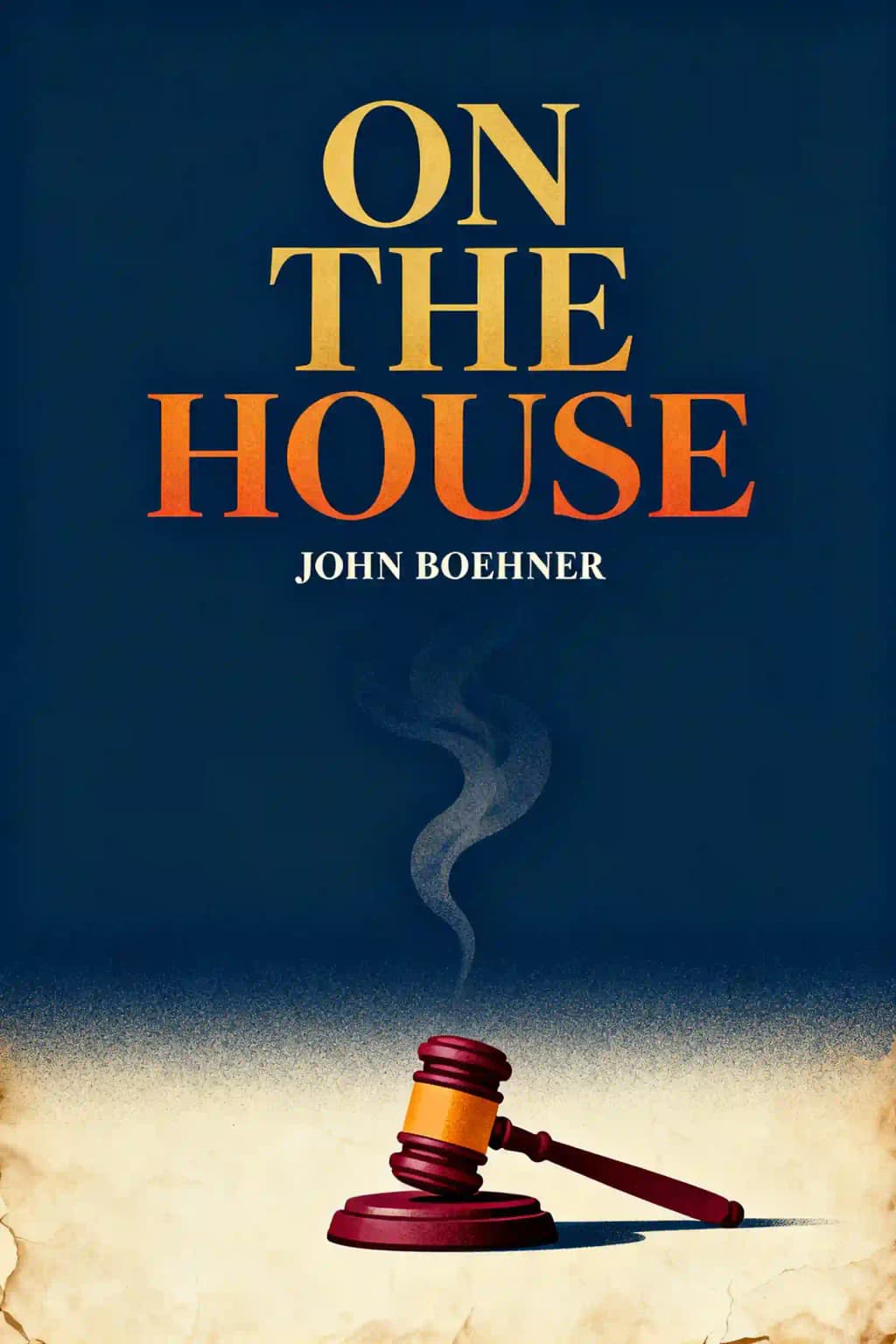
John Boehner never imagined that the kid who mopped floors at his father's bar would one day become Speaker of the House. Yet his unlikely journey from a cramped home with eleven siblings to the halls of Congress offers a fascinating window into American politics. "On the House" has become a political insider's bible since its 2021 release, praised by figures across the political spectrum for its unvarnished honesty. The memoir shot to #1 on the New York Times bestseller list as readers devoured Boehner's colorful tales of Washington's inner workings. What makes this book particularly compelling is Boehner's willingness to name names and tell hard truths about his own party's descent into extremism. Unlike most political memoirs that carefully avoid controversy, Boehner pulls no punches-whether describing his confrontations with Tea Party radicals or his golf outing with President Obama. It's this refreshing candor that explains why this book continues to resonate with readers seeking to understand America's political dysfunction.
Kapitel 2
The Bartender's Son: Lessons from Andy's Cafe
Growing up as one of twelve children in a crowded house in Reading, Ohio shaped John Boehner's entire worldview. With eleven siblings competing for limited resources, he learned to value what little he owned-explaining his later intolerance for wrinkled suits or scuffed shoes. The chaos of his childhood home prepared him for handling congressional mayhem with remarkable calm. As he puts it, "After you've dealt with that many brothers and sisters, dealing with a bunch of congressmen isn't that big a challenge."
Andy's Cafe, his father's bar, became the center of Boehner's world and taught him his most enduring lessons: the value of hard work, earning every dollar through "sweat and elbow grease," and treating everyone with equal respect regardless of their status. Every customer at Andy's received identical treatment whether they were businessmen, factory workers, or even well-behaved drunks.
The bar was a simple rectangular room with a counter, stools, and tables along one wall. It served cold lager beer in frozen mugs and basic food-breakfast and lunch, but never dinner. Workers from nearby factories would stop in for "a shot and a beer" before work, during lunch, or after shifts. Many regulars visited three times daily, becoming like extended family.
Working at Andy's from age eight taught Boehner the value of money and saving. He negotiated his first raise from $2 to $5 per Saturday, saving for six weeks to buy his first real bicycle for $30. This bike expanded his world, letting him take caddying jobs at Ridgewood golf course on Sundays. He was always hustling for money-shoveling snow, selling newspapers, timing his sales to factory shift changes to maximize profits.
Despite raising twelve rambunctious children with little money, Boehner's parents remained incredibly patient. His mother darned socks until they disintegrated, but no matter how chaotic life got, everyone had to be at the dinner table at 6:00 PM. These family dinners were sacred rituals where his mother would cook enough to feed their army-meat, potatoes, vegetables from extra-large cans, and always bread to dip in her to-die-for gravy. No one took a bite until after saying grace, and another rule ensured fairness: the oldest child couldn't have seconds until the youngest had firsts.
These early experiences shaped Boehner's leadership style decades later. When handling fractious House Republicans, he drew on skills honed breaking up sibling squabbles and assigning cleaning tasks after dinner. The discipline of growing up in a large family with limited resources instilled values that would guide his entire political career-even if those values sometimes put him at odds with his own party's evolving extremism.
Kapitel 3
The Art of Real Power in Washington
What does real power look like in Washington? For Boehner, it wasn't about grandstanding or constant visibility-it was about strategic restraint. During his time as Speaker, he learned from watching Nancy Pelosi what not to do-she spoke too frequently and at length on the House floor. Boehner preferred holding his fire for important matters, speaking concisely when necessary. His philosophy came from Senator John Tower's wisdom: "You never get in trouble for something you don't say."
Boehner observed different leadership styles throughout his career. Pelosi's iron grip on power ultimately backfired in the 2010 midterms when she forced controversial legislation like Obamacare through at "ramming speed," sacrificing moderate Democrats. Boehner preferred open decision-making processes, seeking consensus rather than unanimity.
Mitch McConnell represented a completely different leadership style-inscrutable, calculating, and information-hoarding. During one meeting when Boehner was House Majority Leader, McConnell firmly established their power dynamic: "I'll never presume to know more about the House than you do. And trust me, you'll never know as much about the Senate as I do." Despite staff urging him to be tougher with troublemakers, meanness simply wasn't in Boehner's nature.
Presidential power works differently. During State of the Union addresses, Boehner observed that a president's true power lies in commanding the world's biggest soapbox. Effective communication defines presidential power-Obama and Clinton mastered this, Bush had his strengths with Cheney as partner, while Trump's tweeting often undermined his own agenda.
Boehner developed his own leadership philosophy centered on doing the right things for the right reasons. Unlike many in Washington who sought power for its own sake, he viewed leadership as a responsibility to the institution and the country. His Daily Management Meeting at 9:00 or 9:30 every morning became the heart of House operations. Unlike Newt Gingrich's scattered approach or Dennis Hastert's lecture style, Boehner ran these meetings as conversations, seeking honest feedback and consensus. Only about five times in his five years as Speaker did he have to cut off discussion and make a unilateral decision.
Being a leader meant being more than a figurehead-you're a principal, dean, father figure and older brother. Sometimes he had to bring younger members into his office when they were "cruisin' for a bruisin'"-not just to protect them but the institution itself. Members behaving badly makes the whole House look bad and derails legislative priorities.
Perhaps most importantly, Boehner learned early that Washington meetings often produced lots of talk but no action, so he made sure to never walk into a meeting without a plan-because in the absence of other plans, your plan becomes THE plan. This strategic approach to leadership served him well, even when dealing with increasingly radical elements within his own party.
Kapitel 4
From Reagan Republican to Speaker: A Political Evolution
Boehner's political journey began unexpectedly at a neighborhood Fourth of July party in 1977. Having just moved into a new house with his wife Deb the day before, he attended the local pool celebration and somehow ended up appointed to the vacant Lakota Hills Homeowners Association board seat. This seemingly minor event set him on a path that would eventually lead to becoming Speaker of the House.
He wasn't politically minded growing up. His parents were Democrats, so he assumed he was too. After high school, he focused on survival-working construction, roofing, and odd jobs while struggling to pay his way through Xavier University part-time. He even briefly joined the navy before receiving a medical discharge due to back problems.
His life gained direction in summer 1972 when he met Deb while working as an overnight janitor at Merrell Dow Pharmaceuticals (a job he took to play on their softball team). They married the next year with only $400 between them, but their love gave his life focus. He finally graduated from Xavier in 1977 and began working at Nucite Sales, a plastics and packaging company where he eventually became president.
As the 1970s became the 1980s, Boehner's political views evolved. Though raised Democrat, he'd voted for Nixon in 1972 and Ford in 1976. As his income grew, he became frustrated with high tax rates-in 1978, he paid more in taxes than his entire 1976 gross income. When federal tax rates reached 70% on income over $74,500, he found Ronald Reagan's economic vision appealing. He realized, "I'm not a Democrat anymore, I'm a Republican. And I'm a Reagan Republican too."
His local political career advanced when he became Homeowners Association president in spring 1980, leading to connections with school boards and community groups. At 31, he ran for township trustee, overcoming self-doubt to knock on nearly every door in West Chester with friends. He won the election and made lasting friendships that would support his later congressional ambitions.
Throughout his career, Boehner tried following Reagan's philosophy of smaller, fairer government. Sadly, he notes that Reagan wouldn't recognize today's Republican Party, nor could he get elected in it. Reagan understood compromise-getting 80% of what you wanted counted as victory. He built coalitions and worked with Democratic Speaker Tip O'Neill instead of "throwing bombs to score points with partisan media." This collaborative approach often got Boehner in trouble once "the crazies came to town."
By the time Boehner arrived in Congress in 1991, he joined the Conservative Opportunity Society-a group some viewed as "renegade" Republicans but they considered themselves "activists." Members included Newt Gingrich, Tom DeLay, Dick Armey, Jon Kyl and Jim Bunning. Unlike later conservative groups Boehner would contend with, they weren't crazy (mostly), knew their limits, and weren't interested in destroying government just because they could.
His political rise continued through the Republican revolution of 1994, eventually leading to his becoming Speaker in 2011-a position he held until increasing pressure from the far-right of his party led to his resignation in 2015. Throughout this evolution, he maintained his core Reagan Republican values even as his party drifted further from them.
Kapitel 5
Bull Balls and Bailouts: The Art of Negotiation
If you visited Boehner's Speaker's office conference room, you'd find a bizarre centerpiece: a dark, leathery, shriveled object in a clear plastic box. His staff repeatedly tried hiding this African Cape buffalo scrotum (a gift from a hunter friend), but he always returned it to the table where the leadership team gathered. This peculiar display relates directly to how Washington governance actually works-sometimes you need to have the courage to make tough decisions.
Boehner understood that America isn't built for dramatic change. Our system provides stability by avoiding major policy swings, allowing businesses to adjust to gradual shifts rather than wild fluctuations. This frustrates those seeking radical change but has served us well. Presidents, especially those new to Washington, often don't understand this reality-which is why experienced legislators like Boehner help them navigate it.
This philosophy guided Boehner's approach to negotiating with presidents. With George W. Bush, he found a willing partner on education reform. When Bush's team initially excluded George Miller, the ranking Democrat on Boehner's committee and a noted liberal, from education reform discussions, Boehner insisted Miller be included despite their reluctance. At the Austin meeting, Bush welcomed Ted Kennedy and other key figures. Kennedy, though publicly fierce in his criticism of Bush, was privately an old-school dealmaker who genuinely wanted results.
Boehner's job was to handle the conservatives while Kennedy managed the liberals. This pragmatic approach to governance-bringing opposing sides together despite their differences-represents how Washington actually works when it's functioning properly. The resulting No Child Left Behind Act represented a significant bipartisan achievement.
With President Obama, however, Boehner found a very different negotiating partner. Despite campaign promises about bipartisanship, Obama missed key opportunities to build bridges. During stimulus bill discussions, when Republicans offered ideas, Obama dismissively told Boehner, "Well, John, you have to remember, I won." This arrogant response shocked him-not because he needed reminding of Obama's victory, but because Obama failed to see the opportunity to reshape American politics by including Republican input in his early initiatives.
The most significant negotiation between Boehner and Obama came in 2011 over the debt ceiling. After a successful golf outing together, Boehner turned to the president and said, "I think you and I can get something done. But it's going to have to be you and I, or we'll never make it work." Obama responded positively and wanted to set up a meeting. They both understood that staff work would be necessary, but absolute trust between them was essential for progress.
After five weeks of negotiations, they were very close to a deal. The framework heavily favored Republicans-$1.2 trillion in spending cuts in exchange for raising the debt ceiling, with only $800 billion in revenue increases offset by tax reform that would ultimately benefit taxpayers through a simplified code with just three brackets, a top rate of 35%, and reduced corporate taxes.
They shook hands, and Boehner believed the deal was done. Two days later, however, the Senate's bipartisan "Gang of Six" released their own debt reduction plan, with Republicans offering over $1 trillion in revenue increases-more than the $800 billion Boehner had negotiated. Obama publicly praised their framework as "broadly consistent" with their discussions. Despite their handshake agreement, Obama called Boehner demanding $400 billion more in revenue. Boehner firmly refused: "Mr. President, that's just not going to happen."
The deal fell apart, representing a missed opportunity to address the national debt. Boehner had been willing to risk his Speakership for this agreement-and wouldn't have minded if it meant fixing these problems for future generations. Instead, America continued accumulating debt that would only accelerate under Trump's administration.
Kapitel 6
Mayor of Crazytown: The Rise of the Radical Right
When Boehner became Speaker in 2011, he was essentially "mayor of Crazytown"-fighting "batshit ideas" daily while trying to focus on jobs and economic recovery. As he puts it, most ideas to "fix Washington" are nonsense, but there's one thing every American can do: vote for representatives who actually want to get things done rather than hucksters making empty promises or legislative terrorists looking to blow everything up.
What truly surprised Boehner was the depth of hatred these newcomers harbored for Barack Obama. Right-wing propaganda had transformed him into a toxic brand for conservatives. When Boehner first entered Congress, conservative propaganda barely existed beyond a few magazines like National Review. By 2011, America had Drudge Report, Breitbart, and countless YouTube personalities spreading dangerous nonsense about Obama being a "secret Muslim," "America-hater," or "communist"-not to mention the birth certificate conspiracy. People had been genuinely brainwashed into believing Obama was a Manchurian candidate planning to betray America.
Mark Levin pioneered this lunacy on radio, and his ratings success eventually pulled Sean Hannity and Rush Limbaugh into "Looneyville" too. Even Boehner's longtime friend Roger Ailes at Fox News fell victim to these conspiracies. When Boehner met him in New York to urge restraint with the extremists he was putting on air, Ailes ranted about Benghazi conspiracies involving Hillary Clinton, elaborate plots by George Soros, the Clintons and Obama to destroy him, White House surveillance, and his "safe room" protected by combat-ready security. Boehner left dazed, unable to believe the federal government would break numerous laws just to target Roger Ailes. He'd hoped to get Ailes to control the extremists, only to discover he was speaking to the president of their club.
By 2013, the "chaos caucus" had built their own power base through right-wing media and outrage-driven fundraising, led by their non-House member ringleader: Senator Ted Cruz. Cruz was telling House members this shutdown strategy was genius, exploiting the inferiority complex some Representatives feel toward senators. Outside groups like Jim DeMint's Senate Conservatives Fund, FreedomWorks, and Heritage Action fueled this madness-their specialty being fundraising by attacking "the Establishment" and House leadership.
Despite his reservations, Boehner eventually went along with the government shutdown-sometimes you have to let people blow themselves up to make a point. He became their hero overnight for being a "true conservative," though what these kamikaze stunts had to do with conservatism, he never figured out. He committed fully, appearing on talk shows and holding press conferences. They tried compromise after compromise-walking back demands from killing Obamacare entirely to just delaying implementation for a year or removing the medical device tax. Obama and Reid gave them nothing-not even a twig of a fig leaf-knowing Republicans would take the blame.
Meanwhile, Cruz performed his 21-hour non-filibuster stunt reading "Green Eggs and Ham" on the Senate floor. The government shut down October 1st, and as they approached the October 17th debt ceiling deadline, the "crazies" lost even more touch with reality, claiming Treasury could magically prevent default. When Boehner finally announced "This fight is over" after two weeks, he received a standing ovation from the entire Conference-even the extremists. The Obamacare exchanges opened with a disastrous rollout on November 1st, giving Republicans something to hit Democrats with, and they moved on to the next crisis.
This bizarre episode made Republicans look weak, ineffective, and more interested in stunts than results. But more importantly, it revealed how the party was increasingly controlled by media personalities and outside groups rather than its elected leadership. The truth is, Boehner observes, most of these "fiscal conservatives" don't actually care about fiscal responsibility. They proved it by saying nothing when Trump added $1 trillion to the deficit by 2019, before any COVID spending. It was never about money or principle-it was about chaos and power.
Kapitel 7
Beyond the Swamp: Myths and Realities of Washington
After leaving office before Trump's inauguration, Boehner supported many traditional conservative policies his administration pursued-cutting regulations, keeping taxes low, strengthening the military, and appointing constitutionalist judges. But Trump's obsession with the "Deep State" betrayed a fundamental misunderstanding of how government actually works.
Politicians have always railed against Washington insiders as convenient villains. But under Trump, bureaucrats transformed from mere obstructionists into alleged traitors engaged in massive conspiracies. This notion that some secret plot exists within the FBI, courts, and intelligence community to "undo" his election is, in Boehner's words, "pure horseshit."
The reality is that the "Swamp" consists of two main groups: bureaucrats and lobbyists. Bureaucrats, while sometimes annoying, perform essential functions that keep the country running. And lobbyists, contrary to popular belief, often serve a legitimate constitutional purpose-they're exercising the First Amendment right "to petition the Government for a redress of grievances." When done properly, lobbying makes government more accountable, not less.
Boehner learned this lesson as a new Ohio state legislator when he cosponsored what seemed like a simple bill to eliminate front license plates. He thought it would save money-a small-government win. But he quickly heard from school bus drivers (who needed front plates to report cars illegally passing stopped buses), law enforcement agencies (who needed both plates to catch criminals), and 3M (which made the reflective material and employed people in his district).
After investigating, he discovered the bill was pushed by the Ohio Car Wash Association, whose members were tired of customers complaining about damaged front plates. This taught him two crucial lessons: nothing in government is simple, and lobbyists possess specialized knowledge legislators simply cannot have on every issue.
People also underestimate the power of the status quo. Those invested in existing laws and regulations fight fiercely against change. Boehner learned this lesson negotiating the 1996 farm bill as a third-term congressman, when he was sent to negotiate with Senate heavyweights Jesse Helms and Howell Heflin. Helms immediately established dominance, welcoming him to "the United States Senate" before delegating negotiations to Heflin, who stonewalled his every proposal with "I don't think so."
Sometimes you need to shake things up to get results. When tackling Head Start reform, Boehner faced fierce opposition but wouldn't back down. He knew there were problems in their programs that needed fixing. His committee staff investigated and found examples of operators using taxpayer dollars for expensive cars instead of classroom materials. This evidence changed the negotiation dynamic completely and got them to the table.
Strategic disruption can work when done with purpose. Trump supporters often claimed his unpredictable actions were "creative disruption," and maybe they were right sometimes. But constantly blaming a "Deep State boogeyman" for problems seems like deflection. Bureaucrats and lobbyists, when doing their jobs responsibly, actually help government work better. When they don't, you get tough-but that's far from the massive conspiracy Trump described.
Kapitel 8
A Bartender's Son Reflects: Wisdom from the Speaker's Chair
Looking back on his journey from Andy's Cafe to the Speaker's chair, Boehner offers wisdom distilled from decades in public service. His collection of personal maxims-"Boehnerisms"-captures his practical approach to leadership, politics, and life: "There's a fine line between stupidity and courage," "Never get into a pissing match with a skunk," "No need to murder your opponent when they're committing suicide," and "If you do the right things, for the right reasons, the right things will happen."
These aren't just clever sayings but hard-earned lessons from navigating Washington's treacherous waters. When dealing with the press, Boehner learned to "feed the alligators" rather than antagonize them. His approach with reporters became straightforward: they had a job, he had a job, so why not make it easier for both of us? He built good relationships by being himself rather than playing games. He was honest, answered questions concisely, and never misled them. When he couldn't share something, he said so directly.
His experiences traveling the world as a congressman gave him perspective few Americans ever gain. From meeting Muammar Gaddafi in a desert tent (and receiving the dictator's spare sunglasses as a gift) to finding himself in a mujahedeen camp on the Afghanistan-Pakistan border (where one bearded fighter surprisingly whispered "I went to Moeller High School too. Go Crusaders"), Boehner's congressional service exposed him to realities far beyond what he would have seen had he remained in business in southwest Ohio.
These global experiences informed his leadership approach. He saw firsthand how American power projected abroad, how our allies depended on us, and how our adversaries tested us. In Estonia, a nation of just 1.3 million people with a quarter being ethnic Russians, he met a prime minister whose passionate gratitude for American protection moved him to tears. His fear of Russian aggression was palpable. As for Russia itself, Boehner has been banned from entering since calling Putin a "thug"-a label he stands by.
Despite the challenges he faced-from the 2008 financial crisis to government shutdowns to the rise of extremism within his own party-Boehner maintains unwavering faith in America's ability to adapt and persevere through our commitment to freedom. Though he left office before Donald Trump's election, he watched with horror as the January 6, 2021 Capitol attack unfolded-what he calls "a betrayal of his supporters' trust and one of democracy's lowest points."
In retirement, Boehner cherishes family time with his siblings and grandsons, maintains lifelong friendships, enjoys his Florida condo with its Gulf views, and plays plenty of golf. He remains the same person he always was-a bartender's son who rose to one of the nation's highest offices without losing his authentic self. His proudest moment came at the end of his Speakership-hosting Pope Francis at the Capitol, an event that brought him to tears as a lifelong Catholic.
Through it all, Boehner never forgot the lessons of Andy's Cafe-treat everyone with respect, work hard, and remember where you came from. As he puts it, "I left office the same jackass I was when I entered 25 years earlier." In a town where power often corrupts and changes people, that might be his most remarkable achievement of all.