Kapitel 1
The Blues That Breathe and Touch
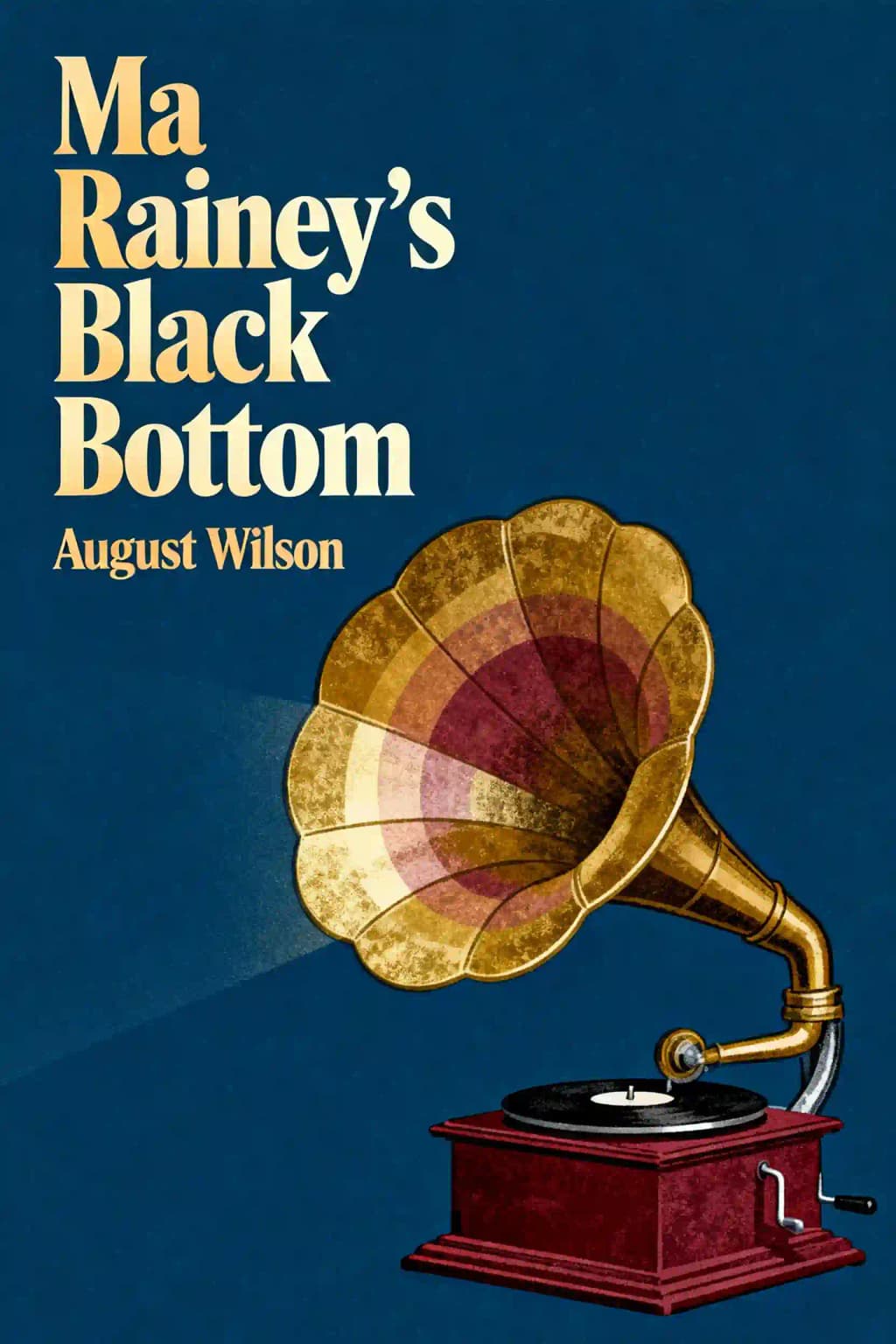
"Ma Rainey's Black Bottom" isn't just a play-it's a raw, pulsating examination of Black art, exploitation, and the human spirit that continues to resonate decades after its 1982 premiere. When Denzel Washington produced the film adaptation in 2020, featuring Viola Davis and Chadwick Boseman in his final, Oscar-nominated performance, it reaffirmed the timeless power of August Wilson's work. As the second play in Wilson's celebrated "Pittsburgh Cycle" (though uniquely set in Chicago), it stands as a cornerstone of American theater, regularly studied in universities worldwide. What makes this work so enduring is how Wilson transforms a single afternoon recording session into a profound exploration of racial dynamics, artistic ownership, and personal dignity. The blues in Wilson's hands becomes more than music-it becomes testimony, resistance, and survival itself. Through Ma Rainey and her band, we witness how art created from suffering becomes both shield and weapon in a world determined to exploit Black creativity while dismissing Black humanity.
Kapitel 2
The Battleground of 1920s Chicago
The city of Chicago in 1927 exists as a study in brutal contrasts - a metropolis where wealth and destitution dance an uncomfortable tango on streets teeming with both opportunity and danger. Winter has technically broken, but spring hasn't quite mustered the courage to arrive, leaving the city in that peculiar Midwestern limbo where morning frost gives way to afternoon thaw. The air hangs heavy with possibility and peril in equal measure, thick with coal smoke and the promises of industrial progress. Millionaires in tailored suits brush past derelicts huddled in doorways, while Model T Fords share potholed streets with horse-drawn delivery wagons. Gangsters cruise the same avenues as dandies, their Thompson submachine guns hidden beneath expensive overcoats. Prostitutes and Irish grandmothers share the same sidewalks, inhabiting entirely different versions of the same city - one of survival, the other of tradition.
At one o'clock on this particular afternoon, Chicago moves through its familiar rhythms with mechanical precision. Secretaries return from lunch breaks, high heels clicking against concrete, their typwriters waiting in offices above State Street's gleaming department stores. Cattle cars rumble through the vast stockyards, carrying animals to their inevitable end in the slaughterhouses that earned Chicago its "Hog Butcher for the World" reputation. Busboys clear away the remnants of midday meals in countless diners and cafeterias, preparing for the dinner rush while steam tables hiss and coffee percolates. But on the Southside, particularly along the vibrant stretch of State Street known as "The Stroll," a different energy builds as residents await nightfall, when they'll transform modest bars and juke joints into temples of artistic expression.
These people - and more importantly, their music - form the beating heart of Wilson's narrative. The blues they create doesn't merely entertain; it "breathes and touches," forging connections that transcend the ordinary boundaries of human interaction. In cramped apartments and basement speakeasies, on street corners and in church basements, this isn't just music but a distinct way of being, a language unto itself. Whether originally carried from the cotton fields of Alabama or the dirt roads of Mississippi, these rhythms and melodies have been transformed by northern city life, electrified by urban energy and amplified by the collective experience of displacement. The Great Migration hasn't just relocated bodies; it has reshaped consciousness, creating new forms of expression from ancient musical traditions.
For Ma Rainey and her band, the blues represents something essential - not just a career but a lifeline to identity itself. As they prepare for the day's recording session in a stark studio on the city's north side, they're simultaneously arming themselves for life's ongoing battles in a society determined to extract their talent while denying their humanity. The recording studio isn't just a workplace; it's a battleground where the war for artistic dignity will be fought one note at a time, where each chord progression and lyric becomes an act of resistance against a system that would rather commodify their culture than understand it.
Kapitel 3
The Power Dynamics of Artistic Control
The recording session transforms into a complex battlefield where the struggle for control over Black art plays out in real time, revealing layers of racial, economic, and artistic tension. Ma Rainey's calculated late arrival to the studio - making the white producers wait nearly two hours - immediately establishes her position through deliberate defiance. She understands with razor-sharp clarity that her value to the white producers lies solely in her voice and her ability to sell records to Black audiences. This commercial reality gives her leverage - limited but real - and she wields it with the precision of someone who has spent years navigating the treacherous waters of the music industry.
When her white manager Irvin suggests using Levee's new arrangement of "Ma Rainey's Black Bottom," she shuts him down without hesitation, demonstrating the first of many power moves. "We're doing this song in the old way... like we rehearsed it," she insists, adding that her nephew Sylvester will perform the spoken introduction despite his severe stutter. Her insistence on Sylvester's participation, despite his obvious struggle, serves multiple purposes: asserting her authority, maintaining family bonds, and refusing to bow to commercial expedience. When Irvin attempts to reason with her, Ma's response cuts through pretense with devastating clarity: "Damn what you thought! What you look like telling me how to sing my song?"
This charged exchange reveals the complex power dynamics at play in the 1920s music industry. Ma knows her artistic vision means nothing to the white producers beyond its commercial potential - they see her music as a product to be packaged and sold, not as the cultural expression she knows it to be. Yet she fights fiercely for control over her music because it represents something the recording industry can't understand or quantify - the authentic expression of Black experience, pain, and joy. Her insistence on using her traditional arrangement rather than Levee's more contemporary, "white-friendly" version becomes an act of cultural preservation in the face of commercial pressure to modernize and sanitize Black musical traditions.
Ma's demands extend beyond musical arrangements to personal comforts - she requires a specific brand of Coca-Cola before recording, insists on proper heating in the studio, and demands respect for her time and talent. These aren't mere diva antics but calculated, strategic assertions of dignity in a system designed to treat her as a commodity rather than an artist. Each demand serves as a small rebellion against the dehumanizing aspects of the music industry. When she threatens to walk away if her conditions aren't met, she's leveraging the only power available to her - her talent and name recognition - knowing that the studio has already invested time and money in the session.
The white producers - Sturdyvant and Irvin - reluctantly accommodate Ma's demands while privately dismissing her as difficult, unreasonable, and "uppity." Their reactions reveal the deeply ingrained racial attitudes of the time, as they cannot conceive of her behavior as anything but problematic, refusing to recognize it as a legitimate response to their own exploitative practices. This tension illustrates how Black artists of the era were caught in a painful contradiction: valued for their cultural production while simultaneously devalued as human beings. Through every interaction, Ma's stubborn insistence on her artistic vision becomes not just about music but about maintaining a core of self-determination in a world determined to deny her agency and humanity.
Kapitel 4
Trauma's Echo Through Generations
The band room becomes a confessional space where personal histories reveal the deep wounds of racial violence that continue to shape each character's relationship with the world. This emerges most powerfully when Levee, provoked by accusations that he's too eager to please white men, shares the traumatic story that has defined his life - a narrative that unfolds like a blues song itself, raw and haunting in its truth.
At eight years old, Levee witnessed white men break into his home and sexually assault his mother while his father was away selling lumber. The scene is rendered with devastating clarity: four men forcing their way in past midnight, the sound of his mother's screams, the smell of whiskey on their breath. When young Levee attempted to defend her with a knife from the kitchen, one of the attackers slashed him across the chest, leaving a permanent scar - both physical and psychological. This wound becomes emblematic of the deeper injuries inflicted by white supremacy, injuries that never fully heal and manifest in ways both visible and invisible.
The story doesn't end with the assault but spirals into a complex tale of revenge and calculated resistance. Levee's father, upon returning, appeared to accept the violation by selling their land to the very men who attacked his wife. For nine days, he maintained a facade of submission, even sharing drinks with his wife's attackers. But this apparent acquiescence masked a calculated plan for revenge. After securing his family's safety by sending them North with careful instructions and saved money, Levee's father returned to methodically hunt down and kill four of the eight attackers before being caught, hanged, and burned. This complex response - strategic retreat followed by deadly resistance - taught Levee his approach to navigating a white-dominated world: "I can smile and say 'yes, sir' to whoever I please. I got time coming to me."
This revelation transforms our understanding of Levee's character, adding layers of complexity to his every interaction. His seemingly accommodating attitude toward Sturdyvant isn't simple subservience but a mask concealing deeper ambitions and resentments. Like his father, Levee has learned to smile while planning his own moves. His eagerness to please white authority figures stems not from weakness but from a traumatized child's understanding of survival - a lesson written in blood and fire.
The band's reaction to Levee's story reveals their own carried burdens. Slow Drag's response is particularly telling - his somber bass playing and quiet singing become a wordless acknowledgment of shared pain. Toledo nods in recognition, while Cutler stares into space, each man silently connecting Levee's story to their own experiences. Each band member carries comparable wounds, whether experienced directly or inherited through family stories passed down like dark heirlooms. These collective traumas find expression not just in their personal interactions but in the very music they create. The blues becomes both testimony to suffering and a means of processing it, transforming private pain into communal catharsis - a musical tradition born from necessity and survival.
The reverberations of these generational traumas echo throughout the play, informing every conflict and conversation. In the band room's confined space, these histories become a shared language, spoken through music, memory, and the unspoken understanding between those who have survived similar wounds.
Kapitel 5
The Blues as Cultural Inheritance
The fundamental tension between tradition and innovation runs throughout the play, embodied in the contrasting approaches of Ma Rainey and Levee. This conflict isn't merely aesthetic but represents different relationships to Black cultural heritage and different strategies for survival in a white-dominated industry.
Ma Rainey's insistence on performing her songs "the old way" reflects her deep connection to the blues as cultural inheritance. For her, this music isn't simply entertainment but testimony-the authentic voice of Black experience that must be preserved intact. When she declares, "Ma listens to her heart. Ma listens to the voice inside her," she's asserting the primacy of intuitive cultural knowledge over commercial considerations.
Her approach to performance maintains direct connections to the music's roots in southern Black communities. The call-and-response patterns, the deliberate pacing, the emphasis on storytelling-these elements preserve the communal function of the blues as shared emotional processing. Ma understands that to change these fundamental aspects would be to sever the music from its source of power and meaning.
Levee, by contrast, represents a forward-looking impulse within Black music. His arrangements incorporate faster tempos and improvisation that anticipate the coming jazz age. When he defends his playing style-"I was playing it the way I felt it"-he's advocating for individual expression over collective tradition. His innovations aren't merely musical but reflect a different survival strategy: adaptation rather than preservation.
The band members-Cutler, Toledo, and Slow Drag-occupy various positions between these poles. Toledo, the only literate member, brings historical and political consciousness to the discussion, connecting their music to broader questions of Black advancement. Cutler serves as Ma's loyal lieutenant, enforcing her traditional approach while mediating band conflicts. Slow Drag appears most detached, yet his bass playing provides the foundation that supports both tradition and innovation.
This musical tension mirrors the broader challenges facing Black Americans during the Great Migration. How much of southern Black culture could or should be maintained in northern urban environments? What adaptations were necessary for survival in new contexts? What would be lost in the process of assimilation? The band's debates about musical style become proxy discussions about these larger questions of cultural identity and continuity.
Kapitel 6
Religion as Comfort and Confrontation
The explosive confrontation between Levee and Cutler over faith reveals how religion functions as both solace and source of conflict within the Black community. This theological battle isn't academic but visceral-a clash between those who find meaning in religious faith and those whose experiences have led them to reject it entirely.
Cutler represents traditional religious devotion, finding in Christianity a framework for understanding suffering and maintaining dignity. His faith provides continuity with southern Black religious traditions and offers a moral compass in a world of shifting values. When he shares the story of Reverend Gates-a Black preacher humiliated by white men who forced him to dance-Cutler emphasizes how the minister maintained his dignity through prayer even in degradation.
Levee's reaction to this story triggers the play's most violent confrontation. Rather than seeing faith as a source of strength, Levee views it as dangerous self-deception. His childhood trauma has left him unable to reconcile the idea of a loving God with the brutal realities of racial violence. "Your God ain't shit," he tells Cutler, recounting how his mother's prayers went unanswered during her assault.
The physical manifestation of this theological divide becomes terrifying when Levee pulls his knife on Cutler, challenging "Cutler's God" to intervene: "Come on and save this nigger! Strike me down before I cut his throat!" This isn't mere blasphemy but an existential challenge born of genuine spiritual anguish. Levee's rage against God-"Did you turn your back, motherfucker?"-as he stabs upward into the air reveals the depth of his spiritual wounds.
This confrontation exposes how religious faith could be simultaneously a tool of survival and a source of division within Black communities. For some, like Cutler, Christianity provided a framework for maintaining dignity and hope despite oppression. For others, like Levee, the contradiction between religious promises and lived experience created irreconcilable spiritual crisis.
The band room becomes a microcosm of broader theological debates within Black America-debates about divine justice, suffering, and the role of faith in liberation. These weren't abstract philosophical questions but urgent matters of psychological survival. The intensity of the confrontation reflects how central these questions were to individual and collective identity during this period of rapid social change.
Kapitel 7
The Economics of Exploitation
The financial transactions in the play's final scenes brutally illustrate how the economics of the music industry systematically exploited Black artists. These moments reveal not just individual betrayals but the structural mechanisms through which Black cultural production was appropriated while Black creators were marginalized.
Ma Rainey demonstrates her hard-won understanding of these dynamics when she insists on payment for her nephew Sylvester's contribution to the recording. When Sturdyvant initially tries to avoid this additional expense, Ma threatens to leave without signing the release forms. Her ultimatum-"One more mistake like that and I can make my records someplace else"-forces Sturdyvant to comply, though his reluctance is palpable.
This interaction reveals Ma's pragmatic approach to an exploitative system. She understands that her leverage exists only within narrow parameters and must be exercised strategically. Her insistence on proper payment isn't just about the money but about establishing boundaries against exploitation. She knows that each concession to white management erodes not just her economic position but her personal dignity.
Levee's experience provides the devastating counterpoint to Ma's relative success in navigating these power dynamics. Throughout the play, he places his hopes in Sturdyvant's promise to record his original songs. This promise represents not just potential income but validation of his artistic vision and a pathway to independence. When Sturdyvant rejects these songs with the dismissive explanation that "they're not the type of songs we're looking for," offering a mere five dollars each instead, the economic betrayal cuts to the heart of Levee's aspirations.
This transaction exposes the fundamental dishonesty of the system. Sturdyvant never intended to promote Levee as an independent artist but was merely acquiring potential material at minimal cost. The paltry sum offered-which Levee throws away in disgust-quantifies precisely how little value the industry placed on Black creativity divorced from its commercial exploitation.
The economic structure revealed in these interactions helps explain why so many Black musicians of this era died in poverty despite creating immensely valuable cultural works. The system was designed to extract maximum profit while returning minimum compensation, a pattern that would continue throughout the twentieth century across multiple genres of Black music.
Kapitel 8
The Tragic Culmination of Rage
The play's devastating conclusion-Levee stabbing Toledo after he accidentally steps on Levee's new shoes-represents the tragic misdirection of rage that has no appropriate outlet. This sudden eruption of violence emerges from accumulated frustrations and humiliations that finally find expression in a moment of displaced fury.
The immediate trigger seems absurdly disproportionate to the response. Toledo's misstep damages Levee's prized yellow shoes-symbols of his aspirations and self-image. But this surface incident merely provides the spark for an explosion fueled by much deeper grievances. Levee has just experienced the crushing of his musical ambitions by Sturdyvant, a betrayal that represents the latest in a lifetime of racial injustices.
Unable to direct his rage at its true target-the white power structure that has repeatedly denied his humanity-Levee redirects it toward the nearest available person. Toledo becomes the unintended recipient of fury meant for Sturdyvant, for the men who assaulted Levee's mother, for a society that consistently thwarts Black ambition. The knife that enters Toledo's back was meant, symbolically, for a system Levee cannot directly confront.
The horror of this moment lies in its tragic inevitability. Throughout the play, we've witnessed Levee's mounting frustrations-his arrangement rejected by Ma, his traumatic past ridiculed by bandmates, his religious crisis unresolved, his songs dismissed by Sturdyvant. Each disappointment has added pressure to an emotional container with no healthy release valve. The explosion, when it comes, destroys not the oppressor but another victim of the same system.
Levee's immediate reaction-horror at his own action as he desperately tries to help Toledo up-reveals that this violence was never his intention. The tragedy deepens with the realization that Levee has now destroyed himself along with Toledo. Whatever limited opportunities existed for him as a Black musician in 1927 Chicago have now vanished completely.
The play's final image-the sound of Levee's trumpet "blowing pain and warning" as the lights go out-transforms personal tragedy into universal testimony. This music, born from the very suffering it expresses, continues to sound its warning across generations. The blues that "breathes and touches" now carries the additional burden of this latest tragedy, incorporating it into the ongoing narrative of Black experience in America.
Kapitel 9
Art as Resistance and Memory
Beneath the personal conflicts and power struggles lies Wilson's profound meditation on the role of art-specifically Black art-as both resistance against oppression and repository of collective memory. Through different characters' relationships to music, the play explores how artistic expression functions as a survival mechanism in a hostile world.
For Ma Rainey, the blues represents an unbroken connection to authentic Black experience. Her insistence on performing songs "her way" isn't mere stubbornness but a commitment to preserving cultural integrity. When she explains, "White folks don't understand about the blues... They hear it come out, but they don't know how it got there," she's articulating how this music contains coded knowledge inaccessible to those outside the culture. Her performances become acts of preservation, maintaining traditions that might otherwise be lost or corrupted.
Toledo, the band's philosopher, places their music in broader historical context. His literacy allows him to connect their artistic practice to larger questions of racial advancement and cultural identity. For him, the blues isn't just entertainment but documentation-a record of Black experience that might otherwise be erased from official histories. When he speaks of Africa and the diaspora experience, he's attempting to situate their music within a longer historical narrative of displacement and resilience.
Levee's relationship to music represents a more individualistic approach to artistic expression. His innovations anticipate jazz's emphasis on personal style and improvisation. Yet his tragedy stems partly from failing to recognize how his individual expression remains dependent on the collective traditions he sometimes dismisses. His ambition to "make records like Ma" reveals his desire for the recognition and autonomy she has achieved, without fully understanding the cultural foundation that supports her position.
The play's setting in a recording studio adds another dimension to this exploration of art's function. The very act of recording these performances represents a transformation-capturing ephemeral expression in permanent form, potentially separating it from its communal origins. The white-owned recording industry's commodification of Black music enacts a kind of cultural appropriation even as it preserves these performances for posterity.
The final sound of Levee's trumpet "blowing pain and warning" suggests that art's power transcends even tragedy. This music-born from suffering, capturing both personal and collective experience-continues to speak across time. The blues becomes not just entertainment but testimony, not just expression but resistance, not just sound but memory. In a world determined to deny Black humanity, the creation and preservation of Black art becomes an essential act of self-determination and cultural survival.