Kapitel 1
Love's Original Design: Rediscovering God's Blueprint for Relationships
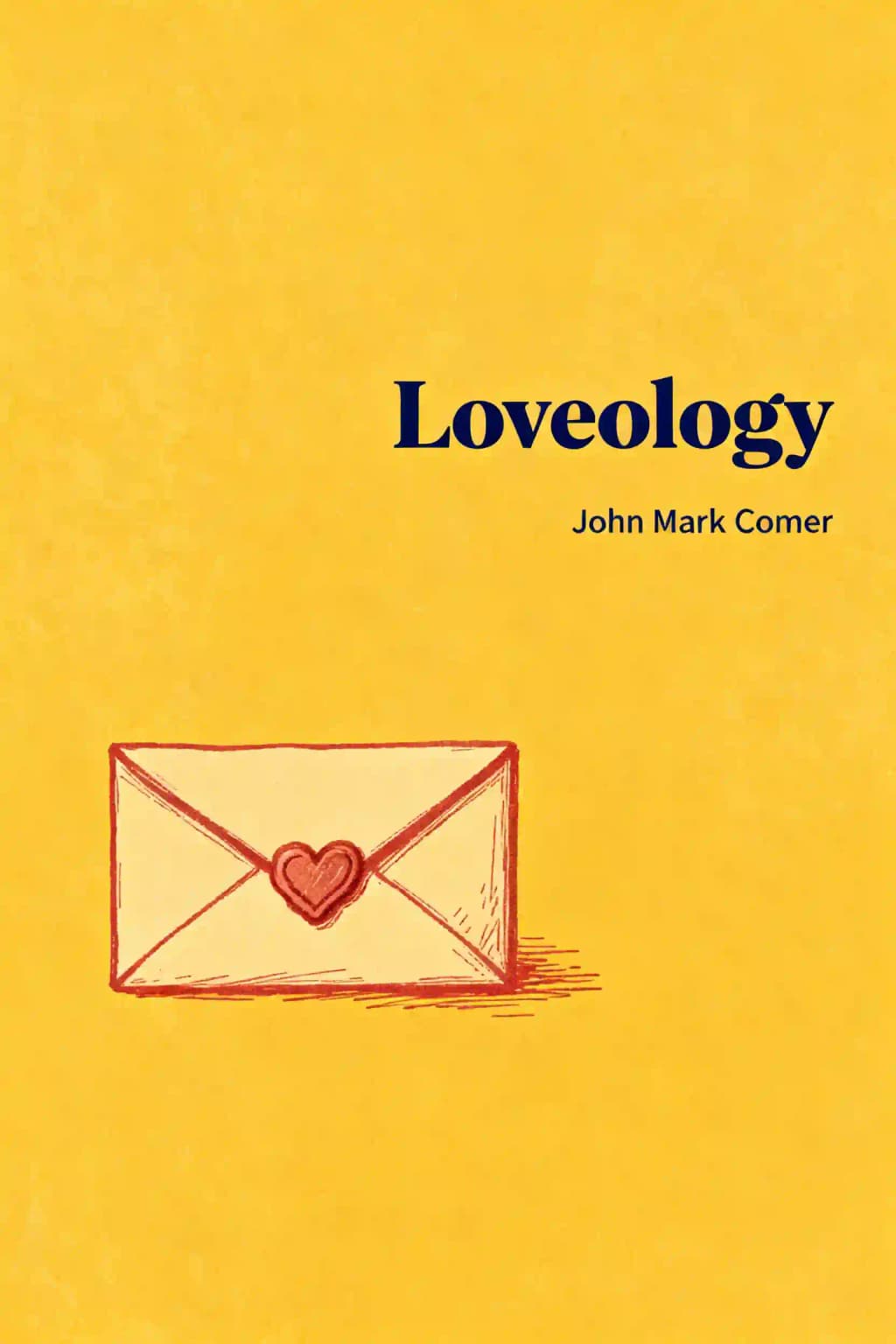
When John Mark Comer's grandparents celebrated their sixtieth wedding anniversary, his grandmother was recovering from a brain tumor. Despite this challenge, his grandfather remained devoted, embodying a love "as strong as death" that "burns like blazing fire." This isn't just a heartwarming anecdote-it's a glimpse into the kind of love that "Loveology" explores. Since its publication, this book has become required reading in countless premarital counseling programs and university relationship courses. Its popularity stems from Comer's unique ability to make ancient wisdom feel refreshingly relevant, blending theological depth with practical insight. While many relationship books offer quick fixes, "Loveology" dares to suggest that our modern romantic confusion stems from abandoning a divine design that was established at creation. As Comer puts it, "Love began with two naked humans in a garden, but we've been picking up the pieces ever since."
Kapitel 2
The Love That Carries Us Through
I fell for my wife at first sight-her brown eyes, warm smile, and calming presence captivated me instantly. Though I barely knew her, I was drowning in romantic feelings, completely unaware of the challenges our future marriage would face. Like many newlyweds, I confused intense emotion with lasting love, not realizing how this initial spark would need to transform into something deeper. This highlights our problem with "love"-a junk drawer word we use for everything from God to fish tacos, diluting its true meaning and power.
Many define love as mere tolerance or passionate feelings, making it passive-something we "fall into" and can therefore "fall out of." This mindset treats love like a chance occurrence rather than a conscious choice, leaving marriages vulnerable when emotions inevitably fluctuate. But if marriage is meant for life as Jesus taught, we need a stronger definition. True love equals Jesus on the cross-both feeling and action, an intentional decision renewed daily through both joy and hardship.
While romantic feelings are God's gift, they can be self-focused, centered on how someone makes us feel rather than what we can give. Real love, modeled by Jesus washing his disciples' feet, is self-giving service. It's choosing to play the role of servant, cleaning the grime from between your beloved's toes. It's making coffee for your spouse before they wake, listening intently after a long day, or caring for them through illness. It's that simple-and that difficult.
In Hebrew, different words capture love's nuances: rayah (friendship love) seen in shared laughter and everyday companionship, dod (passionate, sexual love) expressing physical intimacy and desire, and ahava-the deepest, soul-level love that's "as strong as death" and "burns like blazing fire." Ahava has resolve and staying power-like those grandparents who remain devoted through sixty years of marriage, health crises, and life's inevitable storms. It's the love that grows stronger through trials rather than being diminished by them.
Walking the Via Dolorosa in Jerusalem, tracing Jesus' final steps, I realized His cross-shaped love is both feeling deeply and doing sacrificially. Each stone along that ancient path testified to love's costly nature. This is the only kind of love that carries a relationship through decades of highs and lows-through sleepless nights with newborns, financial struggles, career changes, and aging parents. My wife and I are learning this love daily, discovering that its difficulty and beauty are inseparable, like resurrection following crucifixion. It's in choosing to love when it's hardest that we find love's deepest meaning.
Kapitel 3
Marriage: What's It Really For?
Every good story has a low point, a conflict-and my marriage story is no different. The electric feelings I had when my wife and I first met gradually faded as we discovered how different we were-me being introverted and high-strung, her being social and laid-back. We started driving each other crazy. When I heard a radio ad saying "opposites attract, and then attack," it hit uncomfortably close to home.
My crisis wasn't that my marriage was failing but that my unrealistic expectations were. I simply had no idea what marriage was for-and I'm not alone in this confusion. Despite fierce debates about marriage definition in America, little discussion addresses its purpose.
The Bible begins and ends with weddings. In Genesis, God officiates the first wedding, declaring "That is why a man leaves his father and mother and is united to his wife." The backstory reveals that after creating Adam, God declared "It is not good for man to be alone"-the first "not good" in creation. Adam faced two problems: loneliness (despite being made for relationship) and an impossible workload (managing Eden). He needed help with his calling. So God created woman as "a helper suitable for him" and personally brought her to Adam, who responded with poetry: "This is now bone of my bones and flesh of my flesh."
Looking at Genesis, we discover five foundational purposes for marriage. First, marriage provides friendship-your spouse becomes your "allup" or closest companion, knowing you fully yet still loving you. Second, marriage enables "gardening" or vocation-partners working together in their calling to create human flourishing. Marriages focused solely on the relationship will collapse; healthy marriages need a shared purpose beyond themselves.
Third, marriage provides the context for sexuality, designed by God as the "glue" to hold marriage together. Fourth, marriage creates family-the building block of society and means to "fill the earth." Finally, marriage serves as a vehicle for re-creation-two broken people helping each other become who God intended them to be. Marriage exposes our flaws and selfishness while calling us toward our true selves.
Despite understanding these purposes, I primarily married for happiness, which is actually the result of a healthy marriage, not its purpose. When we let marriage be marriage and God be God, happiness becomes the icing on an already meaningful cake.
Kapitel 4
Sexuality: Gift, Not God
Our culture oscillates between viewing sex as dirty or divine, but both extremes miss the biblical perspective. Christians should have a "Genesis-shaped worldview" that appreciates creation, including sex, as God's good gift meant to be enjoyed within marriage.
Sex is both for procreation and recreation-the church has often reduced its message to "don't," forgetting that Scripture begins with a positive command to "be fruitful and multiply." We must reject dualistic thinking that views the physical world as evil and the spiritual world as good. Humans were sexual before they were sinful.
The Song of Songs celebrates this reality as genuine erotic poetry rather than mere allegory. It describes a wedding night with the man poetically praising his bride's body, and the woman inviting her husband to "come into his garden." Most significantly, God's voice appears, saying "Eat, friends, and drink; drink your fill of love," showing divine blessing over marital sexuality.
Yet we easily turn God's gifts into idols. Sex has become a modern-day Aphrodite demanding sacrifices of innocence and freedom. True freedom comes through Jesus, not through sexual "liberation" that actually enslaves. Sex was never meant to be God but rather a gift pointing to something better.
In 1 Corinthians, Paul confronts the Corinthian church's practice of visiting prostitutes. In Corinth, Greek dualistic thinking led Christians to believe sex was merely physical. Paul counters this by quoting Genesis about two becoming "one flesh" (echad), arguing that sex creates a profound, irreversible fusion between people that's both physical and spiritual. God's view of sex is actually higher than the world's-not just biological recreation but the melding of two beings.
Despite sexual brokenness, God can heal and restore. The good news is that in Jesus, we can find freedom from sexual slavery-freedom from pain caused by misused sexuality, freedom for healing, and freedom to see sex as a gift rather than either a dirty secret or a god.
Kapitel 5
Holiness: Beyond Drawing Lines
Young people frequently ask about sexual boundaries-"the line" of how far is too far. They're really asking how close they can get to sin without sinning. This mindset reveals a fundamental misunderstanding of holiness and relationships. Using the biblical story of Samson, we see how patterns of toeing the line with small compromises eventually lead to disaster. Samson's gradual descent began with small choices that seemed inconsequential but created a pattern that ultimately led to his downfall. Instead of asking about boundaries, we should ask "How holy can I make this? How pure?" This reframes the entire discussion from minimum requirements to maximum potential.
The Hebrew concept of holiness (qodesh) means "dedicated to" or "set apart"-not merely avoiding evil but being special and unique. The opposite of holy isn't evil but ordinary. This distinction is crucial - holiness isn't about restriction but about dedication to something greater. Biblical holiness connects to covenant relationship-saying no to some freedoms to say yes to something better. Like an athlete who forgoes certain foods or activities to excel in their sport, this dedication creates something extraordinary.
God desires our joy in sexuality, not restriction. The best sex happens within marriage, with studies showing monogamous married couples report greater sexual satisfaction than promiscuous singles. Research consistently shows that couples who waited for marriage report higher relationship satisfaction, better communication, and more stable marriages. When people have sex outside marriage, they "take advantage of" or "defraud" their brother or sister in Christ. This defrauding isn't just physical but emotional and spiritual. True love is patient and not self-seeking, focusing on the other person's long-term good rather than immediate gratification.
Sexual choices during dating either build or erode the trust needed for marriage. While sex inside marriage creates vulnerability and trust (echad), sex outside marriage paradoxically makes trust harder. This trust deficit often carries forward into future relationships, creating patterns of insecurity and doubt. At its root, sin is not trusting God's design and timing. Like Eve in Eden who chose the forbidden fruit over trusting God's goodness, we face the same choice: believe the serpent who says the best sex is found in short, risky relationships, or trust God who says it's found in lifelong marriage. The choice isn't between fun and restriction, but between immediate pleasure and lasting joy.
Modern culture often portrays waiting for marriage as outdated or impossible, but countless couples testify to the benefits of pursuing holiness in their relationships. This path requires support from community, clear communication between partners, and a shared commitment to God's design for sexuality. The reward is not just better sex, but deeper intimacy, stronger trust, and a relationship that reflects God's faithful love.
Kapitel 6
Romance: God's Choreography
God is a romantic at heart, with the Bible's closing image being a marriage. Romance is embedded in our DNA-we're born with a "missing rib" sensing someone is waiting for us. Despite our fascination with romance, we often don't know how to navigate relationships.
The Song of Songs offers four marks of healthy pre-marital relationships. The first mark is "the chase"-where the man initiates and pursues, while she responds eagerly. The second mark is "the line"-the Shulammite warns not to "awaken love until it so desires," advising couples to avoid sexual involvement before marriage because sex creates oneness prematurely, obscures judgment about compatibility, and cannot sustain a relationship alone.
The third mark is "the friends"-people who speak into the relationship. These friends affirm the relationship, offer guidance, and help during conflicts. In our hyperindividualistic society, many couples disappear into hibernation when dating, but healthy couples are embedded in community. Opening relationships to scrutiny from trusted friends provides wisdom, helps avoid mistakes, and ensures we're walking at the right pace.
The fourth mark is "the journey to the day"-healthy relationships have motion and direction; they're going somewhere. Dating without purpose is wasteful; all healthy relationships are either moving toward or away from marriage. This doesn't mean panicking over every coffee date, but it does mean dating should be reserved for those ready or nearly ready for marriage. A healthy relationship isn't about itself but about a shared calling.
While Scripture doesn't prescribe a specific dating method, it contains instructive love stories like Isaac and Rebekah's. When Abraham needed a wife for his son Isaac, he sent a servant on a thousand-mile journey who prayed specifically for guidance. While I reject the concept of "the one," I believe God is romantically involved in bringing couples together when they open their stories to his authorship.
Kapitel 7
Waiting: The Active Discipline
In 1942, my grandfather Bill met Ruth, and they fell in love through letters while he served in the Air Force. They married at ages 19 and 20, with only three days together before he shipped out to Guam-which was normal for that generation. Their love story, built on faith and patience, exemplifies a different era of courtship. Through hundreds of letters exchanged over two years, they developed a deep connection despite physical separation, proving that meaningful relationships can grow even in waiting seasons.
Today, most people spend a decade between high school graduation and marriage, with median marriage ages at 26.5 for women and 28.7 for men. This extended period often includes college, career establishment, and personal development. For the first time in US history, single people outnumber married people. This demographic shift reflects changing social norms, economic factors, and evolving perspectives on relationships. This extended waiting period makes learning to wait well not just beneficial, but essential for emotional and spiritual growth.
King David knew waiting intimately, spending thirteen years between his anointing and coronation while hiding from King Saul. During this time, he faced betrayal, lived in caves, and led a band of outcasts, yet maintained his integrity. Psalm 37, likely written during this period, addresses the frustration of seeing those who ignore God's ways seemingly thrive while the faithful struggle. David's counsel is to "just wait"-relationships built on sand will eventually collapse, while those founded on patience and faith endure.
This waiting isn't passive but active, involving seven key practices: trust, doing good, dwelling, enjoying, delighting in God, committing, and being still. To trust is to lean your weight on God, making Him your foundation rather than circumstances. When waiting, do good-don't let life happen to you. Go to college, travel, start a business, serve those in need. Volunteer at local organizations, develop new skills, mentor others. Life doesn't start when you get married; you're alive now, and these years are precious.
Dwell in the land by sinking roots deep and learning contentment where you are. This might mean building meaningful friendships, investing in your community, or developing expertise in your field. Enjoy safe pasture by savoring ordinary moments - morning coffee, sunset walks, conversations with friends. Take delight in God, and your desires will change-you're not really craving romance, but deeper connection with your Creator. Commit your way to the Lord by making Him your navigator, consulting Him in decisions both big and small. Be still-slow down, take deep breaths, stop fighting against your current season. Practice mindfulness and gratitude. And finally, wait patiently, actively walking with God into your future, knowing that each day shapes who you're becoming.
More important than finding your spouse is becoming the kind of person who's ready for marriage. Right now you are becoming your future self through daily choices, habits, and character development. Use this waiting period intentionally to grow in wisdom, emotional maturity, and spiritual depth.
Kapitel 8
Gender: Beyond Stereotypes to Design
God created humans as male and female, not androgynous or interchangeable. Gender is literally in our DNA, encoded at the chromosomal level, affecting everything from hormone production to brain development. Despite pervasive cultural stereotypes about masculinity (sports, trucks, hardware stores, emotional stoicism, career ambition) and femininity (professional woman, supportive wife, sex goddess, outdoorsy naturalist, nurturing caregiver), the real question is what essential roles remain when cultural baggage is removed.
The biblical pattern shows Adam was created first, establishing an order in creation that carries theological significance. He was made to lead-not dominate or control-while Eve was his indispensable partner (ezer), a term used elsewhere in Scripture to describe God as a strong helper. These roles apply specifically to marriage, not society at large where women and men can and should serve in various leadership capacities. Both men and women are called to work and family, but with different emphases based on their unique design. The Bible gives few specifics about how these roles play out practically, leaving considerable freedom for couples to determine finances, work arrangements, childcare responsibilities, and decision-making within their unique context and circumstances.
We must be careful not to confuse cultural stereotypes with biblical principles. Historical practices like preventing women's education or workplace participation aren't biblical mandates but cultural constructs. Gender roles aren't oppressive-people are. The war between sexes is a result of the Fall, not God's design. Marriage is meant to be a safe place for men and women to return to Eden's harmony and show the world God's image in action. Both spouses model Jesus in different but complementary ways: men through self-sacrificial love like Christ's death on the cross, putting their wives' needs before their own, and women through joyful submission like Jesus' yielding to the Father's will in Gethsemane - not out of weakness but strength and trust.
When men love like Jesus by initiating, protecting, and providing (emotionally and spiritually, not just materially), and women submit with joy and respect while offering their wisdom and strength, both create a beautiful dance that heals the gender wars. This partnership requires mutual trust, respect, and regular communication about expectations and needs. The church should be a place of freedom where men and women celebrate their God-given differences without pressure to conform to rigid cultural expectations. This means supporting women in leadership roles where biblically appropriate, encouraging men in nurturing roles, and helping couples discover how to live out biblical principles in their unique circumstances.
The goal isn't to fit into predetermined boxes but to embrace our design while growing together in Christ-like character. This might look different for each couple - some wives may be primary breadwinners while husbands focus on home life, others may share responsibilities more evenly. The key is maintaining the spirit of loving leadership and respectful partnership while working out the practical details in ways that honor both God's design and each person's gifts.
Kapitel 9
The Morning After: Expectations vs. Reality
The author delves deep into Jacob's compelling story from Genesis-a tale that resonates across millennia as a profound metaphor for human disappointment. Jacob, the deceiver who ultimately faces deception in matters of the heart, labors seven years for the hand of Rachel, whom he loves deeply. However, in a cruel twist of irony, he's tricked into marrying her older sister Leah first. The morning after his wedding, when he discovers the switch, becomes a powerful symbol for life's stark reality checks. This biblical account masterfully illustrates how our cherished expectations often clash with reality, leaving us to wrestle with the gap between what we dreamed of and what we actually receive.
The pattern of disappointment extends far beyond ancient biblical narratives into our modern lives. Whether it's the prestigious college that turns out to be less transformative than imagined, the dream job that includes unexpected frustrations, or the success that feels hollow once achieved, life consistently reminds us that reality rarely matches our idealized visions. Marriage, while beautiful and meaningful, proves this point perhaps most poignantly. It isn't the endless honeymoon phase many envision, but rather a complex union of two imperfect individuals, each carrying their own emotional wounds, ingrained habits, and unresolved issues. The author identifies two common responses to this reality: we either lower our expectations too far, settling for mediocrity and missing the potential for growth, or we elevate them unreasonably high, creating impossible standards that no human relationship could possibly meet.
Jesus's fascinating dialogue with the Sadducees about marriage in the resurrection provides a crucial perspective. His revelation that marriage is temporary-a provisional arrangement until "the renewal of all things"-reframes our understanding of its purpose. This temporal nature of marriage doesn't diminish its significance but rather positions it within a larger narrative. The Bible's conclusion revisits Eden's imagery-the tree of life, the healing of nations, the absence of curse-but expands it into something far grander: a garden-city where people from every culture and background live in perfect unity with God.
The author emphasizes that while romantic love, marriage, and physical intimacy are wonderful gifts to be celebrated, they cannot fully satisfy our deepest longings or heal the fundamental breach between humans and their Creator. Life's disappointments serve as necessary reminders that even our most joyful moments are merely glimpses of the greater reality to come. God's redemptive work often flows through these very disappointments, as shown in Jacob's story where Leah-the unwanted wife-becomes part of the lineage leading to Jesus Christ.
The book concludes by asserting that the ultimate love story isn't found in human relationships but in God's persistent pursuit of humanity. Marriage serves as a beautiful but temporary shadow of this greater reality. This perspective doesn't devalue marriage but rather elevates it to its proper place-a sacred gift that points toward our eternal destiny. Understanding this helps us navigate both the joys and disappointments of married life with greater wisdom and grace, knowing that our earthly relationships are reflections of a more perfect union to come.