Kapitel 1
When Nature Heals: The Vital Connection We're Losing
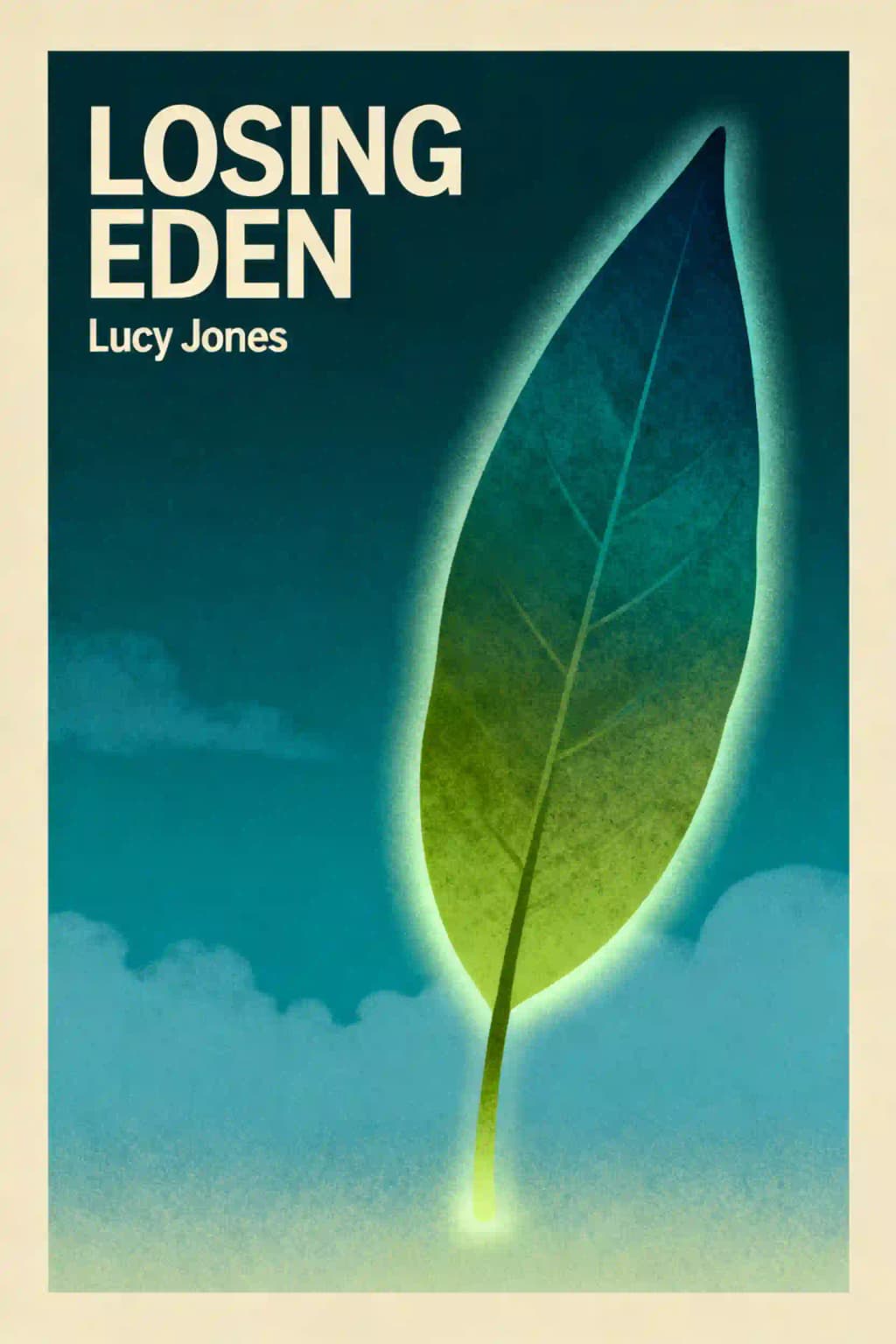
In a world increasingly disconnected from the natural environment, Lucy Jones's "Losing Eden" arrives like a breath of fresh forest air. This powerful exploration of humanity's relationship with nature couldn't be more timely-as climate anxiety reaches fever pitch and depression rates soar globally, Jones presents compelling evidence that these phenomena may be linked. The book has garnered praise from unexpected quarters, with celebrities like Emma Thompson calling it "one of the most important books of our generation" and tech mogul Bill Gates highlighting it in his 2022 reading list as "a wake-up call we can't ignore." Since its publication, the book has sparked a movement of healthcare providers implementing "nature prescriptions" and influenced urban planning policies worldwide. Drawing from personal experience with addiction recovery through nature immersion, Jones weaves scientific research with profound philosophical insights to create what The Guardian called "a love letter to the natural world and a warning of what we stand to lose."
Kapitel 2
The Healing Power of Soil and Microbes
At thirty-two, I discovered gardening after moving to the countryside with my newborn daughter. Working an allotment plot, I noticed something curious: my baby seemed oddly drawn to eating soil, and I consistently felt happier after gardening sessions. This observation led me to fascinating research on Mycobacterium vaccae, a soil bacterium with remarkable effects on mental health.
The story begins with oncologist Mary O'Brien, who in 2004 accidentally discovered that cancer patients injected with M. vaccae reported feeling happier, even though it didn't extend their lives. Neuroscientist Dr. Christopher Lowry later found that mice immunized with this bacterium showed increased serotonin production in brain regions connected to emotional regulation. These immunized mice exhibited significantly less stress when tested under challenging conditions.
Inside your body live trillions of microbial cells-not ten times more than human cells as once thought, but still roughly equal numbers. These aren't mere parasites but integral networks influencing health through complex ecological processes. They affect immune function, the gut-brain axis, and protection against harmful organisms. With each breath, we inhale approximately fifty different species of mycobacteria that colonize our airways and oral cavity.
Our microbiota thrive on diversity, which comes primarily from exposure to outdoor environments. Despite our perception of being separate from nature, our skin is more ecological than we realize-"a pond surface or forest soil," as anthropologist Paul Shepard suggested. These "old friends" we've evolved with can block chronic inflammation-not the protective kind that responds to injury, but the harmful, constant low-level inflammation linked to cardiovascular disease, decreased stress resistance, and depression.
Urban dwellers in developed countries have significantly less biodiverse gut microbiota than traditional farming communities. Studies consistently show inflammation affects mental health-inflamed children are more likely to develop depression later, and people with psychiatric disorders show higher inflammation markers. Just two hours in a forest can significantly lower inflammation-causing cytokines in the blood.
Why do babies naturally eat soil? It exposes them to beneficial microbes. Comparing the Amish (who use traditional farming methods) to Hutterites (who use industrial farming), researchers found Amish children had significantly lower rates of asthma and allergies-5.2% versus 21.3%. Even the dust around Amish homes protected against allergic reactions. The therapeutic effect of soil exposure appears substantial and long-lasting-in animal studies, beneficial T-cells have a half-life of twenty-seven days.
Kapitel 3
Biophilia: Our Innate Connection to Nature
Edward O. Wilson, who lost sight in one eye as a teenager, developed the concept of biophilia-our innate, genetic affiliation with nature and living things. This evolutionary connection isn't coincidental but deeply embedded in human psychology through millennia of evolution in natural environments.
Wilson's hypothesis rests on evolutionary logic: humans evolved over two million years intimately connected to nature, where survival depended on understanding our surroundings. "Snakes mattered. The smell of water, the hum of a bee, the directional bend of a plant stalk mattered." Our genes selected for learning propensities that improved survival chances, making certain environmental responses more instinctive than others.
The evidence is compelling. When given choices, humans consistently select landscapes resembling African savannahs with scattered trees, open vistas, and water. Studies of landscape architect Humphrey Repton's designs show he consistently modified environments to be more "savannah-like." Modern research confirms people across demographics prefer natural settings with complexity, naturalness, and legibility-qualities that would have aided our ancestors' survival.
Our attraction to specific tree shapes appears genetically encoded from our evolutionary past. Gordon Orians found people prefer trees with layered canopies, lower trunks, and wider-than-tall proportions-precisely the shelter-providing shapes that would have protected our ancestors on the African savannah.
Jay Appleton's "prospect-refuge theory" suggests we're drawn to landscapes offering both hiding places (refuge) and vantage points (prospect). Analysis of popular landscape photographs confirms this: 91% include refuge elements, 99% contain prospect symbols, and 96% feature both.
Does exposure to nature make measurable differences to our health? Roger Ulrich's groundbreaking study examined patients recovering from gallbladder surgery, comparing those with window views of trees versus brick walls. The results were remarkable: patients with tree views had shorter hospital stays, fewer negative comments from nurses, and required fewer painkillers.
This research sparked thousands of subsequent studies showing connections between nature exposure and health benefits. In London, researchers found correlations between tree canopy presence and fewer antidepressant prescriptions. The evidence has grown so compelling that some healthcare systems now offer "nature prescriptions"-in Shetland Islands for mental illness and chronic diseases, and across 169 health professionals in the US prescribing park visits.
What about those who don't enjoy nature? A comprehensive 2009 Norwegian review of fifty empirical studies concluded that biophilia has scientific merit-interaction with nature positively affects mental health, and crucially, "even in individuals who do not express any appreciation for plants and nature, the lack of nature can have a negative effect."
Kapitel 4
Children's Vanishing Connection to Wild Places
Our innate connection to nature is evident in childhood memories. On a cold January day, I observe my garden's clematis, its tendrils stubbornly growing even in winter, reminding me of my young daughter's inherent desire to be outdoors-a desire not yet educated out of her.
My own clearest childhood memories center on outdoor experiences: lying under trees, finding insects, collecting ladybirds, and feeling free in natural settings. Yet today's landscape for children has dramatically changed. Three-quarters of UK children now spend less time outdoors than prison inmates. Fewer than one in ten regularly play in wild spaces, and their unsupervised exploration area has shrunk by nearly 90% since the 1970s. School break times have decreased in both the UK and US, further limiting outdoor play.
A 2013 RSPB study found four out of five children lack adequate connection with nature-troubling because childhood nature connections typically lead to adult nature relationships, and without early exposure to wild nature, people are less likely to protect natural areas as adults. This disconnect stems not just from technology but from restricted access to green spaces, safety concerns, urbanization, and underfunded parks. Britain's parks face severe budget cuts, with councils allowing development on urban green spaces and spending just 0.73% of their budgets on parks.
In Sweden, environmental psychologist Fredrika Martensson's OPEC tool demonstrates why green areas positively affect play, enabling children to flow between physical activity, pretend play, and contemplation. A playground with equipment but poor design fails to support this dynamic play-flow that transforms logs into ships and stones into cakes.
The evidence for nature's importance to children is overwhelming. UNICEF found that children from Spain, Sweden and the UK listed the outdoors among their top three needs for happiness. Studies show Scout/Guide participation correlates with better mental health later in life, while nature contact in childhood decreases depression in adulthood. Natural environments reduce ADHD symptoms and provide a buffer against life stresses, especially for vulnerable children.
Urban living and air pollution severely impact children's mental health. A Swedish study of 500,000 children found that even low pollution levels (10 mcg/m3) corresponded to a 9% increase in mental illness. In 2016, 433 London schools exceeded EU pollution limits, with 80% in deprived areas. Harvard research shows higher surrounding greenness links to lower depression in teenagers, with strongest effects in densely populated areas.
Kapitel 5
Forest Schools: Reclaiming Childhood in Nature
At Elves & Fairies outdoor nursery, children aged two to four explore meadows and woodlands, identifying wildflowers, observing insects, and learning through nature. Founded by Kirsteen Freer, who noticed many children lacked outdoor experiences, the nursery struggled initially until receiving an "Outstanding" Ofsted rating in 2017.
The nursery follows the standard curriculum but through experiential, child-led outdoor learning-counting molehills for math, observing seasonal changes for understanding the world, and developing resilience through exposure to weather. Children help prepare meals by gathering sticks, laying fires, and chopping vegetables.
Parents appreciate the natural setting and lack of screens. One mother sent her daughter with cerebral palsy because "nature provided the best variation in the most organic way." Teachers note the calm atmosphere, attributing it to nature's soothing effect and the spaciousness that prevents overstimulation.
"Children don't need that much," Kirsteen explains. "What we're offering is a childhood that our grandparents would have had." While most British families lack access to woodlands, the forest school movement is growing nationwide.
Forest School-regular, child-led, risk-based learning sessions in natural settings-has spread rapidly since the first UK program was established at Bridgwater College in 1993, inspired by Danish forest kindergartens. By 2017, practitioners had trained teachers in every English county, with international expansion to Dubai, Australia, Budapest, China, the US, and Amsterdam.
As childhood anxiety and depression rates climb, forest schools offer hope. Studies show 90% of pupils feel happier and healthier after outdoor learning. Teachers consistently report increased confidence in children who attend forest schools, with studies confirming improvements in self-esteem and resilience. At Tower Hamlets Cemetery Park in East London, forest school sessions provide urban children rare access to nature, teaching plant identification, bug hunting, and safe risk-taking through activities like whittling and fire-making.
Despite growing evidence of benefits, challenges remain: not all teachers embrace outdoor learning, and many urban schools lack access to biodiverse spaces. For children in areas like Tower Hamlets, with minimal green space and high poverty rates, inclusive forest schools are particularly crucial, as research shows quality green space access significantly impacts mental wellbeing, especially in multicultural contexts.
Kapitel 6
How Nature Rewires Our Brains
As we transition from childhood to adolescence, many of us lose our connection with nature and those regular moments of wonder. This disconnection may contribute to the turbulence of adolescence, when self-destructive behaviors and stress-related physical symptoms often emerge.
One significant loss is the experience of awe-that feeling of wonder we associate with childhood but which research shows remains potent throughout adult life. The science of awe, pioneered by psychologist Dacher Keltner at UC Berkeley in the 1990s, reveals that despite our disconnection from nature, many awe experiences still come from natural encounters. People typically experience awe about 2.5 times weekly, with older people and women experiencing it more frequently.
Awe evolved to bind us to social collectives and promote collaborative behavior, improving survival odds. Studies show awe has remarkable physiological effects-it reduces levels of cytokines (specifically Interleukin 6, an inflammation biomarker), suggesting that experiences of wonder, beauty, and awe through nature walks, music, or art directly influence health and longevity.
Awe fundamentally changes how we behave toward others. In experiments where people watched awe-inspiring natural scenery versus funny videos, those who experienced awe were significantly more likely to share lottery winnings with strangers. Brain scans revealed that awe reduces activity in the default mode network-the brain region associated with self-perception-suggesting that awe shifts us away from self-interest toward connection with others.
Mental health benefits from nature include restoration, particularly from mental fatigue. Attention Restoration Theory (ART), developed by Rachel and Stephen Kaplan in 1980, proposes that directed attention on one task leads to mental fatigue, causing irritability and poor concentration. Natural settings provide "soft fascination" (like leaves moving in trees) that enables effortless attention, allowing directed attention to rest and recover.
Neuroscience is beginning to explain why we feel better after time in nature. Brain imaging shows reduced activity in the prefrontal cortex (responsible for complex decision-making), lower cortisol levels, and decreased activity in the subgenual prefrontal cortex (associated with negative rumination). These changes suggest nature reduces stress responses in the brain.
Environmental enrichment research supports these findings. In 1947, Donald Hebb showed that rats exposed to stimulating environments improved in cognitive function. Later experiments by Mark Rosenzweig revealed that rats in enriched environments developed 25% more synapses and 7% thicker cerebral cortices than those in barren cages. This suggests that multi-sensory stimulation triggers neuroplasticity-the brain's ability to adapt and reorganize.
Kapitel 7
Forest Bathing and Physiological Healing
Nature affects our brains through its characteristic shapes. Ferns, seashells, trees, and countless other natural phenomena display fractal patterns-self-repeating shapes that vary in scale. Richard Taylor's research in the 2000s revealed that patterns with a fractal dimension of 1.3 (common in nature) provoke high alpha waves in frontal lobes and high beta waves in the parietal area, creating a relaxed yet focused state that reduces stress.
This response occurs because our eyes themselves have fractal structures that "lock into" similar patterns in nature-what Taylor called "physiological resonance." Natural fractals are inherently easier for our visual system to process than artificial shapes, having evolved to interpret these patterns in our environment.
Research consistently shows greater parasympathetic activity and reduced stress biomarkers when people experience natural settings or hear nature sounds like birdsong. Unfortunately, these opportunities are diminishing-soundscape ecologist Bernie Krause notes that since the 1960s, recording natural sounds without human interference has become dramatically more difficult, with 50% of his archive coming from habitats now radically altered or silent.
The Japanese practice of shinrin-yoku (forest bathing), formalized in the early 1980s, encourages mindful, multi-sensory walks in forests to improve health. Rooted in ancient Shinto and Buddhist principles of harmonic balance with nature, it engages all five senses-inhaling pine scents, listening for wildlife, touching plants, observing seasonal changes, and tasting fresh air.
Since 2006, Japan has certified sixty-two forests specifically for this practice, embedding it into healthcare where doctors routinely prescribe "forest medicine." South Korea has similarly invested $14 million in forest therapy training programs.
Researcher Qing Li from Nippon Medical School discovered that forest exposure significantly boosts the immune system by increasing natural killer (NK) cells and anti-cancer proteins, likely through phytoncides emitted by trees. Remarkably, this enhanced NK-cell activity persists for a month after forest walks but not after city walks. Psychological benefits include decreased anxiety, depression, fatigue and confusion, with increased vigor and energy.
Kapitel 8
The Healing Gardens: Plants as Therapists
As evidence mounts for nature's healing properties, physician Howard Frumkin argues that despite limited mechanistic understanding, nature exposure's minimal risks justify implementation. Unlike medications requiring rigorous proof before use, nature contact offers benefits with few downsides beyond minor concerns like sunburn or bee stings.
Natural spaces increasingly host diverse therapeutic initiatives. Since 2010, Gendered Intelligence has run summer camps for young trans people, while UK GPs can write "social prescriptions" for various health conditions, connecting patients to community-based nature activities ranging from working farms in Cumbria to sailing projects in Cornwall.
Horticultural therapy has grown significantly since the 1980s, building on Florence Nightingale's recognition of gardens' therapeutic potential. Thrive, pioneered by Chris Underhill after observing nature's benefits for those with disabilities in Zambia, now serves about 80 clients weekly at its Berkshire headquarters, helping people with conditions from PTSD to dementia through structured gardening activities.
Depression's symptom of anhedonia-inability to find pleasure in normally enjoyable activities-can disconnect people from nature's joy. After being diagnosed with postnatal depression, I lost interest in trees, clouds, and birds that once delighted me. But one winter morning, while emotionally depleted, I encountered a Daphne bush's powerful orange perfume in my garden. This sensory experience, followed by noticing a red kite overhead, sparked hope and connection. Later, under Scotland's star-filled sky during a midnight walk with my baby, feeling part of something larger helped restore my spirit.
Nature offers profound psychological benefits beyond structured therapy. Plants demonstrate persistence and determination-fungi growing relentlessly, the emerald cockroach wasp's survival strategies, snowdrops pushing through winter soil. This tenacity mirrors human resilience, like Mrs. Alice Blunden who fought desperately after being buried alive twice in 1674.
People discover various healing qualities in nature. One woman resolved a decades-long difficult relationship with her brother by adopting "plant wisdom"-learning from plants' ability to adapt rather than escape challenging environments. Another found relief from mental distress through daily botanical walks, drawing strength from plants' resilience while appreciating their slow, patient growth process.
Kapitel 9
Nature Access as Social Justice
The Robert Taylor Homes study showed that trees created comfortable environments for social connection, with neighbors more likely to congregate, socialize and form supportive relationships in green areas. Mental fatigue, explained through Attention Restoration Theory, was reduced by natural elements in this harsh urban setting. Researchers Kuo and Sullivan found that greener building surroundings correlated with fewer crimes, leading Chicago to invest $10 million in planting 20,000 trees.
A 2018 Philadelphia study demonstrated that greening vacant lots reduced gun violence by 29%, along with decreases in vandalism and burglaries. Residents felt safer and spent more time outdoors. Nature in prisons has shown similar benefits, with gardening programs decreasing reoffending rates. At Snake River Correctional Institution, the innovative "Blue Room" project allowed solitary confinement inmates to view nature videos, resulting in 25% fewer violent incidents and improved mental health.
Research consistently shows that proximity to nature improves health outcomes, with people living near parks, forests or the sea reporting better physical and mental wellbeing. However, access to nature remains deeply unequal, with vulnerable populations on lower incomes often more exposed to pollution while having less access to green spaces. In Britain, fewer than 200,000 families own two-thirds of the countryside, while children in deprived areas are nine times less likely to have access to nature than those in affluent areas.
The disconnection of working-class people from nature has historical roots in Britain's Enclosure Acts (1604-1914), which fenced off 6.8 million acres of previously common land, displacing communities into poverty. Nineteenth-century poet John Clare lamented this transformation in elegies like "The Moors," where he wrote "Enclosure came and trampled on the grave / Of labour's rights and left the poor a slave." His writings reveal how ecological destruction affected mental health centuries ago.
Professor Rich Mitchell's groundbreaking "equigenesis" research at Glasgow University suggests that greener neighborhoods might actually reduce the health gap between rich and poor. An equigenic environment weakens the link between socioeconomic inequality and health inequality. Mitchell's work, published in The Lancet in 2008, found that income-related mortality rates were significantly lower in areas with more green space.
The benefits appear most powerful for poorer populations under greater stress, as wealthier people can purchase stress reduction through private clubs, holidays, or leisure activities. A 2015 follow-up study examining over 20,000 people across 34 European countries confirmed that access to nature reduced socioeconomic inequality in mental well-being by 40 percent.
Kapitel 10
Ecological Grief and Our Collective Future
As we consider how connection with nature improves human health, we face a troubling paradox: how can forest medicine be prescribed when forests are vanishing? How can people spend time in green spaces when parks are declining? Our relationship with nature resembles caring for someone terminally ill-we're disconnected from what we need most while it simultaneously disappears. The wild barely exists anymore, raising profound questions about how biodiversity loss affects our minds and collective psyche. As species vanish-like George, the last Achatinella apexfulva tree snail who died January 1, 2019-what emotional impact ripples through humanity?
The poignant term "endling" emerged in the 1990s when Dr. Robert Webster sought a word for the last surviving member of a family. Though initially rejected by dictionaries, the term found new purpose in 2001 when Australia's National Museum applied it to the thylacine, hunted to extinction in Tasmania. Artists embraced this concept through music, literature, and performance, reflecting our collective grief for vanished species.
Climate change is already affecting mental health worldwide. In Sweden, studies link cooler, rainier summers to increased antidepressant use as people lose access to nature's restorative benefits. In Venice, Louisiana, flooding and coastal erosion have driven half the population away, prompting mental health and substance abuse programs. In Greenland and the Canadian Arctic, melting ice has coincided with rising depression, suicide and alcoholism rates. The Inuktitut of Baffin Island use "uggianaqtuq" to describe their environment behaving strangely and unpredictably, fundamentally altering their identity: "Inuit are people of the sea ice. If there is no more sea ice, how can we be people of the sea ice?"
With 68% of the world's population projected to live in urban areas by 2050, we must advocate for "biophilic cities" that integrate nature into urban design. Beyond walkable neighborhoods and sustainable transport, biophilic design is exemplified in projects like Madrid's Bosco Verticale-a green skyscraper with 4,300 bushes, 15,000 plants, and 800 trees growing up to 9 meters high on its balconies.
The author concludes by comparing humanity's relationship with nature to that of a rebellious teenage daughter and her mother-a relationship characterized by resentment, carelessness, and a failure to recognize what nature provides. This disconnection makes us "sick and ill and sad," but the relationship can be restored. We must fall in love with nature again by reconnecting with childlike wonder and recognizing our interconnectedness with the natural world. The research reveals that contact with nature benefits our bodies, brains, minds, and spirits across the entire population-even for those who don't consider themselves "outdoorsy." Alienation from the natural world is eroding our mental health and contributing to the Western mental health crisis.