Kapitel 1
When Darkness Falls, Secrets Rise
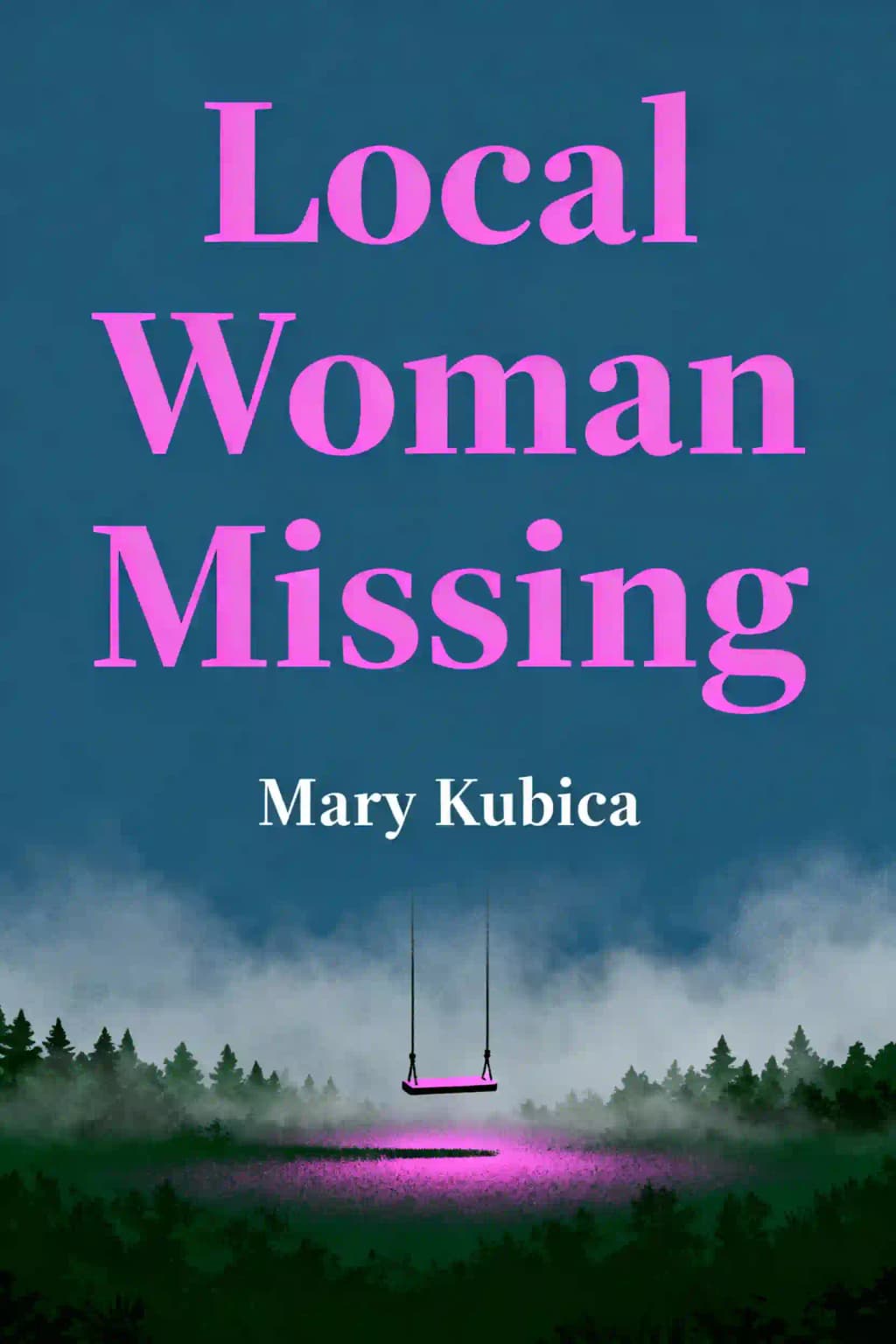
In the quiet suburb where perfectly manicured lawns hide perfectly crafted lies, Mary Kubica's "Local Woman Missing" unravels a chilling tale of deception, betrayal, and the haunting consequences of our darkest choices. This psychological thriller has captivated millions with its intricate plot twists and emotional depth, earning it a spot on The New York Times bestseller list for 14 consecutive weeks. Reese Witherspoon selected it for her book club, calling it "impossible to put down," while Stephen King praised Kubica's ability to "peel back suburban veneer to reveal the darkness beneath." The novel's exploration of motherhood, friendship, and the fragility of trust resonates deeply in our era of carefully curated social media personas, where the gap between appearance and reality grows ever wider. What truly happens when someone vanishes without a trace? And what if the person who returns isn't who they claim to be?
Kapitel 2
Vanished Without a Trace
The peaceful facade of a tight-knit suburban neighborhood shatters when two families are devastated by inexplicable disappearances within days of each other. The first victim, Shelby Tebow - a new mother still adjusting to life with her infant daughter Grace - vanishes during what should have been a routine evening jog. Her husband Jason's frantic calls to police initiate the first wave of searches, with helicopters scanning the area and K-9 units combing through nearby woods. The community holds its breath, hoping Shelby will return to her newborn daughter.
Just ten days later, the unthinkable happens again. Meredith Dickey and her six-year-old daughter Delilah disappear without warning, leaving behind Meredith's husband Josh and their young son Leo. The timing couldn't be more challenging - the region is being battered by unprecedented storms that have turned streets into rivers and fields into treacherous mudflats. Emergency services are already stretched thin dealing with flood-related emergencies, complicating search efforts for the missing mother and daughter.
Kate, who lives three doors down from the Dickeys and whose children often play with Delilah and Leo, becomes entangled in the nightmare when Josh appears at her doorstep in a state of panic. He's drenched from the storm, clutching a confused Leo, and babbling about finding their house empty. The details he shares are deeply troubling - Meredith's phone goes straight to voicemail, their normally well-cared-for dog hasn't been fed, and the house shows subtle signs of disorder that seem out of character for the meticulous Meredith. Josh confides in Kate that Meredith had been behaving oddly in recent weeks - missing social engagements, appearing distracted during conversations, and spending long hours alone in their home office.
The community mobilizes despite the dangerous conditions. Local residents form search parties, wading through flooded areas and checking abandoned buildings. Kate and her partner Bea take the lead in coordinating volunteer efforts, creating maps of searched areas and maintaining communication between different groups. Social media fills with theories and possible sightings, while local news crews set up permanent posts in the neighborhood.
The investigation takes a horrific turn when Shelby Tebow's body is discovered in a debris-filled drainage area near the swollen river. The medical examiner's ruling of homicide transforms the missing persons case into something far more sinister. Fear grips the neighborhood as residents realize a killer might be walking among them. When forensic investigators in white Tyvek suits descend on Josh's property, methodically documenting and collecting evidence, the community's worst fears seem confirmed. But the truth proves far more complex - a web of secrets, lies, and unexpected connections that will take more than a decade to fully expose.
The case becomes notorious in local law enforcement circles, with multiple detectives cycling through over the years, each uncovering new layers to the mystery. The disappearances leave an indelible mark on the neighborhood, transforming a once-idyllic suburb into a place where parents no longer let their children play freely and neighbors view each other with lingering suspicion.
Kapitel 3
Darkness and Deception
In a stark contrast to the search happening above ground, we meet Delilah, imprisoned in a pitch-black underground room with a boy named Gus. Their conditions are horrific - concrete floors, a filthy toilet, no bathing facilities except occasional buckets of cold water, and food served in dog bowls. Their captors are cruel, particularly the woman who calls Delilah degrading names like "Retard" and "Dipshit."
Despite these conditions, Delilah maintains her determination to escape. She's secretly kept a spoon from their food bowl and spends hours sharpening it against the toilet tank lid, ignoring Gus's fears that they'll be killed if caught. Her resolve is tested when their captor suddenly opens the door and discovers her makeshift weapon.
Meanwhile, eleven years after the initial disappearances, a teenage girl appears, claiming to be the long-missing Delilah Dickey. Josh and Leo are overjoyed at this miraculous return, but something isn't quite right. The girl behaves strangely - sleeping on the basement floor instead of a bed, speaking with unusual deference, calling Josh "sir" and Leo "mister." She claims to have been held captive by people named Eddie and Martha Cutter, along with another child named Gus.
As the family adjusts to their new reality, Leo becomes increasingly suspicious. The girl doesn't remember basic details about their family, and her behavior suggests severe trauma. When Leo's classmate Piper shows him childhood photos of the real Delilah, he notices a critical detail - the real Delilah had a cleft chin, but this girl doesn't. Cleft chins are genetic and don't simply disappear, raising the devastating question: is this girl truly Delilah, or an impostor?
Kapitel 4
The Midwife's Burden
Months before her disappearance, Meredith Dickey's life was already unraveling. As a doula and midwife, she witnessed a traumatic birth that would set catastrophic events in motion. Shelby Tebow, a new client, hired Meredith to advocate for her during childbirth. During Shelby's difficult labor, Dr. Feingold, an arrogant obstetrician, ignored Meredith's suggestion for a C-section and instead used forceps improperly, causing the baby to suffer brain damage.
In the aftermath, the Tebows decided to sue Dr. Feingold for malpractice, with Meredith agreeing to testify against him. This decision earned her a threatening call from the doctor: "If you did this, if this was your idea, I'll ruin you." The threat left Meredith shaking for hours, uncertain whether he meant to destroy her career or something more sinister.
Simultaneously, Meredith began receiving anonymous threatening texts: "I hope you die. I hope you rot in hell." These messages escalated to "I know what you did. You'll never get away with it, bitch" and the particularly chilling "Get home safe" after a late-night hospital shift. The texts left her constantly looking over her shoulder, jumping at shadows, and sleeping poorly.
The source of these threats was eventually revealed when Meredith visited her neighbor Cassandra with a peace offering. Cassandra confronted her with evidence of Meredith's college relationship with Marty - now Cassandra's husband - including an old note about a pregnancy (though Meredith had miscarried). As Meredith left, Cassandra spat, "I hope you rot in hell, Meredith" - the exact wording from the threatening texts.
Between Dr. Feingold's threats, Cassandra's hostility, and the stress of potentially testifying in a malpractice suit, Meredith's life was becoming increasingly dangerous. Yet she kept these troubles from her husband Josh, not wanting to worry him or fuel his desire for her to quit her beloved profession.
Kapitel 5
A Night That Changed Everything
On a warm spring night, Bea celebrates her 30th birthday at an upscale riverside restaurant with a retractable roof deck. What begins as a romantic evening between Meredith and Josh - intended for Meredith to finally confess her secrets - transforms when they run into Kate and Bea. Josh leaves early when Delilah has a nightmare, while Meredith stays behind with birthday girl Bea for "one more drink."
The night spirals into excessive drinking and dancing. Despite being intoxicated, Bea insists on driving them home. In the darkness of that rainy night, they hit something with the car - not an animal, but Shelby Tebow. The impact is devastating. When they discover Shelby's body, Bea insists they hide her rather than call for help, claiming she's already dead.
Meredith hears what sounds like a moan from the trunk but Bea dismisses it, refusing Meredith's pleas to check if Shelby might still be alive. They drive miles into the woods where they dig a shallow grave with their hands, ice scrapers, and tree limbs. Bea strips Shelby naked to make it look like a sexual crime, hoping police will search for a man rather than two women.
After burying her, they return home. Bea makes Meredith strip in her yard, taking her mud and blood-covered clothes as evidence. "Go home to your husband and kids," she commands. "Forget all about what happened tonight."
The next morning, Josh assumes Meredith is just hungover from birthday celebrations. She hides the mud under her fingernails and vomits from the horror of what they've done. By evening, Shelby's disappearance spreads on Facebook and makes the local news. Meredith freezes, unable to tell Josh she knows Shelby, trapped in another lie that grows harder to confess with each passing day.
The guilt consumes Meredith completely. She becomes withdrawn and distant from Josh, unable to bear his touch without thinking of Shelby. Bea visits almost daily, seemingly monitoring Meredith's movements and demanding she "act normal" when she can barely function.
Kapitel 6
The Breaking Point
Weeks after Shelby's death, the guilt becomes unbearable for Meredith. When she learns that Bea planted Shelby's bloody clothes to frame Jason Tebow, she's horrified. She refuses to let baby Grace lose both parents and declares she's calling the police.
This confrontation happens in the Dickeys' detached garage. Bea begs Meredith not to call, saying she couldn't survive jail. When Meredith remains firm, Bea's demeanor changes completely. She blocks Meredith's exit as she tries to grab her phone. They struggle, and Meredith accidentally shoves Bea into the wall's exposed nails.
As Meredith tries to escape to the house, Bea catches her, now wielding Josh's hammer. The situation escalates when sick, feverish Delilah appears in the doorway. Before Meredith can warn her daughter to run, Bea strikes her from behind with the hammer, knocking her unconscious.
Meredith wakes disoriented in the back seat of her own car with Bea driving. Panic surges through her: where are her children? Bea drives to a run-down motel in an industrial area and forces Meredith at knifepoint to rent a room for a month, paying cash. She promises to bring Delilah if Meredith cooperates.
Inside the squalid room, Bea makes Meredith write "Delilah is safe. She is fine" on a torn phonebook page. Then she reveals her true plan: "You understand, this needs to look like a suicide." Before Meredith can process these words, Bea slices her wrists with the knife. When Meredith tries to protect herself, Bea stabs her in the stomach. As Meredith lies bleeding on the motel floor, Bea covers her ears, unable to listen to her friend die.
Days later, police discover Meredith's car at the motel. Inside the room, they find evidence that devastates Josh, causing him to collapse in grief. The community believes Meredith is dead, though her body is never found.
Kapitel 7
The Truth in Darkness
Eleven years after the disappearances, the truth begins to emerge. When Leo confronts the girl claiming to be Delilah with photographic evidence of the missing cleft chin, they take their concerns to Detective Rowlings. Initially dismissive, the detective eventually breaks down and confesses that the DNA test was negative - the girl is not Delilah. She admits to lying because she couldn't bear to take away Josh's happiness after watching him suffer for eleven years.
The girl, whose real name is Carly Byrd, is genuinely shocked by this revelation. Through tears, she insists, "You are my daddy," to Josh - suggesting she truly believed she was Delilah. This heartbreaking moment reveals she was likely a victim herself, manipulated by her captors into believing she was the famous missing girl.
When police bring Carly back to the house to collect her belongings, she escapes through a second-floor window. The search for her leads to a surprising discovery at Kate and Bea's home. When Josh and police ask to search Bea's music studio, she mysteriously disappears after going to get the key. Kate receives a text from Bea: "Forgive me. I didn't mean for any of it to happen."
When police break down the studio door and enter the attic, they make a shocking discovery - not Carly, but the real Delilah Dickey, now seventeen years old and the spitting image of Meredith. Josh and Leo collapse in tears at this miraculous reunion. But the most devastating revelation comes when Delilah speaks: "I was there when she killed Mommy."
The truth is finally revealed: Bea kept Delilah prisoner in her soundproofed studio attic for eleven years. Despite having books, toys, and clothes, Delilah's childhood was stolen from her. The window was boarded up except for a small peephole, and the space was so small that seventeen-year-old Delilah could only stand upright at the center of the gabled roof. She slept on an air mattress and used a portable commode, with Bea helping her bathe when Kate was at work.
Kapitel 8
Aftermath and Healing
In the days following these revelations, the remaining pieces fall into place. Carly Byrd is found hiding near an abandoned dam, and her captors - copycat criminals inspired by Delilah's story - are arrested days later. Bea is eventually captured trying to obtain a fake ID and pleads guilty to murder, vehicular homicide, and kidnapping. Jason Tebow is released after serving eleven years for a crime he didn't commit.
The truth about that fateful night emerges: after hitting Shelby with the car, Bea and Meredith buried her body in the woods. When Meredith later threatened to confess, Bea attacked her in the garage, which is why Bea's blood was found there. Bea took Meredith to a motel and staged her suicide, but couldn't bring herself to kill Delilah, who had witnessed the attack. Instead, she kept the child prisoner for eleven years, creating an elaborate system to keep her hidden even from Kate.
The psychological impact on all involved is profound. Delilah, despite her ordeal, adapts remarkably well to family life, though she occasionally shows strange affinity toward Bea - her captor but also her caretaker for most of her life. Leo struggles with the knowledge that the girl he initially resented wasn't his sister at all, but another victim. Josh must reconcile the joy of having his daughter back with the confirmed loss of his wife.
Kate, whose partner of six years turned out to be a murderer, struggles to process the betrayal. When Bea calls from prison claiming she never meant to hurt anyone, Kate responds simply, "But you did. You hurt everyone," before refusing any further contact.
Despite these traumas, healing begins. Josh and Kate sometimes share beers on his porch, watching Leo and Delilah together. Their home, once filled with grief and loss, now rings with laughter. As the saying goes, time heals all wounds - Josh, Delilah and Leo prove this true. For Kate, healing comes more slowly, but she remains hopeful that her time will come soon.
In this suburban neighborhood where perfectly manicured lawns once hid perfectly crafted lies, truth has finally emerged from the darkness. The missing have been found, the guilty have been punished, and those left behind have begun the long journey toward wholeness.
Kapitel 9
The Fragility of Trust
At its core, "Local Woman Missing" explores how easily trust can be broken and the devastating consequences that follow. Every relationship in the novel is built on partial truths and hidden secrets. Meredith keeps her professional struggles from Josh, her history with Marty from Cassandra, and later, the accident with Shelby from everyone. Bea maintains an elaborate facade, appearing to be Kate's loving partner while harboring the darkest of secrets in her soundproofed studio.
Even the Tebow marriage was built on deception - paternity tests later reveal that Jason was not baby Grace's biological father, suggesting both partners were unfaithful. The community initially suspects Jason of killing his wife, demonstrating how quickly trust evaporates in the face of tragedy.
Perhaps most heartbreaking is the manipulation of Carly Byrd, who was convinced by her captors that she was someone else entirely. Her genuine shock when learning she isn't Delilah reveals the profound psychological damage inflicted when trust is weaponized against the vulnerable.
The novel asks uncomfortable questions about who deserves our trust and how well we truly know those closest to us. Kate never suspected her partner of six years was capable of murder and kidnapping. Josh never imagined his wife was involved in a hit-and-run death. The neighborhood never questioned that Charlotte's daycare was safe, despite Leo being locked in a toy chest for an hour.
In the end, healing begins only when the characters stop hiding behind their carefully constructed facades. The truth, however painful, creates space for authentic connection and genuine trust to rebuild. As Josh, Leo, and Delilah demonstrate in the novel's closing scenes, even after unimaginable betrayal, the human capacity for trust and love remains resilient - battered perhaps, but never fully extinguished.
Kapitel 10
The Masks We Wear
Throughout "Local Woman Missing," characters present carefully constructed public personas while hiding darker truths. Meredith appears to be the perfect mother and dedicated healthcare professional, yet harbors secrets about her past relationship with Marty and later becomes complicit in covering up Shelby's death. Bea projects the image of a supportive partner and friend while concealing her capacity for violence and deception.
Even secondary characters maintain facades. Dr. Feingold presents himself as a competent medical professional while dismissing concerns that lead to a baby's brain damage. Charlotte portrays herself as a caring childcare provider while allowing bullying to occur under her watch. Cassandra cultivates the image of the perfect stay-at-home mother while harboring intense jealousy and sending threatening messages.
The novel explores how these masks eventually crack under pressure. Meredith's guilt manifests physically - headaches, backaches, and stomach knots that make it impossible for her to maintain her "everything is fine" facade. Bea's carefully constructed life collapses when her crimes are exposed. The girl claiming to be Delilah can't maintain her deception when confronted with photographic evidence of the real Delilah's cleft chin.
Kubica suggests that these masks exact a psychological toll on those who wear them. Meredith becomes increasingly isolated in her deception, unable to connect with Josh or find comfort in his touch. Bea must constantly monitor Meredith for signs she might confess, creating tension that eventually erupts in violence. The false Delilah struggles to adapt to family life because she's living a role she was forced into rather than expressing her authentic self.
Only when these masks fall away can genuine healing begin. The novel's most touching moments come after the truth emerges - Josh and Leo embracing the real Delilah, Kate finally acknowledging the full extent of Bea's betrayal, and even Carly's raw emotional response when she realizes she isn't who she was told to be. In stripping away these carefully constructed personas, the characters finally face reality and begin the difficult work of rebuilding their lives on foundations of truth rather than deception.
Kapitel 11
When the Missing Return
The novel's most profound exploration centers on the question: what happens when the missing return? Both Delilah and Carly represent different answers to this question, highlighting the complex psychological and emotional challenges of reintegration after prolonged trauma.
Carly, believing herself to be Delilah, struggles to adapt to family life after eleven years of captivity. She sleeps on the basement's concrete floor rather than a bed, calls Josh and Leo "sir" instead of using their names, and flinches when anyone reaches toward her. Her behavior reveals severe trauma - she's developed survival mechanisms like her "darkness game" of navigating without light, and she's created an imaginary friend (Gus) to cope with isolation.
When the real Delilah is discovered, she presents different challenges. Having witnessed her mother's attack and spent her entire childhood imprisoned in Bea's attic, she has developed a complex relationship with her captor. Despite Bea's crimes, she was also Delilah's primary caregiver, creating a psychological dependency similar to Stockholm syndrome.
The novel sensitively portrays how families adapt to these returns. Josh and Leo must reconcile their joy at finding Delilah with the grief of confirming Meredith's death. They must also process the emotional investment they made in Carly, who was herself a victim deserving compassion. Leo particularly struggles with these shifting loyalties - resenting Carly's presence initially, then feeling guilty when he learns her true identity, and finally having to rebuild a relationship with a sister he barely remembers.
Kubica avoids the simplistic "happily ever after" ending often found in missing-person stories. Instead, she acknowledges that return is just the beginning of a complex healing process. The novel's final scenes show this ongoing journey - Delilah adapting well to family life but still carrying the psychological imprint of her captivity, Josh and Leo learning to build new family dynamics, and Kate beginning to process her partner's betrayal.
Through these nuanced portrayals, the novel suggests that when the missing return, they bring with them not just joy and relief, but also complicated questions about identity, belonging, and how to rebuild lives fractured by trauma. The true challenge isn't finding the missing - it's helping them, and those who love them, find their way forward after everything has changed.