Kapitel 1
When Worlds Collide: Indigenous Voices in the Digital Age
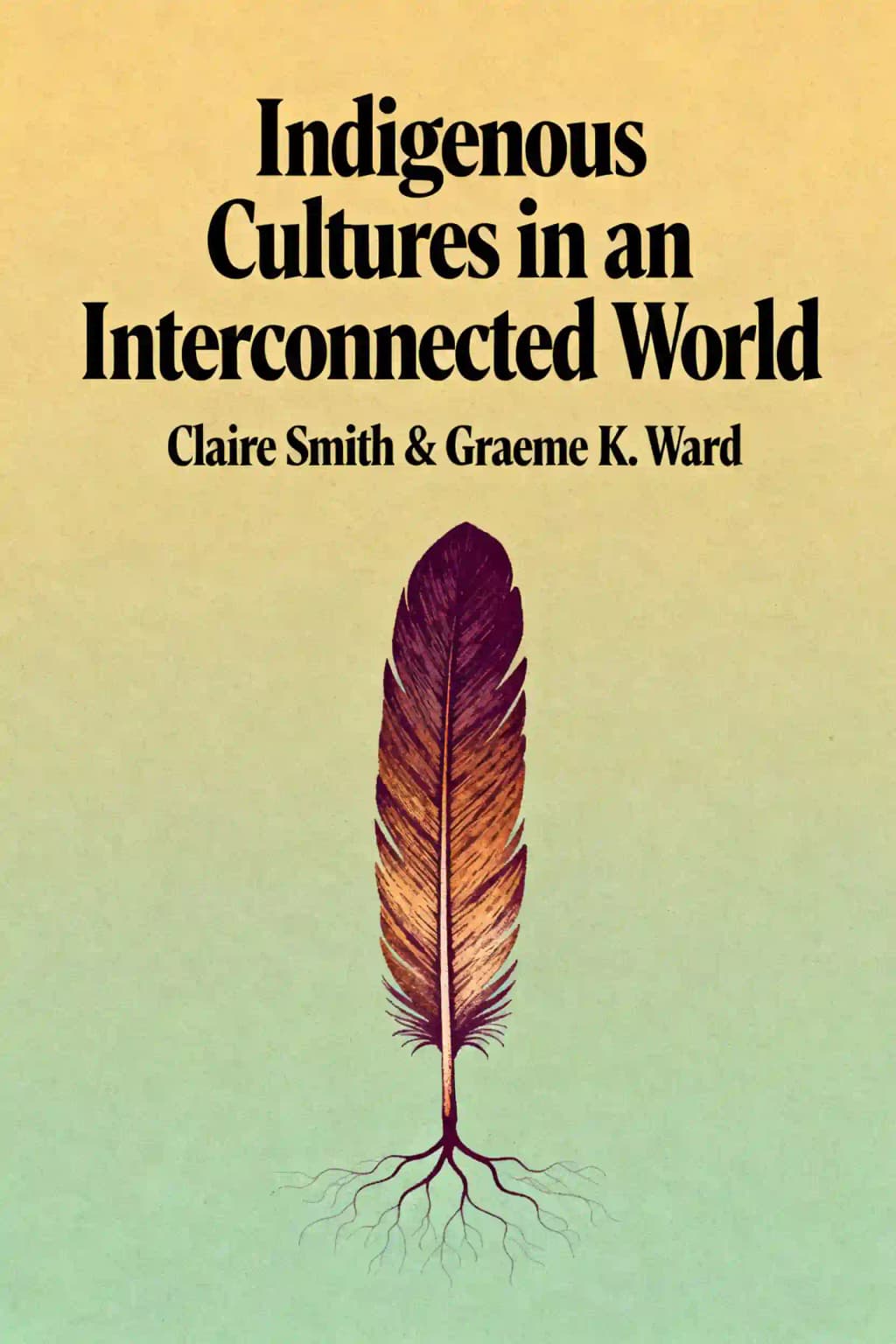
In an increasingly interconnected world, how do ancient cultures navigate the tides of globalization? "Indigenous Cultures in an Interconnected World" tackles this profound question with remarkable insight. The book has gained recognition among anthropologists, cultural theorists, and Indigenous rights advocates as a groundbreaking work that challenges conventional wisdom about cultural survival. What makes this collection particularly powerful is its approach-rather than portraying Indigenous peoples as passive victims of globalization, it reveals their active engagement with modern technologies and global networks to strengthen their communities and assert their rights. Celebrities like Cate Blanchett have praised the book for its nuanced portrayal of Indigenous resilience, while academic institutions from Harvard to the Sorbonne have incorporated it into their cultural studies curricula. At its core, this work invites us to reconsider what it means to be "traditional" in a world where boundaries are increasingly fluid.
Kapitel 2
The Paradox of Globalization: Threat and Opportunity
Globalization presents Indigenous peoples with a profound paradox. On one hand, it accelerates centuries of colonization through expanding communication technologies, mass tourism, and pervasive consumer culture-potentially threatening cultural survival. The spread of Western media, entertainment, and commercial products increasingly penetrates traditional communities, particularly affecting younger generations. On the other hand, these same forces create unprecedented opportunities for empowerment, cultural preservation, and cross-cultural connection. Digital platforms enable Indigenous voices to reach global audiences directly, bypassing traditional gatekeepers of information and representation.
Indigenous peoples have long histories of sophisticated interconnectedness that position them uniquely to harness global networks while maintaining local identities. Their "imperative to communicate" is rooted in oral traditions that invest energy in complex social structures rather than technologies. Traditional practices like songlines, ceremonial gatherings, and trade routes created vast networks of knowledge exchange long before modern globalization. This cultural foundation has allowed them to readily adopt new communication tools-from telephones to television to social media-to restore traditional information exchanges disrupted by colonization. Many communities now use digital archives to preserve elder knowledge, virtual spaces to conduct ceremonies, and online platforms to teach Indigenous languages.
Issues of authenticity and representation remain central to this struggle. When Indigenous cultures are stereotyped as unchanging or primitive, they become disempowered and commodified. Tourist industries often promote shallow cultural experiences, while media perpetuates harmful stereotypes. Yet when Indigenous peoples control their own representation, authenticity becomes a source of strength and cultural renewal. Indigenous knowledge systems differ fundamentally from Western ones-being fluid, multivalent, and contextual rather than definitive and fixed. This creates both challenges in translation and opportunities for enriching cross-cultural dialogue and understanding.
The Internet has enabled Indigenous peoples to challenge colonial histories and power relations in unprecedented ways. Online platforms facilitate direct communication between communities, enabling coordinated political action and cultural exchange. Many Indigenous communities now maintain stronger connections with other Indigenous groups globally than with non-Indigenous peoples in their own countries. Digital networks support language revitalization efforts, traditional knowledge preservation, and cultural education programs. This doesn't mean sacrificing local identities-Indigenous peoples have become adept at operating in different cultural spaces where the same objects and practices can carry different meanings for different audiences.
As Gatjil Djerrkura, Chairman of the Aboriginal and Torres Strait Islander Commission, observed, "While Indigenous peoples must fight harder to secure cultural survival, they are also harnessing new technologies to strengthen their communities." This dual reality defines the Indigenous experience of globalization. Communities increasingly leverage digital tools to protect land rights, preserve traditional knowledge, and build economic opportunities while maintaining cultural integrity. Success stories range from Indigenous-owned media companies to virtual museums and online marketplaces for authentic Indigenous art and products.
Kapitel 3
Media as Cultural Battleground: Indigenous Voices in the Digital Age
Indigenous media creators have transformed expressive forms into "worldly interventions" that simultaneously strengthen their communities and assert Indigenous perspectives in global arenas. Far from being marginal to global concerns, these efforts create new cultural spaces that counter corporate-driven globalization with alternative visions of community and connection. From documentary filmmaking to digital storytelling platforms, Indigenous creators are reshaping narratives about their cultures, histories, and contemporary experiences.
The emergence of Indigenous media coincided with three pivotal developments: new technologies becoming accessible, rising Indigenous activism, and shifting relationships between states and Indigenous nations. Cultural activists like Loretta Todd, Sandy Osawa, and Jolene Rickard formed "counter-publics" through media collectives, creating spaces for Indigenous storytelling and political expression outside mainstream channels. These pioneers established networks of support and collaboration that helped nurture subsequent generations of Indigenous media makers.
One watershed moment came in 1967 when Chief Dan George delivered his powerful statement "I have nothing to celebrate" at Vancouver's Centennial celebration. This catalyzed Indigenous storytelling efforts across North America, inspiring a generation of activists to document their communities' struggles and achievements. Around the same time, "media missionaries" introduced video technology to Native communities, leading to the formation of numerous Indigenous media organizations. Groups like Video in the Villages in Brazil and the Aboriginal Peoples Television Network (APTN) in Canada emerged as vital platforms for Indigenous expression.
Despite political backlash against multiculturalism in countries like the United States, Canada, and Australia, Indigenous media has developed substantial infrastructure-from national film commissions to local production centers-creating lasting pathways for Indigenous self-representation. Organizations like the National Indigenous Media Association of Australia and the Native American Public Telecommunications consortium have provided crucial support for Indigenous creators, offering funding, training, and distribution networks. These institutions have helped establish sustainable careers for Indigenous media professionals while ensuring cultural protocols are respected.
The significance of this media revolution extends beyond representation. When Indigenous peoples control their own narratives, they challenge centuries of misrepresentation and stereotyping. As one filmmaker noted, "The best gun to have during the crisis at Oka was the camera"-recognizing that documentation and storytelling constitute powerful forms of resistance against colonial power structures. This was demonstrated during Standing Rock, where Indigenous media makers provided crucial counter-narratives to mainstream coverage of water protector activities.
Through digital media, Indigenous creators have established new forms of connection that transcend geographical boundaries while remaining grounded in specific cultural traditions. Social media platforms have enabled Indigenous communities worldwide to share stories, organize political actions, and maintain cultural connections across vast distances. Virtual reality projects are allowing elders to record traditional knowledge for future generations, while Indigenous gaming developers are creating immersive experiences that teach traditional values and languages.
This balancing act-maintaining cultural specificity while engaging global audiences-represents one of the most innovative aspects of Indigenous media practice. Contemporary Indigenous creators are developing sophisticated strategies to share cultural knowledge appropriately while reaching broader audiences. Through careful curation and strategic use of new technologies, they're proving that Indigenous perspectives are not just relevant to global conversations but essential to imagining more equitable and sustainable futures.
Kapitel 4
From Clan Symbol to Cultural Emblem: The Evolution of Indigenous Art
Traditional hunter-gatherer communities of 250-500 individuals provided the original "connected world" within which humans moved and created. Unlike territorial chimpanzees, hunter-gatherers maintained regional communities through gift exchange, language, and symbolic communication through art and ritual. Each clan identified itself with particular artistic motifs, while wider communities identified as speakers of particular dialects.
The travels of ancestral beings, depicted in legends, ceremonies, and paintings, expressed both local identity and regional relationships. This structure allowed for various types of creativity as stories could be extended or reinterpreted to accommodate new events. Traditional Aboriginal art functioned as a sophisticated visual language connecting people to land, ancestors, and each other.
Colonial contact transformed these artistic traditions in complex ways. By the mid-1970s, Yolngu paintings joined works from the Papunya school in creating the category of Aboriginal fine art. Artists like Narritjin Maymuru made strategic decisions about which legendary themes to release for commercial sale, with the traditional design "grammar" allowing diverse compositions around single themes.
Yolngu artists viewed their paintings as assertions of land rights conferred by Creation Period heroes. When petitioning the federal parliament against bauxite mining at Gove, they attached the petition to bark paintings featuring designs belonging to the clans whose land was threatened. Narritjin explained his Canberra exhibition: "All these paintings got meanings... Everything has been done here in order to teach the Europeans in Canberra, so they can understand the way we are travelling and the way we are living."
The success of these innovative artistic traditions had significant impact on urban Aboriginal artists, who adopted traditional motifs to express pride in their Aboriginality, though in different contexts. Artists like Trevor Nicholls incorporated Western Desert motifs symbolizing fecundity, while Lin Onus Barinja lived at Gamardi outstation to connect with traditional culture, combining Arnhem Land styles with European artifacts.
These transformed traditions demonstrate how creativity has been harnessed to reflect on and respond to new connectedness within national and international social orders. Indigenous art has evolved from clan symbol to cultural emblem without losing its power to communicate identity and belonging.
Kapitel 5
Digital Smoke Signals: Indigenous Identity in Cyberspace
American Indians, despite their relatively small numbers, maintain remarkable cultural diversity despite centuries of assimilation policies. Pre-contact Indigenous groups engaged in extensive trade networks and developed cross-cultural communication mechanisms like Plains sign language, Chinook jargon, and smoke signals. These synthetic forms of communication helped preserve distinct identities while simultaneously fostering degrees of pan-Indian identity. New technologies now serve similar functions in the digital age.
Ethnicity functions like distant kinship, where people recognize themselves as belonging to the same group based on shared history, language, culture, and religion. For American Indians, Europeans imposed a single category on dramatically diverse populations with as many as 300 distinct languages and 2000 dialects. Today's technologies reflect two levels of ethnic identity formation: some reinforce specific tribal identities (Dakota, Ioway), while others promote pan-Indian ethnicity.
Early digital technologies like bulletin boards and listservs enabled rapid multi-user communication about American Indian issues. NativeNet, created by Gary Trujillo in 1989, evolved into several specialized discussion forums including NATIVE-L, NATCHAT, and groups focused on health and education. These platforms became rare spaces where Indians and non-Indians could directly interact.
A common discussion theme concerned protecting Indigenous identity from "wannabes"-non-Indians who appropriate Native cultural traits, especially sacred practices. The most notorious case involved "Blue Snake's Lodge" on America OnLine, where a non-Indian software consultant posed as an Eastern Shawnee "chief" dispensing pan-Indian spirituality until challenged by actual tribal members.
CD-ROMs have played a crucial role in preserving Indigenous culture through their substantial storage capacity for historical documents, images, and sound. Perhaps most significant is their use for language preservation through projects like the Center for Documentation of Endangered Languages' multimedia dictionaries for Skiri Pawnee and Yanktonai languages, and Brenda Farnell's "Wiyuta" interactive CD-ROM for Assiniboine storytelling that combines spoken words and signing.
The World Wide Web has seen explosive growth in American Indian presence, with sites ranging from school projects to tribal businesses. The Web's appeal lies in its ease of use, multimedia capabilities, and updatability. Many sites connect to language preservation projects, like the Sisseton Wahpeton Sioux Tribe's Community College site featuring the award-winning Dakota Language Homepage.
For American Indians, technology maintains existing ethnic boundaries while creating new possibilities for cultural preservation and expression. The digital realm has become another territory where sovereignty can be asserted and identity negotiated.
Kapitel 6
Reclaiming Representation: Indigenous Voices in Historical Narratives
The Western world has historically depicted "Others" in two spaces: the controlled internal space of museums with labeled specimens, and the external reality of foreign lands and peoples. Today, a third space has emerged-the placeless electronic cultural space where interactive dialogue is possible. Yet for colonized peoples, navigating between worlds is not new; Indigenous cultures have negotiated dual realities for centuries.
In Tasmania, Aboriginal people quickly adapted to new elements like dogs, cats, guns, and glass within a decade of colonization-not as passive recipients but as strategic adopters using these resources for cultural survival. George Augustus Robinson's journals document this cultural adaptation, from training English cats to hunt opossums to maintaining firearms for protection against whites.
The conquest of Indigenous peoples began with the power of language and naming. Robinson, in his mission to "civilize" Tasmanian Aboriginals, systematically replaced their multiple traditional names with Western ones like "Alpha," "Buonaparte," and "Queen Elizabeth"-a deliberate linguistic displacement preceding physical removal. Similarly, colonists renamed the Tasmanian landscape with familiar English county names or exotic biblical references to impose a sense of history on land they refused to recognize as having its own.
Museums further distorted Indigenous representation through exhibits like the Tasmanian Museum's controversial diorama of Aboriginal figures surrounding a lobster. This display portrayed them as a Western-style nuclear family unit, erasing the reality of people who were constantly fleeing violence. Colonial artists and writers further distorted history by depicting Tasmanians as "feeble forest nymphs dancing into inevitable decline" or as mythological "fauns and Satyrs."
Today's global electronic space offers potential for Indigenous voices but remains problematic. The Internet provides opportunity for dialogue, yet concealment and voyeurism remain possible stances. Western anxiety stems from fear of mistranslation and loss of control over language as traditional power structures dissolve in hyperspace. The once-colonized Other now speaks both languages of "colonial accountant" and "cultural preserver," challenging unwelcome depictions.
Indigenous artists are recontextualizing historical stories by retelling documented events from an "invisible Aboriginal" perspective, using familiar domestic objects to invoke recognition while introducing unexpected, possibly disturbing versions of historical events. This approach acknowledges there can be no closure of the past-only approximations of truth-while proposing cultural continuity through rearticulations as a cautious alternative.
Kapitel 7
The Art of Cultural Translation: Indigenous Arts in Global Markets
Marketing Indigenous culture as art is fundamentally a moral act that creates value both in objects themselves and in their exchange value. While some critics frame this as transforming "ethnographic objects" into "art objects" that alienate Indigenous creators, this oversimplification denies Aboriginal people's agency in the process. Despite differences between Aboriginal and Western art traditions, there are areas of compatibility that Aboriginal artists have skillfully navigated.
Jacques Maquet's concept of "art by metamorphosis" suggests Indigenous art objects are transformed into "fine art" by Western consumers without reference to their creators' intentions. This view wrongly assumes the global concept of Aboriginal art is purely Western, ignoring Indigenous agency and the historical trading systems where creators consciously produced works for cross-cultural exchange.
The concept fails to recognize the diversity within Western art practice, the complexity of art markets, and that metamorphosis is common within Euro-American art itself as objects move between categories of craft, decoration, and fine art. Aboriginal people have engaged in artistic discourse with outsiders since before European invasion, actively using art to assert their rights in postcolonial contexts.
Far from being passive victims, Aboriginal artists understand the value art holds in European society and seek recognition in wider contexts. The process of acceptance happens through transformation not only of Aboriginal artifacts but of the ongoing Euro-American category of 'art' itself. Indigenous Australians are well aware of the persuasive power of art, combining phenomenological and sociological approaches to understand the motivations and achievements of artistic persuasion.
Throughout Latin America, weaving and embroidery are skills practiced primarily by women who create vibrant and technically accomplished work despite the pervasiveness of Western goods. Production ranges from items for personal use to pieces made specifically for international markets. In some markets, hand-made items compete with factory-produced "ethnic" goods.
The Isluga women of northern Chile maintain their commitment to traditional Andean weaving forms and standards while aspiring to achieve worldwide visibility for their work. Unlike the Cuna women who developed non-traditional applique embroidery (mola) that gained international recognition, Isluga weavers face challenges in marketing their work. Contemporary Isluga textiles are often perceived as mere craft items rather than fine art, despite old Aymara weavings being collected as art pieces.
For Indigenous artists to successfully navigate global markets, they must balance cultural integrity with market demands-a delicate negotiation that requires both traditional knowledge and strategic innovation.
Kapitel 8
Reclaiming the Past, Securing the Future: Indigenous Heritage in the 21st Century
The Innu, indigenous people of northeastern Canada numbering about 16,000, find irony in how descendants of history's greatest travelers have been characterized as cultural fossils frozen in time. Before being settled into villages in the late 20th century, the Innu lived as small cooperative bands pursuing hunting-fishing subsistence across Nitassinan (Quebec-Labrador peninsula). The Innu have always respected great travelers, with prestige gained through feats of rapid journeying, as their hunters traversed epic distances for food while shamans followed spiritual trails.
For the Innu, their relationship to the land is fundamental to their identity. The land, which they call "country," is the root of their culture and philosophy. Their concept of land stewardship (kanauenitam) involves caring for and watching over the land with the understanding that if respected, the land will provide. Hunting is considered a holy occupation, governed by the principle of respect for animals who give themselves willingly to worthy hunters.
The devastating consequences of forced village life culminated in tragic events in Utshimassit (Davis Inlet). In February 1992, six children died in a house fire with no firefighting equipment available. A year later, six children were found attempting suicide by inhaling gasoline fumes. These events thrust Davis Inlet into international media spotlight, with journalists portraying the community's poverty and despair without historical or cultural context.
The Churchill Falls hydro-electric project dramatically altered Labrador's interior drainage patterns between 1969 and 1972. Dam construction diverted rivers traditionally used by Innu families and completely submerged Lake Michikamau, the largest lake in Labrador's interior and a crucial rendezvous point for Innu families across northern Quebec and Labrador. The project proceeded without any environmental or cultural impact assessments, showing complete disregard for traditional Innu land use, burial places, sacred sites, and places of spiritual significance.
In response to these challenges, the Innu have used public opinion as one of their few available avenues, waging highly visible protests and taking grievances to international forums despite geographical isolation and limited resources. The Innu Nation established a World Wide Web presence to provide information about their heritage and concerns. While archaeological evidence can support land claims by demonstrating past land use, the Innu are troubled that scientific archaeology is accepted by governments while elders' testimony is often devalued.
As Indigenous groups across the North gain control over research conducted on their lands, archaeology must adapt to these new conditions. The Innu now require archaeologists to hire Innu students, share research results, and "be respectful of Innu culture and moral values"-a reasonable expectation for those studying their heritage.
The Pathways Project, a collaboration between the Innu Nation, Innu Resource Centre and the Smithsonian Institution, represents a new model of archaeological practice that incorporates Innu values and exposes young people to bush life, with elders teaching traditional skills and sharing stories. This initiative creates meaningful archaeology for both anthropologists and the Innu community, embracing multiple perspectives on the past while addressing social and political concerns.
Kapitel 9
Indigenous Futures: Tradition and Innovation in a Connected World
Indigenous cultures stand at a critical juncture in human history. As global interconnection accelerates, they face unprecedented challenges to cultural survival while simultaneously gaining new tools for empowerment and self-determination. The experiences documented throughout this book reveal a common thread: Indigenous peoples are not passive recipients of globalization but active agents who strategically engage with new technologies and global networks to strengthen their communities and assert their rights.
From the Aboriginal artists of Australia to the Innu of northeastern Canada, from the Aymara weavers of the Andes to Native American digital pioneers, Indigenous peoples demonstrate remarkable resilience and creativity in navigating between traditional knowledge systems and contemporary global contexts. They challenge simplistic notions of "authenticity" that would freeze their cultures in an imagined past, instead embracing dynamic cultural adaptation while maintaining core values and identities.
Digital technologies have emerged as powerful tools for cultural preservation and revitalization. Language documentation projects, online communities, and multimedia storytelling platforms enable the transmission of traditional knowledge to younger generations while simultaneously asserting Indigenous perspectives in global discourse. These technologies don't replace traditional knowledge systems but extend and complement them, creating new possibilities for cultural expression and political advocacy.
The growing recognition of Indigenous intellectual property rights represents another crucial development. As Indigenous communities gain greater control over how their cultural heritage is represented and commercialized, they are developing innovative approaches to protecting traditional knowledge while selectively sharing aspects of their cultures with wider audiences. This selective engagement allows for meaningful cross-cultural exchange without cultural appropriation.
Perhaps most significantly, Indigenous peoples are increasingly forming transnational networks that transcend colonial boundaries. These connections enable knowledge sharing, political solidarity, and collaborative approaches to common challenges like climate change, resource extraction, and cultural preservation. By linking local struggles to global movements, Indigenous communities amplify their voices and influence in international forums.
The future of Indigenous cultures in an interconnected world will not be determined by simplistic narratives of either cultural loss or preservation. Instead, it will emerge through the ongoing negotiation of tradition and innovation, local identity and global citizenship, resistance and engagement. As this book powerfully demonstrates, Indigenous peoples have always been adaptable and resilient-qualities that position them to not only survive but thrive in the complex landscape of the 21st century.