Kapitel 1
When the Woods Hold Their Breath
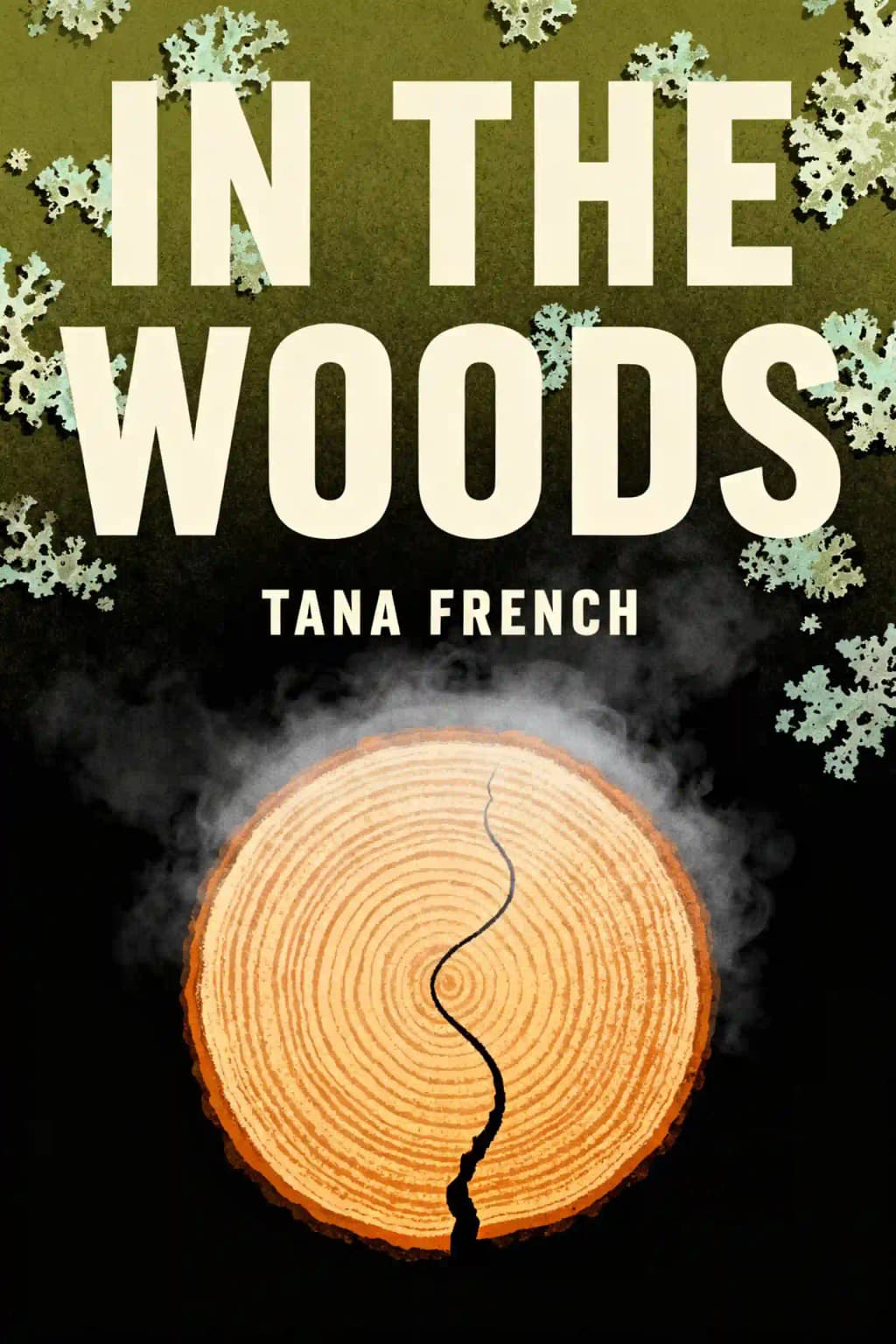
In the heart of Dublin's literary scene lies a modern masterpiece that has captivated readers worldwide since its 2007 debut. Tana French's "In the Woods" isn't just another crime thriller-it's a haunting exploration of memory, trauma, and the shadows that childhood secrets cast over our adult lives. This psychological tour de force won the Edgar, Anthony, Macavity, and Barry awards for best first novel, launching French's internationally acclaimed Dublin Murder Squad series. Stephen King himself praised French as "incandescent," while The Washington Post called her "one of the most distinct and exciting new voices in crime writing." What makes this novel so compelling isn't just its intricate murder mystery, but how it weaves together the fragility of memory, the unreliability of our own minds, and the question of whether we can ever truly escape our past.
Kapitel 2
The Ghosts of Knocknaree Woods
Picture a perfect summer in 1980s Ireland: three twelve-year-old children - Adam Ryan, Peter Savage, and Jamie Rowan - rule their domain in the woods behind their homes in Knocknaree, a suburb just outside Dublin. They know every inch of these woods - the ancient ruins where they build makeshift forts, hidden paths worn smooth by their daily adventures, and secret hollows where they stash their treasures. The woods represent their sanctuary, a place where childhood imagination transforms ordinary trees into magical kingdoms and where every clearing holds the promise of new discoveries. One August afternoon, beneath a cloudless sky that betrays no hint of impending tragedy, they enter the woods to play, but only Adam returns, found standing against a weathered oak tree with blood-soaked shoes, his mind a blank slate, unable to remember what happened. Despite extensive searches involving hundreds of volunteers, police dogs, and helicopter sweeps, Peter and Jamie are never found, leaving behind only scattered theories and grieving families.
Twenty years later, Adam has methodically reinvented himself as Rob Ryan, a detective on Dublin's Murder squad. He's deliberately buried his past beneath a carefully constructed persona, sharing his secret with only a handful of trusted confidants, including his partner Cassie Maddox. He's built a reputation as a skilled investigator, known for his attention to detail and intuitive understanding of crime scenes. When he and Cassie are assigned to investigate the murder of twelve-year-old Katharine Devlin, whose body is found on an archaeological site at the edge of those same woods, Rob's carefully maintained walls begin to crumble. The investigation forces him to confront not just a new crime, but the ghostly echoes of his own buried trauma.
The parallels between the cases are deeply unsettling, extending beyond mere coincidence. Katy's body is discovered at an ancient altar stone, positioned with deliberate care rather than carelessly discarded, suggesting a ritual rather than a random act of violence. The archaeological site - now a contentious location for a new motorway - occupies what had once been the expansive woods where Rob played as a child. Only a narrow strip of trees remains, with modern houses visible beyond a concrete wall - including the one where he'd lived, now occupied by strangers unaware of its dark history. The scene triggers increasingly vivid flashes of childhood memory: running through dappled sunlight, fishing rods fashioned from flexible branches, slapping at persistent midges in the summer heat, and other fragments that hover just beyond full recollection.
"I am a detective," Rob tells us in the opening pages, his voice carrying both authority and uncertainty. "Our relationship with truth is fundamentally broken." This statement becomes the novel's central thesis, as Rob's investigation forces him to question not just the physical evidence before him, but the reliability of his own memories and perceptions. His determination to solve Katy's murder becomes inextricably linked with his desperate need to understand what happened to his childhood friends, creating a dangerous blind spot that threatens both the integrity of the case and his professional career. The woods of Knocknaree hold secrets in their shadows - some decades old, others freshly buried - and Rob must navigate both past and present to uncover the truth, even as he questions whether some mysteries are meant to remain unsolved.
Kapitel 3
The Dance of Partnership
At the heart of this novel lies one of the most compelling partnerships in crime fiction - Rob Ryan and Cassie Maddox. Their relationship transcends typical workplace dynamics, evolving into something far more intimate yet (initially) platonic. They share a unique shorthand developed through countless hours of stakeouts and case discussions, finishing each other's sentences and communicating through mere glances across a crowded room. Rob often sleeps on Cassie's sofa after late nights working, and they've developed small but meaningful rituals that sustain them through the darkness of their profession - shared cigarettes on the station roof, morning coffee runs, and private jokes that mystify their colleagues.
"Looking back, Cassie arrived at exactly the right time for me," Rob reflects. His romanticized vision of Murder squad work had been crushed by the mundane reality of endless interrogations and paperwork. Without her quick wit and grounding presence, he might have become that bitter, conspiracy-obsessed detective with ulcers and a perpetual scowl - the kind that haunts every precinct's corners. Cassie's arrival transformed the tedium into something bearable, even enjoyable, through their shared gallows humor and mutual understanding.
Their partnership becomes the emotional anchor of the story, illustrated through countless small moments of trust and synchronicity. When Rob describes their bond, it resonates with profound truth: "A woman who goes into battle beside you creates a bond more powerful than first love or sex - the daily act of putting your lives in each other's hands." They face danger together in ways that forge unshakeable trust - clearing houses with drawn guns, methodically moving through darkened corridors while covering each other's blind spots, chasing joyriders who die in their arms, and that harrowing night when a junkie held a needle to Rob's throat and Cassie talked the man down for over an hour, her voice never wavering despite her visible fear.
This deep connection makes their eventual unraveling all the more devastating. Their easy camaraderie begins to show cracks under the pressure of the investigation, small disagreements escalating into tense silences. When they cross the line from friendship to intimacy after a particularly vulnerable moment for Rob - triggered by memories of his childhood trauma - he reacts by withdrawing completely, unable to process the shift in their dynamic. His rejection of Cassie's multiple attempts to salvage their friendship reveals his fundamental inability to maintain healthy relationships - a pattern established by his childhood trauma and reinforced by years of emotional isolation.
The deterioration of their partnership parallels Rob's psychological disintegration throughout the case, highlighting how our closest connections often become casualties of our unresolved wounds. Their story becomes a poignant illustration of how trust, once broken, leaves deeper scars than any physical injury - especially when the breach comes from someone who knows all your vulnerabilities and weak spots.
Kapitel 4
The Devlin Family's Fractured Facade
The Devlin family presents a study in contrasts and hidden dynamics. From the outside, they appear to be a normal suburban family-Jonathan and Margaret Devlin with their three daughters: Rosalind (the eldest), and twins Katharine and Jessica. But beneath this veneer lies a household of isolation and secrets.
When the detectives first visit the Devlins to break the news of Katy's murder, Rob immediately notices something off: Jonathan and Margaret never touch or look at each other, the absence of concerned neighbors except Auntie Vera is striking, and each family member seems to come from "a different planet."
Katy emerges as the family's golden child-a ballet prodigy who had earned a place at the prestigious Royal Ballet School. Her bedroom walls are adorned with ballet images, including a drawing from her father. Margaret describes her as "a little angel" and "an easy child." Yet Katy's medical records reveal a troubling history of mysterious illnesses that began when she was eight-severe stomach problems that doctors could only diagnose as "idiopathic pseudo-obstructive bowel disease with atypical lack of distension"-essentially admitting they had no idea what was wrong.
Jessica, Katy's identical twin, presents another puzzle. Described as having "nonspecific learning disability with autistic features" despite normal intelligence, her sudden decline at age seven suggests possible trauma. When Rob first meets her, he's momentarily terrified by her resemblance to the murdered Katy.
Most intriguing is Rosalind, the eldest daughter-tall, slim, expensively dressed with chestnut curls and a newsreader accent unlike her parents' working-class tones. She presents herself as the family's emotional center, supporting her mother and protecting Jessica. Yet subtle inconsistencies in her behavior raise questions. When Rob interviews her alone, she reveals that contrary to Jonathan's claims, Katy had indeed been interested in boys and sometimes lied to her father, who "worshipped" her.
As the investigation deepens, the family's dynamics grow increasingly suspect. Medical records suggest possible Munchausen by proxy syndrome. The family's phone records are surprisingly thin for a household with three teenage girls. Neither parent contacts the detectives about the investigation's progress in the week following Katy's death-an unnatural response to a child's murder.
The Devlin family embodies the novel's central theme: the gap between appearance and reality, and how the most damaging secrets often hide in plain sight.
Kapitel 5
The Archaeological Site: Past and Present Collide
The archaeological dig site where Katy's body is discovered serves as both literal crime scene and powerful metaphor. Once the woods where Rob played as a child, the area is now being excavated before the government bulldozes it for a motorway, leaving only the ancient tower as a "heritage" traffic island.
The site represents layers of history-both personal and cultural-being unearthed and destroyed. Mark Hanly, the passionate site director, rages against this destruction: "This site holds more worth than any church." His devotion to preserving the past contrasts sharply with the government's indifference to history in the name of progress.
The ceremonial stone where Katy's body is found is a Bronze Age sacrificial altar, possibly used for human sacrifices. This creates an eerie resonance between ancient ritual killings and Katy's modern murder. When Rob looks at the stone, he realizes what it reminds him of-"the grooved autopsy tables in the morgue, designed to drain away blood." Past and present blur as ancient purpose echoes in contemporary violence.
The archaeological team itself forms a distinct social ecosystem-young people in their early twenties with a "windblown, outdoorsy innocence" that reminds Rob of kibbutzniks. They represent a connection to the earth and history that Rob has lost, having severed himself from his own past.
Most significantly, the site becomes the physical nexus where Rob's personal history intersects with his professional present. As he investigates Katy's murder, he's literally walking the ground where his childhood trauma occurred. The gradual destruction of the woods by construction equipment parallels his own deliberate erasure of his memories-both represent the violence of forgetting.
When Helen, a forensic technician, discovers an ancient blood spot on the ceremonial stone-type A positive, while Katy was O negative-it creates a physical link between the two cases separated by twenty years. The past isn't just metaphorically present; it has left its literal mark on the landscape.
Kapitel 6
The Politics of Development: Corruption and Consequences
Beneath the personal tragedy of Katy's murder runs a current of political corruption and economic interests. Jonathan Devlin chairs "Move the Motorway," a campaign against the planned motorway through the archaeological site. He reveals receiving threatening phone calls, with the caller mentioning knowing where his family lived. The second call had been answered by Katy herself.
As the investigation progresses, Sam O'Neill uncovers a web of suspicious land deals surrounding the motorway project. He creates a detailed map showing how three mysterious companies-Global Irish Industries, Futura Property Consultants, and Dynamo Development-systematically acquired land years before the route was officially announced. Once four holdout farmers finally sold, the new owners immediately secured rezoning approval that had previously been denied. The alternative route proposed by Move the Motorway would significantly devalue these investments by millions-motive enough for threatening calls or worse.
This subplot reaches its climax when Sam discovers that his own uncle Redmond, a politician, is implicated in the corruption. When confronted with this evidence, their supervisor O'Kelly orders Sam to erase the tape, cancel the wiretap, and leave the developer alone, threatening demotion if he pursues it further.
The corruption storyline serves multiple purposes in the narrative. It provides a plausible alternative motive for Katy's murder, keeping readers guessing. It also illustrates how power operates in society-the wealthy and connected protect their interests while archaeological treasures and children's lives become collateral damage. Most importantly, it forces Sam to confront a moral dilemma that parallels Rob's own ethical compromises, highlighting how institutional pressures can corrupt even those with the best intentions.
The motorway itself becomes a symbol of how modern society bulldozes both natural spaces and historical memory in the name of progress, creating a physical manifestation of the novel's concern with what is lost when we fail to preserve our connections to the past.
Kapitel 7
The Psychology of Memory and Trauma
At its core, "In the Woods" is an exploration of how trauma shapes memory and identity. Rob's inability to remember what happened in the woods twenty years ago isn't just a plot device-it's a realistic portrayal of how the mind protects itself from overwhelming experiences.
Throughout the investigation, Rob experiences memory fragments that surface unpredictably. He recalls the "bikers"-Jonathan Devlin and his friends-who hung around the woods when he was a child. One wore sunglasses year-round and sometimes offered them Juicy Fruit gum. Later, he remembers spying on them in a clearing, watching as a girl named Sandra lay in flattened grass with one of them kissing her.
Other memories disturb him more. He remembers floating down his stairs without touching them, the wallpaper's ribbed texture, light catching dust motes. He also recalls finding a secret garden in the heart of the woods-wild fruit trees, broken marble fountains with water still trickling, ivy-draped statues with missing limbs. Though he knows such a place would have been discovered by archaeologists, the memory feels real to him.
When Rob finally returns to the woods at night, determined to trigger his memories, he experiences a breakthrough. He remembers that after Jamie revealed she was being sent to boarding school, Peter proposed they run away together. The children excitedly planned their escape, racing through the woods following some mysterious music or voice. Rob recalls feeling "light and lucky and wild," running faster than ever before, the forest alive around them. But as they approached the river, something changed-willow branches swaying and "eyes, golden and fringed like an owl's."
This partial recovery of memory leads to Rob's emotional breakdown. Though he can recall the afternoon leading up to their disappearance, he still cannot access the crucial moments of what actually happened. He mourns "the unbridgeable distance" between his present self and those three children who believed they could "defy all the dark and complicated threats of the adult world."
The novel suggests that some wounds may never fully heal, and that the act of remembering itself can be both healing and destructive. Rob's desperate attempts to recover his past ultimately leave him more fractured than before, as the recovered memories disappear again by the novel's end-"excised with surgical precision"-leaving him with only one perfect summer day as "a single bright coin left in my hand."
Kapitel 8
The Hidden Complexities of Suburban Life
French masterfully examines how seemingly ordinary neighborhoods can conceal profound social and psychological complexities. Knocknaree presents as a typical middle-class development with its neat rows of semi-detached houses, everyday family activities, and casual neighborhood interactions. Yet this conventional setting becomes the backdrop for a multilayered exploration of community dynamics and troubling events.
The narrative reveals a twenty-year-old incident involving Jonathan Devlin and his teenage peers that resulted in serious harm to Sandra Scully in the wooded area. This historical event potentially connects to the present investigation, as the missing children may have inadvertently witnessed the earlier incident. Rob and his childhood friends were present in the vicinity that day, leading Jonathan to pursue them through the woods.
Sandra's account includes mysterious atmospheric elements - the sound of large wings and an unusual vocalization that caused intense distress among those present. Jonathan separately recalls hearing distinctive laughter echoing through the woods - not childlike, but that of a young adult - growing increasingly prominent across the estate.
These unexplained elements suggest deeper, more complex forces at work beneath the community's orderly surface. The ancient woods themselves take on an almost sentient quality in the narrative. When Rob returns as an adult investigator, he experiences a profound sense of being observed by the forest itself.
The Devlin family exemplifies this theme of surface appearances versus hidden realities. While neighbors view them as respectable if somewhat distant, internal family dynamics reveal severe psychological issues. One daughter engages in calculated harmful behavior toward her sister while maintaining a convincing facade of normalcy.
French's narrative suggests that the greatest threats to community safety often come not from outside forces, but from within - trusted authority figures who misuse their position, family members who harbor dangerous intentions, or business interests who resort to intimidation. The true tension lies not in supernatural elements but in human psychology - our capacity for deception and harmful behavior, particularly toward those closest to us.
Kapitel 9
The Unraveling of Identity and Truth
As the investigation progresses, Rob's carefully constructed identity begins to unravel. Having reinvented himself after the trauma-changing from Adam to Rob, attending boarding school in England, severing ties with his past-he's created a persona that allows him to function but lacks authentic connection.
His partnership with Cassie represents his closest relationship, yet even this contains elements of performance. When they sleep together after his emotional breakdown in the woods, Rob immediately retreats, unable to integrate this intimacy into his fragile sense of self. "I was trapped in a twilight zone between sleep and waking," he reflects, "unable to force my way into either state." This liminal state becomes a metaphor for his existence-neither fully present in his current life nor able to access his past.
The case forces Rob to confront the artifice of his identity. When his connection to the old Knocknaree case is finally revealed to O'Kelly, Rob faces professional disgrace. His deception threatens not just his career but every conviction he's secured, as they could all be challenged. The very foundation of his adult life-his work as a detective seeking truth-is compromised by his own lies.
Parallel to Rob's unraveling is the revelation of Rosalind Devlin's true nature. Initially appearing as a protective older sister struggling to hold her family together, she's gradually exposed as a manipulative psychopath who poisoned Katy for years out of jealousy and eventually orchestrated her murder through her boyfriend Damien. The discovery of Katy's hidden diary reveals Rosalind's threats and cruelty, showing how thoroughly she had deceived everyone around her.
The novel's final revelation-that Rosalind is only seventeen, making her confession inadmissible-underscores French's theme that truth alone is insufficient for justice. Even when the detectives uncover what really happened, the system's limitations prevent proper resolution.
By the novel's end, Rob has lost everything that defined him-his partnership with Cassie, his career advancement, and even the recovered memories that briefly connected him to his past. His identity, built on denial and reinvention, proves unsustainable when confronted with the buried truths of Knocknaree woods.
Kapitel 10
When the Past Refuses to Stay Buried
"In the Woods" concludes with a profound sense of incompleteness-both in terms of the cases and Rob's personal journey. The 1984 disappearances remain unsolved. Though Rob briefly recovers some memories of that day, they vanish again, leaving him with only a single perfect memory "like a bright coin left in my hand." The mystery that initiated his trauma continues to haunt him, refusing closure.
Katy's case is technically solved-Damien confesses and is convicted-but justice feels hollow. Rosalind, the true architect of Katy's death, escapes prosecution due to her age. The motorway construction proceeds despite the protests, destroying the archaeological site and further erasing the physical landscape of Rob's childhood. The political corruption behind the development remains unexposed, with Sam forced to abandon his investigation.
The novel's emotional resolution is equally ambiguous. Rob's partnership with Cassie is irreparably damaged. When he learns of her engagement to Sam, he drunkenly calls to apologize and tell her he loves her. She doesn't acknowledge him, speaking to Sam as if it were a wrong number, leaving Rob wondering whether she knew he was still listening or had meant to hang up.
In the final scene, Rob visits the construction site one last time, finding it unrecognizable-machinery roaring, trees being cut down. A workman shows him a small metal artifact found on site-possibly an ancient arrowhead with the figure of a man with stag antlers etched on it. Though tempted to keep this connection to the past, Rob returns it for the workman's grandson, symbolically relinquishing his claim on the woods and what happened there.
The novel's power lies in this refusal of neat resolution. Some wounds never fully heal; some mysteries remain unsolved. The past continues to shape us even when we can't remember it. As Rob observes early in the novel, "What I am telling you, before you begin my story, is this-two things: I crave truth. And I lie." This contradiction defines not just Rob but human nature itself-our simultaneous desire for truth and our capacity for self-deception.
French leaves us with the haunting suggestion that the woods hold secrets we may never fully understand-both literal woods with their ancient stones and hidden paths, and the metaphorical woods of memory where parts of ourselves remain forever lost. The true mystery isn't what happened to Peter and Jamie, but how we continue living with the unanswerable questions that define us.