Kapitel 1
Breaking Through the Impossible: Embracing the Illogical Path to Success
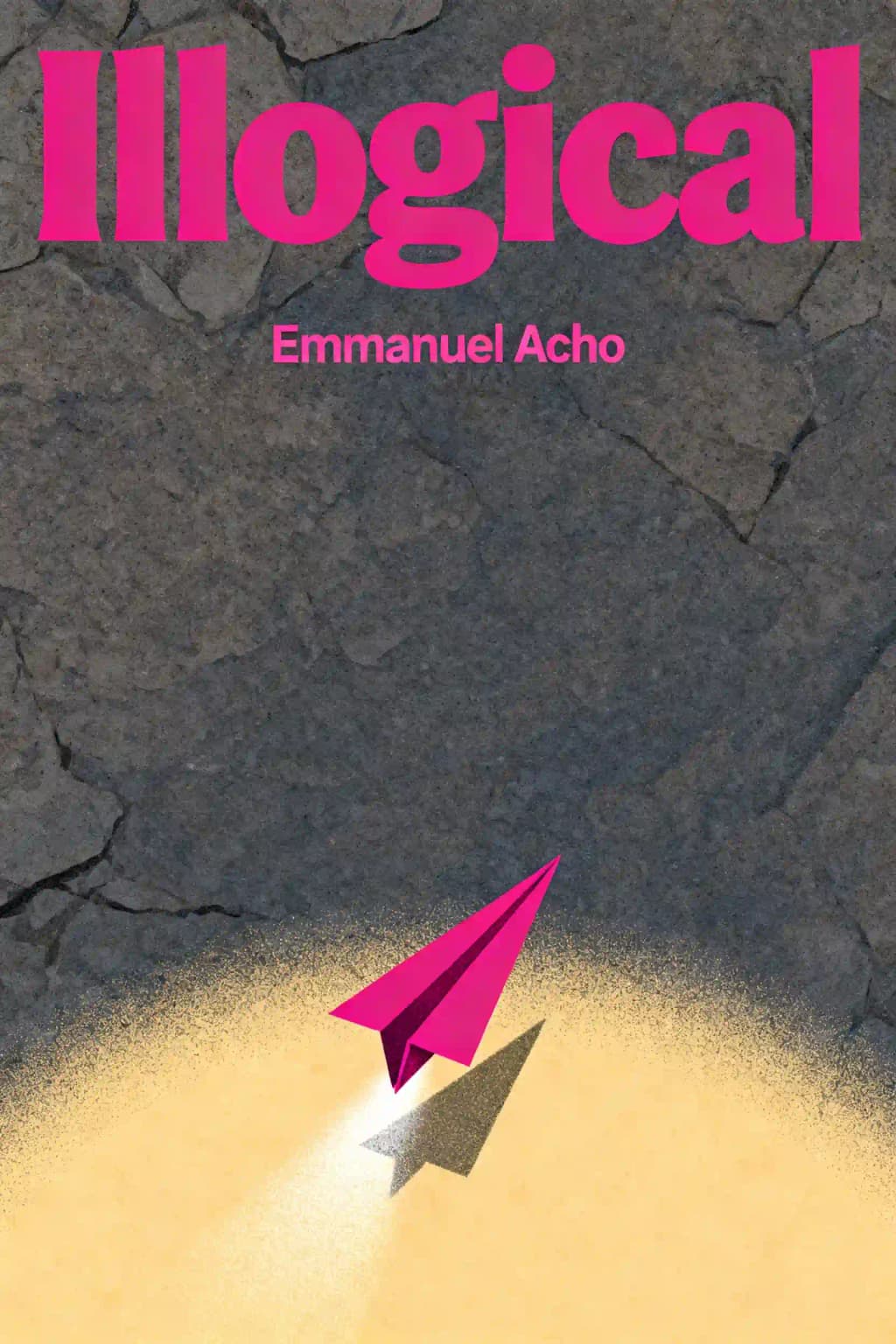
In a world obsessed with conventional wisdom, Emmanuel Acho's "Illogical" arrives as a refreshing rebellion against the status quo. The book has quickly become a favorite among high-performers across industries, with figures like Oprah Winfrey and Matthew McConaughey publicly endorsing its message. Since its 2022 release, this New York Times bestseller has sparked a movement of people questioning the boundaries of what's possible in their lives. What makes this book particularly compelling is how Acho-a former NFL linebacker turned Emmy-winning broadcaster-transforms his personal journey of career reinvention into a universal playbook for achieving the seemingly impossible. His premise is deceptively simple yet profound: the greatest achievements in human history came from those willing to defy conventional logic.
Kapitel 2
When Logic Fails: The Power of Choosing a Different Path
In March 2015, Emmanuel Acho's NFL career seemed secure as the thirty-third ranked linebacker. Then came a thumb injury requiring surgery. The doctor's choice of "pins" instead of "screws" meant significant recovery time, and within hours, Acho found himself emptying his locker into a garbage bag, his football dreams apparently shattered.
The following months were dark and isolating. While former teammates earned millions, Acho trained alone in Philadelphia alleys using stolen traffic cones as markers. At this crossroads, he faced two choices: follow the logical path (wait for another NFL opportunity) or pursue something entirely new. Against conventional wisdom, he chose media, believing his story extended beyond football.
Two years later, as the Eagles celebrated their Super Bowl victory, Acho was there-not as a player but as a television analyst. By 2020, the same general manager who had cut him five times was asking for his help crafting the team's statement on racial justice following George Floyd's murder. The illogical path had led to his true calling.
This pattern repeats throughout history. What we consider "logical" is merely conventional wisdom-general agreement based on supposedly sensible thinking. From Renaissance beauty standards to Olympic medal celebrations, society arbitrarily decides what success, beauty, and value look like. The Mona Lisa, celebrated for centuries, represents beauty standards that would likely be dismissed today. Similarly, second place in basketball means "failure" in the NBA but earns silver medal celebration at the Olympics.
The power comes when we stop letting others determine our value and reclaim control from society's arbitrary metrics. Like Neo in "The Matrix" who learns "there is no spoon," we must realize it's not the world that needs to bend-only our perception of what's possible.
Kapitel 3
Embracing Uncertainty: The Courage to Double Down
I was sitting in the Sugar House casino watching a man known as "The Kid" bet $20,000 on a blackjack hand. With just two fours (total value eight) against the dealer's showing eight, he doubled down, risking $40,000 on one card. Based on sports analytics, his odds were terrible-only a 7% chance of winning. Yet he remained unfazed, leaning back with a smirk saying, "The cards are the cards." When the dealer revealed a ten, giving himself eighteen points, The Kid needed the one perfect card-an ace-to win. Against all odds, that's exactly what he drew.
Life's most stressful moments often occur before the cards are flipped. We calculate poor odds and panic, running away before seeing how things play out. But confidence can exist even facing uncertainty. When the Philadelphia Eagles released Acho, logic said his football career was over. Instead of fighting a closed door, he pursued communication, making the illogical decision to retire at twenty-five. Despite sitting between Texas legends on the Longhorn Network, he seized the opportunity, studying analysts, communicators, and even Taylor Swift's performance techniques to develop his own style.
From Taylor Swift, Acho learned that engaging an audience makes them co-performers, not just spectators. After two grueling years at Longhorn Network, working six days weekly across four cities, he joined ESPN as the youngest national football analyst. His NFL experience translated perfectly-mental toughness, resilience, determination. The illogical decision to leave football young was paying off.
By befriending uncertainty, trying new things, and redefining failure as an opportunity to try something new, Acho's gamble led to hosting his own show, speaking with Oprah, Matthew McConaughey, becoming a New York Times bestselling author and Emmy winner-all because he was willing to be illogical.
Kapitel 4
Reclaiming Childlike Faith: The Superpower We Lose
At a trampoline park, Acho was challenged by a young boy named Chase to do a backflip. Despite being a former NFL linebacker, he froze with fear while children around him performed flips effortlessly. This moment revealed how we lose our childlike faith as we age-the superpower to dream the impossible and move without fear of consequences.
As children, we rush toward what we want without hesitation, like Acho's trainer's five-year-old daughter dashing excitedly toward the workout facility. But as we grow older, we become logical, calculating risks and letting fear hold us back. The problem isn't our ability but our belief. Everything we need to achieve our dreams we already possess-we just need the courage to take the leap.
Faith is a muscle that grows stronger each time you choose to believe the unbelievable. It expands when you refuse to let logic limit you. Childlike faith doesn't mean having no fears; it means not letting fears stop you from taking action. Share your fears with loved ones, but don't let conventional thinking steal your dreams.
When Acho transitioned out of football, he had one desire: to create something that had never been created before. His journey started with that illogical desire and continued with childlike faith. He eventually returned to the trampoline park alone and, after several attempts, finally landed a backflip. What he feared never happened. He learned to live in the moment rather than fearing things that haven't occurred yet-because if we don't, they might never happen at all.
Kapitel 5
Blocking Out the Noise: The Art of Selective Hearing
In 2019, during the most chaotic period of his life, Acho was constantly traveling between Austin, New York City, and Connecticut for work. One Saturday night, he detoured to Manhattan to support his Nigerian American friend Tobe Nwigwe at his concert.
At this intimate venue, the music was deafeningly loud. As he was leaving early with his ears already ringing, Acho noticed a mother holding a sleeping toddler. Amazingly, the child wore large black earmuffs and remained peacefully asleep despite the chaos. This became a powerful metaphor: sometimes we need to put on metaphorical earmuffs to block out the noise and hear our own voice.
This lesson proved crucial months later when, minutes before recording the first episode of "Uncomfortable Conversations with a Black Man," Acho received a discouraging text from a colleague suggesting he abandon the project. Despite spiraling doubts, he chose to put his earmuffs on and proceed. Eighty million views and a bestselling book later, he was grateful he did.
When pursuing something great, skeptics will emerge-sometimes as haters, sometimes as well-meaning friends. But your calling is yours alone. Your earmuffs don't prevent doubt from existing; they prevent external noise from impacting your existence. Like Apple's AirPods Pro, we need both noise cancellation and transparency-knowing when to block everything out and when to let constructive feedback in.
Before his videos went viral, Acho had already faced criticism on social media. When he began addressing race issues, the hate intensified-a sign he was on the right track. Even when under fire for his comments about Sha'Carri Richardson's Olympic suspension, he kept his earmuffs on but allowed one constructive comment through that led him to learn about Harry Anslinger and the racist history of marijuana prohibition.
Sometimes the hardest noise to block comes from within. When self-doubt takes up residence in your mind, it's time to serve an eviction notice. The fear has been living rent-free for too long.
Kapitel 6
Persevering Through Doubt: The Joseph Principle
When you can't put on your earmuffs and the doubters' words get in anyway, remember the story of Joseph from the Bible. As the second youngest of twelve brothers and his father's favorite, Joseph had dreams that his family would bow to him. His jealous brothers sold him into Egyptian slavery. After twelve years in prison, where he became known for interpreting dreams, Joseph was summoned to interpret Pharaoh's troubling dreams. His accurate interpretation-seven years of harvest followed by seven years of famine-earned him the position of second-in-command over Egypt.
Years later during the famine, Joseph's brothers came to Egypt for grain, not recognizing their brother as they bowed before him-fulfilling his childhood dream. Though he could have harbored hate, Joseph forgave them and provided for their needs. The very thing people despised him for led to his destiny.
Before creating "Uncomfortable Conversations with a Black Man," Acho envisioned a book but was discouraged by his literary agent who claimed the market was saturated. He faced a choice: listen to experts or follow his calling. Even after the book's success, he initially harbored resentment toward those who doubted him until he remembered Joseph's example.
Similarly, when an ESPN executive told Acho he wasn't a "big enough name" for the increased role he wanted, he made the illogical decision to leave for a company that gave him room to grow. Weeks later, his platform expanded beyond what any network could have provided.
The lesson? Don't harbor hate toward those who doubt you. When you start being illogical and proving doubters wrong, don't say "I told you so"-thank them for making you uncomfortable and motivating you.
Kapitel 7
Finding Courage in Crazy Moments: The Checkpoint to Greatness
In 2013, after being traded from the struggling Cleveland Browns to the Philadelphia Eagles, Acho discovered his name on a "Cut" list during a routine meeting with the special teams coach. Desperate and afraid, he retreated to a bathroom stall to pray - a moment of raw vulnerability that would later prove pivotal. This was his "I might be crazy" moment-a critical checkpoint on the path to greatness. Despite seeing his name on that list in black and white, he refused to accept it as his final destiny. While other players on the list packed their bags and left the facility, Acho stayed, showing up to practice with renewed determination. His persistence paid off spectacularly - he not only remained on the team but rose through the ranks to become a captain and earned First Team All-Pro honors on special teams, a remarkable turnaround that few would have predicted.
The iPhone's creation offers another compelling example of embracing "crazy" moments. Steve Jobs envisioned something unprecedented - a revolutionary device that would seamlessly combine a phone, camera, music player, and GPS into one sleek package. Industry experts scoffed, competitors dismissed it as impossible, and even some Apple executives harbored doubts. The technology didn't exist, the interface seemed too ambitious, and the market wasn't ready, they said. But Jobs' unwavering belief in his vision was contagious. His conviction transferred to his team, inspiring engineers to solve seemingly impossible problems and designers to rethink what was possible. The result? Over a billion iPhones sold worldwide, fundamentally changing how humans interact with technology.
The moment you think to yourself, "I might be crazy," is not a warning sign - it's actually the first checkpoint on your path to accomplishing greatness. When this thought crosses your mind, it's crucial to believe in your inner voice rather than external evidence. Getting comfortable in uncomfortable situations becomes essential; discomfort is often where growth happens. Remember that being called "crazy" is merely a speed bump on your journey, not a permanent roadblock. When circumstances look grim and logic suggests giving up, hope anyway. This resilience in the face of doubt is what separates those who achieve the extraordinary from those who settle for the ordinary.
The journey to achieve the unthinkable often follows a counterintuitive pattern - things typically get worse before they get better. This pattern has been observed repeatedly in breakthrough innovations, athletic achievements, and business successes. The darkest moment often comes just before a breakthrough, making it essential to persist through the valley of doubt. Your "crazy" idea might just be the spark that ignites a revolution in your field, but only if you have the courage to nurture it through its most challenging phases.
Kapitel 8
Breaking Barriers: When the Dam Finally Breaks
Most people know the story of Roger Bannister, who in 1954 broke the four-minute mile barrier that scientists had declared physically impossible. On a cold, windy day on a wet track, Bannister defied conventional wisdom. After three grueling laps, he summoned a final push he'd practiced alone for years and finished in 3:59.4, shattering what experts claimed couldn't be done. Within 46 days, another runner broke the four-minute barrier, and within two years, ten others achieved the same feat. The mental dam had been broken, and today high school students routinely accomplish what was once "scientifically impossible."
Acho's father broke his own dam after the Nigerian-Biafran War. Despite receiving only twenty Nigerian pounds when Biafran currency became worthless, he became a local preacher, speaking atop broken-down buses. His family questioned and mocked him, but he persisted. When American missionaries heard his passionate preaching, they invited him to America-an opportunity to change generations. He left behind everything familiar, traveling between continents to teach and eventually pursue higher education. Working as janitors and fast food employees, Acho's parents earned master's and doctoral degrees. By refusing to accept limits, his father opened doors not just for himself but for his mother, siblings, and entire village, becoming a beacon of hope and changing generations to come.
When you break through your own barriers, you don't just change your life-you change the lives of everyone who comes after you. The impossible becomes possible not just for you, but for others who follow your path.
Kapitel 9
Beyond Goals: The Freedom of Limitless Objectives
Setting goals is fundamentally flawed. When you achieve a goal, you limit yourself to just that achievement, never knowing what more you could have accomplished. We'll never know how much faster Roger Bannister could have run if his goal had been more ambitious than breaking the four-minute mile barrier. Similarly, imagine if Steve Jobs had only set out to create a successful computer company - we might never have seen the iPhone, iPad, or the revolutionary changes in music distribution through iTunes. Conversely, failing to reach goals damages your self-esteem and self-worth, leading you to question your abilities and even your entire existence.
Through his master's degree in sports psychology, Acho studied goal-setting extensively. While goals do provide valuable feedback and can help achieve "flow"-that optimal state where you're completely immersed in an activity-they ultimately constrain your potential. Research has shown that athletes who focus solely on specific performance targets often experience anxiety and decreased performance compared to those who embrace a more open-ended approach to improvement. The key distinction lies between goals and objectives: a goal is "the end toward which effort is directed," while an objective is simply "something toward which effort is directed." Goals are finite; objectives without limitations open infinite possibilities.
In team settings where accountability is crucial, goals serve a purpose. A sales team needs specific targets, and a sports team needs to know what constitutes a win. But in your personal life, don't set limiting goals-instead, create objectives with no limitations. When Acho entered media, people asked if he wanted to be the next Michael Strahan. His response was no-he had one limitless objective: to be one of the most creative people the industry has ever seen. This open-ended approach led him to explore unique opportunities and take creative risks that a more structured goal might have prevented. By avoiding specific goals, he created things like "Uncomfortable Conversations" that might never have existed otherwise.
Consider other successful innovators who embraced limitless thinking: Elon Musk didn't just set out to build electric cars, but to revolutionize transportation on Earth and beyond. Walt Disney didn't aim to make successful cartoons, but to create entire worlds of imagination. Their achievements came from refusing to be constrained by conventional goal-setting frameworks.
Be illogical. Be free. Live without failure. This mindset shift from specific goals to limitless objectives allows you to explore possibilities you never imagined, take creative risks without fear, and achieve things that might have seemed impossible under traditional goal-setting approaches. It's about embracing the journey of continuous growth rather than fixating on specific endpoints.
Kapitel 10
Finding and Using Your "It": The Key to Extraordinary Success
Emmanuel recalls a life-changing conversation with Oprah Winfrey after appearing on her show discussing his "Uncomfortable Conversations with a Black Man" series. After fielding unrehearsed questions about race and justice with empathy and honesty, Oprah called him saying, "Emmanuel! You've got the thing, my friend! You've got the thing!" When pressed to explain what "the thing" was, she described it as "this ability to tell people difficult and hard information, but they appreciate you for doing so."
Ironically, what got Emmanuel in trouble as a child-making quick-witted comments and challenging professors-would later become his greatest strength. He defines "it" as "a predisposition to having an enhanced skill or being uniquely gifted at something." Everyone has an "it," something they're naturally better at than others.
Finding your "it" means identifying what you're naturally skilled at or what you gravitated toward growing up. Once you find it, you must develop it through consistent practice. NBA star Steph Curry was born with natural shooting ability inherited from his father, but enhanced his talent through rigorous practice, including dribbling multiple basketballs simultaneously and shooting countless shots daily.
You must also invest time, money, and resources in your talent before it pays off. Acho purchased high-quality cameras and studio-grade lights long before any of his videos went viral. He shares a story about Jamie Foxx playing piano with Ray Charles, who admonished Foxx for hitting a wrong key: "Take the time to play the right note... all the keys are underneath your fingers." This lesson taught him that excellence can't be rushed.
The most crucial step is actually using your "it." Acho writes, "The key to changing your life is to use your skills, your talents, your gifts. We are all gifted in something, but we don't all use our gifts." He compares unused talents to wrapped Christmas gifts that remain unopened-a waste of precious value. Many people hesitate to use their gifts because of the potential costs-not just financial, but also relationships and freedom.
Everyone must eventually choose between following their "it" or following someone else's logic. The consequences exist for both action and inaction, but the cost of not using your "it" could be devastating. Find your uniqueness and double down on it-all the cards you need are right in the palms of your hands.
Kapitel 11
The Theory of Everything: Sick of Logic
This book is built on the fundamental theory that logic, while useful, often becomes a constraining force that limits human potential. Acho presents a compelling argument: everything in life begins as a theory until proven, everything remains impossible until someone proves otherwise. Written during his NFL career, before his meteoric rise to becoming a cultural commentator, Emmy award winner, and bestselling author, these chapters document the journey of dreams that materialized through what many would consider illogical thinking. His own story - transitioning from professional football to becoming a leading voice in cultural conversations - serves as a testament to the power of thinking beyond conventional boundaries.
Acho adamantly dismisses the common misconception that being illogical is a privilege reserved for genius innovators or lucky outliers. He argues that every person possesses "it" - that spark of illogical thinking that can lead to extraordinary outcomes - but most people suppress it due to societal pressure to conform. He cleverly deconstructs the word "illogical" into "ill" plus "logical," expressing his frustration with how logic often becomes a cage rather than a tool. This wordplay reflects his broader philosophy that sometimes we need to be "sick of" the limitations logic imposes to break through to new possibilities.
Despite facing numerous setbacks - from NFL career challenges to failed television pilots, from rejection letters to public criticism - Acho has discovered a pattern: when logic predicts failure, perseverance often reveals unexpected opportunities. He shares personal stories of crying in his car after major disappointments, only to find that these moments of apparent failure were actually redirecting him toward better opportunities. These experiences taught him that negative outcomes often serve as gateways to unexpected success when you refuse to let conventional logic dictate your response to setbacks.
His ultimate purpose transcends mere motivation - he aims to fundamentally reshape how readers approach limitations. Through detailed examples from his own journey and others', he demonstrates how breaking free from logical constraints can lead to unprecedented achievements. The poetic manifesto he wrote during his final NFL season encapsulates this mission: "My desire is to inspire / those to go higher / past the required / so those they admire / can also admire / whom they've inspired / before they expire." This recursive poem emphasizes how breaking free from logical constraints can create a ripple effect of inspiration and achievement.
The invitation extends beyond simple motivation - it's a call to action for readers to systematically identify and challenge the logical constraints in their lives. Whether in career choices, creative pursuits, or personal growth, Acho argues that the most significant breakthroughs often come when we dare to pursue paths that logic says should be impossible. By embracing this approach, readers might discover that what seems illogical today becomes tomorrow's new normal, and that their greatest achievements lie just beyond the boundaries of conventional wisdom.