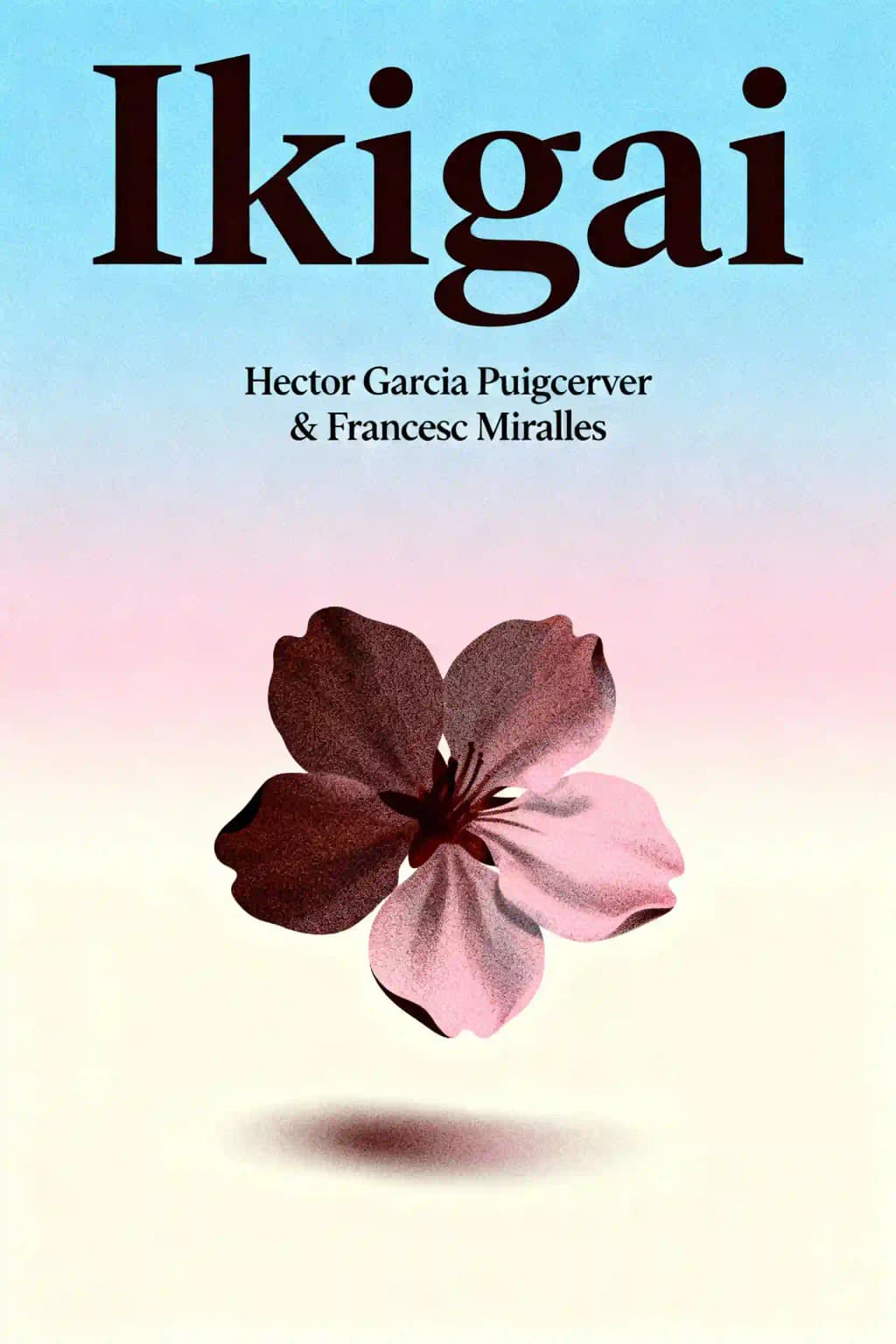
Ikigai
The Japanese secret to a long and happy life
Überblick über Ikigai
Discover "Ikigai" - the Japanese philosophy that's revolutionized how we find purpose. Endorsed by NY Times bestseller Neil Pasricha and featured by BBC, this Okinawan wisdom reveals why centenarians live joyfully past 100. What's your reason for getting out of bed tomorrow?
Kernthemen in Ikigai
- blue zone longevity
- purposeful aging
- community support systems
- stress reduction techniques
- mindful living
Zitate aus Ikigai
Our ikigai is what gets us up in the morning.
Everything can be taken from a man but one thing: the last of the human freedoms—to choose one’s attitude in any given set of circumstances, to choose one’s own way.
Only staying active will make you want to live a hundred years.
Ikigai is what motivates them to greet each new day.
The life you live is equally or more important for longevity.
Personen in Ikigai
- Hector GarciaCo-author who traveled to Okinawa to study ikigai
- Francesc MirallesCo-author who researched the secrets of longevity
- Dan BuettnerNational Geographic researcher of Blue Zones
- Aubrey de GreyScientist focused on aging's escape velocity
Über den Autor
Über den Autor von Ikigai
Héctor García Puigcerver and Francesc Miralles are the bestselling co-authors of Ikigai: The Japanese Secret to a Long and Happy Life, combining expertise in Japanese culture, longevity studies, and self-help philosophy. García, a Spanish engineer and writer, draws from his decade-long immersion in Japanese life, documented in his earlier work A Geek in Japan.
Miralles, a journalist and author specializing in mindfulness and Eastern traditions, contributes his insights into holistic well-being. Their collaboration merges Okinawan centenarian practices with universal principles for purposeful living, positioning the book at the intersection of cultural anthropology and personal development.
García further explores Japanese wisdom in Ichigo Ichie: The Art of Making the Most of Every Moment and Shinrinyoku: The Japanese Forest Bathing Revolution, while Miralles has authored psychological novels and transcreated Scandinavian literature.
Translated into 70 languages, Ikigai has become a global phenomenon, recommended by wellness coaches and featured in mainstream media for its actionable framework to identify life purpose. The work has sparked international workshops and corporate training programs focused on sustainable productivity through intentional living.
Zusammenfassung von Ikigai herunterladen
Erhalten Sie die Ikigai-Zusammenfassung als kostenloses PDF oder EPUB. Drucken Sie es aus oder lesen Sie es jederzeit offline.
FAQ zu diesem Buch
Ikigai explores the Japanese philosophy of finding purpose through the intersection of what you love, what you’re good at, what the world needs, and what you can be paid for. The book combines Okinawan longevity practices, psychological research on flow states, and interviews with centenarians to offer actionable strategies for living meaningfully.
This book suits seekers of purpose, self-help enthusiasts, and anyone interested in longevity. It’s ideal for readers craving practical wisdom on balancing passion with practicality, inspired by Okinawa’s Blue Zone residents who live with vitality into their 100s.
Yes, for its blend of Eastern philosophy and Western research. It provides actionable frameworks like the ikigai Venn diagram and 10 rules for longevity, making abstract concepts tangible. Critics note its repetitive structure, but its insights on flow, diet, and community remain impactful.
A meaningful life arises from pursuing your ikigai—activities that spark joy, leverage strengths, serve others, and sustain you financially. The authors emphasize staying active, embracing simplicity, and fostering social connections, as seen in Okinawan centenarians who prioritize purpose over retirement.
- Stay active, never retire.
- Leave urgency behind.
- Eat until 80% full.
- Surround yourself with friends.
- Get in shape through daily movement.
- Smile and acknowledge others.
- Reconnect with nature.
- Practice gratitude.
- Live in the moment.
- Follow your ikigai.
The book ties ikigai to psychologist Mihaly Csikszentmihalyi’s flow state—deep immersion in tasks that match skill and challenge. Activities like gardening, crafts, or reading induce flow, reducing stress and enhancing fulfillment. Okinawans exemplify this through lifelong engagement in purposeful work.
Key principles include:
- Hara hachi bu: Stop eating at 80% fullness.
- Prioritize vegetables, tofu, fish, and green tea.
- Avoid processed foods and excessive sugar.
- Share meals socially to slow consumption and strengthen bonds.
While both address purpose, Ikigai focuses on actionable habits for longevity and joy, rooted in Okinawan culture. The Subtle Art emphasizes mindset shifts to prioritize values over external validation. Ikigai leans communal; The Subtle Art is more individualistic.
Some readers find its advice overly generic or culturally surface-level, lacking deeper exploration of Japanese philosophy. Others note repetition in sections about diet and exercise. However, its practical frameworks and centenarian insights outweigh these flaws.
- Identify work that aligns passion, skill, societal need, and income.
- Seek flow-inducing tasks.
- Build a supportive community.
- Embrace gradual progress over quick wins.
- Avoid retiring—stay engaged through mentorship or side projects.
- “The happiest people are not the ones who achieve the most, but those who enjoy the doing.”
- “Life is not a problem to be solved, but a reality to be experienced.”
- “Retirement? There’s no word for it in Japanese—you do what you love forever.”
Okinawa is a Blue Zone with the world’s highest concentration of centenarians. Its residents exemplify ikigai through communal living, plant-based diets, daily physical activity, and lifelong purpose—like farming or crafts—which the authors studied to distill longevity principles.
The book advises accepting impermanence (“mono no aware”) and focusing on controllable present actions. By anchoring in purpose and community, individuals build resilience against loss or stress, as seen in Okinawans who thrive despite hardships.
Strong social ties (“moai”) are vital—Okinawans rely on lifelong friend groups for emotional and practical support. The book stresses that shared purpose and mutual aid enhance wellbeing, reducing isolation and fostering accountability.