Kapitel 1
The Radical Joy of Being Alone in a Connected World
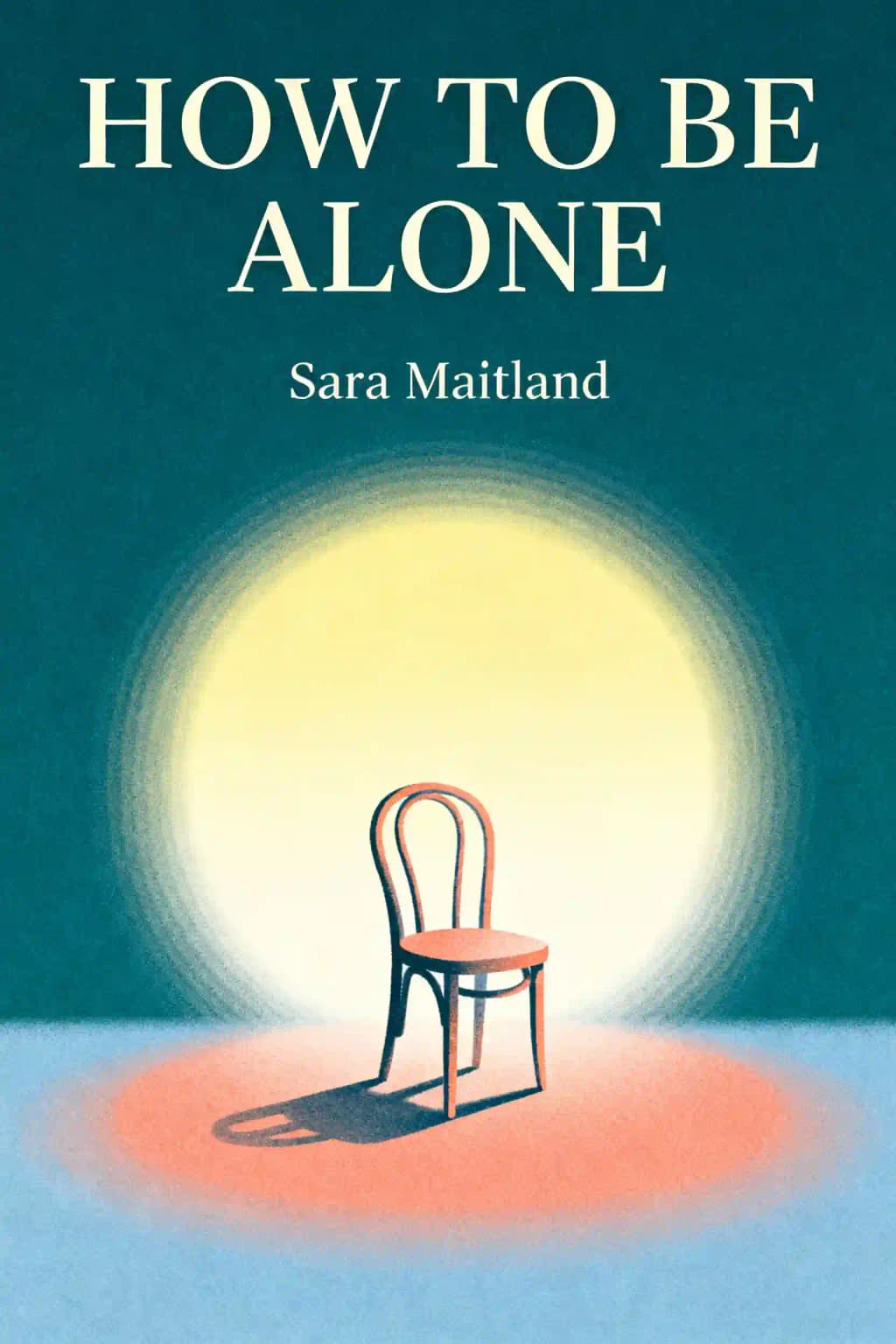
In a society where loneliness is treated as a public health crisis and "loner" has become media shorthand for "psychotic murderer," Sara Maitland's "How to Be Alone" arrives as a revolutionary manifesto. This slim volume has become something of a cult classic among creative professionals, with artists from Florence Welch to Phoebe Waller-Bridge citing it as transformative. What makes Maitland's perspective so compelling is that she isn't theorizing from an ivory tower-she lives her philosophy in rural Scotland, where her nearest neighbor is miles away and she often goes days without seeing another person. And the most shocking part? She absolutely loves it.
Kapitel 2
Our Cultural Phobia of Solitude
We face a profound cultural problem with solitude. Philip Koch identifies three "mad" accusations against it: that solitude is unnatural (humans are pack animals), pathological (psychology insists relationships are necessary for health), and dangerous (physically and psychically risky without others as safety nets). While these arguments have coherence, they fail to account for individual differences.
The moral arguments against solitude are even more absurd: that it's self-indulgent (falsely assuming solitude is easier than social engagement), escapist (running from "reality"), antisocial (a tautological criticism carrying implicit moral condemnation), and evading social responsibility (without defining what that responsibility is). These accusations reveal important questions we're not discussing about what relationships provide, whether creative work offers alternative gratification, and why different lifestyles provoke such anxiety.
These conversations aren't happening because of fear-fear that paralyzes creativity, damages health, and muddles thinking. The mass media profits from fear, making "loner" synonymous with "psychotic murderer." Yet throughout history, many people have sought solitude without becoming serial killers-some became great artists or saints. Consider Greta Garbo, who famously retired at thirty-five to live a simpler life with selective social engagement, demonstrating how one can choose solitude without pathology.
Kapitel 3
The Historical Tug-of-War
Our deep cultural confusion about solitude stems from trying to reconcile two radically opposed models of the good life. The Roman Empire valued cohesive cultural values centered on citizenship and civic responsibility, while Christianity emerged with almost directly opposing values focused on personal interior relationships with God.
Before these tensions could resolve, Rome fell to Alaric's Visigoths in 410 AD. In the turbulent period that followed, the Church and monks became principal forces of social cohesion, but only by abandoning their core solitary values and embracing politics and power. For the last thousand years, social history has seen a continual seesaw between these competing values.
Until the fourteenth century, solitude was highly valued, with saints and hermits as cultural celebrities. The Renaissance and Reformation challenged this, but the Enlightenment brought a radical shift back to Roman social values. Edinburgh, "the Athens of the North," built its New Town with classical architecture to represent rational, civilized society. Enlightenment writers like Gibbon despised solitude as "hideous" and "atrocious."
By the late eighteenth century, the Romantic movement emerged, elevating emotion over reason and celebrating solitude as a path to spiritual truth. Throughout the nineteenth and twentieth centuries, this tension continued, eventually reaching our current brittle compromise: emphasizing individual fulfillment through wider but thinner social connections. This model is increasingly fragile amid global crises, making solitude appear threatening to those clinging to a sinking paradigm.
Kapitel 4
Confronting Our Fear of Being Alone
We've reached a cultural moment where we're terrified of something we cannot reliably avoid. Solitude can happen to anyone-no number of Facebook friends can guarantee protection. The largest growing groups living alone are women over seventy-five (through bereavement) and men between twenty-five and forty-five (through relationship breakdowns). Living in constant defensive fear is unsustainable.
Being alone isn't actually difficult in practice-almost everyone experiences solitude sometimes. Even those in challenging circumstances, like Catherine of Siena with her dozen siblings, can create a "hermitage of the heart." If you can't find any regular solitude, you might be avoiding it out of fear.
Fear of solitude is common enough to have clinical names-autophobia and monophobia-with symptoms like anxiety, avoidance, and distress. Even nomophobia (fear of being without mobile phone contact) affects up to 53 percent of users.
The best treatment combines knowledge with gradual exposure. Start small: take longer baths instead of showers, travel by train alone, spend evenings in a different room from others, or turn off your mobile. Once you feel secure accessing solitude, you may discover unexpected benefits.
Maitland shares her own journey from sociable extrovert to solitude-seeker. After her marriage ended, she began with small doses of alone time and was surprised to find herself relaxing, gaining energy, improving physically, and experiencing less depression. Eventually she grew "greedier and greedier for solitude" and designed a home specifically for solitary living.
Despite societal messages that solitude breeds mental illness and antisocial behavior, there's no evidence that freely chosen solitude harms physical or mental health. Historical figures like Anthony the Great lived to 105 with "joyful determination" and "serene good humor" after decades of solitude.
Kapitel 5
Finding Joy in Solitary Pleasures
Many of us claim we "don't have time" for solitude, but this often masks fear rather than genuine time constraints. We've constructed leisure as predominantly communal, treating solitary hobbyists as "geeks" or "nerds"-potential "loners."
While some activities require company (team sports, board games), many others can be enjoyed either socially or alone. Modern society has created artificial divisions between work, leisure and maintenance that didn't exist historically. Hunter-gatherer and even medieval societies actually had more leisure time than today's "advanced" societies. We've become leisure-poor because we work longer hours to buy more possessions that require maintenance, creating a vicious cycle.
Our association of leisure with sociability stems from historical patterns when people worked alone or in small family groups, making non-solitary time precious. Markets were also fairs, blending work and leisure. Even "holiday" derives from Holy Days when medieval peasants attended church communally.
The solution is to reconsider existing leisure activities through a solitary lens. Running alone, for example, offers meditative benefits impossible in groups-"a mute button on the world." Many activities work well solo: cinema visits, fishing, gardening, mountain climbing. Walking alone particularly intensifies emotional experience and fosters independence. Maitland finds solitary walking in wild places "a necessity as well as a joy" that heightens awareness of both environment and physical sensations.
Kapitel 6
The Lost Art of Reverie
The capacity for adult solitude begins in infancy, laying the foundation for our lifelong relationship with solitary moments. Psychoanalyst Donald Winnicott made the groundbreaking observation that when a baby's immediate needs - hunger, comfort, safety - are consistently met, they naturally enter what he described as a Buddha-like state of relaxed attention, existing peacefully "alone in the presence of the mother." This profound early experience mirrors the ancient Psalm writer's poetic image of setting the soul "in silence and peace" like "the weaned child on its mother's breast," suggesting this fundamental human need has been recognized across centuries and cultures.
Unfortunately, modern parenting's relentless emphasis on constant stimulation, educational activities, and interactive engagement prevents many children from developing this vital capacity for comfortable solitude. Parents fill every moment with structured activities, educational toys, and digital entertainment, leaving little room for the natural development of internal resources. Despite statistical evidence showing no actual increase in stranger abductions since the 1950s, growing parental anxiety has wrapped the concept of solitude in layers of fear and suspicion. This protective impulse, while understandable, has created generations of adults who find themselves deeply uncomfortable with solitary experiences.
Carl Jung offered a therapeutic remedy through what he called "active imagination" - a sophisticated form of concentrated daydreaming that bridges conscious and unconscious awareness. During a profound personal crisis in 1913, when he found himself professionally isolated and experiencing disturbing hallucinations, Jung embarked on a radical experiment in structured solitude. He confronted his deepest fears through systematic self-analysis, deliberately working through memories, dreams, and visions while meticulously recording his observations in his famous Red Book. This intensive period of solitary exploration became the foundation for much of his later theoretical work.
This technique remains particularly valuable for modern practitioners seeking to explore solitude safely. It provides a structured approach to inner exploration, helping individuals reconnect with childhood memories of positive solitary experiences - building forts, daydreaming in nature, quiet reading - that often get buried beneath adult social demands and cultural fears. Through active imagination, people can gradually rebuild their capacity for meaningful solitude, learning to distinguish between loneliness and the rich internal experience that solitude can offer. This practice becomes especially crucial in our hyperconnected age, where constant digital engagement threatens to eliminate the very possibility of true solitary reflection.
Kapitel 7
Nature's Solitary Lessons
When people claim solitude is "unnatural," they're often expressing disapproval rather than biological fact. The accusation is deeply embedded in our culture, beginning with Genesis 2 where God declares "it is not good that man should be alone." Popular science reinforces this view, pointing to humans as social creatures alongside other primates.
Yet examining nature more carefully reveals a more nuanced reality. While humans are indeed social beings who require cooperation for survival, our primate relatives demonstrate varied solitary behaviors. Gorillas forage alone and sleep in individual nests. Orangutans spend most of their daily lives in solitude. Even pack animals like wolves and lions include solitary individuals-the lone wolf and nomad lion-who may remain solo or later form new groups.
The romanticized image of highly social hunter-gatherer societies also overlooks how much gathering and hunting is actually performed alone. The spectacular communal reindeer hunts of northern societies are seasonal events, while most daily food procurement happens quietly and individually.
Looking beyond modern boundaries reveals that solitude, in varying degrees, is simply a normal part of existence for many species, including our closest relatives. The more we observe nature's complexity, the more skeptical we should be about declaring anything purely "natural" or "unnatural."
Kapitel 8
The Mind's Inner Library
Learning by heart-memorization-may seem outdated in our digital age, but it offers profound benefits for those seeking solitude. A well-stocked mind enhances creativity and provides security when alone.
The connection between memory and creativity runs deep-the word "remember" literally means "to put the parts back together." In Greek mythology, Memory (Mnemosyne) was mother to the nine Muses who inspired all arts, reflecting this fundamental relationship.
What we memorize becomes internalized as part of our core identity, accessible without external resources. This internal storehouse connects us to a larger cultural world without compromising our solitude. Unlike information merely accessed through reading or the internet, memorized material transforms into a mental "larder" offering food for thought and coherence.
This practice also provides protection against the psychological dangers of extreme isolation. Those who survive solitary confinement without breakdown often report relying on deeply memorized material to maintain mental stability. Edith Hajos Bone, imprisoned in Hungary in 1949, survived years of solitary confinement by reciting poetry, translating between languages, and recalling detailed medical knowledge from her student days. Even her ability to create intricate knots came from memorized patterns. The desert hermits of early Christianity, though largely illiterate, thrived on memorized psalms recited daily. Perhaps our contemporary fear of being alone stems partly from the emptiness we feel without this rich internal resource.
Kapitel 9
The Adventure of Solitude
Paradoxically, the form of solitude most celebrated in our culture is often the most dangerous: the solo adventure. While those who choose solitude at home are labeled weird, those who climb mountains or sail oceans alone are hailed as heroes. This contradiction exists partly because the purpose of everyday solitude remains mysterious to many, while the goal of being "first" resonates widely.
The pattern of adventure follows a predictable trajectory: first, teams accomplish something remarkable (like Magellan's circumnavigation), then it becomes commonplace, until someone does it alone (like Slocum's solo sailing). Similarly, mountaineering evolved from Hillary and Norgay's first Everest ascent to Messner's solo climb.
This adventurous framing offers a socially acceptable way to practice solitude. Rather than saying "I'm taking a holiday alone," saying "I'm cycling to Istanbul solo" often garners support rather than concern. However, proper preparation is essential-the line between bold adventure and dangerous folly depends on one's experience and skills.
Solo adventures provide a profound sense of empowerment. As Thoreau wrote about his Walden experiment, he sought "to live deliberately" and "suck out all the marrow of life." Admiral Richard Byrd similarly valued Antarctic solitude to live "obedient to no necessities but those imposed by wind and night and cold, and to no man's laws but my own."
Kapitel 10
Raising Children Who Can Be Alone
While we invest considerable effort teaching children social skills-sharing, managing anger, considering others' feelings-we do remarkably little to help them develop a healthy capacity for solitude. Instead, we actively "protect" them from being alone, potentially disabling them for inevitable life experiences. This overprotection often manifests in constant supervision, scheduled activities, and digital connectivity that leaves little room for genuine solitary moments.
This overprotection stems from our own fear of solitude and the belief that a child's psyche is extremely fragile. Modern parenting culture, influenced by anxiety about safety and social development, often views alone time as potentially harmful or indicative of social problems. Yet research consistently shows that solitude enhances creativity, autonomy, risk-assessment abilities, resilience, and imagination-qualities we claim to value in children's development. Children who learn to be comfortable alone tend to develop stronger self-regulation skills and more stable emotional foundations.
Several practical strategies can help children develop comfort with solitude. For newborns, create opportunities for infantile reverie without constant engagement, allowing them to explore their surroundings and internal states naturally. With toddlers, establish "independent play zones" where they can explore safely while feeling unsupervised. Natural settings like woods or gardens provide ideal environments for this controlled independence, offering both freedom and security.
Reading plays a crucial role in developing comfort with solitude. Choose stories about children who face and overcome challenges alone - the moral core of classic fairy tales like Hansel and Gretel or Little Red Riding Hood. These narratives help children process the idea of independence and build confidence in their abilities to handle situations autonomously.
It's equally important to permit children to experience boredom occasionally, as this natural state fosters imagination and self-sufficiency. When children complain of boredom, resist the urge to immediately provide entertainment. Instead, guide them toward discovering their own interests and creative solutions. This might involve creating art, building with blocks, or simply daydreaming - all valuable solitary activities that build internal resources.
The introduction of technology should be carefully managed. Delay giving children mobile phones and limit screen time, as constant connectivity can interfere with developing healthy solitude skills. When devices are introduced, establish clear boundaries and tech-free times that encourage independent play and reflection.
Crucially, never use isolation as punishment, which creates negative associations with being alone. Instead, frame solitude as a positive choice and opportunity for self-discovery. Help children understand that being alone can be refreshing, creative, and empowering rather than lonely or scary. This might involve creating cozy reading nooks, personal project spaces, or quiet corners where children can retreat voluntarily for peaceful activities.
Kapitel 11
Honoring Our Different Needs for Connection
Different people require different amounts of solitude, yet we struggle to respect this natural variation. The introversion-extroversion framework offers helpful vocabulary for discussing these differences, though it has limitations. Research suggests that these traits are partly genetic and visible even in infancy, with some babies showing greater reactivity to stimuli than others.
While extroverts are often described as action-oriented, breadth-seeking, and energized by social interaction, introverts tend toward thought-orientation, depth-seeking, and recharging through solitude. However, these traits exist on a spectrum rather than as fixed categories, varying by context and mood. For example, an introvert might be highly social in professional settings but need significant alone time afterward, while an extrovert might occasionally seek solitude for focused work despite generally preferring company.
Our cultural bias complicates matters further. Western societies generally reward extroverted behaviors, creating a "culture of personality" where charismatic public speaking and networking are highly valued. This contrasts sharply with other cultures like those in Central Europe or Japan, which emphasize introversion in their "cultures of character," valuing careful reflection and quiet competence. In Finnish culture, for instance, silence in social situations is considered comfortable and natural, while Americans often feel compelled to fill conversational gaps.
Two problematic social tendencies emerge: turning descriptive adjectives into defining nouns ("an introvert") that trap people in boxes, and the difficulty maintaining "different but equal" without assigning higher value to one trait. The workplace exemplifies these challenges, where open office plans and team-based projects often favor extroverted working styles. Despite valuing individuality in principle, we struggle to accept that others might genuinely prefer different levels of social engagement than ourselves.
Recent research in neuroscience reveals that introverts and extroverts actually process dopamine differently, with introverts being more sensitive to external stimulation. This biological basis helps explain why forcing either type to conform to the other's preferred social style can be genuinely exhausting, not just psychologically uncomfortable. Understanding these differences can lead to better accommodation of diverse needs in both professional and personal settings, such as providing quiet spaces in offices or respecting a friend's need for alone time without taking it personally.
The key to navigating these differences lies in developing flexible social arrangements that accommodate various comfort levels with interaction, while avoiding the tendency to pathologize either preference. This might mean organizing events with both high-energy and low-key spaces, or establishing clear expectations about social engagement in different contexts.
Kapitel 12
The Five Rewards of Embracing Solitude
Throughout human history, across diverse cultures and contexts, those who have practiced solitude consistently report five overlapping benefits: deeper self-consciousness, heightened attunement to nature, enhanced relationship with the transcendent, increased creativity, and greater freedom.
Solitude offers a unique opportunity to rediscover one's authentic self amid life's distractions. As Father Dioscuros, a Coptic desert monk, explained: "In the desert, in the pure clean atmosphere, in the silence-there you can find yourself." This experience of self-gathering appears consistently across spiritual and secular accounts. Oliver Morgan describes solitude as allowing the scattered self to collect "like a wave rolling from sand and shore back to its ocean source."
Solitude uniquely enhances our connection with nature through three distinct yet related experiences: "clear, undistracted, sensitized perception" where nature reveals itself more fully to the solitary observer; "symbolic perception," where natural elements take on deeper meanings; and "fusion/interfusion"-a dissolution of boundaries between self and nature, creating a profound sense of interconnection.
For many, solitude facilitates a relationship with the transcendent. Every major spiritual tradition recognizes solitude as essential for revelation and divine knowledge. This pattern extends beyond formal religion-Moses, Buddha, Jesus, and Muhammad all retreated into solitude before beginning their missions. Even non-religious figures like Bernard Moitessier, Samuel Taylor Coleridge, and John Muir sought transcendent experiences through solitude in nature.
Of all solitude's rewards, its relationship to creativity seems most self-evident. From Kafka to Wordsworth, Heisenberg to Potter, O'Keefe to Wittgenstein-creators universally testify to solitude's necessity. Kafka captured this tension perfectly: "Writing means revealing oneself to excess...that is why one can never be alone enough when one writes." Werner Heisenberg's breakthrough with the Uncertainty Principle illustrates solitude's creative power-after years of frustrated collaboration, a hay fever attack forced him to retreat alone to pollen-free Heligoland, where he quickly developed his revolutionary theory.
Finally, solitude offers a unique form of freedom. Philosopher Alice Koller defined freedom as progressing from "no restraints" to being "self-governing according to laws of your own choosing," based on "a genuine sense of what your life is and can become." This self-governance requires the self-awareness that solitude uniquely fosters. Paradoxically, knowing yourself through solitude actually improves relationships. When you know who you are and choose relationships freely rather than from desperate need for validation, those relationships become healthier.
Kapitel 13
The Path to Embracing Solitude
Maitland deliberately structured her book in reverse of the typical self-help formula. Rather than beginning with solitude's delights and addressing problems later, she tackled the negative aspects first - fears, cultural resistance, and psychological barriers. This approach acknowledges that loving solitude runs counter to our current social climate, where constant connectivity is often equated with success and wellbeing. By confronting these challenges head-on, she creates a foundation for deeper appreciation of solitary experiences.
She outlines five primary joys of solitude that are accessible to everyone: enhanced creativity, deeper self-knowledge, spiritual growth, connection with nature, and improved mental clarity. These benefits often interweave and reinforce each other. For instance, time alone in nature can simultaneously foster spiritual awareness and creative thinking. If even one of these resonates with you-though they often come together-it's worth overcoming your fears to embrace the freedom of personal solitude. Consider it an adventure worth trying, much like exploring an unknown territory within yourself.
In a world increasingly characterized by constant connection yet growing isolation, Maitland's radical proposition is that true solitude-freely chosen and embraced-might be exactly what we need. She distinguishes between toxic loneliness and nourishing solitude, emphasizing that the latter is a conscious choice rather than an imposed condition. Not just as a temporary respite from overstimulation, but as a vital practice that enhances our creativity, deepens our self-knowledge, and paradoxically, improves our capacity for meaningful connection with others when we choose to engage.
The practice of solitude can take many forms: short daily meditation sessions, weekend retreats, solitary walks in nature, or even dedicated quiet hours at home without digital devices. Each person's journey toward embracing solitude is unique, and Maitland encourages readers to experiment with different approaches. Perhaps the most revolutionary act in our hyperconnected age is to turn off our devices, step away from the crowd, and discover who we are when no one else is watching. This journey into solitude, she argues, isn't about escaping the world but rather about developing a stronger, more authentic presence within it.
The benefits of embracing solitude often ripple outward, affecting not just our individual well-being but also our relationships and creative endeavors. Those who learn to be comfortable alone often report feeling more centered in group situations, better able to maintain boundaries, and more capable of genuine connection when they choose to engage with others.