Kapitel 1
The Power of Taboo: A Journey Through Linguistic Boundaries
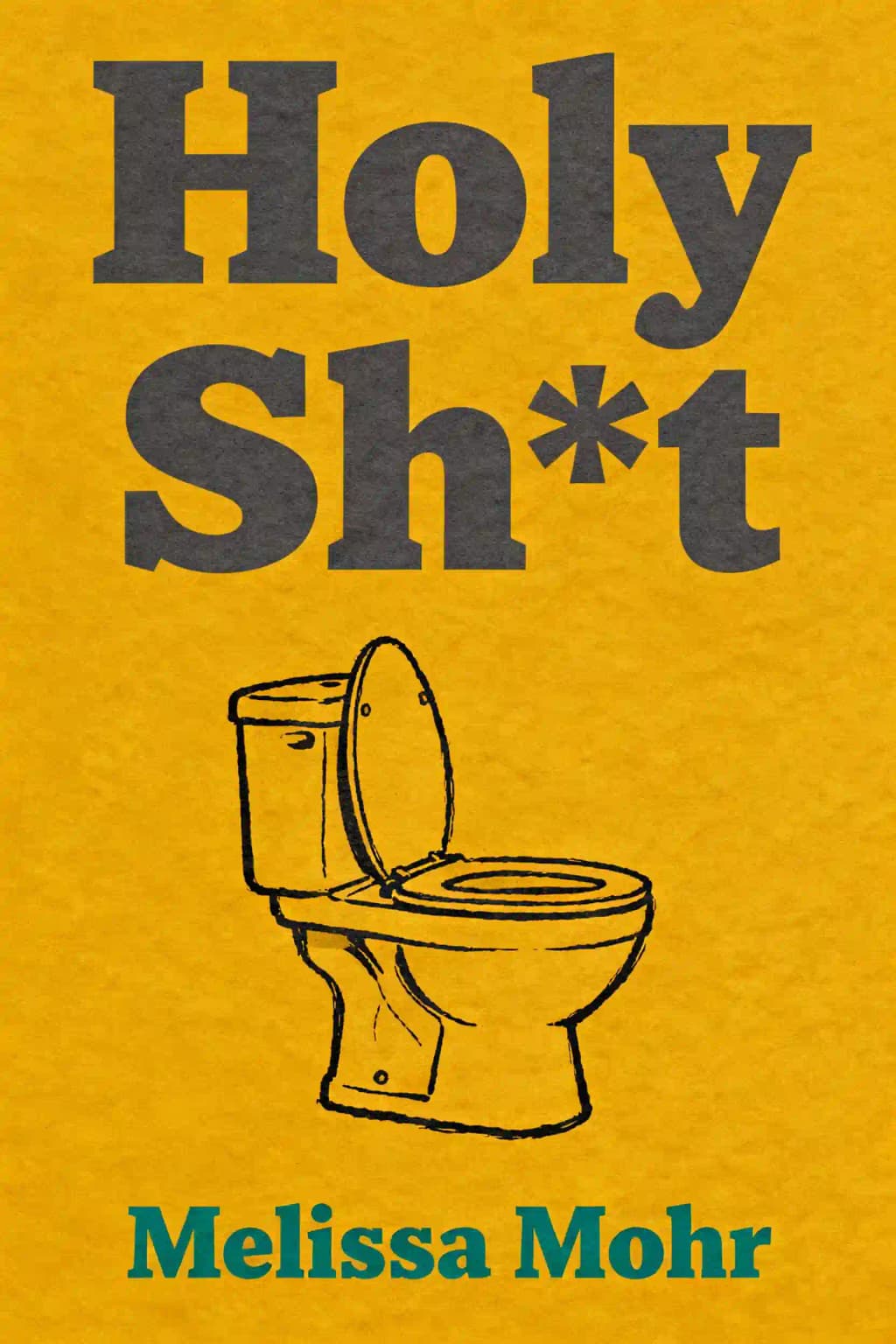
Ever wonder why certain words make us blush, gasp, or laugh nervously? Why does "fuck" feel so different from "intercourse," though they describe the same act? Holy Shit: A Brief History of Swearing takes readers on a fascinating 4,000-year journey through humanity's relationship with taboo language. Author Melissa Mohr, with her PhD from Stanford, has created what The New York Times called "a delightful education," exploring how our most forbidden words reflect our deepest cultural values. This book has become required reading in university linguistics courses and has been praised by Stephen Fry as "a fucking marvelous exploration of language." From ancient Roman graffiti to modern scientific studies proving swearing helps manage pain, this exploration of linguistic taboos reveals that our most offensive words have always come from two primary sources: the Holy and the Shit.
Kapitel 2
The Roman Roots of Obscenity: Sex, Status, and Speech
In ancient Rome, obscenity functioned as an intricate sociopolitical system that went far beyond mere vulgarity, deeply embedding social hierarchies and power dynamics into everyday discourse. Roman masculinity was fundamentally defined by dominance and penetration, creating a binary between the penetrator (vir) and the penetrated (pathicus). Roman men were expected to maintain strict sexual dominance, with any deviation from this role threatening their social and political standing. Those who violated these norms by allowing themselves to be penetrated were branded as cinaedi-effeminate men who adopted traditionally feminine behaviors like wearing makeup, removing body hair, and affecting delicate gestures such as "scratching their head with one finger." These individuals weren't condemned for same-sex attraction per se, but for abandoning the essential virtues of Roman manhood-virtus and gravitas.
Sexual insults in Roman society operated within a carefully calibrated hierarchy of shame. Oral sex represented the ultimate degradation, with complex gradations of stigma. Being labeled a fellator carried severe social consequences, but performing cunnilingus was considered even more debased-viewed as the absolute depths of sexual depravity. This hierarchy stemmed from the Roman conception of the mouth as os sacrum-the sacred portal through which Romans communicated with their gods, delivered speeches, and sealed legal agreements. The satirist Martial viciously attacked those who defiled this sanctity: "Zoilus, you spoil the bathtub washing your arse. To make it filthier, Zoilus, stick your head in it." Similar sentiments appear throughout Roman literature, from Catullus's savage epigrams to Juvenal's biting satires.
The Romans maintained a fascinating paradox regarding phallic imagery and language. While phalli appeared ubiquitously as architectural elements, protective talismans, and decorative features-adorning everything from doorframes and gardens to major monuments like the Forum of Augustus-the Latin vocabulary for genitalia remained strictly taboo in polite discourse. This contradiction reflected deeper religious and cultural complexities. Genitalia occupied a dual status as pudenda (parts of shame) and verenda (parts of awe), embodying both profane pollution and sacred power. The god Fascinus, represented by a divine phallus, received official state cult worship, while simultaneously, speaking about genitalia in improper contexts could bring religious pollution.
Obscene language served crucial ritual functions in specific ceremonial contexts. Wedding celebrations featured fescennine verses-ribald songs and jokes intended to promote fertility and ward off evil spirits. During the Floralia spring festivals, prostitutes performed naked dances while crowds shouted obscenities to ensure abundant crops. Even military triumphs incorporated ritual obscenity-victorious generals endured crude songs from their soldiers, serving both to deflate pride and provide spiritual protection. When Julius Caesar celebrated his triumph in 46 BC, his legionaries famously chanted verses mocking his alleged submission to King Nicomedes: "All the Gauls did Caesar vanquish, Nicomedes vanquished him; Behold Caesar now in triumph, Who subdued the Gauls in war, Nicomedes wears no laurels, Who subdued the conqueror."
The evolution of Latin into separate literary and vulgar forms created a unique linguistic phenomenon that continues to influence modern medical and scientific terminology. As Classical Latin became increasingly restricted to educated elites while Vulgar Latin evolved into Romance languages, the classical form provided an ideal vehicle for discussing taboo subjects without corrupting the "weaker minds" of women, children, and the uneducated. This educational barrier effectively desexualized Latin terms like penis, vulva, and fellatio through linguistic abstraction, transforming them into neutral technical vocabulary. This process of sanitization through scholarly distance continues to influence how we discuss sensitive topics in medical and academic contexts today.
Kapitel 3
Divine Oaths: When God's Name Was the Ultimate Taboo
While Romans focused on bodily taboos, the Bible established oaths as the foundation of Jewish and Christian faiths. God's covenants with Abraham demonstrate the supreme power of divine swearing. Beginning with promises to make Abraham's descendants "like the dust of the earth," God formalizes this pledge through increasingly binding rituals-passing between halved animal carcasses as a "self-curse" and later establishing circumcision as a physical sign of their agreement.
God's frequent swearing throughout the Bible establishes a model for proper oath-taking. Divine oaths always invoke God Himself or His attributes: "By myself I have sworn," "As I live," "by my holiness." These examples teach that legitimate oaths must reference God, address only serious matters, never function as expletives, and above all, be sincere. The third commandment explicitly forbids false oaths, vain oaths sworn to no purpose, and any disrespectful use of God's name.
Yet the Bible actively encourages proper swearing: "The Lord your God you shall fear; him shall you serve, and by his name alone you shall swear." This command makes more sense when we understand the ancient Near East's religious context. Yahweh competed with hundreds of other deities for worship, and swearing became a key weapon in God's campaign for supremacy. When Israelites swore by rival gods like Baal, they implicitly acknowledged those gods' divine powers-which explains God's repeated commands to "swear by his name alone."
Yahweh's victory over rival deities occurred both through dramatic confrontations (like Elijah's contest with Baal's priests) and theological absorption-taking over Baal's mythological battles and adopting El's names and titles. Archaeological evidence suggests Yahweh initially had a consort named Asherah, as inscriptions pair "Yahweh of Teiman and his Asherah." While folk religion acknowledged this divine partnership, the priestly authors of Deuteronomy rejected her worship, commanding Israelites to destroy her sacred poles.
Christ's teachings on oaths created theological tension with Old Testament practices. In the Sermon on the Mount, Jesus appears to prohibit all swearing: "Do not swear at all, either by heaven... or by the earth... or by Jerusalem." This seemingly contradicts God's Old Testament commands for Israelites to swear by his name. The disagreement had real consequences: fifteenth-century Lollards faced persecution for refusing to swear on Bibles, while Quakers suffered fines, property confiscation, and deportation for refusing all oaths. Ultimately, history resolved the debate pragmatically-swearing became not just permitted but necessary for government and legal systems to function.
Kapitel 4
Medieval Oaths: When Swearing Tore God to Pieces
In 715, a monk named Eadfrith created the magnificent Lindisfarne Gospels, an illuminated manuscript later glossed in Old English by a priest named Aldred. Surprisingly, Aldred translated the commandment against adultery using the word "sard" (essentially meaning "fuck"). This wasn't an isolated incident - John Wyclif's 1370s Bible translation contained numerous words modern readers would consider shocking, including "bollocks," "yard" (penis), and various references to "shitting." These translations demonstrate that words modern English speakers consider obscene held no such taboo status in medieval England, where they were simply descriptive terms.
Medieval English vocabulary was remarkably earthy, filled with terms that would make modern speakers blush, yet were used matter-of-factly in daily life. The natural world was described with colorful terminology: common birds bore names like "shiterow" (heron) for its messy feeding habits, "windfucker" (kestrel) for its hovering flight pattern, and various plants were known as "cuntehoare." Urban geography reflected this plain-speaking approach - streets and neighborhoods carried descriptive names like "Gropecuntelane" (found in both London and Oxford), "Schetewellwey" (Shitwell Way), and numerous "Pissing Alleys." These appeared without comment in official maps, tax records, and legal documents. Family surnames similarly incorporated such terms, with historical records showing families named "Shitboast," "Turd," "Fillecunt," and various "Cunt" derivatives.
While modern obscenities flowed freely, medieval people had their own distinct category of fighting words. Court records from 1200-1500 reveal that medieval insults typically focused on questioning moral character rather than using bodily references. For women, accusations of sexual impropriety ("whore," "strumpet") were particularly damaging, while men were most offended by challenges to their honesty and reputation ("false," "thief," "knave"). A typical medieval insult like "you false whoremaster son of a whore" carried enough weight to prompt legal action.
Medieval religious art and artifacts often displayed explicit sexuality that would shock modern sensibilities. Fourteenth-century pilgrimage badges, worn proudly by devout Christians, featured an array of sexual imagery: winged phalluses, vulvas riding horseback, and crowned genitalia with legs. These weren't considered pornographic but rather legitimate Christian objects believed to ward off evil. Churches themselves contained explicit carvings, with "Sheela na gig" figures and other sexual imagery appearing in religious architecture from the twelfth century onward.
The gravest linguistic sin in medieval times was swearing by God's body parts. These oaths were viewed as perverse inversions of the holy Eucharist, where priests legitimately transformed bread into Christ's body through consecrated words. Religious authorities expressed particular concern about the democratizing nature of such oaths - the fact that anyone, from "a little child who can barely speak" to "an old bearded man," could invoke God's body parts was seen as a dangerous leveling of sacred power. Popular oaths included "God's bones," "Christ's nails," and more graphic references to divine anatomy.
The medieval approach to swearing underwent significant transformation during the Renaissance, driven by multiple cultural shifts. The Protestant Reformation fundamentally altered humanity's relationship with God, while the rise of capitalism emphasized written contracts over verbal oaths. Simultaneously, new standards of "civility" privatized previously public bodily functions and parts. This cultural revolution gradually transferred the power of medieval oaths to modern obscenities, shifting the greatest linguistic taboo from words that could harm God's body to words that acknowledged the human one. This transformation explains why modern English speakers find certain words shocking that medieval people used casually, while modern casual references to God would have horrified medieval listeners.
Kapitel 5
Renaissance Transformations: From Holy Oaths to Bodily Taboos
The rise of Protestantism fundamentally weakened the power of oaths by transforming the physical into the spiritual. The defining difference between Catholicism and Protestantism centered on God's body in the Eucharist. For Catholics, God was physically present in the Host-a wafer transformed entirely into divine flesh. For Protestants, the Host became God's body only "spiritually," "sacramentally," or "figuratively," but never physically.
This spiritual transformation paralleled changes in swearing. Medieval Catholic oaths could literally tear apart Christ's physical body-the same body present during Eucharist. Protestant swearing, however, was thought to rip apart Christ's spiritual body. As William Vaughan explained in 1611, when people "forswear themselves... by God's body, by his blood, or by his wounds, they spiritually pierce his sides with their bloody weapons."
The decline of feudalism and rise of capitalism further eroded oath-taking's cultural significance. In medieval society, oaths had defined relationships between lords, vassals, tenants and peasants, binding them in networks of mutual obligation. By Elizabeth I's reign, these networks had already diminished significantly. Market transactions demanded honesty repeatedly and quickly-there was no time to swear by God before each business deal. Success depended on reputation and reliability rather than supernatural sanctions. As historian Christopher Hill observed, "Supernatural sanctions became less necessary in a society in which honesty was manifestly the best policy."
As sacred oaths declined, a new concept of bad language emerged: obscenity. While the Latin word obscenus had existed during the Middle Ages, it began appearing in English in the late sixteenth century. John Harington (who notably also invented the flush toilet) used "obscenousnesse" in 1591 when defending his translation of the Italian epic Orlando Furioso against charges of immorality.
This marked a crucial shift in thinking about offensive language. Medieval culture made little distinction between obscene words and the things they represented-any words that might lead to sin were considered bad. But Renaissance writers began distinguishing between content and expression. Harington argued that Ariosto's poem, despite containing sexually suggestive content, used "modest words & no obscenous phrase" and was therefore acceptable.
The sixteenth century marked a pivotal shift in English swearing, as obscenity developed both moral and social dimensions. This period saw what Norbert Elias calls an "advance in the frontiers of shame"-Renaissance people felt ashamed of more things than their medieval ancestors and experienced this shame before more people. Concealing shameful body parts and actions became increasingly important in both public life and polite language.
Kapitel 6
Victorian Propriety: The Triumph of Euphemism
John Wilmot, Earl of Rochester's 1673 poem "A Ramble in St James's Park" exemplifies the emergence of modern obscenity. His vituperative language-freely using terms like "cunt," "fuck," "prick," and "arse"-deliberately shocks and offends rather than simply providing clarity. Rochester's libertine approach represented a reaction against Commonwealth Puritanism, embracing the opposite extreme after Charles II's restoration in 1660.
However, this libertine period gave way to a new form of social Puritanism as the bourgeoisie developed, making refinement of language a marker of class distinction. Obscene words violated these class norms, being seen as the language of the uneducated lower classes while accessing the deepest taboo of Victorian society: the human body and its desires.
The proverb "to call a spade a spade" linked plain speaking with both obscene and vulgar language. Someone who "called a spade a spade" wasn't afraid to use proper but lower-class words for lower-class things. By the Victorian era, people had become so removed from plain speaking that Oscar Wilde's joke about never seeing a spade rang true. According to historians, by the mid-1800s "hardly anyone called a spade a spade."
The Victorians' delicate sensibilities extended beyond language to complete bodily ignorance. John Ruskin, the eminent art critic, was reportedly so shocked by his wife Effie's pubic hair on their wedding night that he couldn't consummate their marriage for six years until she left him. Having only seen idealized, hairless Greek and Roman statues, Ruskin was unprepared for actual female anatomy. Similarly, poet Robert Browning unknowingly used the obscenity "twat" in his poem "Pippa Passes," mistaking it for an item of nun's clothing rather than female anatomy.
The evolution of toilet-related terminology reveals how euphemism worked in practice. Latin contributed "lavatory" (originally a hand-washing vessel), "latrine" (from Latin for "wash"), and "urinal" (first a physician's urine collection glass, later a wall fixture). "Toilet" itself came from French "toilette" meaning "little cloth" that covered dressing tables, then referred to grooming articles, the dressing process, and finally the bathroom and ceramic fixture itself.
The Victorian middle class co-opted the civilizing process as a way to distinguish themselves from the lower classes. Their extreme linguistic delicacy-preferring euphemisms over direct language-marked them as morally superior to the lower classes who "called a spade a spade." Victorian grammarians were explicit about this connection. Richard Chenevix Trench lamented the "shamefully rich" vulgar language that lived as "sinful oral tradition," while George Perkins Marsh declared that "purity of speech" was "allied with purity of thought and rectitude of action."
Kapitel 7
The Modern Swearing Revolution: From Battlefields to Courtrooms
The twentieth century witnessed a dramatic shift in swearing patterns, largely influenced by the World Wars. Some scholars argue that the horrors of World Wars I and II-poison gas, machine guns, trench warfare, bombing-generated feelings of rage and helplessness that found outlet in frequent swearing. Soldiers brought this language home and eventually into print, radio and television to an unprecedented degree.
In the military, swearing became so ubiquitous that words like "fuck" lost much of their shock value. John Brophy and Eric Partridge noted in their 1930 collection of WWI songs and slang that soldiers used "fucking" so routinely it became merely "a warning that a noun is coming." In fact, omitting the word could signal urgency: "Get your rifles!" implied immediate danger, while "Get your fucking rifles!" was routine.
This language gradually entered civilian life through returning veterans and more realistic war reporting. By World War II, obscenities were used with modern variety and creativity: "dumbfuck," "flying fuck," "motherfucker," and "motherfucking." What the Greatest Generation started, the 1960s counterculture completed. As Geoffrey Hughes puts it, "the floodgates opened" against Victorian propriety. Vietnam War protesters deliberately used obscene language ("Fuck the draft") to express rage at the government.
By the early twenty-first century, society had grown more comfortable with sexual content in media and everyday speech. In a significant shift, racial epithets have replaced sexual terms as the most taboo language. When Allen Walker Read published his groundbreaking article on "fuck" in 1934, he declared it "the word that has the deepest stigma of any in the language." By the 1990s, however, many Americans considered "nigger" the most offensive word, with Christopher Darden, prosecutor in the O.J. Simpson trial, calling it the "filthiest, dirtiest, nastiest word in the English language."
The legal regulation of obscenities became more complex with the emergence of the "fighting words" doctrine. In the 1942 U.S. Supreme Court case Chaplinsky v. New Hampshire, certain words were legally recognized as having power beyond their literal meaning-words so offensive they "by their very utterance inflict injury or tend to incite an immediate breach of the peace" and thus aren't protected by the First Amendment.
Two landmark obscenity trials dramatically changed how society treats obscene words. The 1933 trial of Joyce's "Ulysses" overturned the Hicklin Rule, which had banned works containing even a single obscene word. Later, the 1960 trial of Lawrence's "Lady Chatterley's Lover" tested Britain's new Obscenity Act, with Lawrence's deliberate use of taboo words intended to "free the phallic reality" from social stigma. The book was declared not obscene, selling millions of copies and heralding a new era of openness in public discourse.
Kapitel 8
The Science of Swearing: Why "Bad" Words Feel So Good
The relaxed cultural climate around swearing has opened it up as a legitimate field of scientific study, transforming what was once taboo into a fascinating area of neurological and linguistic research. Brain scientists have discovered that swearing likely originates in the right hemisphere's limbic system, particularly the amygdala, which processes emotional content. While normal speech occurs in the left hemisphere, swearing combines both hemispheres-the right for emotional impact and the left for calculated choice of words. This dual-hemisphere engagement explains why swearing remains intact in some patients with left-hemisphere language deficits.
People with Tourette's syndrome provide compelling insights into the neural mechanisms of swearing. Their coprolalia (uncontrollable obscene utterances), affecting 10-30% of patients, demonstrates how basal ganglia dysfunction prevents the prefrontal cortex from inhibiting these taboo impulses. This condition has helped researchers understand the intricate relationship between impulse control and language centers. Linguists, once forced to disguise their interest in obscenity, now freely study swearwords, with psychologist Timothy Jay's groundbreaking research finding that 0.7% of daily speech consists of taboo words-comparable to the frequency of first-person plural pronouns like "we" and "us."
Scientific testing confirms swearwords' remarkable emotional power: taboo words are better remembered in recall tests and create measurable physiological responses, including increased heart rate, skin conductance, and pupil dilation. Research even proves swearing's practical benefits-subjects who swore could keep their hands in ice water 40 seconds longer than those using neutral words, leading researcher Richard Stephens to advise, "if they hurt themselves, to swear." This pain-reducing effect appears to be linked to the fight-or-flight response triggered by profanity.
Throughout history, humans have used different swearwords to express the same fundamental emotions-from aggression and insult to love and friendship. These words have always been our most powerful tools for communicating emotional extremes, drawing their strength from two primary taboo areas: religion (the Holy) and the human body (the Shit). The balance between these sources has shifted over time-ancient Rome emphasized bodily obscenity, the Middle Ages focused on religious oaths (with "zounds" meaning "God's wounds"), and the Victorian era represented peak bodily taboo, when even "leg" became questionable in polite society.
Just as swearing has always existed, so too have attempts to control it-from Roman genre limitations to medieval pastoral texts, parliamentary laws, and modern obscenity prosecutions. These efforts, ironically, sometimes paved the way for the very public use of obscenities they aimed to curtail. The famous Lady Chatterley trial of 1960, for instance, made certain four-letter words printable for the first time. Yet swearing serves a crucial purpose as society's safety valve-allowing expression of negative emotions without physical violence, a function recognized by anthropologists studying verbal dueling traditions worldwide.
As current obscenities lose power through overuse, new taboos will emerge to fill the emotional void. Perhaps racial epithets will evolve grammatically like other swearwords, following predictable patterns of linguistic development. Death-related terms might become newly obscene as we increasingly deny mortality in modern society, or religious groups might bring back the power of oaths in an increasingly secular world. Whatever the future holds, our language will always contain these powerful words that "kidnap our attention" and express our deepest emotions, serving as linguistic lightning rods for our most intense feelings.