Kapitel 1
The Revolution Begins with Our Bodies
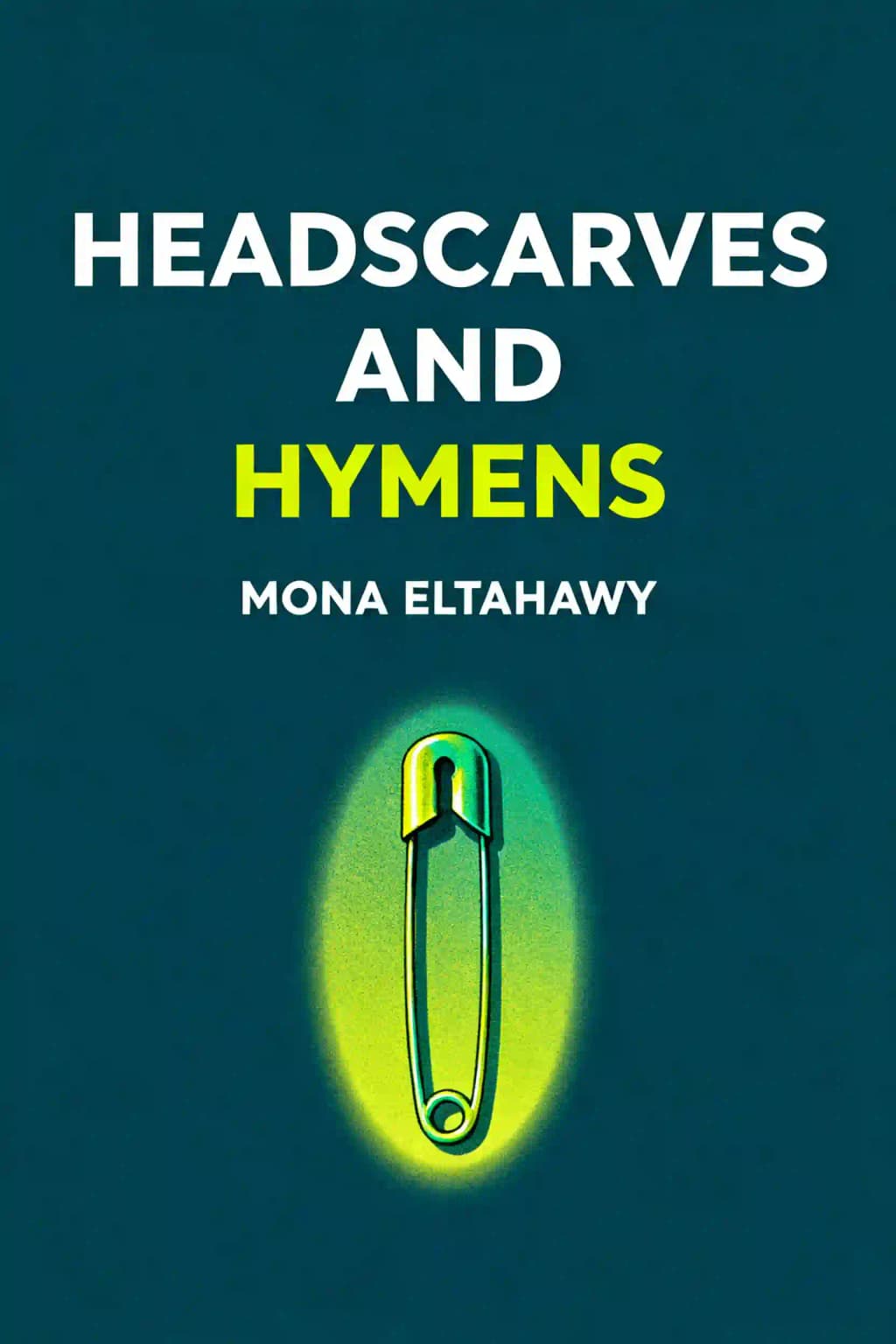
In the heart of the Arab Spring, as dictators fell and hope surged across the Middle East and North Africa, a different revolution was unfolding-one that would prove even more challenging than toppling regimes. Mona Eltahawy's "Headscarves and Hymens" emerged as a battle cry in this second revolution, one aimed at the misogyny embedded in both state and society. When Foreign Policy magazine published her provocative essay "Why Do They Hate Us?" in 2012, it became one of the most widely read articles in the magazine's history, sparking fierce debate across the Arab world and beyond. The book that followed has been embraced by feminist activists worldwide, with Gloria Steinem calling it "a fascinating, fearless look at the unfinished revolution that is changing the Arab world." Dedicated "to the girls of the Middle East and North Africa" with the instruction to "be immodest, rebel, disobey," Eltahawy's manifesto challenges us to recognize how women's bodies have become battlegrounds in the struggle between tradition and liberation.
Kapitel 2
The Hatred That Permeates Our Culture
In the Middle East and North Africa, we Arab women live in a culture fundamentally hostile to us. This isn't a controversial statement-it's a reality experienced daily by millions. Religious authorities perpetuate this misogyny through bizarre pronouncements, like Egyptian cleric al-Qaradawi's instruction that virgins must resist masturbation because it might break their hymens. This obsession with controlling women's bodies manifests everywhere: Kuwait's Islamist parliamentarians pushing "decent attire" laws, Libya's post-Qaddafi government reinstating polygamy as its first priority, Egyptian Salafis superimposing flowers over female candidates' faces in campaign materials.
My feminist awakening began in Saudi Arabia, where I discovered feminist texts in a university library that both terrified and liberated me. I learned that women's rights weren't "Western imports" but had deep roots in our own heritage through pioneers like Huda Shaarawi, Doria Shafik, and Nawal El Saadawi. When Egyptians finally rose up in 2011, women faced two revolutions: one against dictators, another against misogyny. Despite our presence on the barricades, women's rights remain precarious across revolutionary countries.
My own sexual assault by Egyptian security forces in November 2011-where my left arm and right hand were broken during protests-exemplifies the dangers women face. At least twelve other women were sexually assaulted that day, most remaining silent due to shame or family pressure. The infamous "Blue Bra Girl" image, showing soldiers stomping on a woman's exposed chest, became an icon of state violence against women.
When I published "Why Do They Hate Us?" I walked into a minefield-facing both racist Western conservatives eager to use my critique against Muslims, and Western liberals who silence criticism in misguided cultural relativism. I reject both positions. Our feminist struggle connects to the global one, but only we can rescue ourselves. Our revolution must confront not just dictators in presidential palaces but also the Mubaraks in our minds, bedrooms, and streets.
Kapitel 3
Headscarves: The Visible Symbol of Control
In 1923, Huda Shaarawi and Saiza Nabarawi returned from an international feminist meeting in Rome to a crowd of veiled women at Cairo station. In a revolutionary act, they removed their face veils-to applause from the waiting women. This bold gesture marked the end of Egypt's harem system and launched Huda's leadership of the women's movement.
Decades later, in the early 1990s, while riding Cairo's metro wearing a colorful headscarf, I was confronted by a woman in niqab who asked why I wasn't fully veiled. When she compared women to wrapped candy, I rejected her analogy: "I'm a woman, not a piece of candy." Such comparisons-treating women as precious objects needing protection-remain common justifications for veiling.
Women veil for numerous reasons: religious belief, Muslim identity, economic practicality, avoiding street harassment, family pressure, or political rebellion. I wore hijab from age sixteen to twenty-five, and though I removed it, I've never stopped wrestling with its meaning for Muslim women. While conservative interpretations cite Qur'anic passages mandating covering, I found liberation in alternative readings by feminist scholars like Fatima Mernissi, who argued that "hijab" originally meant a privacy curtain for Muhammad's household, not women's concealment.
I'm now less interested in debating religious necessity of veiling than examining what widespread adoption of hijab has done to women's perception. The pendulum between conservative and liberal dress has swung repeatedly throughout history. Huda Shaarawi's historic unveiling in 1923 began decades of movement away from hijab in Egypt, influenced by European liberal models. The pendulum swung back toward veiling following Israel's defeat of Arabs in 1967, the 1979 Iranian Revolution, and economic migration to Saudi Arabia exposing workers to Wahhabism.
Some countries have codified hijab requirements into law. Sudan's Article 152 allows "morality police" to punish women with up to forty lashes for "indecent dress." The veils promoted by Islamists differ from traditional forms-tighter around the head with buttoned-down coats in dark colors, though younger women sometimes subvert this with neon headscarves and formfitting clothes.
I've rarely discussed my nine years wearing hijab and the eight years it took me to remove it. Growing up in Saudi Arabia, I wanted to wear hijab for protection, though my parents suggested waiting. During my first hajj pilgrimage to Mecca, dressed in white garments, I experienced sexual assault while circling the Ka'aba-a man persistently groped me during this sacred ritual. Later, while waiting to kiss the black stone, a Saudi policeman who was directing the women's turn surreptitiously groped my breast. This violation at Islam's holiest site taught me early lessons of silence and shame.
The hijab didn't make me invisible as I'd hoped. Despite covering myself, my entire torso would be colored if I marked every place I was touched without consent. My depression deepened until I discovered feminist writings questioning why women alone bore responsibility for men's desires. After eight difficult years, I finally removed my headscarf, facing family pressure, guilt, and the realization that to many, I was just my headscarf, not a person.
Kapitel 4
The Deadly Price of Modesty Culture
In 2002, a Human Rights Watch report ignited my suppressed outrage. Fifteen Saudi schoolgirls aged 13-17 died in a fire, with 52 more injured, when morality police prevented their escape from a burning building because they weren't wearing proper headscarves and abayas. Firefighters reported being told it was "sinful to approach them." The girls died because zealots valued their modest dress over their lives-the ultimate expression of "you are your headscarf."
The niqab embodies a dangerous ideology that seeks to erase women: the closer to God, the less visible the woman. While many defend it as a woman's choice, this "choice" exists within an ideology that denies women basic rights. I support European bans on face veils despite their problematic origins with xenophobic right-wingers. Face veils violate our social contract by impeding nonverbal communication.
My debates with niqab-wearing women reveal the privilege some have to selectively wear the veil in Western countries while women in MENA regions lack such choice. One woman removed her niqab at a reception after debating me, demonstrating this privilege. Post-revolution Egypt saw women like blogger Fatma Emam removing their hijabs as acts of liberation, while Tunisia experienced the opposite-after Ben Ali's ban on veiling was lifted, Salafists began pressuring women to cover.
Almost a century after Huda Shaarawi removed her face veil, women's bodies remain the canvas for signaling acquiescence to conservatism and patriarchy. Despite Tunisia's progressive constitution guaranteeing equality, women like activist Lina Ben Mhenni face threats for defending women's rights and secularism.
Kapitel 5
The Epidemic of Sexual Violence
Nearly 100% of Egyptian women report being harassed-96.5% experiencing unwelcome physical contact and 95.5% verbal harassment. Similarly in Yemen, activist Amal Basha's study found 90% of Yemeni women experience harassment, particularly pinching, while religious leaders blame the victims and cover up reported cases. Despite Yemen's women being covered head to toe, harassment remains rampant, disproving conservative claims that "modest" dress prevents abuse.
Street harassment has soared across the Arab world, with "purity culture" burdening women with responsibility for their own safety while excusing men's behavior. A 2008 Egyptian survey found most men and women blamed women's clothing for harassment, with 62% of Egyptian men admitting to harassing women. When I wrote about my own harassment experiences, male readers responded with rage and victim-blaming. Women are constantly policed about their appearance, with Saudi surveys showing 86.5% of men blame "women's excessive makeup" for molestation cases.
Beyond street harassment, state-sanctioned sexual violence treats women's bodies as property to be violated for political punishment. In Libya, female politicians and activists face systematic targeting to exclude them from political spaces. In Syria, approximately 6,000 women were raped during the civil war, with women targeted by snipers, used as human shields, kidnapped for prisoner exchanges, or gang-raped in retaliation for male relatives' actions. In Algeria and UAE, authorities subject women to humiliating virginity tests for minor infractions like attending parties or meeting men.
In Egypt, the state sexually assaulted female protesters in 2005, with plainclothes police groping and stripping women during demonstrations. After Mubarak's fall, the military conducted "virginity tests" on female revolutionaries, violating the very women who fought for Egypt's liberation. This state violence reinforces societal oppression of women, creating a system where neither street nor government offers safety.
Egypt's current president el-Sisi approved the 2011 "virginity tests" and women affiliated with the Muslim Brotherhood have faced similar treatment. Street sexual harassment has morphed into vicious mob assaults, with 250 documented cases in Tahrir Square between 2012-2014. Despite new laws criminalizing harassment and some prosecutions, the state security forces themselves remain perpetrators of violence against women.
Kapitel 6
The Cult of Virginity
Arab society values a woman's hymen above all other parts of her body-even her life. Our hymens belong not to ourselves but to our families, as Arab women recognize. I "guarded my hymen" until age twenty-nine, obeying family, school, religion and society's teachings about waiting until marriage. Teaching a university class in Oklahoma, I used the Lebanese film "Caramel" to discuss hymen reconstruction, finding unexpected parallels with American purity culture when a student revealed her own purity pledge.
Female genital mutilation persists due to the twin forces of misogyny and religion. Despite both Muslim and Christian religious authorities officially denouncing FGM, many mosque preachers still instruct communities it's a religious duty. While the Qur'an doesn't mention genital cutting and even advocates for women's sexual satisfaction, some Muslim scholars interpret controversial Hadiths to allow "Sunnah circumcision." When Egypt banned FGM in 2008, Muslim Brotherhood legislators opposed the law.
FGM remains prevalent across many countries: Sudan (88% of women), Djibouti, Egypt, Mauritania, Somalia, Yemen, and has spread through migration. Sudan practices the most extreme form-infibulation-where the clitoris and labia minora are cut and the labia majora sewn together. Anti-FGM campaigns like Sudan's "Saleema" aim to preserve girls' bodily integrity.
The most effective opponents are survivors themselves. Nariman, an Egyptian woman, credits the revolution with changing her mind about FGM. Lawyer Nesma el-Khattab fought against having her younger sister cut, connecting her personal revolution to the political one. Other heroes include Ethiopian couple Genet Girma and Adisie Abosie who publicly rejected FGM at their wedding, and Kenyan sisters Edna and Beatrice Kandie who secured legal protection against being cut.
Kapitel 7
Home: The Most Dangerous Place
I open with the horrific case of five-year-old Lama, tortured and killed by her father, Saudi cleric Fayhan al-Ghamdi, who suspected the child wasn't a virgin. Despite his crimes, he served only three months before an Islamic judge overturned his sentence. This leniency stems from "blood money" laws and the fact that fathers cannot be executed for murdering their children in Saudi Arabia.
I also recount the murder of Lebanese teacher Manal Assi, bludgeoned to death with a pressure cooker by her husband while police refused to intervene in a "family matter." These cases expose how vulnerable women are in their own homes throughout the region. Domestic violence remains largely unaddressed in Arab countries-only Jordan, Mauritania and Tunisia have specific laws against it, while other nations either permit abuse or have ineffective protections.
Recent attempts to address domestic violence reveal the limitations of legal reforms without cultural change. In Lebanon, the domestic violence law disturbingly removed criminalization of marital rape and instead introduced the concept of a "marital right to intercourse." Religious courts still handle most domestic violence cases, prioritizing family preservation over women's safety. Sheikh Ahmad al-Kurdi defended this approach, arguing that criminalizing marital rape "could lead to the imprisonment of the man, where in reality he is exercising the least of his marital rights."
Personal status laws governing marriage, divorce, child custody and inheritance remain the last bastion of religious control over women's lives across the Middle East. While most countries have "modernized" their legal codes in other areas, family law remains stubbornly tied to religious interpretations that favor men. The UAE's Personal Status Code exemplifies this discrimination: women need male guardians to approve marriages, must obey husbands, can only request divorce by renouncing financial rights, receive half the inheritance of men, and lose child custody if they remarry.
When confronted with religion's role in oppressing women, Muslims often respond: "But this isn't the fault of Islam. It is the fault of Muslims who abuse religion." Yet the clerics opposing Lebanon's anti-domestic violence bill fully believed they represented "proper Islam" and had institutional backing. Female Islamic scholars within movements like Musawah are challenging this by wresting interpretative power from men.
Kapitel 8
The Desert Roads to Freedom
In 2012, Saudi Arabia finally sent two female athletes to the London Olympics after years of pressure. Before this, ultraconservative clerics had deemed women's sports sinful, claiming they were a Western plot to lure Muslim women from their homes and headscarves. The two Olympic pioneers, Wojdan Shahrkhani and Sarah Attar, faced vicious social media attacks calling them "prostitutes of the Olympics." Despite losing quickly, both women received standing ovations, recognizing their historic role.
The restrictions on sports and driving in Saudi Arabia are fundamentally about controlling women's mobility. In 2011, Manal al-Sharif was jailed for nine days after posting a YouTube video of herself driving with her brother. As a single mother, she understood the practical necessity of driving, especially for women who couldn't afford drivers. Al-Sharif's campaign inspired dozens of women to upload videos of themselves driving. Some made it home without incident; others were arrested and released only after their fathers pledged they wouldn't drive again.
Western powers consistently betray Saudi women through their silence and hypocrisy. When U.S. Secretary of State John Kerry visited Saudi Arabia after the 2013 driving campaign, he shamefully refused to acknowledge the women's struggle, claiming Saudi Arabia had the right to its own social order. Meanwhile, Saudi Arabia buys its way onto international bodies like UN Women, gaining clout with minimal obligations.
The Saudi regime's fear of women's power reveals itself in their political maneuvering. When four women won seats in Kuwait's 2009 parliamentary elections, Saudi Arabia immediately postponed its own municipal elections by two years. Though King Abdullah appointed thirty women to the advisory Shura Council in 2013, this body remains largely powerless. Employment restrictions continue to marginalize Saudi women despite their educational achievements. Women outnumber men on university campuses, yet their employment rate remains a mere 15 percent.
A social revolution has begun despite these barriers. Saudi women have embraced blogs and social media to create virtual spaces for self-expression that don't exist in public life. The driving protests directly challenge the male guardianship system, which is why they so frighten the clerics and the regime. As activist Aziza Youssef noted, "Until the guardianship rule goes, all the changes are just a show for outside."
Kapitel 9
Breaking the Silence About Desire
Despite my feminist identity, I had compartmentalized my personal and political lives. My first sexual experience at twenty-nine was beautiful and elating, partly because it felt illicit. Though I didn't bleed or feel pain, guilt soon crept in-I wasn't free of my upbringing or tradition. Like protesters who feared parents more than police, I feared discussing my sex life more than confronting state security officers.
At forty-seven, I've spent eighteen years fighting sexual guilt. During Egypt's revolution, I sought Egyptian men who had undergone similar reckonings with tradition, but many revolutionaries failed to embrace sexual liberation. As Spanish anarchist Lola Iturbe noted in 1935, many radical men "drop their costumes as lovers of female liberation at the doors of their homes."
Writing about being loved "freely, in spite of everyone and everything" remains rare in Arab culture. Few discuss non-marital sex, and even fewer address same-sex relationships. When an Egyptian friend came out to me as lesbian, she explained why-despite years of anti-Mubarak activism-she couldn't come out publicly. The forces pressing her into silence were overwhelming.
Sex education would accelerate our sexual revolution, but it's largely absent in Arab schools. According to a 2007 report, only Algeria, Bahrain, Iran, Morocco, and Tunisia include reproductive health in their curricula, and even there, teachers often skip these sections out of embarrassment. Most young people learn about sex from the internet, pornography, or religious talk shows that spread misinformation and reinforce taboos.
Syrian poet Nizar Qabbani gave voice to women's desires and frustrations, attacking Arab societies for their sexual double standards. But where is our female Qabbani? She existed once. "Classical Poems by Arab Women: A Bilingual Anthology" introduced me to great female poets of desire in Arabic. These women from the pre-Islamic period through the Umayyad, Abbasid, and Andalusian eras wrote fearlessly about their desires. Dahna bint Mashal reprimanded her husband for inadequate lovemaking, while Bint al-Hubab boldly boasted of her adultery.
What we've lost since these bold, desirous women poets! Their fearless expressions show there has always been a language of female desire in Arabic. We must reclaim it while conservatives charge that discussing bodily desires is "Western" and blasphemous. We must also remove harmful language distinctions like using "girl" for virgins and "woman" for those who've had sex-a distinction that affects even rape laws, which punish violations of virgins more harshly.
Kapitel 10
The Personal Revolution
Privacy is essential for autonomy but scarce in our region. Most young adults live with parents until marriage, and hotels demand marriage certificates for opposite-sex couples. In Cairo, shy couples line Nile-overlooking bridges with their backs to traffic, seeking minimal privacy. Cars become spaces for intimacy, though this risks legal consequences.
In Morocco, Article 490 punishes consensual extramarital sex with imprisonment, while Article 491 punishes adultery. The bias against women is evident-a man's word is valued over a woman's, and women are often accused of adultery simply for being alone with a non-husband male. Despite Justice Minister Ramid claiming society isn't "ready" for change, activist Khadija Riyadi rightly insists: "Laws help change mentalities. We don't wait for mentalities to change on their own."
We need women to speak out not just about violations but also about sexual pleasure. When your culture ensures you cannot determine your own sexuality, it ensures your silence when sex is forced upon you. I know many women who, like me, spent years waiting for marriage before deciding to direct their own sexuality. What if more women spoke openly of sexual frustration? These personal battles connect directly to political oppression.
In 2011, twenty-year-old Egyptian Aliaa Elmahdy challenged sexual hypocrisy by posting a nude photo of herself online-facing vitriol from conservatives and disappointingly, many liberals who accused her of giving ammunition to religious opponents. But revolutions are meant to shock and provoke. Despite death threats forcing her exile to Sweden, Elmahdy powerfully asked why we're more outraged by naked bodies than by sexual violence.
This book aims to break down the space between public and private oppression. As bell hooks notes, it's at this intersection where the most hurt occurs. I write as a product of my culture and faith, as someone who fought to free herself from taboos and silences. The women who connect the fight against oppression both outside and inside will ultimately free our societies-with our feet on streets and our voices loudly demanding "Bread, Liberty, Social Justice, Human Dignity!"
Kapitel 11
The Next Generation of Revolution
What kind of Egypt will we leave for the next generation? This question frames my return to Egypt in 2013 to write this book and work more closely with women there. The revival of the Egyptian Women's Union brought together young women and men working on feminist issues. During discussions I led, a nineteen-year-old woman named Alaa expressed her overwhelming rage about being controlled by her parents, particularly around wearing the hijab. She eventually removed her headscarf and left home temporarily, inspiring other women in our support group with her courage.
Our weekly support group became a space where women of different ages shared frustrations, hopes, and triumphs. Some members described how the revolution transformed their thinking-like nineteen-year-old Menna who once believed women were secondary to men but found something in her "snapped" after participating in protests. Another woman, also named Menna, challenged the notion that women belonged at home while men defended the country.
The real battle in Egypt isn't between Islamists and military rulers, but between patriarchy and women who refuse to accept the status quo. We must connect all forms of violence against women-domestic violence, marital rape, FGM, street harassment-and name them as crimes. Women political prisoners like activists Sanaa Seif and Yara Sallam demonstrate women's central role in Egypt's revolution, though their contributions are often overshadowed by men's. Our rage, tenacity, and audacity will ultimately free our countries through a feminist reckoning with culture, religion, military rulers, and Islamists alike.