Kapitel 4
Impossible Choices
As Brandon stands at the broken edge of the 89th floor, looking directly into open sky with no window between him and the thousand-foot drop, he realizes he must find another way to reach his father. His desperate attempt to crawl along a narrow ledge nearly ends in disaster until he's pulled to safety by Richard, a man he and his father had encountered earlier that morning. Richard explains the harsh reality: the 93rd floor is where the plane hit, creating an impassable barrier between them and Windows on the World. As they prepare to head back down, Brandon realizes he's now "a team of one"-separated from his father by the disaster.
In a brief moment of hope, Brandon manages to call his father at Windows on the World. His father explains they're trapped above the 100th floor with about seventy others. While they're talking, Brandon spots another airplane through the window-a second jet that crashes directly into the South Tower. The horrifying realization dawns on them both: "This wasn't an accident. We're under attack!"
Meanwhile, Reshmina's choice to help Taz creates dangerous ripples. When her brother Pasoon discovers the wounded enemy soldier in their home, he's furious, wanting to turn Taz over to the Taliban for revenge. Despite their father's insistence on honoring Pashtunwali and protecting Taz, Pasoon storms out, declaring he no longer lives under his father's roof. Reshmina realizes with horror that her brother has gone to tell the Taliban about Taz, putting their entire family at risk.
The impossible choices continue as both children navigate increasingly desperate situations. Brandon must abandon hope of reaching his father and focus on his own survival, while Reshmina must choose between her twin brother and the moral code her family lives by. These choices reflect the larger themes of the book: how ordinary people respond to extraordinary circumstances, and how our humanity is tested in moments of crisis.
Kapitel 5
When Worlds Collapse
In a devastating sequence, Brandon witnesses the unthinkable. First, the South Tower collapses at 9:59 AM. Then, as he and Richard finally escape onto Vesey Street, they look up to see the North Tower's antenna tilt and disappear into smoke. The entire structure-with Brandon's father still inside-collapses before their eyes. Each floor falls under the weight of those above it, creating an expanding avalanche of concrete, steel, and debris. A massive cloud of dust rushes toward them like a living monster. "Run, Brandon!" Richard cries, and Brandon flees down Vesey Street in blind panic as the blast wave catches him.
Across the world, Reshmina watches in similar horror as an American helicopter's missile triggers a devastating landslide that destroys her entire village. Everyone flees across the river to safety, then turns to witness their homes being swallowed by a cloud of dust. Through a brief gap, Reshmina glimpses the empty hillside where her village once stood. An American soldier callously remarks, "That's for 9/11," while clapping Taz on the shoulder before departing.
The parallel destruction-the Twin Towers in New York and Reshmina's village in Afghanistan-creates a powerful connection between these seemingly separate stories. Both children witness the complete destruction of their worlds, both literally and figuratively. The dust clouds that envelop New York and the Afghan village become a visual metaphor for the shared trauma experienced on opposite sides of the globe. In both cases, innocent lives are devastated by forces beyond their control-terrorism in America, and the military response it triggered in Afghanistan.
The collapse of these physical structures represents the collapse of innocence for both children. Brandon loses not only his father but his sense of safety in the world, while Reshmina loses her home and watches her brother choose violence over family. Their worlds have irrevocably changed, forcing them to confront harsh realities about loss, survival, and the long-lasting impacts of violence.
Kapitel 6
Finding Connection in Chaos
As dust settles over Manhattan, Brandon finds Richard lying motionless in the street. Fearing the worst, he shakes his friend gently and is overwhelmed with relief when Richard's fingers twitch. Brandon takes Richard's hand in both of his and weeps, realizing Richard had been reaching out just to know his friend was still with him. This moment of human connection amid chaos becomes Brandon's lifeline.
They join thousands fleeing over the Brooklyn Bridge, eventually reaching Richard's home in Queens where his family-Talisha, children Kiara and Anthony, and dog Neo-greet them emotionally. After showering away the dust of Ground Zero, Brandon calls his apartment, desperately hoping his father might answer, but only reaches their answering machine. "I love you, Dad. Goodbye," he says before hanging up.
In Afghanistan, Reshmina and her father dig through the rubble of their destroyed village as sunset approaches. Taz returns, now cleaned and bandaged, bringing blankets, food, and a portable stove to help. He mentions many villagers are collecting payments from the US Army and leaving for Pakistan, but Reshmina's family has decided to stay and rebuild. When Taz offers to help rebuild with American machinery, Reshmina bitterly points out how Taz can't even help properly because his rifle keeps getting in his way-symbolizing how America tries to help with one hand while holding a gun in the other.
Despite their differences and the tragedy that connects them, both Brandon and Reshmina find moments of human connection that offer hope amid devastation. Brandon finds a surrogate family in Richard and his loved ones, while Reshmina discovers resilience in her family's determination to rebuild. These connections don't erase their losses but provide a foundation for moving forward. The parallel between Brandon's temporary ID badge and Taz's Tasmanian Devil toy-both small objects that take on outsized significance-highlights how people cling to tangible reminders of normality when their worlds have been shattered.
Kapitel 7
The Weight of History
As Brandon watches news coverage of the attacks with Richard's family, he learns about all four hijacked planes and the thousands dead. When he asks why terrorists hate America, Richard has no answer. The complexity of global politics and religious extremism is beyond simple explanation, especially to a nine-year-old who has just lost his father. Yet Brandon begins to understand something important: survival isn't about being against the world-it's about people working together for each other.
The historical context of 9/11 weighs heavily on the narrative. Through Brandon's experience, we witness the immediate impact of terrorism on American soil-the shock, confusion, and grief that gripped the nation. The attacks represented not just a loss of life but a loss of innocence for an entire generation of Americans who had never experienced such violence at home.
Through Reshmina's story, we see the long history of conflict in Afghanistan-a country repeatedly invaded throughout history. Her grandmother shares stories of Afghanistan's golden past when women had freedoms and opportunities, contrasting with her mother's life of constant loss and hardship through forty years of war. The Soviet invasion, civil war, Taliban rule, and now American military presence form the backdrop of Reshmina's life, representing how ordinary Afghans have been caught in cycles of violence not of their making.
The weight of history is embodied in the ancient white marble statue and artifacts Reshmina discovers in a hidden cave chamber-Greek shields, British pith helmets, Mongol bows, Soviet weapons-all remnants of previous invaders who tried and failed to conquer Afghanistan. The Pashto writing on the wall declaring "We will never be content with a master" speaks to the Afghan people's resilience through centuries of conflict.
By juxtaposing these narratives, Gratz invites readers to consider the complex historical forces that connected these two children on September 11, 2001-how decisions made decades earlier set in motion events that would ultimately bring destruction to both New York City and rural Afghanistan.
Kapitel 8
The Meaning of Survival
In the aftermath of tragedy, both Brandon and Reshmina must redefine what survival means. For Brandon, physical survival is just the beginning. As he processes the loss of his father, he must also navigate his uncertain future. Who will care for him now? His grandparents in Honduras or elderly ones in Idaho aren't viable options, and he fears becoming an orphan. Richard's promise to Brandon's father-"I'll look after him"-offers a glimmer of hope, suggesting that survival includes finding new family connections when original ones are lost.
For Reshmina, survival means rebuilding from literal rubble while processing her brother's betrayal and the destruction of her village. When she plants a cedar seed in a graveyard filled with war casualties, hoping it might grow if given peace, she demonstrates resilience and hope despite overwhelming evidence that violence will continue. Her determination to stay and rebuild rather than flee to Pakistan represents a different kind of survival-one that honors her connection to home despite its destruction.
Both children discover that survival requires community. Brandon finds support in Richard's family, while Reshmina's village comes together to face their shared loss. The contrast between the American response to 9/11-increased security measures, the Patriot Act, and military action-and the Afghan experience of being on the receiving end of that military response highlights how differently survival can be defined depending on one's position in the world.
Perhaps most importantly, both Brandon and Reshmina learn that survival includes making meaning from tragedy. Brandon realizes that "it's not us against the world; it's all of us, working together, for each other." Reshmina understands that while moving forward means making mistakes and facing consequences, stagnation represents death rather than life. These realizations don't diminish their losses but provide a framework for continuing despite them.
Kapitel 9
The Long Shadow of 9/11
The events of September 11, 2001, cast a long shadow over both American and Afghan life, fundamentally altering the fabric of both societies in ways that continue to reverberate decades later. Through Brandon's story, we witness the immediate aftermath in vivid detail - the thick gray dust that blanketed Lower Manhattan for weeks, the thousands of missing person posters that transformed city walls into memorials, and the profound national mourning that united Americans in shared grief. The changes manifested quickly: airports implemented stringent security protocols, surveillance cameras multiplied across cities, and the creation of the Department of Homeland Security signaled a new era of domestic vigilance.
Through Reshmina's perspective, we witness how 9/11 became the catalyst for military actions that devastated countless innocent Afghan civilians. The story poignantly illustrates this through intimate moments - when an American soldier destructively remarks "That's for 9/11" after demolishing her village, the chasm between American retribution and Afghan civilian suffering becomes stark and undeniable. Reshmina's bitter observation about American military helicopters named "Apaches" carries particular weight - she notes that if Americans name their weapons after indigenous peoples they've defeated, they should call their next ones "Afghans," reflecting the systematic destruction of her homeland.
The book provides a nuanced examination of how 9/11 transformed American foreign policy and international relations. The initial invasion of Afghanistan garnered widespread American support, fueled by a desire for justice and retribution. However, this military campaign evolved into America's longest war, spanning two decades and resulting in over 240,000 deaths, including Afghan civilians, coalition military personnel, and aid workers. The war displaced millions of Afghans, destroyed crucial infrastructure, and left deep societal wounds that persist today.
In New York, the reconstruction of Ground Zero embodies America's complex recovery process. The 1,776-foot One World Trade Center stands as a symbol of resilience, while the National September 11 Memorial's twin reflecting pools - each nearly an acre in size and featuring the largest manmade waterfalls in North America - create a space for remembrance and reflection. The names of 2,977 victims are inscribed in bronze around the pools, serving as a permanent testament to the lives lost.
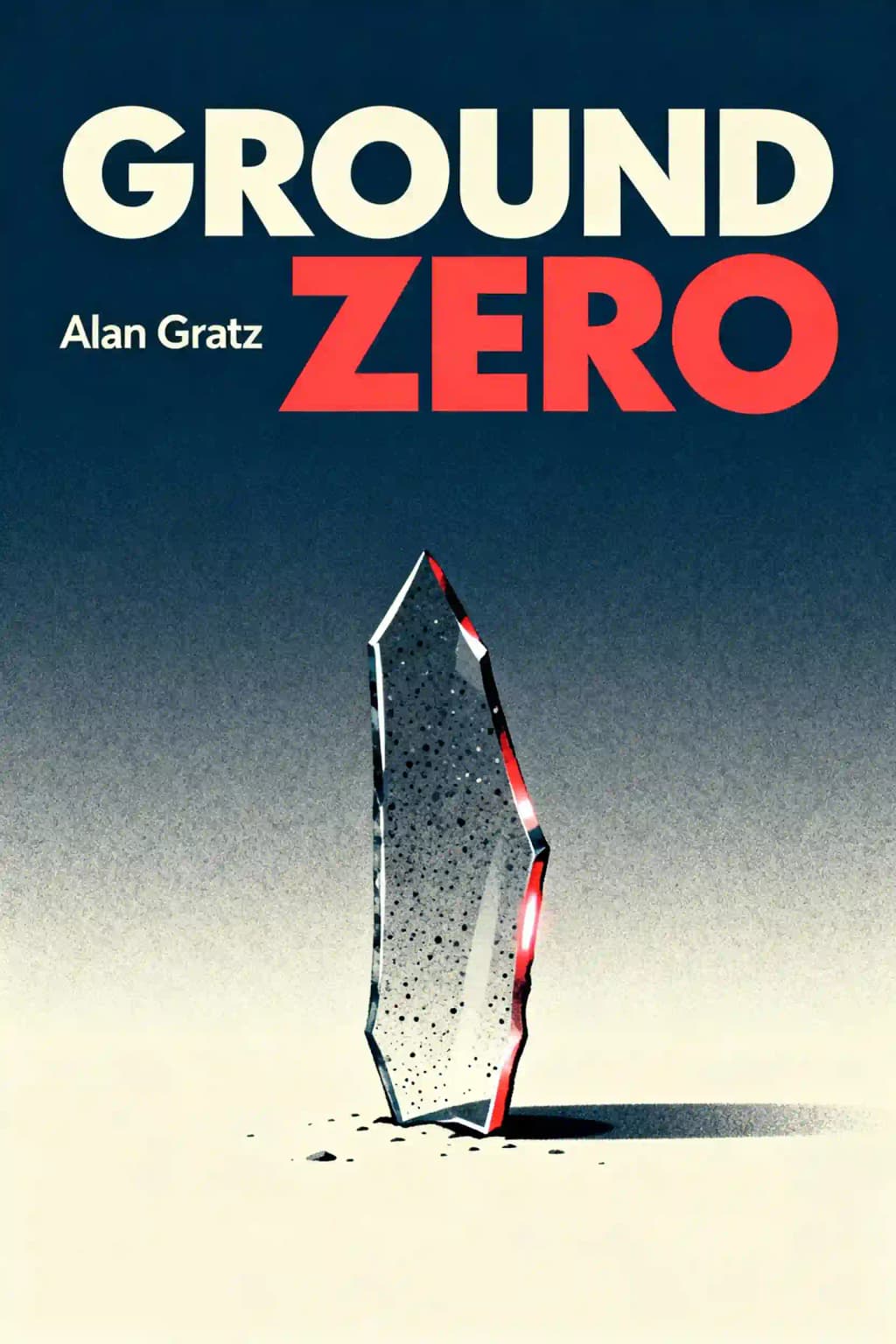
By weaving together Brandon's and Reshmina's narratives, Gratz masterfully illustrates the far-reaching consequences of terrorism and military intervention. The story explores how a single day's events rippled through time, transforming not just individual lives but entire nations. The impact extends beyond physical destruction to reshape cultural attitudes, political policies, and international relationships. Through these parallel stories, readers understand how historical events continue to influence our world long after the immediate crisis has passed, creating legacies that span generations and transcend national boundaries.
Kapitel 10
Finding Hope in Broken Places
Despite the devastating events portrayed, "Ground Zero" ultimately offers glimpses of hope amid tragedy. This hope doesn't come from easy answers or miraculous rescues but from small moments of human connection and resilience.
For Brandon, hope emerges in Richard's promise to care for him-a stranger becoming family in the wake of loss. It appears in the firefighters climbing up the stairs while everyone else descends, demonstrating extraordinary courage in the face of danger. Hope manifests in the community that forms among survivors, like when Brandon, Richard, Pratik, and Gayle form a human chain to navigate the destroyed mall, literally holding onto each other to find their way to safety.
For Reshmina, hope takes the form of her grandmother's songs that draw survivors together in the dark cave after the village's destruction. It appears in her encounter with a rare snow leopard that fills her with unexpected strength and purpose. Hope emerges in her family's determination to rebuild rather than flee, to plant seeds that might grow if given peace.
The book suggests that hope often comes not from external circumstances changing but from internal resilience and human connection. When Brandon realizes that "survival isn't about being against the world-it's about people working together for each other," he articulates the central message of hope that emerges from both narratives. Similarly, when Reshmina understands that moving forward means making mistakes and facing consequences, she acknowledges that life continues even after devastating loss.
By juxtaposing these stories of children on opposite sides of a global conflict, Gratz reminds us that hope isn't the absence of suffering but the determination to continue despite it. The broken places-a collapsed tower, a destroyed village-become sites where new understandings and connections can emerge, suggesting that even in our darkest moments, the human capacity for compassion and resilience remains our greatest strength.
Kapitel 11
The Power of Ordinary Heroes
Throughout "Ground Zero," the most profound heroism comes not from soldiers or firefighters (though they certainly demonstrate courage) but from ordinary people making difficult choices in impossible situations. Brandon's determination to find his father, Richard's promise to care for a stranger's son, the elevator passengers working together to create an escape route-these everyday acts of courage stand in stark contrast to the spectacular violence of the attacks.
Similarly, Reshmina's decision to help a wounded enemy soldier, her father's insistence on honoring Pashtunwali traditions despite the danger, and their family's commitment to rebuilding represent quiet heroism that rarely makes headlines but forms the backbone of human resilience. Even Taz, the American soldier, demonstrates heroism not through combat but through his willingness to acknowledge the harm caused by American forces and his efforts to help rebuild what his country has destroyed.
The book challenges simplistic notions of heroes and villains, showing how ordinary people contain multitudes-capacity for both selfishness and sacrifice, fear and courage, hatred and love. When Brandon helps a businessman juggle his coffee and briefcase early in the morning, he has no idea this small kindness will later lead to his rescue on the 89th floor. When Reshmina decides to help Taz despite her justified anger toward Americans, she couldn't predict how this choice would both endanger and ultimately transform her family.
By focusing on these small but significant choices rather than grand heroic gestures, Gratz suggests that true heroism lies in maintaining our humanity even when circumstances tempt us to abandon it. The power of ordinary heroes-children and adults alike-to choose compassion over vengeance, connection over isolation, and hope over despair becomes the most enduring message of both narratives.
In a world forever changed by the events of September 11, 2001, perhaps this recognition of our shared humanity across cultural, religious, and geographical divides represents the most heroic response of all.