Kapitel 1
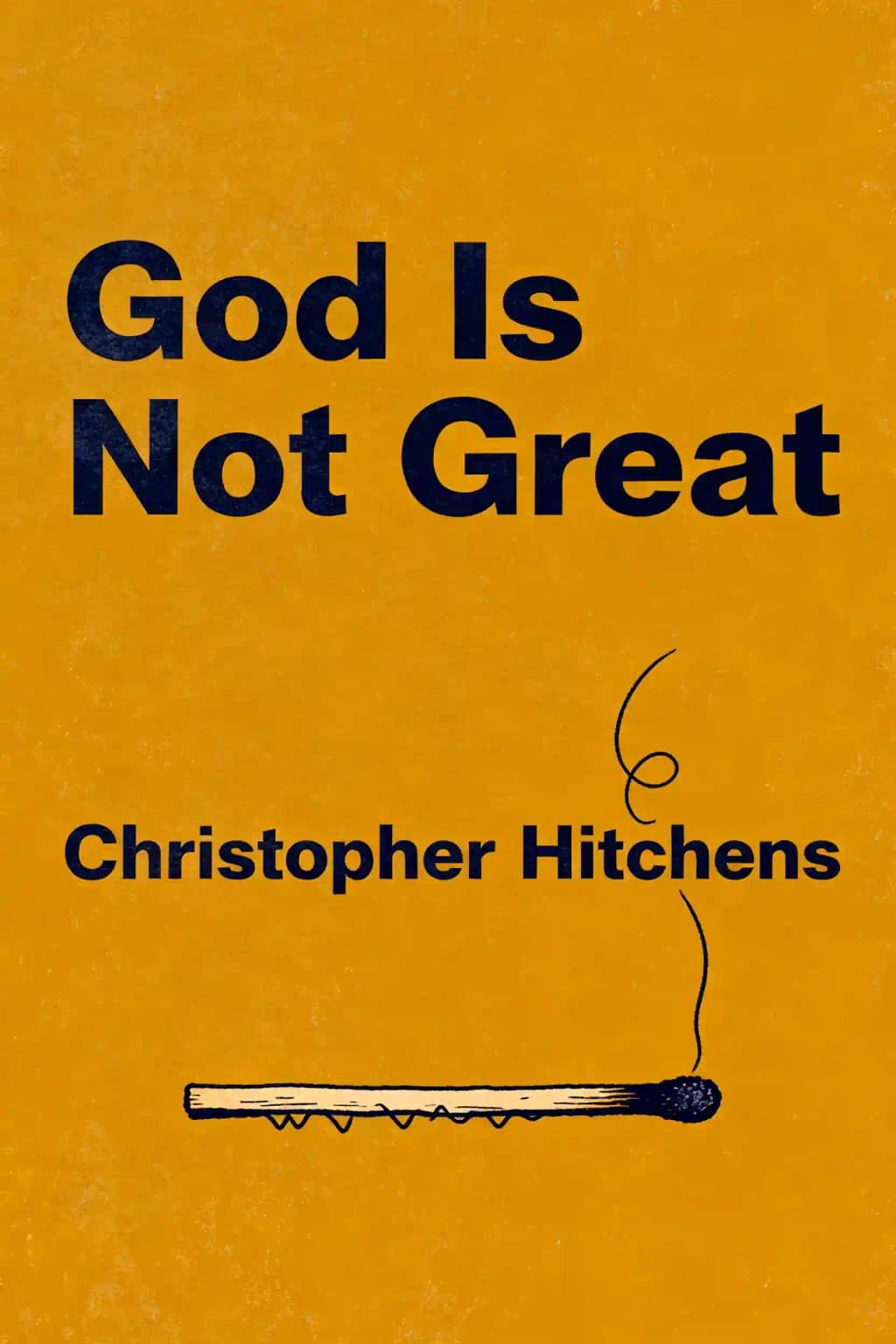
Faith's Fatal Flaws: Religion's Most Ruthless Critic Strikes
In a world where religion claims moral authority, Christopher Hitchens - the chain-smoking, whiskey-loving contrarian who debated believers in packed halls across continents - delivers his intellectual sledgehammer to faith's foundations. "God Is Not Great" isn't just a critique; it's an unflinching prosecution of organized religion as humanity's original sin. The book sold over a million copies and became the atheist movement's battle cry during the mid-2000s "New Atheism" surge.
Hitchens dissects religious texts with surgical precision, revealing contradictions and cruelties while building his case that "religion poisons everything." His arguments range from the historical (religion's bloody past) to the philosophical (the problem of evil) to the darkly humorous (circumcision critique that made audience members simultaneously wince and laugh).
What sets this manifesto apart is Hitchens' unparalleled rhetorical flair - his razor-sharp wit and literary references make even disagreeing with him an intellectual pleasure. Whether you're a believer seeking to understand your fiercest critic or a skeptic looking for articulate ammunition, this controversial classic delivers intellectual fireworks on every page.
Kapitel 2
The Awakening of Doubt: A Child's First Questions
My journey into skepticism began innocently enough in a classroom with Mrs. Jean Watts, a teacher who unwittingly planted the seeds of doubt in my young mind. She taught both the vibrant diversity of nature and the abstract concepts of scripture, but when she claimed that God had made vegetation green to soothe human eyes, something didn't sit right. Why would an omnipotent creator need to adjust nature to accommodate our imperfect vision, rather than simply designing our eyes to appreciate whatever colors existed? This simple question marked the beginning of a pattern: religious explanations consistently failed to withstand logical scrutiny.
As I grew older, these doubts multiplied. Religious leaders would sometimes admit privately that faith primarily existed to comfort people facing life's tragedies. Meanwhile, I observed the glaring hypocrisies of religious adults whose behavior contradicted their professed beliefs. These experiences gradually pushed me toward science and critical thinking, away from blind acceptance of religious dogma.
Four fundamental objections to religion crystallized in my mind: religions misrepresent our origins and the cosmos; they inherently promote authoritarianism; they unhealthily repress human sexuality; and they're founded on wishful thinking rather than evidence. Those who share these doubts aren't simply rejecting something - we're embracing the pursuit of knowledge without intermediaries claiming divine authority.
When we compare scientific revelations about our universe with religious narratives, the contrast is stark. Science offers mysteries far more profound and awe-inspiring than any religious myth, while acknowledging the boundaries of current understanding. Religion, conversely, claims certainty where none exists, stifling the very curiosity that drives human progress.
Kapitel 3
The Violent Heart of Faith: Religion's Bloody Legacy
Is religion primarily a force for moral good or a catalyst for evil? John Stuart Mill offered a penetrating critique, arguing that religion promotes false virtues disconnected from genuine human welfare. This isn't merely an academic concern - throughout history, religion has consistently generated intractable conflicts precisely because it makes absolute claims without evidence.
Consider the pattern of sectarian violence across what I call the "B-cities" - Belfast, Beirut, Bombay, Belgrade, Bethlehem, and Baghdad. In each case, religious identities have hardened divisions, making compromise nearly impossible. In Northern Ireland, knowing whether someone was Catholic or Protestant became a matter of life or death. In India, Hindu nationalists destroyed the Babri mosque, triggering violence that killed thousands. In the Balkans, Orthodox Serbs, Catholic Croats, and Bosnian Muslims engaged in "ethnic cleansing" defined largely by religious affiliation.
What makes religious conflicts particularly intractable is religion's inherent resistance to compromise. When you believe you're acting on divine commands, negotiation becomes impossible - even blasphemous. This explains why religious authorities rarely issue unambiguous condemnations of violence committed in their name. Instead, they often engage in equivocation, condemning violence "on all sides" while tacitly supporting their own faction.
The Rushdie affair exemplified this dynamic perfectly. After Ayatollah Khomeini issued his fatwa against Salman Rushdie for "The Satanic Verses," many Western religious leaders, while not endorsing the death sentence, nevertheless criticized Rushdie for "offending" religious sensibilities. The message was clear: religious feelings deserve special protection from criticism, even at the cost of free expression.
Religion's need to control and censor doesn't arise from strength but weakness - the fear that free inquiry will undermine faith's foundations. This explains why religions cannot peacefully coexist with dissent or pluralism. They must interfere, must control, must dominate - because the alternative is irrelevance.
Kapitel 4
Sacred Absurdities: From Dietary Laws to Medical Obstruction
Among religion's most peculiar manifestations are dietary restrictions, with the prohibition against pork being particularly widespread and ancient. This taboo, originating in ancient Judaea alongside circumcision, served as a religious boundary marker. Despite being condemned in the Koran, Muslims share this aversion with Jews, often reacting with visceral horror to pork consumption.
The pig's status as both biological cousin to humans and religious pariah reflects our complex relationship with reverence and disgust. In medieval Spain, eating pork became a test of Christian conversion for Jews, while today some religious conservatives demand censorship of even fictional pigs in children's stories. These obsessions reveal religion's tendency to elevate arbitrary rules to sacred status.
More dangerously, religious dogma has repeatedly obstructed medical progress. When vaccines were being developed, religious sectors resisted, claiming disease was divine punishment. Today, religious authorities continue spreading deadly misinformation, like the Catholic claim that condoms don't prevent AIDS transmission. In Africa, where this teaching has particular influence, the consequences have been catastrophic.
Children suffer most directly from harmful religious practices. From circumcision to female genital mutilation to child marriage, countless harmful customs persist under religious justification. Even in advanced societies, "religious freedom" often trumps child welfare, allowing harmful practices to continue unchallenged.
Religion's obsession with controlling sexuality manifests in bizarre taboos and harsh punishments for natural sexual expression. The psychological damage inflicted by teaching children that normal sexual thoughts constitute "sin" deserving eternal punishment cannot be overstated. How many potential contributions to human knowledge and flourishing have been lost to minds warped by religious guilt and fear?
Kapitel 5
The Crumbling Foundations: Religion's False Metaphysics
Religion's metaphysical claims increasingly appear optional rather than essential, becoming just one belief system among many in our pluralistic world. This represents a significant shift from earlier eras when religious worship was mandatory and dissent punishable by death. Even medieval scholasticism, despite its intellectual limitations, showed the struggle against enforced belief. William of Ockham's famous principle - that explanations should not multiply entities unnecessarily - cuts away superfluous assumptions, including divine ones.
The traditional "argument from design" fails spectacularly when confronted with modern understanding. Believers often label beneficial coincidences as "miracles" while ignoring tragedies or attributing them to mysterious divine purposes. But evolutionary biology reveals a world of imperfections incompatible with intelligent design. Our eyes, for instance, are wired "backward" with nerves and blood vessels passing in front of the retina - hardly the work of a perfect engineer.
The evidence from molecular biology and paleontology tells a story of evolution that is callous, random, and wasteful. The fossil record shows countless species extinguished in mass extinctions, with survival depending more on luck than divine favor. This pattern of indifferent natural selection, not benevolent design, shaped life on Earth.
Stephen Jay Gould's study of Cambrian fossils in the Burgess Shale demonstrates how contingent and unpredictable evolution truly is. If we could "replay the tape of life," as Gould put it, entirely different creatures might dominate Earth today. Our existence hinges on countless chance events, including the survival of a tiny, obscure vertebrate ancestor called Pikaia. Nothing about this process suggests divine guidance or purpose.
The work of Peter and Rosemary Grant with Galapagos finches provides direct observation of evolution in action, showing how beak shapes change in response to environmental pressures. Their meticulous research demonstrates that natural processes, not divine intervention, shape life's diversity.
From our genetic kinship with bacteria to our poorly designed spine (better suited to quadrupeds than bipeds), evidence of our evolutionary history abounds. These imperfections make perfect sense in light of evolution but are inexplicable as the work of an intelligent designer. The universe and life within it bear the hallmarks of chance and necessity, not divine craftsmanship.
Kapitel 6
Sacred Texts Unmasked: The Human Origins of Scripture
Religious revelations claim divine truth transmitted through various prophets, yet they present wildly contradictory doctrines. These revelations typically center on unremarkable individuals in the superstitious Middle East, conveniently confirming existing prophecies and prejudices.
The story of Moses receiving the Ten Commandments exemplifies these problems. The Decalogue prioritizes God's primacy and various forms of worship while omitting crucial moral prohibitions against rape, slavery, or child abuse. This peculiar emphasis reveals its human origins - these are the rules of priests concerned with maintaining their authority, not universal moral principles from a divine source.
The New Testament continues this pattern of human fabrication. Jesus's nativity story appears crafted to fulfill prophecies rather than record historical events, with irreconcilable contradictions between different gospel accounts. The virgin birth and prophecies about the second coming bear all the hallmarks of retroactive mythmaking designed to bolster faith against criticism.
Even supposedly moral parables reveal layers of manipulation. The famous story about Jesus stopping the stoning of an adulteress ("Let he who is without sin cast the first stone") doesn't appear in the earliest manuscripts of John's gospel - it's a later addition, revealing how religious texts evolve to serve changing needs.
The Koran similarly draws heavily from Jewish and Christian myths while claiming divine originality. Islamic scholars like Bukhari have questioned the authenticity of numerous hadith (sayings attributed to Muhammad), labeling most as fabrications. Muhammad's supposed revelations often conveniently aligned with his personal desires or political needs, and many Islamic practices simply continued pre-Islamic pagan traditions while claiming divine sanction.
Throughout history, miraculous claims have diminished in grandeur as scientific understanding advanced. From false resurrection stories to UFO sightings, skepticism thrives amid fraudulent claims. Extraordinary assertions continue to lack extraordinary evidence, challenging believers to present superior proof or face disbelief.
Kapitel 7
The Corrupt Beginnings: Religion's Fraudulent Origins
Religion's inception typically involves deception and social control rather than divine truth. Historical examination reveals countless beliefs claimed as divinely sanctioned yet clearly crafted to reassure, deceive, or manipulate followers. From the absurdities of Adam's tale to modern scams like "cargo cults" and televangelist fraud, the line between faith and deception has always been thin.
The case of Marjoe Gortner proves particularly revealing. Trained from childhood by his parents to perform as a "miracle child preacher," he later exposed the entire enterprise as a calculated fraud designed to extract money from the faithful. His testimony provides a rare insider's view of how religious manipulation works - the techniques of emotional manipulation, the deliberate exploitation of hope and fear, and the cynical profit motive behind apparently spiritual enterprises.
After natural disasters like tsunamis or hurricanes, religious leaders often claim to see divine retribution, diverting rational analysis to supernatural speculation. Major religious figures, struggling to reconcile their doctrines with modern knowledge, frequently resort to archaic interpretations that preserve their authority while avoiding engagement with scientific reality.
Throughout history, religions have risen and fallen, often vanishing completely as beliefs change. The Millerites, who predicted Christ's return in 1844, faded after their prophecies failed. Ancient gods like Pan and Osiris receded into mythology. Even Sabbatai Sevi, a self-proclaimed Messiah who captivated Jewish communities across Europe and the Levant in the 17th century, saw his movement collapse after he converted to Islam rather than face martyrdom.
Kapitel 8
Morality Without Gods: The Secular Basis of Ethics
Does religion actually make people behave better? Dr. Martin Luther King Jr. is often cited as evidence for religion's positive moral influence. While King certainly used biblical language and imagery, his fundamental commitment to human equality and dignity derived from universal humanitarian principles that transcend any particular faith.
The historical record on slavery illustrates religion's ambiguous moral role. Religious institutions initially justified and perpetuated slavery, with both the Old and New Testaments accepting it as normal. The eventual movement for abolition was driven largely by freethinkers like Thomas Paine and Frederick Douglass, who rejected religious justifications for human bondage. While some Christians eventually joined the abolitionist cause, they did so by selectively interpreting their texts against their literal meaning.
The inconsistency of religious morality appears starkly when we observe how different sects supported both slavery and abolition, using the same texts to reach opposite conclusions. This suggests that moral progress comes not from religion itself but from evolving human ethical standards that believers retroactively read into their texts.
The argument that religious belief provides the necessary foundation for moral behavior fails when we examine actual behavior. Figures like philosopher A.J. Ayer (an atheist) and novelist Evelyn Waugh (a devout Catholic) demonstrate that strict adherence to religious dogma doesn't necessarily produce ethical conduct - often quite the opposite, as rigid beliefs can justify cruelty and intolerance.
This suggests that religious morality isn't as universal or timeless as claimed, but rather consists of contingent historical adaptations presented as eternal truths. Human virtue frequently transcends dogma, with secular humanism offering a more flexible and pragmatic foundation for ethical principles based on human wellbeing rather than supposed divine commands.
Kapitel 9
Eastern Religions: No Escape from Delusion
Many Westerners, disillusioned with traditional religion, have turned to Eastern spiritual practices seeking an alternative path to enlightenment. My own journey to the ashram of Bhagwan Sri Rajneesh (later known as Osho) in Poona, India, revealed the emptiness of such pursuits. At first glance, the ashram appeared idyllic - a place of freedom and spiritual exploration. But beneath this veneer lay manipulative practices designed to extract money and obedience from devotees.
The striking similarities between Eastern spiritual leaders and Western religious authorities became impossible to ignore. The Dalai Lama, despite his gentle image, promotes supernatural beliefs no more credible than those of the Pope. His claim to be the fourteenth reincarnation of a specific lama requires the same suspension of critical thinking as belief in the virgin birth or resurrection.
The misguided belief in mystic enlightenment and the surrender of reason ultimately leads to disillusionment. Whether in East or West, religious exploitation follows the same pattern: charismatic leaders claim special access to spiritual truth, demand submission from followers, and resist critical examination of their claims.
This pattern persists because religion itself is fundamentally flawed - not merely in its implementation but in its core doctrines. Religion presents a false picture of reality, clinging to creation myths long after science has demonstrated their falsity. It preserves primitive practices like blood sacrifice (reinterpreted but not abandoned in Christianity's crucifixion narrative) and promotes immoral concepts like vicarious redemption, where the innocent suffer for others' transgressions.
Perhaps most damaging is religion's impact on children. Religious indoctrination often employs terror, threatening eternal punishment for thought-crimes while demanding absolute obedience. Historical examples abound of sermons designed to frighten children with graphic descriptions of hellfire, causing lasting psychological damage. This manipulation of innocence reveals the moral bankruptcy at religion's core.
Kapitel 10
Totalitarianism and Religion: Natural Allies
Critics often argue that secular and atheist regimes have committed atrocities as terrible as any inspired by religion. This objection deserves serious consideration, as it challenges the idea that abandoning religion necessarily leads to moral improvement.
Historical analysis reveals that totalitarian systems, whether explicitly religious or ostensibly secular, share fundamental characteristics with traditional religions. They demand absolute submission, claim infallible authority, punish dissent, and elevate leaders to godlike status. The relationship between religious fervor and oppressive control runs deep.
For centuries, rulers combined secular authority with religious absolutism, creating societies where subjects faced dire consequences for minor infractions or impure thoughts. These leaders, often regarded as divine, expected unwavering obedience extending to the mind and soul.
John Calvin's Geneva provides a striking example of religious totalitarianism. Calvin established a theocratic dictatorship that controlled every aspect of citizens' lives, punishing dissent with torture and execution. His doctrine of predestination - that God had already decided who would be saved or damned - created a psychological prison of guilt and fear that parallels the thought-control mechanisms of modern totalitarian states.
The Catholic Church's collaboration with fascism further illustrates religion's affinity for authoritarian power. The Vatican supported Mussolini's regime, with Pope Pius XI endorsing him as divinely appointed. This alliance stemmed from shared interests in traditionalism and opposition to communism. Pius XII expressed devotion to Hitler at the beginning of his pontificate and never excommunicated Catholic members of the SS, revealing the human, not divine, nature of "holy" institutions.
Even ostensibly atheist regimes like Soviet communism functioned essentially as religious systems. Stalin's cult of personality mirrored religious worship, and he pragmatically tolerated a puppet Orthodox Church when it served his purposes during World War II. North Korea today represents perhaps the purest example of secular totalitarianism functioning as a state religion, with the Kim dynasty receiving worship normally reserved for gods.
These parallels suggest that the problem isn't religion versus atheism but dogmatism versus critical thinking. Totalitarian systems, whether religious or secular, share the same fundamental vice: they demand that humans surrender their autonomy and critical faculties to an absolute authority claiming infallible knowledge.
Kapitel 11
The Rational Resistance: Humanity's Finest Tradition
Despite religion's dominance throughout history, humans have always harbored skeptical thoughts. Even in eras when expressing doubt meant death, whispers of unbelief persisted. Religion arrived not as a universal human instinct but as a constructed system of control, challenged from its beginnings by those who recognized its absurdities.
Socrates exemplifies this tradition of questioning. Through his gentle yet relentless interrogation, he exposed the contradictions in religious beliefs. His method, brilliantly captured in Aristophanes' play "The Clouds," used logical reasoning to deconstruct everyday religious assumptions. For this crime of encouraging critical thinking, Athens condemned him to death - a pattern repeated countless times throughout history as religious authorities sought to silence rational inquiry.
During the Enlightenment, figures like Benjamin Franklin and Joseph Priestley navigated the dangerous waters between scientific discovery and religious conformity. Franklin crafted pious-sounding language to make his revolutionary ideas more palatable, while David Hume used sophisticated logic to question divine claims. Thomas Paine's "Age of Reason" boldly challenged religious myths, arguing for a rational approach to understanding the world.
Even Charles Darwin, whose work delivered perhaps the most devastating blow to religious cosmology, treaded carefully, aware of the social consequences of challenging faith too directly. Yet the evidence he compiled made the case for evolution irresistible to honest minds, regardless of their religious commitments.
This tradition of rational resistance represents humanity at its finest - the courage to question authority, to demand evidence for claims, and to follow reason wherever it leads. As Gotthold Lessing observed, the pursuit of truth holds greater value than its possession, challenging the comforts of unquestioning faith.
Kapitel 12
The New Enlightenment: Freeing Human Potential
The time has come for a new Enlightenment - one that builds on the achievements of the first while addressing its limitations. We must move beyond the comfort of religious certainty to embrace the exhilarating uncertainty of rational inquiry. The absurdities of faith, whether embodied by Thomas Aquinas or modern leaders like Mahmoud Ahmadinejad, limit human potential and obstruct our search for truth.
Religion's archaic rituals and dogmas belong to humanity's childhood. We've outgrown the need for cosmic parents to guide and punish us. Instead, we can embrace our responsibility to create meaning and morality through reason, compassion, and shared human values.
This doesn't mean abandoning wonder or transcendence. The natural world, revealed through scientific inquiry, offers mysteries far more profound than religious myths. From the vastness of the cosmos to the intricacies of quantum mechanics, reality exceeds our wildest imaginings. We need no supernatural additions to appreciate the genuine marvels that surround us.
The path forward lies in free inquiry, human achievement, and the removal of religious constraints on thought and action. By liberating ourselves from the shackles of faith, we can create a future where knowledge and humanism prevail over superstition and dogma.
This journey won't be easy. Religious institutions wield enormous power and will resist challenges to their authority. But the tide of history flows toward greater knowledge and freedom. Each person who embraces rational thinking, who questions dogma, who seeks evidence before belief, contributes to this vital transformation.
The choice before us isn't between religion and nihilism, but between blind faith and open-eyed wonder at the actual universe we inhabit. By choosing the latter, we honor our unique human capacity for understanding and create the possibility of genuine moral progress based not on ancient texts but on our evolving comprehension of human flourishing.