Kapitel 1
The Art of Persistent Pursuit: How Follow-Up Transforms Sales
When was the last time a salesperson actually followed up with you? Think about it. You visit a store, express interest in a product, exchange contact information, and then... silence. In a world where 44% of salespeople give up after just one follow-up attempt, mastering this neglected discipline represents perhaps the greatest untapped opportunity in sales today.
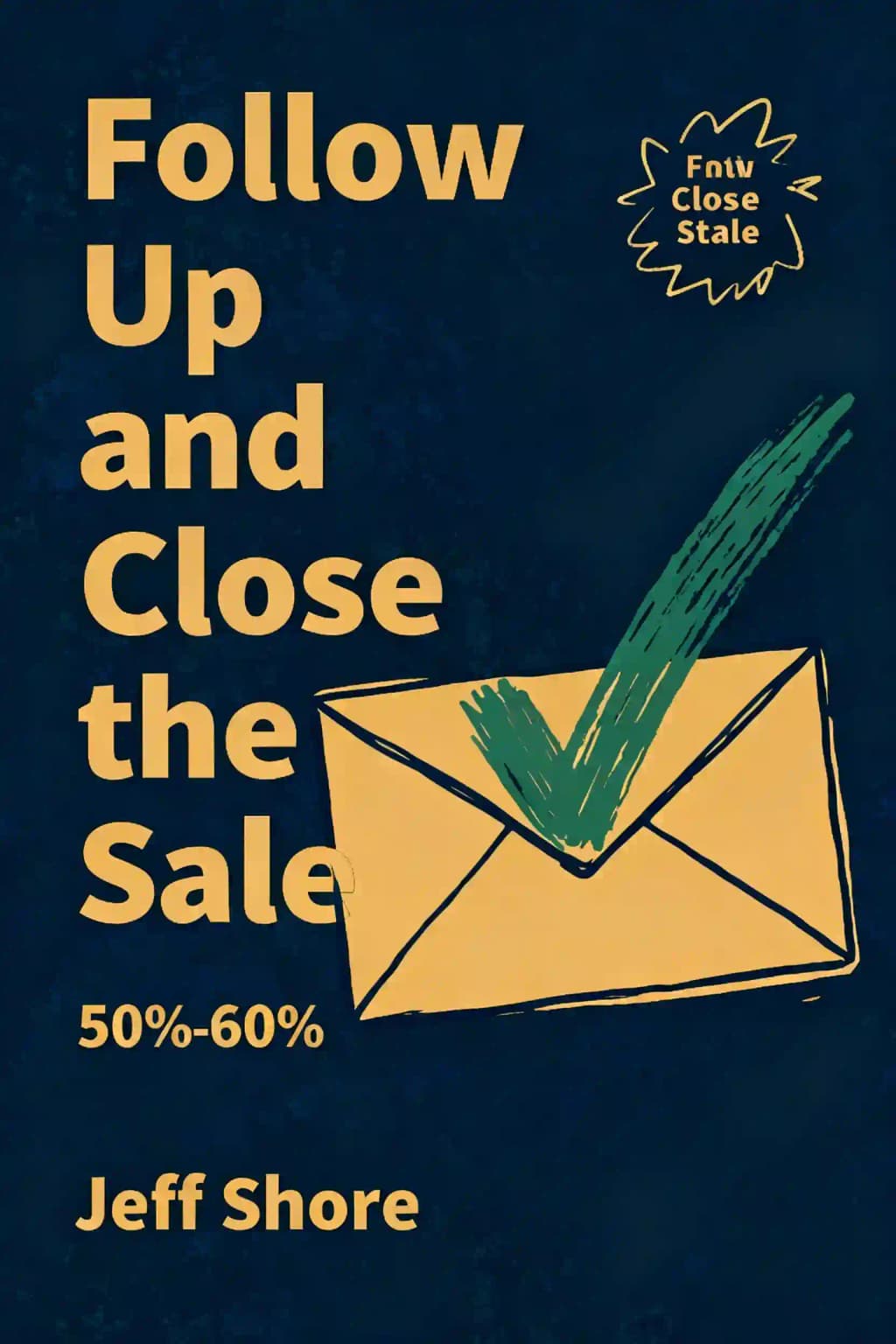
Jeff Shore's "Follow Up and Close the Sale" isn't just another sales manual-it's a wake-up call that has become required reading for sales teams at companies like Tesla, Salesforce, and Apple. The book has garnered praise from industry titans including Grant Cardone and Jill Konrath, who call it "the definitive guide to turning prospects into customers." What makes it particularly powerful is Shore's background-a self-described "telephobic" who once relied entirely on first-visit closing skills until market conditions forced him to develop the very follow-up muscles he now teaches others to strengthen.
Kapitel 2
The Psychology Behind Effective Follow-Up
The fundamental disconnect in sales follow-up stems from how differently salespeople and customers experience the buying journey. When a customer says, "I need to think about it," the salesperson typically walks away feeling positive, mentally counting the future commission. Meanwhile, the customer gets immediately distracted by life's demands-work stress, family obligations, health concerns, urgent emails, competing priorities-and quickly forgets the entire interaction. This cognitive disconnect creates a gap that only strategic, thoughtful follow-up can bridge.
This phenomenon happens because of what Shore calls "Emotional Altitude"-the level of positive emotional involvement in a purchase decision. According to researcher Martin Lindstrom, a staggering 85% of purchase decisions are based on emotion, with only 15% driven by logic. The farther customers get from their initial emotional experience with your product or service, the more their emotional altitude wanes, potentially causing them to fall out of emotional memory altogether. For example, a customer might be excited about a new software solution during a demo, but three days later, when buried in daily tasks, that emotional connection has significantly diminished.
"People don't buy from you because you bother them; they buy because you care more than anyone else," Shore explains. This insight reveals why follow-up isn't just about persistence-it's fundamentally about service. When you spend time with customers, build rapport, and then disappear, you send the message that you never truly cared. This abandonment can be particularly damaging in complex sales cycles where trust is paramount.
Effective follow-up must therefore incorporate three essential elements: be relationship-based (extending established rapport through personalized communication), service-driven (showing you have the customer's best interests at heart by providing valuable insights and solutions), and emotionally positive (rekindling that emotional fire through engaging touchpoints). The mindset shift required is moving from "palms up" (wanting to receive something, like a purchase order) to "palms down" (wanting to give something helpful to the customer).
This service-oriented approach transforms follow-up from a dreaded task to a meaningful opportunity. When you genuinely care about helping customers solve their problems, follow-up becomes not just acceptable but essential-it's the ethical thing to do. Successful salespeople understand that each follow-up interaction should add value, whether through sharing relevant industry insights, addressing potential concerns, or offering solutions to emerging challenges. This might include sending pertinent case studies, sharing new research, or making introductions to other satisfied customers who can share their experiences.
The psychology of effective follow-up also recognizes the importance of timing and frequency. Research shows that optimal follow-up patterns typically involve multiple touches across different channels, with each interaction building upon the last. This creates a consistent presence that maintains emotional altitude without becoming overwhelming or pushy. The key is to remain relevant and helpful rather than simply persistent.
Kapitel 3
Overcoming Resistance: The Invisible Force Blocking Your Success
Despite knowing the importance of follow-up, many salespeople still struggle to implement it consistently. Shore identifies the culprit as "Resistance"-an invisible but powerful force that manifests as procrastination, fear, lack of confidence, excuses, and distractions.
The statistics reveal this resistance in action: 50% of sales happen after the fifth contact, yet the average rep makes only two attempts to reach prospects. While 44% of salespeople give up after one follow-up and 92% quit after four calls, 60% of customers say no four times before saying yes-revealing a massive disconnect between buyer needs and seller behaviors.
Resistance stems from what Shore calls "comfort addictions"-our hardwired tendency to escape discomfort. For salespeople, these addictions appear as procrastination, telephobia, avoidance of objections, fear of closing, and discomfort with follow-up.
"Resistance occurs because our brains are wired for self-protection," Shore explains. "We misinterpret discomfort as threats, triggering our primitive brain to send 'run!' signals to our cognitive brain." In our comfortable society, we've become hypersensitive to emotional threats, allowing even subtle adversity to trigger fear responses.
The key to defeating Resistance is making decisions before facing it. Shore transformed from occasional flossing to daily flossing, from thousands of unread emails to an empty inbox, and from late-day sales calls to morning calls-all by deciding his response to Resistance beforehand. The strategy is using your rational brain to plan your response before your primitive brain can tell you to "bail out."
Shore suggests visualizing Resistance as an ugly face and mentally "hitting it with a two-by-four" to clear your path forward. This mental technique acknowledges Resistance while refusing to let it control your actions. The simple truth is that Resistance is only as strong as we allow it to be, and we alone have the choice to be stronger than it.
Kapitel 4
Setting Up the Follow-Up: The Seamless Sales Narrative
Shore challenges the notion that follow-up should be viewed as an isolated step, arguing instead that sales is one extended narrative from first contact through purchase. While the ideal is closing during the initial encounter, when prospects say "not yet," follow-up becomes critical.
The urgency of follow-up stems from the emotional nature of purchasing decisions. The longer people remain in the buying process, the further removed they become from their initial emotional impulse. They enter an "analytics zone" where they become mentally paralyzed by details. The emotional detachment that comes with time makes closing less likely, creating an imperative for sales professionals to shorten the buying cycle through effective follow-up.
Rather than viewing sales interactions as disconnected conversations, Shore advises seeing the entire sales process as one extended dialogue where your purpose is fueling emotional momentum. He recommends planning for follow-up from the start-setting up your next conversation during the initial presentation.
During presentations, take detailed notes not just about price preferences or feature needs, but personal information about hobbies, family, and interests. These details help create personalized follow-up strategies and show you care. Particularly identify pain points, as problem-solving adds value in follow-up.
When wrapping up initial meetings, Shore introduces his "Next Step Close": "So glad to know that you like what you're seeing. The next step is to write a purchase agreement. Is that where we are?" If the customer says no, immediately gain mutual commitment for next steps by using the phrase "Let's do this..." which implies both parties have action items. This keeps the process active and allows for naturally introducing the next interaction with specific timing: "Let's regroup Wednesday at ten o'clock."
Shore also advocates for immediate "taillight follow-up"-sending a quick text message the moment your customer leaves your sight. This simple action accomplishes multiple goals: showing customers they matter, standing out from competitors, confirming next steps, demonstrating action-orientation, showing respect, and putting your number on their phone.
Kapitel 5
How Not to Get Eliminated: Staying in the Consideration Set
When faced with too many choices, our brains naturally seek to reduce options to avoid cognitive strain. This elimination process happens largely subconsciously-if something doesn't trigger positive emotions, it gets eliminated without conscious thought. Research shows that consumers typically narrow down their choices to a consideration set of just 3-4 options before making a final decision, regardless of how many initial options they had.
Shore explains that the brain follows a simple psychological hack: "Easy = Right"-the easier something seems, the more right it feels. This is why companies strive to make purchasing processes simple, as cognitive ease leads to positive purchasing decisions. Examples include Amazon's one-click ordering, Apple's seamless ecosystem, and Netflix's autoplay feature. When processes feel effortless, customers are more likely to proceed with their purchase and return for future transactions.
There are two types of elimination: active elimination (consciously rejecting an offering) and passive elimination (simply forgetting about an option). Active elimination occurs when customers deliberately decide against a product due to factors like price, features, or negative reviews. While this is inevitable, passive elimination is "an unforgivable sales sin" that happens through neglect. A prospect might be genuinely interested but slowly forget about the offering due to lack of engagement. Follow-up is the critical protection against passive elimination-if customers forget you, you lose the sale.
Consistency is the key to avoiding elimination. Shore recommends reviewing your strongest leads daily and all leads weekly, constantly asking "How can I move this sale along today?" He suggests creating a systematic follow-up schedule: immediate response to inquiries within 24 hours, check-ins every 3-5 days during active negotiations, and monthly touches for longer-term prospects. He warns against long gaps between follow-ups, as prospects will forget you entirely. Studies show that 80% of sales require five or more follow-ups, yet 44% of salespeople give up after just one follow-up attempt.
Jeffrey Gitomer is quoted: "The faster you follow up, the more wow there is in the sales process." This wow factor creates emotional engagement that helps keep you in the consideration set. Shore recommends personalizing follow-ups with relevant content, industry news, or specific solutions to previously discussed challenges. This demonstrates ongoing value and keeps your offering fresh in the prospect's mind, reducing the risk of both active and passive elimination.
Kapitel 6
Speed: Your Secret Superpower in Follow-Up
Just as delayed follow-up after a promising date creates doubt, slow sales follow-up loses customer engagement. Shore emphasizes that customers have miniscule attention spans and can quickly forget you without prompt follow-up.
Our instant gratification culture has trained us to read positive attributes into quick responses: "He cares," "I matter," "I can trust her," "He is attentive," "She likes me." Speed isn't just appreciated-it's increasingly expected in our service interactions.
Organizations built around speed are dominating their industries. Amazon Prime's next-day delivery changed retail expectations. UberEATS delivers meals in just 35 minutes on average. Emergency rooms now boast wait times under four minutes. These examples demonstrate how speed translates directly to perceived quality of care and service.
Speed prevents passive elimination-the forgetting that happens as time passes after a sales conversation. Research shows companies following up within an hour are seven times more likely to qualify leads. The benefits of speed are powerful: showing you care, standing out, interrupting competitor presentations, surprising prospects, being memorable, gaining competitive advantage, extending relationships, and ultimately closing more sales.
While 90% of salespeople follow up within 24 hours, Shore recommends a four-hour window as optimal. If a customer leaves by noon, follow up that same day; if they leave at 4 p.m., follow up early next morning. The key is making an appointment for follow-up within four hours and asking, "What value can I add in the next four hours?"
Follow-up can never be too fast if you're providing value. A quick "Have you made a decision yet?" brings no value, but meaningful, helpful information earns the right to reconnect quickly. Speed combined with value is the winning formula for effective follow-up.
Kapitel 7
Making It Personal: The Art of Meaningful Connection
Mary Kay Ash's advice to "pretend every person has a sign saying 'Make me feel important'" forms the foundation of personalized follow-up. Great sales conversations go beyond products to facilitate human connections. Shore illustrates how discovering a prospect's passion for snowboarding provides opportunities for personalized follow-up-perhaps sharing a ski resort review app or multi-resort pass information.
We naturally gravitate toward people who share our interests. Shore describes a hockey locker room conversation about Harley-Davidsons that created instant camaraderie. Even without shared hobbies, attentive salespeople can create personal connections through small details. Shore shares a personal story from 1991 where a realtor remembered a family conversation about his daughter's hair and sent a note saying "P.S. Don't cut Emily's hair"-a small personal touch he still remembers decades later.
While speed is half the battle in follow-up, personalization completes the strategy. The goal isn't simply making contact but maximizing quality through personalization. Too many salespeople focus on quantity-"pounding through" their CRM task list-rather than creating meaningful, personalized connection points that convert prospects into customers.
Effective follow-up requires a mindset shift from what you'll get to what you'll give. Start by asking "What does your customer need to see?" rather than focusing on your own agenda. This customer-centric approach transforms you from a nuisance into a trusted advisor.
Taking notes during customer interactions isn't awkward-it's respectful. Rather than just recording sales-related data, focus on personal details that enable meaningful follow-up. Document interests, hobbies, family information, and small details that create connection points.
Get creative with personalized follow-up. Small thoughtful gestures-like sending a gift card to someone's favorite restaurant-demonstrate genuine care and strengthen relationships. These personalized touches make follow-up enjoyable for both you and your customer, creating lasting impressions that extend beyond the initial transaction.
Kapitel 8
Planning for Follow-Up Success: The Lead Conversion Hour
Proper planning-both mental and strategic-produces peak performance in follow-up. The execution phase requires focused preparation rather than haphazard, last-minute attempts. By creating dedicated time blocks and approaching follow-up systematically, you'll dramatically improve your results.
The ineffective approach to follow-up involves procrastination, excuses, and last-minute scrambling through an overwhelming backlog of tasks. Without preparation, salespeople struggle to recall customer details and make desperate, self-serving calls that yield poor results.
Just as you wouldn't show up at a dentist without an appointment or cook without ingredients, effective follow-up requires preparation. Drawing from Daniel Coyle's "The Talent Code," successful follow-up demands practice/repetition, great coaching, and most importantly, total concentration-the ability to enter a focused zone where distractions disappear and you're fully present for the task.
Rather than making scattered follow-up attempts throughout the day, dedicate a specific "Lead Conversion Hour" for focused follow-up work. This scheduled, uninterrupted block creates a mental "zone" where you can maintain the right mindset and momentum. Unlike weaker salespeople who "wing it" between distractions, this structured approach transforms mundane tasks into purposeful activity.
Begin your Lead Conversion Hour with five minutes of mental preparation. Visualize success, raise your confidence through belief and mastery, elevate your emotional altitude, create contagious energy that customers will mirror, and adopt a "Show Time!" mindset that treats follow-up as a front-stage performance rather than a backstage administrative task.
After mental preparation, spend a few minutes on process planning through three key steps: set specific goals for your session (contacts to reach, time allocation, conversion targets), simplify your tasks to maintain focus on what advances your goals, and commit to working nonstop through your lead conversion time to maintain momentum rather than making a call and taking a break.
Kapitel 9
Selecting the Right Follow-Up Method: Strategic Communication
Not all follow-up methods are equally effective, and choosing the right communication channel is strategic rather than just a matter of personal comfort. Too many salespeople select follow-up methods based on what feels comfortable rather than what will be most effective for the customer.
Different follow-up situations call for different tools, just as you wouldn't use a hammer to unclog a toilet. When facing discomfort like making a phone call, your brain interprets it as a threat and encourages you to flee toward easier alternatives. To succeed in sales, you must override these natural instincts and choose what's in the customer's best interest.
Follow-up methods vary in effectiveness based on their impact on the customer. Face-to-face communication is most effective as our brains are wired to read facial expressions. Voice-to-voice communication still conveys emotion through tone and inflection. Personalized video offers one-way communication but proves dedication while standing out. Voice mail can still communicate energy and optimism if it includes a specific call to action. Personalized email works for dense information but lacks human connection, while text messaging is primarily a supplemental tool.
When choosing your follow-up method, consider these guidelines: Use the telephone for sharing exciting news, extending relationships, conveying messages requiring responses, and closing sales. Use video for introducing yourself before appointments and showing features or lifestyle opportunities. Use email for sending dense information, handling administrative tasks, sharing multiple large photos, and sending videos. Use text messaging for confirming appointments, brief thank-you notes, sending one or two smaller photos, and short personalized videos.
Always ask customers directly for their preferred communication method, but give yourself options. When discussing communication preferences with buyers, clarify that certain situations may require different methods. For example, you might say: "There are times I will need to call, and other times I will need to email. But what is your preferred method of communication?"
Kapitel 10
Mastering Specific Follow-Up Channels: Phone, Email, Text, and Video
The telephone remains a secret weapon for sales professionals, offering voice-to-voice communication that's second only to face-to-face interaction. Despite widespread telephobia among salespeople, phone calls provide nuance, tone, energy and urgency that text-based communications lack.
Voice communication excels because it's complete and two-sided. Unlike text or email, phone calls convey tone, energy, confidence and urgency. When you call with a specific solution to a customer's problem and offer a brief time commitment ("30 seconds to chat"), you're making a compelling offer that's hard to ignore.
Prepare for great calls by recognizing that your comfort-or discomfort-is contagious to prospects. Warm up through repetition by practicing your opening lines. Before dialing, determine your call's primary purpose: what value will you add, what problem will you solve, or what question will you answer?
Email began as a revolutionary communication tool but quickly became overwhelming with 53.65 billion legitimate emails sent daily alongside 302.99 billion spam messages. Most people now ignore emails, with only 15-25% of messages actually being opened.
To increase your email open rates, focus on positive triggers: use a known sender name, craft effective short subject lines, personalize with the customer's name, include appropriate images, create appealing first lines, and provide excellent content. Many people screen emails without opening them, using preview panes or mobile phones that show the sender, subject, and first sentence. This makes your opening line crucial for catching attention before deletion.
Text messaging offers immediacy but its potential for annoyance makes it dangerous. Americans send 26 billion text messages daily, and text messages have a 98% open rate compared to just 22% for emails. However, texting is primarily one-way communication and can hinder developing relational depth. The key question is whether your text messages add value-if they don't, you're wasting your customer's attention and creating annoyance.
Video follow-up offers extraordinary impact for minimal effort-it's easy to execute, costs nothing, creates emotional engagement, and is fun. Adding video to emails increases reply rates up to eight times, prospects who view product videos are 85% more likely to buy, and 75% of late-stage prospects who received personalized videos closed deals. Despite video's power, only 5% of salespeople use it for follow-up, primarily due to discomfort and fear of looking foolish.
Kapitel 11
The 1 Percent Club: Achieving Elite Status Through Follow-Up
The "1 Percent Club" represents those sales professionals who achieve extraordinary success through consistent follow-up. Like the "knee of the curve" phenomenon where performance suddenly skyrockets after a long period of seemingly minimal progress, follow-up is the critical factor that vaults mediocre salespeople to exceptional levels.
The challenge is that follow-up isn't sexy-it requires diligence, patience, stamina, discipline, and acceptance of delayed gratification. It demands persistence, like Bill Porter, who despite having cerebral palsy, walked seven miles daily for 40 years as a door-to-door salesman to become Watkins Industries' top performer.
The 1 Percent Club comprises sales professionals who are truly complete in their approach-those who apply maximum effort and perfected skills across all areas of the sales process. These elite performers are driven (never resting until giving their best), methodical (following effective processes), focused (not easily distracted), bold (leaning into discomfort), and persistent (never giving up).
What keeps most salespeople out of the 1 Percent Club is poor follow-up. Complete success with incomplete effort isn't truly complete. Effective follow-up separates you from the crowd, builds your confidence, gains attention from bosses and customers alike, and makes you memorable when decision time arrives.
Follow-up exemplifies Darren Hardy's "Compound Effect" principle-small actions, done consistently over time, yield exponential results. It's not about implementing a program but developing a habit of doing the right thing repeatedly, day after day. Like climbing a mountain or building a house by hand, joining the 1 Percent Club doesn't happen accidentally-it requires focus, persistence, and time invested in consistent follow-up actions that compound over your career.
The path to sustained excellence requires turning skills into deeply ingrained habits through daily repetition and never breaking the string of consistent practice. As Aristotle noted, "Excellence is not an act but a habit"-we become excellent by repeatedly doing the right things until they become automatic.