Kapitel 1
The Content Revolution: Beyond Creation to Experience
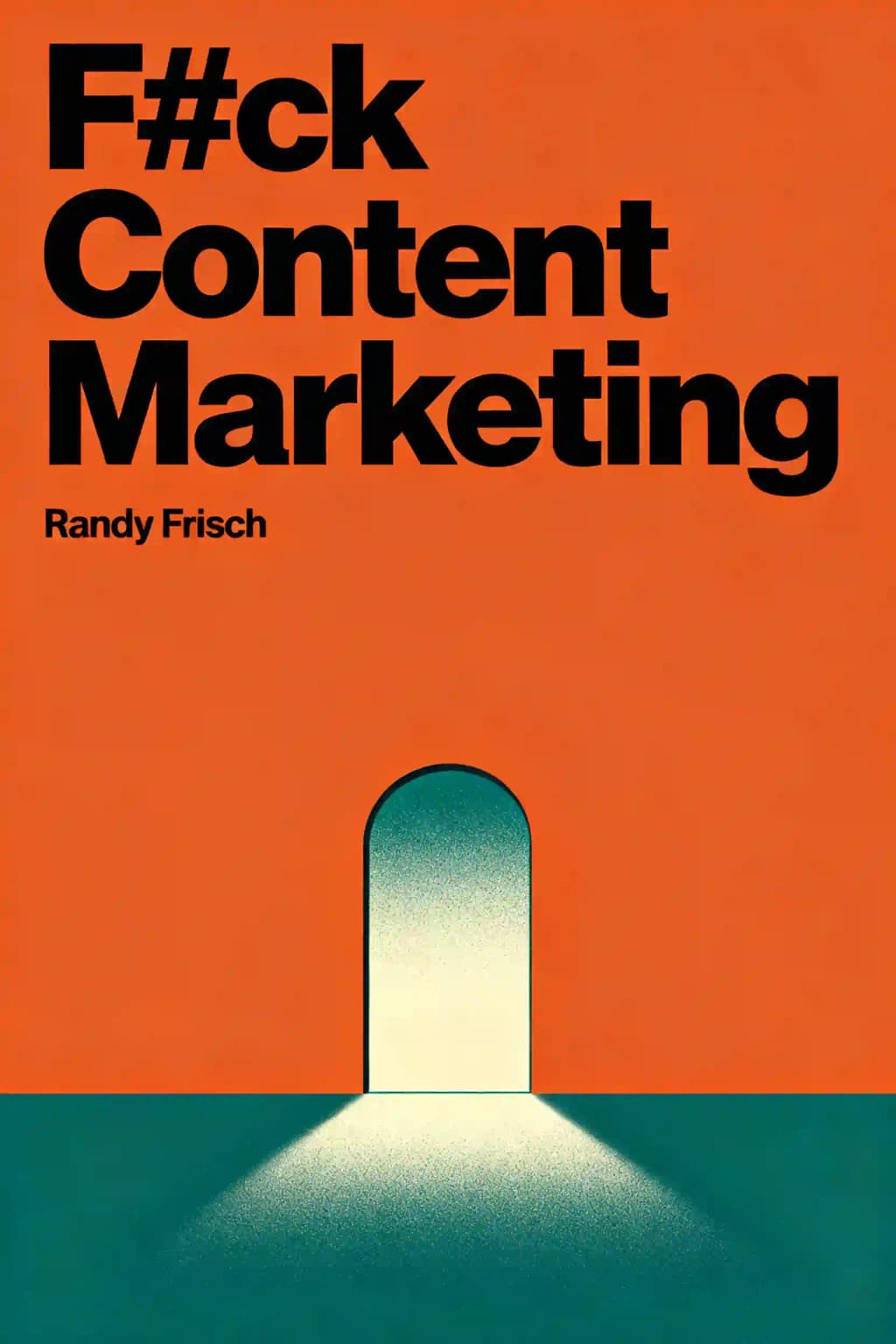
Have you ever found yourself drowning in a sea of marketing content, yet somehow still feeling parched for information that actually matters to you? You're not alone. While marketers worldwide have been churning out blog posts, ebooks, and podcasts at unprecedented rates, something fundamental has gone wrong. This disconnect sparked Randy Frisch's provocative manifesto "F#ck Content Marketing," which challenges the very foundation of modern marketing strategy. The book, endorsed by marketing luminaries like Jon Miller (founder of Marketo and Engagio), isn't about abandoning content-it's about transforming how we deliver it. In an era where Netflix and Spotify have conditioned us to expect perfectly tailored experiences, B2B marketing often remains stuck in the equivalent of Blockbuster's alphabetical shelving system. Frisch's work has become required reading for forward-thinking marketers, with companies like Snowflake and Blackbaud implementing his framework to achieve dramatic improvements in engagement and conversion rates-some seeing conversion increases of over 700% compared to traditional approaches.
Kapitel 2
The Content Crisis: When More Became Less
The startling revelation that 60-70% of marketing content goes completely unused was Randy Frisch's wake-up call. As a marketing leader, he had been relentlessly pushing his team to create more and more content, operating under the assumption that volume would translate to audience engagement and customer conversion. During a Wi-Fi-free flight, Frisch had his "Jerry Maguire moment," drafting a passionate blog post titled "F#ck Content Marketing" that his team initially refused to publish.
The problem wasn't content creation itself, but how organizations were failing to properly distribute and leverage that content after creation. Content marketing, as defined by the Content Marketing Institute, was meant to encompass both creating valuable content AND attracting and retaining an audience. But over time, CMOs became fixated solely on content creation while neglecting distribution and audience engagement.
Two key factors contributed to this crisis: First, unclear job descriptions that overloaded content marketers with responsibilities far beyond their expertise. Organizations hired journalists and storytellers but expected them to manage the entire content lifecycle-from creation to distribution, audience attraction, buyer journey management, and conversion. This created a lose-lose scenario for brands, content marketers, and audiences alike.
Second, confusion around content marketing platforms (CMPs) that only solved for content creation while ignoring distribution and engagement. Software companies like NewsCred, Kapost, and Contently emerged offering "content marketing platforms" that addressed only half the equation. Brands invested heavily in creation while neglecting the crucial aspects of packaging and distributing content at scale.
The result? Marketing teams drowning in content that nobody sees, executives questioning the ROI of content marketing investments, and audiences overwhelmed by irrelevant information. As Frisch puts it, "If we're just making content that goes unused, then f#ck it." His message wasn't attacking content marketers but supporting them by demanding their work be properly utilized.
Kapitel 3
The Experience Revolution: What Consumers Now Expect
Today, we've grown accustomed to personalized "Made For You" experiences from consumer brands that make content discovery effortless. Netflix doesn't overwhelm us with its entire catalog but recommends shows based on our viewing habits. Spotify's personalization has dramatically increased user engagement-between 2014-2017, their daily engagement increased from 37% to 44%, while users went from listening to 68 unique artists monthly to 112.
These platforms hook us with familiar content while introducing new ideas, creating personalized journeys that B2B marketers should emulate. According to IDG, buyers typically need seven content pieces before making a purchase decision. The challenge is serving the right content at the right time to efficiently guide them through the buyer's journey.
Social media platforms like LinkedIn, Facebook, and Instagram effectively keep users engaged through the "infinite scroll," presenting contextually relevant content without dead ends. These platforms use intelligent algorithms to show only the most relevant content from our connections. While it's valuable when audiences find our brand on these platforms, once they click on our content, they typically jump back to the platform's infinite scroll rather than engaging with more of our content.
What makes Disney World magical isn't just their rides but the immersive journey they create. From Space Mountain's queue experience to the strategically placed gift shops, every element is designed with user experience in mind. Similarly, IKEA guides customers through room displays that help them visualize products in their homes. As marketers, our job isn't just delivering one great piece of content but pulling everything together into a natural journey that keeps customers engaged and learning.
Even when people aren't actively seeking content, marketers must creatively deliver it. Frisch contrasts his experiences with Volkswagen and Tesla to illustrate this point. At a festival, Volkswagen collected his email but failed to personalize follow-ups, sending convertible promotions despite his obvious SUV needs as a father of three. Tesla, however, remembered details from his ski resort test drive, referenced his injured brother-in-law, and tailored their nurture emails to his specific interests.
True personalization means focusing on the customer's agenda, not yours. Netflix and Spotify don't blast every subscriber about every new release-they deliver content that matters to specific audience segments. We must earn access to personal information by creating valuable experiences from the start. When brands demonstrate they understand who we are and what we need, we're far more willing to share information and continue down a personalized journey.
Kapitel 4
Breaking Bad Content Habits
While many companies aspire to Google-level personalization, bad content habits hold them back. These habits have developed because marketers often lack control over their content strategy.
The first bad habit is greeting visitors with the latest content rather than the greatest. Marketers obsess over constantly producing new content, creating elaborate editorial calendars stretching months ahead without considering what they've already created. But most audience members have no idea what was published yesterday, let alone six weeks ago. Content that's six months old is still new to someone discovering it for the first time. Like Frisch's sons needing to start with the first Transformers movie rather than the latest one, audiences need the right content at the right time, not just the newest material.
The second bad habit is organizing content by format rather than by topic or challenge. Most brands organize content into buckets like blogs, ebooks, and videos, but this contradicts how people actually search for information. Users don't care about format-they want relevant content that answers their questions. Just as Spotify suggests music by mood or genre rather than format, marketers should organize content around customer challenges and needs.
The third bad habit is ignoring user experience. While content quality matters, poor UX drives users away-like Frisch's healthcare provider whose frustrating site navigation sends him to WebMD instead. Effective content experiences require thoughtful design elements, mobile-friendly formatting, and intuitive navigation systems that don't frustrate users.
The fourth bad habit is passing the buck on experience. Nobody wants to own "experience" in many organizations. Content marketers claim they just create and publish into existing templates, while web developers say they only design from templates. This ownership gap is compounded by technological limitations, as most marketers rely on content management systems (CMSs) that deliver static experiences rather than the personalization modern audiences expect.
To overcome these bad habits, organizations must first determine who owns the content experience-someone must feel responsible beyond just content quality. Second, they should evaluate whether their CMS can deliver personalized experiences at scale or if they need to invest in a content experience platform.
Kapitel 5
The Content Experience Framework: A Practical Solution
The Content Experience Framework isn't just another theoretical model but a practical solution developed through countless conversations with marketers facing real challenges. It focuses specifically on personalizing content experiences at scale rather than content creation.
While frameworks often get a bad reputation, they provide essential structure for methodical marketing approaches. Marketing has long benefited from frameworks that bring structure to our thinking. The people-process-technology framework reminds us to focus on the right team and processes before investing in technology. Academic classics like the four Ps and SWOT analyses provide foundational understanding, while modern frameworks like HubSpot's Inbound Methodology and FlipMyFunnel have shaped our approach to content and account-based strategies.
The Content Experience Framework emerged from countless conversations with marketers sharing best practices and is designed to unite multiple organizational stakeholders to execute effectively. It consists of five key steps: Centralize, Organize, Personalize, Distribute, and Generate Results.
Kapitel 6
Centralize: Bringing Content Home
Many marketers mistakenly believe they lack sufficient content for creating meaningful experiences. In reality, most organizations have plenty of valuable content that's simply forgotten after creation-what Ann Handley calls "homeless content." The first phase of the Content Experience Framework focuses on bringing this content "home" where it can be properly utilized.
Indexing content may not seem exciting, but it's foundational to building a world-class content experience. This process helps track assets, make informed decisions about content usage, and prevent duplication of efforts. While specialized software helps, even a simple spreadsheet can effectively catalog content assets by format, topic, headline, CTA, persona, journey stage, and other relevant details.
Though we often distribute content on platforms we don't own (YouTube, LinkedIn, Twitter), centralization allows us to bring the experience inbound and guide prospects through a controlled journey. When content is properly indexed and centralized, you can create your own "infinite scroll" experience rather than losing prospects to external channels. This approach ensures stronger engagement and keeps audiences moving through your buyer's journey with pitch-perfect content packages.
Centralizing is the first step toward taking stock of everything you have and packaging it strategically by topic, funnel stage, and buyer persona. It's not just about tracking outbound assets, but understanding how to leverage content across various marketing approaches. With buyers requiring seven or more touchpoints to complete their journey, centralization helps you utilize existing assets rather than constantly creating new content. The key is appointing someone to own this responsibility.
Kapitel 7
Organize: Making Content Discoverable
Like Netflix revolutionizing how we find content compared to Blockbuster's limited organization system, effective content organization transforms your marketing effectiveness. While Blockbuster forced customers to hunt alphabetically with no cross-referencing, Netflix's tagging system allows instant discovery through multiple entry points-a model B2B marketers must embrace for their own content libraries.
With centralized content as your foundation, the next critical step is auditing and tagging everything you have. Though tedious, this process is what makes Netflix worth billions. Start by determining your organizational parameters: topics, personas, funnel stages, and content types. A thorough audit not only makes content discoverable but reveals gaps in your content strategy, like insufficient middle-funnel assets that might explain sales cycle stalls.
Ever created perfect content that nobody noticed? The problem isn't quality but discoverability. Content buried under mountains of other assets without proper organization becomes virtually invisible. While SEO drives traffic to your site, content discoverability determines whether visitors can navigate between related assets once they arrive, without returning to Google.
Most sites default to chronological organization, which only benefits regular visitors. For the average user, organizing by persona, job title, topic, industry or vertical creates a more intuitive experience. Test different approaches using heat-mapping tools-for Frisch's team, organizing by content topic proved most effective with their audience.
Your navigation should guide visitors on a path to purchase. Implement a robust search function, as Google has trained us all to search first. But also use strategic menu headings as suggested filters, providing multiple entry points to your content. The more thoughtful navigation options you provide, the greater the likelihood one will resonate with your prospects.
Metadata tagging is crucial for content discoverability. At Uberflip, they tag content by topic, buyer journey stage, persona, content type, marketing automation platform, and product relevance. This detailed tagging system allows marketers to quickly find exactly what they need-for example, "a middle-of-the-funnel video targeting the demand generation persona."
AI is revolutionizing content organization for marketers by improving recommendation capabilities through consumption and third-party intent data. When sales depend on moving prospects through multiple content pieces, strong recommendations become crucial for accelerating pipeline velocity. While manual recommendation strategies based on analytics are possible, investing in AI recommendation engines saves countless labor hours and quickly pays for itself.
Kapitel 8
Personalize: Creating Tailored Experiences
Personalization has evolved far beyond simply greeting visitors by name. Modern buyers expect sophisticated, contextual experiences throughout their complicated journey, requiring marketers to deploy multiple tactics while demonstrating credibility and trustworthiness.
Today's consumers quickly decide whether to trust brands based on personalization quality. When companies deliver seamless experiences like Netflix and Google, customers willingly share data. In the post-GDPR world, audiences make split-second decisions about trusting companies with their information, making it essential to demonstrate value through meaningful, personalized content experiences from the start.
Basic personalization tactics like greeting visitors by name no longer impress buyers on complex journeys. Converting visitors into qualified leads requires sophisticated approaches using lead nurturing, sales coordination, and targeted account mapping. Frisch contrasts two experiences: a company requiring users to "email Frank" for content access (creating friction and distrust), versus hotels that remember preferences like having green tea and robes ready for returning guests-the level marketers should aspire to.
After organizing content contextually, personalization involves creating tailored collections and experiences through resource centers, email nurtures, or ABM campaigns. The details matter-personalized messaging, custom images, and company branding all contribute to better engagement and conversion rates.
For inbound marketing, personalization begins with creating content addressing specific audience challenges and questions, then distributing it across paid, owned, and earned channels to drive engagement. Modern audiences expect Netflix-like personalization rather than digging through content libraries to find relevant information.
Alight exemplifies effective inbound personalization by understanding that visitors seek solutions, not content formats. They drop prospects into dynamic content streams combining ebooks, videos, and blog posts tailored to specific needs-like educating HR professionals about cloud migration or health benefit administration. This strategic approach positions Alight as experts by serving varied, relevant content that guides visitors through a natural progression toward conversion, all within seconds of engagement.
With 6.8 different buyers typically involved in purchase decisions, marketers must create personalized content streams for each persona. By centralizing content in a reimagined resource center, companies can build contextual streams organized around specific personas, industries, and challenges-not chronology or content type. This approach makes content adaptive to different buyers and their unique journeys, ensuring relevance for each decision-maker in the process.
Kapitel 9
Distribute: Getting Content to the Right People
Distribution isn't something to address quarterly but daily. Creating good content isn't enough-without strong distribution, even perfectly personalized content destinations won't be found. In today's marketing landscape, distribution has evolved beyond the traditional "place" in the four Ps to require an omnichannel presence that captures audience attention across multiple touchpoints.
Modern distribution requires an omnichannel approach rather than a single direct path to market. The concept has evolved significantly from the traditional "place" in the marketing mix, now demanding a sophisticated presence across multiple channels to effectively reach target audiences. Today's consumers navigate across various touchpoints-social media, review sites, online merchants-and marketers must meet them at every step with strategically built experiences rather than single content assets.
Siloed roles between content creation and distribution lead to poor customer experiences. When content marketers create assets without coordinating with demand generation teams who push them out, the natural opportunity to convert or continue down a path is lost. Both teams need to communicate effectively-content marketers must understand the journey that demand gen wants to create, while demand gen needs to respect the intended purpose of content assets.
Effective distribution requires preparation through the earlier steps of the Content Experience Framework. Without this groundwork, marketers get stuck in a reactionary loop, searching for single content assets rather than creating tailored buyer journeys. The key is building personalized experiences ahead of time by persona, topic, or account, making distribution as simple as a few clicks when needed.
Effective email nurturing organizes content by buyer persona and journey stage, greeting leads with experiences carefully aligned with marketing goals. The content may be the same as found elsewhere, but CTAs are specifically contextualized to match where buyers are in their journey. This approach allows prospects to self-nurture through a path while marketers collect data to adjust accordingly.
Rather than sending prospects to landing pages with dismal 2.35% conversion rates, strategic marketers create personalized content experiences with multiple conversion opportunities. This approach has yielded conversion rates around 17%-seven times better than traditional methods. Landing pages should be used to convert initial leads and begin the buyer's journey, not to close deals.
Kapitel 10
Generate Results: The Ultimate Goal
The "Generate Results" step isn't something that happens at the end of a process but rather a mindset that should be present throughout every stage of content marketing. While this is the final step in the framework, the focus on results-oriented outcomes should permeate every stage from centralizing to personalizing.
Content marketing often gets dismissed as an expense rather than a revenue-generating investment. To change this perception, marketers must be tactical about what happens after someone consumes content. Rather than using generic CTAs across all content, we must contextualize them to the buyer's journey stage to capture qualified leads. This requires collecting the right data and implementing scoring models to accelerate enthusiastic prospects through the sales funnel faster.
Like hockey players who both score and assist, content assets play different roles in generating results. While some content directly converts prospects, other pieces assist in the journey. This is why multi-touch attribution is crucial-knowing which content drives prospects forward helps marketers understand what to create for specific moments in the buyer journey.
The ultimate goal for most marketers is getting customers to purchase or continue buying, which requires leveraging the full force of content experience. aPriori, an enterprise product cost management platform, transformed their subpar content experience by investing in a CEP and creating tailored experiences. The results were dramatic: 90% increase in page views, 137% increase in pages per visit, and 32% of visitors consuming all hub content before exploring the main site.
Not all content experiences aim for direct conversion. Amanda Todorovich from Cleveland Clinic explained that their content strategy focuses on building brand authority rather than converting visitors to patients. They view WebMD as their main competitor, not other hospitals, and their CTAs direct visitors to partners who pay for promotion.
As we generate results and see which content succeeds in guiding buyers, we naturally discover what content works, what's useless, and what's missing. This valuable data should inform our content creation process, editorial calendar, and future investments in blogs, videos, ebooks, and other formats.
Kapitel 11
Organizational Alignment: Who Owns the Experience?
Content responsibility flows throughout the entire organization, not just marketing. Back in 2012, Uberflip created a visual representation showing how content experience filters through all departments-from strategic marketing down to HR, billing, and IT. Everyone both creates and relies on content, making the responsibility universal.
In sales departments, ownership of content experience is often fragmented between reps crafting emails, sales enablement managers optimizing messaging, and VPs deciding on presentation decks. This leads to "broken telephone syndrome" with inconsistent messaging. At Uberflip, they discovered each sales rep was using different versions of slides, platforms, and narratives-creating entirely different content experiences for prospects depending on which rep they encountered.
Post-sale content experience is equally crucial for turning customers into advocates. When messaging isn't aligned across all stages, customers may describe your solution differently than intended-creating confusion in review sites like G2 Crowd or TrustRadius. Worse, customers may not understand your product's value if post-sale content doesn't align with pre-sale promises, risking churn.
With content assets scattered across an organization, determining ownership becomes overwhelming. While each department needs a point person to ensure consistent messaging within their team, this doesn't guarantee alignment between sales, customer success, billing and other departments. The responsibility for creating a seamless content experience ultimately falls on the marketing team, who must coordinate messaging across the entire customer journey.
Kapitel 12
The Content Experience Manager: A New Critical Role
Content marketers are often unfairly blamed when teams don't generate expected wins. Their primary responsibilities include building editorial calendars, creating various content assets, taking inventory of existing content, and measuring effectiveness. They focus mainly on the first two phases of the Content Experience Framework-centralizing and organizing-by properly tagging content to make it discoverable for the team.
Digital marketers focus on planning and executing digital marketing campaigns. They measure performance, collaborate on landing pages, optimize user experiences, and evaluate emerging technologies. They're responsible for optimizing user paths and leveraging tools to personalize the content experience, arming the demand generation team with assets for their campaigns.
Designers create and maintain the visual representation of the brand. They translate concepts into user flows and wireframes, rapidly test and iterate based on user-centered design, and optimize experiences across devices. They ensure content assets are visually consistent, easy to find, and intuitive.
Demand generation marketers focus on getting qualified leads to sales, measurement and attribution, analyzing data across paid marketing efforts, and ensuring accurate reporting. They often control significant budget and impact the distribution phase of the Content Experience Framework.
While each marketing role owns a slice of the content experience, no single position should own it entirely. The content experience manager unifies the marketing team and interfaces with the rest of the organization. Similar to sales enablement managers, they identify the right assets for each funnel stage, facilitate communication between demand generation and content marketing teams, and ensure organizational alignment of the content experience across departments.
Kapitel 13
The Future of Content Experience Technology
As CMOs gain budget over CIOs, they're investing in technologies that serve marketing teams rather than IT departments. Following Randy's philosophy of investing first in people, then process, and finally technology, the question becomes: what tools will best equip content experience managers?
Clayton Christensen's "Innovator's Dilemma" explains how successful companies fall into innovation traps: innovation brings success, success brings customers, and focusing exclusively on existing customers' needs eventually blinds companies to emerging markets. BlackBerry exemplifies this pattern-by catering solely to IT departments' demands for security and keyboards while ignoring consumers' desire for apps and larger screens, they left themselves vulnerable to Apple's disruption.
The content management system (CMS) faces BlackBerry's fate. While CMS platforms like WordPress and Drupal effectively managed simple websites for two decades, they're now being forced to power complex marketing experiences they weren't designed for. Marketers are left either clinging to customized, hacked solutions controlled by IT rather than marketing, or seeking practitioner-led platforms.
Content experience platforms (CEPs) are emerging specifically for marketers who need to manage the entire buyer journey. Unlike a CMS that only provides webpage formats, a CEP treats each content type as a distinct entity. Whether it's a blog post, video, slide deck, white paper, or social post, the CEP manages each independently from typical page structures, giving marketers greater flexibility.
CEPs integrate demand generation capabilities directly into their systems, eliminating the headaches marketers face when trying to gate assets in traditional CMSs. This purpose-built solution is designed specifically for the buyer's journey and marketing needs, not for IT requirements.
While CMSs offer only surface-level analytics like Google Analytics integration, CEPs provide deep insights across different stages of the buyer journey through integration with other marketing systems. This enables sophisticated personalization beyond simply adding a customer's name to generic content. Using AI and third-party data, CEPs can recognize visitors, determine their place in the buying cycle, and create dynamic content experiences that de-prioritize outdated assets and recommend the most relevant content.
Kapitel 14
The Ultimate Challenge: Personalization at Scale
If you had your entire company focused on closing just one account, how certain would you be of success? Could you determine exactly what would make that one person click an email or consume perfectly personalized content? Most marketers lack 100% certainty even with this focused approach-so imagine the challenge at scale with thousands of accounts.
Though we're far from complete certainty, especially at scale, improvements in people, process, and technology are moving us in the right direction. While content management systems aren't designed specifically for marketers, Content Experience Platforms are-and that makes all the difference.
In an era of high marketer turnover, companies must consider not just customer lifetime value but contact lifetime value-champions who may advocate for your brand at future companies. With the rise of review sites, consistent content experiences ensure consistent brand identity that generates ongoing advocacy and referrals.
To implement this change, approach leadership boldly with the message: "We're wasting dollars, time, content, and opportunity. If we're going to win-f#ck content marketing-let's focus on content experience!" Every marketing strategy-inbound, demand generation, account-based marketing, or sales enablement-begins with content. Finding a dedicated content experience manager who can rally everyone behind the framework and constantly audit your work is essential, as the content experience is your secret weapon for driving demand, revenue, and relationships.