Kapitel 1
A Tale of Unlikely Heroism in the Little Kingdom
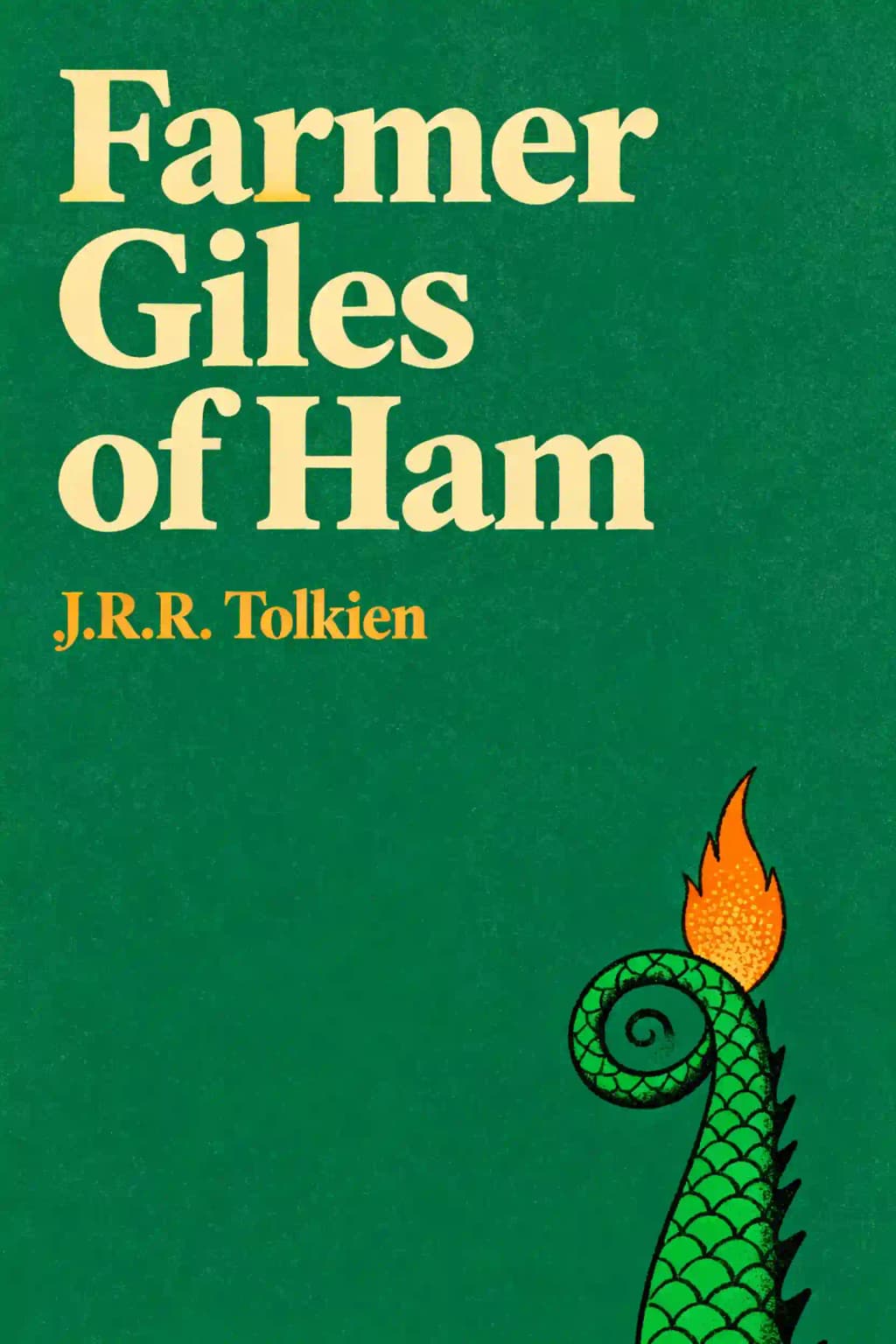
Farmer Giles of Ham stands as one of J.R.R. Tolkien's most delightful yet often overlooked works. Published in 1949, this medieval fable showcases Tolkien's linguistic playfulness and storytelling prowess outside his more famous Middle-earth legendarium. The book has garnered a dedicated following among literary scholars who appreciate its clever satire of heroic traditions and medieval romance. Though less commercially celebrated than The Hobbit or The Lord of the Rings, Farmer Giles has influenced modern fantasy writing with its subversive take on dragon-slaying narratives. Neil Gaiman has cited it as an inspiration for his own unconventional heroes, and the book remains a favorite among writers who appreciate Tolkien's linguistic humor. The tale's charm lies in its perfect balance of scholarly wit and accessible storytelling-a medieval adventure that feels both ancient and remarkably fresh.
Kapitel 2
The Little Kingdom: A Land Lost to Time
The Little Kingdom exists in that curious space between history and legend-a realm preserved only in fragments of tales and songs rather than in the sober pages of historical annals. This setting represents Tolkien's imaginative vision of Britain during its "dark period," a time after the legendary King Coel but before the arrival of King Arthur or the establishment of the Seven Kingdoms of the English. The Little Kingdom occupied a modest territory, with its capital nestled in the southeastern corner, never extending far up the Thames westward nor beyond Otmoor to the north, while its eastern borders remained somewhat ambiguous.
What makes the Little Kingdom so fascinating is how Tolkien positions it as a historical reality that has been largely forgotten, with only place names and fragmented legends remaining as evidence of its existence. This narrative technique-presenting fiction as recovered history-is one Tolkien employed throughout his works, most notably in his Middle-earth legendarium. It creates an immediate sense of authenticity and depth, suggesting layers of history beneath the surface of the tale.
The fragmentary legend of an outpost against the Middle Kingdom at Farthingho hints at political tensions and border conflicts that shaped this miniature realm. These details establish the Little Kingdom as a place with its own internal logic and historical context, however whimsical the subsequent tale might be. This careful world-building, even for a short story, demonstrates Tolkien's meticulous approach to creating fictional settings that feel lived-in and historically grounded.
The Little Kingdom serves as more than mere backdrop-it becomes a character in its own right, with its own personality expressed through its customs, language preferences, and political structures. As we'll see throughout the tale, this setting perfectly complements its protagonist: modest in scale but rich in character, overlooked by the grand narratives of history yet possessing its own quiet dignity and charm.
Kapitel 3
Giles of Ham: The Reluctant Hero's Beginnings
Farmer Giles of Ham begins his journey as the antithesis of the traditional fantasy hero. Unlike the knights and warriors who typically populate medieval tales, Giles is a simple farmer-practical, somewhat grumpy, and entirely uninterested in heroic adventures. He lives in the village of Ham, a peaceful place where the extraordinary rarely intrudes. Giles possesses no special talents or magical abilities; he's simply a man who knows his land and tends to his business with the pragmatism characteristic of rural life.
What makes Giles such a compelling character is precisely this ordinariness. He represents the everyday person suddenly thrust into extraordinary circumstances, armed with nothing but common sense and a healthy dose of self-preservation. His initial reluctance to embrace heroism feels refreshingly honest-who among us wouldn't hesitate before confronting a giant or dragon? This reluctance stands in stark contrast to the eager heroism of traditional tales, where knights actively seek out danger for glory's sake.
Giles's world is populated with equally colorful characters who ground the story in a sense of community. His dog Garm serves as both comic relief and a reflection of his master's status throughout the tale. Initially a rather ordinary dog given to exaggeration, Garm's transformation parallels Giles's own journey. The parson, the blacksmith, and the miller each represent different facets of village society, with their reactions to Giles's adventures revealing much about the social dynamics of Ham.
The village itself emerges as a character in its own right-a place where practical concerns outweigh romantic notions of chivalry and where a man's worth is measured by his ability to tend his fields rather than slay mythical beasts. This setting provides the perfect contrast to the more traditional medieval trappings that will later enter the story, highlighting the gap between everyday reality and heroic legend.
What's particularly delightful about Giles's character is how his fundamental nature never truly changes despite his extraordinary adventures. Even as circumstances thrust greatness upon him, he remains essentially the same practical farmer, approaching even the most fantastic situations with the same down-to-earth attitude that served him well in tending his fields. This consistency makes his eventual rise all the more satisfying-he conquers not by transforming into something he's not, but by applying his existing strengths to new challenges.
Kapitel 4
An Unexpected Visitor: The Giant Who Started It All
The peaceful routine of Ham is first disrupted not by the dragon who will later become central to the tale, but by a remarkably dim-witted giant. This enormous figure stumbles into the village's vicinity, carelessly trampling crops and causing general havoc-not out of malice but sheer obliviousness. The giant represents the first intrusion of the fantastical into Giles's ordinary world, setting in motion the chain of events that will transform the farmer's life.
What's particularly amusing about this giant is his complete lack of menace despite his tremendous size. Unlike the terrifying giants of many fairy tales, this one is portrayed as a bumbling fool who mistakes livestock for insects and causes destruction through incompetence rather than cruelty. When he later mistakes a dragon for mere horseflies, we see the perfect example of his profound disconnection from reality. This characterization serves multiple purposes in the narrative-providing comic relief while also establishing that in this world, even the most traditionally fearsome creatures have decidedly unheroic qualities.
Giles's confrontation with the giant establishes the pattern that will define his heroism throughout the story. Rather than facing the intruder with courage or skill, he simply happens to be in the right place at the right time, armed with his blunderbuss-a weapon he understands but which is mysterious and frightening to creatures of legend. His success comes not from bravery but from a combination of luck, practicality, and the element of surprise. The giant flees not because Giles has defeated him in honorable combat, but because he's startled and confused by the unfamiliar weapon.
This encounter earns Giles his first taste of fame and recognition, setting up one of the tale's central themes: the gap between actual events and how they're perceived by others. The villagers begin to see Giles in a new light, and tales of his "bravery" spread, growing more elaborate with each retelling. The farmer finds himself celebrated for qualities he doesn't actually possess and for intentions he never had. This ironic disconnect between reality and reputation will continue to drive the narrative forward.
The giant's intrusion serves as both catalyst and foreshadowing. His careless destruction prefigures the more serious threat of the dragon, while his humorous retreat establishes the pattern of Giles succeeding through circumstance rather than traditional heroic qualities. Most importantly, this encounter plants the seed of Giles's reputation-a reputation that will soon outgrow the man himself and draw him into adventures far beyond his comfortable farmstead.
Kapitel 5
Enter Chrysophylax: A Most Particular Dragon
Chrysophylax Dives is no ordinary dragon. His very name-meaning "gold-guardian wealthy" in Greek-reveals his primary motivation: the accumulation and protection of treasure. Unlike the mindlessly destructive giant, Chrysophylax is calculating, intelligent, and possessed of a distinctly individual personality. He represents a more sophisticated threat, one that cannot be scared away by a lucky shot from a blunderbuss.
This dragon embodies the perfect balance between traditional dragon tropes and surprising originality. He has all the expected draconic traits-fire-breathing, treasure-hoarding, and a taste for livestock-but these are complemented by unexpected qualities like his capacity for negotiation, his sense of honor (however flexible), and his ability to feel genuine emotions ranging from fear to grudging respect. He's both fearsome predator and sophisticated conversationalist, capable of terrorizing the countryside one moment and engaging in complex verbal bargaining the next.
Chrysophylax's arrival in the Little Kingdom marks a significant escalation of the fantastical elements in the story. While the giant was merely a bumbling nuisance, the dragon represents a genuine threat to life and property. His predations are systematic and intelligent, targeting the richest farms and most valuable livestock. Yet even in his destructiveness, there's a certain businesslike quality-he's not destroying for destruction's sake but rather to satisfy his appetite and demonstrate his power.
What makes Chrysophylax particularly fascinating is his capacity for growth throughout the narrative. He begins as a typical marauding dragon, confident in his invulnerability and contemptuous of humans. Yet his encounters with Giles force him to reassess these assumptions. He experiences fear, possibly for the first time, when confronted with Tailbiter. He learns to respect at least one human, however grudgingly. And ultimately, he forms a relationship with Giles that, while never exactly friendly, contains elements of mutual understanding that transcend the traditional dragon-slayer dynamic.
The introduction of Chrysophylax shifts the tale from simple village comedy to something more complex-a story about negotiation, power dynamics, and the unexpected connections that can form between natural enemies. His presence elevates Giles's journey from local curiosity to genuine legend, providing the farmer with an adversary worthy of the reputation he's reluctantly acquiring. Their relationship becomes the central axis around which the remainder of the story revolves, each forever changing the other's life in ways neither could have anticipated.
Kapitel 6
The Reluctant Quest: From Farmer to Dragon-tamer
When the king commands Giles to confront Chrysophylax, we witness the perfect collision between royal expectations and rural practicality. The court, steeped in romantic notions of chivalry, envisions Giles as the traditional dragon-slaying hero-brave, eager for glory, and skilled in combat. The reality, of course, is entirely different. Giles approaches his quest with all the enthusiasm of a man being sent to his certain death, which is exactly how he perceives the situation.
This reluctant quest inverts the traditional hero's journey. Rather than eagerly accepting the call to adventure, Giles tries every possible means to avoid it. He delays, makes excuses, and proceeds at the slowest possible pace. His companions-the "likely lads" from the village-share his lack of enthusiasm, creating a quest party that moves with deliberate inefficiency. This inversion serves both comic purposes and deeper thematic ones, highlighting the gap between heroic ideals and human reality.
The journey itself becomes a study in procrastination. Giles and his companions take every opportunity to rest, feast, and postpone their confrontation with the dragon. They follow the most indirect route possible, stopping at every village along the way. Yet this very reluctance paradoxically serves Giles well-by the time he finally reaches the dragon's lair, his reputation has grown to mythic proportions through the delay, with tales of his approach spreading far ahead of him.
What transforms this reluctant quest into something meaningful is the gradual shift in Giles's approach. While never becoming the traditional eager hero, he does begin to take ownership of his situation. The turning point comes with his acquisition of Tailbiter, the ancient sword that responds to his touch despite his lack of noble blood. This magical weapon represents the intrusion of genuine legend into Giles's practical world, suggesting that perhaps there is something special about this ordinary farmer after all.
Armed with Tailbiter and faced with the reality of Chrysophylax, Giles displays a surprising resourcefulness. Rather than attempting to slay the dragon outright-a task he knows is beyond his abilities-he engages in negotiation, leveraging his unexpected advantages to secure not just his own safety but a significant treasure. This approach represents a different kind of heroism-not the glory-seeking bravery of knights and champions, but the practical problem-solving of a man who understands his own limitations and works within them.
By the quest's end, Giles has neither transformed into a traditional hero nor remained entirely the same reluctant farmer. He's found a middle path, accepting the role thrust upon him while reshaping it to fit his own nature. His triumph comes not from conforming to heroic expectations but from subverting them entirely, creating a new template for success based on wit rather than warfare.
Kapitel 7
The Power of Reputation: How Legends Are Born
Throughout the tale, we witness the fascinating process by which an ordinary man becomes a legend. Giles's reputation consistently outpaces his actual deeds, growing more elaborate and impressive with each retelling. What begins as a lucky shot with a blunderbuss becomes, in village gossip, a deliberate and courageous confrontation. His reluctant journey to the dragon's lair transforms, in popular imagination, into an eager quest for glory. This gap between reality and perception forms one of the story's most insightful themes.
The power of reputation operates bidirectionally in the narrative. On one hand, it creates expectations that Giles must somehow fulfill, pushing him into situations he would otherwise avoid. The king's command that he confront Chrysophylax stems directly from the inflated tales of his courage against the giant. On the other hand, his growing reputation actually becomes a tool he can wield-the dragon fears him precisely because of the stories that have spread about his prowess, creating a self-fulfilling prophecy where perceived power translates into actual advantage.
This exploration of how legends are born feels particularly authentic because it captures the very real historical process by which ordinary events transform into myth through retelling. Each person who shares Giles's story adds their own embellishments, emphasizing certain aspects while downplaying others. The cumulative effect creates a narrative that serves the needs of the community-providing them with a hero during frightening times-regardless of its accuracy.
Particularly clever is how Giles himself relates to his growing legend. Initially bewildered and reluctant, he gradually learns to use his reputation strategically. When confronting Chrysophylax, he deliberately plays into the dragon's expectations, presenting himself with a confidence he doesn't entirely feel. This performance, combined with Tailbiter's genuine magic, convinces the dragon that Giles is indeed the mighty hero others believe him to be.
By the tale's conclusion, the line between Giles the farmer and Giles the dragon-tamer has blurred significantly. His legend has, in some ways, transformed the man himself-not by making him braver or more traditionally heroic, but by expanding his understanding of his own capabilities. He remains pragmatic and somewhat reluctant, yet he has learned to inhabit the role that circumstances and reputation have created for him, finding his own unique approach to heroism that incorporates both the legend and the reality.
Kapitel 8
The Economics of Dragon-taming: Treasure and Transformation
One of the most distinctive aspects of Farmer Giles is its surprisingly sophisticated treatment of economics. Unlike many fantasy tales where treasure serves merely as a symbol of victory, this story explores the practical implications of suddenly acquired wealth and the power dynamics it creates. The negotiations between Giles and Chrysophylax represent not just a battle of wits but a complex economic transaction, with both parties seeking to maximize their advantage.
The dragon's treasure becomes the fulcrum around which power shifts in the Little Kingdom. Initially, all wealth and authority rest with the king, whose demands Giles must obey despite his reluctance. The acquisition of Chrysophylax's treasure fundamentally alters this dynamic, providing Giles with the resources to establish his independence. He uses this wealth strategically-building a magnificent hall, equipping a private force of men-at-arms, and creating a power base that ultimately allows him to challenge royal authority.
What makes this economic narrative particularly satisfying is how it intertwines with questions of merit and desert. The king, who contributed nothing to the dragon's defeat beyond lending a sword he never expected to see again, feels entitled to the majority of the treasure. Giles, who faced actual danger and used his wits to secure the wealth, naturally feels otherwise. This conflict highlights broader questions about who truly deserves the fruits of labor and risk-those who perform the work or those who claim authority over them.
The transformation of Ham itself reflects these economic changes. From a simple farming village, it evolves into "Tame" (without an h, despite scholarly protests), the chief town of a new realm. This linguistic shift mirrors the community's rising status, just as "Aula Draconaria" (Dragon Hall) reflects Giles's personal elevation. Even the corruption of "Worminghall" to "Wunnle" in later times speaks to how prosperity rises and falls, with villages retreating "from their former glory" as economic fortunes change.
Perhaps most interesting is Chrysophylax's own economic journey. Initially introduced as "Chrysophylax Dives"-literally "wealthy gold-guardian"-the dragon's identity is inextricably linked to his treasure. The loss of this wealth represents not just material deprivation but an existential threat to his self-conception. His continued growth while in captivity (dragons growing "like trees throughout their lives") creates further economic pressure, as he becomes "increasingly expensive to feed." These practical considerations ultimately lead to his release, demonstrating how economic realities shape even the most fantastical elements of the story.
Through this economic lens, the tale reveals itself as not just a dragon story but a meditation on how wealth transforms both individuals and communities, creating new power structures and possibilities while bringing its own complications and responsibilities.
Kapitel 9
From Farmer to King: The Reign of Aegidius Draconarius
The transformation of Giles from simple farmer to King Aegidius Draconarius represents the culmination of his unlikely journey. This elevation completes the inversion of traditional hierarchies that runs throughout the tale-the commoner becomes ruler, practical wisdom trumps aristocratic privilege, and a dragon-tamer establishes a new order based on merit rather than birthright. Yet even in this transformation, Giles retains the essential qualities that defined him from the beginning.
His royal court reflects this blend of elevation and authenticity. Unlike traditional monarchs, Giles favors the "vulgar tongue" over Book-Latin, maintaining a connection to his roots even as he assumes greater authority. His creation of the Wormwardens-a new order of knighthood with the dragon as their emblem-demonstrates his understanding that new circumstances require new traditions rather than simple imitation of old ones. By elevating the "twelve likely lads" to senior positions within this order, he rewards loyalty while ensuring his administration remains grounded in practical experience rather than abstract theory.
Queen Agatha's transformation parallels her husband's, though in characteristically different ways. She grows "imposing in stature" and maintains "strict control of the household accounts," her practical management skills scaling up from farm to kingdom. The humorous observation that there was "no getting round her" as "it was a long walk" maintains the tale's light-hearted tone while acknowledging her significant influence in the new regime.
What makes Giles's reign particularly noteworthy is his approach to governance. The observation that he established a court "where merit was often rewarded" suggests a break from traditional medieval power structures based solely on birth and inheritance. His generous treatment of supporters-elevating the parson to bishop, the blacksmith to undertaker, and the miller to royal servant-demonstrates both loyalty and political shrewdness, creating a network of allies with vested interests in his continued success.
Even his more questionable policies reveal a practical understanding of power. Making milling a royal monopoly secures an important revenue stream, while outlawing "unpleasant prophecy" protects his regime from challenges cloaked in religious authority. These measures, while not entirely benevolent, show Giles applying the same pragmatic approach to kingship that he previously applied to farming and dragon-taming.
The white beard that grows down to his knees serves as a visual symbol of his transition from reluctant hero to established monarch, connecting him to traditional imagery of wise rulership while maintaining his distinctive character. Throughout his reign, Giles demonstrates that wisdom often consists not in dramatic transformation but in applying existing strengths to new circumstances-remaining essentially himself while adapting to dramatically changed conditions.
Kapitel 10
Full Circle: The Dragon Returns Home
The tale reaches a satisfying conclusion with Chrysophylax's eventual release and return to his mountain lair. This resolution brings the narrative full circle while avoiding the simplistic "happily ever after" ending common to many fairy tales. Instead, it offers a more nuanced conclusion that acknowledges both change and continuity in the lives of its characters.
Chrysophylax's release stems from practical considerations rather than sentimentality-he has grown "increasingly expensive to feed" as dragons continue to "grow like trees throughout their lives." This detail reinforces the story's consistent attention to practical matters even in its most fantastical elements. The parting between dragon and dragon-tamer with "mutual expressions of esteem" and a "non-aggression pact" resembles nothing so much as a diplomatic agreement between nations, elevating what began as a confrontation between farmer and predator to something approaching a relationship between equals.
The dragon's return journey beautifully illustrates how his experiences have changed him while his essential nature remains intact. His wings are "stiff from disuse" and his body "enlarged," physical manifestations of his time in captivity. Yet when he discovers a young usurper occupying his cave, his response is traditionally draconic-a battle that "reportedly echoed throughout Venedotia" followed by devouring his defeated opponent. This act allows him to feel his "humiliation somewhat assuaged," suggesting that while he has developed a grudging respect for Giles, he remains fundamentally a dragon with a dragon's pride and appetites.
The final confrontation with the "tall, stupid giant who had started the whole affair" provides perfect narrative closure, connecting the end of the tale to its beginning. The giant's confused response when reminded of the blunderbuss-"I thought it was horseflies!"-highlights both his continued dimwittedness and the extraordinary chain of consequences that flowed from his initial mistake. What began with a case of mistaken identity has transformed an entire kingdom, elevated a farmer to royalty, and humbled a dragon-yet the giant remains unchanged, as oblivious at the story's end as he was at its beginning.
This conclusion suggests that while some characters are transformed by their experiences, others remain fixed in their nature. Giles has grown from farmer to king, Garm from ordinary dog to collar-wearing aristocrat of the canine world, and even Chrysophylax has developed a capacity for respect toward at least one human. Yet the giant remains exactly as he was-a reminder that not all characters are equally capable of growth and change.
The tale thus ends with a new equilibrium established-Giles rules his kingdom, Chrysophylax returns to his treasures and territorial disputes, and the giant remains confused by a world too complex for his understanding. This resolution feels satisfying precisely because it acknowledges both the transformative power of extraordinary events and the persistent pull of essential nature-a balance that reflects the sophisticated wisdom underlying this seemingly simple tale.