Kapitel 1
Wisdom Bombs From Tech's Ultimate Futurist
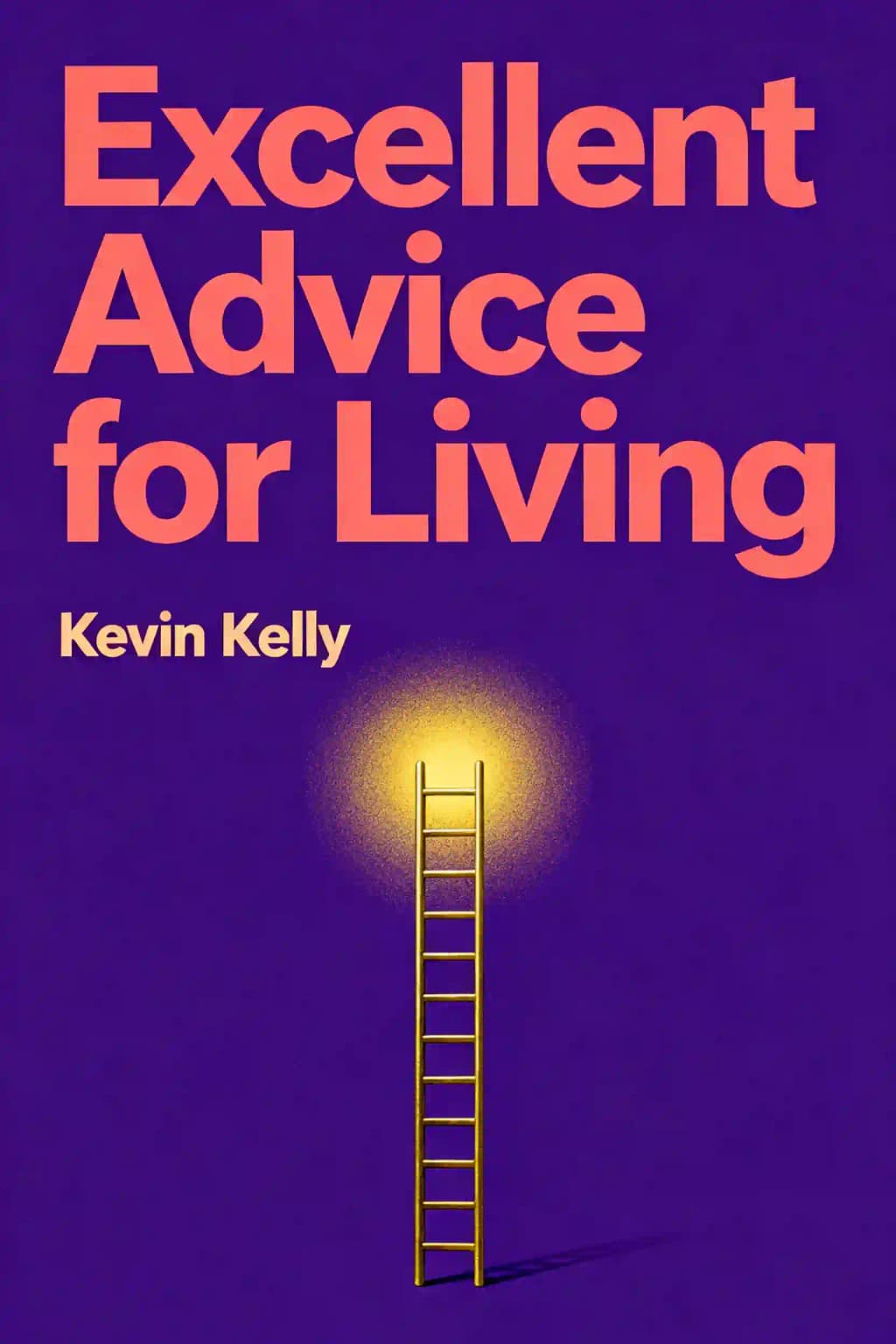
Ever wonder why a founding editor of WIRED magazine - a man who's advised companies like Apple and Airbnb - still keeps a paper notebook in his pocket? Kevin Kelly's "Excellent Advice for Living" distills 68 years of extraordinary insight into bite-sized wisdom that feels like getting mentored by the world's most optimistic tech philosopher. This collection of 450 life-changing maxims emerged from Kelly's annual birthday tradition of sharing his hard-won lessons with millions of followers. What makes this book revolutionary isn't just Kelly's uncanny ability to predict technological shifts (he foresaw the importance of the internet in 1989), but how he humanizes our relationship with technology while never losing sight of what truly matters: connection, meaning, and joy. Whether you're navigating career crossroads, relationship challenges, or simply seeking clarity in our complex world, Kelly offers the rare combination of future-forward thinking and timeless wisdom. These aren't just life hacks - they're perspective-altering insights from someone who has consistently seen around corners before anyone else.
Kapitel 2
The Art of True Wealth Beyond Money
Wealth, in its truest form, transcends the simple accumulation of money. It's about mastering the art of resource management - both financial and personal. Consider how often we chase after more when what we really need is better stewardship of what we already possess. Kelly suggests that real financial growth stems not from constantly seeking more income but from making informed decisions with what you have and maintaining disciplined habits.
Communication plays a surprising role in building wealth. The strategic use of silence - knowing when to pause before responding - creates space for impact. These moments of restraint often carry more weight than hastily delivered words. This principle applies equally to negotiations, relationships, and leadership.
Skills development represents another form of wealth accumulation. Rather than fixating on possessions, focus on cultivating abilities that enhance your value to others and yourself. The carpenter who masters their craft, the writer who refines their voice, the manager who develops emotional intelligence - all are building wealth through capability rather than currency.
Connection forms perhaps the most overlooked aspect of wealth. The quality of your relationships - professional networks, friendships, family bonds - constitutes a form of richness that no bank statement can reflect. When you invest time in meaningful relationships, you're diversifying your portfolio of happiness.
The essence of true wealth ultimately lies in clarity of purpose. Without knowing what matters most to you, no amount of money brings satisfaction. By aligning your resources with your values, you experience abundance regardless of your financial situation. This perspective shift - from having to being - transforms how you experience life's journey and the choices you make along the way.
Kapitel 3
Embracing Criticism: The Counterintuitive Path to Growth
Seeking criticism early - before completion - represents one of life's most powerful yet underutilized growth strategies. When we invite feedback during the process rather than after, we create space for meaningful improvement. This approach requires humility but yields tremendous dividends in personal and professional development.
The discomfort of watching or listening to recordings of yourself speaking offers another powerful growth mechanism. That initial cringe reaction provides valuable data about how others perceive you and highlights opportunities for refinement that would otherwise remain invisible. The temporary discomfort pales in comparison to the lasting benefits of self-awareness.
When facing problems, consider Hanlon's razor: never attribute to malice what can be adequately explained by incompetence. This mental model prevents unnecessary conflict and preserves relationships that might otherwise be damaged by misattributed intentions. Most people aren't plotting against you - they're simply making mistakes, just as you do.
Worry represents another growth obstacle worth examining. How often do the catastrophic scenarios you imagine actually materialize? The mental energy expended on anxiety rarely produces useful outcomes. Instead, channel that energy toward constructive action or deliberate relaxation.
The careful management of promises accelerates growth. Make them sparingly and ensure they can be comfortably kept. Your credibility - with others and yourself - depends on alignment between words and actions. When you do promise something, deliver more than expected rather than falling short.
Proper apologies contain three essential elements: expressing genuine regret, taking full responsibility without qualification, and offering a specific remedy. This formula transforms mistakes from setbacks into opportunities for strengthening relationships and demonstrating integrity. The ability to apologize effectively distinguishes those who continue growing from those who stagnate.
Kapitel 4
The Paradox of Change: Why Big Leaps Outperform Small Steps
Counterintuitively, large changes often prove more attainable than small ones. When we make modest adjustments, our existing patterns exert tremendous gravitational pull, drawing us back to familiar territory. But radical shifts - changing careers, moving cities, transforming habits - create clean breaks that make reverting to old ways more difficult.
This paradox appears throughout life. Consider how difficult it is to slightly modify a morning routine versus completely redesigning it. The small change fights against established neural pathways, while the complete redesign creates new ones. Similarly, organizations often find incremental improvements harder to sustain than transformative initiatives that engage people's imagination and commitment.
Everyone improvises - this realization liberates us from perfectionism's paralysis. The polished professional you admire, the seemingly flawless parent, the confident public speaker - all are figuring it out as they go. Understanding this universal truth allows you to focus on progress rather than perfection, reducing the anxiety that accompanies change.
Your perception dramatically influences outcomes, particularly regarding setbacks. Those who view obstacles as temporary rather than permanent experience greater resilience and perceive themselves as "luckier." This mindset difference explains why some people bounce back quickly while others remain stuck after similar challenges.
Developing a unique offering - something distinctly yours - diminishes the necessity of traditional credentials. When you create value in ways others cannot, formal qualifications become secondary to demonstrated results. This principle applies whether you're an entrepreneur, employee, or artist. The question becomes not "What are your qualifications?" but "What can you uniquely contribute?"
Curiosity about seemingly uninteresting topics often yields unexpected rewards. The willingness to engage with subjects outside your established interests creates cross-disciplinary insights that can transform your thinking. Some of life's most valuable discoveries happen at these intellectual intersections, where different domains of knowledge connect in surprising ways.
Kapitel 5
The Psychology of Connection: Understanding Human Dynamics
Human connection operates according to fascinating psychological principles. Consider how mirroring another person's body language can defuse tension during disagreements. This subtle technique creates unconscious rapport that makes resolution more likely. Without saying a word, you signal understanding and empathy through physical alignment.
Recognizing potential deception sometimes hinges on understanding projection. Those who believe others regularly steal may themselves have stealing tendencies. This insight applies beyond theft to various behaviors - people often project their own tendencies onto others, revealing their internal landscape through their accusations.
Virtual meeting fatigue stems partly from constantly seeing yourself on screen. Reducing self-view during video calls alleviates this exhaustion by removing the unnatural experience of watching yourself interact. This simple adjustment makes digital communication more sustainable and less draining.
Understanding an author's influences by reading their favorite books provides a deeper comprehension than studying their work in isolation. This principle extends beyond literature - examining the influences of any creator reveals the intellectual lineage shaping their contributions. We understand people better when we understand what shaped them.
Decision-making improves dramatically when focused on long-term gain rather than immediate gratification. This temporal perspective shift explains why some people consistently make choices that compound positively while others remain trapped in cycles of short-term thinking. The ability to delay gratification correlates strongly with success across domains.
Ideas remain pristine until expressed, which is both their beauty and limitation. Capturing thoughts in tangible form - writing, sketching, prototyping - brings them closer to reality while inevitably transforming them. This transition from internal to external represents a crucial step in creation, even as it reveals the gap between conception and execution.
Kapitel 6
The Currency of Trust: Building and Preserving Credibility
Trust builds slowly but can dissipate instantly - much like a savings account that takes years to build but can be emptied in moments. This fundamental asymmetry explains why reputations require consistent, long-term investment yet can be destroyed through single actions or missteps. Understanding this dynamic helps leaders and individuals prioritize decisions that might impact credibility. Before acting, consider: "Is this worth risking the trust I've worked so hard to build?" This question becomes particularly crucial in high-stakes situations where short-term gains might tempt compromise.
Balanced reviews provide more reliable assessments than extremely positive or negative ones, reflecting the complex reality of most situations. Nuanced perspectives that acknowledge both strengths and weaknesses demonstrate thoughtful evaluation rather than emotional reaction. For example, a product review that discusses both beneficial features and areas for improvement offers more value than one expressing blind devotion or complete dismissal. When you encounter uniformly glowing or scathing reviews, approach them with healthy skepticism about their completeness and potential hidden agendas. Look for specific examples and concrete details rather than generalizations.
Requesting what you want - directly and clearly - dramatically increases your chances of success, yet many people hesitate to voice their needs. Many opportunities remain unrealized simply because people fail to articulate their desires, often due to fear of rejection or appearing demanding. This applies in professional settings (asking for promotions or resources), relationships (expressing emotional needs), and everyday interactions (requesting help or clarification). The willingness to voice your needs represents a simple yet powerful life skill that distinguishes effective leaders and communicators. Studies show that direct requests are granted significantly more often than indirect hints or implications.
Active listening creates the perception of being an excellent conversationalist while building genuine understanding. When you focus fully on understanding others rather than planning your next statement, you create meaningful connection while gathering valuable information. This involves maintaining eye contact, asking clarifying questions, and providing thoughtful responses that build upon what was shared. Ironically, speaking less often makes you more memorable in conversation because people remember how you made them feel understood and valued.
Curiosity disrupts certainty, creating space for expanded perspectives and innovation. When you approach situations with questions rather than assumptions, you discover nuances that would otherwise remain hidden. This habit prevents intellectual stagnation while building bridges to different viewpoints. Effective leaders cultivate curiosity by regularly asking "What if?" and "Why?" questions, encouraging team members to challenge existing assumptions and explore new possibilities. This approach leads to better problem-solving and more creative solutions.
A friend wanting nothing in return exemplifies genuine connection in its purest form. While relationships built on mutual benefit certainly have value in professional and social contexts, those rare connections without agenda or expectation represent friendship at its most authentic. These relationships serve as anchors during life's inevitable storms, providing emotional support and stability when other connections might waver. True friends celebrate your successes without envy and support you through failures without judgment. Research shows that having even one or two such genuine friendships significantly impacts long-term well-being and resilience.
Kapitel 7
Investing in Quality: Where to Allocate Resources
Life's quality depends significantly on where you direct your resources - both financial and attentional. Consider how much time you spend on chairs and in beds throughout your lifetime. These items justify quality investments precisely because they support your body during most waking and sleeping hours. The principle extends beyond furniture to anything you use daily.
Art displayed in your home should be memorable enough that your children will remember it decades later. This standard encourages thoughtful curation rather than decorating with forgettable pieces. What surrounds you shapes your perception, so choose visual elements that inspire, challenge, or comfort in meaningful ways.
Improving efficiency by just 1% daily compounds dramatically over time. This seemingly modest goal - being slightly better today than yesterday - creates exponential growth when sustained. After a year of such improvements, you're not 365% better; you're 37 times more effective due to compounding.
Asking children who they helped today rather than what they learned emphasizes compassion alongside achievement. This simple question shift communicates values more effectively than lectures about kindness. Children internalize what we consistently emphasize through our inquiries and attention.
Happiness killers like comparison deserve vigilant avoidance. Measuring your journey against others' visible successes creates unnecessary suffering while providing no useful data. Each path is unique, with different starting points, resources, and objectives. The only meaningful comparison is between your present and past self.
Your twenties represent an ideal time for bizarre, risky pursuits that might yield lifelong inspiration. This decade offers a unique combination of independence, resilience, and freedom from major responsibilities that makes exploration particularly valuable. The experiences accumulated during this period often inform creativity and perspective for decades to follow.
Kapitel 8
Identity and Growth: Defining Yourself Wisely
Defining identity through values rather than opinions keeps the mind open and adaptable. When your core sense of self attaches to how you approach life rather than specific positions, you can evolve your thinking without identity threat. This distinction allows for intellectual flexibility while maintaining personal coherence.
Success hinges more on focusing on process than fixating on outcomes. When you direct attention toward consistent actions rather than results beyond your control, you build sustainable progress. The runner who concentrates on training rather than winning, the writer who prioritizes daily words over bestseller status - both exemplify this wisdom.
Ideal partners challenge growth through productive disagreement. Relationships that never experience conflict often lack depth, while those featuring thoughtful disagreement create opportunities for mutual development. The key lies in disagreeing respectfully, focusing on ideas rather than attacking character.
Open hearts pave the way to open minds. Emotional receptivity precedes intellectual flexibility. When we approach others with genuine warmth and acceptance, we create conditions where perspectives can be exchanged without defensiveness. This sequence - heart before mind - explains why logical arguments alone rarely change entrenched positions.
Stagnation signals the need for exploration into unknown territories. When life feels flat or uninspiring, the remedy often involves stepping beyond familiar boundaries. New environments, relationships, skills, or challenges create friction that sparks growth. Comfort, while pleasant, rarely catalyzes development.
Curiosity about opposing viewpoints sometimes shifts your own perspective. By genuinely seeking to understand positions you disagree with, you might discover nuances that transform your thinking. Even when your fundamental position remains unchanged, this practice develops intellectual empathy and more sophisticated reasoning.
Kapitel 9
The Collective Power: Moving Beyond Individual Achievement
Solo pursuits may be swift, but collective endeavors achieve enduring, far-reaching impact. While individual action allows for quick decisions and clear direction, collaboration harnesses diverse perspectives and resources that amplify results. The tension between individual agency and collective power represents one of life's fundamental balances.
Without genuine care for people, their motivation diminishes. Leadership, teaching, parenting - all require authentic concern for others' wellbeing and development. Technical expertise without human connection produces compliance at best, resistance at worst. The most effective influencers combine competence with compassion.
Encouraging unique contributions accelerates meeting efficiency. When each participant offers distinct perspectives rather than echoing established positions, groups make better decisions in less time. This principle applies in boardrooms, classrooms, and family discussions alike. Diversity of thought, properly harnessed, creates both better outcomes and greater engagement.
Differentiating riches from wealth emphasizes time over money. Financial abundance coupled with time poverty represents a hollow victory. True prosperity includes the freedom to allocate your hours according to your values rather than external demands. This distinction explains why some with modest incomes experience greater satisfaction than those with substantial wealth but limited autonomy.
A relaxed, post-laughter portrait yields the best captures. This seemingly specific photography tip reveals a broader truth: authenticity emerges when we're at ease rather than performing. Whether in photographs, conversations, or creative work, our most compelling expressions often follow moments of genuine enjoyment rather than forced effort.
Responsibility expansion mirrors true growth. As your capacity increases, so should your willingness to take ownership of larger challenges and their outcomes. This progression - from managing yourself to leading others to shaping systems - represents a natural evolution that both reflects and furthers personal development.
Kapitel 10
Embracing Life's Rhythms: Work, Rest, and Renewal
Weekly sabbaths without work rejuvenate energy and productivity. Regular intervals of complete disengagement - whether religious or secular - create necessary space for recovery and perspective. This counter-cultural practice of deliberate rest paradoxically enables greater accomplishment during active periods.
Embracing pronoia - believing the universe conspires for your success - creates a positive lens through which opportunities become more visible. This perspective shift doesn't guarantee outcomes but enhances your ability to recognize and capitalize on favorable circumstances. The optimist sees possibilities the pessimist misses, even when facing identical situations.
Opting for choices that multiply opportunities rather than limit them represents strategic wisdom. Each decision either expands or contracts your future options. By consistently selecting paths that create more possibilities rather than fewer, you build momentum and flexibility that serve you throughout life's journey.
Beginning by completing unfinished tasks creates psychological space for new initiatives. Lingering projects drain mental energy even when you're not actively working on them. Clearing these incomplete items - whether minor administrative tasks or major creative endeavors - liberates attention and reduces background stress.
When stuck, listing impossible solutions often reveals viable approaches. This counterintuitive technique bypasses conventional thinking by temporarily removing practical constraints. Once freed from immediate feasibility concerns, your mind explores creative territories that might contain breakthrough ideas worth adapting to reality.
Cherishing these golden years - whatever your current age - acknowledges that every period of life offers unique lessons and opportunities. Youth provides energy and possibility, middle age brings capacity and perspective, later years offer wisdom and integration. Each stage contains its particular gifts, available only when we recognize their value.
Kapitel 11
The Art of Living: Finding Wonder in the Everyday
Delay serves as the best antidote for anger. Time creates distance between emotional triggers and responses, allowing wisdom to emerge. This simple practice - pausing before reacting - prevents countless regrettable actions while preserving relationships and dignity. The space between stimulus and response contains our greatest power.
By re-visioning the mundane, everyday details transform into art's wonder. The practice of seeing familiar surroundings with fresh attention reveals beauty and significance in ordinary moments. This perceptual shift requires no special circumstances - only the willingness to look at the world as if encountering it for the first time.
Aspiring to spend your fortune while alive maximizes joy and impact. Resources deployed during your lifetime allow you to witness their effects and adjust your approach based on results. Whether financial assets or personal gifts like time and attention, conscious allocation during your lifetime creates more meaning than posthumous distribution.
Showing patience for the elderly acknowledges they reflect your future self. The consideration you extend to older individuals represents an investment in the world you'll eventually inhabit. This perspective transforms potentially frustrating interactions into opportunities for compassion and learning.
Cultivating easy family rituals creates traditions that grow legendary with anticipation. Simple practices - Sunday morning pancakes, annual camping trips, bedtime stories - gain significance through repetition and shared meaning. These touchpoints provide stability during life's inevitable changes while building family identity and connection.
Staying astonished prevents aging at the deepest level. Wonder keeps perception fresh and engagement high regardless of chronological years. Those who maintain curiosity and appreciation experience continued growth while those who succumb to cynicism or indifference age prematurely, even if physically vital.
Prioritizing art over chores acknowledges that beauty and meaning ultimately matter more than perfect order. While responsibilities require attention, elevating creative expression - whether making or appreciating art - ensures life contains inspiration alongside obligation. This balance prevents existence from narrowing into mere maintenance.
Most regrets stem from inaction rather than action. The paths not taken, words unspoken, and risks avoided typically generate more lasting regret than mistakes made while actively engaging with life. This insight encourages courageous participation over cautious observation. The aim is reaching life's end fulfilled by having lived fully rather than safely, with wisdom accumulated through experience rather than avoidance.