Kapitel 1
Streets of Danger: Where Survival Meets Betrayal
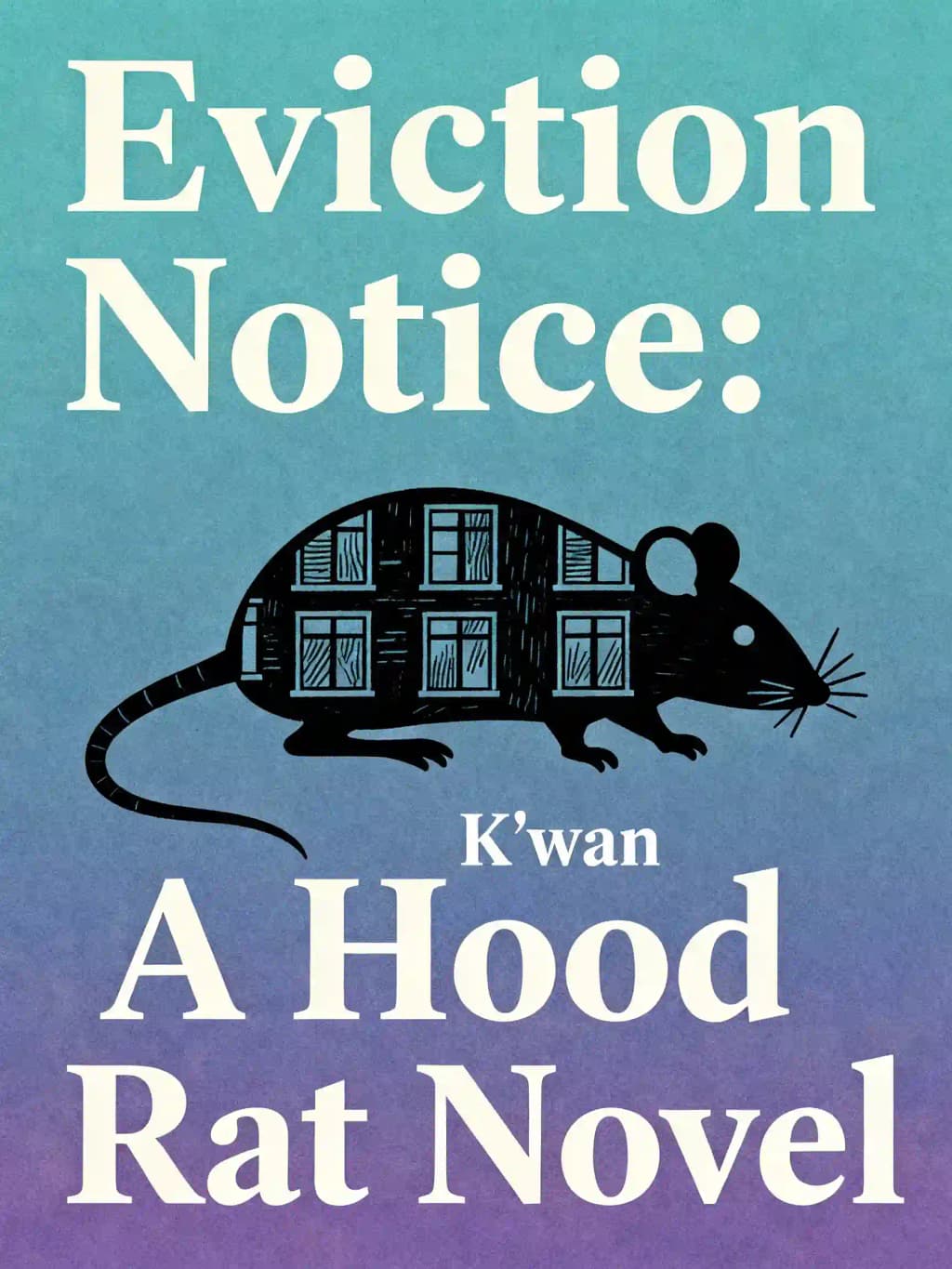
Eviction Notice is a gritty urban thriller that has captivated readers since its release, earning its place among the most influential street literature of the past decade. Author K'wan, often called the "hood lit maestro" by publications like The New York Times, delivers a raw portrayal of Harlem's underworld that has resonated with millions of readers worldwide. The novel has achieved cult status among hip-hop artists-Jay-Z and 50 Cent have both referenced it in interviews-and its authentic portrayal of urban life has made it required reading in several university urban studies programs. What makes this book particularly compelling is how it weaves together multiple character perspectives to create a tapestry of street life where loyalty, betrayal, and survival collide in unexpected ways.
Kapitel 2
The Ruthless Empire of Big Dawg Entertainment
The story opens with a chilling demonstration of power as Murder, a once-promising artist demanding his rightful royalty payments, confronts Don B., the notorious head of Big Dawg Entertainment. The confrontation ends violently when Murder is savagely beaten and thrown through plate glass doors by Don's imposing bodyguard Devil, who coldly explains this is "clause zero-three-one" of Murder's contract - a brutal reminder that in this world, legal agreements carry lethal consequences. The incident, witnessed by terrified office staff and aspiring artists in the lobby, cements Big Dawg Entertainment's reputation as a label where disputes are settled with fists rather than lawyers.
Don B.'s rise to power reads like a modern noir tale. Starting as a small-time producer in the city's underground scene, he built his empire through a combination of musical instinct and ruthless business practices. His label is linked to numerous unsolved murders, including his former best friend True, who was found shot execution-style after threatening to start a rival company, and the chart-topping group Bad Blood, whose members disappeared after a contract dispute. The police investigations consistently hit dead ends, with witnesses suddenly developing amnesia or relocating to distant cities.
Don B. perfectly embodies the dangerous intersection of music and criminality, wearing custom Italian suits to industry galas while allegedly ordering hits from his penthouse office. His empire operates with stunning impunity, protected by both his considerable wealth and the paralyzing fear he inspires. He's cultivated a network of corrupt officials, compromised journalists, and street soldiers who ensure his business runs smoothly. The music industry portrayed isn't just about talent and entertainment-it's a battlefield where contracts are enforced with violence and artists are disposable commodities, their careers and lives hanging by threads controlled by Don's whims.
The label's hierarchy is precisely defined, with Don B. at the apex, surrounded by loyal enforcers like Devil, his massive head of security with a military background, and Tone, his smooth-talking but deadly business manager. These lieutenants maintain Don's position through calculated intimidation and strategic violence, making examples of anyone who challenges the established order. Their methods range from economic destruction to physical elimination, with each enforcer specializing in different forms of persuasion.
The mysterious case of Animal, Big Dawg's most infamous artist, adds another layer of darkness to the label's reputation. After being arrested for multiple murders, including a rival producer and two aspiring rappers, Animal escaped custody under suspicious circumstances, creating an urban legend that haunts the narrative. His absence creates both opportunity and danger in the industry ecosystem. While new artists like the charismatic Blaze are brought in to fill the commercial void, various rivals attempt to capitalize on the perceived weakness in Don's organization, leading to a series of increasingly violent confrontations.
This opening establishes a world where violence isn't just a means to an end-it's the fundamental language of business, the currency of respect, and the foundation upon which music empires are built. The industry portrayed here isn't about artistic expression or cultural contribution but about raw power and absolute control, with artists and executives alike participating in a deadly game where success is measured in survival and every contract potentially becomes a death warrant.
Kapitel 3
The Rising Threat: King James Stakes His Claim
In the projects of Harlem, a new force emerges in the form of King James, a charismatic and ruthless young man determined to carve out his own territory. Standing nearly six feet tall with "Peace God" tattooed across his chest and a gold medallion with a crescent moon and diamond-filled number 7, King James embodies a new generation of ambitious criminals. Unlike the established powers who maintain a veneer of legitimacy, King James embraces the raw violence of the streets, declaring "there's never been a nigga on the streets like me and there never will be."
His rise to power is marked by calculated brutality. In a particularly chilling scene, King James and his crew ambush a local dealer named Johnny-O. When Johnny-O threatens them with retaliation from his boss Born, King reveals Born's bloody chain medallion, showing he's already eliminated the competition. After executing Johnny-O, King kills his own informant Fangs, explaining, "He who recognizes a snake and still invites it into his home is a fool."
What makes King James particularly dangerous is his combination of street intelligence and unbridled ambition. He understands the politics of the streets, noting how territory was once fairly distributed under old-school leaders like Tommy Gunz and Poppa Clark. But rather than respecting these established boundaries, he sees opportunity in the changing landscape, particularly when he learns that Shai Clark, the son of Poppa Clark, is claiming territory in Harlem.
King surrounds himself with loyal soldiers like Lakim and Dump, creating a crew bound by both friendship and business. His relationship with his girlfriend Sahara reveals his possessive nature and quick temper, as seen when he savagely beats a man named Lamar for disrespecting him at the projects. This volatile combination of ambition, intelligence, and violence makes King James not just another player in Harlem's criminal ecosystem, but a disruptive force challenging the established order.
The tension between King James and Shai Clark represents a generational conflict in the criminal underworld-the old guard with its business-like approach to crime versus a new breed of gangster who embraces chaos and spectacle. This collision course sets the stage for the violence that will eventually engulf all the characters in the story.
Kapitel 4
Three Women, One Eviction Notice
At the heart of the novel are three women whose lives become intertwined by circumstance and a shared predicament. Porsha, Sahara, and Frankie-roommates in a Harlem apartment-find themselves facing eviction when they discover they're three months behind on rent. Each woman brings her own complex history and survival strategies to their shared crisis.
Porsha stands 5'7" with brown skin, a funky short haircut, and a confident swagger that commands attention. Born in Brooklyn, her life improved when her mother married a military man, but her rebellion led to pregnancy by a man sentenced to prison. When her stepfather gave her an ultimatum to abort or leave home, she chose independence, only to suffer a miscarriage and fall into depression. Now pursuing education while working as a dancer, she relies on her striking looks and natural confidence to make money.
Sahara, King James's on-again off-again girlfriend, enjoys elevated social status through her association with the rising gangster. Despite having her own apartment in the Douglass projects, she spends considerable time in Grant projects with King. Their relationship reveals her conflicted nature-sometimes flattered by his jealousy, other times stifled by his controlling behavior.
Frankie, a professional shoplifter or "booster," learned her trade from her estranged father. She can steal hundreds of dollars of merchandise in under 90 seconds, a skill that provides her irregular income. When the roommates discover their eviction notice, they learn that Frankie had been giving their rent money to Debbie, their sublease holder, in cash instead of money orders, leaving them without receipts when Debbie pocketed the money instead of paying Housing.
The eviction notice becomes the catalyst that drives each woman to desperate measures. Their shared apartment represented more than just shelter-it was a sanctuary from the harsh realities of the streets, a place where they could maintain some semblance of normalcy despite their unconventional lives. Faced with losing this sanctuary, each woman must decide how far she's willing to go to survive.
What makes their story particularly compelling is how their different approaches to the same crisis reveal their characters. Porsha leverages her beauty and dancing skills, setting her sights on Don B. as a potential savior. Sahara clings tighter to King James, hoping his street success will provide security. And Frankie makes the fateful decision to enter the drug trade, approaching the notorious Cutty for product to sell-a choice that will have devastating consequences.
Kapitel 5
The Return of Animal: A Shadow Over Harlem
While the main narrative unfolds in Harlem, parallel chapters reveal that Animal-the infamous escaped fugitive connected to Big Dawg Entertainment-is alive in Puerto Rico. Working as an enforcer for an organization called Los Negros Muertes under the leadership of K-Dawg, Animal has built a new life far from New York. Yet his legendary status continues to cast a long shadow over the streets he left behind.
Animal's scenes in Puerto Rico reveal a man of extraordinary violence tempered by unexpected moments of principle. During a mission to eliminate a target named Cruz, Animal displays brutal efficiency, beheading Cruz to claim a million-dollar bounty. Yet when another enforcer named Sincere attempts to rape a teenage girl found hiding in Cruz's compound, Animal intervenes, thinking of someone named Mimi from his past. This intervention leads to a confrontation that ends with K-Dawg shooting Sincere dead, demonstrating the precarious balance of loyalty and morality in their world.
Despite his success in Puerto Rico, Animal remains haunted by what he left behind in New York, particularly his relationship with Gucci. In a poignant scene in an abandoned church, he confesses to Sonja, a woman who loves him, that Gucci's absence has left "a hole in his soul that will never heal." When Sonja reveals that Gucci may have been hurt or killed in a shootout, Animal immediately decides to return to New York despite the dangers he faces as a fugitive.
Animal's impending return creates a sense of foreboding throughout the narrative. Detective Brown, who obsesses over cold cases connected to Animal, believes he's still alive despite his partner Alvarez urging him to let it go. Meanwhile, Ashanti-a young criminal who once ran with Animal-refuses to believe rumors of his death, maintaining a fierce loyalty to his absent mentor.
The mythology surrounding Animal serves as both contrast and context for the current players in Harlem's underworld. King James's ambition and Don B.'s ruthlessness are measured against the legend of Animal, whose reputation for violence is matched only by his reputation for loyalty. As the narrative progresses, the question of whether Animal will return becomes increasingly urgent, with the potential to upset the delicate balance of power that has emerged in his absence.
Kapitel 6
Dangerous Ambitions: The Price of Dreams
Throughout the novel, characters pursue their ambitions with a desperation born of limited options, each paying a different price for their dreams. Porsha's pursuit of a better life leads her to Don B., whose sophisticated facade masks a predatory nature. Their evening begins with dinner at a French restaurant where he impresses her by translating the menu, but ends in horror when he drugs her drink and sexually assaults her while she's semi-conscious. The scene is particularly devastating as Porsha sees someone else enter the bathroom before she passes out, suggesting Don B. planned to share her with others.
Frankie's ambition to solve their financial problems drives her to approach Cutty, a notorious gangster recently released from prison, for drugs to sell. Despite her inexperience, Cutty gives her eleven grams of uncut cocaine "on the strength" of his dead friend Shamel, warning her that if she tries to burn him, her family connection won't protect her. Frankie's venture into drug dealing initially seems successful as she makes enough money to cover rent and debts, but her success attracts unwanted attention, leading to a violent home invasion.
Even characters with seemingly modest ambitions find themselves caught in the crossfire. Alonzo, a reformed stick-up kid working as a supermarket assistant manager, chooses honest work over his former criminal lifestyle after witnessing horrors in prison. Yet his past reputation as "Zo-Pound" follows him, and his attraction to Porsha pulls him back toward the world he tried to leave behind. When he discovers her working as a dancer at Brick City club, his disappointment reveals his own conflicted relationship with the streets.
The pursuit of music industry success proves equally treacherous. Lord Scientific, an up-and-coming rapper from Newark, performs at Brick City's opening only to have his show end in a riot when someone throws a bottle. Despite the chaos, Don B. sees potential profit in Lord Scientific's wild energy, arranging to discuss business with his manager Gotti. This transaction, like all others in the novel, carries the implicit threat of violence should expectations not be met.
What makes these ambitions particularly poignant is how they reveal each character's vision of escape-whether through wealth, fame, love, or legitimacy. Yet the novel consistently shows how these dreams become corrupted by the reality of the streets, where every opportunity comes with strings attached and every alliance carries the potential for betrayal. The price of these ambitions is often paid not just by the dreamers themselves but by those around them, creating ripples of consequence that spread throughout the community.
Kapitel 7
The Club Shooting: Worlds Collide
The narrative threads converge explosively at King James's surprise birthday party at a Harlem club. This pivotal scene brings together characters who had previously existed in separate orbits, with devastating consequences. King James, finally relaxed and enjoying his celebration, is unaware that Holiday and two young recruits have been ordered by Shai Clark to make an example of him. Meanwhile, Gucci-Animal's former girlfriend-attends the party with her friend Tionna, crossing paths with King James's crew.
The tension builds masterfully as Alonzo spots three suspicious men in army fatigues watching King, realizing they're armed and dangerous. Simultaneously, King shows interest in Gucci, irritating Sahara, while Ashanti recognizes Gucci as Animal's former girlfriend. These intersecting relationships create a web of connections that will be forever altered by what follows.
When gunfire erupts, chaos consumes the club. Dump draws his weapon but is shot twice. King takes a bullet to the shoulder while Holiday and his crew attempt to execute him. Ashanti charges in, killing two shooters while Holiday escapes wounded. In the midst of this violence, an innocent bystander becomes the most significant casualty-Gucci lies bleeding on the floor in her green dress, shot during the crossfire.
The aftermath of the shooting reverberates throughout the narrative. King and his crew must flee before police arrive, leaving the wounded Dump behind. Ashanti, devastated by Gucci's shooting, vows vengeance against Holiday and Shai, swearing on Animal's life to hunt them down. Sahara, after being questioned by police all night, begins reevaluating her lifestyle and the company she keeps.
This single violent event serves as both climax and catalyst, bringing long-simmering tensions to a head while setting new conflicts in motion. The shooting represents the inevitable collision of ambition and consequence in a world where violence is the primary currency. No one emerges unscathed-not the perpetrators, not the targets, and certainly not the innocent bystanders caught in between.
The scene also foreshadows the novel's conclusion, as news of Gucci's shooting reaches Animal in Puerto Rico. His decision to return to New York, despite the dangers he faces as a fugitive, promises a reckoning for those responsible. As he warns Tionna to tell loved ones to stay off the streets because "the sky is gonna rain blood over Harlem," the stage is set for a continuation of the cycle of violence that defines the world of the novel.
Kapitel 8
Consequences: The Aftermath of Choices
As the novel reaches its conclusion, each character faces the consequences of their choices, often in ways they never anticipated. The three roommates-Porsha, Sahara, and Frankie-who began the story facing eviction together, find their lives scattered in different directions by the forces they set in motion.
Frankie's decision to enter the drug trade leads to the most immediate and violent consequences. When Scar and two accomplices attempt to rob her apartment, she fights back with unexpected ferocity, killing Scar and critically wounding another attacker named Spoon. Though she survives the attack, she now faces murder charges and the discovery of her drug operation. In a cruel twist, her bail is posted by Cutty, who shows her two severed fingers from one of her robbers and explains she now owes him both the drug money and bail money, forcing her to work for him to pay off her debt. Her attempt to solve a temporary financial problem has trapped her in a more dangerous and permanent arrangement.
Porsha's pursuit of Don B. leaves her traumatized after being drugged and sexually assaulted. The morning after, she remembers waking up in bed between Tone and Don B. with no memory of how she got there. When she confronted Don B., he merely laughed and had security throw her out. This violation forces her to confront the dangers of the world she's been navigating and the predatory nature of men like Don B. who use their power to exploit vulnerable women. After the eviction, she initially stays with her sister but leaves due to constant criticism, eventually finding a small apartment in the Bronx where she thinks often about Alonzo.
Sahara, whose relationship with King James nearly cost her life during the club shooting, moves in with family in the Bronx. Having learned she's "not built for street life" after her experiences with King, she focuses on working extra hours at the hair salon to save money for her own shop. Her character arc represents a turning away from the allure of street fame and power toward a more sustainable, if less glamorous, path to independence.
The consequences extend beyond the three roommates to the wider cast of characters. Happy is stunned to discover that Levi, who he thought was broke, has become wealthy as the owner of BrownGirls.com. King James must now contend with both his injuries and the escalating war with Shai Clark. And most significantly, Gucci lies in a coma after undergoing four surgeries, her life hanging in the balance as Animal returns to seek vengeance.
These interconnected fates illustrate the novel's central theme-that in an environment where options are limited and dangers abundant, even choices made for survival can lead to unforeseen and often tragic outcomes. The characters' attempts to navigate a system stacked against them reveal both their resilience and vulnerability, creating a complex portrait of urban life where there are no easy answers or simple moral lessons.
Kapitel 9
The Cycle Continues: Setting the Stage for Retribution
The epilogue brings the narrative full circle while setting the stage for what promises to be a bloody continuation. After failing to pay their back rent, Sahara and Porsha are evicted from their apartment, the marshals allowing them to take what they can before padlocking the door. This physical displacement mirrors their emotional and social displacement throughout the story-women forced to adapt to increasingly desperate circumstances with diminishing resources.
Meanwhile, in the hospital, Tionna maintains a constant vigil at Gucci's bedside, blaming herself for convincing her friend to go to the club where she was shot. Gucci has undergone four surgeries and fallen into a coma, her fate uncertain. This scene of quiet grief is shattered by the appearance of Animal, confirming he is indeed alive despite rumors of his death.
Animal's return represents both a continuation of the cycle of violence and a potential disruption to the new power dynamics that have emerged in his absence. His promise to make those responsible for Gucci's shooting suffer, and his warning that "the sky is gonna rain blood over Harlem," suggests that the consequences we've witnessed so far are merely the prelude to a greater reckoning.
What makes this ending particularly effective is how it demonstrates that in this world, there is no true resolution-only temporary lulls in an ongoing struggle for survival, respect, and power. The eviction that initially drove the roommates to desperate measures has come to pass despite their efforts, showing the often futile nature of their struggle against larger social and economic forces. Yet Animal's return introduces a new variable that may upset the established order, suggesting that while systems of power may be entrenched, they are not immutable.
The novel thus concludes not with closure but with the promise of escalation, leaving readers to contemplate the cost of this continuing cycle of violence and retribution. In a world where choices are limited and consequences severe, the characters remain trapped in patterns that seem impossible to escape-patterns reinforced by both individual choices and systemic pressures. The "eviction notice" of the title becomes not just a literal document but a metaphor for the precarious position of all the characters, who can be displaced from safety, security, or life itself with little warning and less recourse.