Kapitel 1
When Your Greatest Asset Becomes Your Worst Enemy
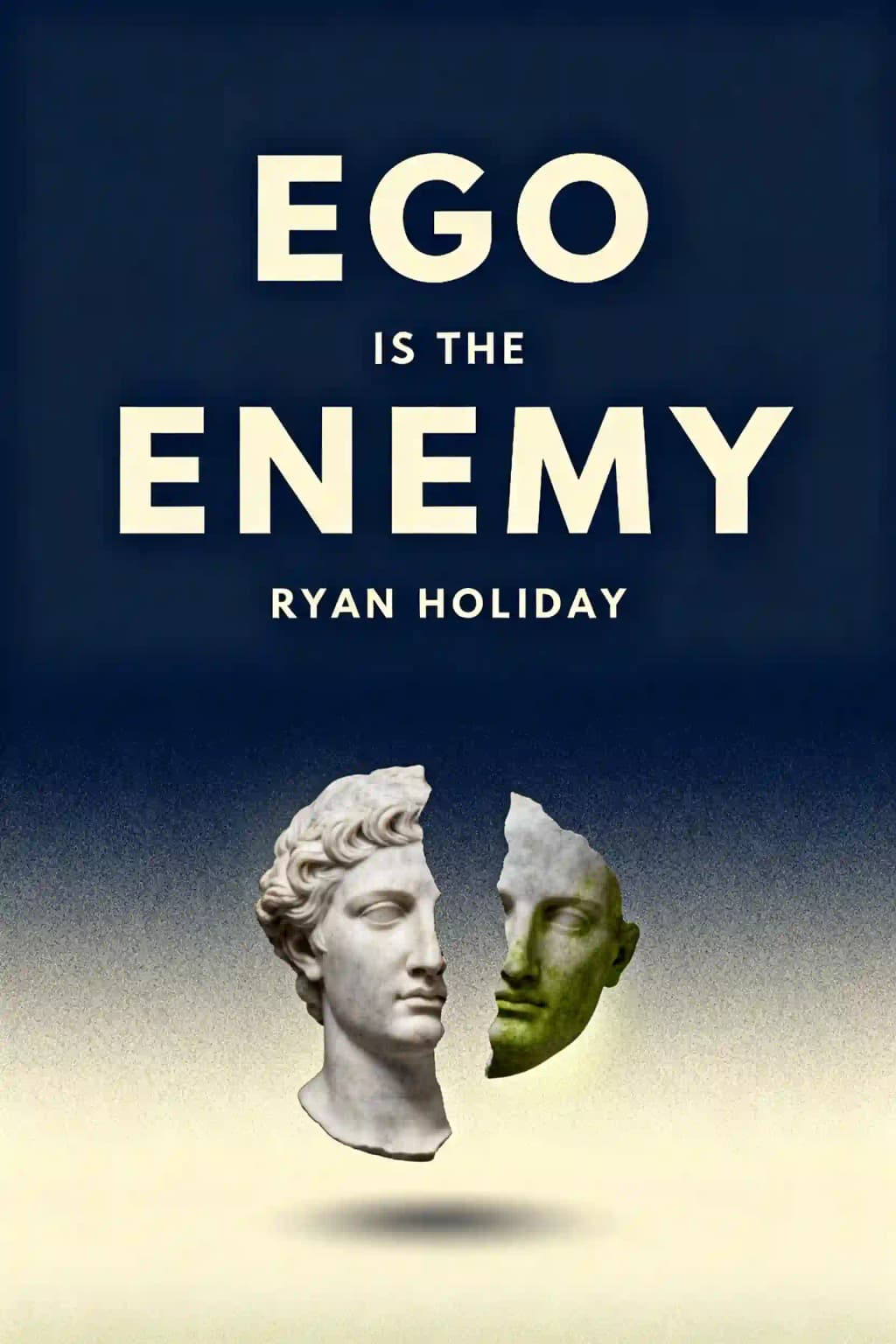
Have you ever wondered why some of the most promising talents crash and burn while others with seemingly less potential achieve remarkable success? Ryan Holiday's "Ego Is The Enemy" offers a compelling answer: the very force that drives us to achieve-our ego-often becomes the primary obstacle to our continued growth and success. This New York Times bestseller has become a staple in Silicon Valley boardrooms and NFL locker rooms alike, with figures from Serena Williams to Twitter co-founder Ev Williams citing its influence on their approach to both success and failure.
Holiday doesn't just theorize-he writes from painful personal experience. By age twenty-five, he had become a controversial marketing director for American Apparel and a bestselling author with his face on book covers. Yet at the height of his early success, he found himself stressed, overworked, and watching his personal relationships crumble. The hard-won wisdom from this journey forms the backbone of a book that challenges our culture's celebration of ego and self-promotion with a compelling alternative: the quiet power of humility.
Kapitel 2
The Silent Killer of Great Potential
The dangerous paradox of ego is that it feels essential to success but actually prevents it. Like a cancer that grows undetected, ego separates us from reality, corrupting our ability to learn, collaborate, and maintain perspective. It's not the Freudian concept but rather what Holiday defines as "an unhealthy belief in our own importance"-that voice that demands recognition, resists feedback, and places self-promotion above actual accomplishment.
Our culture has only amplified this problem. Social media platforms give everyone the unprecedented ability to self-promote in ways once reserved for celebrities. We can announce our goals to thousands before taking a single step toward achieving them. We interact with our idols on Twitter, consume endless inspiration quotes, and proudly declare ourselves "CEO" of fledgling startups. The symptoms of success-attention, validation, recognition-are mistaken for success itself.
This cultural shift has created what Holiday calls "an epidemic of ego" where the ability to promote oneself often outweighs the substance behind the promotion. For every Steve Jobs or Kanye West whose ego seems justified by their achievements, countless others have been destroyed by the same trait. Even these celebrated egotists did their best work when fighting against their self-absorption rather than indulging it.
The alternative isn't weakness or lack of ambition-it's what Holiday calls "confident humility." This paradoxical quality allows us to believe in our capacity while remaining grounded in reality. It's the difference between the poisonous confidence that comes from delusion and the powerful confidence born from accurate self-assessment and genuine accomplishment.
Kapitel 3
The Dangerous Allure of Talking Over Doing
One of ego's most insidious traps is confusing talk with accomplishment. We've all encountered people who constantly discuss their ambitions but rarely make meaningful progress. These individuals often describe elaborate plans for businesses they'll start, books they'll write, or changes they'll implement, yet months and years pass with little tangible progress. This pattern isn't new-ancient wisdom traditions, from Stoic philosophers to Zen masters, explicitly warned against it, and historical figures like General William Sherman exemplified its opposite. Sherman refused promotions he wasn't ready for, supported others without seeking credit, and developed strategies based on careful study rather than desire for glory. Even when offered command of the Union Army, he declined, stating he wasn't yet prepared for such responsibility.
Research confirms what these examples suggest: talking about our goals creates a premature sense of accomplishment that reduces our motivation to actually achieve them. When writer Emily Gould received a substantial book advance, she spent a year "building her brand" online instead of writing her contracted novel. She posted extensively about being an author, attended literary events, and engaged in social media discussions about writing-yet produced very little actual work. The energy that should have gone into creation was depleted through constant verbalization. Studies from NYU and other institutions have shown that announcing goals triggers the same psychological satisfaction as achieving them, effectively short-circuiting our motivation.
This pattern has accelerated in the digital age, where platforms encourage us to announce every intention and half-formed idea. LinkedIn is filled with self-proclaimed "entrepreneurs" who spend more time crafting their profiles than building businesses. Instagram features countless "artists" who post about their creative process more than they create art. The result is what Holiday calls "a generation of talkers"-people who mistake social media engagement for meaningful progress. True achievement requires the opposite approach: the discipline to work quietly while others seek validation through chatter.
As Bo Jackson and other accomplished figures demonstrate, those who make real impact often keep their ambitions private until they've achieved them. Jackson rarely gave interviews about his training regimen or future plans, instead letting his unprecedented achievements in both baseball and football speak for themselves. The correlation between talk and action is inversely related-one kills the other. Successful entrepreneurs like Sara Blakely built Spanx into a billion-dollar company while maintaining almost complete silence about her plans until the product was ready for market. The question we must ask ourselves is simple but profound: are we here to talk about things or to do them? The answer lies not in our words but in our actions and their results.
Kapitel 4
Purpose Over Passion: Finding Your North Star
Our culture celebrates passion as the essential ingredient for success, but Holiday argues that purpose-passion with boundaries-serves us better. Passion is emotion without direction; purpose is emotion with boundaries and focus. The difference becomes clear when examining failures like the Segway (passionate but impractical) versus successes like Eleanor Roosevelt (purposeful and directed). Roosevelt's dedication to civil rights and human dignity wasn't just passionate advocacy; it was methodical, strategic work spanning decades that transformed both domestic and international policy.
This distinction matters because passion often masks weakness-its "breathlessness and impetuousness" substitute poorly for discipline and perseverance. Consider entrepreneurs who burn out quickly pursuing their "passion project" without sustainable systems, or artists who create sporadically when inspired rather than developing consistent practices. John Wooden, described as "dispassionate" by Kareem Abdul-Jabbar, won championships through systems and discipline, not emotional intensity. His approach wasn't cold but methodical-"purpose is function, function, function." Wooden's success came from developing detailed practices, from how players tied their shoelaces to precise defensive formations, creating a sustainable framework for excellence.
Purpose also helps answer what military strategist John Boyd called the fundamental question: "To be or to do?" When your purpose is larger than yourself, choices become both easier (as distractions fall away) and harder (as everything must align with your purpose). This approach focuses not on "Who do I want to be?" but "What do I want to accomplish?" For instance, a teacher focused on student success rather than personal recognition might decline administrative advancement to remain in the classroom, where their impact is greatest.
Boyd exemplified this principle, changing military theory profoundly despite personal costs. His OODA Loop (Observe, Orient, Decide, Act) revolutionized military strategy and later influenced business decision-making. Known as "Genghis John" for his determination and the "ghetto colonel" for his frugal lifestyle, he refused contractors' expense checks (viewing them as bribes) and never advanced beyond colonel due to his principles. Living in a small apartment and driving an old car, Boyd chose influence over affluence, turning down lucrative consulting opportunities to maintain his independence. His example challenges us to examine our own choices between ego-driven desires and meaningful contribution.
The key difference between purpose and passion often emerges during difficult times. While passion may fade when facing obstacles, purpose provides a steady compass. Consider Dr. Paul Farmer, who built a healthcare system in rural Haiti not through bursts of passionate energy but through relentless, purposeful work over decades. Similarly, Jane Goodall's groundbreaking primate research succeeded not just through her love of animals, but through methodical observation and detailed documentation that transformed our understanding of chimpanzees.
Kapitel 5
The Canvas Strategy: Rising Through Service
Early in our careers, we face a critical choice: resent our subordinate position or use it as a platform for growth. Holiday introduces the ancient Roman concept of the anteambulo-"one who clears the path"-as a model for early success. This role, far from being merely ceremonial, was a strategic position that allowed ambitious individuals to learn from and connect with powerful mentors. Rather than viewing entry-level positions as beneath us, we can embrace the apprentice model that produced geniuses from Michelangelo to Franklin, Leonardo da Vinci to Mozart - each of whom spent years in humble service to established masters.
The canvas strategy means "providing support so that others can be good" by finding "canvases for other people to paint on." This approach serves multiple purposes: it acknowledges our initial limitations, reduces ego at a critical career stage, and creates opportunities through service. The strategy manifests in various forms: doing the unglamorous research, handling routine correspondence, organizing systems, or managing logistics that free others to focus on their strengths. Bill Belichick volunteered to analyze film without pay and thrived on grunt work others thought beneath them, eventually becoming one of the NFL's most successful coaches. Benjamin Franklin wrote anonymous letters for his brother's newspaper, honing his skills while serving another's goals. Similarly, comedian Craig Ferguson spent years as a drummer in punk rock bands, learning timing and audience engagement before stepping into the spotlight.
This strategy isn't about being a doormat but making a strategic investment in relationships and personal development. By finding tasks nobody wants to do, identifying inefficiencies, connecting people who should know each other, and freely sharing ideas, we build a foundation that ultimately allows us to control direction while others take credit. Modern examples include Sheryl Sandberg, who joined Google when it was relatively small, taking on whatever tasks needed doing, or Marc Andreessen, who began by doing free programming work for the University of Illinois's computing lab.
The approach requires suppressing short-term ego gratification for long-term payoff-a trade most people aren't willing to make. It means being willing to work behind the scenes, sometimes for years, while building skills, relationships, and understanding of how systems really work. This might involve taking detailed notes in meetings, creating systems that make others more efficient, or volunteering for projects nobody else wants to touch.
The canvas strategy represents a profound paradox: helping yourself by helping others. In a world obsessed with individual recognition and personal branding, those who master this approach gain advantages that self-promoters never access. They develop deep institutional knowledge, build genuine relationships based on value provided, and learn their craft without the pressure of being in the spotlight. This patient, strategic approach to service has launched countless careers across industries, from politics to entertainment, business to athletics.
Kapitel 6
Restraint as a Superpower
Jackie Robinson's journey to becoming the first Black player in Major League Baseball illustrates one of Holiday's most powerful insights: sometimes the greatest strength lies not in fighting back but in strategic restraint. Though Robinson had confronted discrimination throughout his youth and was known for his fierce competitive spirit at UCLA, Branch Rickey of the Brooklyn Dodgers specifically sought a player with "the guts not to fight back." This wasn't just about baseball; it was about changing American society itself.
Despite facing coordinated campaigns of abuse-being hit by pitches, targeted by opponents' cleats, and subjected to vicious racial slurs-Robinson honored his agreement to suppress his natural reactions. When Phillies manager Ben Chapman taunted him with horrific racist abuse for three straight games, Robinson not only restrained himself but later posed for a friendly photo with Chapman. His teammates were stunned by his composure, and even his harshest critics began to admire his dignity under fire. During his first season, Robinson was hit by pitches eight times and endured countless spike wounds from opposing players, yet he maintained his composure through it all.
This restraint wasn't weakness but strategic strength. Holiday argues that our paths are defined by "the amount of nonsense we are willing to deal with," noting that ego makes this tolerance impossible. The lesson is powerful: "Those who have subdued their ego understand that it doesn't degrade you when others treat you poorly; it degrades them." Robinson's restraint allowed others to see the true nature of racism - when he didn't react, the ugliness of his opponents became glaringly apparent to spectators and the press.
Only after establishing himself as Rookie of the Year and MVP did Robinson begin to more assertively stand his ground. His restraint wasn't permanent submission but a strategic approach to a specific challenge. By 1949, having proven himself beyond doubt, he began speaking out against injustice and challenging calls on the field. By controlling his reactions rather than being controlled by them, Robinson changed baseball and American society forever, paving the way for other Black players like Roy Campanella and Don Newcombe.
This principle applies beyond racial barriers. In any situation where we face unfair treatment or criticism, our ego pushes us toward immediate reaction. Holiday points to modern examples: successful entrepreneurs who ignore critics during their early days, politicians who refuse to engage with petty attacks, and executives who maintain composure during corporate conflicts. The alternative-strategic restraint-often proves more powerful in the long run. Warren Buffett exemplifies this approach, famously remaining calm during market crashes while others panic, demonstrating how restraint can be a competitive advantage in any field.
The key insight is that restraint isn't about being passive or weak; it's about choosing your moments and conserving your energy for what truly matters. As Holiday notes, true strength often lies not in the ability to strike back, but in the wisdom to know when not to strike at all.
Kapitel 7
The Work Behind the Work
Ideas alone are worthless without the work to bring them to life. When poet Stephane Mallarme told painter Edgar Degas, "It's not with ideas that one makes verse. It's with words," he highlighted the crucial distinction between professionals and dilettantes. True mastery requires endless hours of dedicated practice-not until you "make it," but forever. This fundamental truth applies across all disciplines, from artists to entrepreneurs to athletes, each requiring thousands of hours of deliberate practice to achieve excellence.
The ego bristles at this reality, wanting recognition for planning and talking rather than doing. But accomplishment comes from where we direct our energy: Bill Clinton meticulously building his network of contacts card by card, Darwin laboring for decades on his theory of evolution, spending countless hours collecting specimens and corresponding with other naturalists. As basketball player Bill Bradley reminded himself: "When you are not practicing, remember, someone somewhere is practicing, and when you meet him he will win." This mindset drove Bradley to practice shooting baskets for hours in the dark, developing muscle memory that would serve him throughout his career.
This principle appears throughout the book in examples like Kirk Hammett, who joined Metallica at their breakthrough moment but immediately sought out guitar teacher Joe Satriani to improve his fundamentals. For two years, Hammett submitted to rigorous weekly lessons, accepting harsh feedback that drove away many others. He would practice scales and techniques for hours daily, often returning to basic exercises despite already being in one of the world's biggest bands. This student mindset placed his ego and ambition in someone else's hands, imposing what Holiday calls an "ego ceiling." The result was that Hammett became one of metal's greatest guitarists, helping transform thrash metal into a global genre.
Work isn't glamorous-it's pushing through pain, bad drafts, and ignoring both criticism and praise to focus on improvement. Writers like Malcolm Gladwell are known to go through dozens of drafts for each article, while entrepreneurs like Sara Blakely spent years perfecting her Spanx prototype while working a day job. The true measure of progress isn't talk but results: "You know a workman by the chips they leave." This applies equally to the painter whose studio floor is covered in discarded canvases, the programmer whose GitHub shows thousands of commits, or the athlete whose worn-out equipment tells the story of countless practice sessions.
The most successful individuals often maintain this work ethic even after achieving success. Warren Buffett still spends most of his day reading and analyzing companies, while famous musicians continue practicing scales daily. This dedication to continuous improvement, rather than resting on past achievements, distinguishes true professionals from those who merely dream of success.
Kapitel 8
The Disease of Me: Success's Hidden Danger
Basketball coach Pat Riley observed that great teams follow a predictable trajectory: they begin with the "Innocent Climb" where they work together selflessly, but after success comes the "Disease of Me" where egos emerge and bonds fray. This pattern repeats across domains-from sports teams to businesses to creative partnerships.
General George Marshall stands as a rare exception who never succumbed to this disease during World War II, while other Allied generals fought for recognition and position. Marshall actively discouraged promotion lobbying and turned down honors that might have elevated him above others, including command of D-Day troops which went to Eisenhower. He even refused revenge against a general who had once mistreated him, seeing the man still had value to offer.
What made Marshall special wasn't absence of ego or ambition, but these traits "tempered by a sense of humility and selflessness." As soccer coach Tony Adams said: "Play for the name on the front of the jersey, and they'll remember the name on the back."
This principle explains why so many successful ventures collapse at their peak. The very qualities that enable initial success-collaboration, focus on the mission, willingness to sacrifice-get replaced by their opposites once recognition arrives. Team members begin focusing on individual credit, media attention, and personal brand rather than collective achievement.
The antidote isn't suppressing ambition but maintaining perspective through what Stoics called sympatheia-a connectedness with the cosmos-or what philosopher Pierre Hadot termed the "oceanic feeling." By seeking experiences that remind us of our smallness in the universe while simultaneously recognizing our connection to it, we gain the humbling perspective that successful people need most.
Kapitel 9
The Inner Scorecard: Measuring What Matters
Despite drafting Tom Brady-arguably the greatest quarterback in NFL history-the New England Patriots focused not on celebrating their success but on the intelligence failure that almost prevented them from selecting him. Scott Pioli, their director of personnel, kept a photo of a failed draft pick on his desk as a reminder: "You're not as good as you think."
This exemplifies how great people think-they hold themselves to standards that exceed society's definition of success. Coach John Wooden didn't judge success by the scoreboard but by whether his team had achieved their potential. Bo Jackson wouldn't celebrate home runs because he knew "he hadn't done it perfect."
Warren Buffett distinguishes between the inner scorecard and external validation. Your potential-the absolute best you're capable of-should be your metric. This isn't just about validation; it's about moral clarity. When you judge yourself by internal standards rather than what you can get away with, you become less selfish and self-absorbed.
A person with an inner scorecard doesn't crave the spotlight, doesn't collapse during setbacks, and can share credit in ways others can't. We improve not through self-congratulation but through discipline and continually higher standards.
This principle becomes particularly important during failure. Malcolm X transformed his prison sentence into a profound opportunity for growth by choosing what Robert Greene calls "Alive Time" over "Dead Time." Teaching himself to read by copying the dictionary longhand and devouring books on history, philosophy, and religion, Malcolm emerged from prison intellectually transformed. When asked about his alma mater, he simply answered: "Books."
Kapitel 10
The Eternal Cycle: Aspiration, Success, Failure
Holiday structures his book around three inevitable phases we all cycle through: aspiration (when we're working toward goals), success (when we achieve them), and failure (when we face setbacks). Each phase presents unique ego challenges that must be managed differently.
During aspiration, ego tempts us toward delusion, self-promotion, and impatience. The antidotes are staying a student, working quietly, and focusing on the long game. During success, ego pushes toward entitlement, control, and paranoia. The solutions include maintaining sobriety, remembering your purpose, and cultivating an awareness of your place in the larger universe. During failure, ego leads to denial, blame, and bitterness. The remedies involve accepting reality, maintaining your own standards, and choosing love over hate.
This cycle never ends-success creates new aspirations, failure leads to new attempts, and the battle against ego continues throughout life. As Holiday notes, managing ego is like sweeping the floor-just because we've swept once doesn't mean the floor stays clean forever. Every day dust returns, and every day we must sweep again.
The consequences of neglect can be devastating, as illustrated by Dov Charney's response after being fired from American Apparel. When asked if he would make a comeback like Steve Jobs, he replied with haunting earnestness, "Ryan, Steve Jobs died." To him, this failure felt like death itself, leading him to subsequently wreak havoc on the company he had built.
Most consequences of ego aren't calamitous but resemble the ending of "What Makes Sammy Run?" where the narrator realizes the vengeance he'd hoped would befall the egotistical protagonist was already present in his lonely life, his fears, and insecurities. That's how ego manifests-as a slow-acting disease that gradually consumes us.
The mantra Holiday offers is simple though never easy: Not to aspire or seek out of ego. To have success without ego. To push through failure with strength, not ego. This isn't a one-time achievement but a daily practice of humility, reality, and purpose-the true path to lasting achievement and fulfillment.