Kapitel 1
The Crypto Illusion: How Digital Money Became the Greatest Fraud of Our Time
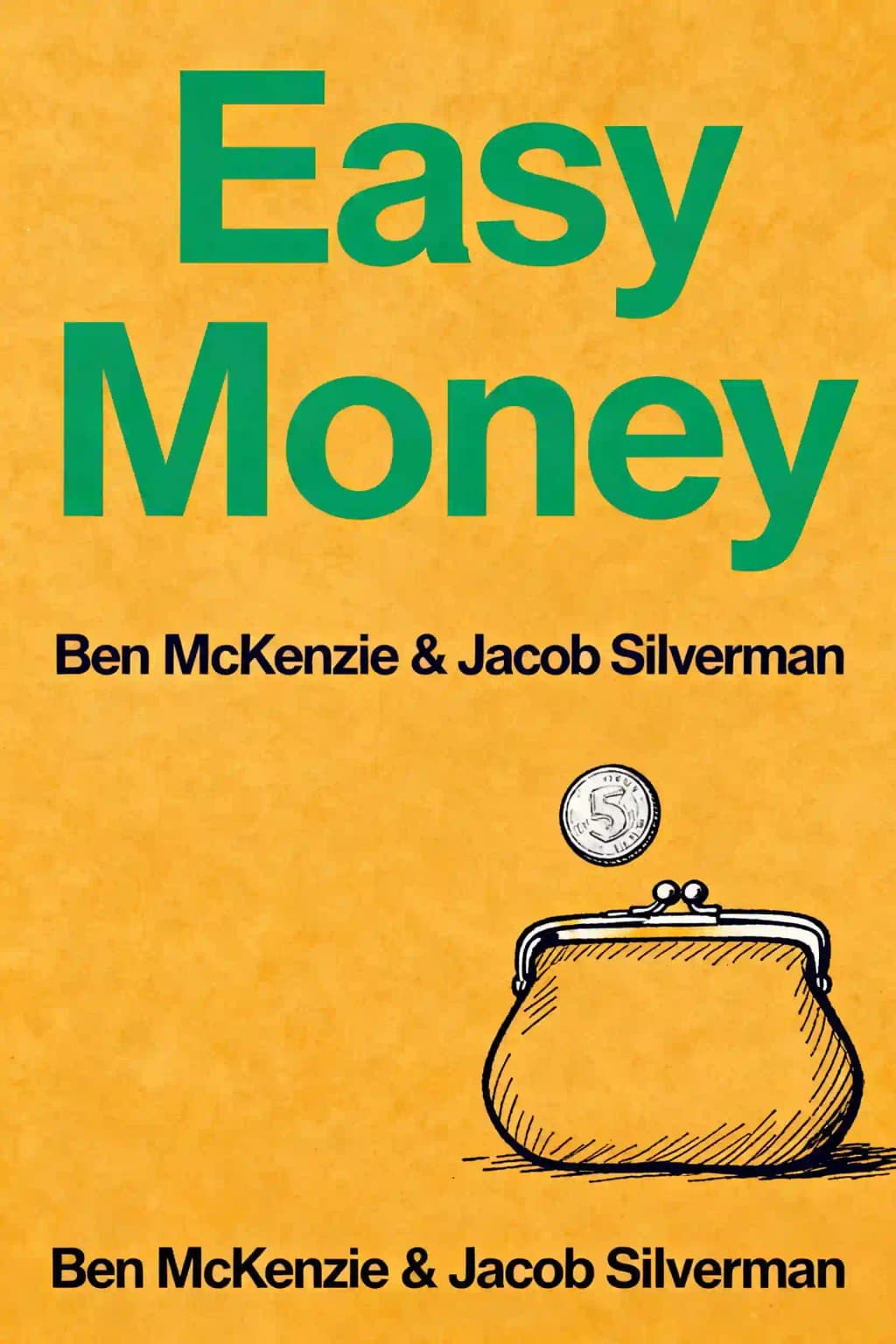
When actor Ben McKenzie's friend Dave asked for investment advice on Bitcoin in early 2021, McKenzie's economics degree kicked in. "Don't do it," he warned. But as cryptocurrency exploded into a $3 trillion market with Matt Damon commercials, Super Bowl ads, and celebrity endorsements, McKenzie couldn't shake the feeling that something was fundamentally wrong. This wasn't just another speculative bubble-it was potentially the largest fraud in history, targeting everyday Americans. Combining his economics background with his Hollywood insider perspective, McKenzie embarked on a global investigation that would take him from the glitzy Bitcoin Conference in Miami to the impoverished villages of El Salvador, and eventually to testify before Congress. His journey reveals how the "future of money" was built on fantasy, deception, and the same old financial tricks that have separated people from their money for centuries.
Kapitel 2
The Anatomy of a Financial Hallucination
The cryptocurrency boom of 2020-2022 represents a fascinating case study in mass delusion, one that rivals historic bubbles like the 1720 South Sea Company and the 1990s dot-com mania. Unlike stocks or commodities that represent ownership in companies or physical goods, cryptocurrencies are merely computer code with no intrinsic value or productive capacity. They're zero-sum games where one person's gain is another's loss-essentially digital gambling chips masquerading as revolutionary technology. This fundamental reality was often obscured by sophisticated marketing and complex technical jargon designed to give the appearance of legitimate innovation.
What drove this mania? The 2008 Global Financial Crisis created deep societal trauma, with average citizens bailing out corporate America while facing unsustainable debt themselves. The collapse of Lehman Brothers, the foreclosure crisis, and the subsequent economic downturn left lasting scars on an entire generation. This spawned both political movements like Occupy Wall Street and technological "solutions" like Bitcoin, which promised to democratize finance and eliminate corrupt intermediaries. When Satoshi Nakamoto published the Bitcoin white paper on Halloween 2008, it proposed bypassing financial institutions through blockchain technology and proof-of-work mining. This spawned an entire ecosystem including Ethereum's smart contracts, decentralized finance (DeFi) protocols promising astronomical yields, and NFTs selling digital art for millions. The cryptocurrency landscape exploded from less than 100 coins in 2013 to an estimated 20,000 by 2022, with many offering increasingly outlandish promises of returns.
The pandemic created perfect conditions for crypto's explosive growth. With people stuck at home, stimulus checks in hand, and traditional entertainment unavailable, millions turned to speculative investing. Popular trading apps like Robinhood made buying crypto as easy as playing a mobile game. The Federal Reserve's balance sheet expanded dramatically as the government pumped $5 trillion into the economy, sending markets into overdrive. This unprecedented monetary expansion drove inflation fears and boosted Bitcoin's narrative as "digital gold." Home prices soared past their 2006 peak, stocks climbed to record valuations, and speculative investments from SPACs to NFTs thrived in this environment of excess liquidity.
This environment fostered what economist Robert Shiller calls "naturally occurring Ponzi schemes"-price increases that attract investors, whose participation further drives prices up, creating a self-reinforcing cycle without requiring a central administrator like Bernie Madoff. Social media amplified these feedback loops, with influencers and crypto evangelists reaching millions of followers with promises of financial freedom. When money flows freely, distinguishing true innovation from hype-driven fraud becomes nearly impossible. Projects like Terra/LUNA and FTX demonstrated how quickly apparent success could mask underlying fraud. As Charles Kindleberger observed in his study of financial manias: "The implosion of a bubble always leads to the discovery of frauds and swindles that developed in the froth of the mania." The crypto crash of 2022 proved this observation painfully accurate, revealing numerous schemes that had flourished during the speculative frenzy.
Kapitel 3
The Emperor's New Digital Clothes
Cryptocurrency's first fundamental problem is semantic-they aren't actually currencies. Real currencies function as mediums of exchange, units of account, and stores of value. Cryptocurrencies fail at all three: you can't buy everyday items with them, their values fluctuate wildly making business accounting impossible, and they can't reliably store value.
Bitcoin's technology is fundamentally flawed-processing only 5-7 transactions per second compared to Visa's 24,000, while consuming as much electricity as Argentina. Under American law, these "currencies" functionally operate as securities according to the Howey Test: investments of money in common enterprises with profit expectations derived from others' efforts.
By spring 2021, we had come full circle to pre-1929 market conditions. Approximately 20,000 unregistered, unlicensed securities-more than all publicly listed securities on major US exchanges-were being sold to the general public. These were primarily traded on crypto exchanges with massive conflicts of interest, often through Caribbean shell corporations to avoid regulatory jurisdiction.
Unlike conventional securities like Apple stock, which derives value from products and revenue streams, cryptocurrencies produced nothing tangible-they were "pure securitized air." Their true economic foundation was simply "number go up"-the belief that someone else would eventually pay more for the same digital token. This mindset transformed tokens into digital assets used as collateral for loans or complex financial products, marking the beginning of DeFi where insiders could profit quickly while regular people were left "holding the bag."
The entire ecosystem resembled Hans Christian Andersen's "The Emperor's New Clothes"-a fraud relying on ego and status worship, with everyone afraid to state the obvious truth. Despite the industry's claims of democratizing finance, it primarily functioned as a wealth transfer mechanism from late-arriving retail investors to early adopters and insiders.
Kapitel 4
The Money Printer Behind the Curtain
At the heart of cryptocurrency's explosive growth lay a shadowy stablecoin called Tether. Supposedly backed one-to-one by US dollars, Tether tokens (USDT) served as the primary on-ramp to crypto markets and the main trading pair for Bitcoin. But investigation revealed five major red flags indicating potential fraud.
First, Tether maintained a suspiciously small circle of trust-only twelve employees managing billions. Second, their executives had concerning histories, including a CFO who settled counterfeiting charges, a CEO who sold dubious health products, and a general counsel from a cheating online poker company. Third, they faced significant legal troubles, including a $41 million CFTC fine and $18.5 million New York Attorney General fine for lying about their reserves. Fourth, their redemption process was highly restrictive, requiring minimum $100,000 withdrawals-a classic Ponzi scheme characteristic. Fifth, they operated with glaring conflicts of interest, with the same executives controlling both the money printer (Tether) and a trading exchange (Bitfinex).
The company fit perfectly within the "fraud triangle" framework: they had the need (recovering from a $71 million hack), opportunity (operating an unregulated offshore money printer), and rationalization (claiming to boost financial inclusion). A pseudonymous whistleblower called Bitfinex'ed had been tracking their suspicious activities for years, convinced Tether was "a ticking time bomb inside a $3 trillion industry."
When interviewed at the Bitcoin Conference in Miami, Tether co-founder Brock Pierce offered contradictory explanations about the company's lack of proper auditing while awkwardly comparing the situation to Arthur Andersen and Enron. Most alarming was his claim to speak with "more world leaders than our secretary of state" and helping arrange meetings between Binance's CEO and El Salvador's President Bukele.
The most shocking admission came from Celsius CEO Alex Mashinsky during an interview at SXSW. With audio still rolling, he candidly admitted only "ten to fifteen percent" of crypto's value was backed by real money-meaning $1.5 trillion of the market's supposed $1.8 trillion value simply didn't exist. The market was dancing on a knife's edge, built on "hopium" rather than substance.
Kapitel 5
The Cult of Crypto
Perhaps the most insidious aspect of cryptocurrency was its manipulation of language and community dynamics. The industry's lexicon was filled with contradictions and mangled terminology-from calling speculative digital assets "money" to labeling unstable "stablecoins" and centralized "decentralized" systems. Enthusiasts greeted each other with insider acronyms like GM (good morning), WAGMI (we're all gonna make it), and HODL (hold on for dear life).
Most pernicious was the constant invocation of "community"-a term masking what's essentially a pyramid-like structure where early adopters and insiders profit from newcomers. Like multi-level marketing schemes, crypto communities recruit members who must "buy in" to demonstrate belief. The structure funnels money upward to privileged insiders while 99% eventually lose.
The community concept serves to "cool out the mark"-redirecting scam victims' anger inward rather than at perpetrators. Remarkably, being scammed becomes a rite of passage, with victims accepting it as a necessary learning experience. Despite crypto's promise of "trustless" transactions, most users must trust centralized exchanges, undermining the very community concept they promote.
This reveals cryptocurrency's fundamental contradiction: money is inherently a social construct that requires consensus and trust to function. When we accept paper with markings or digital numbers in exchange for goods, we're participating in a shared social agreement. This consensus lies at the heart of our economic system, with a direct link between faith in government and faith in currency.
The stated goal of cryptocurrency-creating "trustless" money-is therefore nonsensical. Money IS trust forged through social consensus. Saying you want trustless money is like wanting a governmentless government. Our banking system works because institutions like the FDIC guarantee deposits, creating a foundation of trust despite the system's flaws.
Crypto advocates are essentially proposing private money, which America already tried during the free banking era (1837-1864). That experiment with "wildcat banks" failed miserably due to fraud and instability. The "future of money" crypto promises is actually money's failed past.
Kapitel 6
Bitcoin Beach: The Emperor's New City
In June 2021, El Salvador's President Nayib Bukele announced that Bitcoin would become legal tender, implementing it by September despite minimal public consultation. The pitch was compelling: it could revolutionize remittances (which account for 25% of GDP), reduce transaction fees for the 70% of unbanked Salvadorans, and attract crypto-wealthy tourists to the country's excellent surfing beaches. El Zonte was rebranded as "Bitcoin Beach"-a tax-free paradise for Bitcoin enthusiasts.
But visiting Bitcoin Beach revealed a different reality. The modest collection of small hotels and shops overlooking black sand beaches was nearly deserted, with few people using cryptocurrency. A Canadian juice stand owner accepted Bitcoin but noted most customers still preferred cash. The government's Chivo Wallet system had been plagued with fraud and identity theft during its rollout, with many Salvadorans having their identities and Bitcoin stolen.
Despite technical improvements, Bitcoin adoption remained minimal. Less than 2% of remittances used the Chivo Wallet system. The implementation suffered from the same problems plaguing cryptocurrency generally: it didn't work well, was centralized rather than decentralized, and was prone to fraud. Average Salvadorans, already living near financial margins, refused to gamble alongside their president.
Yet Bukele doubled down, changing his Twitter handle to "world's coolest dictator" with Bitcoin maximalist laser eyes, and claimed to buy Bitcoin with state treasury funds while sitting on the toilet. If his claims were true, he'd lost tens of millions in public money, while the Chivo Wallet system itself cost taxpayers $4.7 million.
After the disastrous wallet rollout, Bukele announced an even more ambitious plan: Bitcoin City and Volcano Bonds. Half the money raised would purchase Bitcoin, while the other half would finance a tax-free paradise for crypto enthusiasts near Conchagua Volcano, with Bitcoin mining powered by geothermal energy. The plan made little economic sense-El Salvador is a net electricity importer, and geothermal energy from Conchagua would be prohibitively expensive.
Meanwhile, locals like Wilfredo Claros faced forced removal from their ancestral lands to make way for a new airport serving the non-existent Bitcoin City, with compensation far below the value of their properties. Sharp and self-sufficient, Wilfredo would rather continue fishing and farming than be reduced to menial labor at an airport serving Bitcoin tourists.
Kapitel 7
The House of Cards Collapses
While investigating crypto's failure in El Salvador, the online crypto market was imploding. By April 2022, the crypto economy had fallen from its $3 trillion peak to about $2 trillion. Then in early May, everything blew up.
Do Kwon, a brash thirty-year-old South Korean Stanford graduate, created Terraform Labs with its dollar-pegged stablecoin TerraUSD (UST) and companion token Luna (LUNA). The system used a complex arbitrage mechanism to maintain Terra's dollar peg, with Luna serving as a counterweight. Kwon's Anchor protocol promised an improbable 20% yield to investors who staked their Terra coins.
In early May, Terra depegged, plummeting to thirty-five cents despite Kwon's infamous tweet: "Deploying more capital - steady lads." The Terra blockchain was halted, exchanges delisted the tokens, and approximately $40 billion in value vanished. Beyond wealthy investors, ordinary people lost everything-including one Korean family who committed suicide after financial ruin.
The contagion spread rapidly. Three Arrows Capital (3AC), a Singapore-based hedge fund run by former boarding school classmates Kyle Davies and Su Zhu, collapsed after their half-billion-dollar stake in Luna plummeted to just $604. The fund had borrowed enormous sums from major industry players: Genesis Global Trading was owed $2.3 billion, Voyager Digital over $650 million, and Blockchain.com $270 million.
Celsius, a leading crypto lender, paused customer withdrawals on June 12, citing "extreme market conditions." Their core offering-an absurd 18% yield on staked coins-could only be achieved through Ponzinomics. By July 13, Celsius filed for bankruptcy with $5.5 billion in liabilities against $4.3 billion in mostly illiquid assets. Court documents revealed the company had actually been insolvent since 2019. The collapse devastated approximately 300,000 everyday retail investors who had trusted CEO Alex Mashinsky's promises about revolutionizing finance.
As the crypto crash wiped out over $2 trillion in notional value, the industry's major players turned on each other. The "community" revealed itself as a collection of competitors in a zero-sum game, with Frances Coppola aptly observing crypto bros fighting "like rats in a sack." Most disturbing was the utter lack of humility from industry leaders, who remained personally insulated from consequences while offering empty sympathies to retail investors who lost everything.
Kapitel 8
The Final Boss: FTX and Sam Bankman-Fried
As crypto markets imploded in 2022, one figure emerged as the industry's supposed savior: Sam Bankman-Fried (SBF). The son of Stanford law professors, SBF had graduated from MIT before founding trading firm Alameda Research and cryptocurrency exchange FTX. Positioning himself as an "effective altruist" who made money to give it away, he graced magazine covers asking if he was "THE NEXT WARREN BUFFETT?"
When interviewed in a New York hotel room, SBF appeared exactly as his public image suggested: dressed in a company T-shirt, shorts, and battered New Balances with messy black hair. But several red flags were apparent in his operation: he owned both an exchange (FTX) and a trading firm (Alameda) operating on that exchange-a clear conflict of interest; Alameda had deep ties to Tether, reportedly receiving $36.7 billion from them; FTX's chief regulatory officer Daniel Friedberg had worked with Tether's general counsel at a company behind an online poker cheating scandal; and FTX's inner circle consisted entirely of Sam's friends and roommates under thirty living together in a $39 million Bahamas penthouse.
During the interview, SBF appeared nervous when questioned about these connections. His movements intensified-turning away from cameras, fidgeting, and twitching so much he needed water. When confronted about crypto's fundamental problems-targeting vulnerable people for gambling while enriching exchange owners like himself-Sam weakly argued some early investors made money and repeated vague future use cases.
In November 2022, FTX spectacularly collapsed after CoinDesk revealed Alameda's balance sheet was largely composed of FTT, a token created by FTX itself. When Binance CEO Changpeng Zhao announced he would sell his FTT holdings, a bank run ensued. Within days, FTX filed for bankruptcy, revealing an $8 billion hole in customer funds. Court filings showed customer deposits had been secretly funneled to Alameda Research through a "back door" in FTX's code.
Despite facing enormous legal liability, Sam couldn't stop talking. He gave daily interviews, DMed with journalists, called crypto influencers late at night, and wrote lengthy Twitter explanations. In messages with Vox reporter Kelsey Piper, he admitted his ethical stance was mostly performative: "it's what reputations are made of" and "this dumb game we woke westerners play."
On December 12, Sam was arrested in the Bahamas at U.S. authorities' request. The unsealed indictment revealed eight charges including wire fraud, conspiracy, and campaign finance violations. Prosecutor Damian Williams called it "one of the biggest financial frauds in American history." FTX co-founder Gary Wang and Alameda CEO Caroline Ellison pleaded guilty and agreed to cooperate with investigators.
Kapitel 9
The Human Cost of Digital Gambling
Behind the technical jargon and financial schemes lie real human tragedies that illustrate the devastating personal impact of cryptocurrency scams. David Henson's father Hal exemplified the typical victim - a charismatic salesman, evangelical preacher, and playful trickster who found genuine fulfillment in his church work and community service. Despite his natural sales talent and strong work ethic, Hal struggled financially, particularly during the 2008 subprime crisis when his real estate investments collapsed. Desperate to provide more for his family and recover his losses, he became increasingly obsessed with forex trading, which eventually led him to Stallion Wings, a sophisticated cryptocurrency investment scheme that promised guaranteed returns.
The predatory nature of these schemes became apparent when Hal attempted to withdraw his initial investments. The scammers employed classic tactics, demanding escalating "tips" and "processing commissions," leading him to systematically deplete his retirement savings, take out multiple high-interest loans, and max out seven credit cards. When David refused his father's desperate request for $5,000, recognizing it would only feed his spiraling addiction, Hal took his own life on June 26, 2020. The cold-hearted nature of these operations was revealed in David's subsequent investigation, where he discovered the scammers had responded with just "Bye" when his father mentioned suicidal thoughts in his final email to them.
The industry-wide impact became clear with the collapse of Celsius, which devastated approximately 300,000 everyday retail investors. These victims included teachers, nurses, small business owners, and retirees who had trusted CEO Alex Mashinsky's charismatic promises about revolutionizing finance through "banking the unbanked." Many faced financial ruin, with some losing their homes, unable to pay medical bills, or falling into severe depression. The human toll was particularly evident in South Korea, where a family of three committed suicide after losing their life savings in the TerraLuna collapse, leaving behind a note describing their desperation.
The scale of these tragedies is staggering. The FTC documented over 46,000 people reporting losses exceeding $1 billion to crypto scams since 2021 - representing one in four dollars lost to scams, more than any other payment method, with losses sixty times higher than in 2018. Court filings from bankrupt companies like FTX and Celsius revealed heart-wrenching testimonials from victims across all demographics - from young professionals who lost their down payments for homes to elderly retirees who lost their entire life savings. Many victims described not just financial devastation but also broken marriages, severe mental health issues, and shattered dreams of retirement or education for their children.
These personal stories highlight how cryptocurrency schemes often target vulnerable individuals during periods of financial stress, exploiting their hopes for financial recovery while disguising gambling addiction as legitimate investment strategy. The psychological manipulation employed by these operations, combined with their technical complexity and promises of revolutionary technology, created a perfect storm that continues to destroy lives across the globe.
Kapitel 10
Money Is Trust, Not Code
Money, like government and religion, is a human creation under our collective control, though greed often blinds us to this reality. We must corral capital's power to benefit everyone, or risk worsening political and criminal impunity. Turning America into a casino perverts the American dream, fostering competition rather than cooperation. Fraud, if unchecked, erodes rule of law until accountability vanishes.
Bitcoin maximalists claim their coin is "digital gold" because of its limited supply (21 million coins), but they fundamentally misunderstand economics. Supply alone doesn't determine scarcity-demand does. Something with limited supply is only valuable if people want it. Bitcoin's nearly inelastic supply (90% already mined) makes its price extremely vulnerable to demand fluctuations.
The gold standard comparison is particularly misguided, as most economists consider it obsolete. During crises like the Great Depression, the gold standard's inflexibility prevented governments from injecting needed liquidity, prolonging economic suffering. By contrast, during COVID, America's ability to inject money into the economy prevented another depression.
One evening, the author played Monopoly Junior with his six-year-old daughter Frances before her bedtime. When she landed on his property without enough money to pay, she simply reached into the bank and took what she needed. When asked if this was allowed, she confirmed it was-for both of them. They continued playing, each taking money from the bank whenever needed, theoretically able to continue indefinitely.
This simple game illustrated a fundamental truth about money: it works as long as participants trust the system and each other. Capitalism itself cannot provide answers because it prioritizes expansion above all else. However, since we created capitalism, we can reshape it. Crypto advocates, like previous tech "innovators," offered a selfish vision disconnected from reality. Their attempt to eradicate trust is fundamentally nihilistic. In the end, we have only ourselves and each other to rely on.




![Gig Economy Vehicle Jobs Ranked by $/Hour [2026 Data] | Dropcurb](/_next/image?url=https%3A%2F%2Fd1y2du6z1jfm9e.cloudfront.net%2Fassets%2Fpodcast%2Fgreen.png&w=1024&q=50)