Kapitel 1
The Dopamine Paradox: Why We Can't Stop Scrolling
Have you ever found yourself mindlessly scrolling through social media when you should be working on that important project? That nagging task sits in the back of your mind while hours slip away in a digital haze. If this sounds familiar, you're experiencing what Thibaut Meurisse calls a "dopamine trap" in his groundbreaking book "Dopamine Detox." This isn't just another productivity guide - it's become a cultural phenomenon, with tech executives in Silicon Valley and celebrities like Arianna Huffington endorsing its methods. The book has sparked a movement, with #dopaminedetox generating millions of views across social platforms. Why? Because in our hyperconnected world, the ability to focus has become our scarcest resource. What makes this book particularly compelling is how it transforms neuroscience into practical strategies, showing us how the very chemical that evolved to help us survive is now being weaponized against us by technology designed to capture our attention. Are you ready to reclaim control of your focus and, by extension, your life? Let's explore how understanding dopamine might be the key to unlocking your productivity potential.
Kapitel 2
Dopamine: Not What You Think It Is
Dopamine isn't actually the "pleasure chemical" most people believe it to be. It's more accurately described as the anticipation neurotransmitter - the molecule that drives us toward potential rewards. When our ancestors spotted a fruit tree in the distance, dopamine surged, motivating them to walk toward it. The anticipation of eating, not the eating itself, triggered dopamine release.
This distinction is crucial. Dopamine doesn't reward satisfaction; it fuels desire. It's the reason you feel more excitement buying a new gadget than using it a week later. It's why the anticipation of checking notifications often exceeds the satisfaction of actually reading them.
In our natural environment, this system worked beautifully. Dopamine motivated necessary behaviors for survival - finding food, seeking shelter, pursuing mates. These activities required effort, and the dopamine reward system ensured we found them worth pursuing.
But our modern world has short-circuited this delicate balance. Today's digital landscape offers endless dopamine triggers requiring minimal effort. Social media platforms, video games, and streaming services have been meticulously engineered to exploit this neurological pathway. Each notification, like, or auto-playing video delivers a tiny dopamine hit, creating a cycle that's difficult to escape.
The problem isn't dopamine itself - it's that we've created an environment where our dopamine system is constantly overstimulated. This overstimulation leads to what neuroscientists call "tolerance," where we need increasingly potent stimuli to feel the same level of engagement. Meanwhile, activities that require sustained attention and delayed gratification - like deep work, learning new skills, or building relationships - seem less appealing by comparison.
Understanding this mechanism explains why focusing on important but challenging tasks feels so difficult. Your brain, accustomed to quick dopamine hits from digital distractions, resists the relative dopamine "drought" of sustained effort. The good news? Once you recognize this pattern, you can begin to recalibrate your dopamine system to work for you rather than against you.
Kapitel 3
The Attention Economy: You're the Product
Have you ever wondered why so many digital services are free? The truth is unsettling: if you're not paying for the product, you are the product. More specifically, your attention is the product being sold to advertisers. We're living in what economists call the "attention economy," where the most valuable commodity isn't money but human attention.
Tech companies employ armies of engineers, designers, and psychologists with one goal: to capture and hold your attention for as long as possible. They're not being malicious; they're simply following their business model. The longer you stay engaged, the more ads they can show you, and the more revenue they generate.
These platforms use sophisticated algorithms that learn exactly what keeps you scrolling, watching, or clicking. When you open Instagram, the content you see isn't random - it's precisely calibrated to trigger your specific dopamine pathways. Those "recommended for you" videos on YouTube? They're selected by algorithms that have studied your viewing patterns to determine what will keep you watching "just one more."
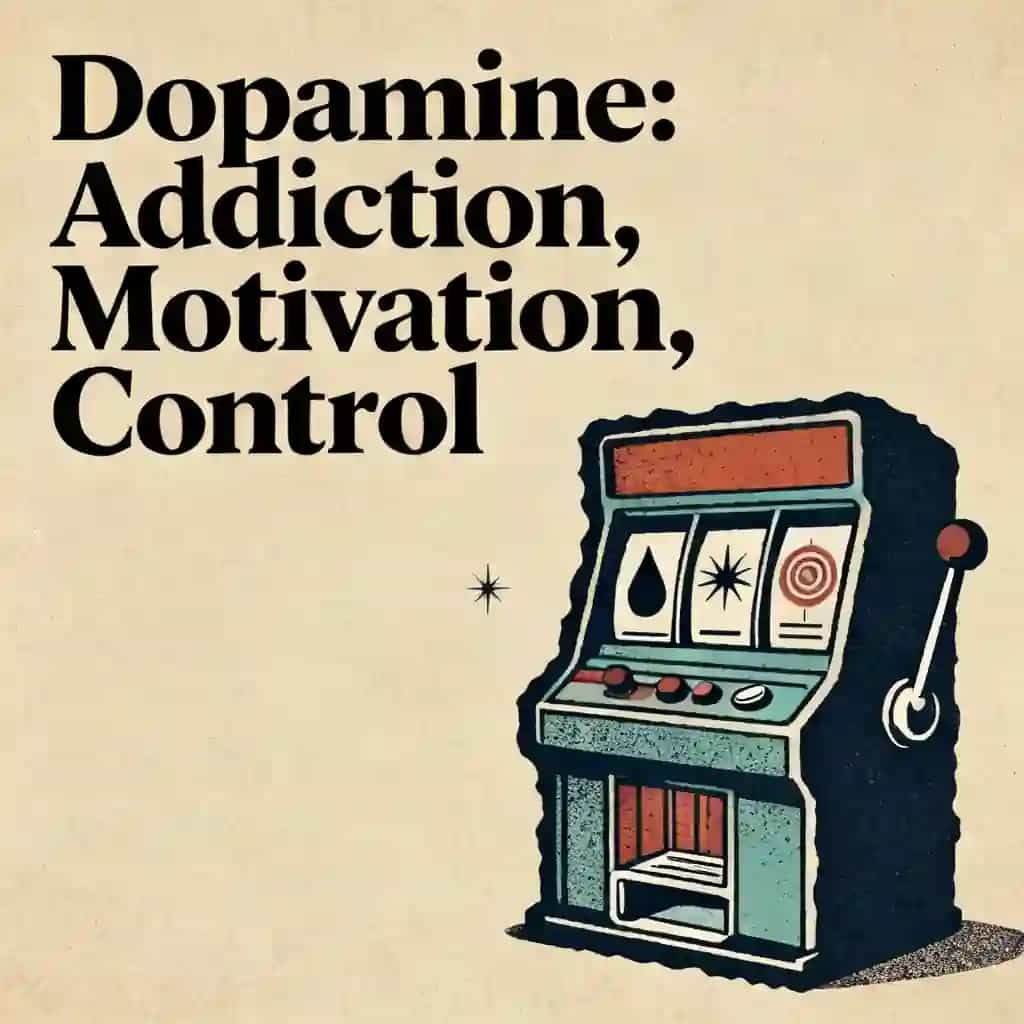
Even seemingly innocent design features serve this purpose. The pull-to-refresh mechanism on social media apps mimics slot machines, creating what psychologists call a "variable reward schedule" - one of the most effective ways to reinforce behavior. Notifications are colored red not by accident but because red triggers alertness in our brains. Autoplay features eliminate the decision point where you might otherwise choose to stop watching.
This environment creates what some researchers call "digital addiction by design." Studies show that the average person touches their phone 2,617 times daily and spends over four hours on mobile devices. That's not coincidental - it's the result of thousands of small design decisions aimed at maximizing engagement.
What's particularly concerning is how this affects our ability to focus on meaningful work. Each time you check your phone, your brain gets a small dopamine reward. Over time, this trains your neural pathways to seek these quick hits rather than the deeper, more sustainable satisfaction that comes from concentrated effort and achievement. It's like trying to appreciate a gourmet meal when you've been snacking on candy all day - your taste buds become desensitized to subtler flavors.
Kapitel 4
Sugar, Screens, and Shortcuts: The Modern Dopamine Diet
Our relationship with food offers a perfect parallel to our digital consumption habits. Just as tech companies have engineered their platforms to trigger dopamine release, the food industry has manipulated ingredients to create maximum palatability and cravings.
Consider sugar. Our ancestors rarely encountered concentrated sweetness - perhaps occasionally in honey or seasonal fruits. Their dopamine systems were calibrated accordingly. Today, however, we're surrounded by foods containing more sugar in a single serving than our ancestors might have consumed in weeks. This isn't accidental; food scientists have identified the "bliss point" - the precise amount of sugar, salt, and fat that maximizes cravings without triggering satiety.
When you eat highly processed foods, your brain receives an outsized dopamine signal compared to what it would get from whole foods. Over time, this recalibrates your system so that natural foods seem less appealing by comparison. A strawberry can't compete with strawberry ice cream when it comes to immediate dopamine release.
This same pattern applies to how we consume information and entertainment. Our brains evolved in an environment where novel information was rare and valuable. Finding a new water source or learning about a new predator could mean survival. Today, we're drowning in novelty - endless news updates, social media feeds, and entertainment options. Each new piece of information triggers a small dopamine hit, creating what some neuroscientists call "novelty addiction."
The consequences extend beyond mere distraction. This constant dopamine stimulation impairs our ability to think long-term. When your brain is accustomed to immediate rewards, activities with delayed benefits seem increasingly unappealing. Why work on a skill that takes months to develop when you could get immediate validation from social media? Why save money for retirement when you could experience the pleasure of a purchase right now?
This short-term focus creates a particularly dangerous feedback loop. As we seek more immediate gratification, we become less capable of the sustained effort needed for meaningful achievement. Then, feeling the lack of accomplishment, we seek comfort in more immediate rewards, perpetuating the cycle.
The result is what psychologists call "present bias" - an excessive focus on immediate outcomes at the expense of future benefits. Studies show that excessive digital stimulation can actually reshape neural pathways, making it physiologically harder to engage in deep thinking and long-term planning.
Kapitel 5
The Detox Solution: Recalibrating Your Brain
The good news is that our dopamine systems remain remarkably adaptable throughout our lives. Just as they can be hijacked by excessive stimulation, they can be recalibrated through strategic periods of reduced stimulation - what Meurisse calls a "dopamine detox."
The concept is straightforward: temporarily eliminate or significantly reduce sources of easy dopamine hits to reset your brain's baseline sensitivity. This doesn't mean eliminating pleasure; rather, it means creating space to rediscover more sustainable forms of satisfaction.
Meurisse outlines three levels of detox, each with different intensity and duration:
The 48-hour complete detox is the most intensive approach. For two full days, you eliminate virtually all sources of artificial stimulation: social media, streaming services, video games, junk food, news consumption, and even music. What remains? Reading physical books, writing, walking in nature, face-to-face conversations, and simple meals. This approach creates a dramatic reset of your dopamine system.
The 24-hour detox follows the same principles but for a shorter duration. It's more accessible for beginners while still providing significant benefits. Think of it as a weekly reset button for your attention.
The partial detox targets specific problematic stimuli rather than attempting a comprehensive cleanse. If social media is your primary distraction, you might eliminate just that while maintaining other activities. This approach is more sustainable for long-term practice.
What makes these detoxes effective isn't just the temporary break but the insights they provide. Many participants report being shocked by how frequently they reach for their phones out of habit rather than necessity. They discover how much anxiety is generated by the constant checking and scrolling. Most importantly, they experience how their capacity for deep focus gradually returns as their dopamine systems recalibrate.
During a detox, activities that initially seem boring become increasingly engaging. A book that couldn't hold your attention before might suddenly become fascinating. A walk without podcasts or music reveals sounds and sensations previously unnoticed. Conversations deepen without the constant interruption of notifications.
This isn't merely anecdotal. Neuroimaging studies show that periods of reduced stimulation can increase dopamine receptor density, making us more responsive to natural rewards. It's like turning down the background noise so you can hear the subtle melodies of everyday life.
Kapitel 6
The Three-Step Method: Making Detox Practical
Implementing a dopamine detox requires more than just willpower - it demands a strategic approach. Meurisse offers a three-step method that makes the process both effective and sustainable:
First, identify your biggest distractions. This requires honest self-assessment. Which activities consistently pull you away from important work? For many, it's social media, news sites, or streaming services. For others, it might be online shopping, video games, or even work emails. The key is specificity - naming exactly what consumes your attention without adding value to your life.
This step often reveals surprising patterns. You might discover that what you thought was a five-minute Twitter break routinely stretches to thirty minutes. Or that checking email first thing in the morning consistently derails your entire day. Keep a distraction log for a few days, noting each time you break focus and what drew you away.
Second, add friction to undesirable behaviors and remove friction from desirable ones. Our environment shapes our actions more than we realize. Making distractions slightly more difficult to access can dramatically reduce their pull.
This might mean deleting social media apps from your phone (requiring you to use the less convenient browser version), using website blockers during work hours, or keeping your phone in another room while working. Conversely, make important tasks more accessible: keep a book visible on your desk, prepare workout clothes the night before, or create a dedicated workspace free from distractions.
The power of friction is remarkable. Studies show that adding just 20 seconds of delay to an undesired behavior can reduce its frequency by over 90%. We're far more influenced by convenience than we like to admit.
Third, start your day right. The first hour after waking sets the tone for your entire day's relationship with dopamine and attention. Beginning with high-stimulation activities - checking social media, reading news, or watching videos - primes your brain to expect constant novelty.
Instead, create a morning routine built around lower-stimulation activities: meditation, journaling, exercise, reading, or simply enjoying a quiet cup of coffee. This establishes a healthier baseline for your attention and makes it easier to engage in focused work throughout the day.
What's particularly effective about this three-step approach is that it acknowledges the reality of habit formation. Rather than relying on constant willpower (which inevitably depletes), it creates an environment where good choices become the path of least resistance.
Kapitel 7
Maximizing Your Detox: The Power of Reflection
A dopamine detox isn't just about what you eliminate - it's about what you discover in the space created. To maximize benefits, Meurisse recommends three reflective practices during your detox period:
First, take notes on your experience. When the urge to check your phone arises, document it. What triggered the urge? What emotion preceded it? What were you hoping to gain? This practice creates metacognition - awareness of your own thought processes - which is essential for lasting change.
Many detoxers report surprising insights: discovering they check social media when feeling slightly anxious, bored, or uncertain about their next task. Others notice they use digital distractions to avoid difficult emotions or challenging work. These patterns, once recognized, become far easier to address.
Second, reflect on your life direction. Without the constant noise of digital stimulation, bigger questions naturally emerge. Are your daily activities aligned with your core values? Are you progressing toward meaningful goals? What adjustments might bring greater fulfillment?
This isn't abstract philosophy - it's practical recalibration. Many of us move so quickly through life that we rarely step back to ensure we're moving in the right direction. A dopamine detox creates space for this essential navigation.
Third, use the clarity gained to solve persistent problems. With reduced mental clutter, solutions often emerge to challenges that previously seemed intractable. Write down problems you've been facing, then brainstorm potential approaches. The combination of mental clarity and reduced distraction creates ideal conditions for creative problem-solving.
These reflective practices transform the detox from a mere break into a catalyst for meaningful change. Rather than simply enduring the discomfort of reduced stimulation, you're actively harvesting insights that can reshape your relationship with technology, productivity, and attention.
What's particularly valuable is how these practices reinforce each other. The notes you take reveal patterns that inform your life reflection, which in turn highlights problems worth solving. This creates a virtuous cycle of increasing self-awareness and intentionality.
Kapitel 8
Building Unshakable Focus: The Daily System
A detox is just the beginning. The real challenge - and opportunity - lies in creating a sustainable daily system that preserves your recalibrated attention while functioning in a hyper-stimulating world.
Start by planning each day with intention. Before opening any digital device, decide what matters most. Identify your "lead domino" - the one task that, if completed, would make everything else easier or unnecessary. Schedule this for your peak mental hours, typically early in the day before decision fatigue sets in.
Use simple tools for planning - a physical notebook often works better than digital alternatives, as it doesn't contain the temptation of notifications or other apps. The act of writing by hand also engages different neural pathways, often leading to greater commitment and clarity.
Next, develop laser-sharp focus through environmental design. Work in the same location at the same time each day to establish a powerful habit loop. Your brain will begin to associate that space and time with deep work, making focus progressively easier.
Create a pre-work trigger - a simple ritual that signals to your brain that it's time to concentrate. This might be brewing tea, arranging your workspace, or three minutes of deep breathing. The specific activity matters less than its consistency.
When working, eliminate all potential interruptions. Put your phone in another room (not just face-down beside you), block distracting websites, and communicate boundaries to colleagues or family members. Research shows that even the presence of your phone in your peripheral vision reduces cognitive capacity, regardless of whether it's on or off.
Work in focused blocks of 45-90 minutes, followed by true breaks. These intervals align with your brain's natural attention cycles and prevent the accumulation of mental fatigue. During breaks, avoid high-stimulation activities that can trigger dopamine spikes and make returning to focus difficult.
Perhaps most importantly, be vigilant about "open loops" - systems without clear boundaries or endpoints. Email, social media feeds, and news sites are designed to be endless, making it difficult for your brain to achieve closure. Start your day with "closed loop" activities that have clear completion points before engaging with any open systems.
This daily framework doesn't require monk-like discipline or complete digital abstinence. Rather, it creates strategic boundaries that allow you to use technology intentionally rather than reactively. The goal isn't to eliminate dopamine but to ensure it's working for you rather than against you.
Kapitel 9
Preventing Relapse: Sustainable Success Strategies
Even with the best intentions and systems, maintaining focus in our stimulation-saturated world remains challenging. Meurisse offers six strategies to prevent "dopamine relapse" and sustain your recalibrated attention:
First, develop awareness of relapse patterns. Notice the early warning signs when you're slipping back into old habits - increased checking behaviors, shortened attention spans, or growing resistance to deep work. Catching these patterns early allows for course correction before they become entrenched.
Second, understand the ongoing battle between your prefrontal cortex (responsible for planning and impulse control) and your limbic system (driven by immediate rewards). This isn't a one-time victory but an ongoing negotiation. Some days will be easier than others, and perfect consistency isn't the goal. What matters is the overall trajectory.
Third, recognize that many powerful forces actively work against your focus. Tech platforms employ thousands of brilliant minds specifically to capture your attention. Understanding this helps depersonalize the struggle - it's not just about willpower but about navigating an environment designed for distraction.
Fourth, prepare contingency plans for high-risk situations. If you know certain contexts trigger distraction (stress, fatigue, specific locations), develop pre-planned responses. This might mean having alternative activities ready, using stronger blocking tools, or simply removing yourself from triggering environments.
Fifth, build a sustainable system that doesn't rely on constant vigilance. Rather than fighting the same battles daily, create habits and environmental adjustments that make focus the default option. Automation and routines are far more reliable than motivation alone.
Finally, cultivate what Meurisse calls "here-and-now neurotransmitters" - serotonin, oxytocin, and endorphins - through activities like exercise, meaningful social connection, time in nature, and mindfulness practices. These create a sense of wellbeing that makes you less vulnerable to dopamine-chasing behaviors.
What makes these strategies effective is their complementary nature. They address different aspects of the challenge: awareness, understanding, environment, planning, systems, and biochemistry. Together, they create multiple layers of protection against relapse.
The ultimate goal isn't perfection but progress. Even reducing distraction by 20% can dramatically increase your capacity for meaningful work and presence. Each day of improved focus compounds over time, creating a widening gap between your productivity and that of those still trapped in distraction cycles.
Kapitel 10
The 30-Day Challenge: Your Path to Transformation
Change becomes real through consistent practice. Meurisse concludes with a challenge: commit to 30 days of intentional focus management. This timeframe is significant - research shows it's long enough to establish new neural pathways while being short enough to feel achievable.
The challenge structure is simple yet powerful:
Week 1: Conduct a 24-hour complete detox, then implement morning and evening phone-free periods daily.
Week 2: Identify your most important task each day and complete it before opening any potentially distracting applications or websites.
Week 3: Add a midday check-in to assess your focus and course-correct if needed. Expand phone-free periods gradually.
Week 4: Implement a weekly review to evaluate progress and refine your system based on what's working and what isn't.
Throughout the 30 days, maintain a focus journal documenting triggers, successes, and insights. This creates accountability and builds self-awareness about your unique attention patterns.
The beauty of this approach is its flexibility. You can adapt the specifics to your circumstances while maintaining the core principles. A writer might focus on daily word count goals, while a student might structure study sessions around specific subjects or projects.
What participants consistently report is that the benefits extend far beyond productivity. As attention stabilizes, anxiety often decreases. Relationships improve with more present engagement. Sleep quality enhances without pre-bed screen time. Creative insights emerge more frequently during periods of undistracted thought.
Perhaps most significantly, many describe a renewed sense of agency - the feeling that they're choosing how to direct their attention rather than having it constantly pulled away. In a world where external forces increasingly compete for our mental bandwidth, this sense of ownership becomes not just productive but profoundly liberating.
The challenge doesn't promise perfection. There will be setbacks, difficult days, and moments of frustration. What it offers instead is progress - a gradual recalibration of your relationship with technology, attention, and ultimately, how you spend the limited hours of your life.
Kapitel 11
Reclaiming Your Mind in a Distracted World
In essence, "Dopamine Detox" isn't just about productivity - it's about reclaiming autonomy in an age where our attention is increasingly commodified. By understanding how dopamine shapes our behavior, we can make more conscious choices about where we direct our most precious resource: our focus.
What would change if you could consistently direct your attention toward what truly matters rather than what's merely urgent or stimulating? How might your work deepen, your relationships strengthen, your personal growth accelerate?
The path begins with awareness - recognizing the invisible forces that shape our attention landscape. It continues with intentional design - creating environments and habits that support rather than undermine focus. And it's sustained through ongoing practice - treating attention management as a skill to be developed rather than a trait you either have or lack.
In a world that increasingly values depth over breadth, focus over frenzy, and quality over quantity, the ability to manage your attention may well be the most valuable skill you can develop. The dopamine detox offers not just a temporary reprieve from distraction but a fundamental reset of how you engage with technology, information, and ultimately, your own potential.
The question isn't whether you can afford to take time for such a reset - it's whether you can afford not to.