Kapitel 1
When Survival Becomes a Dance with Death
In the vast wilderness of Peru, a young woman falls two miles from the sky. Her plane disintegrates around her, yet she awakens in the jungle with only minor injuries. Instead of succumbing to despair, seventeen-year-old Juliane Koepcke observes with wonder that the treetops "looked just like cauliflowers." This moment marks the beginning of her eleven-day solo journey through the Amazon rainforest to safety-while a dozen other survivors who waited for rescue perished. What separated Juliane from those who died wasn't equipment or even training, but something far more fundamental: her mindset.
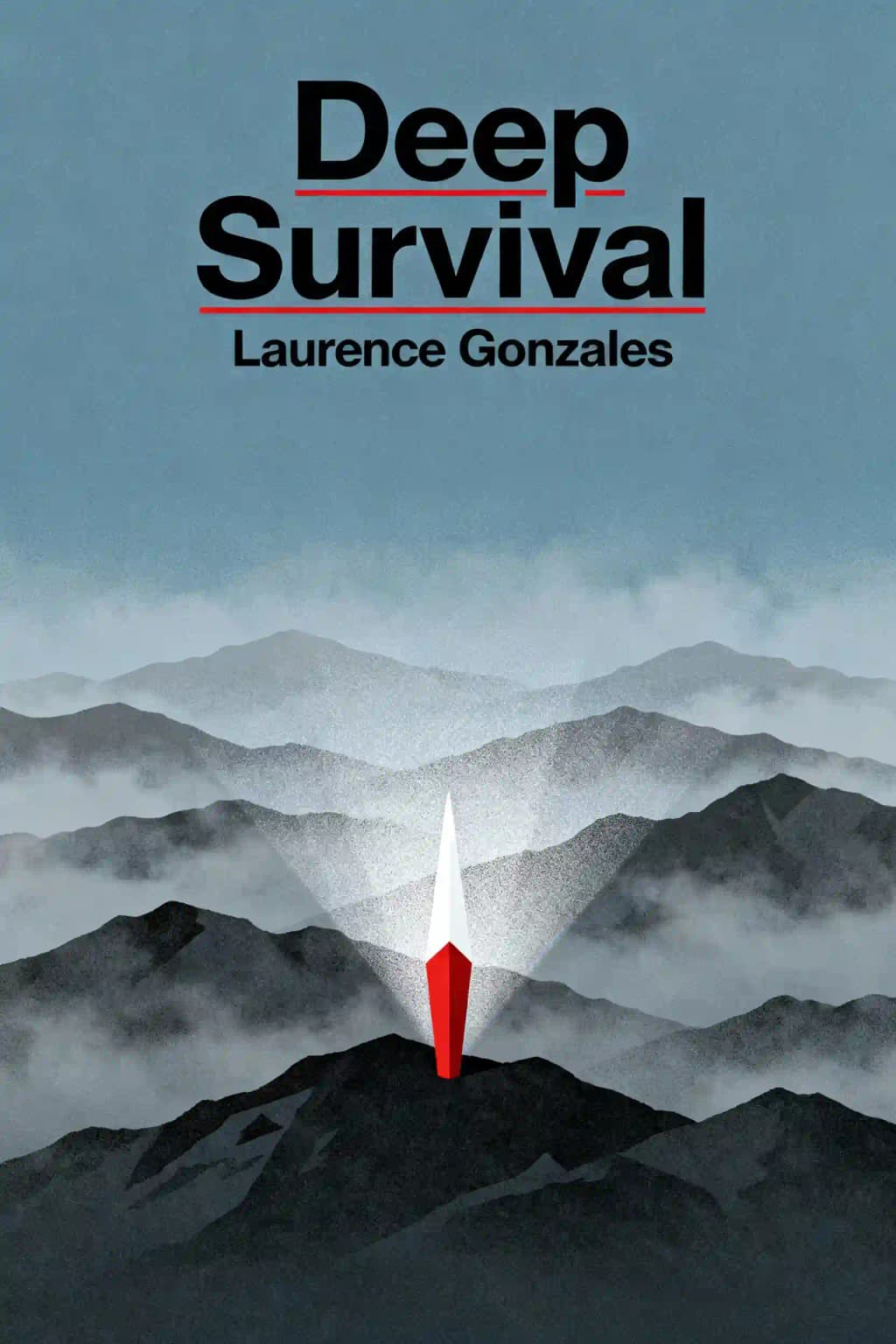
Deep Survival has become a cult classic among adventurers, military personnel, and business leaders since its publication. Laurence Gonzales's masterful exploration of why some people survive extreme situations while others perish has been embraced by everyone from Navy SEALs to Fortune 500 executives. The book has influenced survival training programs worldwide and been featured on numerous "must-read" lists by publications like National Geographic Adventure. Even celebrities like Jimmy Fallon have cited it as transformative reading. What makes this work so compelling isn't just the gripping survival stories, but how Gonzales weaves together neuroscience, psychology, and firsthand accounts to reveal the universal patterns that determine who lives and who dies when facing life's most extreme challenges.
Kapitel 2
The Invisible Forces That Create Accidents
Standing on an aircraft carrier, I witness the boundary between life and death-where survival demands a peculiar kind of calm alertness that not everyone possesses. The pilots face this reality with dark humor, knowing fear is necessary but must be controlled. As one explains during pre-flight briefing: "It will scare the living shit out of you. If you taxi to the cat and don't have a knot in your stomach, there's something wrong."
The emotional system is extraordinarily powerful-so powerful it can make you lift a 500-pound rock when trapped, or rip control columns from jumbo jets in desperate attempts to save crashing planes. Emotion is the horse and reason the jockey-"He's a small man and it's a big horse." The winning jockey, the true survivor, knows when to soothe the beast and when to let it run.
Fear disrupts perception and cognition profoundly. Under stress, cortisol floods your system, narrowing visual fields and interfering with your prefrontal cortex's ability to process information. You see less, hear less, and make critical mistakes. This explains why a fighter pilot crashed into the carrier deck-his fear narrowed his focus exclusively to the landing spot.
This is why dark humor becomes essential for survival. Firefighters call body bags "long-term bivvy sacks" and corpses "crispy critters." Laughter actually inhibits firing in the amygdala, dampening fear. It's not absence of fear that separates elite performers-as Mike Tyson said, fear is "like a snap, a little snap of light...Here's my buddy today." It's about managing fear through emotional control.
Watching pilots launch from the carrier, I notice they ordered "dog" for dessert-soft-serve ice cream named for how it comes out of the machine. An hour later, standing on the LSO platform, I watch an officer judge incoming pilots by eyeball alone in the pitch black. When one approaches badly, he says through my headphones, "Look out, here comes Ray Charles," doing a blind man's dance as he waves the pilot off. Watching the jet shoot off the carrier end, dipping slightly before regaining altitude, he quips, "Boy, did you see him settle? He'll be picking the seat cushion out of his asshole about now."
Kapitel 3
How Our Brains Create Deadly Illusions
Our brains make decisions through emotional bookmarks rather than pure logic. When decisions must be made instantly, our emotional system reacts by finding similar past experiences and recalling the feelings associated with their outcomes. These gut feelings provide immediate feedback on how to behave-avoiding bad options and pursuing good ones-without conscious thought.
The classic Claparede experiment demonstrated this perfectly: his amnesiac patient, despite having no memory of being pricked by a pin during a handshake, forever refused to shake his hand again. She couldn't explain why-she just had a bad feeling. Her body had learned without conscious memory.
This emotional response system explains many recreational accidents. Scuba divers have been found dead with air in their tanks after removing their regulators-their overwhelming emotional response to mouth covering overrode logical knowledge. Similarly, snowboarders quickly learn to keep their edge up after just two painful falls-the body remembers the pain and automatically tightens muscles without conscious thought.
Our brains continuously map both ourselves and our environment, adapting through experience. From birth, we develop complex neural networks that attach emotional values to situations, creating "emotional bookmarks" that guide future decisions faster than conscious reasoning can. These emotional maps develop through risk-reward learning-like my infant son Jonas learning that crying brings attention, or children learning to walk despite falling risks.
The brain's architecture contributes to these dynamics. The amygdala processes sensory information milliseconds before our conscious neocortex, triggering emergency reactions before rational thought can intervene. This explains why we startle before recognizing a friend. While elite performers can sometimes override inappropriate emotional responses, most people (up to 90%) struggle to think clearly under stress.
Our mental models can blind us to obvious realities. When lost in a ski resort whiteout, I pushed my daughter downhill away from safety despite seeing people going up the lift-my stressed brain followed the flawed model that "safety is down." Thankfully, my twelve-year-old daughter maintained her environmental awareness and corrected me.
Mental models determined survival during the World Trade Center collapse. While eighteen people escaped down an open stairwell, hundreds went upward-some following a window washer with a key to the locked roof door, others remembering helicopter rescues from the 1993 bombing. All died when the building collapsed.
Kapitel 4
When Small Mistakes Cascade Into Disaster
On Cathedral Peak, the climbers rushed ahead despite seeing clouds moving in. By the third pitch, with distant rain visible, they still "made a group decision to press on" rather than retreat. Their cotton clothing offered no protection against hypothermia in the approaching storm.
As they neared the summit, disaster struck. Their hair stood on end from St. Elmo's fire-the corona discharge created when thunderclouds draw positive charges upward through conductors like human bodies. Rob described the terrifying buzzing sound moments before lightning struck, hammering him into the stone wall and surging through his body. His brother David, at the summit, hung limply from his belay position.
Despite the extreme danger, Rob scrambled unprotected across wet, exposed rock to perform rescue breathing on his brother, driven by "rescue fever"-the powerful emotional impulse to help others despite life-threatening risks. The four climbers, one injured and all suffering hypothermia in their cotton "death cloth," had only one flashlight between them as darkness approached.
Most accidents happen when routine mistakes occur in high-risk environments where small errors can cascade into disaster. Consider the catastrophic climbing accident on Mount Hood in May 2002. Four climbers-Bill Ward, Rick Read, Chris Kern, and Harry Slutter-were descending from the summit when Ward slipped. Their rope system, designed to protect them, instead created a deadly chain reaction. As Ward accelerated to 30 mph before the rope went taut, he pulled the others off the mountain. The falling climbers "clotheslined" two other climbers, and all six tumbled into a crevasse, where they collided with three more climbers.
Using Charles Perrow's "normal accident theory," we can understand that these accidents aren't random but emerge from the interaction of system components. Like the space shuttle Challenger disaster, the Mount Hood accident resulted from a tightly coupled system where small failures cascaded catastrophically.
The most common factors in mountaineering accidents are descending, being roped together without fixed protection, and having no anchors. As experienced mountaineers say, "A rope without fixed protection is a suicide pact." Human-machine systems fail when people celebrate prematurely, experience physical depletion, and face technically difficult descents. Stress impairs judgment and physical ability while our mental models fail to account for how quickly energy can build in a rope system during a fall.
Kapitel 5
The Hidden Dangers in Paradise
One sunny day in Hawaii, I headed eagerly toward the inviting waves at Lydgate Beach. The lifeguard, Mike Crowder, stopped me to carefully read the water conditions. He explained the deadly rip currents that would carry swimmers beyond a safe zone just ten yards offshore, around a rock barrier, and "just beat you to death against those rocks." Without this chance encounter, I would have swum straight into danger.
Scientist Chuck Blay's research revealed drownings in Hawaii correlate directly with tourist numbers-75% of victims were visitors, 90% white males in their forties or fifties. "The profile is: A guy comes here. He looks out there. And it's so beautiful and blue and inviting that he goes in." The seemingly benign warm waters hide the reality of being "in the middle of the ocean here, two thousand miles from the nearest land" with waves coming from four-mile deep waters with nothing to stop their momentum until they hit the cliffs.
Two days before my arrival, two twenty-one-year-old tourists went hiking in Sacred Falls State Park and vanished without a trace. Despite their parents flying in to keep vigil, they were never found-joining three other hikers who disappeared in the same area in 1994-95. During one rescue effort involving 150 people, three searchers were lost as well.
Growing up body-surfing on Galveston beach taught me that waves were benign and pleasurable-but the Gulf of Mexico is not Kaua'i. The seemingly harmless act of walking into a forest or swimming in surf doesn't trigger thoughts that we might "never be seen again." Chuck Blay explained how lost hikers in Hawaii's interior wilderness-triple-canopy jungle with no visible sun or sense of direction-sometimes hear surf below and walk toward it seeking escape. They venture onto deceptive carpets of vegetation growing out over 4,000-foot cliffs, punch through soft spots, and plummet to their deaths, their bodies churned against volcanic rocks and never recovered.
My rock climbing instructor once told me about friends rappelling off a seemingly solid granite slab on the Matterhorn-a spot used for generations. After letting others go first, the husband descended while his wife watched. Suddenly, the massive slab began sliding. Their fingers touched briefly before the rock floated away, killing him and forever changing her perception of mountain solidity. Most people can't imagine mountains coming apart, yet all mountains are in continuous collapse. Our compressed human timeframe doesn't match nature's phenomena.
Some people never learn despite repeated close calls. Butch Farabee of the National Park Service recalled rescuing a man with sunstroke from a Yosemite wall, only to pull the same man off another mountain six months later, this time dead from hypothermia. We make complex calculations crossing streets or driving cars without conscious thought because our culture prioritizes that learning. But wilderness presents energy levels beyond our trained imagination.
Kapitel 6
The Survivor's Mindset: Beyond Skills and Equipment
Juliane Koepcke's response to falling from a disintegrating plane revealed the survivor's mindset-rather than panicking, she observed with wonder that the jungle trees "looked just like cauliflowers." Awakening alone strapped to her seat, she didn't waste time lamenting her fate but took responsibility and made a plan. Drawing on knowledge from her researcher parents, she followed rivers downhill, walking eleven days through jungle despite being attacked by parasites and insects. Meanwhile, a dozen other crash survivors who waited for rescue all died.
When Juliane finally reached a hut and was found by hunters, it wasn't just luck-as Pasteur said, "Luck favors the prepared mind." Similarly, during the World Trade Center disaster, many died following authorities' instructions to stay put, while survivors like Juliane trusted their own judgment over rules.
The author describes how survival instructor Byron Kerns learned crucial lessons about survival psychology during a training exercise with Air Force pilots. Pushing them too hard across a snowy field led to dangerous fatigue and apathy. Kerns discovered that fatigue is as much psychological as physical-"more like a spiritual collapse" that can rapidly deteriorate into hypothermia and death. Survival requires operating at about 60% normal activity, resting frequently, and being "stingy with scarce resources."
At Mark Morey's Vermont Wilderness School, children learn to move silently through forests like deer and respond to emergencies as a team. When challenged to build a fire to save their hypothermic instructor with just one match, the eight-year-olds work harmoniously and succeed in just over four minutes. Morey explains they're "loss-proofing these kids by building empathy and observational skills" and teaching them to prioritize group needs.
The author connects this to Jack London's "To Build a Fire," where the protagonist dies because his attitude-not his skills-fails him when facing extreme cold. At Morey's school, children like ten-year-old Jacob spend years mastering primitive skills like bow-drill firemaking, developing "an attitude of quiet humility" and "thoughtful, confident examination of self and environment."
Morey's wilderness school teaches "song lines"-an Aboriginal navigational technique where students create mental maps through conversation and observation at specific points. When hiking, Morey stops frequently to examine and discuss findings, creating memorable reference points. Later, students can retrace their steps by remembering these conversations. Each child also selects a "secret spot" in the woods to visit daily through all seasons, learning to be calm and alone. This embedding of reliable mental maps in the unconscious mind represents "aboriginal neuroscience" that ensures children will never feel the woods are alien or panic if lost.
Kapitel 7
The Transformation from Victim to Survivor
Steven Callahan demonstrated textbook survival behavior after his boat sank. Rather than succumbing to despair, he took decisive action while maintaining emotional control-diving back into his sinking vessel to retrieve supplies, analyzing his situation objectively, and setting small achievable goals rather than focusing on the impossible 1,800-mile drift to land. He employed humor as "a vital organ for survival," channeled fear into productive action, and maintained humility before nature. His preparation (including having read survival accounts) gave him crucial knowledge that survival was possible.
Within 24 hours, despite painful salt sores, Callahan had completely transformed from victim to survivor-celebrating small victories and maintaining resolve through pain. This exemplifies the survivor's mindset: staying humble, taking measured risks, harnessing emotions productively, and believing that anything is possible.
For survivors adrift at sea, physical suffering begins almost immediately-within 24 hours, Callahan's skin developed hundreds of painful salt sores. Yet his ability to feel victorious after patching a small hole in his raft demonstrates a crucial survivor trait: celebrating small achievements. Unlike many recreational sailors, Callahan transformed from victim to survivor with remarkable speed and grace-a quality typically found only in highly trained professionals.
This contrasts sharply with Tami Oldham Ashcraft who, despite having more resources after her boat was damaged in a hurricane, attempted suicide when land briefly disappeared from view. Similarly, Pasquale Buzzelli, trapped in the World Trade Center collapse, remained in denial until smoke forced him to evacuate, and later contemplated suicide when trapped in the wreckage. These reactions, while understandable, represent the antithesis of the survivor's perspective.
Debbie Kiley's experience aboard the sinking Trashman provides another contrast to Callahan's survival story. Despite being an accomplished sailor, Kiley was hampered by an incompetent crew when their boat sank in a hurricane. After clinging to an 11-foot Zodiac with no supplies, the crew's lack of preparation (especially no water) meant their chances were minimal. As John Leach observed, "People will quite simply ignore the possibility that a particular disaster will ever strike them."
As the group deteriorated further, Kiley found her survivor's mentality through focusing on beauty: "Focus on the sky, on the beauty there." She experienced the paradox that defines survivors-accepting reality with a hard heart while maintaining empathy. "And at that moment I knew with startling and absolute certainty that I was not going to die." Every survivor describes the same pattern: facing horror, finding beauty, then feeling certainty. In survival, the final step isn't acceptance but total commitment.
Kapitel 8
The Sacred Dance of Survival
When disaster strikes, survivors must navigate through denial and anger to reach determination. Joe Simpson and Simon Yates demonstrate this perfectly after Simpson's catastrophic leg break while descending Peru's Siula Grande. Rather than surrendering to self-pity, both men immediately shifted from emotional reactions to cognitive control, creating an "uncrossable gap" of necessary emotional distance that allowed them to focus entirely on survival.
After 65 days adrift, Callahan approached death despite his remarkable survival skills. When finally reaching the Caribbean Islands on April 21, 1982, fishermen found him because birds were circling the dorados he'd herded across the Atlantic. Despite his condition, he calmly told them to continue fishing while he waited, savoring his hoarded water after 76 days on half-pint rations.
Joe Simpson and Simon Yates faced death on Peru's Siula Grande when Simpson broke his leg at 19,000 feet. Simpson initially cycled through denial and anger but quickly took cognitive control, maintaining calm to avoid panic. When Yates found him, both men communicated minimally, preserving the "terrifyingly fragile and precious" mental balance needed for survival.
On the treacherous snow cliff, they demonstrated survival's essential qualities: cool assessment, adaptation, and commitment. Yates made the hard decision that "I left him then, and forgot about him"-the necessary emotional detachment for survival. Simpson, meanwhile, transformed his desperate sideways movement on the vertical snow wall into a methodical pattern: "Each pattern made up one step across the slope and I began to feel detached from everything around me." His struggle became a dance that freed him from terror.
Lauren Elder's 1976 plane crash survival in California's Sierra Nevada demonstrates the power of anger as survival fuel. After the crash killed both companions, "something peculiar happened. I got angry... That's not going to happen to me. I am going to get down from here."
Despite wearing high-heeled boots and a short skirt, Elder hiked for 36 hours through wilderness, even finding moments to appreciate beauty and skinny-dip in mountain pools. Like Simpson, she used patterns to transform her grueling hike into "a dance of joy." This pattern-making-whether through chanting, marching songs, or rhythmic movement-helps survivors alter consciousness and maintain control. As the author notes, "To make a pattern, to use rhythms, means quite literally to live."
After Yates cut the rope, Simpson fell into a deep crevasse but miraculously survived, landing on a snow bridge. Finding himself alive, he laughed-a critical first response. Despite his broken leg and impossible situation, Simpson maintained remarkable mental clarity, analyzing his predicament with a "calm rational voice" while another part of him "went quietly mad."
Accepting his new reality, Simpson chose to lower himself into the unknown darkness rather than die slowly. During his terrifying rappel, he discovered a snow cone leading up to the surface. At dawn, a transformative moment occurred when he saw "a pillar of gold light" beaming through a hole in the crevasse ceiling. This spiritual experience triggered an absolute certainty of survival: "I was going to reach that sunbeam. I knew it then with absolute certainty."
Kapitel 9
The Nobility of True Survival
At Randolph Air Force Base during a weather standby, the narrator encounters Chuck, a former F-15 pilot who'd played dangerous games of chicken with Russians over Iceland. The conversation reveals the brutal physical realities of fighter piloting-the crushing helmet weight, the restrictive gear, the physical pain of long flights. They watch a video of a midair collision during a dogfight where a pilot, despite his emergency, professionally calls "Mark" after his "Bailout!" command to help rescuers locate him. "That's just pure professionalism," Chuck explains-thinking of teammates even in mortal danger.
This exemplifies what survival requires: being "a player-a fighter and helper from beginning to end," like flight attendant Madeline Amy Sweeney on 9/11, who calmly reported hijacker information until the end. While cognition gives humans evolutionary advantages by shifting from reaction to action, its linear nature often fails against nonlinear dynamic systems in crisis moments.
In Herodotus' Histories, Solon tells Croesus that true happiness can only be judged at life's end. Survival follows this paradox-it's not a single moment but a lifelong path. Ancient wisdom like the Tao Te Ching addresses survival through paradox: the true survivor has "no mortal spots." Peter Leschak, a wilderness firefighter, describes the fireground as "sacred locale" where he's tapped into spiritual aspects that guide his survival.
Like astronauts who train ascetically for years, survivors embrace fear and pain as tools of salvation. When Neil Armstrong landed on the moon, he demonstrated this perfect blend of reason and emotion-taking manual control when logic failed, remaining calm despite alarms and low fuel, literally flying by the "seat of his pants" when dust obscured visibility. This exemplifies Leschak's "certain nobility"-not wealth, but dignity of behavior in life-threatening situations.
In 1988, I wrote about Air Force fighter pilots, seeking to understand what made them exceptional survivors. Captain Rodgers explained they select those who "get it right away," are competitive, can speak confidently on unfamiliar topics, and are perfectionists-the top 5% academically. Unlike the reckless "Top Gun" stereotype, modern fighter pilots embody discipline and humility. When pilots mimicked the movie line "the need for speed," they were mocking it. As Captain Rodgers said, "We are officers first, pilots second." Like Zen archery where hitting the target becomes secondary to mastering the way, survival emerges from integrity and humility.
Kapitel 10
The Legacy of Impossible Falls
Survival isn't defined by singular moments of luck, but by the accumulated circumstances of a life and what follows. The author's father survived falling 27,000 feet without a parachute, but the true survival story was his ability to forge on for sixty more years after losing his brothers and crew, breaking his body, and enduring prison camp. While his would-be assassin's jammed pistol was mere chance, everything after required deliberate survival.
The author's father began laughing at the absurdity of his situation-surviving an impossible fall only to face an angry farmer with a gun-which marked the beginning of his salvation. This humor became key to his survival, even as a German officer intervened and Mrs. Peiffer, a local woman, insisted the wounded pilot receive care despite her farmland being damaged by the crashed B-17.
Drifting in and out of consciousness after his crash, the author's father experienced wild emotional swings-from delirious joy at being alive to guilt about his dead crew to terror when he thought his own internal bleeding meant imminent death. After a German soldier repositioned his nearly severed nose, he realized he would live. Mrs. Peiffer ordered soldiers to bring him inside by her fire, offering tea and cigarettes before he was thrown into a truck, where the pain of his broken bones grinding together caused him to scream until unconsciousness.
At the prison camp, Dr. Geri, a French Resistance surgeon, wired and plastered his broken body while denying him morphine, bitterly saying it wasn't for "American fliers who bomb babies." As spring arrived and his bones knitted, he was carried outside to sit in the sun. There, watching the distant hills, he spotted a lone figure approaching-an American GI scout whose casual, unmistakable walk caused the German guards to surrender immediately.
The author's family developed survival rituals around his father's experience, celebrating January twenty-third each year with special dinners where more of the improbable story would be shared. Growing up, the author witnessed physical evidence of his father's ordeal-a barely movable right arm fixed with steel pins, horrible scars along his shins, and deformed feet requiring special shoes.
The lesson took decades to learn: his father survived because he remained cool under pressure, following protocols even as death approached. Beyond physical survival, his father rebuilt his life with remarkable vigor-earning a Ph.D., teaching at a medical school, mastering numerous artistic pursuits, and fathering eight sons (one died in infancy)-symbolically replacing the nine crewmen he had lost. The father's endless curiosity and energy demonstrated the first rule of survival: believe anything is possible.
The author reflects on how seemingly trivial decisions create life-altering trajectories-if Colonel Hunter had flown left seat instead of right that fateful day, the author would never have been born; if he'd been assigned different stories in 1973, he would have boarded the doomed Flight 191. Survival isn't merely about the moment of crisis but continues as an ongoing struggle. In a world governed by natural laws balancing order and chaos, entropy and self-organization, nothing truly happens by chance.