Kapitel 1
The New Scramble for Africa: China's Million Migrants
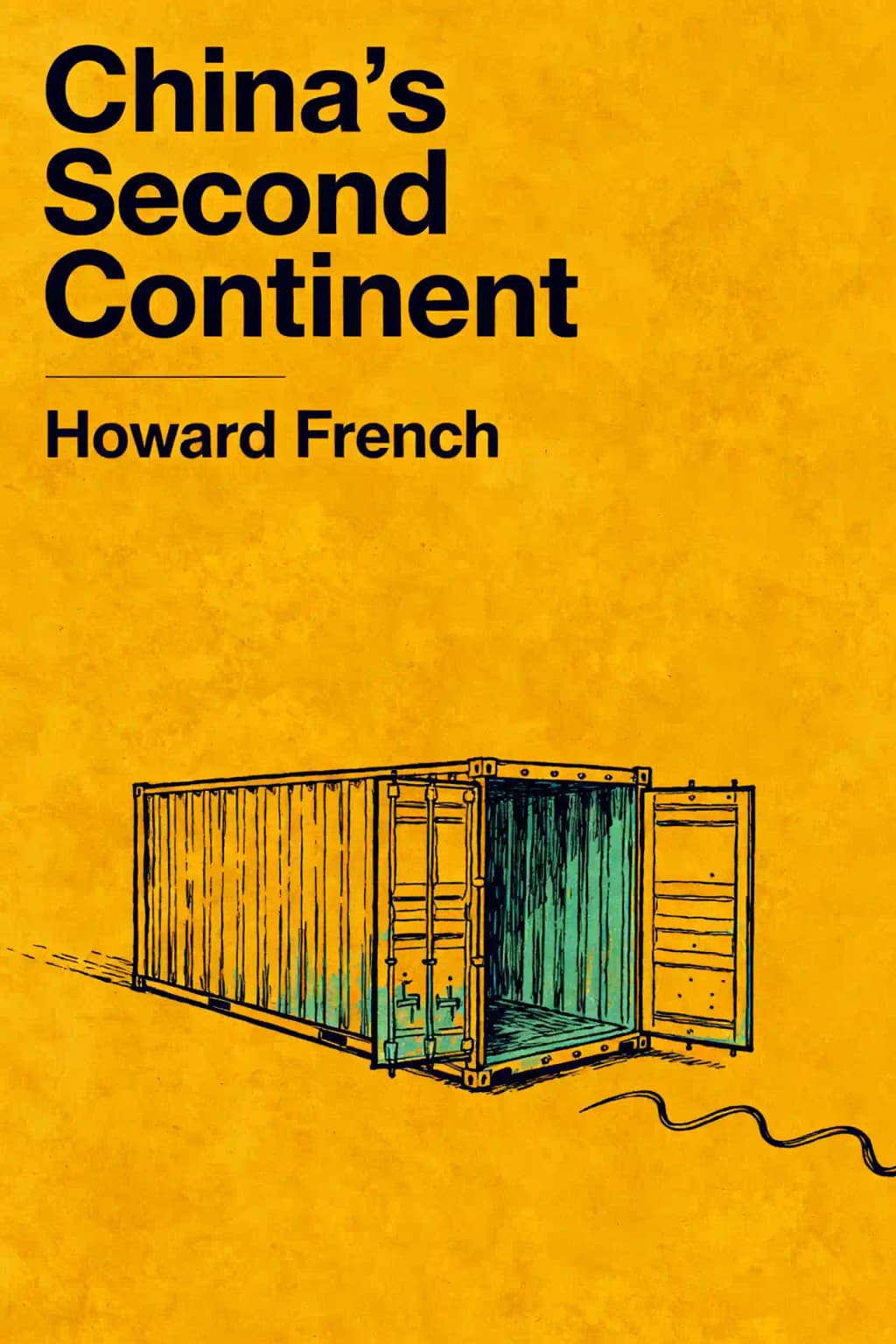
When Howard French first arrived in Mozambique, a gruff Chinese farmer named Hao Shengli picked him up in a white Toyota pickup. Barking orders in a mixture of Chinese, broken Portuguese, and English expletives, Hao embodied what French would come to recognize as the successor to the "Ugly American" stereotype-the unfiltered Chinese expatriate in Africa. This encounter marked the beginning of French's exploration into one of the most significant yet underreported geopolitical developments of our time: the migration of approximately one million Chinese citizens to Africa over just a decade.
Published in 2014, "China's Second Continent" became an instant classic in international relations circles and was named one of The Economist's "Books of the Year." Through French's vivid storytelling and deep reporting across twelve African nations, readers witness how these individual migrants-not just Beijing's official policies-are reshaping the continent's future through their daily interactions, business practices, and cultural exchanges. As China has evolved from the world's factory to its most transformative economic actor, Africa has become the testing ground for a new form of globalization-one increasingly written in Chinese characters.
Kapitel 2
When China Met Africa: A Transformative Encounter
When China launched its historic opening in the late 1970s, it benefited from both wise policies and perfect timing. As globalization surged, China transformed from a poor, closed economy to the "factory of the world." But that first wave of globalization operated largely on Western terms. Now a second, potentially more consequential tide is rising, with China evolving from vessel to transformative actor-becoming the primary agent of economic change across much of the developing world.
Africa has become the great stage for these innovations. Sensing the continent's post-Cold War abandonment by the West, Beijing saw Africa as both training ground for Chinese companies and repository of vital resources. China's trade with Africa exploded to $200 billion by 2012-a twentyfold increase since 2000, surpassing any Western nation's engagement with the continent.
Most crucially, China has exported approximately one million of its own citizens to Africa in just a decade. These migrants-farmers, factory owners, traders, doctors, teachers, even smugglers and prostitutes-are the true architects of this relationship, building networks that channel goods and capital through informal circuits beyond official control.
Africa itself stands at a historic crossroads. Demographics, education, and communication technologies have created possibilities for several African countries to escape poverty and achieve middle-income status. Recent growth has nearly matched Asia's and may soon take the lead. The continent's population will double to two billion by mid-century, creating a "demographic dividend" of predominantly working-age people. By century's end, Africa could reach 3.5 billion people-exceeding China and India combined.
However, growth and development aren't synonymous. Only well-governed countries, likely emerging democracies, will leverage resources and population growth toward prosperity. Others will see elites squander windfalls on prestige projects while populations soar, cities become overcrowded, and resources deplete.
Mid-century represents a twin horizon when population growth peaks and many countries' mineral reserves are exhausted. For some African nations, China's "rediscovery" will mirror China's own lucky timing a generation ago. For others, China's voracious appetites may hasten their demise. As Ghanaian think tank executive Ed Brown observed, this relationship "will determine Africa's future for the next fifty years," with the question being whether African countries can seize the advantage or become "the appendage of somebody else all over again."
Kapitel 3
Pioneers and Predators: Chinese Migrants Across Africa
The influx of Chinese migrants has sparked tensions across Africa. Senegal, Namibia, Malawi, and Tanzania have seen protests from local merchants against Chinese traders. In Ghana, Chinese wildcat miners have been accused of environmental destruction. In Zambia, Chinese immigrants have penetrated every economic sector, becoming a contentious election issue.
These migrants reveal unexpected insights about China itself. Beyond seeking economic opportunity, many have fled corruption, pollution, constraints on freedoms, and overcrowding in their homeland. They embody a peculiar mix of entrepreneurial ambition and cultural insularity, often expressing dismissive attitudes toward local populations while simultaneously building lives far from China's constraints.
In Mozambique, Hao Shengli, who had come after business failures in China and Dubai, was attracted by agricultural experts' advice about Africa's cheap, available land. His candor was striking: "I didn't think they were so clever... We had to find backward countries, poor countries that we can lead... If it was the United States, with fucking intelligent Americans, how could we compete?"
After securing 5,000 acres of abandoned Portuguese plantation land for a pittance, Hao faced resistance from local villagers claiming ancestral rights. His solution was breathtakingly colonial: "I'm bringing my children here... if my sons have lots of offspring with local girls... what do the children become? Chinese or Mozambicans?" His plan was to create a dynasty through procreation with locals, ensuring his family's permanent claim to the land.
In Zambia's Copper Belt, Yang Bohe built his copper-processing empire from scratch. During China's Cultural Revolution, Yang secretly learned English from Bible pages given by a banished teacher-skills that later proved invaluable when China's "go out" policy created demand for translators. Arriving in Zambia in 2002, Yang established Tianfen, his own smelting operation that quickly recovered his $625,000 investment when copper prices surged.
Unlike fly-by-night Chinese operators who devastated Congo's environment before abandoning operations when the market crashed, Yang built a sustainable business with four smelters. His operation exemplified both ingenuity-making bricks from smelter ash-and the problematic labor practices common among Chinese businesses in Africa, where Zambian workers toiled in dangerous conditions without masks or protective gear.
In Senegal, Zhang Yun began his African journey as a translator before opening an electronics store that made him wealthy. Starting with a restaurant and retail shop in Dakar, Zhang gradually expanded into metallurgy and construction. His most ambitious project was a 200-million-euro "Dakar CBD" development on prime corniche real estate, featuring seven buildings including a 32-story tower. The controversial project, which replaced a neighborhood sports area, faced significant local opposition from residents concerned about Chinese economic encroachment.
Kapitel 4
Labor Pains: The Human Cost of China's African Presence
Inside Yang's copper operation in Zambia, workers toiled in dangerous conditions without masks or protective gear, loading charcoal pellets into furnaces that roared with unbearable heat and air thick with particulates. When questioned about his Chinese bricklayers earning $1,500 monthly while skilled Zambians made only $300, Yang grew defensive, claiming the work "is not as simple as it looks" despite the obvious opportunity for skills transfer.
At Shanghai Mining, a Chinese copper processing plant, workers shared similar grievances. John Kasonde, a shift supervisor, bluntly stated, "The Chinese are no good... they don't treat us like people." Twenty-year-old Chola Warren described earning merely $10 per week without overtime pay, dangerous chemical exposure without protective equipment (which Chinese managers wore themselves), and poor food. Unlike Chinese workers who received proper safety gear, Zambian workers stuffed cloth in their noses to ward off toxic fumes.
These tensions fueled opposition candidate Michael Sata's 2006 presidential campaign, which leveraged anti-Chinese sentiment. Though China threatened consequences if Sata won, he softened his rhetoric in subsequent campaigns. Another shooting incident at Collum Mine in 2010 wounded thirteen miners when Chinese supervisors fired on protesters. When Sata finally won election weeks later, Chinese companies immediately doubled worker pay, and Sata diplomatically welcomed the Chinese ambassador while firmly insisting they respect Zambian laws.
In Namibia, Herbert Jauch's study documented Chinese builders paying as little as one-third of legal wages. Labor activist Justina Jonas took a strong stance after successfully striking against a Chinese construction firm. "The people employed by the Chinese are the most exploited workers in Namibia," she insisted, noting they paid as little as 21 cents hourly versus the 95-cent minimum wage. When unions organized a conference to address concerns, Chinese representatives reportedly claimed Namibians were lazy and that "there is nothing you can do to us," sparking outrage that eventually led to worker protests and government intervention.
Throughout Africa, Chinese managers expressed similar attitudes about local workers. Zou Manyang, a project manager for China Railway Wuju Corporation who'd spent eight years in Ghana, criticized local work ethic: "Some people in Ghana don't work very hard. Because it is a tropical country, they can get food very easily... They don't want to work hard to make more money." Defending Chinese management practices, Zou claimed they couldn't use African managers due to communication barriers and quality concerns: "If we just had Africans do the work, it wouldn't be done to that level of quality."
Kapitel 5
The Resource Rush: Extracting Africa's Wealth
China's economic presence in Africa is fundamentally driven by an insatiable appetite for natural resources to fuel its industrial expansion. This dynamic is vividly illustrated in Zambia, where Chinese companies strategically acquired the Chambishi copper mine for $20 million during the privatization wave of the 1990s. This remarkably low price came amid intense pressure from international financial institutions like the IMF and World Bank, who pushed for rapid privatization of state assets. The Chinese owners subsequently invested in modernizing the facility with new equipment and technology, resuming operations in 2003. By 2008, they had fully recovered their initial investment, demonstrating the extraordinary value proposition of their acquisition.
The post-conflict reconstruction of Sierra Leone presented another opportunity for Chinese expansion. Chinese road-building companies swiftly established operations, effectively displacing traditional European and African contractors who had historically dominated the sector. Their comprehensive proposal included ambitious infrastructure projects: a modern city development, airport renovation, seaport construction, and a state-of-the-art smelter. These projects were strategically designed to access Sierra Leone's vast mineral wealth, including significant deposits of iron ore, rutile, titanium, and other valuable metals. Though Romanian-born entrepreneur Frank Timis ultimately secured key mining rights, he did so by partnering with Chinese state-owned giants China Railways Materials and Shandong Iron and Steel Group, who provided crucial infrastructure support including railway reconstruction and port development.
Northern Mozambique emerged as a particularly concerning example of resource exploitation. In this impoverished but resource-rich region, Chinese operators established extensive logging and fishing operations, often operating in legal gray areas. The scale of illegal activities became apparent when authorities intercepted six hundred containers of illegally harvested hardwoods destined for Chinese markets. Environmental monitoring groups, including a prominent London-based organization, documented that China's import of illegal Mozambican timber reached between 190,000 and 216,000 cubic meters in 2012 alone, representing approximately $130 million in value.
The situation at Mozambique's National Directorate of Lands and Forestry highlighted institutional challenges in managing these resources. Director Joao Carrilho's dismissive attitude toward the land crisis contradicted widespread evidence of corruption, with officials selling large land concessions to foreign interests. While he claimed zoning regulations contained the problem, he admitted to persistent violations of value-added processing requirements by Chinese logging operations. His prediction that similar issues would persist for thirty years ignored the devastating reality that Mozambique's precious old-growth forests faced imminent destruction at current exploitation rates.
Ghana's experience further exemplified the environmental and social costs of unregulated resource extraction. Chinese miners engaged in widespread illegal gold mining operations, employing harmful practices that devastated forest ecosystems and contaminated agricultural land with toxic mercury. Despite Ghana's relative political stability, growing oil sector, and favorable demographic trends, the country's educated class expressed deep concerns about long-term resource management and the increasing Chinese presence in their extractive industries. These concerns reflected broader continental anxieties about the sustainability and equity of China's resource-driven engagement with Africa.
Kapitel 6
Infrastructure and Influence: China's Soft Power Strategy
China's economic presence has translated directly into political influence across Africa, establishing a new paradigm of development partnership that challenges Western approaches. Under President Toure, Mali aggressively pursued foreign investment in the fertile Niger River Delta starting in the early 2000s, with Chinese firms leading the charge. Critics objected to both the opacity of these land deals and the forced displacement of local peasants, with gendarmes expelling residents while foreign buyers covered the costs of removal. These displacements affected thousands of smallholder farmers and their families, particularly in regions like Segou and Sikasso.
American diplomats in Mali expressed mounting concern about China's growing influence, particularly Beijing's strategic funding of government buildings like the presidential office complex, parliament buildings, and ministerial headquarters. One diplomat worried that these investments created dangerous leverage: "If Mali ever disagrees with China at some point on an issue, they can say, What about that $100 million that we've just loaned you?" This concern was amplified by China's practice of providing both the financing and construction services as a package deal, creating long-term dependencies.
The competition between Chinese and Western interests became particularly revealing through China's success in winning American-funded projects through the Millennium Challenge Corporation, including a $71.6 million Bamako airport expansion contract awarded to Sinohydro. Chinese companies consistently underbid Western competitors by 20-30%, often through state subsidies and lower labor costs. This exploitation of American aid dollars prompted Congress to pass legislation blocking foreign state-owned companies from bidding on MCC contracts. The situation highlighted fundamentally different engagement approaches-while the US had moved away from tied development assistance, China's funding remained strongly tied, requiring borrowers to employ Chinese contractors, materials and labor, often bringing in thousands of Chinese workers for major projects.
In Zambia, at the stadium construction site, the stark division between Chinese managers and African workers revealed ongoing tensions that characterized many Chinese projects across the continent. African painters complained bitterly about their Chinese employers-describing thirteen-hour workdays, wages below local standards, harsh treatment, and dangerous working conditions without proper safety equipment. When journalists attempted to speak with Chinese managers about these conditions, they were dismissed with hostile responses like: "Foreigners come here to make trouble. They are always looking for ways to harm China's image."
Across Africa, there was a growing sense that China was becoming the indispensable partner-an expeditious power that could transform nations in ways the West with its countless rules and procedural demands around democracy, human rights and corruption had promised but never delivered. Chinese-built highways, railways, and ports were visible symbols of progress, completed in fraction of the time Western-backed projects typically required. Africans increasingly saw the United States as the epitome of disappointment-making beautiful, principled speeches and imposing countless conditions around governance and transparency, but moving the ball very slowly. This perception was reinforced by China's "no strings attached" policy regarding internal affairs, though critics argued this approach enabled corruption and poor governance standards.
Kapitel 7
Democracy's Defense: How Governance Shapes China-Africa Relations
Throughout Africa, French witnessed democracy's impact on China-Africa relations: shadowy real estate deals blocked in Senegal, better pay for miners in Zambia after Chinese labor practices became an election issue, and even in a village near Bamako, where an ex-mayor's faith in democratic institutions fueled his persistence against corruption.
In Ghana and across Africa, China conducted business with minimal transparency. What details emerged about their massive deals came through democratic institutions-parliaments, opposition parties, and civic groups demanding disclosure of information the Chinese preferred to keep private.
Ghana holds an outsized position in African history as the first sub-Saharan country to gain independence in 1957. After decades of economic decline under corrupt military rule, Ghana has maintained one of Africa's strongest democracies while achieving steady economic growth, making it uniquely positioned to manage its relationship with China effectively.
Edward Brown, a former World Bank representative now working at the African Center for Economic Transformation, expressed skepticism about Ghana's $13 billion Chinese loan package despite President John Atta Mills' claim it would "transform our country's economy." Though Ghana's democracy, transparency, and growing middle class positioned it well to leverage Chinese investment, Brown worried about the deal's fundamentals: "The Chinese decide what they want. They arrange the financing. They send their companies."
Kwadwo Tutu, senior economist at Ghana's Institute of Economic Affairs, dismissed China's "win-win" rhetoric and claims of being a developing country peer: "Only a fool would believe that." Yet he welcomed Chinese investment for projects like the Bui Dam that had languished for forty years without Western support. He worried that without building technical and entrepreneurial capacity, Ghana would remain passive while its resources were depleted.
Kofi Bentil and Franklin Cudjoe, founders of the Ghanaian think tank IMANI, offered a critical assessment of Ghana's approach to Chinese relations. "We are simply stumbling through this relationship with China," Bentil said. "I want us to get a good deal out of this relationship, and you won't get that by accident. China has a strategy, and we don't, and they will take advantage of us, not because they are bad people, but because we haven't been smart."
Kapitel 8
The New Colonialism Question: Patterns of Empire
Any act of generosity must be understood through the benefactor's motives. China insists its African project bears no resemblance to Western imperialism, yet questions persist about whether its activities merit this label. While China's engagement lacks formal colonies and relies on peaceful economic means, certain features link its involvement to historical imperial patterns, particularly in how economic influence translates to political power.
Beijing exhibits a preference for highly visible projects that demonstrate its reach and power-having built forty-two stadiums and fifty-four hospitals across Africa. These "monument diplomacy" projects, including the $200 million African Union headquarters in Addis Ababa and the Tanzania-Zambia Railway (TAZARA), serve as constant reminders of Chinese presence. China's ambassador to Zambia boasted about these tangible contributions while dismissing American electoral assistance as intangible and ineffective. Meanwhile, China invests heavily in African media, with StarTimes now controlling 10% of sub-Saharan Africa's digital TV market, and has established over fifty Confucius Institutes across the continent to expand its cultural and linguistic influence.
Most strikingly, the migration of approximately one million Chinese to Africa parallels historical patterns of empire-building through emigration. This mirrors how Portugal sent settlers to Mozambique in the sixteenth century to establish trade presence without extensive administration. In Angola alone, the Chinese population has grown from under 500 in 2003 to over 250,000 by 2012, creating self-contained communities that often operate parallel to local economies.
China's massive infrastructure development in Africa mirrors how Western imperial powers built ports, railways, and roads across the globe to facilitate trade and resource extraction. The Belt and Road Initiative, with projects valued at over $1 trillion, follows historical patterns of empire-building through infrastructure. As China has transformed from near-autarky to "factory of the world" in a single generation, it has become Africa's most ambitious infrastructure developer-driven by similar needs to circulate goods and secure raw materials, particularly minerals and oil.
The Japanese example is particularly compelling-in the 1930s, Japan sent a million people to settle Manchuria with plans for five million more to create "continental Japanese" who would secure colonial domination. While China's movement lacks Japan's militarism and appears more haphazard than deliberately orchestrated, the outcomes matter most. In Ghana, Chinese migrants illegally took control of gold mining operations, causing environmental destruction estimated at $250 million and creating social tensions through systematic bribery of local officials.
Reflecting on the Chinese enclave in Namibia, particularly the $10 billion port development at Walvis Bay, French discussed parallels to European trading stations that preceded colonialism in Africa. These comptoirs introduced Africans to foreign goods, created new markets, extended credit, and established debt relationships-all precursors to full colonization. Though the comparison isn't exact, and China vehemently denies being a colonizer, concerns persisted throughout Namibia from locals who felt disempowered watching foreign workers flout labor laws while their government defended the outsiders. The pattern of Chinese companies bringing their own workforce, often in violation of local employment quotas, has created similar tensions across multiple African nations.
Kapitel 9
Africa's Choice: Partnership or Dependency?
As Chinese influence grows across Africa, the continent faces a critical choice between partnership and dependency. Albert Osei, a retired World Bank country director, dismissed fears about Chinese resource exploitation as "nonsense." He emphasized leverage as the key concept: African countries needed to negotiate collectively with China rather than individually, and use China's involvement to improve terms with Western powers. "If the West is jealous of China, we should say to them, Train our people and give them a bigger role in your companies. Don't complain about the Chinese. Help us move up the value chain."
In Liberia, former labor minister Tiawan Gongloe defended President Ellen Johnson Sirleaf's government, insisting that governance was better than it had been in four decades. When discussing Chinese presence, Gongloe revealed that both Lebanese and American officials had warned Liberia about Chinese influence, but he welcomed Chinese investment that created jobs. What impressed Gongloe about the Chinese was their efficiency: "People appreciate them here because they move at a faster pace than anyone else... They didn't do a lot of feasibility studies. They just went and got the job done."
In Mali, Cooperation Minister Koutoub Sano candidly acknowledged China's strategic generosity: "They don't say this is in exchange for anything. But when they begin doing business with you, they may expect certain things in return... We understand this."
Throughout French's journey, he encountered African leaders and thinkers wrestling with how to maximize benefits from Chinese engagement while minimizing exploitation. The most successful examples came from democratic countries with strong civil societies that could demand transparency and accountability.
The question remains whether Africa's emerging relationship with China will foster genuine development or merely extract resources while leaving little lasting benefit. As Faliry Boly, a Malian farmer and union leader, observed about Chinese investors: "They are like a boa: it observes its prey quietly. They're waiting for a maximal result." His warning to government officials resonates across the continent: "If it is a jewel, then you shouldn't be selling it off to just anyone who comes knocking."
In the end, the future of Africa-China relations will be determined not just by official policies and agreements, but by the daily interactions between ordinary Chinese and Africans across the continent-farmers, traders, miners, construction workers, and entrepreneurs whose individual choices collectively shape this momentous encounter between two civilizations at a pivotal moment in global history.