Kapitel 1
The Sacred Waters: Where Death Becomes Life
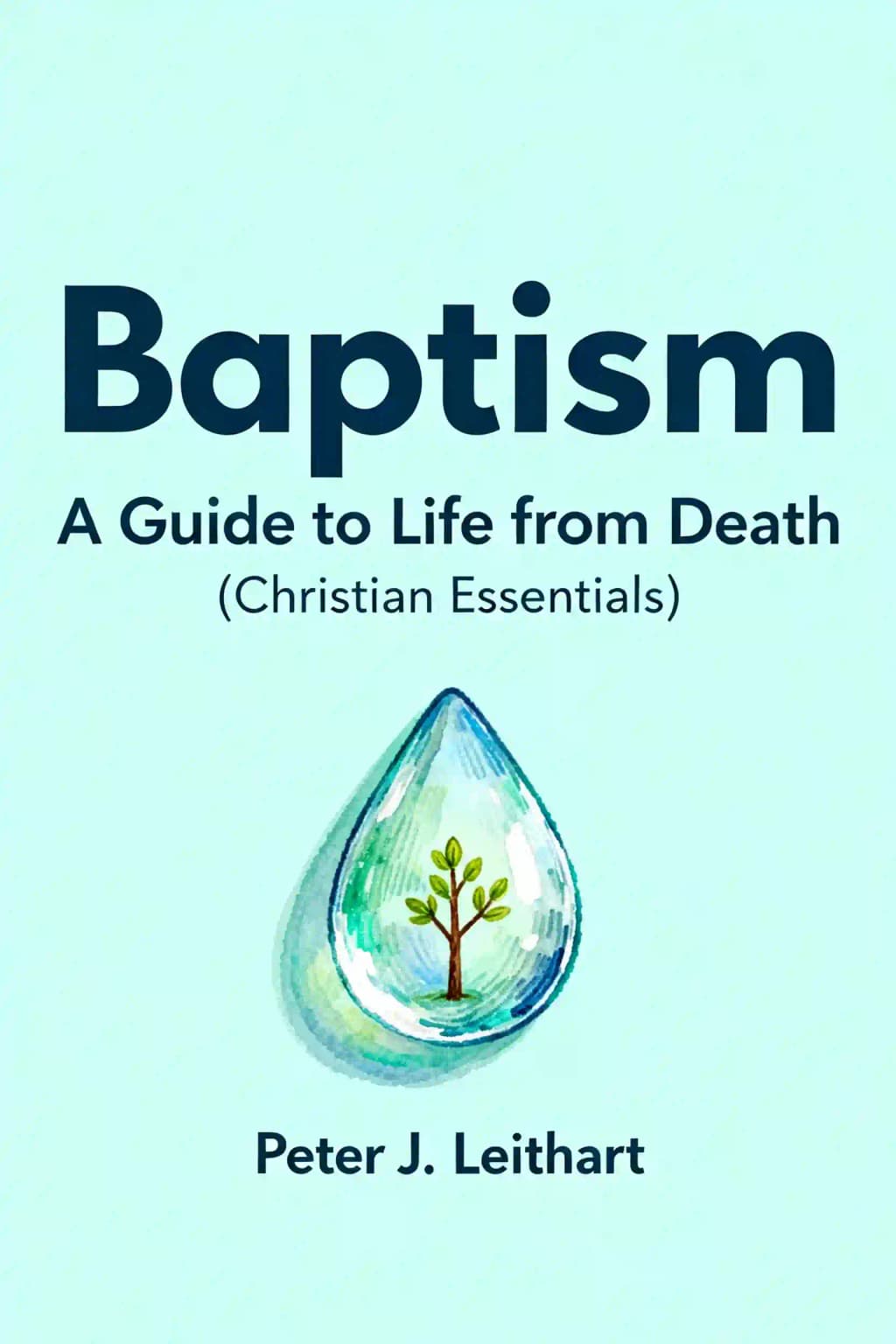
In a world obsessed with self-improvement and personal transformation, Peter Leithart's "Baptism: A Guide to Life from Death" offers something radically different-a vision of transformation that begins not with our effort but with our symbolic death. This theological masterpiece has quietly become required reading in seminaries across denominational lines, with figures as diverse as N.T. Wright and Russell Moore citing its profound insights. What makes this work so compelling is how Leithart weaves together biblical imagery, historical theology, and vivid metaphors to reclaim baptism not as a denominational battleground but as the foundational Christian experience. While churches remain divided over baptismal practices, Leithart's work has been praised for finding common ground in the "baptismal imagination" that united Christians for centuries. Through waters that both kill and make alive, he invites readers to rediscover baptism as nothing less than participation in cosmic recreation-a ritual that doesn't just symbolize but actually accomplishes our incorporation into Christ's death and resurrection.
Kapitel 2
The Church as Family, Body, and Temple
Nearly all errors about baptism stem from misconceptions about the church itself. Three foundational beliefs anchor a proper understanding of baptism. First, humans are fundamentally social beings who are saved not as isolated individuals but as a community. The church isn't merely a collection of saved people but salvation in social form-truly the family of the Father, the body of the Son, and the temple of the Spirit.
Second, through Christ's resurrection, the church already participates in the life of the age to come. We aren't merely waiting for a future transformation; we are now who we will be. The resurrection has inaugurated a new creation in which we already participate, though not yet fully.
Third, communion with God happens through public, communal rituals. Baptism and the Eucharist aren't merely symbols but effective means by which we enter into and sustain communion with God. These rituals aren't private, individualistic experiences but communal practices that shape our shared identity.
These three beliefs are deeply interconnected. The church participates in the new creation through sacramental practices, with baptism serving as the doorway to church membership. When we're baptized, we're incorporated into a family, grafted into a body, and built into a temple. This isn't merely metaphorical language but describes our new ontological reality.
Scripture speaks of baptism as an effective rite that brands us with the Triune name, washes away sin, confers the Spirit, grafts us into Jesus' death and resurrection, and justifies, sanctifies, and saves. What baptism pictures happens at baptism-baptism works. This doesn't mean baptism operates magically or automatically, but that God is faithful to his promises and truly acts through this ritual when it's performed in faith by the church.
The tragedy is that God's sign of unity has become a spring of division. Christians argue endlessly about whom to baptize, how to baptize, why we baptize, and what baptism does. Yet all Christians use water and invoke the Triune name. By recovering the rich baptismal imagination of earlier generations, we can begin to heal these divisions and reclaim baptism as the foundation of Christian unity.
Kapitel 3
Baptism as Effective Sign and Seal
Baptism is a sign that announces the gospel, but it's not merely a picture of an announcement-it actively preaches. Like a herald proclaiming a royal decree, baptism declares that the kingdom has come. It makes the gospel visible and tangible, functioning as a seal that marks the baptized as belonging to God.
This sign works because it is God's work. When the rite is performed by the church using water in the Trinitarian name, it is an act of God himself. The effectiveness doesn't depend on the moral character of the minister or even the faith of the recipient, but on God's faithfulness to his promises.
The apostles read the Old Testament as previewing Jesus, finding "types" that Christ fulfills. Similarly, baptism gathers together biblical events and characters-it's prefigured by creation waters, Noah's flood, Israel's exodus, and other Old Testament water stories. When we're baptized into Christ, these types become part of our identity too. We become new Noahs saved through water, new Israelites passing through the Red Sea, new Naamans cleansed in the Jordan.
Biblical rites function like root words with common meaning but different forms across time. Circumcision was a future-tense sign of hope, pointing forward to Christ who would cut away sin. Baptism is a present-tense declaration that the Messiah has come and accomplished this work.
As a seal, baptism functions like a brand on an animal, a mark on a slave, or a regimental tattoo. This seal doesn't merely tell us we belong to God; it makes it so, transferring us from the world to the church. It both imposes demands (sheep must follow the shepherd, soldiers must be ready to fight) and offers promises (good shepherds care for their sheep, good masters protect their slaves). Baptism saves because belonging to God is salvation-to be marked as his is to be set apart for life.
Kapitel 4
New Creation from Water and Spirit
Jesus initiates new creation in the midst of the old, and baptism announces this new time. God uses water to announce new creation because the first creation was born of water and Spirit. From Genesis onward, water has been fundamental to creation-the Spirit hovered over waters, God separated waters above and below, and living souls first filled the sea. This pattern of water and Spirit working together establishes a foundational principle that carries through all of scripture.
Water permeates all creation in profound and multifaceted ways. Heaven has its sea of glass, described in Revelation as crystal clear and pure. Land has rivers and lakes, oceans cover approximately 71% of Earth's surface, and underground channels flow beneath in vast aquifers. Our planet is fundamentally a water world, and we ourselves are watery beings-approximately 60% water, with brains being 73% water, blood 83% water, and muscles 79% water. This intimate connection between water and life itself reflects deeper spiritual truths about creation and renewal.
In biblical imagery, paradise was a "well-watered place" with a four-branched river suggesting Eden as source rather than destination. The rivers Pishon, Gihon, Tigris, and Euphrates flowed outward, carrying life and abundance. While channeled, fresh water gives life, the sea represents danger and chaos-Israel's heroes were landlubbers, not sailors, with figures like Moses parting waters rather than sailing them. Rivers make land fruitful, set boundaries between peoples, or join them as liquid roads. Ancient civilizations arose on shores of rivers, lakes, and seas - from Mesopotamia between the Tigris and Euphrates to Egypt along the Nile.
Yahweh is portrayed as Lord of water, the true storm God, who sends drought in wrath or throws hail like cannonballs. He parts the Red Sea, brings water from rock, and controls the flood waters. Israel longed for water from heaven, for the Spirit to be "poured out upon us from on high" as prophesied in Isaiah. Jesus is baptized to fulfill these aquatic promises, transforming men filled with murk and mud into living water. His first miracle at Cana involving water becoming wine further emphasizes this transformative power.
Baptism preaches the reconciliation of heaven and earth, giving us a share in heavenly life through a profound symbolic and spiritual act. As God's Word and Wind sculpted creation from the deep, so the Spirit hovers over the baptismal font to shape new creatures. We are born again of water and Spirit, undergoing a sea-change into something rich and strange, as Shakespeare poetically described transformation. The baptismal waters connect us to both creation's origins and its ultimate renewal. In this way, baptism isn't merely a religious ritual but participation in cosmic recreation, linking individual transformation to God's larger work of making all things new. This sacrament embodies both personal renewal and cosmic restoration, making visible the invisible work of the Spirit.
Kapitel 5
The Flood: Death and Resurrection in Water
The first biblical rainfall kills rather than gives life. After three falls-Adam's sin, Cain's murder, and the sons of God intermarrying with daughters of men-God condemns the unfaithful world by decreating it. Waters of life become waters of death as the world reverts to formless void. Yet God remembers Noah, and creation begins anew.
The flood prefigures baptism, though we're often jarred by this comparison because our view of baptism has become shrunken. Baptism marks a haven in the hurricane, preserving the faithful in "the holy ark of Christendom." Through baptism, we join the eightfold family of a new and greater Noah.
Both flood and baptism tell us something profound about our sin-we need something more radical than reform; we need to die. Baptism doesn't just tell us we need to die; it kills, giving the gift of death. Baptized into the ark, we don't die with the world, but to the world.
Peter says baptism doesn't wash dirt from flesh but saves by the appeal of a good conscience. Unlike Old Testament lustrations that purified only flesh, baptism cleanses the conscience from dead works. God doesn't merely declare; he acts, washing away whatever idols we've clung to, whatever evil we've done.
Christians don't live toward death but from death. Death lies behind us, and we live our baptismal death daily, killing the world's lusts. Baptism also warns the world that its days are numbered, pointing to the last day when the Risen One will judge all.
Noah emerges as a second Adam, an improved "Adam 2.0" who ascends higher than the first. Baptized Noah is more radiantly godlike than Adam-a resurrected Adam on the far side of death. Baptism isn't merely rescue or restoration; it's glorification. We don't just return to Eden; we ascend to the New Jerusalem.
Kapitel 6
Circumcision: Cutting Away the Flesh
Both Noah and Abraham are new Adams, arising every tenth generation in early history. After the flood, Abraham comes on scene when wickedness again fills the earth at Babel. Instead of another flood, God calls a single man from among the divided nations, promising Abraham land and seed to carry God's blessing to all nations. Abraham becomes father of a new human race carved from the old.
Circumcision marks the cut in humanity separating Abraham's family from others, not for permanent division but for eventual reunion in the "One New Man." As a symbolic castration, it repudiates natural potency, declaring faith in God's power alone to fulfill his promises.
When Paul links the "circumcision of Christ" to baptism, he refers not to baptism replacing circumcision, but to Jesus' death as the fulfillment of what circumcision prefigured: the cutting away of flesh. In baptism, we're united to Christ's circumcision-our fleshly identities are submerged while we receive a new identity in the Spirit.
Sharing one baptism, we become one people, called to preserve unity against the schismatic way of flesh. Baptism doesn't merely incorporate us into a religious organization but grafts us into a new humanity. It cuts away our old identities-racial, national, social-and gives us a new identity in Christ.
What does this mean for us today? It means that in a world fragmented by tribal identities, baptism calls us to a deeper unity that transcends these divisions without erasing genuine differences. It means that our primary identity isn't found in our ethnicity, nationality, political affiliation, or social status, but in Christ. And it means that the church is called to be a community where these divisions are overcome, where we learn to love those who are different from us as brothers and sisters.
Kapitel 7
Exodus: Liberation from Bondage
Moses' life revolves around water, from surviving Pharaoh's infanticide in a floating ark to leading Israel through the Red Sea. His very name means "drawn out" of water, making him a new Noah and an ancient example of infant baptism. What happens to Moses is recapitulated in Israel's exodus-they are all baptized into Moses, the drawn-out one, becoming a people drawn out of death.
In baptism, the devil-our Pharaoh-is drowned while we pass through to new life. Early Christians ritualized this liberation through pre-baptismal exorcisms and renunciations. Baptism frees us not only from Satan's dominion but from ourselves and our world's cruel systems. On the far shore, we join Miriam's victory song: "Yahweh is a warrior. He has thrown the horse and its rider into the sea."
This liberation confronts both obvious evils and subtle "demonic" distortions of positive values in our culture. Baptism isn't merely a private religious experience but a political act that declares allegiance to a new king and a new kingdom. It announces that we've been transferred from one realm to another, from the kingdom of darkness to the kingdom of God's beloved Son.
Paul warns that Israel's exodus is our cautionary type-all were baptized, yet many fell in the wilderness. Baptism begins our journey but doesn't guarantee arrival. Repentance doesn't precede baptism; baptism is repentance, the turn from Satan to Christ, initiating a life of continuous turning.
Faith is loyalty to King Jesus, and the Spirit's gift of persevering faith matters more than pre-baptismal faith. Though some baptized people tragically rebel against their perfect Father, Paul's warning provokes not despair but godly fear that spurs us to endure in baptismal faith.
What does this mean for us today? It means that baptism isn't just about personal salvation but about liberation from systems of oppression and injustice. It means that the church is called to be an exodus community that resists the Pharaohs of our age. And it means that our baptism initiates a journey that requires ongoing faithfulness, not a one-time event that guarantees eternal security regardless of how we live.
Kapitel 8
Priests and Temples: Consecrated for Service
Baptism functions as the effective sign of new creation, announcing Jesus's inauguration of a new world while giving the baptized a share in it. As a cleansing ritual, baptism fulfills the Levitical purification rites that prepared Israelites to enter God's presence. This ancient practice finds its ultimate expression in Christian baptism, where the waters symbolize both death to the old self and resurrection to new life in Christ.
While Israel needed repeated washings to maintain purity through various sacrifices and ceremonies, Jesus's blood cleanses us through baptismal water once for all, welcoming us permanently to God's table. This singular purification marks a radical departure from the Old Testament system, where priests needed constant ritual cleansing. The baptismal waters, sanctified by Christ's sacrifice, effect a permanent transformation that the temple washings could only foreshadow.
The tabernacle's three-part structure-court, Holy Place, and Most Holy Place-represented both Eden and the cosmic temple, a pattern that reflected heaven itself. Through baptism we become living stones in this divine dwelling, built together into a habitation for God by the Spirit. Each baptized believer becomes part of this living temple, with Christ as the cornerstone. This architectural imagery emphasizes both our individual sanctification and our corporate identity as God's temple.
As "filling the hand," baptism equips us with gifts and mission, making us not merely consecrated ones but consecrating ones who sanctify everything through thanksgiving and prayer. This empowerment mirrors the ancient practice of filling priests' hands with sacrificial portions, symbolizing their authority to serve. We become mediators between God and the world, representing God to the world and the world to God, carrying forward the priestly role of blessing, intercession, and reconciliation.
What does this mean for us today? It means that every baptized Christian is a priest with direct access to God, able to approach the throne of grace with confidence. This democratization of the priesthood transforms our understanding of spiritual authority and service. It means that we don't need special mediators to approach God on our behalf - the veil has been torn, and through baptism, we enter the holy of holies. And it means that we have a priestly responsibility to the world-to intercede for it, to bless it, and to bring it into contact with the holy through our daily lives and work.
This priesthood isn't reserved for a special class of Christians but belongs to all the baptized, a radical concept that upends traditional hierarchies. Whether ordained or not, every Christian has been consecrated for service through their baptism. The distinction isn't between clergy and laity but between those who have been baptized and those who haven't. This universal priesthood manifests in various ways: in prayer and intercession, in offering spiritual sacrifices of praise, in ministering God's grace to others, and in transforming the secular into the sacred through our presence and work in the world.
Kapitel 9
Conquest: Inheriting the Kingdom
Baptism transforms us into conquerors and soldiers of Jesus, the new and better Joshua. Water has always marked significant spiritual boundaries throughout biblical history-Israel left Egypt through the Red Sea and entered Canaan through the Jordan River. These water crossings weren't merely geographical transitions but profound spiritual demarcations. Unlike the death-dealing Red Sea crossing, where Egypt's army perished, the Jordan baptism was life-giving, serving as an effective sign of inheritance that granted Israel their divine birthright.
The geographical movement from east to west across the Jordan represented humanity's restoration to an expanded Eden, a reversal of Adam and Eve's expulsion eastward. This directional symbolism carried deep theological significance, as each step westward was a step closer to paradise restored. Through this baptismal crossing, Israel became a conquering flood that would sweep away the idols and false gods from the promised land. This imagery of cleansing waters became a powerful metaphor for spiritual renewal and cultural transformation.
John the Baptist strategically chose the Jordan wilderness to dramatize a coming exodus and conquest, deliberately echoing Israel's historical crossing. His baptismal ministry prepared a faithful remnant to escape the impending judgment, just as the original Jordan crossing had prepared Israel for their conquest of Canaan. By baptizing at this historically significant location, John was announcing the inauguration of a new exodus and a new conquest under a new Joshua.
Jesus, as the new and greater Joshua, conquers and inherits not just one land but all nations, and those baptized into his Jordan baptism become co-conquerors and co-heirs with him. The Spirit received in baptism serves as a down payment, an arrabon, on their future inheritance, guaranteeing their participation in Christ's victory. We must resist modern spiritualizing tendencies that artificially separate us from our earthly inheritance. As true heirs with Abraham, we inherit not just a spiritual reality but the world itself, fulfilling God's original mandate for humanity to exercise dominion over creation.
Baptism enlists us in the cosmic war between the seed of the woman and the seed of the serpent, equipping us with spiritual weapons to demolish ideological strongholds and resist tyrannical powers in Jesus' name. This warfare isn't conducted through physical violence but through spiritual weapons - truth, righteousness, peace, faith, salvation, and the word of God. These weapons are designed to confront and overcome the powers and principalities that oppose God's kingdom.
This theological understanding has profound implications for contemporary Christian life. It means that Christians aren't called to escape the world but to inherit and transform it. Our hope isn't for a disembodied, spiritual existence in heaven but for the comprehensive renewal of creation. We're called to participate actively in God's mission of reclaiming all spheres of life for Christ - cultural, social, political, and environmental. This involves confronting contemporary idolatries and injustices not with physical force but with the weapons of faith, hope, and love, working toward the day when Christ's kingdom will be fully manifest in every aspect of creation.
Kapitel 10
The Personal Promise: Baptism with Your Name on It
While evangelists preach to nameless crowds and the Bible's promises aren't addressed directly to you, baptism speaks your name. At your baptism, the minister addressed you personally, weaving your name into God's as you were welcomed into the Trinitarian life. Baptism is "the gospel with your name on it."
Through water and Spirit, God made the gospel real in your life-you're reborn, translated from death to life, safe in the ark from the deluge, heir with Abraham, freed from demons, and drafted into Joshua's army to crush idols and fight injustice. You're sanctified as priest, anointed as king, filled with prophetic Spirit. Your past no longer controls you.
Baptism's power continues daily-when bullies return, remind Jesus you are his; when feeling shackled by your past, hear God calling you to the future opened at the font; when fearful, call on the Spirit for words; when surrounded by mobs, remember baptism is fulfilled in martyrdom. Trust your Father's love, stay loyal, don't "melt like water."
Plunged in God's water, become God's water-live like fish in water and be God's rain on dry ground, God's flood against wickedness, for "nothing is more powerful than water." Your baptism isn't just a past event but a present reality that shapes your identity and destiny.
What does this mean for you today? It means that God knows your name and has claimed you as his own. It means that you have a place in God's family and a role in God's mission. And it means that whatever challenges you face, you face them as one who has died with Christ and been raised to new life.
In a world that often makes us feel anonymous and insignificant, baptism declares that you matter to God. In a culture that tells us we must create our own identity, baptism gives us an identity as God's beloved children. And in a society that measures worth by achievement, baptism reminds us that we are valued not for what we do but for who we are-those whom Christ has claimed as his own.