Kapitel 1
Awakening to Life's Symphony: The Spiritual Masterpiece That Changed Oprah's Life
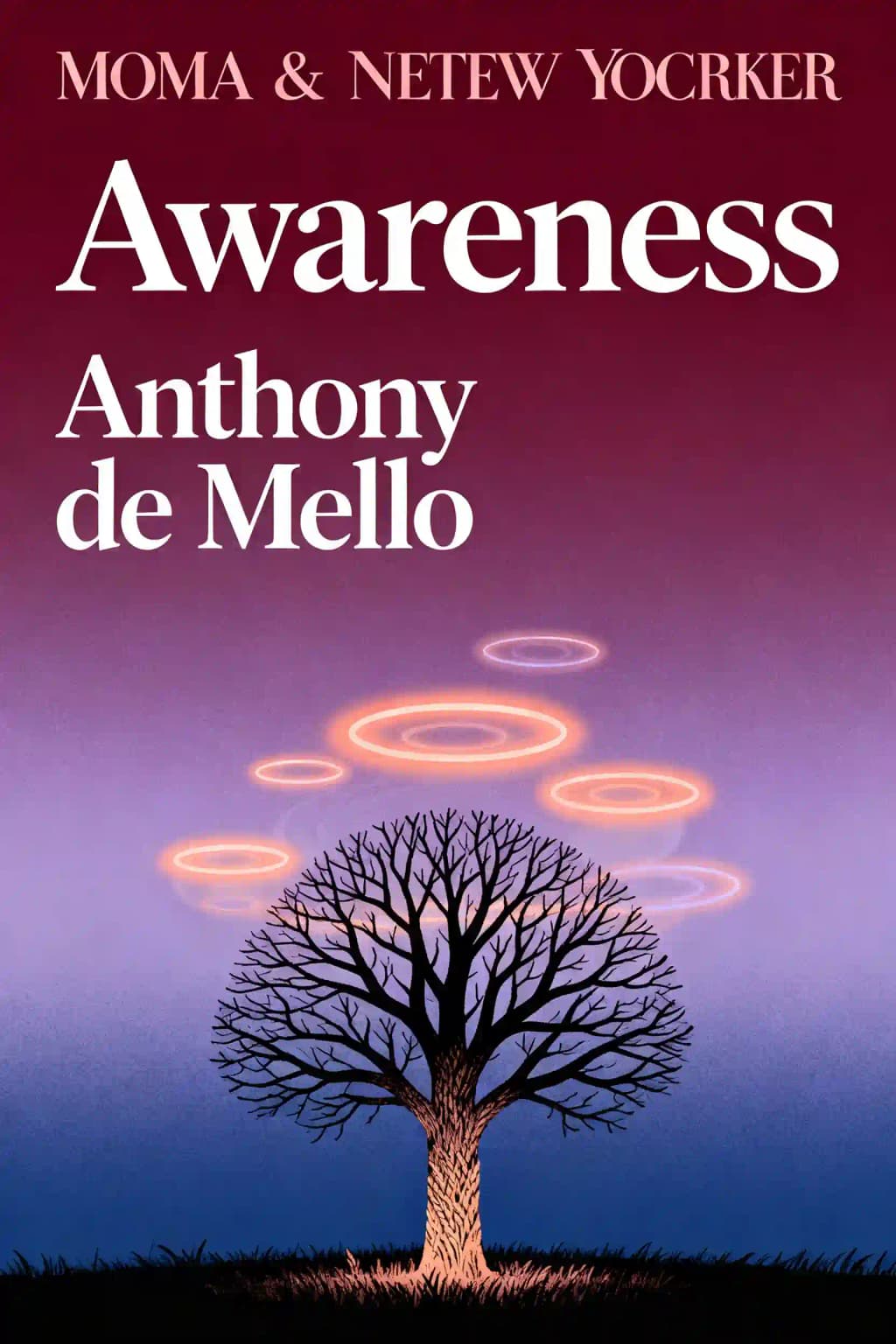
Anthony de Mello's "Awareness" has become a spiritual touchstone for celebrities and seekers alike, with Oprah Winfrey citing it as one of the books that "awakened her to life's greatest lessons." This Jesuit priest's teachings have transcended religious boundaries, influencing millions worldwide with his unique blend of Eastern and Western spiritual wisdom. Unlike conventional self-help books that offer quick fixes, de Mello's approach is revolutionary-he doesn't promise to fix your broken toys but instead invites you to wake up and realize you've been sleepwalking through life. Written in his characteristic conversational style, capturing the spontaneous wisdom of his retreats, "Awareness" continues to resonate decades after its publication because it addresses a fundamental human challenge: how to truly experience life rather than merely thinking about it.
Kapitel 2
The Paradox of Our Sleeping State
Most people, despite appearing fully functional, are actually asleep. This isn't metaphorical-de Mello insists we're literally unconscious to the reality around us. "Spirituality means waking up," he declares. "Most people, even though they don't know it, are asleep. They're born asleep, they live asleep, they marry in their sleep, they breed children in their sleep, they die in their sleep without ever waking up." This unconsciousness manifests in our daily routines, our reactive behaviors, and our mechanical responses to life's challenges.
This sleeping state explains why we miss the paradoxical truth that mystics throughout history have recognized: despite life's apparent messiness, all is fundamentally well. We can't see this because we're trapped in a nightmare of our own making, constantly reacting to our programming rather than responding to reality. Like the 45-year-old headmaster who still needs his father to wake him for school, we've grown too big to remain asleep, yet we resist awakening. This resistance shows up in countless ways: our attachment to familiar patterns, our fear of change, and our tendency to blame external circumstances for our internal state.
Why this resistance? Because waking up is uncomfortable. It requires facing truths we've spent lifetimes avoiding - our dependencies, our fears, our false beliefs about ourselves and others. Most people don't truly want awakening; they merely want their broken toys fixed-their relationships, careers, reputations. They want the symptoms addressed without curing the underlying disease of unconsciousness. They seek better jobs, more harmonious relationships, or greater status, all while remaining fundamentally asleep to their true nature.
True awakening isn't about fixing external circumstances but about transforming perception. It's about seeing reality as it is, not as we wish it to be. This transformation doesn't come through effort or willpower but through awareness-a quality of attention that sees through our conditioning and illusions. As an Arab saying goes: "The rain is the same, but it produces thorns in the marshes and flowers in the gardens." The difference lies not in the rain but in the soil that receives it. Similarly, two people can experience the same event differently - one remaining trapped in unconscious reactions, the other responding with awareness and clarity.
This awakening process requires consistent self-observation, a willingness to question our assumptions, and the courage to face uncomfortable truths. It involves recognizing our programmed responses, our habitual patterns of thought, and the ways we unconsciously create our own suffering. The path to awakening isn't about adding more knowledge or experiences, but rather about removing the layers of conditioning that keep us asleep.
Kapitel 3
The Proper Kind of Selfishness
One of de Mello's most provocative ideas challenges our conventional understanding of selfishness. We've been brainwashed into believing selfishness is always wrong, yet there exists what he calls "a proper kind of selfishness" essential for spiritual growth. This concept runs counter to many religious and cultural teachings that often equate virtue with self-sacrifice and selflessness with moral superiority.
Consider this scenario: someone demands you choose them over your own happiness. Who's truly being selfish? The person making the demand is actually exhibiting a destructive form of selfishness masked as love. A woman once told de Mello her Jesuit cousin taught that "the test of love is sacrifice, and the gauge of love is unselfishness." But this creates two unhappy people sacrificing for each other-what folly! True love doesn't demand unhappiness from either party. Instead, it nurtures mutual growth and joy.
"We don't want to be unconditionally happy," de Mello observes. Instead, we say to friends or God, "You are my happiness. If I don't get you, I refuse to be happy." This conditional approach to happiness manifests in numerous ways: in relationships where partners make their happiness dependent on each other's behavior, in career pursuits where satisfaction is tied solely to achievement, or in material acquisitions where joy is expected from possessions. We cannot imagine happiness without certain conditions because we've been programmed to place our happiness in external things.
This conditioning creates a fundamental misunderstanding about love and happiness. We believe we need specific people, achievements, or possessions to be happy. But this is precisely what keeps us asleep. True happiness isn't dependent on external conditions; it arises naturally when we drop our attachments and see reality clearly. De Mello suggests that genuine self-love - the "proper kind of selfishness" - actually enables us to love others more authentically because we're no longer trying to use them to fulfill our needs.
The path to awakening requires questioning our inherited beliefs about sacrifice and happiness. De Mello illustrates this with examples from daily life: parents who martyr themselves for their children, creating dependency rather than strength; friends who maintain toxic relationships out of a misguided sense of loyalty; spiritual seekers who confuse self-denial with enlightenment.
What could be more practical than finding a way to truly love one another and be at peace? As de Mello pointedly asks, "What's the use of putting a man on the moon when we cannot live on earth?" The most practical thing in the world isn't technological advancement but spiritual awakening-learning to live with awareness, compassion, and freedom from our conditioning. This awakening begins with understanding that true selfishness - caring for our own spiritual and emotional well-being - is not only acceptable but necessary for authentic relationships and genuine happiness.
Kapitel 4
The Illusion of Our Identity
The most fundamental question we can ask is not "Does God exist?" or "What happens after death?" but "Who am I?" Most people never truly confront this question, living their entire lives without understanding their own nature.
Through self-observation, we discover something shocking: most of what we consider "ourselves"-our thoughts, emotions, attitudes, and beliefs-aren't truly ours. They come from others-our parents, education, culture, and society. Our "I" is largely a conglomeration of past experiences and conditioning. We're like parrots repeating what we've heard without understanding.
De Mello distinguishes between the "I" and the "me." The "I" can observe the "me"-a phenomenon unique to humans requiring intelligence. We must determine what the "I" is not: not our thoughts which come and go; not our constantly changing bodies; not our name, career, or beliefs. Labels like Catholic, Protestant, Republican belong to "me," not "I." The observer-the "I"-remains constant while "me" changes.
When "I" identifies with "me," suffering begins. Any pain or anxiety comes from a desire where you've tied your very existence to something. All suffering results from identifying yourself with something internal or external.
This insight is liberating yet terrifying. It means most of what we defend so vigorously isn't actually us. Our opinions, beliefs, and even cherished identities are largely borrowed. When we begin to see this, our illusions shatter-a painful but necessary step toward awakening.
True self-observation means watching what happens in you as if it were happening to someone else, without trying to change it. You become the sky observing the clouds that come and go. You are not your depression or anxiety-that's a trick of the mind. You might say "I am experiencing depression," but you are not depressed.
Kapitel 5
Breaking Free from Dependency
One of the most profound questions de Mello raises is whether it's possible to live a life where you are so totally alone that you depend on no one emotionally. We naturally depend on each other for practical things-the butcher, the baker, the various services that make modern life possible-but psychological dependency is fundamentally different. It means relying on others not just for services, but for our core emotional wellbeing, our sense of worth, and our happiness.
This emotional dependency manifests in numerous subtle and obvious ways. We seek approval from colleagues, validation from partners, and constant reassurance from friends. We feel devastated when someone doesn't return our call, or when a relationship ends. We monitor social media likes and become anxious when our posts don't receive the expected attention. These are all symptoms of psychological dependency that de Mello urges us to examine.
"Where there is love, there are no demands, no expectations, no dependency," de Mello explains. "I do not demand that you make me happy; my happiness does not lie in you. If you were to leave me, I will not feel sorry for myself; I enjoy your company immensely, but I do not cling." This radical perspective challenges our conventional understanding of relationships, suggesting that true love exists only in the absence of need.
What de Mello describes isn't cold detachment but a higher form of love-one that doesn't use others to fill our emotional needs. He uses a beautiful metaphor to illustrate this: "What I really enjoy is not you; it's something that's greater than both you and me. It's something that I discovered, a kind of symphony, a kind of orchestra that plays one melody in your presence, but when you depart, the orchestra doesn't stop. When I meet someone else, it plays another melody, which is also very delightful." This orchestra represents our innate capacity for joy and love, which exists independently of others.
This perspective transforms relationships completely. Instead of clinging to others out of need, we can enjoy their company without making demands. We can appreciate their presence without fearing their absence. We can love them for who they are, not for what they can do for us. This is perfect love-the kind that casts out fear and allows both parties to grow independently while sharing their journey.
De Mello suggests practical steps toward this independence: developing self-awareness, questioning our emotional reactions, and gradually loosening our grip on others. He encourages us to observe our dependencies without judgment and to practice being alone without feeling lonely. This might mean sitting quietly with our thoughts, pursuing solitary activities, or learning to find joy in our own company.
Awakening means dropping illusions and making contact with reality, which cures loneliness far better than human company ever could. The paradox is that only when we're capable of being completely alone-psychologically independent-can we truly love others. This independence becomes the foundation for authentic relationships based on sharing rather than needing, appreciation rather than possession, and freedom rather than control.
Kapitel 6
The Art of Self-Observation
Self-observation is the cornerstone of de Mello's approach to awakening. It's not about analyzing yourself or trying to change what you see-it's about watching everything inside and outside you with detached awareness.
"When something happens to you, look at it as if it were happening to someone else, with no comment, no judgment, no attitude, no interference, no attempt to change, only to understand." As you practice this, you'll begin to disidentify from the "me" that's constantly reacting to life.
This isn't the same as concentration. Awareness differs from concentration; it's being open to whatever comes within your consciousness without distraction. It's a relaxed, alert attention that doesn't exclude anything from its field.
Through this practice, you'll begin to notice things you've never seen before-patterns in your reactions, the origin of your emotions, the nature of your conditioning. You'll see that most of your negative feelings don't come from external reality but from your own mind-your expectations, demands, and attachments.
When you understand something through awareness, it changes naturally. What you repress doesn't change; what you observe does. Some people experience this in a flash, like the sheep-raised lion who discovered his true nature upon seeing his reflection. Others grow into awareness gradually. Either way, those who practice awareness see differences within weeks-they react less and act more, seeing things they've never noticed before.
Without cravings and fear of failure, you become relaxed, energetic, alive. As the Chinese sage Tranxu said about archers: "When the archer shoots for no particular prize, he has all his skills." You can even be at peace with your anxiety or depression because you no longer identify with these states-they simply pass through you.
Kapitel 7
The Four Steps to Wisdom
De Mello offers a practical framework for applying awareness to our daily challenges, which he calls the "four steps to wisdom." This systematic approach helps transform our relationship with difficult emotions and life circumstances through conscious observation and detachment.
First, become aware of your negative feelings-depression, gloominess, self-hatred, hurt feelings. Don't suppress or deny them; simply acknowledge their presence without judgment. This means sitting with uncomfortable emotions like anxiety before a presentation, jealousy in relationships, or frustration with colleagues. Watch these feelings as if you're a scientist observing a phenomenon, noting their intensity, duration, and physical manifestations in your body.
Second, understand these feelings are in you, not in reality. Stop trying to change external circumstances or other people. No person or event has the power to make you unhappy; your reaction creates the unhappiness. For instance, two people can experience the same traffic jam differently-one becomes enraged while another remains peaceful. The difference lies not in the situation but in their internal response to it. Your boss's criticism, a friend's forgetfulness, or a rainy day only gain the power to disturb you through your interpretation.
Third, never identify with that feeling. Don't say "I am depressed," but rather "depression is there." Your essential self isn't defined by temporary feelings. You are the awareness that observes these feelings, not the feelings themselves. This subtle shift in language reflects a profound shift in consciousness. Just as clouds passing through the sky don't become the sky itself, emotions passing through your awareness don't become your true nature. Practice saying "anger is present" instead of "I am angry," or "fear is arising" rather than "I am afraid."
Fourth, understand that you must change, not others. We foolishly think, "I'll feel good if someone else changes," but you remain just as vulnerable until you wake up. The world isn't right because you feel good; you feel good because you're awake to reality. This might mean accepting that your partner will always leave dishes in the sink, or that your parent may never give you the validation you seek. True freedom comes from changing your response, not controlling others' behavior.
This approach represents a radical departure from conventional therapy or self-help strategies. Instead of trying to fix negative feelings or understand their historical origins, de Mello suggests simply observing them with detachment. This creates a space between you and your emotions, allowing them to move through you without controlling you. It's like watching a movie-you can be fully engaged while knowing you're not actually in the story.
When you apply these four steps consistently, something remarkable happens: your negative emotions lose their power over you. You still experience them, but they no longer define or control you. You become like air when black paint is thrown into it-uncontaminated, unchanged by what passes through. This state of awareness allows you to respond to life's challenges with clarity and wisdom rather than reactive patterns. Over time, you develop an inner stability that remains constant regardless of external circumstances or emotional weather.
Kapitel 8
Breaking the Chains of Attachment
At the heart of our suffering lies attachment-our desperate clinging to people, things, and outcomes. "We were programmed to be happy," de Mello explains, "but then we were taught that we needed certain conditions to be happy: money, success, a good job, relationships, God's approval."
These attachments are false beliefs that something external is necessary for happiness. People spend their lives fighting for these things, getting temporary thrills that quickly fade. There's no way out except through awareness-seeing the programming for what it is.
De Mello distinguishes between desire and attachment. "Don't suppress desire, but understand it," he advises. Transform desire into preference-go through life with preferences but don't let your happiness depend on any of them. "This is wakefulness, seeing things not as you are but as they are."
Every time you're unhappy, you've added something to reality through your negative reaction. There's always an illusion, a demand, an expectation behind this unhappiness. One common illusion is thinking that changing your exterior world will change you-like changing your pen to change your handwriting.
But life is always flowing, always changing. As Confucius said, "The one who would be constant in happiness must frequently change." You must flow with life rather than clinging to notes in the symphony.
The heart in love remains soft and sensitive, but attachment makes you ruthless and hard. You can't truly love people when you need them-you can only use them. When you "die to the need for people," you enter the desert of solitude, which initially feels awful and lonely. But if you persist, the desert begins to flower, and you discover what love, God, and reality truly are.
Giving up attachment is like giving up a drug-painful but necessary. Suffering can be useful if it leads you to end suffering, though most people simply continue suffering indefinitely.
Kapitel 9
Returning to Life's Banquet
"Life is a banquet," de Mello declares, "yet most people are starving to death." We're surrounded by joy, happiness, and love but remain unaware because we're hypnotized and asleep. Like people dying of thirst while floating on fresh water, we fail to see what's right before us.
Part of awakening is rediscovering our capacity for enjoyment-learning to taste life again. "You need both awareness and nourishment," de Mello explains. "Learn to enjoy the solid food of life-good food, wine, water. Lose your mind and come to your senses."
Unfortunately, many have lost this capacity for enjoyment, seeking increasingly artificial stimulants instead. Animals naturally maintain discipline-they never overeat, never consume what's harmful, exercise appropriately, and relax perfectly. We've lost this wisdom, trapped in our minds and self-conflict.
Modern life is like people planning vacations for months only to spend their time taking pictures of places they never truly saw. We're constantly preparing to live, but never actually living. We're eating the menu instead of the food.
De Mello suggests a simple practice: slow down and let your senses come alive. Simply sit quietly and listen to all sounds around you-miracles will happen as your senses unclog. This isn't just about sensory pleasure; it's about returning to reality, to the present moment where life actually happens.
The passport to living is to imagine yourself in your grave. Look at your problems from that viewpoint-it changes everything. "You're not truly living until it doesn't matter whether you live or die. When you're ready to lose your life, you actually live it."
Most people aren't living; they're just keeping their bodies alive. An Italian poet said, "We live in a flash of light; evening comes and it is night forever." Yet we waste this flash with anxiety and worries. Through awareness rather than mere information, you become new.
Kapitel 10
The Land of Love and Freedom
The ultimate destination of this journey is what de Mello calls "the land of love"-a state of being where you're free from attachment and therefore capable of true love.
"If we dropped our illusions, we would be alert and regain our capacity to love. To love, you must learn to see again, which means giving up your dependencies." Though externally everything continues, you'll be in the world but not of it-free at last, though utterly alone. Your dependencies die in this solitude, and the capacity for true love is born.
This process is terrifying, like inviting yourself to die or asking an addict to give up their only known happiness. Imagine refusing to need anyone's approval or support, depending on no one emotionally. When you reach this state, you'll see with vision unclouded by fear or desire.
The cure for loneliness isn't emotional dependence or noise, but returning to nature and embracing solitude. At first, the vast desert of aloneness seems unbearable, but stay there and it will blossom into love. Your heart will burst into song, and you'll experience eternal springtime-free from addiction at last.
De Mello concludes with a parable about a man who invented fire and taught a northern tribe his valuable skill. Before they could thank him, he disappeared, concerned only with their well-being. At another tribe, priests grew jealous of his popularity and killed him. Fearing backlash, they cleverly mounted his portrait in their temple with fire-making tools before it. People worshipped these for centuries, but produced no fire.
Similarly, we've overemphasized worship while losing sight of the fire-the love, awareness, and freedom that true spirituality generates. The world suffers not from lack of religion but from lack of love and awareness. Love is generated through awareness alone-understanding the obstructions you place in its way.
"Love isn't something you produce; it's something that has you." Surrender occurs when you become aware of your illusions, addictions, desires, and fears. In this surrender, you discover what it means to be truly alive-to see reality as it is and respond with the love it deserves.