Kapitel 1
When Night Becomes a Shelter: A Father's Journey Through Homelessness
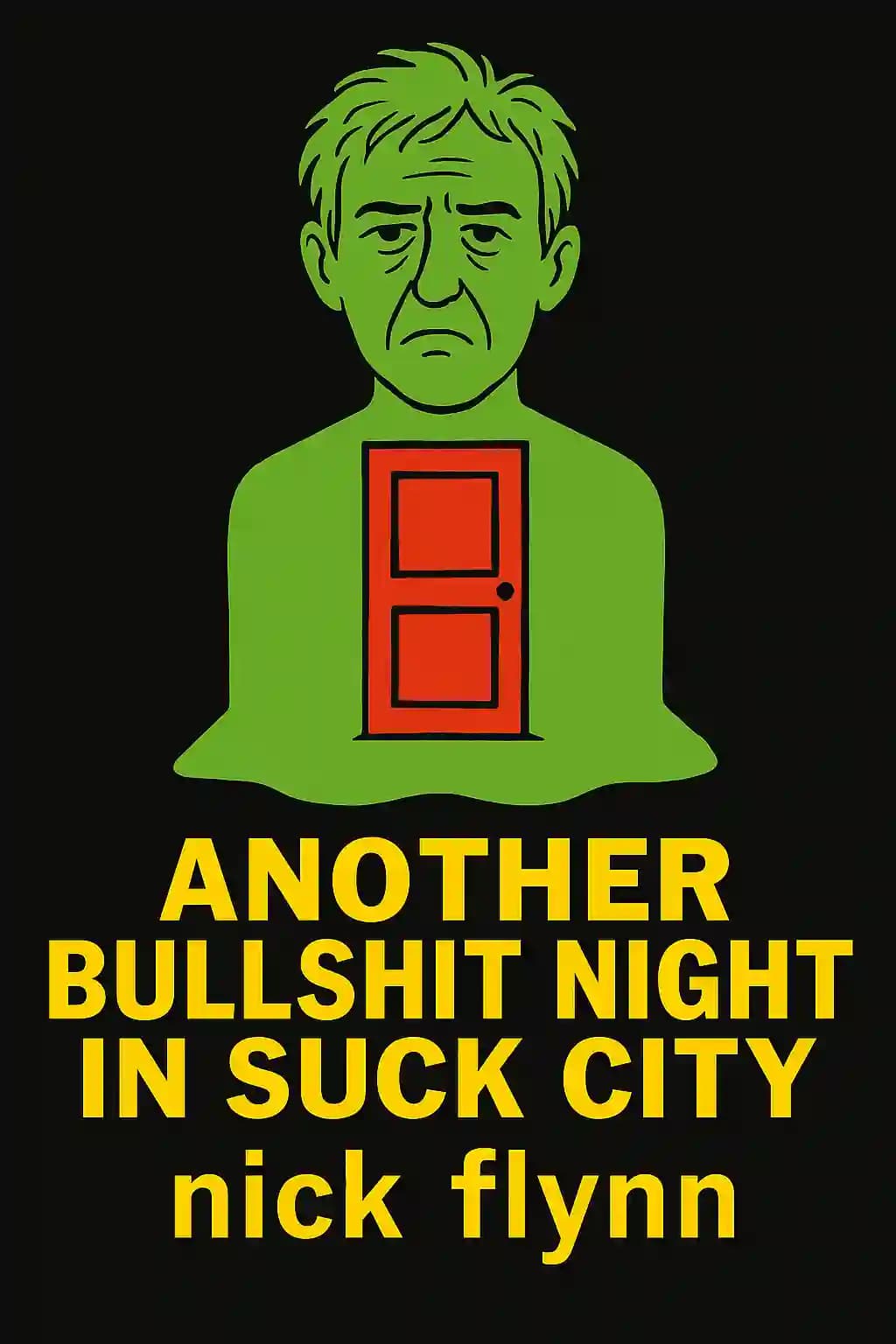
"Another Bullshit Night in Suck City" isn't just a memoir-it's a haunting collision between father and son in America's shadowed corners. Nick Flynn's raw, unflinching account became an instant classic upon publication, praised by literary giants like Cheryl Strayed and Dave Eggers for its brutal honesty. The book won the PEN/Martha Albrand Award and was adapted into the film "Being Flynn" starring Robert De Niro and Paul Dano. What makes this work so powerful is how it transforms the unthinkable-encountering your homeless father at the shelter where you work-into a meditation on identity, addiction, and the inescapable bonds of family. As Flynn himself once said in an interview: "I didn't choose this story; this story chose me."
Kapitel 2
The Inheritance of Absence
What does it mean when your father exists only as "a name without a body"? For young Nick Flynn, his father was primarily an absence-a mysterious figure who had disappeared before Nick was old enough to form memories of him. The three of them-mother, brother, and Nick-sat around a table all carrying the name "Flynn," connected to a man who wasn't there. This void became a defining feature of Nick's childhood, a negative space that shaped his understanding of family and identity.
Jonathan Flynn had grandiose stories about their family wealth and accomplishments, tales that bordered on mythology. According to these elaborate narratives, Nick's paternal grandfather had invented the life raft, power windows, and push-button car locks - innovations that supposedly brought great wealth to the Flynn family. The family had remained prosperous through the Depression with a roofing company that secured prestigious contracts for Boston landmarks like Faneuil Hall. Nick's great-grandfather's name, Thaddeus, could supposedly be found inside the grasshopper weathervane atop the building, a detail that seemed to perfectly encapsulate Jonathan's blend of specific detail and improbable claims.
For years, Nick would tell people his father was "dead" or "missing," though he roughly knew where he was. These weren't exactly lies, but rather simplifications of a truth too complex and painful to explain to casual acquaintances. The reality was more complicated and tinged with both romance and tragedy. Jonathan had been a charming drifter who spent winters on charter fishing boats in Palm Beach and summers in Massachusetts, styling himself as "Barracuda Buck, Native Guide." With literary ambitions and a swagger that compensated for his slight build, he worked construction while crafting his image as "The Next Great American Poet," filling notebooks with verses that would never see publication.
When Jonathan met seventeen-year-old Jody at a coffee shop in Scituate Harbor, their romance seemed doomed from the start, marked by the classic tensions of class and character. She came from wealth but was rebellious, seeking escape from her privileged but constraining upbringing; he was charming but unreliable, full of promises he couldn't keep. They bonded over Salinger and shared family troubles, finding in each other a temporary refuge from their respective worlds. When Jody became pregnant, her father arranged a meeting with Jonathan at the prestigious Locke-Ober in Boston, where Jonathan agreed to marry her and abandon his nomadic Florida life. Though Jody had serious misgivings, expressing them in an unsent letter that detailed his drinking and neglect, they married with Ray as witness, hoping against hope that marriage and fatherhood would anchor Jonathan's restless spirit.
This pattern of abandonment would repeat itself throughout Nick's childhood, creating a void that shaped his identity as surely as any presence could have. The absence became a kind of inheritance itself - not the wealth and prestige of Jonathan's tall tales, but a legacy of uncertainty and longing that would influence Nick's relationships and self-understanding for years to come.
Kapitel 3
A Life in Fragments: The Father's Downward Spiral
Jonathan Flynn's life unraveled in predictable yet tragic stages. His father-in-law set him up as president of European Engineering, a doomed Renault dealership in Belmont. Despite wearing suits and driving new cars, Jonathan lacked talent for selling automobiles. After two years of losses, his father-in-law fired him and closed the business.
Jonathan rebranded himself as "Trader Jon," selling used foreign cars on commission. The scheme worked briefly until he began delaying payments to wealthy clients, spending their money and assuming they wouldn't notice. By the time Nick was born, his twenty-year-old mother packed up both children and left Jonathan. She never received child support nor accepted money from her own father, determined to make it on her own.
Years later, Jonathan would be arrested for stealing the Palm Beach sheriff's car. He'd been driving it like a taxi, picking up passengers while in a blackout-what he called "toxic amnesia." After five weeks in the stockade, he pleaded guilty and received six months' hard labor. For nearly twenty years he'd identified as a writer without writing much beyond cocktail napkin notes. Now he imagined this setback as an opportunity: he'd emerge with his prison novel, his "Dostoyevsky."
But this was merely the beginning of his descent. Later, he'd be arrested again for passing forged checks, serving three to five years in actual prison. He passed his first forged check using his real name, later adopting aliases like "Millard Fillmore." He claimed he was recruited into "the checking business" by characters named Dippy-do Doyle and Suitcase Fiddler, who threatened his children if he didn't cooperate.
After prison, Jonathan created the Fact Foundation of America, Inc.-a dummy corporation with fancy letterhead showing an open book pierced by a quill. He listed himself as "President" (also founder and sole member) with a Beacon Hill P.O. box address and disconnected phone number. The letterhead included a Disraeli quote about ignorance of facts being a step toward knowledge.
By the time Nick encountered him at Pine Street shelter, Jonathan had been evicted from his Beacon Hill room after threatening the "goddamn queers" who were the new landlords. Without his room, he lived in his taxi, driving three back-to-back shifts. When he lost his hack license after blacking out drinking, he began walking everywhere-to his P.O. box, his storage unit, the Sevens for soup. Eventually, he found himself standing over a steam grate where another homeless man slept, the hot air from the library's heating system creating an invisible room of warmth.
Kapitel 4
The Son's Journey: From Paper Routes to Pine Street
While his father drifted through life, Nick carved out his own path-one that would ironically lead him back to the man he barely knew. At nine, Nick was already aware of the world's dangers, having absorbed whispers about razorblades in apples and Charles Manson. Horror became his fascination-from Saturday afternoon Creature Double Features to drive-in zombie films with his mother's boyfriend.
Growing up in Scituate, a town that appeared in Time magazine as America's second-highest alcohol-consuming town, Nick was surrounded by drinking culture. His mother pointed out bars his grandfather was banned from and told stories of learning to drive while he was drunk in the backseat. His grandmother sent him to pick up her half-gallon of Turner's Special Blend, which she brought to dinner in her own jar.
After his mother married Travis, a Vietnam veteran, Nick witnessed the effects of trauma firsthand. Travis brought a wild energy-hot-wiring boats for fishing trips, stealing lumber for house additions. Nick loved practical jokes, setting tripwires throughout their house, not realizing the trauma this might trigger in Travis. One Saturday, drunk after digging sea clams, Travis showed them his Vietnam photo album-villages burning, corpses, faces without eyes.
When Nick was fourteen, his mother and Travis separated. She cut off her hair, became a vegetarian, and lost too much weight, hovering "in the ghostly realm." She took pills for migraines and to wake up. At fifteen, when most kids were breaking from their parents, Nick developed a common language with his mother and brother through watching Red Sox games.
By seventeen, Nick's mother and he sometimes drank together, sharing her philosophy: "Never trust anyone who doesn't drink." Once Nick and his friends got driver's licenses, they drove their parents' cars to an abandoned sand pit they called "The Pits" to drink every night. Monday mornings in Scituate became a ritual of learning who totaled their car over the weekend.
After high school, Nick began working at Tony's fish pier, where a year earlier the owner had kidnapped a marijuana-smuggling mobster and held him for ransom, receiving a million dollars. This audacious move allowed them to take over East Coast drug smuggling operations. Nick spent his days coopering (building fish boxes) and creating elaborate hiding places among the stacks.
When Nick received a full scholarship to the University of Massachusetts, he was torn about leaving the Organization. The carpenter advised him not to be an asshole-"you have your whole life to work." Two weeks later, he was in a classroom studying King Lear, though he maintained his weekend job, ready to leave school if offered a spot on a smuggling boat.
Kapitel 5
Crossing Paths: When Two Lives Collide
In 1981, Nick met Emily in his creative writing class at Boston University. Fresh from his year living among gangsters in South Boston, he felt weathered and cynical beside her youthful optimism. At twenty-three, he carried himself like someone much older, while Emily, barely twenty, radiated the kind of innocence that comes from a sheltered suburban upbringing. What Nick couldn't have known was that Emily would become the unlikely bridge between him and his absent father, connecting two parallel lives that had run separately for decades.
Their romance bloomed through spring semester, sharing coffee at campus cafes and exchanging stories about their vastly different childhoods. After six months together, summer scattered them to different corners of New England. When they reunited in November, Emily had found someone new. At a crowded house party near campus, she began telling stories about her family's peculiar friend-a perpetually drunk writer who once stumbled into a downtown Boston bar and tried to pick up his ex-wife, not recognizing her through his alcoholic haze. As she continued describing this failed writer who had served time in federal prison, fallen off a ladder while painting houses, and repeatedly claimed to have written an unpublished masterpiece called "The Button Man," Nick felt the blood drain from his face. With growing disbelief, he realized she was talking about his father-a man he'd seen perhaps a dozen times in his life but who had been a regular fixture in her family's life for years.
Jonathan had made himself at home at Ray and Clare's house in Ipswich, twenty miles north of Boston, appearing unannounced at their dinner parties and holiday gatherings. He'd drive his taxi up from Boston, sometimes arriving with expensive bottles of scotch when fares were good, other times showing up empty-handed and borrowing money. Over the years, he'd scattered his belongings across a network of sympathetic friends, keeping clothes in their basements, books in their attics, and maintaining a suit at various dry cleaners as makeshift storage units-a modern-day urban nomad.
Ray, Emily's father, had even converted their spare room into a writing studio for Jonathan, complete with an old Royal typewriter and a desk facing the garden. But as Emily and her sisters entered their teenage years, leaving them alone with Jonathan became increasingly problematic. He'd become irritable if the girls invaded his space, and if left unsupervised, would systematically empty the liquor cabinet before passing out on their couch, often requiring Ray to drive him home in the middle of the night.
The evening Nick discovered this bizarre connection, Emily led him to her bedroom where she pulled out dusty photo albums from her basement. There, in faded pictures and margin notes, was his father's distinctive scrawl. Nick realized with amazement that he had even danced to his father's beloved Zorba the Greek record at Emily's family parties, never noticing Jonathan's name written across Zorba's face in thick black marker.
This surreal intersection of their lives highlighted the strange ways people's paths can circle each other for years without touching-until fate orchestrates an unexpected collision that reveals the hidden threads connecting us all.
Kapitel 6
The Shelter: Where Worlds Collide
In 1984, after his mother's suicide, Nick found himself working at Boston's Pine Street Inn homeless shelter. The shelter occupied an entire city block in Boston's South End, housed in a landmark Sienese tower replica where firemen once practiced jumping into safety nets.
Nick started in the Cage, giving out bed tickets through a steel-mesh screen as 300-600 men flowed through nightly. He learned their names and stories-Jamal who smoked in the park all day, unintelligible Randy who couldn't meet his eyes. The shelter exuded cigarette smoke and anxiety, filled with a constant din of murmurs punctuated by occasional freak-outs.
After the Cage, Nick moved to Housing-more intense without the protective mesh. Here, men exchanged bed tickets for plastic bins and hangers, stripping naked and surrendering clothes to the "Hot Room"-a 180-degree sauna that killed bugs and sanitized. Nick's job was to oversee this operation, defuse incidents, and check men for health issues.
His true purpose became clear: he was an exterminator. They used Kwell, a DDT-based lotion/shampoo, to kill lice and scabies. This role felt natural-as a child, Nick's grandmother had him pour bleach down anthills, and he'd watch thousands stream out and writhe.
Most shelter residents had been in war, prison, or both. They bore physical and mental scars-one spoke through a throat hole, some were blind or deaf, junkies had festering arm wounds, epileptics needed medication. They arrived with limps, canes, walkers, or carried by friends.
The Brown Lobby started with twenty to thirty men sprawled on benches and floor each night, but as winter approached, the numbers swelled to over a hundred bodies packed together. Some staked out corners or tabletops while others paced, smoked, or wrapped themselves around their possessions.
After work, staff went drinking at local bars to hear bands like the Minutemen or Pixies. Though it felt like being a security guard sometimes, the job represented something deeper-"the idea of bending down to someone struggling."
Then, in 1989, the unthinkable happened. Captain told Nick a man claiming to be his father had come looking for a bed. He had ID and demanded accommodation, saying his son worked there. Nick was stunned, standing up and wiping his hands on his pants when he learned his father had sat in the same chair.
Hours later, Jonathan showed up without fanfare. No ominous music or dramatic entrance-just another "new guest" raising his arms to be searched like everyone else. Nothing was said between them.
Kapitel 7
The Impossible Barrier: Father and Son
After his father arrived at the shelter, Nick became "transparent," unable to discuss him with friends or colleagues. Some offered support, which only fueled his shame. Eventually it normalized-"That guy's father is a guest here"-like some parallel home life.
Nick's father initially presented well at the shelter-recently evicted but still put-together, lucid, somewhat clean. He had one unmoored eye floating "like a ghost satellite" and wore support stockings for phlebitis. Though damaged, he claimed no history of institutionalization, medication, or detox.
Jonathan wrote Nick a letter thanking him for help, comparing his shelter experience to Orwell's "Down and Out in Paris and London." He philosophized about writers' madness, claiming a connection between creativity and suffering. He wrote: "Whether you like it or not-you are me. I know."
Three months after his father arrived, Nick would watch him from across the lobby, not approaching but imagining his routine-the frisk, checking valuables, receiving his hanger and shoebox, undressing, showering in the now-empty facilities.
Eventually, Nick transitioned to working the Outreach Van to avoid encountering his father inside the shelter. Working nights from 9pm to 5am, he developed relationships with street people, including a man he knew as Joe Morgan who turned out to be Martin Adams-a man whose disability checks had been collected by his brother for years while Martin lived on the streets.
Meanwhile, Jonathan had a breakdown at the shelter, staring at himself naked in the mirror insisting he was only twenty-eight while his body showed decades more wear. A week later, he launched into a racist and sexist verbal assault against another guest, resulting in staff wrapping him in a sheet and removing him to the lobby. Nick witnessed his father in this humiliating state but walked past him, maintaining his professional distance.
After increasingly belligerent behavior, Jonathan was brought up for barring-either accepting a 30-day lockup detox at Bridgewater State Correctional Facility or being banned from the shelter for two months. Nick may have voted with his coworkers to bar his own father, knowing his father would never voluntarily return to prison.
Kapitel 8
The Great Unseen American Novel
Throughout his life, Jonathan Flynn maintained one constant: his belief in his unwritten masterpiece. For nearly twenty years he'd identified as a writer without writing much beyond cocktail napkin notes. He imagined his prison time as an opportunity: he'd emerge with his prison novel, his "Dostoyevsky."
Every time Nick visited, he asked to see his father's book-the manuscript he'd supposedly been working on his entire life, alternately titled "The Button Man" or "The Adventures of Christopher Cobb." Jonathan pointed to framed rejection letters from publishers as proof of its existence, one describing his work as "a virtuoso display of personality" whose "dosage would kill hardier readers."
Jonathan claimed he needed twelve desks (or sometimes twelve doors with typewriters) for his twelve chapters (or sometimes twelve books), inspired by Solzhenitsyn's writing method in Vermont. When Nick asked if he could see the actual manuscript, Jonathan insisted "it's all written, every word" but evaded showing anything concrete. He claimed to need a barn to spread out his work, waiting for a two-million-dollar advance from Little, Brown because "Kissinger got two million, and Kissinger isn't even a writer."
Over twenty-five years, Jonathan sent hundreds of letters to Nick, which Nick preserved in a cardboard box. His messages ranged from life advice ("Read as much as you can. Write only when you feel the inner need") to grandiose claims about his writing talents ("I shall-soon-win the Nobel Prize for both Storytelling and Poetry-no fear"). He repeatedly insisted his work would rival Solzhenitsyn's impact on Russia, claiming his book was "one of the three great books that America has produced."
In summer 2000, Jonathan claimed to have located "The Button Man." When Nick visited, he handed him four binders-four hundred pages of what turned out to be a musical. It began with a song: "Clink/Clank/Clunk/I think that I am drunk/Clunk/Clank/Clink/I really need a drink." The first musical number was dated February 15, 1964, the day after he blacked out and stole the sheriff's car.
Nick read it in an afternoon. The narrative followed his jail time, each day getting its own chapter, with songs, letters, found documents and scrawlings smuggled out of county jail. For thirty pages it showed promise-a hybrid form with tones borrowed from "Catcher in the Rye"-but soon fell apart into incoherence.
Kapitel 9
Finding Solid Ground: Reconciliation and Truth
After twelve years of stable housing, Jonathan's tenancy was threatened when, drunk on vodka after getting his check, he attacked a neighbor with his cab club over loud music. Dawn from management called Nick about the eviction process. Nick offered to confiscate his weapon, hoping to convince Dawn to reconsider.
When Nick arrived, Jonathan was still drunk and didn't remember the incident. He launched into paranoid stories about neighborhood dangers and a mysterious loaded .38 in the elevator. When Nick mentioned taking his club, Jonathan exploded about being left defenseless, brandishing it near Nick's head while screaming, "What do you think I am, a homicidal maniac?" He followed Nick into the hallway, screaming "FATHER MURDERER" at his back.
Days later, Nick returned from New York to give his father one more chance. Surprisingly, Jonathan calmly handed over the club, thanking Nick for trying to help.
After months of research at the U.S. Patent Office and the Science, Industry, and Business Library, Nick finally discovered that his grandfather, Edmund T. Flynn of Cambridge, Massachusetts, really did invent "a new and useful Life-Raft" in 1918, with improvements patented in 1942. His invention was used by seven countries during both World Wars, keeping thousands of heads above the waves. "The problem was to keep the body above the waves. The trick was to breathe only air." Nick was stunned-this part of his father's story was actually true.
When Nick brought his father his first published poetry collection, which included poems about his mother's suicide and about his father, Jonathan turned it over in his hands "as if it's a holy relic" before thumbing through it and declaring, "Christ, I'm being beaten by my own son at poetry." Then he immediately pivoted to his familiar claim: "I've been in touch with Little, Brown. They're doing my book. Four million. They said it's a masterpiece. Everything I write is a masterpiece."
On one of their final visits, Nick's father answered the door with a gashed, swollen eye, immediately boasting about beating up "two cocksuckers" who tried to rob him. Outside, Nick noticed how "gnomelike" he'd become-smaller yet still cocky, cross-eyed with a stiff gait. Before Nick left, his father proudly pointed to a tree growing from the sidewalk: "See that tree? I'm responsible for that. I made a call, got the city to plant it. My tree." Then to the steps they sat on: "My steps." And finally, leaning into Nick's car window: "That tree too, even though it's not in front of my door. I was feeling generous."
In the end, Nick realized that perhaps the book had been standing before him all along-his father himself, constructed entirely of stories: robbing banks, sleeping on benches, his father inventing the life raft, Nick's mother being the love of his life. The only book ever written about Jonathan Flynn was the one in your hands-the book that somehow fell to Nick, his "uncredited, noncompliant ghostwriter," caught in the folly of writing about a book that may not exist.