Kapitel 1
Reaching for the Stars: Lessons from 2,336 Orbits Around Earth
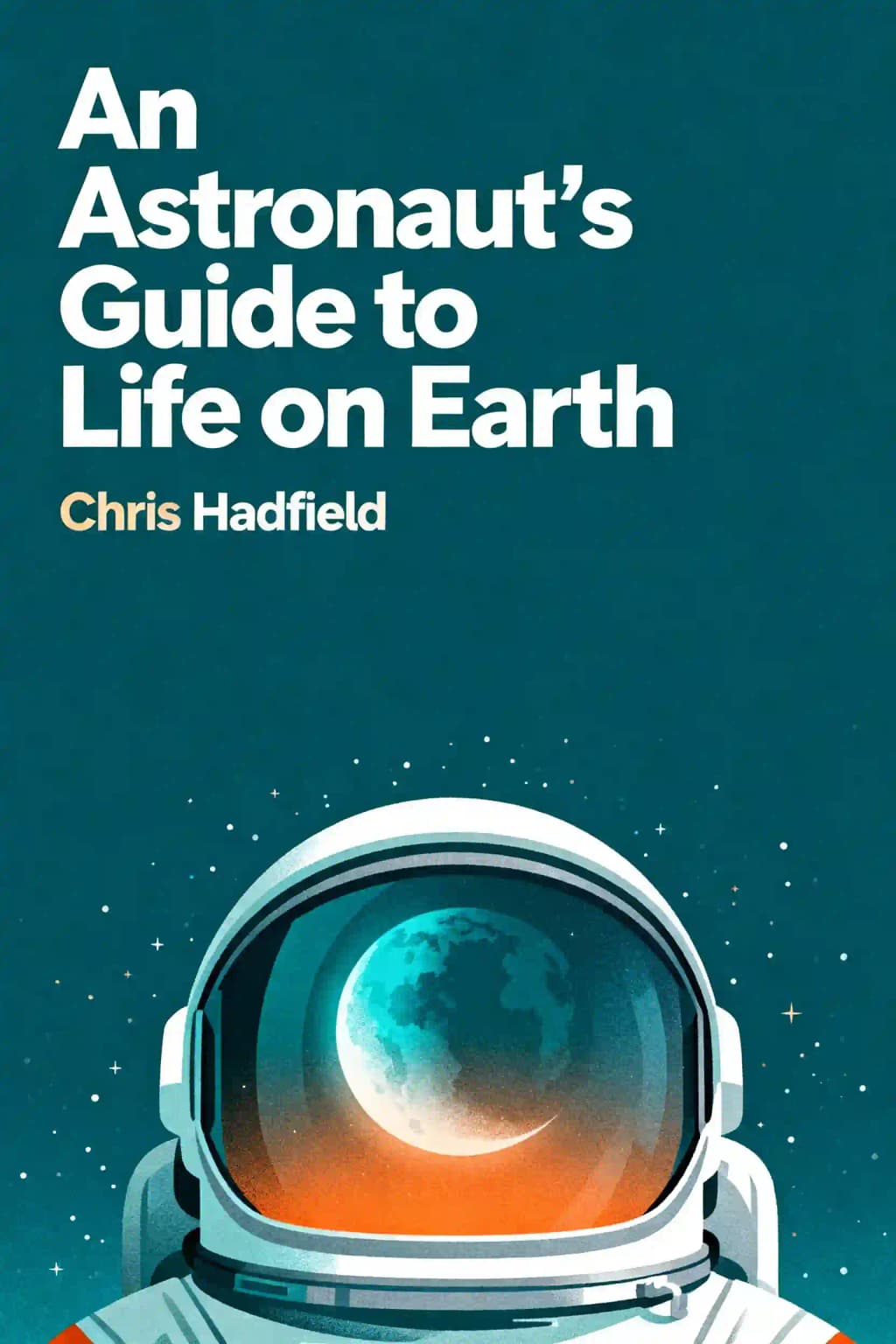
In December 2012, as Chris Hadfield blasted off from Kazakhstan aboard a Soyuz rocket, he wasn't just embarking on a 146-day mission to command the International Space Station-he was putting the finishing touches on a lifetime of meticulous preparation. Hadfield's memoir quickly became a cultural phenomenon, spending 20+ weeks on the New York Times bestseller list and transforming this mustachioed Canadian into a global celebrity. His viral rendition of David Bowie's "Space Oddity" recorded aboard the ISS garnered over 50 million views, while tech mogul Elon Musk cited the book as essential reading for aspiring space travelers. Beyond the space community, Hadfield's practical wisdom resonated with everyone from Fortune 500 executives to military leaders, who recognized that his approach to high-stakes decision-making had applications far beyond the cosmos. What makes this astronaut's guide so compelling is that it isn't just about space-it's about rewiring your brain to handle life's challenges with astronaut-level composure.
Kapitel 2
The Counterintuitive Path to Becoming an Astronaut
The journey to becoming an astronaut begins with a paradox: you must dedicate your life to a goal that statistically, you will almost certainly fail to achieve. When Hadfield decided at age nine that he wanted to become an astronaut, Canada didn't even have a space program. The odds were astronomical-literally. Yet instead of being deterred, he embraced a philosophy that would define his approach to life: focus on the process rather than the outcome.
This mindset shift is the first crucial lesson. Rather than fixating on the binary question of "Will I become an astronaut?" Hadfield asked himself, "How can I live like an astronaut today?" Every decision-from studying engineering to becoming a test pilot-was filtered through this lens. The beauty of this approach is that it creates meaning regardless of whether you achieve your ultimate goal. By the time Hadfield was selected as one of four astronauts from a pool of 5,330 applicants, he had already built a fulfilling career as a fighter pilot and test pilot.
The path required constant self-reinvention. When Hadfield arrived at NASA, he discovered that being technically competent wasn't enough-he needed to become the person others wanted to fly with. This meant developing what he calls "expedition behavior": putting group needs above personal desires, sharing credit generously, and being the colleague who improves morale rather than drains it. In the confined quarters of a space station, where crew members can't escape each other for months, these interpersonal skills become as crucial as technical abilities.
Perhaps most counterintuitively, Hadfield learned to embrace the unglamorous. While the public sees astronauts floating majestically against the backdrop of Earth, most of an astronaut's career involves mundane tasks: studying technical manuals, practicing emergency procedures, and even learning to fix space toilets. Hadfield approached these tasks with the same dedication he brought to spacewalks, recognizing that excellence in the ordinary creates the foundation for extraordinary achievement.
Kapitel 3
Sweating the Small Stuff: Why Details Matter in Space and on Earth
In direct opposition to conventional wisdom that advises against "sweating the small stuff," astronauts deliberately obsess over details. In space, minor oversights can cascade into catastrophes. A single loose screw, an overlooked gauge reading, or a momentary lapse in concentration can spell disaster when you're orbiting Earth at 17,500 miles per hour.
Hadfield recounts preparing for a spacewalk to repair the Canadarm, a robotic arm on the International Space Station. For months, he rehearsed every movement in NASA's Neutral Buoyancy Laboratory-a massive pool where astronauts practice spacewalks underwater to simulate weightlessness. He memorized 350 discrete steps, practiced tool manipulation while wearing bulky gloves, and mentally rehearsed countless emergency scenarios.
This preparation was tested when, during the actual spacewalk, his left eye began burning intensely. Something-likely a mixture of anti-fogging solution and sweat-had gotten into his eye, causing it to tear up profusely. In the vacuum of space, tears don't fall; they accumulate in a growing blob that covered his eye and then began spreading across his face toward his nose. Soon, both eyes were blinded. Floating 250 miles above Earth, temporarily blind, attached to the space station by only a tether, Hadfield faced a potential crisis.
What saved him wasn't improvisation but preparation. Because he had practiced every movement to the point of muscle memory, he could continue working despite being unable to see. He knew exactly where each tool was located on his suit. He could communicate calmly with Mission Control while working through the problem. Eventually, the irritant dissipated, his vision cleared, and he completed the mission successfully.
The lesson extends beyond space: meticulous attention to detail isn't about perfectionism-it's about building a margin of safety that allows you to handle unexpected complications. By mastering the fundamentals so thoroughly that they become automatic, you free up mental bandwidth to solve novel problems when they arise. In Hadfield's words: "In space, there's no problem so bad that you can't make it worse." The same principle applies on Earth, where thorough preparation creates the foundation for graceful improvisation when circumstances change.
Kapitel 4
Negative Thinking: Finding Strength in Anticipating Failure
Perhaps the most counterintuitive aspect of astronaut training is the deliberate cultivation of negative thinking. While popular psychology often emphasizes positive visualization, astronauts spend most of their time imagining everything that could go wrong. This isn't pessimism-it's strategic preparation that Hadfield calls "productive paranoia."
The astronaut approach begins with a simple question: "What's the next thing that could kill me?" By systematically identifying potential failure points, they can develop contingency plans before emergencies arise. NASA has formalized this process through "sim fails"-training simulations where instructors deliberately introduce catastrophic problems without warning. These aren't just occasional challenges; they're the core of preparation. For every hour an astronaut spends in actual space, they've spent hundreds of hours practicing worst-case scenarios on Earth.
Hadfield describes a particularly harrowing simulation where instructors simultaneously triggered multiple critical failures: a fire in the space station, rapid decompression, and communication loss with Mission Control. As alarms blared and simulated smoke filled the training module, the crew had to execute emergency procedures while wearing oxygen masks and dealing with the psychological pressure of cascading system failures. These scenarios are intentionally designed to be nearly impossible to handle perfectly-the goal isn't flawless performance but developing the ability to function effectively under extreme stress.
This approach transforms fear from a paralyzing force into a focusing mechanism. By repeatedly facing your worst-case scenarios in controlled environments, the emotional sting diminishes while your technical competence grows. When Hadfield finally faced real emergencies in space-like the time ammonia began leaking from a cooling system, threatening the station's electronics-the situation felt familiar rather than overwhelming. He had mentally rehearsed similar scenarios dozens of times.
The earthbound application is powerful: instead of avoiding thoughts about what might go wrong in important life situations, deliberately visualize potential failures and develop specific plans to address them. Before a job interview, don't just imagine success-imagine forgetting an important point and plan how you'll recover. Before a difficult conversation, consider how you'll respond if the other person becomes defensive. This isn't about dwelling on negative outcomes; it's about removing their power to derail you by preparing for them in advance.
Kapitel 5
The Power of Neutral: Emotional Self-Regulation in Crisis
When an emergency alarm blares on the International Space Station, astronauts don't panic-they go "neutral." This psychological state, which Hadfield describes as "alert but not alarmed," is perhaps the most valuable skill astronauts develop. It's the ability to acknowledge danger without being emotionally hijacked by it.
Hadfield illustrates this concept with a story from his time commanding the ISS. The crew detected an ammonia leak in the cooling system-a potentially serious problem that could disable critical electronics. Rather than reacting with anxiety, Hadfield and his crew methodically worked through their emergency procedures: verifying the alarm wasn't a false positive, identifying the specific leak location, and implementing containment measures. Throughout the crisis, their heart rates barely elevated. This wasn't because they didn't understand the gravity of the situation-it was because they had trained themselves to channel fear into focused action.
Achieving this state of emotional equilibrium doesn't happen naturally. It's cultivated through what astronauts call "overtraining"-practicing emergency procedures so thoroughly that responses become automatic. When Hadfield trained for his first spacewalk, he rehearsed each movement hundreds of times in NASA's Neutral Buoyancy Laboratory. He practiced tool manipulation while wearing pressurized gloves until he could perform complex repairs without conscious thought. This level of preparation creates what psychologists call "cognitive offloading"-the basic mechanics become automatic, freeing mental resources to handle unexpected complications.
The technique extends beyond physical skills to emotional regulation. Astronauts use visualization not just to rehearse procedures but to inoculate themselves against the psychological impact of emergencies. By mentally experiencing potential crises before they happen, the emotional novelty diminishes. When a real emergency occurs, it feels like the hundredth time you've faced it rather than the first.
This approach can transform how we handle crises in everyday life. When facing a challenging situation-whether it's a medical diagnosis, a financial setback, or a professional crisis-the goal isn't to suppress fear but to acknowledge it without allowing it to dictate your actions. Ask yourself: "What's the actual problem here, and what's the next action I need to take?" Breaking down overwhelming situations into discrete, manageable steps prevents emotional flooding and keeps you focused on solutions rather than threats.
The power of neutral isn't about becoming emotionless-it's about choosing where to direct your emotional energy. As Hadfield puts it: "Fear is just an emotional response to recognizing you're in danger. It's completely normal and healthy. But it's what you do with that fear that matters."
Kapitel 6
Aim to Be a Zero: The Counterintuitive Path to Becoming Valuable
In most professional contexts, people strive to be a "plus one"-someone who makes positive contributions and stands out from the crowd. But Hadfield introduces a counterintuitive concept: in high-stakes environments like spaceflight, the first goal should be to become a "zero"-someone who neither adds value nor creates problems. Only after mastering this neutral state should you aspire to become a plus one.
When Hadfield first arrived at NASA, he recognized that despite his accomplishments as a fighter pilot and test pilot, he was a "minus one" in the astronaut context-his lack of experience meant he required resources and attention from others. Rather than trying to immediately prove his worth by asserting opinions or volunteering for high-profile assignments, he focused on learning systems, absorbing institutional knowledge, and becoming self-sufficient.
This approach manifested in practical ways. During his early days at NASA, Hadfield would arrive at the office before anyone else, studying technical manuals and spacecraft schematics. He volunteered for unglamorous assignments that more senior astronauts avoided. When he attended meetings, he listened carefully before speaking. His goal wasn't to be invisible but to ensure that his presence was never a burden on the team.
The wisdom of this approach becomes clear in collaborative environments where resources are limited and mistakes are costly. By first establishing yourself as reliable and low-maintenance, you build the foundation of trust necessary for leadership. Only after demonstrating that you won't be a liability should you focus on making distinctive contributions.
This philosophy extends to how Hadfield approached learning Russian-a requirement for working with cosmonauts on the International Space Station. Rather than aiming for perfect fluency immediately, he first focused on reaching a level where his language limitations wouldn't create problems. He mastered technical terminology and emergency protocols before worrying about conversational nuance. Only after becoming a "zero" in Russian did he work on becoming a "plus one" by developing cultural understanding and relationship-building skills.
The concept applies powerfully to career transitions and new roles. When entering unfamiliar territory-whether it's a new job, a new team, or a new industry-resist the urge to immediately demonstrate your value through bold actions or opinions. Instead, focus first on not creating problems. Learn the existing systems, understand the team's dynamics, and build credibility through reliability. Once you've established yourself as a zero, you'll have the foundation to become a plus one through innovative contributions that actually fit the context.
Kapitel 7
The Astronaut's Approach to Work-Life Balance
The common image of astronauts suggests single-minded dedication to their mission at the expense of personal life. Hadfield reveals a more nuanced reality: successful astronauts don't sacrifice family for career-they integrate the two through deliberate strategies and clear communication.
When Hadfield's children were young, he established what he calls "micro-traditions"-small, consistent rituals that created connection despite his demanding schedule. Even during intensive training periods, he would call home at the same time each day. Before deployments, he would record himself reading bedtime stories so his children could still hear his voice while he was away. These weren't grand gestures, but their consistency made them meaningful.
The approach extended to his marriage. Hadfield and his wife Helene developed a practice of "expedition behavior" at home-the same mindset that makes space missions successful. This meant explicit conversations about roles and expectations, regular check-ins about how each person was feeling, and a commitment to solving problems together rather than assigning blame. When Hadfield's career required relocating to Houston, they approached the decision as a family mission rather than a career move, discussing how each family member could find meaning in the new location.
Perhaps most importantly, Hadfield practiced what he calls "present-tense living"-being fully engaged in whatever environment he occupied. When at work, he focused completely on his responsibilities without dwelling on what he might be missing at home. When with family, he put aside work concerns to be fully present. This compartmentalization wasn't about building walls between different aspects of life but about giving each domain his complete attention when engaged with it.
This approach required rejecting the myth of work-life balance as a daily equilibrium. Instead, Hadfield viewed balance as something achieved over longer timeframes. There were periods-like the months of intensive training before a mission-when work demanded more attention. These were balanced by periods of reconnection afterward. The key was communicating clearly about these cycles and ensuring that family members understood the rhythm.
The astronaut's approach to work-life integration offers valuable lessons for anyone with demanding responsibilities. Rather than seeking perfect daily balance, focus on being fully present in each context, establish consistent connection rituals that don't require large time investments, and view family as part of your mission rather than competing with it. As Hadfield puts it: "The trick to being an astronaut with a family isn't about dividing yourself perfectly-it's about making your family part of the mission."
Kapitel 8
Cosmic Perspective: How Space Changes Your View of Earth
The most profound transformation astronauts experience isn't technological but perceptual. Seeing Earth from space-what psychologists call the "overview effect"-fundamentally alters how they understand humanity's place in the universe. Hadfield's description of this perspective shift offers insights that extend far beyond spaceflight.
Orbiting Earth every 92 minutes aboard the International Space Station, Hadfield experienced 16 sunrises and sunsets daily. This accelerated rhythm dismantled his lifetime of associating daylight with wakefulness and darkness with rest. The arbitrary nature of our 24-hour cycle became viscerally apparent-a human convention rather than a cosmic truth. This realization extends to other social constructs: from the space station, national borders are invisible, while natural features like mountain ranges and coastlines are strikingly prominent. The artificial divisions we create between countries appear as what they are-human inventions rather than natural realities.
Perhaps most profound is the visual experience of Earth's fragility. From space, the atmosphere appears as an impossibly thin blue line surrounding the planet-"like a contact lens on an eye," in Hadfield's words. This delicate layer, just a few miles thick, contains everything that makes human life possible. The vulnerability of our planetary life support system becomes impossible to ignore when viewed from this perspective.
This cosmic viewpoint doesn't diminish the importance of human concerns-it contextualizes them. Hadfield describes watching lightning storms over the Amazon and city lights blinking on across continents as darkness falls. These reminders of human presence within the vastness of space create what he calls "the dual awareness"-simultaneously comprehending humanity's cosmic insignificance and the profound importance of our connections to each other.
The overview effect changes not just how astronauts see Earth but how they approach problems after returning. Petty conflicts appear less consequential when viewed against the backdrop of our shared planetary home. Environmental concerns take on greater urgency when you've witnessed the thinness of the atmosphere. International cooperation seems not just desirable but essential when you've observed how interconnected Earth's systems truly are.
While few people will experience the overview effect directly, Hadfield suggests we can cultivate aspects of this perspective through deliberate practices: regularly zooming out from immediate concerns to consider longer timeframes and broader impacts; recognizing artificial boundaries between groups as human constructs rather than cosmic truths; and approaching problems with awareness of our fundamental interconnectedness on this "pale blue dot" suspended in space.
Kapitel 9
Returning to Earth: Bringing Space Lessons Home
The most challenging part of spaceflight isn't adapting to zero gravity-it's readjusting to life on Earth. After 146 days in space, Hadfield's body had adapted completely to weightlessness. His spine had elongated, making him two inches taller. The bones in his legs had lost density. His balance system had recalibrated to an environment without "up" or "down." Landing was just the beginning of another challenging transition.
When the Soyuz capsule touched down in Kazakhstan, Hadfield couldn't walk. His vestibular system-the inner ear mechanism that helps us balance-was completely confused by gravity's return. Standing up made him immediately nauseated and dizzy. His cardiovascular system, accustomed to pumping blood without fighting gravity, struggled to maintain blood pressure when he was upright. Even speaking was difficult because the muscles in his face and tongue had adapted to a weightless environment.
This physical readjustment parallels the psychological challenge of returning to ordinary life after an extraordinary experience. How do you find meaning in everyday activities after commanding the International Space Station? Hadfield's approach offers wisdom for anyone transitioning from a period of intense purpose to more routine existence.
First, he reframed the transition itself as a mission requiring the same dedication he brought to spaceflight. Rather than viewing rehabilitation as an annoying obstacle to overcome, he approached it with astronaut-like precision-setting specific goals, measuring progress, and finding satisfaction in incremental improvements. When doctors told him to walk for five minutes daily, he didn't just comply; he timed his walks precisely and tracked his stability improvements with the same attention he'd given to spacecraft systems.
Second, Hadfield recognized that meaning comes not from external circumstances but from how we approach them. The same mindset that made fixing a space toilet meaningful-understanding its importance to the larger mission-could make everyday activities on Earth meaningful when connected to values and purpose. He applied the astronaut's attentiveness to seemingly mundane tasks, finding complexity and importance in activities others might consider trivial.
Finally, Hadfield embraced what he calls "the power of done." Throughout his career, he had focused on becoming an astronaut, then on specific missions, always with the next goal in mind. Retirement from the astronaut corps required learning to find fulfillment in completion rather than just preparation. Instead of seeing the end of his space career as a loss, he celebrated having fully accomplished what he set out to do decades earlier.
The wisdom here extends far beyond spaceflight: transitions-whether from career to retirement, from one job to another, or from any period of intensity to normalcy-require the same qualities that make challenging missions successful: deliberate preparation, attention to process rather than just outcomes, and the ability to find meaning in the present moment rather than constantly looking toward the next horizon.
Kapitel 10
The Ultimate Mission: Living Well on Earth
The most valuable insight from Hadfield's journey isn't about space at all-it's about how to live better on Earth. The principles that keep astronauts alive in the most hostile environment humans have ever entered apply with surprising directness to navigating everyday challenges. The astronaut's mindset-characterized by thorough preparation, calm under pressure, and finding meaning in process rather than just outcomes-offers a framework for approaching everything from career decisions to personal relationships.
The core of this approach is what Hadfield calls "working the problem"-breaking down overwhelming challenges into manageable components and addressing them systematically. When faced with a complex situation, astronauts don't attempt to solve everything at once. They identify the most critical issue, address it, then move to the next priority. This methodical approach prevents the paralysis that often accompanies complex problems in everyday life.
Another transferable principle is the astronaut's relationship with fear. Rather than trying to eliminate fear-an impossible goal in high-risk environments-astronauts learn to use it productively. By thoroughly understanding what they're afraid of and preparing specifically for those scenarios, they transform vague anxiety into focused readiness. This approach works equally well for job interviews, difficult conversations, or major life transitions: identify specific fears, prepare for them concretely, and the fear becomes a tool rather than an obstacle.
Perhaps most importantly, astronauts develop what Hadfield calls "the explorer's mindset"-approaching new situations with curiosity rather than judgment. When something goes wrong on a spacecraft, the first response isn't blame but investigation. What happened? Why did it happen? What can we learn? This stance-seeking understanding before assigning fault-creates psychological safety that enhances both individual resilience and team performance.
The ultimate lesson from Hadfield's journey is that extraordinary accomplishment doesn't require extraordinary circumstances-it requires extraordinary attention to ordinary details. The same qualities that make someone a successful astronaut-meticulous preparation, clear communication, emotional self-regulation, and finding meaning in process-create success in any environment. The difference isn't in having special abilities but in applying universal principles with uncommon consistency.
As Hadfield reflects on his journey from a farm in southern Ontario to commanding the International Space Station, he emphasizes that the value wasn't in the destination but in who he became through pursuing it. Even if he had never reached space, the qualities developed through the pursuit would have enriched his life immeasurably. The astronaut's perspective teaches us that the ultimate mission isn't reaching space-it's becoming the kind of person who's ready for whatever challenges life presents, whether on Earth or among the stars.