Kapitel 1
A Journey Through Identity: Where Black and Queer Intersect
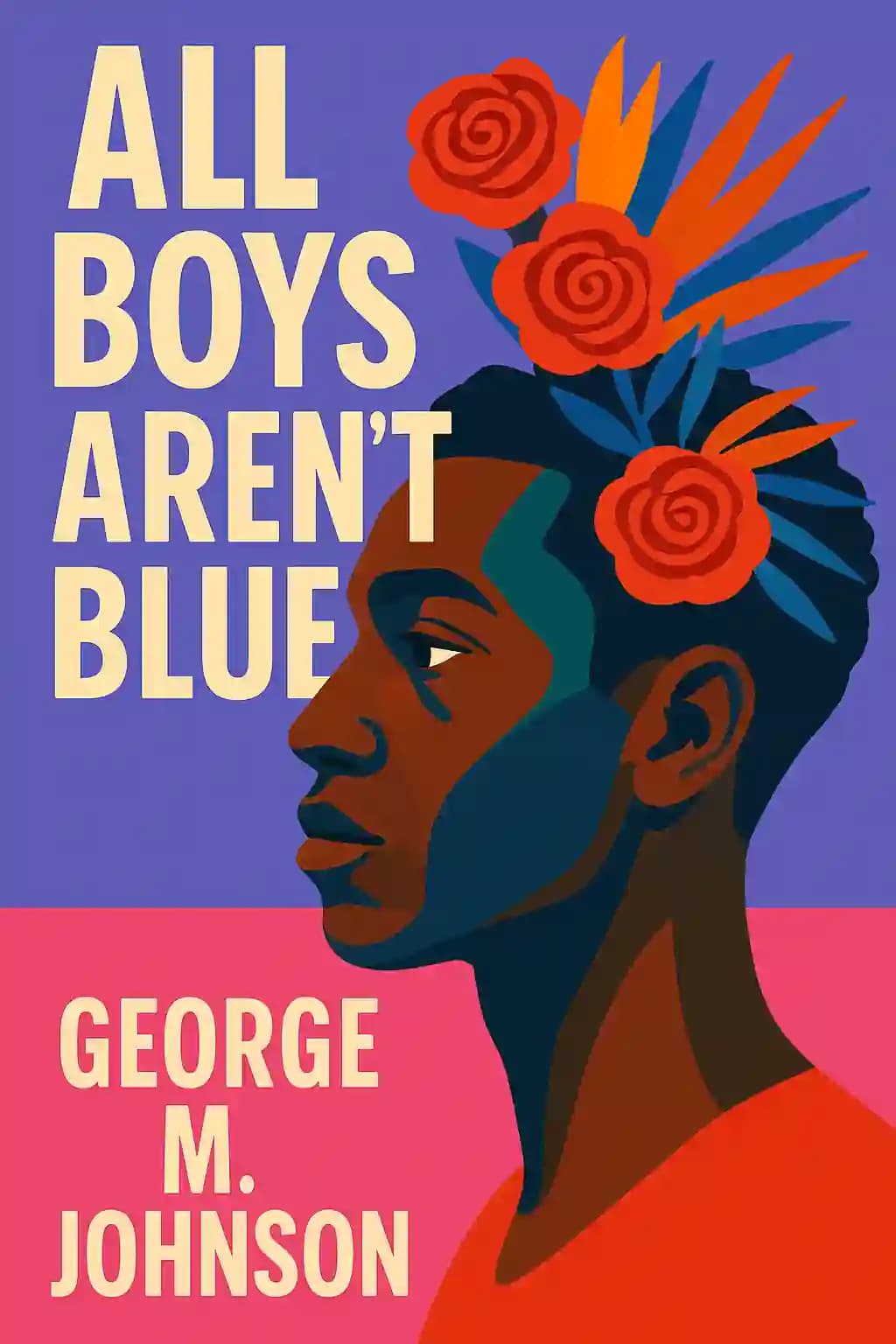
"All Boys Aren't Blue" has become a cultural touchstone for young adults navigating intersectional identities. This raw, unflinching memoir by George M. Johnson has been embraced by celebrities like Gabrielle Union and praised for its authentic portrayal of growing up Black and queer in America. Featured on numerous "best of" lists and banned in over 29 school districts, the book has sparked important conversations about representation while providing a roadmap for those who've never seen their experiences reflected in literature. Johnson's powerful storytelling invites readers into the intimate spaces of his life, challenging us to examine how we create space for those who exist at society's margins.
Kapitel 2
The Stolen Smile: Early Wounds and Childhood Resilience
At five years old, George's teeth were kicked out during a playground altercation-his first significant trauma. This physical wound evolved into a deep-seated psychological one as he became acutely self-conscious about smiling, developing a persistent habit of hiding his teeth in photographs and social situations. In the Black community of the 1990s, where mental health carried heavy stigma and was often seen as a sign of weakness, his family responded with love and protection rather than therapy, trying to move forward through strength and solidarity without addressing the deeper emotional impact that would shadow him for decades.
The experience taught George harsh lessons about the rigid expectations placed on Black boys in America-to be tough, to suppress pain, to avoid tears at all costs. Being both Black and queer added complex layers of pressure, creating what he vividly describes as "fear that wraps around you in constricting layers, like a python slowly tightening its grip." His lost smile became symbolic of denied joy-both Black joy and queer joy-representing the parts of himself he felt compelled to hide from the world.
Trauma, as George discovered, has an insidious way of resurfacing unexpectedly. Even as a successful adult, mundane triggers could transport him back to that childhood moment: the metallic taste of blood while brushing too hard, catching his reflection in a mirror, or hearing children's playground laughter. He would find himself crying before the bathroom mirror while pretending not to know why, the five-year-old's pain still fresh decades later. The pivotal turning point came when his mother suffered devastating brain aneurysms in 2015. Before her high-risk surgery, she looked up at him from her hospital bed and said simply: "Smile, Matt. Just smile." In that moment of crisis, he gave her the biggest, most genuine smile he'd managed since childhood. Her survival became a powerful lesson about the possibility of releasing long-held trauma and reclaiming joy.
This early experience established a pattern that would follow George throughout his life journey-the perceived need to hide essential parts of himself to survive in a world that wasn't designed for his intersectional existence. Yet it also revealed the fierce, unconditional protection of family, as his cousins and uncle immediately sought justice, confronting the boy responsible and his father, accepting a five-day school suspension as the necessary cost of defending their own. This demonstration of family solidarity taught George that while the world might be hostile, he would never face it alone. The incident became a complex tapestry of loss and love, trauma and protection, showing how childhood wounds can shape identity while also revealing the healing power of family bonds.
Kapitel 3
Identity Formation: The Power and Pain of Self-Naming
Names carry profound significance in our understanding of self, serving as both identifier and intimate expression of identity. For George, this truth manifested early when he discovered his teachers calling him by his first name (George) rather than his middle name (Matthew), which his family had always used. This revelation created his first identity crisis, prompting him to experiment with writing "George Johnson" on school papers and introducing himself differently to friends. The dual naming created confusion not just externally but internally, as he grappled with which version of himself felt most authentic.
When confronted by his mother about the confusion this created, she offered a choice: "You can either go by George or Matthew, but you can't go back and forth." This early lesson in agency became formative-he chose to remain Matthew until high school, where administrative requirements forced the use of his legal name. The resulting dual identity persists to this day, creating distinct personas: Matthew, the familiar family member and childhood friend, and George, the professional and public figure. This duality taught him early on how names can segment our lives and create multiple versions of ourselves that we present to different audiences.
This experience taught George about the power of self-determination and the complexities of identity formation. His mother's respect for his right to choose what worked best for him proved revolutionary, though he later wondered if the conversation would have been as simple had he wanted a traditionally feminine name. The experience highlighted how certain identity choices are more readily accepted than others, foreshadowing later understanding of gender politics and social acceptance.
Catholic school further reinforced lessons about conformity through strict standards-uniforms, mandatory Mass attendance, and behavioral expectations. These rigid structures, while sometimes stifling, paradoxically prepared him for navigating spaces with respectability politics later in life. The school's emphasis on presentation and proper conduct became a framework for understanding how marginalized individuals often must carefully manage their public personas.
The importance of naming extends beyond personal choice to social recognition and basic human dignity. As George matured, he witnessed how society's refusal to acknowledge chosen names and pronouns constitutes a form of violence against transgender and non-binary individuals. His cousin Hope's experience would later deepen this understanding, demonstrating how deadnaming and pronoun misuse serve as tools of oppression. Through Hope's journey, George learned that names represent not just identity but fundamental human dignity and the right to self-determination. This understanding transformed his early experiences with naming from personal anecdote to political awakening, highlighting how individual choices about identity exist within broader social and political contexts.
The power of naming became increasingly clear as George navigated professional spaces, where he observed how names could either grant or deny access to opportunities, shape others' perceptions, and influence social mobility. This awareness extended to understanding how names carry cultural weight, historical significance, and can mark individuals as belonging to or existing outside of dominant social groups.
Kapitel 4
Childhood Authenticity and Its Suppression
As a child, George possessed a natural expressiveness that manifested in what he calls a "switch" in his walk - a subtle hip sway that felt completely natural to him - and a preference for female friendships that reflected his internal sense of self. While other boys gravitated toward rough-and-tumble play during recess, George found comfort in the circle of girls who shared secrets and stories, creating a space where he felt truly seen and understood.
This authenticity emerged spontaneously one autumn afternoon when, while gossiping with girlfriends under the playground oak tree, he coined the phrase "Honeychild..." accompanied by a bent wrist and playful head tilt. The girls' initial shock - eyes widening, mouths forming perfect O's - quickly turned to delighted imitation as they adopted his expression, complete with the distinctive inflection he'd given it. The phrase became their special code, a marker of belonging in their tight-knit circle.
The word spread like wildfire throughout their classroom, then to other grades, becoming a playground sensation. Eventually, it reached parents' ears during dinner table conversations about school days. Adults grew increasingly concerned about a boy using such a "feminine" term, viewing it as a troubling sign rather than the innocent creative expression it was. George's teacher, Mrs. Thompson, called his mother, framing the situation as a "behavioral issue" that needed addressing.
That evening, his mother sat him down at the kitchen table, her face showing the careful balance between love and societal pressure. She gently explained he needed to stop saying it because it had become a "class distraction." Though her words were soft, their impact was devastating.
This moment represents a pivotal realization: "When you're a different child, there's always something about you that must be erased." The irony wasn't lost on George that language created by Black queer people is often commercialized for mainstream consumption - appearing in movies, advertisements, and popular culture - while those same creators face censure for using it. He noticed how certain expressions would be deemed "inappropriate" coming from him but "cute" or "trendy" when used by others.
George never used "Honeychild" again, storing it away alongside other childhood traumas in what would become a growing collection of self-censored behaviors. The word became a symbol of all the parts of himself he would learn to hide.
That night, lying in bed and staring at glow-in-the-dark stars on his ceiling, George realized his imagination provided the only truly safe space for his authentic self. His ability to simply be a child came at the expense of his gender expression - the first instance of donning a mask that would hide his true identity for years to come. This pattern of suppression would repeat throughout his youth, as he learned to navigate environments hostile to his natural way of being, each instance teaching him to dim his light a little more, to speak a little softer, to move a little less freely.
Kapitel 5
Sports as Shield: Finding Protection Through Performance
When George's friend Todd informed him that boys were calling him a "fag" and saying he wanted to be a girl, the words filled him with fear rather than anger. He understood the dangerous implications-being called a faggot typically led to fights, and walking away would be seen as confirming the accusation. In the harsh social hierarchy of elementary school, such labels could lead to isolation, physical confrontation, or worse. This posed a particular problem because George was exhibiting effeminate characteristics and engaging in traditionally female activities like jump rope and playing with girls during recess.
Todd suggested a practical solution: play football with the boys to stop their talk. Though reluctant, George agreed, recognizing the social currency that came with athletic participation. When asked if he'd ever played, he had-with cousins during family gatherings-but this was different. This wasn't about fun or family; this was about survival and acceptance in the brutal landscape of childhood politics. During that pivotal game, George caught a pass and amazingly dragged three boys trying to tackle him into the end zone, displaying unexpected strength and determination. The other boys celebrated his toughness with high-fives and shoulder punches, and it became one of his greatest elementary school triumphs, instantly transforming his social standing.
This experience taught George that athletic talent could serve as powerful protection against bullying and social ostracism. Football and basketball replaced jump rope and other "feminine" activities, though he felt deep sadness about abandoning activities he genuinely loved. The trade-off was clear: social safety at the cost of authentic self-expression. Eventually, he found middle ground with track and field in middle school, a sport requiring less performed masculinity that he genuinely enjoyed. He excelled in hurdles, becoming the main varsity hurdler in high school and finding a way to be both athletic and true to himself.
Sports also provided a convenient deflection shield against uncomfortable family conversations about his sexuality and dating life. Instead of probing questions like "Are you dating?" or "Do you have a girlfriend?" relatives would ask "How is track going?" or "When's your next meet?" The irony wasn't lost on George that as an adult, he's now playfully teased for how invested he is in sports, defying the stereotype that "gays don't do sports." His fantasy football obsession and encyclopedic knowledge of basketball statistics often surprise those who hold rigid views about masculinity and sexuality. His experience demonstrates that identity isn't binary-one can excel at both football and double Dutch, dominate in basketball and enjoy dance, not bound by artificial constraints of gender expectations. Through sports, George found not just protection, but eventually a way to bridge different aspects of his identity.
Kapitel 6
Confronting Historical Myths and Finding Black Identity
In third grade, George landed the lead role as Abraham Lincoln in his school play. He delivered lines from the Emancipation Proclamation wearing a carefully decorated black jacket and a handmade felt top hat, filled with innocent pride at portraying someone he believed had done more for Black people than any civil rights icon. Like many American schoolchildren, he had absorbed the simplified narrative of Lincoln as the "Great Emancipator," memorizing quotes about equality and freedom while remaining unaware of the deeper complexities of Lincoln's legacy. His elementary school teachers reinforced this heroic image, presenting Lincoln as an unambiguous champion of Black liberation.
This understanding changed dramatically in junior high, where Black teachers at Ronald H. Brown School taught a more nuanced and challenging history. George learned about Lincoln's problematic statements that contradicted his image as a liberator: "If I could save the Union without freeing any slave I would do it" and "there is a physical difference between the white and black races which I believe will forever forbid the two races living together on terms of social and political equality." These revelations shattered his childhood idealism and sparked a deeper questioning of other historical narratives he had been taught to accept without question.
This period marked George's complex struggle with dual identities-embracing his Blackness while suppressing his queerness. He wore what Paul Laurence Dunbar called "the mask that grins and lies" to hide his true self, perfecting the art of code-switching between different social contexts. At home, he learned the essential survival skills passed down through generations of Black families. His parents taught him "the talk" - not just about police interactions, but about navigating white spaces, maintaining dignity in the face of discrimination, and recognizing subtle forms of racism. His mother, fierce in her determination to preserve their cultural heritage, constantly reminded him, "My children are gonna know their history. You just can't be so trusting of white people with your history." She filled their home with books about Black achievement, African American art, and stories of resistance.
In high school, George became one of only handful of Black students at a prestigious, predominantly white Catholic school. There, he experienced frequent microaggressions-subtle but persistent insults based on his race. White classmates touched his hair without permission, expressed surprise at his articulate speech, and made assumptions about his athletic abilities and academic capabilities. The environment reached a breaking point when a history teacher, during a discussion about slavery, casually remarked that he "probably would've had slaves too" if he'd lived during that era. George felt a burning anger rising within him, not just at the comment itself, but at the realization that historical narratives are often shaped to comfort the powerful rather than acknowledge uncomfortable truths. This moment crystallized his understanding of how institutional racism operates through the control and distortion of historical memory.
Kapitel 7
Family as Foundation: The Power of Unconditional Love
The central pillar of George's resilience was his grandmother, "Nanny," who became not just a caregiver but his business partner and best friend. She loaned him $100 to start a candy business at school, teaching him to calculate inventory costs and profit margins. Every weekend, they'd sell household items and homemade baked goods at flea markets, and when he needed community service hours for Catholic school, Nanny created a soup kitchen at their church.
Nanny recognized George's growing isolation as a queer child who didn't quite fit in with peers. While his cousins and brother had tight friend circles, George had his books and homework. Nanny decided she would be his circle, playing Rummy 500 with him for hours, taking him to flea markets, and involving him in all her activities.
Having experienced other LGBTQ+ family members, including transgender cousin Hope, Nanny understood what George needed. When she said "I love each of you differently," she meant "I love you whole, and as you are." While the national homelessness rate for LGBTQ+ youth approaches 40%, George's family maintained 0% because of this unconditional acceptance.
When George finally came out to Nanny at age 25, she simply affirmed him, saying she always knew and loved him regardless. She even insisted that when he started dating, he needed to bring his boyfriend to meet her first-just like all her other grandchildren.
This foundation of family support extended to his father, who despite being "a country nigga from the South" with traditional patriarchal views, approached George differently than his older gay son-a second chance to get it right. Though occasionally using words like "sissy" about activities George enjoyed, he mostly allowed George to be himself. Their relationship transformed when his father discovered George could play football well, and he supported his interests financially from track to bowling to private school tuition.
Kapitel 8
The Journey to Authenticity: College and Coming Out
George entered college with a naive plan-he could be openly gay in Virginia while keeping that part of himself hidden from family in New Jersey. Reality proved different. Initially struggling to connect with anyone on campus, a chance encounter with neighbor Monique changed everything-she introduced him to friends who became his chosen family, even giving him a new nickname: MJ.
When directly asked "Are you gay?" during a car ride, George denied it, continuing his pattern of self-denial. Despite plans for a fresh start, he couldn't yet embrace his identity. He realized people would see him as gay whether he acknowledged it or not, and accepted that someday he would answer "yes" to that question-just not today.
This double life took its toll. Despite making friends and maintaining good grades his first semester, George fell into depression without recognizing it as such. He eventually abandoned classes, gave up on coming out, and felt completely empty. His life devolved into a haze of smoking marijuana, working at Ruby Tuesday, partying, and skipping classes.
By semester's end, his GPA dropped below 3.0, losing his scholarship. When he called his mother about coming home, she surprised him by insisting he figure things out himself. That summer became his refocusing period, remembering how much he enjoyed academic achievement. Upon returning to school, he regained control of his habits and simplified his life: class in the mornings, work at night, homework, repeat.
A turning point came when George joined Alpha Phi Alpha fraternity, initially seeing it as an opportunity to gain masculinity. During the three-month membership process, he bonded deeply with his "line brothers" while learning fraternity history. When one brother accused him of being gay, his line brothers supported him through his breakdown. On April 7, 2006, during their public presentation, George declared himself "Khalfani, which means King and Ruler." With his family cheering, he realized he wasn't chasing masculinity anymore-he was defining it on his own terms.
Kapitel 9
Legacy and Purpose: Writing for the Next Generation
Five months after losing his fraternity brother Kenny, George graduated college with his entire family present - a moment of triumph tinged with bittersweet emotion. His mother pulled him close in the backseat of their truck, whispering "I'm so proud of you" - words that carried the weight of generations of struggle and hope. This graduation celebrated not just his personal achievement but honored the entire village that raised him, from his grandmother Nanny's unwavering support to his brother's protective presence, watching him transform from a shy, effeminate boy who played with dolls into a confident, self-assured adult.
At twenty-one, George had already experienced a lifetime of pivotal moments that shaped his understanding of love, loss, joy, pain, triumph, and trauma. He witnessed the strength of Black family bonds, the complexity of sexuality and gender expression, and the harsh realities of discrimination. He knew the challenging road still ahead - navigating professional spaces, building relationships, and continuing to define his identity on his own terms. Writing a memoir at thirty-three initially felt self-indulgent and premature, but he realized its deeper purpose transcended his personal story - it was a beacon for others walking similar paths in darkness.
Growing up, George searched libraries and bookstores in vain for stories that reflected his experience, finding no heroes who looked like him, loved like him, or struggled like him. There were no roadmaps for young Black queer boys trying to understand themselves while maintaining family bonds and cultural connections. This absence of representation fueled his determination to fill that void for future generations.
George wrote to illuminate a Black queer-affirming family dynamic rarely discussed in literature or media, sharing even his darkest moments - the bullying, the confusion, the fear - so others might see themselves reflected and know they're not alone. Through detailed accounts of his relationship with Nanny, his mother's evolution in understanding, and his father's complex presence, he demonstrated how love can transcend traditional expectations. The most valuable lesson he hopes to teach is that identity development is fluid and continuous - his five-year-old self playing with dolls wasn't his fifteen-year-old self navigating high school politics, who wasn't his twenty-five-year-old self embracing his full identity. But now his story stands as a testament and starting point for others.
When George declares he's not "blue," the statement resonates on multiple levels beyond rejecting a color traditionally assigned to boys. He's speaking about the blue police uniform his father wore, representing an institution that has historically oppressed and harmed Black and brown communities. He's referencing his deep identification with Chiron from "Moonlight," another young Black queer boy chased and persecuted for being different. Most importantly, he's asserting his right to define himself outside of societal expectations and binary choices. Looking back, he harbors no regrets about how his life unfolded - if even one young person finds comfort, guidance, or validation in his story, every vulnerable disclosure was worth it.
Through this memoir, George M. Johnson has created more than a personal narrative - he's crafted a vital lifeline for young people navigating the complex intersection of Black and queer identities. His story demonstrates that authenticity is not just possible but essential, even in a world that often demands conformity and silence. By sharing his journey with raw honesty and careful reflection, he's provided future generations with the very resource he once desperately sought - proof that they are not alone, that their experiences matter, and that they too can forge their own path to self-acceptance and joy.