Kapitel 1
When Robots Take Our Jobs: The Coming Age Without Work
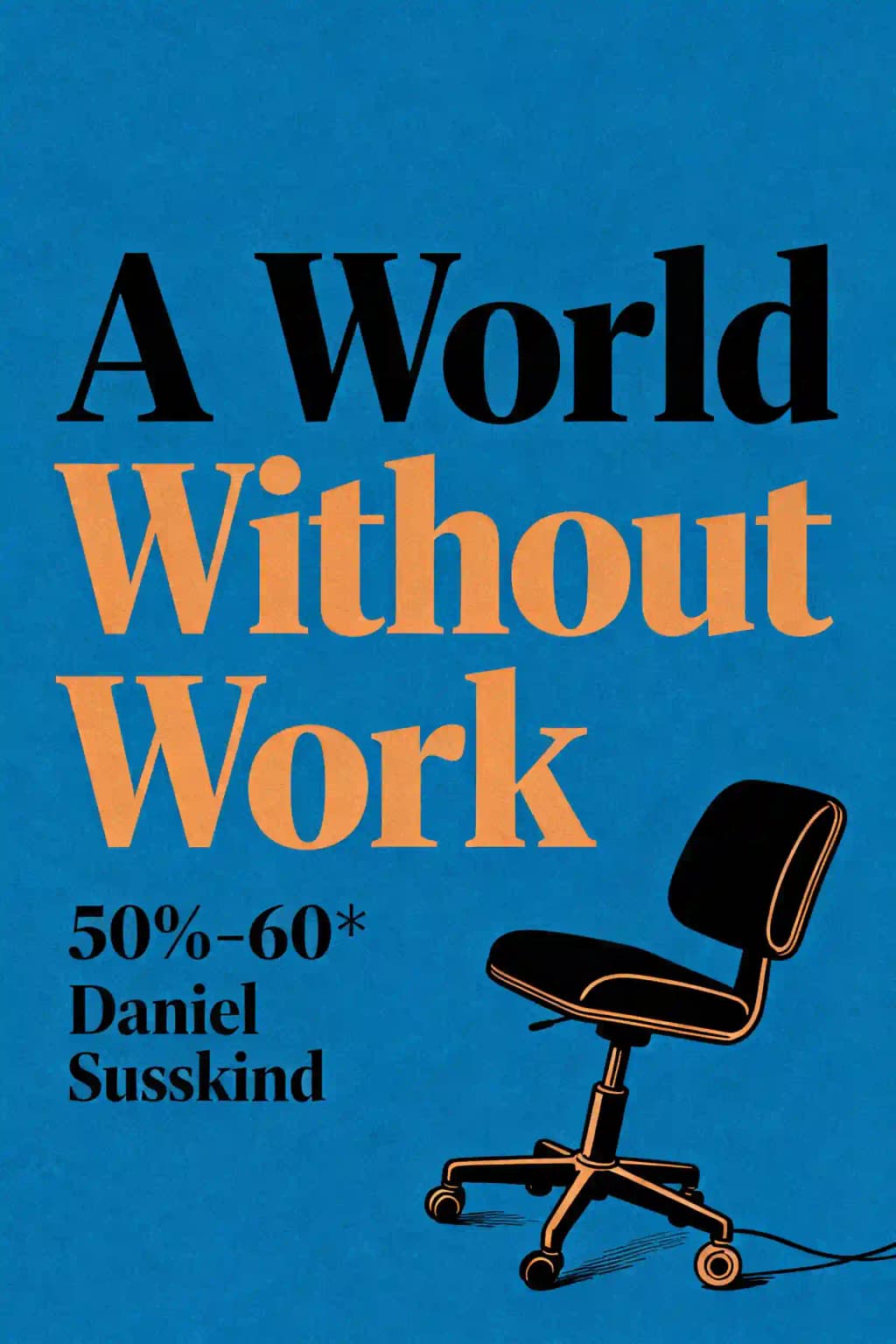
In 1890s London, a crisis loomed. Horse-drawn transportation had created mountains of manure-up to 35 pounds daily per horse-threatening to bury the city in waste. Similar problems plagued New York, where predictions suggested manure would reach third-story windows by the 1930s. This "Great Manure Crisis" seemed insurmountable until the combustion engine arrived, replacing horses almost entirely. Today, we face a similar paradigm shift, but with humans potentially being replaced rather than horses. Nobel laureate Wassily Leontief warned decades ago that humans might follow horses into technological obsolescence. Daniel Susskind's "A World Without Work" has become required reading in Silicon Valley boardrooms and economic policy circles, praised by figures from Yuval Noah Harari to Martin Wolf for its clear-eyed analysis of how artificial intelligence will reshape employment. Unlike many tech prophecies, Susskind's vision isn't of a sudden jobless apocalypse, but something perhaps more unsettling-a gradual withering of work opportunities that's already underway.
Kapitel 2
The Long History of Automation Anxiety
Economic growth is a remarkably recent phenomenon in human history. For most of our 300,000-year existence as a species, economic life remained stagnant. Only in the last few centuries has per-person production increased thirteen-fold, with world output rocketing nearly three hundred-fold. This explosive growth began with the Industrial Revolution in 1760s Britain, when new machines like the steam engine dramatically improved production methods.
Yet this technological revolution sparked immediate resistance. James Hargreaves, the illiterate cotton weaver who invented the spinning jenny, had his machine demolished and furniture destroyed by anxious neighbors. John Kay, inventor of the flying shuttle, reportedly escaped an angry mob only by being smuggled away "in a wool-sheet." These weren't isolated incidents-technological vandalism was so widespread that in 1812, the British Parliament made destroying machines a capital offense.
Even governments sometimes opposed innovation-Queen Elizabeth I refused William Lee's knitting machine patent in 1589, fearing it would make her subjects "beggars," while inventor Anton Moller was reportedly executed for creating the ribbon loom in 1586. This automation anxiety has persisted through centuries, with similar concerns expressed from JFK to Obama, Einstein to Hawking.
While mass permanent unemployment never materialized, the transition was brutal for workers caught in technological upheaval. During the Industrial Revolution, despite relatively low unemployment rates, entire industries collapsed and communities were devastated. Real wages barely rose (just 4% from 1760-1820), food became more expensive, infant mortality worsened, and life expectancy fell. The Luddites weren't fools but had legitimate grievances about technological disruption.
Technology didn't cause mass unemployment historically because two competing forces were at work: the substituting force (machines replacing humans) and the complementing force (machines enhancing human productivity). The complementing force operates in three ways: the productivity effect (making workers more effective at remaining tasks), the bigger-pie effect (expanding the economy creates new opportunities), and the changing-pie effect (economies transform to produce different outputs through different means).
From the Industrial Revolution until today, the complementing force has consistently prevailed over the substituting force, maintaining demand for human work in what can be called the Age of Labor. But this balance is now shifting in profound ways.
Kapitel 3
The Pragmatist Revolution in Artificial Intelligence
Human fascination with intelligent machines dates back millennia. Homer described "driverless" three-legged stools, Plato wrote of animated statues, and Jewish folklore featured golems. Leonardo Da Vinci designed autonomous carts, while Jacques de Vaucanson created mechanical animals that captivated 18th-century audiences.
The first serious attempt to build truly intelligent machines began in the mid-20th century. In 1956, John McCarthy, Marvin Minsky, Nathaniel Rochester, and Claude Shannon coined the term "artificial intelligence" and optimistically claimed they could make "significant advances" in a single summer at Dartmouth College.
Early AI researchers primarily tried to mimic human intelligence by replicating brain structure, simulating human reasoning processes, or encoding expert rules. This human-centric approach was reflected in their language-they sought "machines with minds" and believed humans were essentially complex computers. Despite initial enthusiasm, this approach failed to produce meaningful results. By the late 1980s, an "AI winter" descended as funding dried up and interest waned.
AI's revival began in 1997 when IBM's Deep Blue defeated world chess champion Garry Kasparov. Rather than mimicking human chess genius, Deep Blue succeeded through raw computational power, evaluating up to 330 million moves per second compared to Kasparov's hundred or so.
This victory represented a philosophical shift from purism to pragmatism. Instead of copying human intelligence, researchers now built machines that solved problems differently than humans but achieved superior results. Modern machine translation doesn't mimic human translators but analyzes millions of translated texts to find patterns. Image recognition systems outperformed humans by 2015, reaching 98% accuracy by 2017.
Recent systems like AlphaGo demonstrate this pragmatic approach's power, defeating the world's best human player at the extraordinarily complex game of go in 2016-an achievement experts thought was at least a decade away. Its successor, AlphaGo Zero, needed only the game's rules, playing itself for three days before defeating the original AlphaGo. Similar systems have mastered poker, a game involving bluffing and deception, learning entirely through self-play without human guidance.
The pragmatist revolution parallels another intellectual revolution: our understanding of human capabilities. For centuries, religious explanations attributed human intelligence to divine creation. Darwin's theory of evolution upended this thinking in 1859, showing human capabilities weren't created through top-down intelligent design but through a bottom-up process of unconscious design requiring only variation, selection, and inheritance.
Today's most capable AI systems similarly aren't designed top-down by intelligent humans but emerge gradually from blind, unthinking, bottom-up processes that don't resemble human intelligence at all.
Kapitel 4
The Relentless Advance of Task Encroachment
How will AI progress affect human employment? Rather than trying to identify specific limits that quickly become outdated, we should recognize the general trend of "task encroachment"-machines gradually taking on more tasks once performed by humans across three main capabilities: manual, cognitive, and affective.
In agriculture, driverless tractors, cow-milking machines, fruit-harvesting robots, and drone crop sprayers have already transformed farming. Some operations run without humans ever setting foot in fields. Driverless vehicles represent another frontier, with companies like Ford and Tesla developing autonomous cars that learn from millions of test drives. The freight industry is testing "platooning" trucks, while Amazon explores drone delivery systems and operates over 100,000 warehouse robots.
In construction, bricklaying robots like Sam100 can place 3,000 bricks in an eight-hour shift compared to a human's 300-600. Construction sites use laser-based sensing systems to check work progress, and Balfour Beatty hopes for "human-free" construction sites by 2050.
Machines are rapidly encroaching on cognitive tasks too. JP Morgan's system reviews commercial loan agreements in seconds rather than the 360,000 human lawyer hours it would typically require. AI systems can predict legal outcomes with greater accuracy than human experts-forecasting US Supreme Court decisions with 70% accuracy compared to human experts' 60%. DeepMind's program diagnoses eye diseases with only 5.5% error rate, outperforming most clinical experts.
Even affective capabilities-tasks requiring emotional intelligence-are being automated. Systems can analyze facial expressions to determine whether someone is happy, confused, surprised, or delighted-even outperforming humans at distinguishing genuine smiles from fake ones. AI can determine if people are lying with about 90% accuracy (compared to humans' 54%), leading Chinese insurance company Ping An to use such technology to evaluate loan applicants' honesty.
While machines are becoming increasingly capable, they won't be adopted at the same pace globally due to differences in tasks, costs, and regulations. Countries with lower GDP per capita tend to have higher automation risk because they contain more easily automatable tasks. When considering automation, what matters is not just machine productivity relative to humans, but also machine cost relative to human labor.
Despite these variations, all economies are being pulled in the same direction as technologies become not just more powerful but also more affordable. The cost of computation plummeted throughout the second half of the twentieth century, mirroring the explosion in computational power. Nobel laureate Michael Spence estimates that processing power costs fell by a factor of ten billion times in the last fifty years of the twentieth century-trends this powerful eventually catch up with virtually all parts of economic life.
Kapitel 5
The Coming Wave of Technological Unemployment
When John Maynard Keynes popularized "technological unemployment" ninety years ago, he predicted we would "hear a great deal" about it in years to come. The crucial question remains: why might we not find new uses for human labor as technology advances?
Frictional technological unemployment occurs when work still exists but many workers simply cannot reach it. This doesn't necessarily mean fewer total jobs. For the next decade or so, the substituting force will likely be overwhelmed by the complementing force in most economies. However, this will comfort a shrinking group as time passes.
"Frictions" in the labor market prevent workers from freely moving into available jobs. This is already happening with working-age American men, whose labor market participation has collapsed since World War II-one in six are now out of work, more than double the 1940 rate. Despite the US economy quadrupling since 1950 with plenty of new jobs created, many displaced men couldn't access this work due to three distinct frictions: mismatches of skills, identity, and place.
In many developed economies, labor markets have become increasingly polarized-more high-paid, high-skill work at the top, plenty of low-paid work at the bottom, but withering middle-class employment between them. This hollowing out creates the first friction: the increasingly difficult leap to top-tier jobs. Meanwhile, the race with technology accelerates. Literacy and numeracy no longer suffice as they did in the early 20th century. Ever-higher qualifications are required, with postgraduate degree holders seeing wages soar compared to those with only bachelor's degrees.
The second friction is identity mismatch. For those unable to reach high-skilled work, retreating to less-skilled or lower-paid jobs becomes inevitable. Yet many reject this downward movement, preferring unemployment instead. In South Korea, where 70 percent of young people have degrees, half the unemployed are college graduates unwilling to take poorly paid, insecure, or low-status roles that don't match their aspirations. Many displaced American male manufacturing workers refuse to take "pink-collar" jobs disproportionately held by women (teaching, nursing, hairdressing) despite these sectors creating the most new jobs.
The third friction is geographical mismatch-work exists but in the wrong location. Despite early internet optimism about the "death of distance," location matters more than ever. People may lack funds to relocate or be unwilling to leave their communities. Regional economic disparities highlight this problem. From 2000-2010, Rust Belt cities like Detroit and Cleveland lost up to 25% of their population as manufacturing declined, while Silicon Valley experienced stratospheric growth.
Beyond frictional unemployment, we face the more profound challenge of structural technological unemployment-where there simply aren't enough jobs. While economists readily accept frictional technological unemployment, they typically dismiss structural technological unemployment. But history doesn't guarantee future patterns.
As machines take on more tasks, not only will the harmful substituting force grow stronger, but task encroachment will simultaneously weaken the complementing force that has historically protected workers. The productivity effect only works if humans remain better at certain tasks than machines. The bigger-pie effect won't necessarily benefit human workers if machines become better positioned to perform new tasks. And the changing-pie effect depends on humans remaining best suited for emerging tasks.
Most optimistic predictions about the future of work rest on what Susskind calls the "superiority assumption"-the belief that humans will remain the best choice to perform many economic tasks. As task encroachment continues, this assumption becomes increasingly dubious.
Kapitel 6
Technology and the New Inequality
Economic inequality has existed throughout civilization, with prosperity always unevenly distributed. As technological progress has increased humanity's wealth, markets have become the primary mechanism for distributing prosperity, but rising inequality-often driven by technology-is putting this system under strain.
Critics of capitalism often claim "the problem with capitalism is that not everyone has capital," referring to traditional capital like stocks, real estate, and patents. But this overlooks human capital-the skills and talents people develop and use in their work. Unlike traditional capital, human capital cannot be traded separately from its owner.
Technological unemployment occurs when someone's human capital loses all market value-when no one wants to pay for their skills. In a world with less work, those who own the systems and machines (traditional capital) that displaced workers will continue receiving substantial income, while those without valuable capital of either kind will be left with virtually nothing.
Income inequality has risen significantly in most developed countries over recent decades. Looking at income distribution in the United States reveals that before 1980, income growth was fairly evenly distributed, but after 1980, growth was minimal for lower earners while soaring for the top 1%. The income share of the top 1% has nearly doubled in countries like the US and UK, and has increased even in Nordic countries known for equality.
Much of rising income inequality stems from increasing labor income inequality-workers being paid increasingly unequal amounts for their efforts. Since 1970, the share of wage income going to the best-paid Americans has doubled for the top 1%, more than doubled for the top 0.1%, and more than tripled for the top 0.01%.
For much of the twentieth century, the division between labor income and capital income remained remarkably stable-about two-thirds going to workers and one-third to capital owners. However, in recent decades, this balance has shifted dramatically. Since the 1980s in developed countries and the 1990s in developing ones, the labor share has shrunk while the capital share has grown. As productivity rose across twenty-four countries by about 30% since 1995, pay increased by only 16%.
As workers' share of economic output shrinks, the portion flowing to traditional capital owners grows-a concerning trend since capital income is distributed even more unequally than labor income. In most countries, the richest 10% own half or more of all wealth, while the poorest half "own virtually nothing." The United States presents a stark example: the poorest 50% of Americans own just 2% of national wealth, while the richest 1% now own over 40% (up from 25% in the late 1970s).
These patterns don't manifest identically everywhere, but the overall picture remains consistent-economies becoming more prosperous but more unequal, with technological progress as the primary driver. This growing inequality helps explain why technological unemployment poses such a serious future threat.
Kapitel 7
Education's Promise and Limitations
When facing technological unemployment, the most common proposed solution is more education. This view treats the problem as a skills challenge that education can solve. For now, this remains our best response, though we must carefully consider what "more education" actually means.
The faith in education's power stems from historical success. In the "human capital century" of the 1900s, skill-biased technological progress made educated workers more valuable. Today, a college degree in the US still yields an impressive 15% annual return, outperforming stocks, bonds, and real estate.
The fundamental principle guiding education reform should be teaching people skills that complement rather than compete with machines. This means shifting away from "routine" tasks where machines already excel and toward roles like nursing, caregiving, and technology design that remain beyond machine capabilities.
Despite the simplicity of this principle, we largely ignore it in practice. Much of our mathematics education still focuses on problems easily solved by apps like PhotoMath and Socratic. Simultaneously, we fail to adequately prepare students for tasks machines struggle with-computer science remains an uninspiring curriculum add-on in many places, with teachers often lacking subject expertise.
Our teaching methods have remained remarkably unchanged for centuries-small groups of students in physical classrooms with live lectures following rigid curricula. Modern technology offers better alternatives. Traditional classroom teaching is inherently "one size fits all"-or rather "one size fits none"-while personalized tutoring is known to dramatically improve outcomes. Adaptive or personalized learning systems promise similar tailoring at much lower cost.
Our current conception of education as something done only at life's beginning must also change. In the future, people will need to move in and out of education repeatedly throughout their lives, both for retraining and as insurance against unpredictable future workplace demands.
Despite education's importance, skepticism about its value has surged. Only 16% of Americans believe a four-year degree prepares students "very well" for good jobs. This skepticism is fueled partly by the success of prominent tech entrepreneurs who dropped out of prestigious universities. Peter Thiel represents the most provocative critique, calling higher education an overpriced "bubble" that people pursue simply because "that's what everybody's doing."
However, education faces fundamental limits. For many people, certain skills simply aren't attainable due to natural differences in talents and abilities. Learning new skills also consumes significant time and effort. For older workers especially, retraining may not make financial sense with fewer working years left to recoup costs.
Most critically, education struggles to solve structural technological unemployment when there simply isn't enough demand for human work. While education can increase demand by making workers more productive, this effect has limits. As technological progress diminishes worker demand, education would need to create ever-increasing productivity gains to compensate. Unlike machines, whose potential seems boundless, human capabilities have natural limits that may be closer than we think.
Kapitel 8
The Big State: New Solutions for a New Age
The great economic dispute of the last century centered on how much economic activity should be directed by the state versus the free market. In calling for a Big State, Susskind isn't advocating for central planning of production, which the twentieth century proved ineffective. Rather, he's proposing a state focused on distribution-ensuring everyone gets a slice of the economic pie.
While most developed countries already have welfare states supporting those without reliable incomes, these systems were designed for a world where employment is the norm and unemployment temporary-assumptions that technological unemployment would invalidate. As Beveridge wrote in 1942, "a revolutionary moment in the world's history is a time for revolutions, not for patching."
In a world with less work, taxation will become critical for solving the distribution problem. The Big State must follow the income, taxing those who retain wealth and sharing it with those who don't. It must tax workers whose human capital increases in value with technological progress, properly tax income flowing to owners of increasingly valuable traditional capital, and ensure "superstar firms" that generate healthy profits while employing proportionally fewer workers pay their fair share.
Once the Big State has raised necessary revenue, it must determine how to distribute it so everyone has sufficient income. While 20th century approaches relied on the labor market, these methods will prove ineffective in a world with less work. This explains the growing excitement around universal basic income (UBI), a regular payment provided to everyone regardless of employment status.
Unlike traditional UBI proposals, Susskind proposes a conditional basic income (CBI) that is only available to some people and explicitly comes with strings attached. When UBI advocates say payments should be universal, they typically mean available to all citizens-but this raises the fundamental question of who qualifies as a citizen. As work diminishes, struggles over community membership will intensify.
A CBI addresses both the distribution problem (sharing prosperity) and the contribution problem (ensuring everyone gives back to society). Without work-based contributions, alternative membership requirements-perhaps caring for others, cultural activities, or teaching-will be needed to maintain social solidarity in deeply divided societies.
Beyond income redistribution, the Big State could share out valuable capital itself-providing citizens with assets rather than just regular cash flows. A Citizens' Wealth Fund, modeled after sovereign wealth funds like Norway's $1 trillion oil fund, could acquire capital stakes on behalf of citizens. As private capital grows relative to national economies while public capital shrinks, economist James Meade's vision of a "capital-sharing state"-where government has ownership stakes in companies without necessarily controlling them-becomes increasingly relevant.
Kapitel 9
Big Tech: The New Power Centers
As work diminishes, large technology companies will increasingly dominate our economic and political lives. Understanding and constraining Big Tech's growing power will become essential in a world with less work, yet we remain largely unprepared to respond effectively.
Today's "Big Five" tech giants-Amazon, Apple, Google, Facebook, and Microsoft-already wield extraordinary market power, controlling vast portions of search, social media, retail, and operating systems. As Marc Andreessen noted, "software is eating the world," with technology companies increasingly dominating all economic sectors.
Like today's tech giants, future dominant technology companies will likely be massive due to three expensive requirements: vast data collections, world-leading software, and powerful hardware. Only the largest companies can afford all three simultaneously. Data requirements are enormous-AlphaGo learned from 30 million past moves, while companies like Uber build entire mock towns for training autonomous vehicles. Software development demands expensive talent, with San Francisco developers averaging $120,000 annually and top engineers earning far more. Processing power needs are extraordinary-a single Google search requires as much computing power as the entire Apollo space program.
Future economies will likely be dominated by large technology companies, all aspiring to monopoly power. Competition policy traditionally opposes monopolies, but applying this principle to tech giants is challenging. The economic argument against monopolies is that they reduce welfare by inflating profits through higher prices or poorer services, while stifling future innovation without competitive pressure.
However, this argument is difficult to apply to tech companies that often provide free services. It's also unclear how to define their markets-is Google in the search business (where it dominates) or the broader advertising business (where it holds a smaller share)? Most significantly, monopolies can actually benefit innovation, as Joseph Schumpeter argued. The prospect of monopoly profits motivates entrepreneurs to innovate despite costs, and these profits fund further research and development.
While commentators often compare today's tech giants to Standard Oil, this analogy fails to capture a crucial difference. Standard Oil faced primarily economic objections about market distortion, but Big Tech faces concerns about political power that extend far beyond economics. These issues aren't about economic power but about how these technologies distort social structures. The threat is the "privatization" of our political lives, with engineers at tech companies making decisions that should belong to citizens and their representatives.
While we have frameworks to address concentrated economic power, we lack comparable tools to address Big Tech's political power. Instead of nationalization, we need a Political Power Oversight Authority-a regulatory institution designed to constrain tech companies' political power. This authority must develop a framework to systematically identify political power misuse, determining when restrictions on liberty, threats to democracy, or instances of social injustice warrant intervention.
Kapitel 10
Finding Meaning in a Post-Work World
As we face a future with less work, we confront a challenge beyond economics: how to find meaning when a major source of it disappears. While modern economics textbooks treat work as an unpleasant activity done purely for income, this narrow view isn't universal. Economist Alfred Marshall saw work as necessary for "physical and moral health" and achieving "the fullness of life." Sigmund Freud considered work "indispensable" for harmonious social living.
Marie Jahoda's 1930s study of Marienthal, an Austrian village devastated by unemployment, revealed profound consequences beyond lost income: widespread apathy, loss of direction, declining civic participation, and even slower walking speeds among the unemployed.
Though work and meaning seem deeply connected today, this relationship is neither universal nor ancient. Hunter-gatherer societies actually worked far less than modern humans-taking about a thousand more hours of leisure annually than today's UK working men. In the ancient world, work was often considered degrading rather than meaningful. Egyptian law in Thebes prohibited office-holders from engaging in trade for ten years. Sparta's citizens were legally forbidden from productive work, leaving it to non-citizens and slaves.
Ancient myths and religious texts often portray work as punishment-Zeus punished mankind with work in the Prometheus myth, while God condemned Adam to "eat by the sweat of your brow" after the Fall. This contradicts modern notions that work inherently provides fulfillment.
In a world without work, leisure becomes a critical concern. Marie Jahoda's research showed that unemployment made leisure a "tragic gift"-without structure, the unemployed drifted into undisciplined emptiness, unable to recall anything meaningful about their days. To avoid this despondency, we need deliberate leisure policies alongside our labor market policies.
Education must shift from merely preparing people for work to teaching them how to flourish through leisure. The state already shapes leisure through public broadcasting, free museums, sports initiatives, and volunteering programs. However, these interventions are currently haphazard when they should be comprehensive.
Some people, even with basic income secured, may still crave work for fulfillment. For these individuals, the state could help create meaningful work opportunities. This isn't radical-governments already employ millions through institutions like the US Department of Defense and the NHS. "Job guarantee" programs are gaining popularity, with 52% of Americans supporting such policies.
As free time becomes a larger part of our lives, it will necessarily become a bigger focus of state intervention. Just as governments currently shape our working lives, we'll need policies to influence our free time-leisure policies, opportunities for meaningful unpaid work, and requirements for societal contribution.
Work provides meaning beyond economics. For many, like British coal miners whose identities were anchored in their profession, work creates a sense of purpose and community. As economic identities diminish, people will seek non-economic identities elsewhere-potentially through identity politics based on race, faith, or geography.
This suggests a final role for the Big State: as a meaning-creating state. Through leisure policies and the conditional basic income, it must guide what fills the purpose gap left by diminishing work. Unlike today's politicians who function primarily as technocrats solving policy problems, future leaders must help answer fundamental questions about what constitutes a flourishing life.