
Book
Effective Programming
Jeff Atwood
Insightful guide on writing quality code, fostering teamwork, and mastering the art of software development beyond just programming.
Discover the 9 best apps to learn coding in 2026 — from beginner-friendly tools to AI-powered book summaries. Find your perfect match.

The best apps to learn coding in 2026 are BeFreed, Mimo, SoloLearn, Codecademy Go, freeCodeCamp, Enki, DataCamp, Khan Academy, and Programming Hub — each serving a different learning style, budget, and goal. Whether you want to understand programming concepts deeply or practice writing code on your phone, this guide breaks down exactly which app fits your needs.
Learning to code has never been more accessible. With the right app, you can pick up Python during your morning commute, practice JavaScript on a lunch break, or listen to an AI-generated podcast about software architecture before bed. BeFreed's AI-powered book summaries and podcasts give you the conceptual foundation that syntax-focused apps often skip — and that foundation is what separates developers who understand why code works from those who just memorize how.
Picking the right coding app depends on what you actually want to accomplish. Here's a quick decision guide:
If your goal is understanding programming concepts and CS fundamentals → use BeFreed
If your goal is learning your first programming language from scratch → use Mimo
If your goal is exploring many languages and practicing with a community → use SoloLearn
If your goal is building a career in tech with certifications → use Codecademy Go
If your goal is learning to code for free with real projects → use freeCodeCamp
If your goal is fitting quick coding practice into a busy schedule → use Enki
If your goal is data science, analytics, or Python specifically → use DataCamp
If your goal is strengthening math and logic foundations for coding → use Khan Academy
If your goal is a mobile-first all-in-one coding reference → use Programming Hub
The best approach for most learners is pairing a hands-on practice app (like Mimo or freeCodeCamp) with a conceptual learning tool (like BeFreed) so you build both the muscle memory and the deeper understanding.
A coding learning app is a mobile or web-based platform that teaches programming through interactive lessons, exercises, and projects. These apps range from gamified quiz-style tools to full curriculum platforms with certificates.
Most apps focus on teaching syntax — the rules of a specific programming language. But truly effective coding education also covers computer science concepts, problem-solving patterns, and software design principles. That's where tools like BeFreed complement traditional coding apps by offering deep dives into programming books and concepts through AI-generated podcasts.
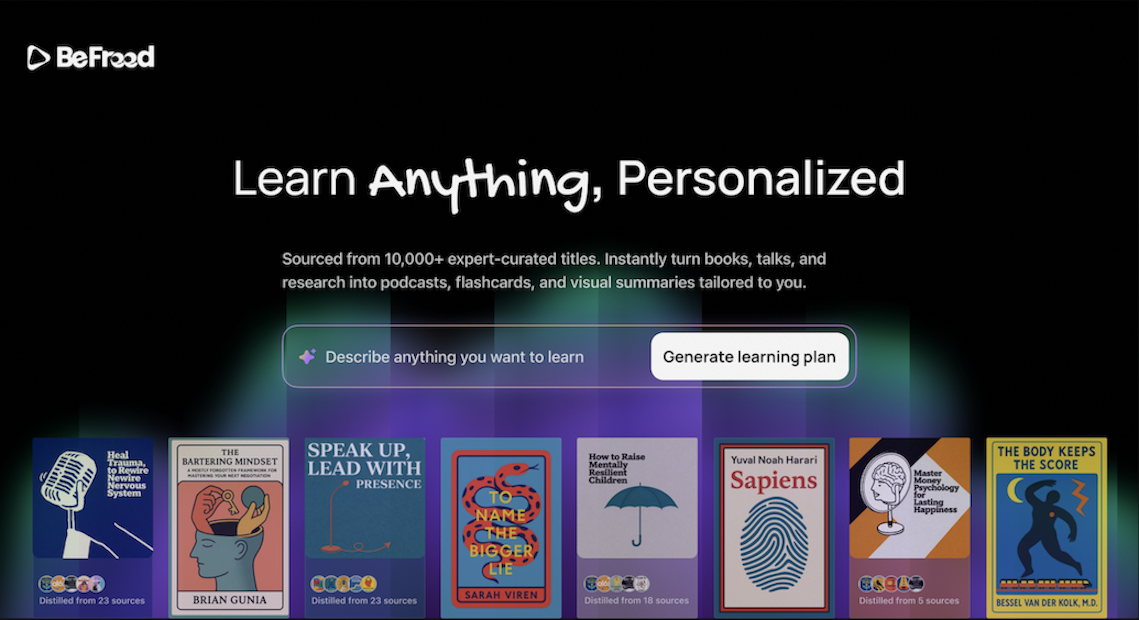
BeFreed takes a different approach to coding education. Instead of teaching you syntax line by line, it helps you understand the ideas behind great software through AI-powered book summaries and personalized podcasts. With access to over 50,000 titles — including programming classics like Effective Programming by Jeff Atwood and Python Programming for Beginners by Jason Cannon — you get the conceptual depth that most coding apps skip entirely.
Insightful guide on writing quality code, fostering teamwork, and mastering the art of software development beyond just programming.

Comprehensive guide for beginners to learn Python programming.
The AI podcast generator is what makes BeFreed stand out. You can listen to a 10, 20, or 40-minute personalized summary of any programming book while commuting or exercising. Podcasts like Coding From Zero to Hero and Coding for Absolute Beginners give you a practical roadmap for starting your programming journey, all in audio format.


Discover how to start your programming journey with beginner-friendly languages and resources. We'll guide you through a practical 90-day roadmap that makes coding approachable for anyone, regardless of experience.

Why It Stands Out: BeFreed fills the gap that syntax-focused apps leave behind. Understanding why code is structured a certain way — through books like Jeff Atwood's guide on writing quality code and building teamwork in software teams — makes you a better developer, not just a faster typist.
Pricing: Free to start, with premium plans for full access to AI podcasts and book summaries.
My Take: BeFreed is the app I recommend pairing with any hands-on coding tool. Most beginners hit a wall once they move past basic tutorials — they can write a for-loop but don't understand when to use a dictionary vs. a list, or why clean code matters. BeFreed's book summaries bridge that gap. It's not a replacement for writing code, but it's the best way to absorb programming wisdom during time you'd otherwise waste.
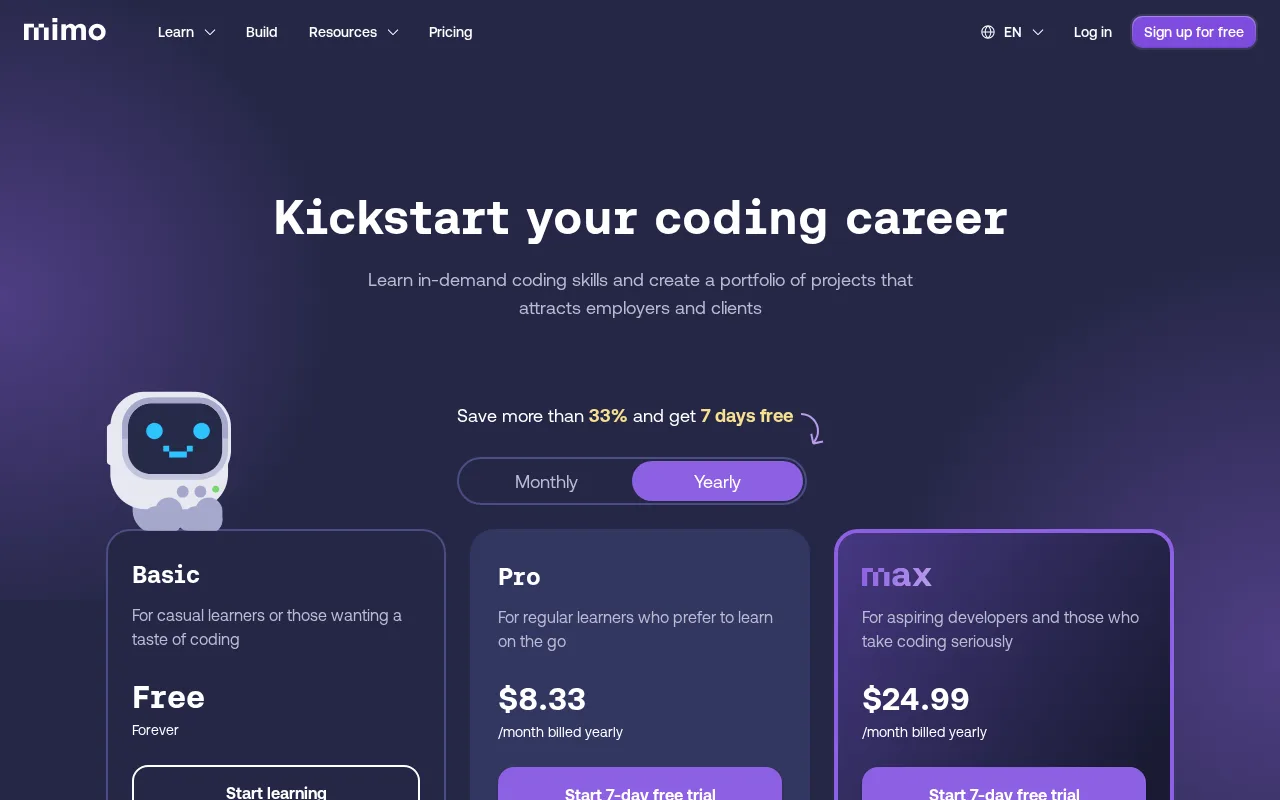
Mimo is the top-rated app for people who have never written a line of code. Its lessons take under 5 minutes each, with a streak system that keeps you coming back daily. The 2025 curriculum refresh added SQL and TypeScript tracks alongside its core Python, JavaScript, HTML, and CSS courses.
Mimo's strength is its pacing — it never assumes prior knowledge and builds concepts gradually through interactive coding exercises. You write real code from day one, and the app provides instant feedback on your answers.
Why It Stands Out: Mimo combines gamification with a real coding environment, so you're not just answering multiple-choice questions — you're actually writing and running code on your phone.
Pricing: Free with limited access; Mimo Max plan at $24.99/month billed annually (7-day free trial available).
My Take: Mimo is the best starting point if you've never coded before. The 5-minute lesson format removes the intimidation factor completely. The downside is that once you finish the beginner tracks, you'll need to move to a desktop environment for real project work. Pair it with BeFreed's Learn Python in One Day and Learn It Well summary for deeper Python understanding.

A concise, hands-on guide to rapidly master Python programming fundamentals through practical examples and a final project.
SoloLearn covers 20+ programming languages — Python, JavaScript, Java, C#, C++, SQL, Swift, Kotlin, and more. What sets it apart is the community: you can post your code, get feedback from other learners, and challenge people to head-to-head coding battles.
The bite-sized, quiz-based lessons work well for exploring multiple languages before committing to one. SoloLearn also has a built-in code playground where you can write and run code directly in the app.
Why It Stands Out: No other mobile app offers this breadth of language coverage combined with an active community of learners who review each other's code.
Pricing: Free plan with generous course access; SoloLearn Pro at $12.99/month or $5.83/month billed annually.
My Take: SoloLearn is the best choice if you're not sure which language to learn yet. The community features add accountability that solo learning apps lack. However, the free tier has gotten more restrictive over the years, and the teaching style is more quiz-heavy than project-heavy.
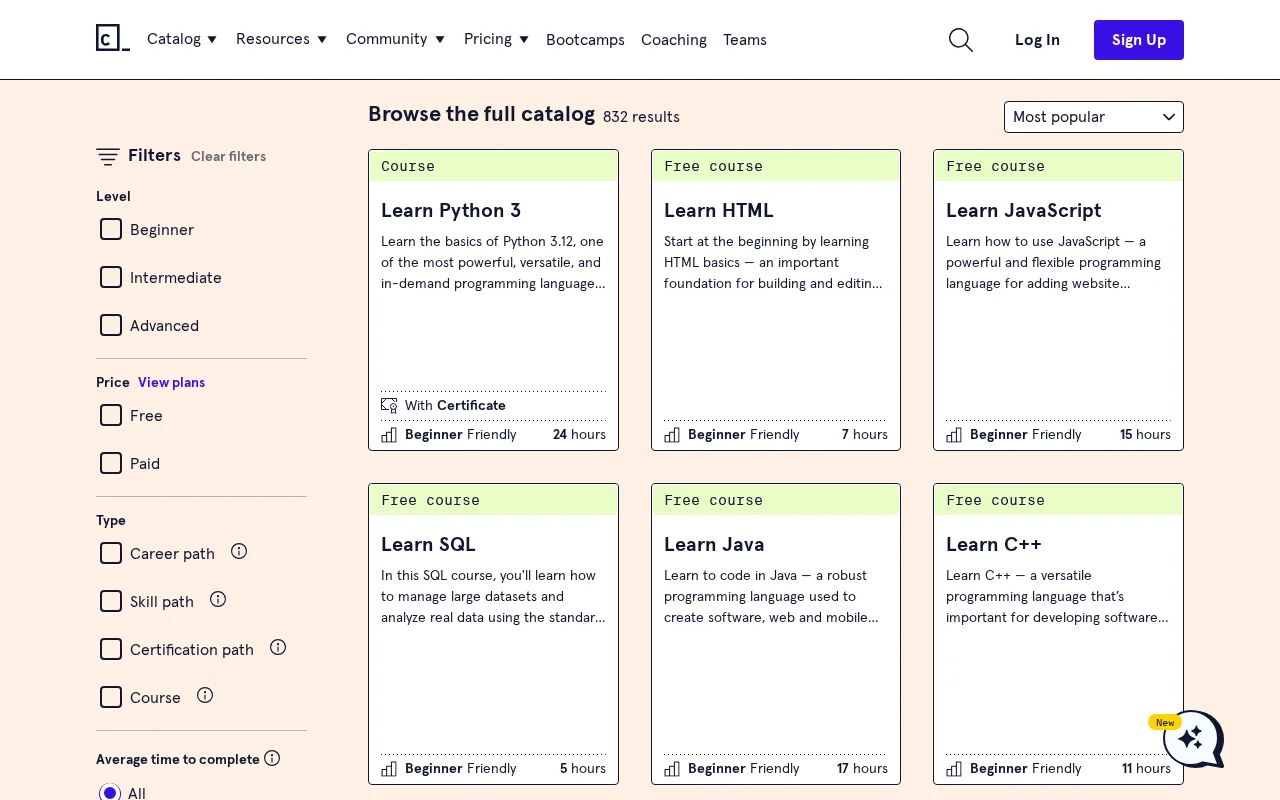
Codecademy offers over 700 courses spanning web development, data science, machine learning, and cybersecurity. Its Pro plan includes formal career paths with certification prep for AWS, CompTIA, and Microsoft exams — making it the most career-focused option on this list.
The mobile app (Codecademy Go) works well for reviewing lessons and practicing concepts on the go, though the full interactive coding experience is best on desktop.
Why It Stands Out: Codecademy's career paths are structured end-to-end, taking you from beginner to job-ready with portfolio projects and interview prep built in.
Pricing: Many free courses available; Codecademy Pro at $19.99/month billed annually; Student plan at $149.99/year.
My Take: If your goal is landing a developer job, Codecademy's career paths are the most structured option available. The trade-off is price — it's one of the more expensive options. The mobile app is a supplement, not a standalone learning tool. For conceptual preparation, supplement with BeFreed's programming book summaries.
freeCodeCamp is the largest free coding curriculum in the world, offering over 3,000 hours of interactive content covering web development, data science, machine learning, and more. You earn verified certificates by completing real projects — not just quizzes.
The platform is entirely free, funded by donations. Projects include building responsive web designs, JavaScript algorithms, and full-stack applications that you can add to your portfolio.
Why It Stands Out: No paywalls, no premium tiers — everything is free. The project-based certificates are respected by employers and demonstrate real building ability.
Pricing: Completely free.
My Take: freeCodeCamp is unbeatable on value. The catch is that it requires more self-discipline than gamified apps — there are no streaks, no leaderboards, and no push notifications reminding you to practice. It's best for learners who are already motivated and want to build real projects. The curriculum is web-focused, so look elsewhere for mobile or data science tracks.
Enki delivers personalized daily lessons that adapt to your skill level. It functions like a coding coach, serving you short exercises each day that gradually increase in difficulty. Topics include Python, JavaScript, SQL, Git, data science, and web development.
The daily workout format makes Enki ideal for maintaining coding skills or slowly building new ones during a busy schedule.
Why It Stands Out: Enki's adaptive learning algorithm adjusts to your progress, so you're always challenged at the right level without feeling overwhelmed.
Pricing: Free tier available; premium plans start at approximately $9.99/month.
My Take: Enki is great for supplemental practice — the daily workout format makes it easy to stay consistent. It's less effective as a primary learning tool because individual lessons don't always connect into a coherent curriculum the way Mimo or Codecademy courses do.
DataCamp focuses exclusively on data science and analytics, offering hands-on courses in Python, R, SQL, and related tools like pandas, NumPy, and Tableau. Lessons are delivered in bite-sized modules with real datasets.
If your coding goal is data analysis, machine learning, or working with databases rather than building apps, DataCamp is the most focused option available.
Why It Stands Out: DataCamp's courses are built around real-world data problems, and the platform includes a portfolio of projects that demonstrate applied data skills.
Pricing: Free introductory courses; DataCamp Premium at approximately $25/month billed annually.
My Take: DataCamp is the right choice if you know you want to work with data, not build websites or apps. The platform is narrow by design — that's a strength for data-focused learners and a limitation for everyone else. The R courses are particularly well-regarded.
Khan Academy offers free courses in computing, including Intro to JS, Intro to HTML/CSS, and Intro to SQL. But its real strength for aspiring programmers is the math and logic foundation — algebra, algorithms, and discrete math — that supports everything you'll learn in code.
The platform is entirely free and supported by donations, with courses created by subject matter experts.
Why It Stands Out: Khan Academy provides the math and logic prerequisites that many coding bootcamps assume you already have, making it the perfect starting point for learners who need to build foundational skills.
Pricing: Completely free.
My Take: Khan Academy isn't a coding app in the traditional sense, but it's invaluable for beginners who struggle with the logical thinking that programming requires. If loops and conditional statements feel confusing, spend a week on Khan Academy's logic courses first. Ulrich Boser's Learn Better — available as a summary on BeFreed — also offers science-backed techniques for mastering new skills faster.

Discover the science of learning and master techniques to become an expert in any field, revolutionizing your approach to skill acquisition.
Programming Hub offers courses across 20+ languages including Python, Java, JavaScript, C++, HTML, and CSS, all in a single mobile app. The interface uses illustrations and interactive examples to keep lessons engaging.
The app also includes a built-in code compiler so you can write and execute code directly on your phone without any external tools.
Why It Stands Out: Programming Hub packs the broadest mobile-first learning experience into one app, with a built-in compiler that lets you go from lesson to practice without switching tools.
Pricing: Free with ads; Pro plan available with a one-time purchase option (pricing varies by region).
My Take: Programming Hub tries to be everything in one app, which means it covers breadth at the expense of depth. The built-in compiler is a nice touch, but the lessons aren't as polished as Mimo's or as project-focused as freeCodeCamp's. It works best as a reference and practice companion.
| Feature | BeFreed | Mimo | SoloLearn | Codecademy Go | freeCodeCamp | Enki | DataCamp | Khan Academy | Programming Hub |
|---|---|---|---|---|---|---|---|---|---|
| Best For | Coding concepts & book summaries | Complete beginners | Language variety & community | Career paths & certifications | Free project-based learning | Daily coding habits | Data science & Python | Math & logic foundations | Mobile all-in-one reference |
| Price | Free to start, premium plans available | Free tier, $24.99/month annual | Free tier, $12.99/month | Free courses, Pro $19.99/month annual | Completely free | Free tier, premium from $9.99/month | Free intro, $25/month annual | Completely free | Free with ads, Pro one-time purchase |
| Free Plan | Yes, with limited features | Yes, limited course access | Yes, generous free tier | Yes, many free courses | Yes, everything is free | Yes, limited daily workouts | Yes, intro courses only | Yes, everything is free | Yes, with ads |
| Languages/Topics | 50,000+ book summaries on programming, CS, and tech topics | Python, JavaScript, HTML, CSS, SQL, TypeScript | 20+ languages including Python, Java, C++, Swift, Kotlin | 700+ courses across web dev, data science, ML, cybersecurity | Web dev, JavaScript, Python, data science, ML | Python, JavaScript, SQL, Git, data science | Python, R, SQL, pandas, NumPy, Tableau | JavaScript, HTML/CSS, SQL, math, algorithms | 20+ languages including Python, Java, C++, HTML |
| Platform | iOS, Android, Web | iOS, Android | iOS, Android, Web | iOS, Android, Web | Web (mobile-responsive) | iOS, Android | iOS, Android, Web | iOS, Android, Web | iOS, Android |
| Key Differentiator | AI podcasts and personalized book summaries for deep conceptual learning | 5-minute gamified lessons with real code execution | Community code reviews and head-to-head coding battles | End-to-end career paths with industry certifications | 3,000+ hours of free content with verified certificates | Adaptive daily workouts that adjust to your level | Real-world datasets and data-focused portfolio projects | Free math and logic foundations for coding | Built-in mobile code compiler across 20+ languages |
The best coding app is the one you'll actually use consistently. Here are three factors to consider:
Your learning style matters most. If you learn best by reading and listening, BeFreed's book summaries and AI podcasts will give you the deepest understanding. If you learn by doing, hands-on apps like Mimo, freeCodeCamp, or Codecademy are better fits. Most successful learners combine both approaches.
Budget is a real constraint. freeCodeCamp and Khan Academy are 100% free with no paywalls. SoloLearn and Mimo offer useful free tiers. Codecademy and DataCamp require paid plans for full access. Consider starting with free options to confirm your interest before investing in premium subscriptions.
Your end goal shapes your path. Career changers should look at Codecademy's structured career paths. Hobbyists and curious learners do well with Mimo or SoloLearn. Data-focused learners should go straight to DataCamp. And everyone — regardless of goal — benefits from the conceptual depth that BeFreed's programming book summaries provide.
Most coding apps teach you how to write code. BeFreed teaches you why code works the way it does. That distinction matters more than most beginners realize.
Jeff Atwood's Effective Programming — one of the most respected programming books ever written — argues that great software development demands psychology, teamwork, and user empathy, not just technical skill. BeFreed lets you absorb insights like these in a 20-minute podcast during your commute, instead of spending hours reading a 300-page book.
Insightful guide on writing quality code, fostering teamwork, and mastering the art of software development beyond just programming.
BeFreed's AI podcast generator creates personalized summaries tailored to your interests. Search for "Python" and you'll get summaries of Python Programming for Beginners and Learn Python in One Day and Learn It Well. Search for "learning techniques" and you'll discover Learn Better by Ulrich Boser, which reveals science-backed strategies like spaced practice and interleaving that can accelerate your coding progress.
Comprehensive guide for beginners to learn Python programming.
A concise, hands-on guide to rapidly master Python programming fundamentals through practical examples and a final project.
Discover the science of learning and master techniques to become an expert in any field, revolutionizing your approach to skill acquisition.
The smartest approach to learning code in 2026 is combining a hands-on coding app with BeFreed. Practice syntax on Mimo or freeCodeCamp, then deepen your understanding with BeFreed's book summaries and podcasts. You'll learn faster and retain more.
The best app to learn coding depends on where you are in your journey. For conceptual understanding and programming wisdom, BeFreed is our top pick — its AI-powered book summaries and podcasts give you a depth of knowledge that no syntax-focused app can match. For hands-on coding practice, Mimo is the best starting point for beginners, and freeCodeCamp is the best free option for project-based learning. Career-focused learners should explore Codecademy, and data enthusiasts should head straight to DataCamp.
Our recommendation: start with BeFreed to understand the fundamentals, then pair it with a hands-on app that matches your goals. That combination will get you further, faster than any single app alone.

Learn to code from scratch
This comprehensive path bridges the gap between writing your first line of code and architecting complex systems. It is ideal for aspiring developers who want to move beyond basic syntax to master the professional engineering standards required in the tech industry.

From Zero to Coder
This comprehensive path bridges the gap between digital literacy and professional software development. It is ideal for absolute beginners who want to move beyond basic syntax to building functional web applications with industry-standard tools.

OpenAI Codex: The Non-Coder's Masterclass
As AI transforms software development, the ability to command code through natural language is becoming a vital superpower for non-technical professionals. This masterclass is designed for entrepreneurs and creators who want to build functional web applications without the traditional learning curve of programming languages.

Code to Launch: Web and Mobile
This learning plan is designed for aspiring developers and entrepreneurs who want to move beyond simple tutorials to building production-ready products. It bridges the gap between technical execution and market validation, ensuring you build software that users actually need.

Make a an app
This comprehensive plan bridges the gap between technical coding skills and commercial product success. It is ideal for aspiring developers and entrepreneurs who want to build high-quality mobile apps from the ground up while ensuring business viability.

Learn software dev
This comprehensive learning path takes you from programming beginner to professional software engineer, covering everything from writing your first line of code to making architectural decisions for large-scale systems. It's ideal for career changers entering tech, self-taught programmers looking to formalize their skills, or junior developers aiming to reach senior-level expertise. The structured progression ensures you build both technical proficiency and the professional mindset needed to succeed in modern software development teams.
Programming
This comprehensive path bridges the gap between basic syntax and professional system architecture. It is ideal for aspiring developers who want to master both the practical skills of coding and the high-level design patterns used in top-tier tech companies.

How to build a great language learning app
Building a successful language app requires a unique blend of pedagogical science, psychological triggers, and high-performance product design. This plan is essential for developers, product managers, and educators looking to transform language learning into a scalable, high-retention digital experience.